
China’s remarkable progress in modernization offers valuable lessons for other Global South nations, enabling them to amplify their influence on the international stage, according to a prominent academic. Justin Yifu Lin, honorary dean of the Institute of South-South Cooperation and Development at Peking University, emphasized that China’s achievements serve as a source of inspiration and confidence for developing countries. Speaking at the Global South Modernization Forum in Beijing, Lin highlighted how China’s four global initiatives empower these nations to strengthen their voice in global affairs. He argued that by adopting China’s development strategies, countries in the Global South can unlock their potential and achieve sustainable growth. The forum, held on Friday, brought together experts to discuss pathways for modernization and international collaboration among developing nations.
分类: world
-
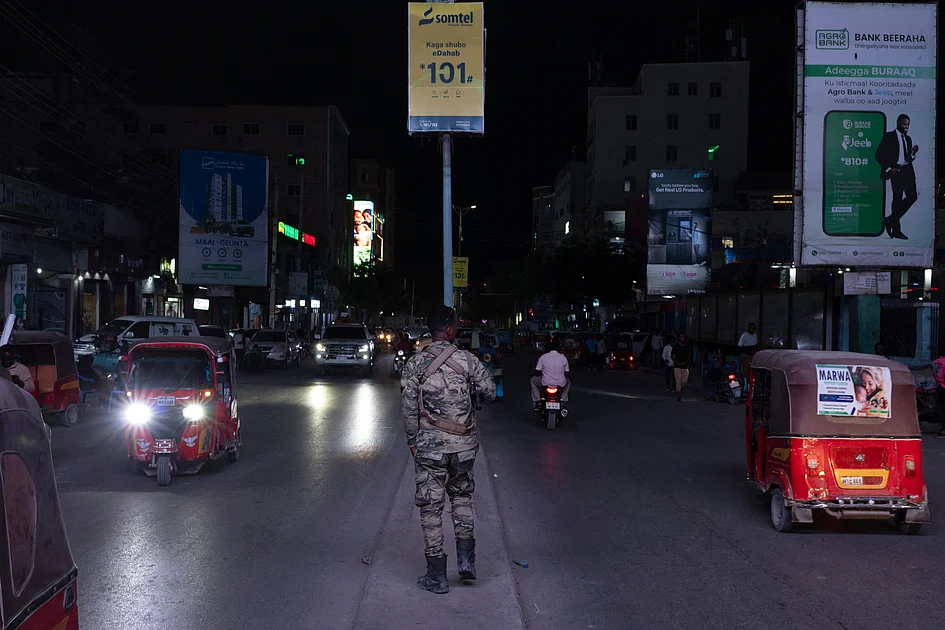
Rising from the ashes of war: Mogadishu’s building boom
Mogadishu, the capital of Somalia, is experiencing a remarkable transformation as it emerges from decades of conflict and instability. For the first time in years, the city’s three million residents are witnessing a construction boom, with new buildings rising amidst the remnants of war-torn streets. Pavements still bear the scars of bullet holes, and ruined structures remain, but the dominant sound is now the clatter of construction rather than the echoes of destruction. This resurgence is a testament to the resilience of a city that has endured civil war in the 1990s and a militant insurgency that continues to threaten parts of the country. Despite these challenges, Mogadishu is making strides toward recovery, driven by improved security measures and investment from the Somali diaspora. The government attributes the decline in insurgent attacks—down 86% from 2023 to mid-2025—to a new system of checkpoints and enhanced professionalism among security forces. However, the city still faces significant hurdles, including the resurgence of Al-Shabaab in surrounding areas and growing inequality. While wealthy officials and foreigners benefit from improved living standards, many residents grapple with forced evictions and limited access to essential services. The construction boom, though a sign of progress, raises questions about who truly benefits from Mogadishu’s rise.
-
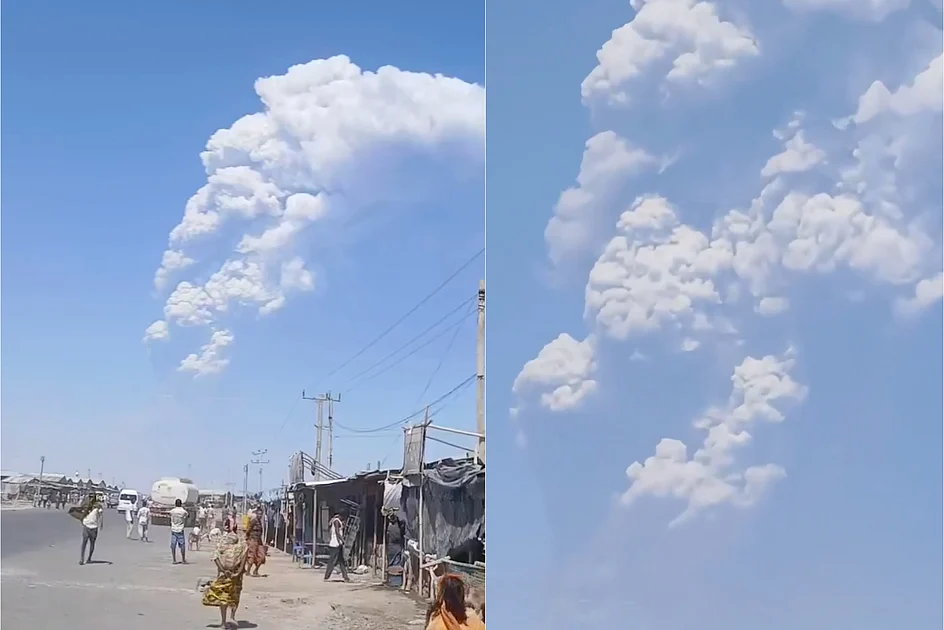
Oman issues advisory after Hayli Gubbi volcano erupts in 10,000 years
The Oman Environment Authority has issued a public advisory following the unprecedented eruption of Ethiopia’s Hayli Gubbi volcano, which had remained dormant for 10,000 years. The eruption, which began on November 23, 2025, at approximately 8:30 AM UTC, sent towering ash plumes soaring up to 15 kilometers into the atmosphere. These ash clouds drifted across the Red Sea, impacting regions in Yemen and Oman. Despite the significant scale of the eruption, Oman’s monitoring stations have not yet detected any rise in pollutant levels or deterioration in air quality. The authority has assured the public that continuous monitoring is underway through 68 stations across the country, including key locations in Dhofar and Al Wusta. Real-time air quality updates are accessible via the ‘Naqi’ platform. Aviation authorities have also been alerted due to the extensive ash cloud, which reached altitudes of nearly 20,000 feet. Scientists have described the event as one of the most remarkable volcanic awakenings in the region’s recorded history. The Oman Environment Authority has pledged to keep the public informed of any developments.
-

Here’s what’s next in the fight to curb climate change, now that talks in Brazil have ended
The recent COP30 United Nations climate talks in Belem, Brazil, concluded with a mix of cautious optimism and stark warnings about the future of global climate action. While the event, held in the heart of the Amazon, was expected to be a historic turning point, it fell short of delivering a comprehensive roadmap to phase out fossil fuels—coal, oil, and gas—despite strong backing from Brazil’s president and over 80 nations. Critics argue that the lack of consensus on this critical issue reflects the persistent influence of powerful opponents and petrostates. However, experts identified several positive developments, including the establishment of a ‘global implementation accelerator’ to support nations in enhancing their climate commitments. The COP presidency also highlighted 117 ‘action agenda’ items, including a $1 trillion pledge for renewable energy grids, $5.5 billion for forest conservation, and industrial decarbonization plans for developing countries. Despite these initiatives, the absence of binding agreements underscores the challenges of achieving global consensus. Experts warn that without urgent action, climate impacts will intensify, disproportionately affecting vulnerable communities and ecosystems. While the process remains flawed, the talks have laid the groundwork for incremental progress, emphasizing the need for continued collaboration and innovation in the fight against global warming.
-

China’s development experience valuable to Global South: professor
During the Global South Modernization Forum, Qian Chengdan, a distinguished Boya chair professor at Peking University, highlighted the significance of China’s holistic modernization strategy as outlined in the draft recommendations of the 15th Five-Year Plan (2026-30). He emphasized that China’s development model provides a wealth of insights for nations in the Global South striving for modernization. Qian underscored the importance of China’s integrated approach, which balances economic growth, social progress, and environmental sustainability. He noted that this framework could serve as a valuable reference for other developing countries seeking to navigate their own paths toward modernization. The professor’s remarks shed light on the growing recognition of China’s role as a key player in shaping global development paradigms.
-
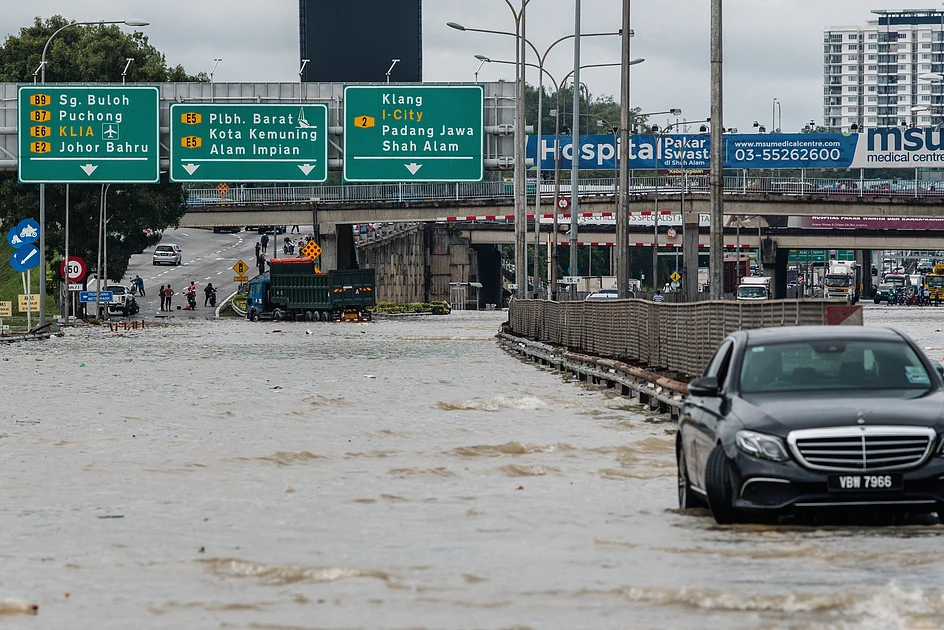
Malaysian floods affect 11,000 people across seven states
Torrential rains have triggered widespread flooding across seven Malaysian states, impacting more than 11,000 individuals, according to the National Disaster Management Agency. The affected regions include Kedah, Kelantan, Penang, Perak, Perlis, Terengganu, and Selangor, with 3,839 families displaced as of Monday. This annual monsoon season, which runs from October to March, frequently causes severe flooding along Malaysia’s eastern coast, displacing thousands annually. The situation echoes last November’s devastating floods, which forced over 37,000 people to flee their homes within a week. Authorities are working to provide relief and support to those affected, though the recurring nature of these disasters highlights the region’s vulnerability to extreme weather events.
-
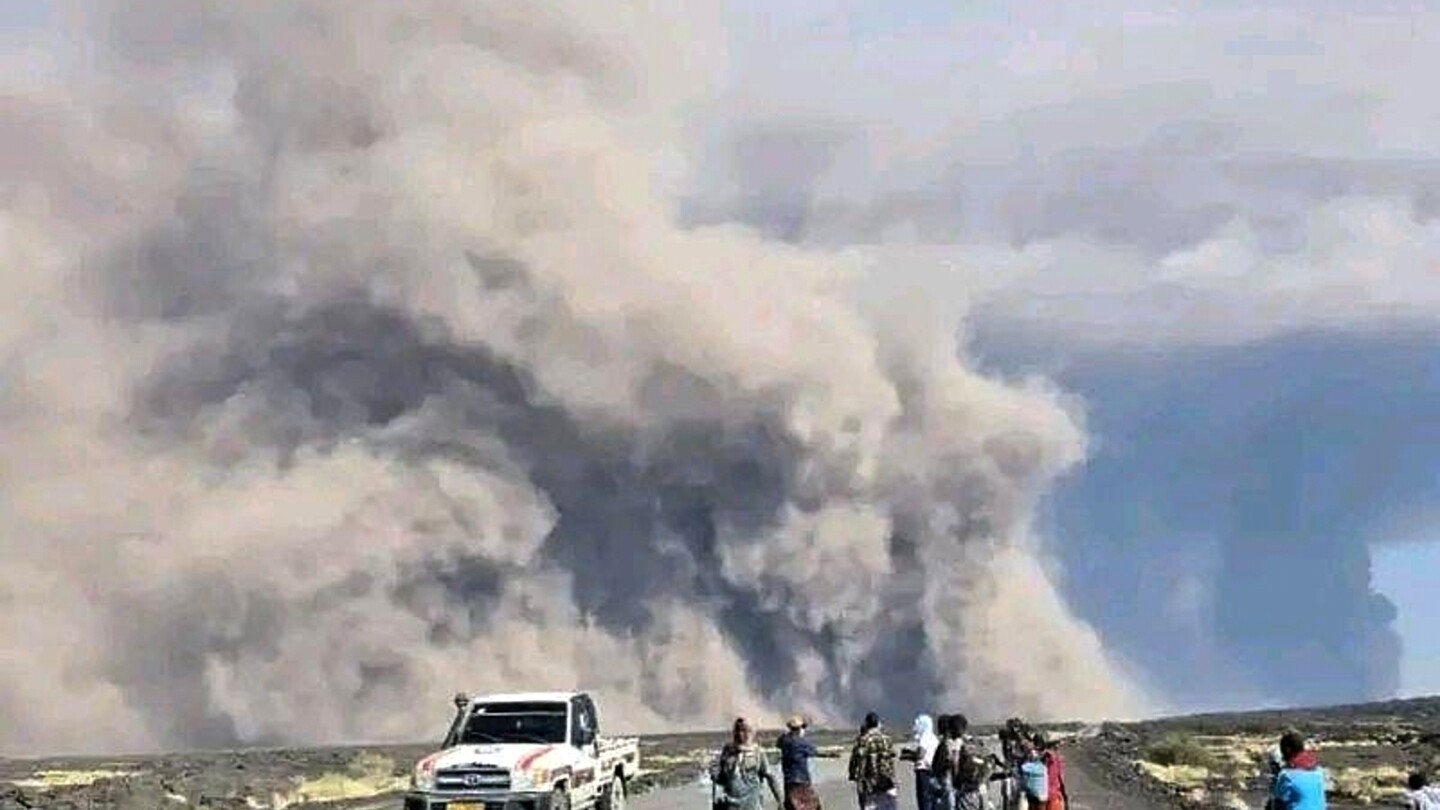
Volcano erupts in northern Ethiopia, sending ash plumes toward Yemen and Oman
A previously inactive volcano in northern Ethiopia, Hayli Gubbi, erupted unexpectedly on Sunday, sending massive ash plumes across the Red Sea toward Yemen and Oman. Located in the seismically active Afar region, the eruption blanketed the nearby village of Afdera in dust, disrupting daily life and raising concerns about the economic impact on local livestock herders. Mohammed Seid, a local administrator, confirmed no casualties but expressed fears for the livelihoods of residents, whose animals now face food shortages due to the ash-covered grazing lands. Seid noted that this was the first recorded eruption of Hayli Gubbi, adding to the unpredictability of the situation. The Toulouse Volcanic Ash Advisory Center in France confirmed the eruption through satellite imagery. Residents, including Ahmed Abdela, described the event as akin to a bomb explosion, with shock waves and dense smoke. The eruption also stranded tourists and guides in the village near the Danakil desert, a popular tourist destination, which remained covered in ash on Monday. Local authorities shared visuals of the towering ash plume, highlighting the scale of the event.
-

New Kuwait residency rules: Higher visa fees, more categories, stricter controls
Kuwait has unveiled a comprehensive overhaul of its residency and visa regulations, introducing higher fees, stricter controls, and new categories for foreign nationals. The Ministry of Interior announced the changes on November 23, 2025, with the new rules set to take effect on December 23, 2025. This marks one of the most significant reforms to Kuwait’s immigration system in recent years.
Key changes include a minimum salary requirement of KD800 for family residency and increased fees for sponsoring dependents other than spouses and children, now set at KD300 annually. Visa fees have been raised across most categories, with a KD10 fee now applied to all types of visit or entry visas, including tourism, family visits, medical treatment, and business purposes. Most visit visas are valid for three months and can be renewed once, up to a maximum of one year.
Residency permit fees have also been updated, with government and private sector work permits costing KD20 annually, investor residencies set at KD50, and property owner residencies at KD500. Domestic workers sponsored by Kuwaiti families are charged KD10 annually, while a new self-sponsor category requires a KD20 annual fee for foreigners with independent income.
The reforms introduce stricter rules for domestic helpers, limiting the number of helpers based on household size and imposing stepped fees for additional helpers. Domestic helpers must also be between 21 and 60 years old, unless granted an exemption. Temporary residency fees are set at KD10 per month for most categories, with extensions costing the same.
Investors and property owners benefit from specific residency categories, with investor residencies costing KD50 annually and property owner residencies requiring proof of ownership. The new system also mandates online applications, electronic appointment booking, and biometric verification for most procedures.
Penalties for violations have been tightened, with daily fines for overstaying visas and caps on settlement fees. Administrative deportation can now be ordered even if a residency is valid, based on grounds such as lack of income, unauthorized employment, or public security concerns.
The overhaul aims to modernize Kuwait’s residency framework, aligning it with the country’s evolving social and economic needs while increasing government revenue.
-
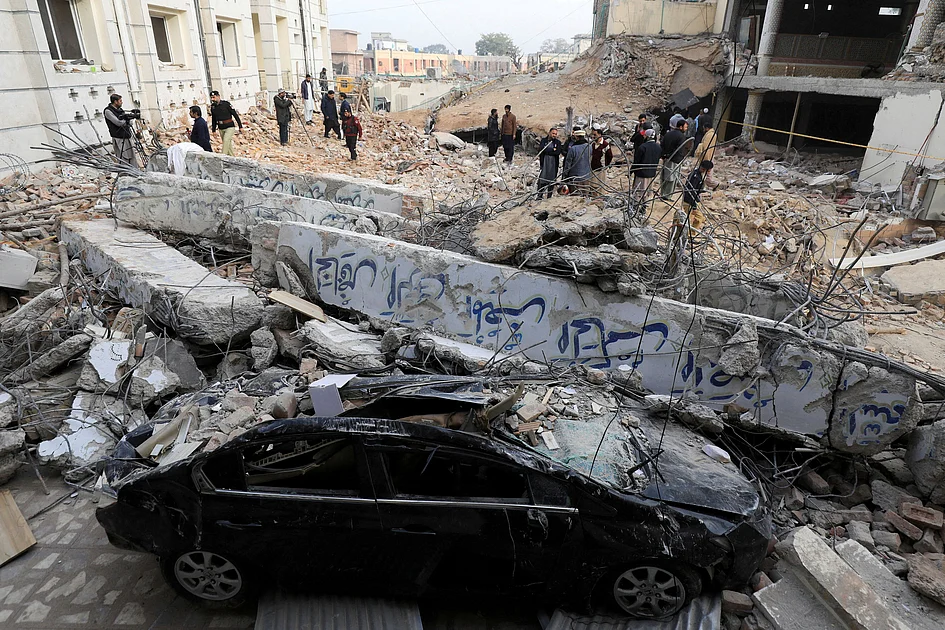
Suicide bombers kill three at Pakistan paramilitary HQ
In a brazen attack on Monday, three suicide bombers targeted the headquarters of Pakistan’s Frontier Constabulary in Peshawar, resulting in the deaths of three paramilitary personnel and injuring at least five others. The assailants reportedly opened fire as they forced their way into the facility before detonating explosives within the complex. Javed Iqbal, the deputy commandant of the force, confirmed the casualties. A senior official, speaking anonymously, revealed that the first bomber struck the main entrance, enabling others to infiltrate the compound. Security forces, including the army and police, swiftly cordoned off the area, suspecting additional terrorists might still be inside. The headquarters, situated in a densely populated district of Peshawar, prompted road closures and heightened security measures. The injured, including two paramilitary members, were rushed to Lady Reading Hospital, according to spokesperson Mohammad Asim. No militant group has yet claimed responsibility for the attack. This incident follows a surge in militant activities in the region, exacerbated by recent border clashes. Pakistan accuses the Afghan Taliban of sheltering militants who launch cross-border attacks, a claim Kabul denies.
-
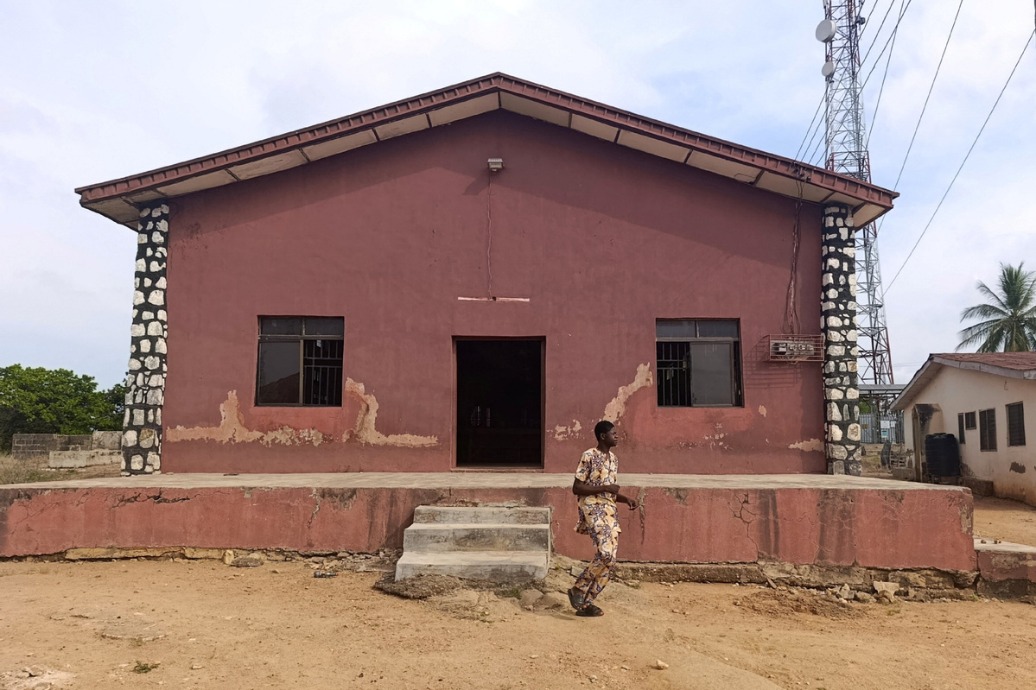
More than 300 students abducted from Nigeria school
In one of the largest mass kidnappings in Nigeria, suspected terrorists abducted more than 300 students and teachers from St. Mary’s School in Niger state. The Christian Association of Nigeria (CAN) reported the incident on Saturday, initially estimating 227 victims but later revising the figure to 315 after a verification exercise. This includes 303 students and 12 teachers, with 88 students captured while attempting to escape. By Sunday, 50 students had managed to escape and reunite with their families. Alhaji Abubakar Usman, secretary to the Niger state government, confirmed the attack, noting that it occurred despite prior intelligence warnings of heightened security threats. The government had ordered the suspension of construction activities and the closure of boarding schools in the affected area. However, St. Mary’s School had reopened without official clearance, putting students and staff at risk. Local security agencies have launched a full-scale investigation and search-and-rescue operation, deploying tactical units and military personnel to comb nearby forests for the abducted individuals.