The long-simmering conflict between Israel and Iran erupted into open cross-border fire on Tuesday, sending shockwaves through the Middle East and raising urgent international concerns over broader regional destabilization. Multiple coordinated strikes, civilian safety warnings, and high-stakes diplomatic maneuvering have combined to create one of the most volatile moments in the region in decades.
Pakistan, which has been serving as a neutral mediator between Iran and the United States, has seen its diplomatic efforts to de-escalate the crisis reach a pivotal turning point, according to Iran’s ambassador to Islamabad, Reza Amiri Moghadam. In a post shared Tuesday on the social platform X, Moghadam noted that “positive and productive endeavours in Good Will and Good Office to stop the war is approaching a critical, sensitive stage,” though he offered no additional details on the substance or timeline of the ongoing talks.
As military operations intensified across the region, the Israeli Defense Force issued an urgent public safety advisory to Iranian civilians, urging them to avoid all rail travel across Iran until 17:30 GMT Tuesday. “For your safety, we ask you to refrain from using trains or travelling by train throughout the country from now until 9 pm Iran time,” the military said via its official Persian-language social media account, warning that “Your presence on trains and near railway tracks puts your life in danger.”
Neighboring Gulf states have also moved to strengthen security protocols amid rising tensions. Authorities in Saudi Arabia and Bahrain announced a temporary precautionary closure of the King Fahd Bridge, a critical cross-border transportation artery that connects the Saudi mainland to the island Kingdom of Bahrain. The closure came shortly after official security alerts were issued for the border region amid rising threat assessments.
In the Iranian capital of Tehran, local media confirmed that US-Israeli joint airstrikes carried out early Tuesday completely destroyed the city’s Rafi-Nia synagogue. Iran is home to a small remaining Jewish community, the majority of whose members fled the country in the wake of the 1979 Islamic Revolution.
Hours after a series of strikes hit energy infrastructure targets across Iran, overnight attacks targeted a major petrochemical complex in the eastern Saudi Arabian industrial city of Jubail. An anonymous witness confirmed the strike to Agence France-Presse (AFP) Tuesday. The strike came shortly after the Saudi Ministry of Defense announced that its air defense systems had successfully intercepted and destroyed seven ballistic missiles launched toward eastern regions of the kingdom.
The escalating conflict has already claimed the lives of foreign civilians, with the Philippine Department of Foreign Affairs confirming Tuesday that a second Philippine national has been killed in the fighting. The Filipino woman was killed Sunday in a missile strike on a residential building in the Israeli port city of Haifa, dying alongside her Israeli husband and his elderly parents. Israeli rescue services recovered four bodies total from the rubble of the building, which was hit by an Iranian missile a day after the attack was launched.
Israeli military officials confirmed Tuesday that they had launched a widespread wave of airstrikes across Iran, with local Iranian media outlets reporting loud explosions across multiple neighborhoods in Tehran and the nearby city of Karaj. Simultaneously, the IDF confirmed that its domestic air defense systems had been activated to intercept incoming missiles fired by Iranian forces toward Israeli territory.
In the autonomous Kurdistan Region of northern Iraq, local authorities reported that a drone originating from Iran crashed into a residential home, killing a married couple. An AFP journalist on the ground also reported hearing two large explosions near Erbil International Airport, which hosts military advisors from the US-led global anti-jihadist coalition. Earlier the same day, a security source told AFP that regional air defense systems had intercepted four missiles targeted at the US consulate in Erbil before they could reach their target.
At the United Nations headquarters in New York, the UN Security Council is scheduled to hold a key vote Tuesday on a draft resolution addressing Iranian threats to freedom of navigation through the Strait of Hormuz, a top global diplomatic source confirmed to AFP. The latest draft of the resolution, which has been reviewed by AFP, demands that Iran end all attacks on commercial shipping and halt “any attempt to impede transit passage or freedom of navigation in the Strait of Hormuz.” However, objections from multiple veto-wielding permanent Security Council members have forced negotiators to water down the text, and the current draft does not include explicit authorization for the use of military force to enforce its terms. Tehran has effectively closed the strategic waterway to international commercial traffic since US-Israeli strikes on Iranian targets on February 28, a move that has already sent global oil and natural gas prices soaring in recent weeks.
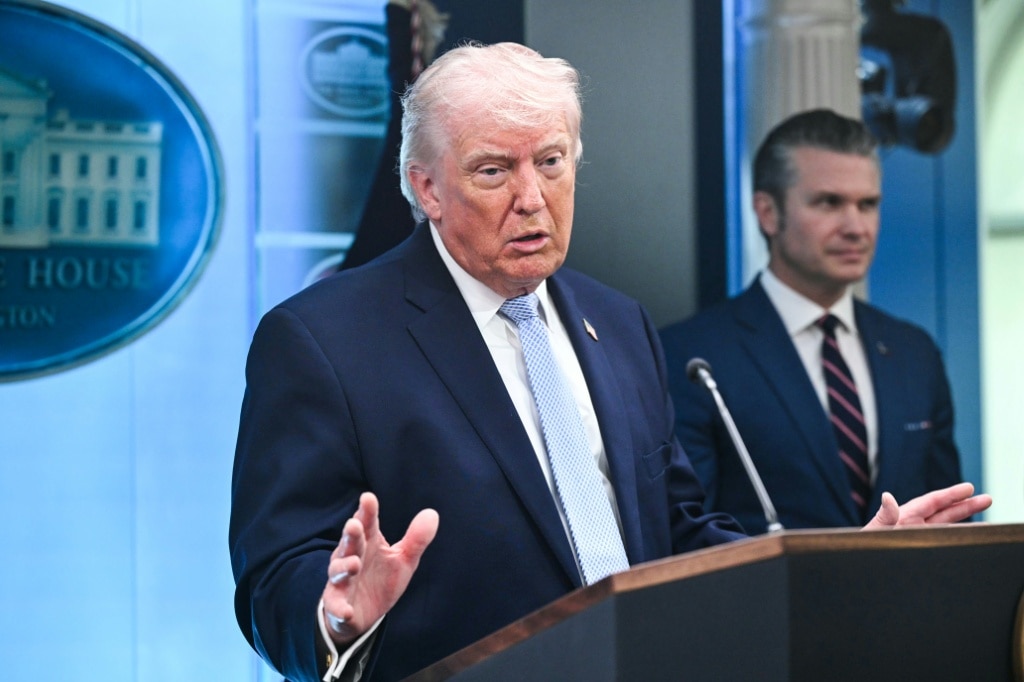
Tensions between Washington and Tehran further escalated Tuesday after US President Donald Trump doubled down on extreme threats to destroy Iran’s national infrastructure. In response, an Iranian Army spokesperson rejected the threats, saying that Trump’s “rude, arrogant rhetoric” has no impact on Iranian military and political decision-making. Trump doubled down on the threats during a White House press conference, saying that “the entire country” of Iran “could be taken out in one night and that night might be tomorrow night,” if Iran does not meet his ultimatum to reopen the Strait of Hormuz by 00:00 GMT Wednesday. “Every power plant in Iran will be out of business, burning, exploding and never to be used again,” he said, adding that he also threatened to destroy all major bridges across Iran. “I mean complete demolition by 12 o’clock (0400 GMT), and it’ll happen over a period of four hours — if we wanted to.”