分类: world

  • US-Iran talks fail to find deal but Gulf truce holds for now

    US-Iran talks fail to find deal but Gulf truce holds for now

    High-stakes negotiations between the United States and Iran aimed at ending the months-long Middle East conflict concluded without a binding agreement on Sunday, though the temporary ceasefire that has calmed the region for two weeks has so far held, keeping immediate hopes for de-escalation alive. The talks, hosted in Islamabad, Pakistan, marked the highest-level direct engagement between the two nations since Iran’s 1979 Islamic Revolution, bringing senior delegations from both sides to the table after weeks of open warfare that shook global energy markets.

    US Vice President JD Vance departed Pakistan following the 21-hour marathon meeting, carrying with him Washington’s self-described “final and best offer” for a peace settlement. “We leave here with a very simple proposal,” Vance told reporters. “We’ll see if the Iranians accept it.” In response, Iranian Parliament Speaker Mohammad Bagher Ghalibaf noted that Tehran’s negotiating team had put forward “constructive initiatives” during the round, but ultimately the American side failed to earn the trust of Iranian negotiators.

    The breakdown of the talks has stoked widespread international anxiety: a resumption of full-scale hostilities could send global energy prices soaring once again and cause further damage to critical Gulf shipping lanes and oil and gas infrastructure. Even so, there were small signs of incremental progress on energy stability over the weekend. Saudi Arabia’s energy ministry announced that its key east-west oil pipeline, damaged in earlier strikes during the conflict, has been fully restored to service. Qatar’s transport ministry also moved to lift a subset of restrictions on Gulf shipping, easing some of the supply chain disruptions that have rippled across global markets since the war began in late February.

    As the host of the negotiations, Pakistan has committed to continuing its role as a neutral mediator. Pakistani Foreign Minister Ishaq Dar emphasized the urgency of upholding the existing truce, saying “It is imperative that the parties continue to uphold their commitment to ceasefire.”

    According to a report from Axios, citing an anonymous source briefed on the closed-door negotiations, core sticking points that derailed the deal included Iran’s demand for full control over the Strait of Hormuz and its refusal to dismantle its existing enriched uranium stockpile. The strategic waterway carries roughly one-fifth of the world’s daily oil supplies, and Iran closed the strait to most commercial traffic after the war began, a move that sent crude prices spiking immediately.

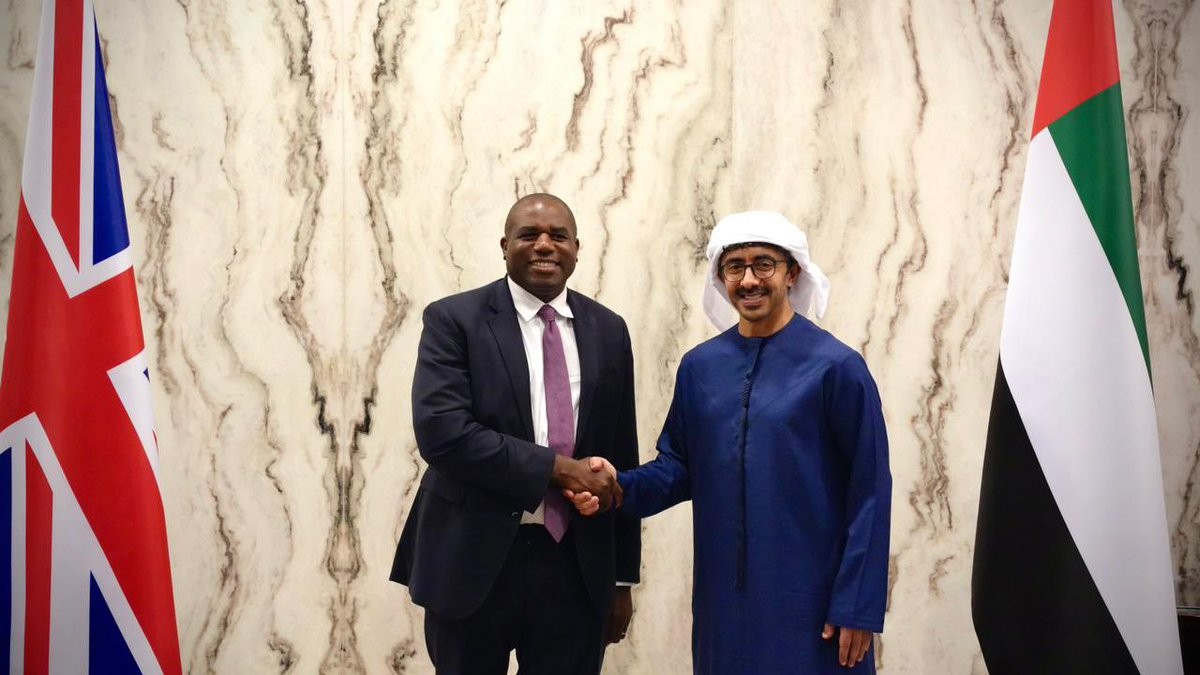
    International reaction to the failed talks has been measured. UK Health Minister Wes Streeting, speaking on behalf of the British government, told Sky News that while the outcome was disappointing, diplomatic efforts remain worth pursuing. “That doesn’t mean there isn’t merit in continuing to try,” Streeting said.

    The current conflict erupted on February 28, when the United States and Israel launched a coordinated strike on Iranian targets that killed Iran’s long-serving supreme leader Ali Khamenei. Tehran responded with retaliatory attacks, plunging the entire region into open conflict and sending shockwaves through the global economy. Before the Islamabad talks, Washington ramped up pressure on Tehran by announcing it had deployed minesweeping warships through the Strait of Hormuz to clear the waterway. On Saturday, the US military confirmed two Navy warships had completed the transit to begin mine clearing operations, framing the move as an effort to secure a “safe pathway” for commercial tankers.

    Iranian military officials have rejected the US account, denying any American warships entered Iranian territorial waters in the strait and threatening a full military response if any US vessels enter the waterway. The Iranian Revolutionary Guards’ Naval Command clarified that the promise of safe passage during the two-week ceasefire only extends to “civilian vessels under specific conditions.”

    Deep mistrust has defined the negotiations from the start, with decades of hostility between the two nations compounded by the sudden outbreak of war in late February. Notably, the US delegation included Jared Kushner, former President Donald Trump’s son-in-law, and Steve Witkoff, a New York real estate developer with longstanding personal ties to Trump. The pair had been in secret negotiations with Iranian officials in early February, just weeks before the US-Israeli strike that began the war.

    Tehran’s core demands for a final peace deal include the full unfreezing of Iranian assets blocked by international sanctions, an end to Israel’s ongoing military campaign against Hezbollah in Lebanon, and a resolution of the dispute over control of the Strait of Hormuz. Throughout the conflict, Iran has used its control of the strait to exert global economic leverage, driving up fuel prices in the United States and piling political pressure on the Trump administration.

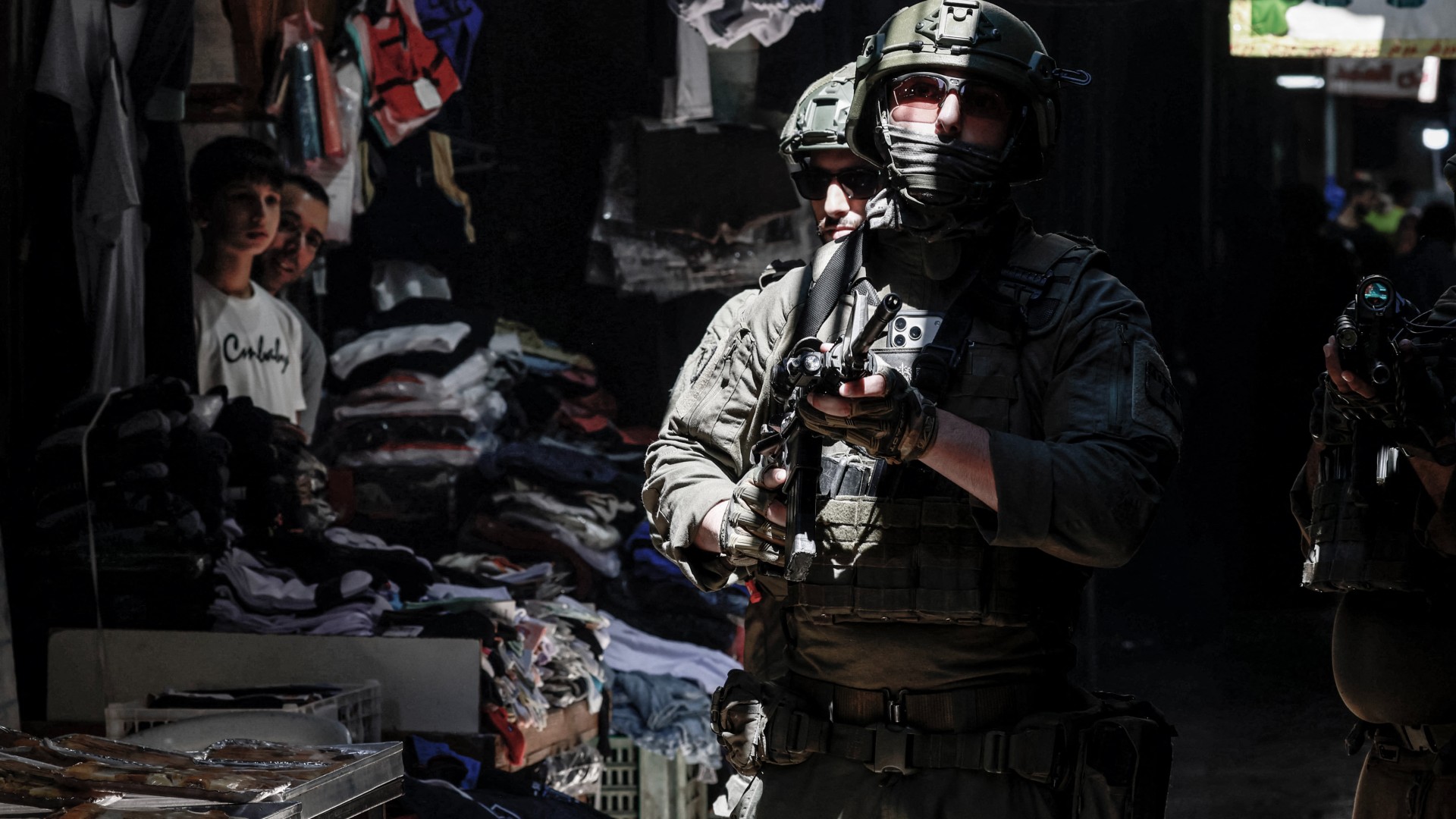
    A separate complicating factor to regional peace is the ongoing violence in Lebanon, where Israeli forces have continued their offensive against Hezbollah, the Iranian-backed armed movement, despite the broader Gulf ceasefire. Israeli officials have explicitly stated the truce does not apply to Lebanon, where the Israeli military has launched both air strikes and a ground incursion in response to ongoing rocket fire from Hezbollah.

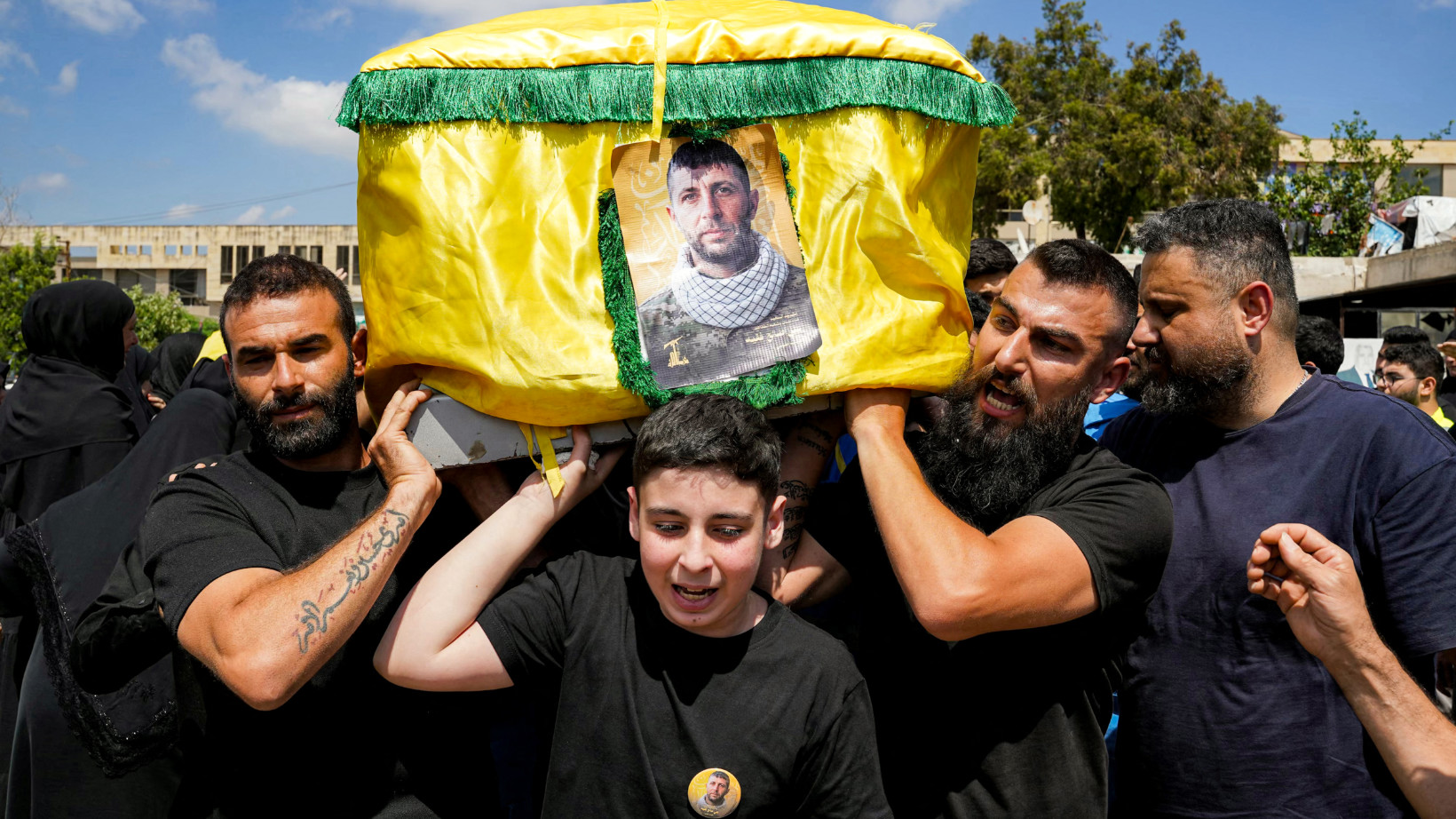
    On Saturday, Lebanese health authorities reported that 18 people were killed in new Israeli strikes across southern Lebanon, pushing the total death toll from Israeli operations in the country past 2,000 since the war began. Israeli-Palestinian talks focused on reaching a separate peace deal for Lebanon are scheduled to begin next week in Washington. Israeli Prime Minister Benjamin Netanyahu said Saturday that he aims to secure a peace agreement with Lebanon that “will last for generations,” though Israel has ruled out a temporary ceasefire with Hezbollah, choosing instead to continue military pressure on Lebanon’s fragile central government.

  • Ukraine and Russia accuse each other of hundreds of ceasefire violations

    Ukraine and Russia accuse each other of hundreds of ceasefire violations

    A unilateral Orthodox Easter ceasefire between Russia and Ukraine descended into mutual accusations of widespread violations within hours of taking effect, derailing Ukrainian hopes of extending the truce to kickstart stalled peace talks. The temporary pause in fighting, announced unilaterally by Russian President Vladimir Putin earlier this week after months of rejecting Ukrainian calls for temporary ceasefires, went into force at 16:00 local time on Saturday, coinciding with Orthodox Easter celebrations.

    Within less than 24 hours of the truce starting, Ukraine’s military released a damning tally claiming Russian forces had carried out 2,299 separate violations of the cessation of hostilities. According to the Ukrainian account, Russian troops launched 28 ground assaults and conducted nearly 2,000 drone strikes across the front line, though no large-scale bomb or missile attacks were registered. In one of the most high-profile incidents, local authorities in Ukraine’s northern Sumy region, which shares a direct border with Russia, confirmed a Russian drone struck a civilian ambulance overnight, leaving three medical personnel wounded.

    Russia quickly hit back with its own set of violation claims, with the country’s defense ministry saying Ukrainian forces had committed 1,971 breaches of the truce. The Russian account included three attempted Ukrainian counter-offensives in the central Dnipropetrovsk region, overnight strikes on Russian positions near Pokrovsk and Otradne, and four failed Ukrainian advance attempts in Sumy and Donetsk regions that Russian forces successfully repelled, per the defense ministry statement.

    Long before the full violation counts were released, both sides had already documented smaller, limited breaches in the opening hours of the ceasefire on Saturday, signaling the truce’s fragility from its onset. Even as fighting continued across the front, the two sides completed a long-planned prisoner of war exchange on Saturday, swapping 175 detainees each — a rare point of cooperation that included the release of seven civilians per side.

    Ukrainian President Volodymyr Zelensky had previously stated that Ukrainian forces would respond “symmetrically” to any Russian attacks during the ceasefire, framing Easter as a natural moment for peace. He also held out tentative hope that the temporary truce could be extended beyond the Easter holiday, a step he said would create space to restart peace negotiations that have been effectively frozen since the outbreak of the Israel-Hamas war in the Middle East drew global attention away from the conflict.

    Russia immediately rejected the proposal to extend the ceasefire, confirming that it planned to resume full-scale offensive operations on Monday. This is not the first temporary pause arranged between the two warring parties this year: earlier in 2025, Putin agreed to a U.S. request to halt strikes on Ukrainian energy infrastructure as the country faced a period of extreme winter cold, a limited concession that held partially through the coldest months.

    For frontline Ukrainian soldiers and civilians living through the 3-year full-scale invasion, which launched in February 2022, little optimism surrounds the ceasefire initiative. Kyiv and its Western European allies have long pushed for a full, comprehensive ceasefire as an non-negotiable first step toward negotiating a lasting peace deal to end Russia’s invasion. Moscow, by contrast, has repeatedly insisted that a final peace agreement must be reached before any permanent cessation of hostilities can take effect — a positioning that Kyiv and its allies say proves Russia has no genuine intention of ending the war.

  • Ukraine, Russia trade mass Easter truce breach barbs

    Ukraine, Russia trade mass Easter truce breach barbs

    As the Ukraine-Russia conflict stretched into its fifth year, the Orthodox Easter holiday ceasefire that had raised faint hopes of a temporary lull instead dissolved into a barrage of mutual accusations of thousands of violations from both warring parties on Sunday.

    The 32-hour truce, which ran from Saturday afternoon through Sunday end-of-day per Kremlin scheduling, emerged after Ukrainian President Volodymyr Zelensky first proposed a halt to hostilities, followed by an official order for the ceasefire from Russian President Vladimir Putin four days prior. This marked the second consecutive year the two sides agreed to an Easter truce, only to see the agreement fall apart almost immediately amid denials and counter-claims. Last year’s identical holiday ceasefire also ended with both sides trading accusations of widespread breaches.

    By 7 a.m. local time on April 12, the Ukrainian Armed Forces General Staff reported it had documented 2,299 separate violations along the 1,200-kilometer front line. In a public Facebook post, the military broke down the alleged breaches: 28 enemy infantry assaults, 479 artillery shelling incidents, 747 strikes conducted by attack drones, and 1,045 strikes from FPV (first-person view) drones. Despite the staggering count of violations, Ukrainian officials did note one tangible benefit of the truce: there were no reported long-range Shahed drone attacks, guided aerial bombings, or large-scale missile strikes, which have become near-nightly occurrences for Ukrainian communities in recent months.

    Local Ukrainian frontline commanders echoed this mixed assessment. In Kharkiv region in northeastern Ukraine, Lieutenant Colonel Vasyl Kobziak of the 33rd Mechanised Brigade told AFP that conditions in his sector were “rather calm” Sunday morning, even as he acknowledged the truce was never fully respected. The temporary lull in heavy fighting still allowed his troops to gather for an outdoor Easter Sunday mass in the cold forest, where priests followed Orthodox tradition to bless traditional Easter food baskets and painted eggs. “Our comrades have the chance, as you can see, to have their Easter baskets blessed and to feel the warmth and joy of this holiday,” Kobziak said.

    Russia’s defense ministry pushed back immediately with its own set of accusations, claiming Kyiv had committed nearly 2,000 ceasefire breaches in the period between 4 p.m. and 8 a.m. Moscow time on April 12. In a post on the state-affiliated MAX platform, the ministry claimed Ukrainian forces had fired artillery and tank rounds 258 times, launched 1,329 FPV drone strikes, and dropped various types of munitions on 375 separate occasions, most via drone. The statement added that Ukraine launched three nighttime raids on Russian positions and four attempted advances along the front, all of which Russian forces successfully thwarted.

    Outside of the front lines, Russian regional officials also reported alleged truce violations. In Russia’s Kursk region, which shares a border with Ukraine, Governor Alexander Khinshtein claimed a Ukrainian drone attacked a gas station in the town of Lgov, leaving three people injured including an infant.

    In a Saturday evening address, Zelensky used the moment to call for an extended ceasefire, noting that any further progress on a longer halt to hostilities now depended on Moscow. “The ball is in Russia’s court,” he emphasized.

    The collapse of the Easter truce comes as broader peace negotiations remain deadlocked, months after multiple rounds of U.S.-brokered talks failed to narrow gaps between the two sides. The conflict, which began with Russia’s full-scale invasion of Ukraine in February 2022, has become Europe’s deadliest conflict since World War II, leaving hundreds of thousands dead and forcing more than 14 million people to flee their homes.

    Negotiations have stalled even further following the outbreak of conflict in the Middle East, which has shifted U.S. diplomatic and security attention away from Ukraine. Even before the Middle East crisis, however, progress on a lasting peace deal remained glacial, blocked by intractable disagreements over territorial claims. Ukraine has proposed freezing existing front lines to end active hostilities, a proposal Russia has flatly rejected. Moscow continues to demand full control over Ukraine’s entire Donetsk region, nearly half of which remains under Kyiv’s control — a non-negotiable demand for Ukrainian leadership.

    Recent territorial gains for Russia have been incremental, coming at the cost of massive Russian manpower losses, according to independent analysis. The U.S.-based Institute for the Study of War (ISW) reports that Ukrainian forces have made small incremental pushbacks in southeastern Ukraine, and Russian advances have slowed sharply since late 2025. Currently, Russian forces occupy just over 19 percent of Ukraine’s total territory, almost all of which was seized in the opening weeks of the 2022 invasion.

  • Russia and Ukraine accuse each other of violating Orthodox Easter ceasefire

    Russia and Ukraine accuse each other of violating Orthodox Easter ceasefire

    Just 24 hours after a unilateral Orthodox Easter ceasefire declared by the Kremlin came into force, Russia and Ukraine have traded blame for widespread breaches of the truce, marking another failed attempt at de-escalation in the ongoing conflict.

    Russian President Vladimir Putin first announced the 32-hour ceasefire on Thursday, ordering all Russian military forces to suspend all offensive operations from 4 p.m. local time Saturday through the end of Sunday, in a move framed as a gesture for the Orthodox Easter religious holiday. In response, Ukrainian President Volodymyr Zelenskyy stated his country would adhere to the truce terms, but made clear that any incursion or violation by Russian forces would be met with an immediate, robust military counteraction.

    By 7 a.m. local time Sunday, Ukraine’s Armed Forces General Staff reported it had documented 2,299 separate instances of ceasefire violations across the front line. These violations included infantry assaults, heavy artillery shelling, and the deployment of small surveillance and attack drones. The statement added that there had been no confirmed use of long-range combat drones, cruise missiles, or guided bombs up to that point. Even before the first full day of the truce ended Saturday, a senior Ukrainian military officer confirmed to the Associated Press that Russian forces had already been launching continuous attacks on Ukrainian defensive positions.

    Not to be outdone, Russia’s Ministry of Defense issued its own counterclaim Sunday, putting the number of Ukrainian ceasefire violations at 1,971. Russian officials specifically called out drone attacks carried out by Ukrainian forces against targets in Russia’s border regions of Kursk and Belgorod, stating that the strikes had left multiple civilians injured.

    This latest collapse of a holiday ceasefire fits a consistent pattern in the 2-year-plus conflict: previous diplomatic and unilateral attempts to establish temporary truces have seen little to no success, with both sides consistently blaming one another for breaches. Most notably, Putin announced an identical 30-hour unilateral Easter ceasefire one year ago, which fell apart almost immediately amid mutual accusations of violations from both Moscow and Kyiv.

  • Iran-US peace talks extended for another day: media

    Iran-US peace talks extended for another day: media

    Diplomatic efforts between Iran and the United States will continue into an additional day, after Pakistan tabled a proposal to extend talks that gained the approval of both negotiating delegations, Iran’s semi-official Tasnim News Agency reported in an early Sunday dispatch.

    The latest round of Pakistani-mediated peace negotiations wrapped up its initial schedule in Islamabad early Sunday, following an exchange of drafted negotiation texts between the two national delegations. After the initial session concluded, Islamabad put forward a plan to hold an extra day of talks. The proposal came against the backdrop of ongoing disagreements, with Tasnim noting that US negotiators have put forward what Tehran describes as “illogical and excessive demands”, while the Iranian delegation has remained firm on protecting the country’s core national interests throughout the discussions. Both sides ultimately signed off on the extension, clearing the way for further diplomatic bargaining on Sunday to narrow gaps in their positions.

  • ‘We need real peace’: Easter truce fails to lift grim mood in war-torn Ukraine

    ‘We need real peace’: Easter truce fails to lift grim mood in war-torn Ukraine

    # Fragile Orthodox Easter Truce Collapses Within Hours in Kharkiv, Ukraine

    More than four years into Russia’s full-scale invasion of Ukraine, a bilateral agreement for an Orthodox Easter truce came into force across frontlines on a Saturday afternoon. Just 38 minutes after the ceasefire took effect, wailing air raid sirens cut through the quiet of northeastern Ukraine’s Kharkiv region, shattering any immediate hope of a lasting pause in fighting.

    Since that first alarm, Ukrainian officials and military commanders have confirmed dozens of ceasefire violations along active contact lines, though no long-range missile or drone strikes have been recorded in the immediate hours after the truce began. The 32-hour cessation of hostilities was meant to stretch through Easter Monday, offering civilians and soldiers alike a rare, desperately needed break from four years of constant conflict.

    In a public post on X ahead of the truce, Ukrainian President Volodymyr Zelenskyy emphasized that Easter should stand as a season of safety and peace, while warning that Ukrainian defense forces would respond “strictly in kind” to any hostile action by Moscow. Across Kharkiv, widespread skepticism of any Russian commitment to peace runs deep, with public trust in the temporary truce hovering near zero.

    Moments before the ceasefire was scheduled to begin at 4 p.m. local time, scores of local families gathered at St John the Theologian Church for the traditional annual blessing of Easter fare. Carrying wicker baskets heaped with glazed sweet Easter cakes, hand-painted dyed eggs, and cured sausage, worshippers formed a line wrapping around the church building to receive a sprinkling of holy water from the parish priest.

    This year, the service was moved from its traditional midnight timing, which includes a ceremonial procession around the church grounds, to mid-afternoon to comply with local curfew orders imposed to reduce civilian risk from Russian attacks. The church itself suffered significant damage in the opening weeks of the full-scale invasion, and one entire wall of its windows remains covered with plywood boarding.

    When asked about the meaning of the Russian-proposed ceasefire, parish priest Fr Viktor questioned the very premise of trusting Moscow’s commitments. Parishioner Larisa echoed his caution, noting that past Russian truces have only been followed by more intense offensives. “Maybe there will be a short pause,” she told reporters, “but then Russia will only launch even more intense attacks. We’ve seen that before.”

    Roughly 12 miles from the Russian border, at a rural military training ground, members of the Yasni Ochi strike drone unit—part of Ukraine’s Khartia Corps—spent the holiday weekend testing new explosive drone systems destined for the frontlines. The troops loaded newly delivered kamikaze drones with ordnance and practiced precision diving attacks on ground targets, their training proceeding even as the truce was announced.

    Unit commander Heorhiy issued orders for his troops to hold their positions during the 32-hour truce unless directly attacked, but he says he fully expects Russian forces to break the agreement. “Russia says one thing, then does the other. So you have to be ready,” he explained. For troops on rotating rest, the unit has been dropping care packages of Easter cake and alcohol-free wine to frontline positions via drone delivery.

    The small village the unit now uses for training was occupied by Russian forces in 2022 before being recaptured by Ukrainian troops, and nearly every residential structure in the area lies in crumbled ruins. While open discussion of large-scale territorial recapture, such as the entire Donbas region south of Kharkiv, has become rare among frontline troops, Heorhiy insists Ukraine cannot pause fighting until it secures favorable terms for peace negotiations with Russia.

    “We need real peace talks,” the commander said, adding that he has been encouraged by growing international demand for Ukraine’s drone expertise spurred by new conflicts in the Middle East, where Ukraine is able to share its years of frontline experience and drone technology. However, the US-led peace process for Ukraine has stalled in recent months, with US President Donald Trump’s diplomatic envoys reallocated to handle escalating tensions with Iran.

    Ukraine continues to push for concrete long-term security guarantees from its Western backers, specifically clarity on what support the US would provide if Russia launches another full-scale invasion in the future. “It’s not our choice. I don’t like war, my guys don’t like it. We used to have good civilian life,” Heorhiy said, noting that several members of his unit worked as DJs in Dnipro’s underground electronic music scene before the invasion. “Now we do what we need to do.”

    Back within Kharkiv’s city limits, the main regional ring road is now being draped in anti-drone netting, designed to catch and entangle incoming Russian unmanned aerial vehicles before they can strike vehicles traveling below. But little can be done to protect residential neighborhoods from incoming missile attacks: with Russian positions so close to the city, there is barely enough warning time for air defenses to engage incoming threats.

    In one Kharkiv suburb, entire sections of five-story apartment blocks have been reduced to rubble by recent strikes, while dozens of surrounding buildings remain boarded up and uninhabitable. Last month, an early morning Russian missile strike on the neighborhood killed 11 residents, wiping out an entire wing of a residential building. Walking through the ruins, visitors can still spot a bright red rug pinned to what remains of a living room wall, with portraits of two killed residents laid on the rubble at its base.

    Olha, a neighbor who survived the strike, described huddling in the building’s central corridor with her elderly mother as the missile hit. She shared phone footage showing the building across the street engulfed in bright orange flames, and her own apartment reduced to splinters and debris. Unsurprisingly, she says she craves any break from the constant threat of death. “This truce is only one and a half days. But at least we can rest a bit, because here, you expect to die every second,” she said. “We really want peace. Not for one and a half days. For good.”

    Weeping quietly, Olha questioned the cost of holding the last remaining sliver of Ukrainian-held Donetsk Oblast, saying it is not worth the mass loss of civilian life. “There were children killed in that strike, wonderful people. Will it ever stop?” she asked.

    Zelenskyy has said he is open to turning this flawed temporary truce into a permanent ceasefire, followed by structured peace talks with Russia to reach a lasting settlement. But the Kremlin has already rejected the proposal, confirming that full-scale offensive operations will resume on Monday when the temporary truce is set to expire.

  • Iran war lands ‘triple blow’ to flood-ravaged Sri Lankans

    Iran war lands ‘triple blow’ to flood-ravaged Sri Lankans

    For Indrani Ravichandran and her family, the nightmare began in the pitch-black of a November night, when Cyclone Ditwah’s unprecedented rainfall sent floodwaters surging through their small village of Kudugalhena in Sri Lanka’s Kandy district. Within minutes, rising waters swallowed portions of their home, forcing the family to flee into lashing rain, slippery hillsides and constant fear of encountering venomous wildlife displaced by the storm. They escaped with their lives, leaving almost all their belongings behind. Today, months after the cyclone passed, they have returned to the only section of their home that remained standing, joining hundreds of thousands of Sri Lankans still picking up the pieces of the worst natural disaster to hit the island nation in modern history.

    Cyclone Ditwah left a trail of destruction that experts say outstripped even the devastating 2004 Indian Ocean tsunami in terms of infrastructure damage. Over just 72 hours, parts of Sri Lanka’s central highlands received up to 500 millimeters of rain – nearly two months of average rainfall – triggering catastrophic flash floods and landslides that washed away entire communities, businesses and residential settlements. The official human toll stands at 643 confirmed dead, with another 173 people still unaccounted for. Close to two million people across all 25 of Sri Lanka’s districts were impacted, with more than 165,000 people remaining displaced months after the storm, housed in temporary shelters or with host families.

    According to estimates from the United Nations and international aid agencies, total damage from the cyclone reaches roughly $4 billion – an amount equivalent to 4% of Sri Lanka’s entire annual gross domestic product. Dr. Ganeshan Wignaraja, a visiting senior fellow at London’s ODI Global Institute, notes that while the cyclone’s death toll was lower than that of the 2004 tsunami, its damage to roads, public utilities, private property and critical economic infrastructure is unmatched in the country’s modern history.

    The cyclone hit at the worst possible moment for Sri Lanka. The South Asian island nation had only just begun to claw its way back from a crippling 2022 economic crisis, when a collapse in foreign currency reserves led to a sovereign debt default and widespread shortages of food, medicine, fuel and cooking gas. Those shortages sparked mass public protests that ousted then-president Gotabaya Rajapaksa, and the new government had implemented austerity measures including cutting electricity subsidies and raising top income tax rates to 36% in an effort to stabilize public finances and restore growth.

    Now, the fallout from the ongoing Iran conflict has compounded the country’s existing challenges, creating what Wignaraja calls a “triple shock” to the fragile economy: first, the $4 billion in damage from Cyclone Ditwah; second, skyrocketing global fuel prices driven by Middle East tensions; and third, a looming drought in parts of the country that threatens to deepen resource shortages.

    In response to shrinking fuel supplies and spiking global prices, the Sri Lankan government has been forced to implement emergency austerity measures in recent weeks: fuel rationing, broad price hikes, a mandatory four-day working week to cut energy consumption, a 40% increase in electricity tariffs, and rolling power and water cuts to conserve dwindling resources. Fuel and cooking gas shortages have already triggered panic buying across the country, stirring grim memories of the 2022 crisis, when daily power cuts stretched up to 13 hours and basic essentials were unobtainable for millions.

    As the government struggles to fund post-cyclone reconstruction, it has secured only around $750 million of the estimated $4 billion in recovery costs – barely one-fifth of what is needed. Unlike the 2004 tsunami, which drew immediate billions in international donor pledges from across the globe, the international response to Cyclone Ditwah has been far more muted. Only neighboring India moved quickly to mount a large-scale relief effort, launching Operation Sagar Bandhu – “Friend Across the Sea” – deploying two warships including an aircraft carrier, launching rescue sorties that saved hundreds of people including foreign citizens, setting up field hospitals, restoring critical infrastructure, and delivering more than 1,000 tonnes of emergency supplies. New Delhi also provided $450 million in grants and direct aid, making it by far the largest international donor to date.

    In contrast, long-time Sri Lankan ally and major investor China has offered minimal support: less than $2 million in financial aid and roughly 100 tonnes of emergency supplies. The Sri Lankan government formally requested Chinese support for key infrastructure reconstruction projects in January, but has yet to receive a substantive response.

    Sri Lankan disaster management officials acknowledge that while most families with partially damaged homes – like the Ravichandrans, who received 50,000 rupees ($325) in repair aid plus additional support for their young children – have received government assistance, compensation for families who lost their entire homes or businesses has been delayed. KG Dharmathilake, a senior official in the country’s disaster management division, says the delay stems from the government’s focus on “building back better”: officials are prioritizing identifying safe, disaster-resilient land for new housing to protect families from future extreme weather events, rather than rushing construction in high-risk areas. He adds that more than 80% of all affected residents have already received the financial support they are eligible for.

    For displaced Sri Lankans and economic analysts alike, the outlook has grown even bleaker in recent weeks due to the Iran conflict. Beyond spiking fuel prices, the crisis threatens Sri Lanka’s key source of foreign exchange: remittances from the estimated one million Sri Lankan workers based in Gulf nations. Last year, those remittances totalled roughly $7 billion, nearly matching the country’s current total foreign reserves of $7 billion. While mass layoffs have not yet occurred, economists warn that a prolonged conflict in the Middle East could cut off new job opportunities for Sri Lankan migrant workers and reduce overall remittance inflows, further straining the country’s ability to pay for critical imports and fund reconstruction.

    Economists say that with careful fiscal management, the current $7 billion in foreign reserves should be enough to get the country through the immediate crisis of cyclone recovery and spiking fuel prices. But a prolonged fallout from the Iran conflict would push the country back into the kind of economic chaos it saw in 2022. For President Anura Kumara Dissanayake, who took office after the 2022 crisis, successfully navigating this compound of natural disaster and geopolitical economic shock will be the defining test of his leadership.

  • US and Iran hold direct talks in Pakistan to end war

    US and Iran hold direct talks in Pakistan to end war

    Six weeks after open conflict erupted between the United States and Iran, the two long-adversarial nations convened their highest-level face-to-face negotiations in half a century Saturday in Pakistan’s capital of Islamabad, marking the first direct formal high-level meeting between the two sides since Iran’s 1979 Islamic Revolution. The two-hour closed-door session brought together a high-powered American delegation led by Vice President JD Vance, special envoy Steve Witkoff, and former White House senior advisor Jared Kushner, while Iran was represented by parliamentary speaker Mohammad Bagher Ghalibaf and Foreign Minister Abbas Araghchi. Pakistan’s army chief also joined the opening round of talks, as the South Asian nation served as a neutral mediator for the breakthrough diplomatic engagement. The talks entered a pause after the initial session, even as competing and contradictory accounts of early progress and on-ground developments began to emerge even before negotiators released any official joint statement. One key point of contention is the status of the Strait of Hormuz, the strategically critical waterway that carries roughly a fifth of the world’s daily oil supplies. Iran’s blockade of the strait earlier sparked the largest single disruption to global energy markets in modern history. A senior anonymous U.S. official told news outlet Axios that multiple U.S. Navy vessels traversed the strait on Saturday, but both Iranian state television and an anonymous Pakistani source outright denied any U.S. ships had passed through the waterway. Shortly after the opening of talks, former U.S. President Donald Trump claimed on social media that the process of clearing the Strait of Hormuz had already begun, adding that all 28 of Iran’s mine-laying vessels had been sunk. No independent confirmation of this claim has emerged as of Saturday evening. Another conflicting report centers on the fate of billions of dollars in Iranian assets frozen by U.S. sanctions in foreign banks, primarily in Qatar. A senior unnamed Iranian source earlier told Reuters that the U.S. had agreed to release these assets, a statement that was immediately rejected by a U.S. official. The direct Saturday meeting came after hours of pre-negotiation shuttle diplomacy led by Pakistani Prime Minister Shehbaz Sharif, who worked to align both sides on basic terms before the first face-to-face encounter. Iranian state media outlined Tehran’s core pre-negotiation red lines that Washington must accept for any final agreement: progress on the status of the Strait of Hormuz, the full unfreezing of Iranian blocked assets, war reparation payments from the U.S., and a comprehensive immediate ceasefire across the entire Middle East region. A key non-U.S.-Iran conflict at the top of Tehran’s negotiating agenda is the ongoing Israeli military campaign in Lebanon, where strikes have continued despite the recent bilateral ceasefire between the U.S. and Iran. On Wednesday alone, Israeli strikes killed more than 350 people in Lebanon, and total fatalities from Israeli operations that began in March have reached nearly 2,000. Both the U.S. and Israel have insisted that the military campaign in Lebanon falls outside the scope of the U.S.-Iran ceasefire, a position Tehran strongly rejects. Iran’s negotiating delegation has confirmed it will continue to press for an immediate ceasefire to end Israeli strikes in Lebanon during the ongoing talks. Even as the Islamabad talks got underway Saturday, fresh violence rocked southern Lebanon: Israeli air strikes hit more than a dozen locations, killing 10 people including a Lebanese civil defense member and two paramedics. In response, the Iran-aligned group Hezbollah announced it had carried out multiple targeted operations against Israeli military positions both inside Lebanese border territories and across the frontier in northern Israel. Looking ahead, both Israeli and Lebanese officials have confirmed they will hold separate talks in Washington on Tuesday, though the two sides have also released conflicting accounts of what agenda those discussions will cover, adding another layer of uncertainty to the already volatile regional situation as world powers wait for outcomes from the historic U.S.-Iran negotiations in Pakistan.

  • US-Iran talks begin in Pakistan’s Islamabad

    US-Iran talks begin in Pakistan’s Islamabad

    Diplomatic efforts to defuse long-running tensions between the United States and Iran have moved into a new phase, with direct talks aimed at ending ongoing hostilities officially kicking off in Pakistan’s capital city of Islamabad this Saturday, multiple regional and international media outlets have confirmed.

    The meeting, hosted by Pakistan, marks a rare high-level diplomatic engagement between the two nations that have been locked in a decades-long adversarial standoff. For years, open hostilities and broken diplomatic channels have contributed to widespread instability across the Middle East and broader South Asian region, raising global concerns about escalated conflict. The decision to launch negotiations in Islamabad reflects Pakistan’s ongoing role as a neutral diplomatic intermediary between Tehran and Washington, leveraging its long-standing bilateral relationships with both governments to create space for dialogue.

    While details of the negotiation agenda and initial discussions have not been released to the public at this early stage, the launch of direct talks itself marks a significant shift from the open confrontation that has defined US-Iran relations for much of the past decade. International observers have broadly framed the talks as a critical opportunity to de-escalate tensions that have already spilled over into regional conflicts in recent years, with stakeholders across the globe closely watching for developments out of the Islamabad negotiations.

  • Pakistani PM meets US JD Vance: statement

    Pakistani PM meets US JD Vance: statement

    ISLAMABAD, April 11, 2026 – A high-stakes diplomatic push to de-escalate soaring tensions in the Middle East moved through Pakistan’s capital on Saturday, as US Vice President JD Vance held a formal meeting with Pakistani Prime Minister Shehbaz Sharif, according to an official statement released by the Prime Minister’s Office.

    Vance touched down in Islamabad Saturday to participate in newly arranged talks with an Iranian delegation, a diplomatic initiative aimed at ending the recent wave of armed hostilities that have roiled the broader Middle East region. The gathering marks a significant step in international efforts to open a diplomatic pathway out of escalating conflict, with Pakistan stepping in to host the critical negotiations.

    During his meeting with Vance, Prime Minister Sharif praised both negotiating teams for their willingness to enter dialogue in good faith, and offered a forward-looking message on the potential of these talks to deliver long-term stability. He emphasized that the discussions represent a critical opening to build momentum toward lasting, durable peace across the Middle East.

    Sharif made clear Pakistan’s continued commitment to the diplomatic process, reiterating that the country stands ready to keep supporting both the US and Iranian delegations as they work toward tangible progress on sustainable regional peace. Just hours before his meeting with Vance, the Pakistani prime minister had already held separate talks with the Iranian delegation, which arrived in Islamabad earlier the same day to prepare for the negotiations.

    The talks in Islamabad come as the international community has grown increasingly alarmed by recent hostilities in the Middle East, pushing regional and global powers to pursue urgent diplomatic intervention to prevent further escalation. Pakistan’s role as host and facilitator underscores its position as a key stakeholder in regional stability and a neutral party willing to bridge divides between negotiating sides.