分类: world

  • Giovani Laulu, Younes Ali Younes: AFP to seek public interest immunity claim over information about Adass Israel fire

    Giovani Laulu, Younes Ali Younes: AFP to seek public interest immunity claim over information about Adass Israel fire

    A pre-trial hearing for two men charged over a devastating late 2024 arson attack on a Melbourne Jewish synagogue has progressed this week, with Australian federal law enforcement confirming it will fight to keep key case documents sealed from the defense under public interest immunity rules.

    Giovani Laulu, 21, and Younes Ali Younes, 20, were slapped with charges including arson and reckless conduct endangering life months after the December 6, 2024 blaze gutted the Adass Israel Synagogue in the inner Melbourne suburb of Ripponlea. As is standard in Australian early court proceedings, neither defendant has been required to enter a plea to the allegations against them.

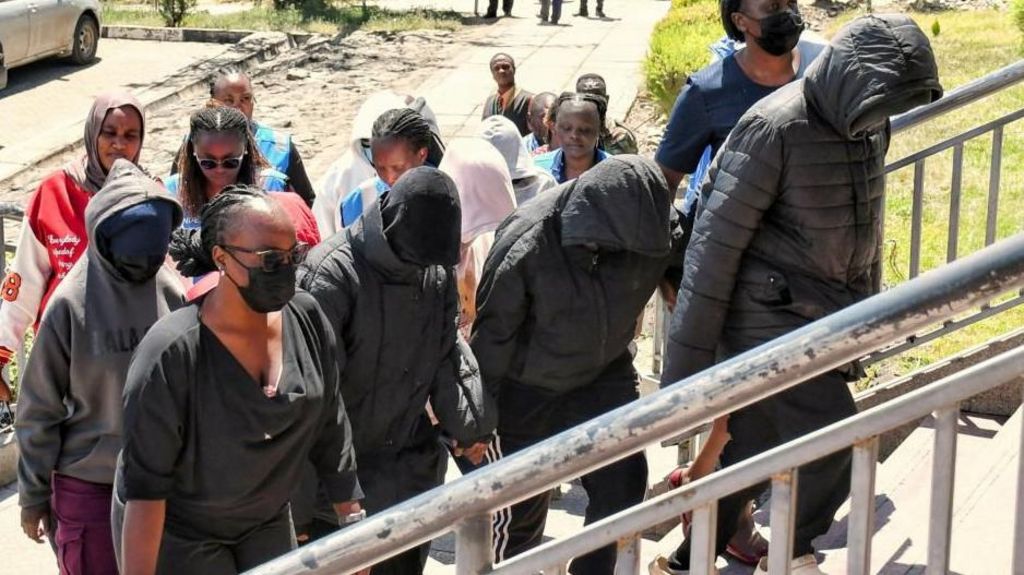
    The pair appeared before Melbourne Magistrates Court on Monday afternoon, with magistrate James Henderson receiving a procedural update on the progress of the case. Laulu, who was granted bail in December to reside at his mother’s home, drew public attention after being photographed carrying an apparent Louis Vuitton Pochette Voyage MM men’s clutch, a luxury retail item valued at roughly AU$1,600. By contrast, Younes appeared via videolink from a Victorian remand centre, dressed in a standard green prison uniform.

    Court proceedings brought to light a key point of contention in the case: the Australian Federal Police (AFP)’s plan to withhold a selection of documents from the defense. A legal representative for the AFP told the court that the agency is on track to fulfill its mandatory disclosure obligation — the requirement to turn over all relevant evidence and case information to the defendants’ legal teams — by the end of May. To date, 2,500 pages of material have already been handed over, with a further 1,100 pages still undergoing internal agency review.

    However, the AFP intends to file multiple public interest immunity claims for a subset of the unreleased documents. If the court upholds these claims, the information would be barred from disclosure to the defense, on the grounds that releasing it would cause harm to broader national or public interests. Legal teams for the two accused have indicated they may challenge the immunity claims, meaning a separate window of court time will need to be scheduled to hear arguments on the issue before the scheduled August committal hearing, which will determine if the case proceeds to a full trial.

    Per police allegations, Laulu, Younes, and a third, still-unidentified suspect broke into the synagogue around 4:10 a.m. on the day of the fire. CCTV footage released by Victoria Police months after the attack shows three hooded individuals force entry into the building, carry multiple red jerry cans of accelerant inside, and ignite the blaze. The attack caused an estimated AU$20 million in structural damage to the synagogue and destroyed irreplaceable sacred Jewish texts. Two worshippers who were inside the building at the time of the attack managed to escape, though one suffered minor burns to his hands, per police accounts.

    The case has already taken on major national security implications, after Australian Prime Minister Anthony Albanese and ASIO Director-General Mike Burgess revealed last August that Australian intelligence links this synagogue blaze, as well as an October 2024 arson attack on Sydney’s Lewis Continental Kitchen, to the Islamic Revolutionary Guard Corps (IRGC) of Iran. Burgess told the public at the time that the IRGC allegedly used an elaborate network of proxies to cover up its involvement in the attacks targeting Australian Jewish communities.

    Following Monday’s hearing, the next procedural appearance for Laulu is scheduled for August 12, while Younes is set to next appear in court on June 16.

  • Five emerging themes for the Indo-Pacific from Trump’s Iran war

    Five emerging themes for the Indo-Pacific from Trump’s Iran war

    The phrase “this is not our war” has become a major source of friction within the Trump White House, after dozens of European leaders invoked it to explain their refusal to deploy military forces alongside the U.S. and Israel in their ongoing attacks on Iran. This public rift has thrown the future of the post-WWII transatlantic alliance into renewed uncertainty, even as the ripple effects of the Iran conflict extend far beyond the Middle East to reshape global security and economic assumptions. While the war itself remains unresolved, following the breakdown of April 11 negotiations hosted in Islamabad, early trends indicate that five major long-term global shifts are already taking shape, affecting every region from the Indo-Pacific to the Persian Gulf.

    Financial markets have so far reacted with muted volatility to the conflict, as investors hold out hope for a rapid end to hostilities. This bet aligns with the reality that the dramatic disruptions of open war can fade as quickly as they emerge once active combat ceases. Still, analysts have identified clear emerging themes that will outlast any near-term ceasefire, starting with the greatest long-term risk: accelerated nuclear proliferation across the globe.

    North Korean leader Kim Jong Un has openly argued that his country’s decades-long investment in nuclear weapons, begun by his father and grandfather, has insulated Pyongyang from the same type of attack Iran is now facing. Many experts agree that this example is not lost on Iran’s ruling regime, which is now widely believed to regret moving more slowly toward a nuclear weapons program. While some observers argue the war could deter proliferation by highlighting the risk of American intervention for nuclear aspirants, this logic falls apart for states that can leverage great power protection, like North Korea’s close relationship with China that makes a large-scale U.S. attack too risky to contemplate.

    In the Indo-Pacific, this new calculus has already pushed Japanese officials into open, unprecedented discussions about abandoning the country’s long-held nuclear taboo. These talks stem from two overlapping fears: that South Korea and other regional states could move quickly to develop their own nuclear arsenals, and that the U.S.-promised “extended deterrence” nuclear umbrella can no longer be counted on to protect regional allies. That doubt around American deterrence forms the second major shift laid bare by the Iran conflict.

    The war has put U.S. military power on full display, but it has also revealed alarming vulnerabilities. In a conflict against an already heavily weakened Iran, which had sustained significant damage from Israeli and American strikes in June of last year, the U.S. military rapidly depleted a large share of its stockpiles of advanced precision weapons and cutting-edge missile defense systems. This has raised urgent questions across the Indo-Pacific: if the U.S. can exhaust its stockpiles in weeks of fighting a weaker adversary, how would it fare in a prolonged conflict against a far stronger peer competitor like China?

    Compounding these concerns is the fact that the Iran war has forced the U.S. to reallocate critical military assets—including warships, entire Marine regiments, and layered missile defense systems—from the Indo-Pacific to the Middle East. While the immediate capability gaps created by this shift are not the primary worry, regional strategists cannot discount the risk that China or North Korea could choose to exploit this opening, even if the probability remains low. The far bigger concern is that despite an annual defense budget approaching $1 trillion, the U.S. military has already become severely overstretched after just a short conflict in Iran. This confirms long-held warnings about U.S. defense production capacity constraints, and suggests that current spending prioritizes fixed overhead costs like global basing over the flexible assets and stockpiles needed for modern conflict.

    The third key takeaway from the war is a global reevaluation of air and missile defense doctrine. The Gulf monarchies—the United Arab Emirates, Qatar, Bahrain, Kuwait, and Saudi Arabia—have faced repeated barrages of Iranian missiles and drones, and their existing defense systems have failed to stop these attacks effectively. Part of this failure stems from the global shortage of advanced, costly interceptors for U.S.-made Patriot and THAAD systems, a supply crunch that was first exposed by the war in Ukraine. Another factor is that most countries had not adapted their defense strategies to counter the swarms of low-cost drones that have become a staple of modern warfare, until the Iran conflict forced a reckoning. As a result, demand for the type of low-cost, mass-deployed anti-drone defenses Ukraine has honed is set to surge across the globe, not just in the Middle East.

    Fourth, the conflict has underscored the urgent need for diversified energy supply chains and expanded strategic stockpiles of critical commodities. For years, analysts have warned that global trade chokepoints could become tools of leverage during open conflict, but the U.S. largely downplayed or even ignored the strategic risk of the Strait of Hormuz, despite the fact that roughly 20% of the world’s annual oil supply passes through the narrow waterway shared by Iran and Oman. After the collapse of the Islamabad talks, the world now faces a high-stakes game of brinkmanship between Trump and Iran over control of the strait. Trump’s recent declaration that U.S. warships will blockade the strait to block Iran from levying transit tolls is a direct challenge to Tehran, a bold gambit that carries a major risk of reigniting full-scale hostilities.

    Beyond the immediate crisis, the Hormuz standoff makes clear that nations need to diversify trade routes and build up larger strategic reserves to reduce the leverage chokepoints can give to adversarial powers. For Taiwan, this lesson hits particularly close to home: the island’s still-small strategic energy and commodity stockpiles leave it extremely vulnerable to a potential Chinese blockade.

    The fifth and final emerging shift centers on the future of American global alliances. The Iran war has laid bare Trump’s extreme sensitivity to any perceived lack of support from U.S. allies, even as he spent much of the past year publicly insulting and alienating those same partners. Already, the rift over European refusal to join the war has increased the odds that Trump could withdraw the U.S. from NATO in a fit of pique. While the Indo-Pacific alliances have not yet faced the same existential risk, the conflict confirms that U.S. foreign policy is now heavily concentrated in the hands of a single individual: the president. Though Trump is scheduled to leave office in less than three years under current constitutional rules, he has already made dozens of deeply personal, unilateral decisions that will reshape global order in that time, and no country can insulate itself from the consequences of his actions.

    This article is an updated version of an original piece published by Mainichi, appearing in Bill Emmott’s Substack column Global View.

  • Iran’s IRGC warns any wrong move by ‘enemy’ in Strait of Hormuz to have lethal consequences

    Iran’s IRGC warns any wrong move by ‘enemy’ in Strait of Hormuz to have lethal consequences

    Tensions have flared again in the strategically critical Strait of Hormuz just days after a fragile ceasefire between Iran and the United States went into effect, with Iran’s Islamic Revolution Guard Corps (IRGC) Navy issuing a stark public warning that any miscalculated move by hostile forces in the waterway will be met with deadly consequences.

    The warning was published Saturday on the social media platform X, where the IRGC Navy also shared drone-collected surveillance footage purporting to show the full operational landscape of the strait. The branch emphasized that every movement—whether active or stationary—of foreign vessels within the strategic waterway is under constant, full surveillance by Iran’s armed forces. “Any erroneous maneuver will trap the enemy in deadly whirlpools in the strait,” the post read.

    The escalation of rhetoric follows conflicting accounts of a U.S. naval operation in the region one day prior. U.S. Central Command (CENTCOM) announced Saturday that two American warships had completed a transit through the Strait of Hormuz and launched mine-clearing operations in the Persian Gulf. Iran’s top military body, Khatam al-Anbiya Central Headquarters, immediately pushed back against the claim, issuing a strong denial that any American vessels had entered the strait’s territorial waters.

    In an exclusive Sunday report, Iran’s state-owned Press TV framed the U.S. military’s attempted deployment of the two destroyers—identified as the USS Michael Murphy and USS Frank E. Peterson—as a botched propaganda exercise timed to coincide with newly resumed Tehran-Washington negotiations in Islamabad. Press TV reported that Iranian naval forces forced the two American destroyers to retreat before they could reach the strait.

    Expanding on its stance Sunday, the IRGC released an official statement clarifying that any foreign military vessel seeking to approach the Strait of Hormuz under any pretext will be classified as a violation of the ongoing ceasefire and will face harsh, decisive retaliation.

    The current standoff comes against a backdrop of sharply escalated regional conflict that began in late February 2026, when Israel and the United States launched joint airstrikes targeting Tehran and multiple other Iranian cities. The strikes killed Iran’s then-Supreme Leader Ali Khamenei, alongside a number of senior Iranian military commanders and civilian bystanders. In response, Iran launched a massive retaliatory campaign of missile and drone attacks targeting both Israel and U.S. military assets across the Middle East, and moved to tighten its control over the Strait of Hormuz by banning passage for all vessels owned or affiliated with Israel and the United States.

    A two-week ceasefire between Iran and the United States entered into force on Wednesday, paving the way for extended bilateral negotiations between the two delegations in the Pakistani capital. As of Sunday, those talks had not resulted in any breakthrough agreement, leaving the fragile truce at growing risk of collapse amid the latest naval dispute.

  • Pope prioritises world’s fastest-growing Catholic region in major Africa tour

    Pope prioritises world’s fastest-growing Catholic region in major Africa tour

    Pope Leo XIV is set to kick off a high-stakes 11-day pastoral tour across four African nations this Monday, with a core mission to shift global focus to the continent amid its rapidly growing role in global Catholicism, a senior Vatican official has confirmed. This trip marks only the second major international visit the Pope has undertaken since his election to the papacy in May last year, underscoring the Vatican’s growing prioritization of African Catholic communities.

    Recent 2024 demographic data underscores why the tour is ranked as a personal priority for Pope Leo: more than 288 million Catholics — over one-fifth of the global Catholic population — currently reside in Africa, making the continent one of the fastest-growing regions for the Catholic Church. Latest Vatican surveys also confirm a striking, consistent increase in the number of baptized Catholics across the region, further cementing Africa’s centrality to the Church’s future.

    Covering nearly 18,000 kilometers across 18 separate flights, the Pope’s itinerary includes stops in 11 cities across Algeria, Cameroon, Angola, and Equatorial Guinea. In a deliberate symbolic choice, Pope Leo has selected Algeria — a majority Sunni Muslim nation and the only stop on the tour without a large Catholic population — as his first port of call. The country holds deep personal significance for the Pope: it is the birthplace of 4th-century theologian St. Augustine, and Pope Leo is the first pontiff from the religious order that follows Augustine’s teachings of community and humility, principles that have shaped his papacy.

    This visit will mark the first time any pope has traveled to Algeria. A core focus of the Algeria leg will be advancing interfaith dialogue between Christianity and Islam: the Pope will visit the Great Mosque of Algiers, as well as the Basilica of Our Lady of Africa, a shared pilgrimage site for both Muslims and Christians. The basilica’s iconic Black Madonna statue bears an inscription reading “Pray for us and the Muslims,” a testament to the shared spiritual heritage of the two faiths in the region. Father Peter Claver Kogh, rector of the basilica, shared with the BBC that the Catholic community expects Pope Leo to encourage their work building a peaceful, harmonious world where people of all faiths coexist. Still, the choice to open the tour in Algeria has drawn criticism from international human rights groups, which have documented the imprisonment of Christian and Ahmadi Muslim minorities for charges of “unauthorized worship” and offending Islam, a practice that remains widespread in the country.

    After departing Algeria, the Pope will travel to Cameroon, where a decade-long separatist conflict in the country’s two Anglophone regions will frame his visit. The United Nations estimates that at least 6,000 people have been killed in the violence, which grew out of tensions between English-speaking separatists and the Cameroonian government dominated by French-speaking leaders, and more than 500,000 people have been displaced from their homes. Bamenda, the capital of the conflict-battered North-West region, will host a papal Mass for peace and justice at the city’s airport, a gathering many local residents hope will become a catalyst for national reconciliation. Ernestine Afanwi, a 45-year-old displaced woman who fled Bamenda after separatist fighters destroyed her home and shop, now lives with her six children in a makeshift settlement for internally displaced people in Yaoundé, the capital. She told the BBC that if she could meet the Pope personally, she would share her story and ask him to bless the war-torn region, saying she believes his visit can bring long-awaited resolution to the conflict.

    The third stop on the tour, Angola, will center on the themes of peace and post-conflict reconstruction, following a 27-year bloody civil war that ended in 2002. Between 40% and 55% of Angolans identify as Catholic, with the Church’s presence in the country dating back to the late 15th century, when Portuguese explorers and missionaries first arrived on the Angolan coast. During his visit, the Pope will meet with local bishops and celebrate an open-air Mass expected to draw roughly 200,000 faithful worshippers.

    The final stop on the tour is Equatorial Guinea, where more than 70% of the population identifies as Catholic. The Pope is expected to address issues of social justice during his visit, as the country’s long-ruling President Teodoro Obiang Nguema has held power for nearly 50 years, making him one of the longest-serving sitting heads of state in the world. Critics have repeatedly accused Obiang’s government of widespread human rights abuses and systemic oppression, allegations the regime has consistently denied. In addition to meeting with national authorities, Pope Leo will visit a local psychiatric hospital and a prison, and hold a gathering with the country’s youth.

    While this is Pope Leo’s first pastoral visit to Africa since his election to the papacy, the 70-year-old pontiff is no stranger to the continent: before his elevation, when he was still Cardinal Robert Prevost, he traveled to multiple African nations including Kenya and Tanzania. Over the 11-day tour, he will deliver roughly 25 public addresses, meet with national political leaders, engage with local Catholic communities, and host a series of interfaith engagement events.

    Vatican officials note that the ambitious, intensive itinerary is a clear signal of the Holy See’s commitment to deepening its engagement with African Catholicism. By choosing to undertake such an extensive tour of the continent, Pope Leo aims to reinforce Africa’s central role in global Catholic life, framing it as a region defined by profound faith, enduring resilience, and massive potential for future growth, according to Vatican statements.

  • Lebanon PM says working to get Israeli troop withdrawal

    Lebanon PM says working to get Israeli troop withdrawal

    Amid escalating cross-border violence between Israeli forces and Iran-backed Hezbollah, Lebanon’s Prime Minister Nawaf Salam has publicly committed to diplomatic efforts to end the conflict and secure a full withdrawal of Israeli troops from all Lebanese territory, even as Israeli Prime Minister Benjamin Netanyahu reinforced that military operations in southern Lebanon will continue. The escalating bloodshed, which has already killed more than 2,050 people in Lebanon, has drawn global condemnation after a series of attacks on humanitarian workers and international peacekeepers.

    Sunday brought a fresh wave of deadly violence and provocative incidents that underscored the fragility of any path to de-escalation. The Lebanese Red Cross confirmed that one of its paramedics was killed in a targeted Israeli drone strike while the team was carrying out a humanitarian mission in southern Lebanon. The organization emphasized that all ambulances and crew were clearly marked with the internationally recognized protective Red Cross emblem, and that the team had coordinated with UN Interim Force in Lebanon (UNIFIL) ahead of the mission to secure safe passage. A second paramedic was wounded in the attack.

    This strike marks the second killing of a Lebanese Red Cross volunteer in recent weeks, drawing harsh condemnation from global humanitarian leadership. Jagan Chapagain, Secretary General of the International Federation of Red Cross and Red Crescent Societies, said he was “appalled and saddened” by the death. The Lebanese Red Cross called the attack a “clear and blatant violation of all provisions of international law,” a sentiment echoed by UNIFIL, which also reported new confrontations with Israeli forces over the weekend. The UN peacekeeping mission confirmed that an Israeli tank rammed UNIFIL vehicles on two separate occasions, leaving one vehicle heavily damaged.

    Israel has repeatedly rejected calls for a ceasefire in its campaign against Hezbollah, arguing that the fragile temporary truce currently in place for the broader Israel-Hamas war across the Middle East does not apply to its operations in Lebanon. Since Hezbollah opened its front against Israel following the killing of Iran’s supreme leader in a US-Israeli strike, Israel has responded with devastating large-scale airstrikes and a ground incursion into southern Lebanon, leaving widespread destruction in its wake.

    In a televised address Sunday, Salam outlined Lebanon’s diplomatic path forward, confirming that he will continue pushing for negotiations to end the war ahead of scheduled trilateral talks between Lebanese, Israeli, and US officials set to take place in Washington on Tuesday. “We will continue to work to stop this war, to ensure the Israeli withdrawal from all our lands,” Salam said, reaffirming Lebanon’s core negotiating position.

    Speaking during a visit to Israeli troops deployed in southern Lebanon, Netanyahu struck a far more bellicose tone. He claimed Israeli forces had already neutralized the threat of cross-border Hezbollah infiltrations, but added that “there is still more to do, and we are doing it. The war continues, including within the security zone in Lebanon.” Israeli officials have repeatedly stated their goal of establishing a permanent Israeli-controlled “security zone” in southern Lebanon to prevent future Hezbollah attacks on northern Israeli territory.

    Sunday’s airstrikes hit dozens of locations across southern Lebanon, with additional strikes hitting the adjacent West Bekaa region, according to Lebanon’s state-run National News Agency (NNA). Lebanon’s Ministry of Health updated the overall death toll from the conflict to more than 2,050 people, including 165 children and over 80 health workers. One of the deadliest single strikes Sunday hit the southern town of Qana, killing five people—three of them women—and wounding 25 others. An AFP photographer on the scene documented extensive destruction, with excavators working to clear rubble and first responders pulling civilian bodies from collapsed buildings.

    Rescue workers and medical facilities across southern Lebanon have repeatedly been targeted in the campaign. In the town of Bazuriyeh, the emergency center run by the Risala Scout association, a group affiliated with the Hezbollah-aligned Amal movement, was completely destroyed in an Israeli strike. Hassan Berro, a rescue worker with the organization, told reporters that all medical equipment, beds, and infrastructure inside the facility were lost. Photographic evidence shows shattered windows, collapsed walls and ceilings, and debris scattered across ruined patient beds in the damaged building.

    The Israeli military on Sunday also repeated its common claim that Hezbollah abuses civilian infrastructure for military purposes, accusing the group of operating out of a hospital compound in the southern Lebanese town of Bint Jbeil. Hezbollah confirmed it had launched new cross-border and in-country attacks against Israeli targets Sunday, including targeting Israeli troops operating in Bint Jbeil, where the NNA reported intense close-quarters fighting.

    Global leaders and religious figures have added their voices to calls for an immediate end to the violence. Pope Leo XIV, who visited Lebanon late last year, released a statement Sunday reaffirming his solidarity with the Lebanese people, stating that the international community has a “moral obligation to protect the civilian population from the atrocious effects of war.”

  • Trump says US Navy to immediately blockade all ships attempting to enter or leave Hormuz Strait

    Trump says US Navy to immediately blockade all ships attempting to enter or leave Hormuz Strait

    WASHINGTON – U.S. President Donald Trump has announced a sweeping new order directing the United States Navy to enact an immediate full blockade of all vessels attempting to transit in or out of the strategically critical Strait of Hormuz. The major policy shift was made public via a post on his Truth Social platform on Sunday, confirming that the restrictive maritime measure would go into effect without delay.

    The Strait of Hormuz, a narrow waterway linking the Persian Gulf with the Gulf of Oman, is one of the world’s most vital chokepoints for global energy trade. Roughly 20% of the world’s daily oil supplies and a substantial share of global liquefied natural gas shipments pass through the strait, making any disruption to maritime traffic there capable of sending shockwaves through international energy markets and global supply chains. Trump’s announcement of a full blockade marks an unprecedented escalation of maritime tensions in the already volatile Middle East region, with broad implications for global energy security and international diplomatic relations.

  • War in the Middle East: latest developments

    War in the Middle East: latest developments

    The long-simmering conflict across the Middle East entered a sharp new phase of escalation on Sunday, as multiple interconnected fronts saw rapidly shifting developments that threaten to drag more global powers into open confrontation. The most consequential shift came early Sunday, when former U.S. President Donald Trump announced he had ordered the U.S. Navy to implement a full naval blockade of the Strait of Hormuz, one of the world’s most critical chokepoints for global oil supplies. The order came just after talks mediated by Pakistan between U.S. and Iranian delegations collapsed, ending a brief fragile ceasefire between the two powers that had held for less than two weeks.

    In response to the blockade announcement, Iran’s top leadership has issued a firm rejection of U.S. pressure, saying the country will never bow to foreign coercion. Mohammad Bagher Ghalibaf, Iran’s parliament speaker who led the Iranian negotiating delegation to the Pakistan talks, delivered the defiant message in comments carried by multiple Iranian state news outlets. “If they fight, we will fight, and if they come forward with logic, we will deal with logic,” Ghalibaf said. “We will not bow to any threats, let them test our will once again so that we can teach them a bigger lesson.” Iran’s Revolutionary Guards reinforced that stance, confirming that Iranian security forces maintain full operational control over the Strait, and warned that any hostile misstep by foreign powers would trap aggressors in a “deadly vortex” with devastating consequences.

    Along the Israel-Hezbollah front in southern Lebanon, Israeli military operations continued unabated Sunday, with a series of sustained airstrikes hitting targets across the region. Lebanese authorities reported that at least five people were killed in the latest strikes, pushing the total death toll from the conflict on Lebanese territory to more than 2,055. Lebanese Prime Minister Nawaf Salam said his government remains focused on ending the fighting and securing key concessions to stabilize the country. “We will continue to work to stop this war, to ensure the Israeli withdrawal from all our lands, the return of all the prisoners, to rebuild our destroyed villages and towns, and the safe return of the displaced,” Salam said.

    Visiting Israeli troops deployed in southern Lebanon, Israeli Prime Minister Benjamin Netanyahu claimed that the immediate cross-border threat his country faced has been neutralized. He confirmed that Israeli operations will continue, however, including in the newly established security zone inside Lebanese territory. “Israeli forces have eliminated the threat of an invasion by Hezbollah militants,” Netanyahu said in a video statement released by his office, adding that “the war continues, including within the security zone in Lebanon.” Israel has repeatedly maintained that the broader regional ceasefire agreement does not apply to its operations targeting Hezbollah, which is backed financially and militarily by Iran.

    A new point of international tension emerged Sunday when the United Nations Interim Force in Lebanon (UNIFIL) issued a statement condemning Israeli military actions against its peacekeeping mission. The statement confirmed that an Israeli tank twice rammed UNIFIL vehicles in southern Lebanon, where active combat between Israeli forces and Hezbollah has been ongoing for weeks. Additionally, Israeli soldiers blocked a key road in the town of Bayada that provides the only access to multiple UNIFIL positions, hampering the peacekeeping force’s ability to operate.

    Beyond the Strait of Hormuz and Lebanese fronts, the escalation has spilled over into other regional states. Saudi Arabia’s foreign ministry announced it had summoned Iraq’s top ambassador to deliver a formal complaint over drone attacks launched from Iraqi territory, marking the second such complaint in days after the U.S. issued a similar protest. In Kuwait, authorities announced the arrest of 24 people, including five former lawmakers, as part of an investigation into alleged financing of terrorist entities. Kuwait and other Gulf Cooperation Council states have cracked down on individuals and organizations suspected of ties to Iran since Tehran launched attacks on Gulf targets.

    On Iran’s home front, the country’s judiciary-affiliated Legal Medicine Organization released the highest official death toll from the ongoing war with the U.S. and Israel to date, with head Abbas Masjedi confirming that 3,375 Iranians have been killed. Agence France-Presse, which reported the figure, noted that it cannot independently verify casualty numbers or access strike sites in Iran due to official government reporting restrictions.

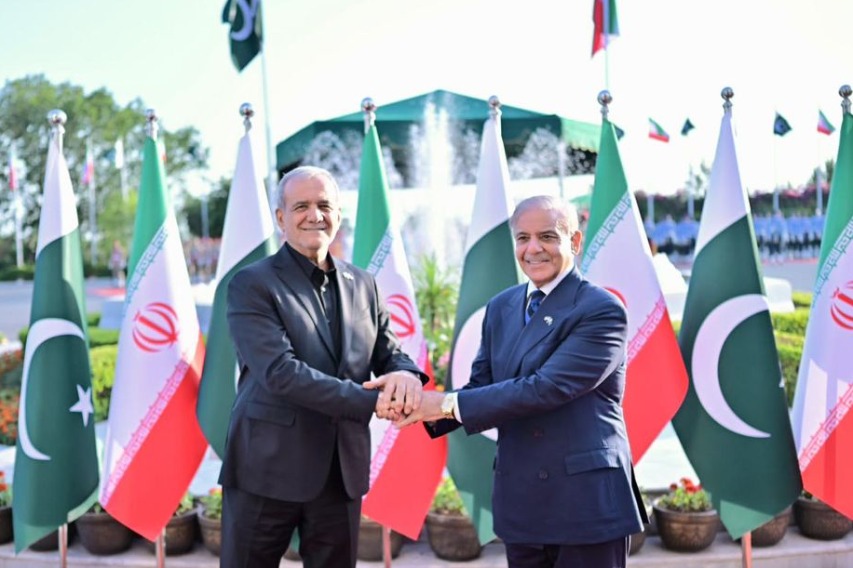
    International actors have already begun moving to push for de-escalation. Pakistan, which mediated the collapsed weekend talks between the U.S. and Iran, has issued a public plea to uphold the two-week ceasefire that Washington and Tehran initially agreed to. Russian President Vladimir Putin also extended an offer of diplomatic mediation to Iranian President Masoud Pezeshkian, with the Kremlin confirming Sunday that Putin stands ready to facilitate new peace efforts. In a separate move that expands the conflict’s global reach, Trump issued a new threat to China during an interview with Fox News, saying the U.S. will impose 50 percent tariffs on all Chinese goods imported into the country if Beijing provides military assistance to Iran.

  • No deal after US, Iran end marathon talks

    No deal after US, Iran end marathon talks

    After 21 hours of intensive, overnight diplomatic negotiations in Islamabad, Pakistan, the highest-level direct talks between the United States and Iran in more than a decade have concluded without a breakthrough, leaving a fragile two-week ceasefire in their six-week conflict on the brink of collapse. The war, which has already claimed thousands of lives, has roiled global energy markets and sent international oil prices soaring, casting deep uncertainty over regional stability.

    Hosted by Pakistani mediators, the April 12 talks marked the most senior official engagement between Washington and Tehran since the 1979 Islamic Revolution, raising cautious hopes across the international community for de-escalation. The conflict erupted in late February after the U.S. and its closest Middle East ally Israel launched pre-emptive military strikes against Iran during an ongoing round of nuclear negotiations that included former U.S. president Donald Trump’s special envoy Steve Witkoff and then-senior advisor Jared Kushner. Iran responded with widespread retaliatory action, dragging the entire Middle East into open conflict.

    Disagreements over core sticking points derailed any path to a final agreement, according to officials and media reports from both sides. Iran’s semi-official Tasnim News Agency blamed what it described as “excessive American demands” for the collapsed talks, while other Iranian outlets noted that while incremental progress was made on secondary issues, two major flashpoints—the future of the strategic Strait of Hormuz and Iran’s nuclear program—proved impossible to reconcile. Iranian Foreign Ministry spokesperson Esmaeil Baghaei framed the negotiations as having taken place against a backdrop of deep long-standing distrust between the two nations, adding that a comprehensive deal was never a realistic outcome for a single round of talks. Still, he emphasized that diplomatic channels would remain open, noting that “Diplomacy never ends.”

    JD Vance, U.S. Vice President and leader of the American delegation, told reporters that Iran had rejected Washington’s “final and best offer” during the discussions. “The bad news is that we have not reached an agreement, and I think that’s bad news for Iran much more than it’s bad for the U.S,” Vance said, offering no clarity on how the U.S. would act once the 14-day Pakistan-brokered ceasefire expires. Iran’s delegation was led by Parliamentary Speaker Mohammad Bagher Ghalibaf and Foreign Minister Abbas Araghchi, a composition that analysts had previously viewed as a clear signal of Tehran’s seriousness about reaching a negotiated settlement. Trita Parsi, executive vice president of the Quincy Institute for Responsible Statecraft and a leading expert on US-Iran relations, noted ahead of the talks that the size and seniority of the Iranian delegation “signal both Tehran’s sincerity in these negotiations and its clear expectations and confidence.”

    Pakistani mediators, who spearheaded the efforts to bring the two adversaries to the table, have publicly urged both sides to extend the ceasefire and continue negotiating. “We hope that the two sides continue with a positive spirit to achieve durable peace and prosperity for the entire region and beyond,” Pakistani Foreign Minister Ishaq Dar said. A senior Pakistani source involved in the negotiations told Reuters that the talks saw sharp shifts in tone, with tensions rising and falling repeatedly across the marathon overnight session that began Saturday.

    Going into the negotiations, unconfirmed reports emerged that the U.S. had agreed to unfreeze billions of dollars in Iranian assets held in Qatar and other foreign banks, a claim a senior U.S. official quickly denied. Tehran has laid out clear non-negotiable demands in the talks: full sovereign control over the Strait of Hormuz, war reparations for American and Israeli strikes, and a region-wide ceasefire that includes an end to Israeli military operations in Lebanon. Israel has refused to include the Lebanon conflict in any truce with Iran, and new Israeli strikes on southern Lebanon on Saturday and Sunday killed 18 people, pushing the total death toll from Israel’s campaign in the country past 2,000 since the outbreak of the wider war.

    Control over the Strait of Hormuz, through which roughly one-fifth of the world’s daily seaborne oil trade passed before the conflict, has emerged as Iran’s most powerful strategic leverage in the negotiations. Since the war began, Iran has effectively restricted access to the waterway, with only 12 vessels recorded passing through since the ceasefire took effect, compared to more than 100 per day pre-war. Tensions over the strategic chokepoint flared even during the talks: the U.S. military announced that two American destroyers had transited the strait ahead of planned mine-clearing operations, marking the first U.S. military passage since the war began. Iran’s Revolutionary Guards Naval Force quickly rejected the U.S. claim and issued a stark warning. “Any attempt by military vessels to cross the Strait of Hormuz will be confronted firmly and decisively,” the command said in a statement.

  • Civilians feared killed after reports of air strike on Nigerian market

    Civilians feared killed after reports of air strike on Nigerian market

    Northeastern Nigeria is at the center of escalating controversy after an alleged accidental air strike by the Nigerian military on a busy weekly village market near the Yobe-Borno state border left scores of civilians feared dead, in what would be the latest in a string of deadly civilian casualties from counter-insurgency operations targeting Boko Haram militants.

    The strike occurred Saturday on the Jilli market in Borno State’s Gubio local government area, during what the Nigerian Air Force (NAF) described as a “mop-up” operation against remaining terrorist factions. In an official statement, the NAF confirmed it carried out targeted strikes on what it labeled as “identified terrorist locations” in the Jilli axis, noting the mission was designed to eliminate fleeing insurgent remnants and regrouping cells that have taken advantage of the region’s rugged, hard-to-access terrain to rebuild their networks. The service has so far declined to confirm it hit the market or verify any civilian casualties from the operation.

    This zone of northeastern Nigeria has been the epicenter of a 15-year Boko Haram insurgency that has left more than 35,000 people dead and displaced over 2 million residents, with frequent military operations targeting insurgent strongholds near the Yobe-Borno border. The Jilli weekly market draws hundreds of traders and shoppers from cross-border communities in both states, making it a busy gathering point for local commerce at the time of the strike.

    As of Sunday, official casualty counts remain deeply conflicting across local and international sources. Citing multiple on-the-ground sources including a Yobe state councillor, three local residents, and an official from an international humanitarian organization, Reuters reported Saturday that at least 200 civilians were killed in the strike, with injured survivors transported to medical facilities in both Yobe and Borno states. Local councillor Lawan Zanna Nur Geidam called the event “a very devastating incident”. Two other major Nigerian national outlets, The Sun and Punch, have cited local sources putting the death toll at 10, with an unspecified number of additional people wounded. Abuja-based newspaper Daily Trust, meanwhile, cited an eyewitness account reporting at least 56 fatalities and 14 hospitalizations.

    Ahmed Ali, a 43-year-old trader who was at the market during the strike and sustained injuries, described the chaos of the attack to Reuters: “I became so scared and attempted to run away, but a friend dragged me and we all lay on the ground.”

    State emergency authorities have acknowledged the incident but have not confirmed a casualty count. In a Sunday Facebook post, the Yobe State Emergency Management Agency said it had received preliminary reports of an incident at Jilli Market that caused casualties among market participants, noting it had immediately activated emergency response protocols and deployed assessment teams to the remote area. The agency added that key details including the nature of the incident and the final number of casualties remain unverified as of Sunday. Brigadier General Dahiru Abdulsalam also confirmed via Facebook that residents from Yobe’s Geidam local government area, which borders the strike site in Borno, were among those affected.

    Amnesty International’s Nigeria branch has issued a sharp condemnation of the strike, putting the confirmed death toll at more than 100 people. In a post on the social platform X, the organization argued that “Launching air raids is not a legitimate law enforcement method by anyone’s standard. Such reckless use of deadly force is unlawful, outrageous and lays bare the Nigerian military’s shocking disregard for the lives of those it supposedly exists to protect.”

    This incident fits a documented pattern of repeated civilian casualties from Nigerian military counter-insurgency operations in the northeast over the past decade. Military air strikes targeting Islamist militants have previously mistakenly hit civilian sites including residential villages, camps for internally displaced persons, and public marketplaces, drawing ongoing criticism from human rights groups over inadequate safeguards to protect civilian populations.

  • At least 100 dead in Nigeria after air force ‘misfire’ on market, sources say

    At least 100 dead in Nigeria after air force ‘misfire’ on market, sources say

    MAIDUGURI, Nigeria — A tragic error in a Nigerian Air Force operation targeting extremist rebels has left more than 100 civilians, including children, dead after an airstrike hit an active weekly market in the country’s conflict-battered northeastern region, multiple sources including a leading global rights group and local media confirmed Sunday. The incident has reignited longstanding concerns about the heavy human cost of Nigeria’s 12-year counter-insurgency campaign in the Sahel.