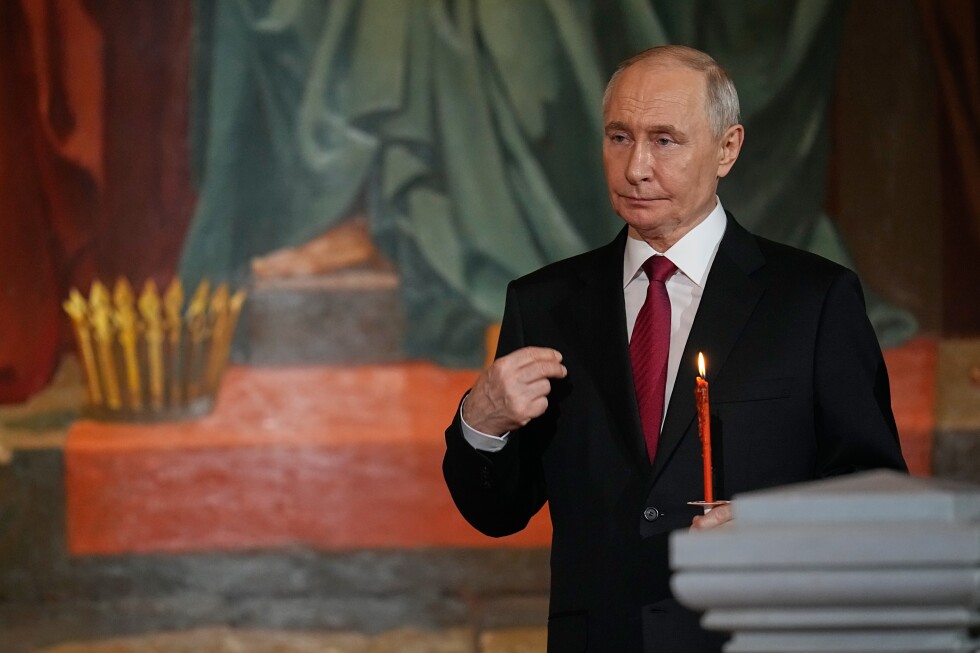
Just 24 hours after a unilateral Orthodox Easter ceasefire declared by the Kremlin came into force, Russia and Ukraine have traded blame for widespread breaches of the truce, marking another failed attempt at de-escalation in the ongoing conflict.
Russian President Vladimir Putin first announced the 32-hour ceasefire on Thursday, ordering all Russian military forces to suspend all offensive operations from 4 p.m. local time Saturday through the end of Sunday, in a move framed as a gesture for the Orthodox Easter religious holiday. In response, Ukrainian President Volodymyr Zelenskyy stated his country would adhere to the truce terms, but made clear that any incursion or violation by Russian forces would be met with an immediate, robust military counteraction.
By 7 a.m. local time Sunday, Ukraine’s Armed Forces General Staff reported it had documented 2,299 separate instances of ceasefire violations across the front line. These violations included infantry assaults, heavy artillery shelling, and the deployment of small surveillance and attack drones. The statement added that there had been no confirmed use of long-range combat drones, cruise missiles, or guided bombs up to that point. Even before the first full day of the truce ended Saturday, a senior Ukrainian military officer confirmed to the Associated Press that Russian forces had already been launching continuous attacks on Ukrainian defensive positions.
Not to be outdone, Russia’s Ministry of Defense issued its own counterclaim Sunday, putting the number of Ukrainian ceasefire violations at 1,971. Russian officials specifically called out drone attacks carried out by Ukrainian forces against targets in Russia’s border regions of Kursk and Belgorod, stating that the strikes had left multiple civilians injured.
This latest collapse of a holiday ceasefire fits a consistent pattern in the 2-year-plus conflict: previous diplomatic and unilateral attempts to establish temporary truces have seen little to no success, with both sides consistently blaming one another for breaches. Most notably, Putin announced an identical 30-hour unilateral Easter ceasefire one year ago, which fell apart almost immediately amid mutual accusations of violations from both Moscow and Kyiv.