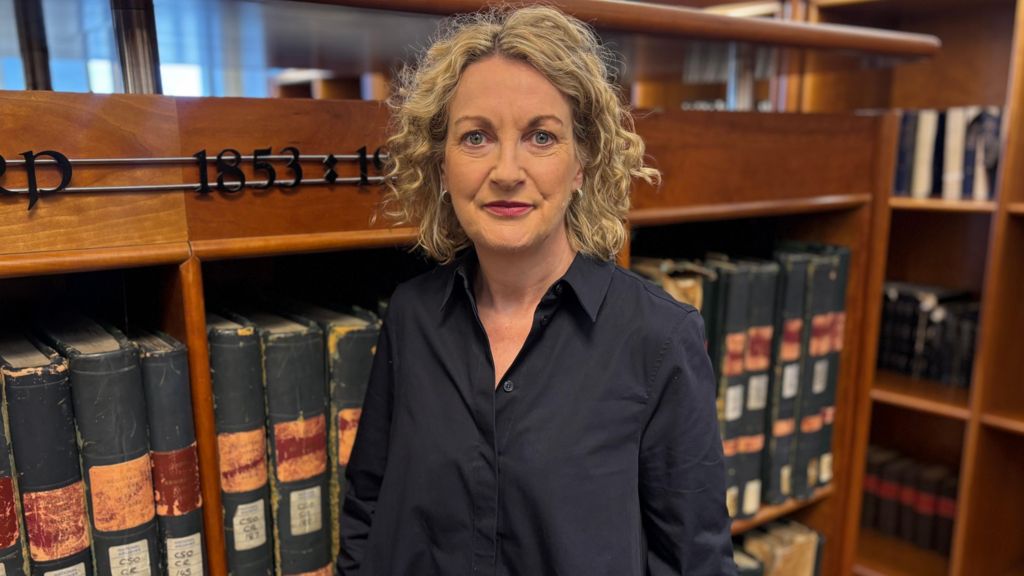
A century after it was collected, the first national census of the newly formed Irish Free State has been made fully accessible to the public online, unlocking groundbreaking new details about one of the most dramatic demographic shifts in modern Irish history.
Released by the National Archives of Ireland on Saturday, the 1926 survey captures the first comprehensive snapshot of the country’s population just four years after the Irish War of Independence concluded with the formation of the independent Irish Free State (the precursor to the modern Republic of Ireland) and the partition of the island into the Irish Free State and Northern Ireland, which remained part of the United Kingdom.
The census data confirms a staggering 32% drop in the non-Catholic population — overwhelmingly made up of Protestant communities — across the 26 counties of the Irish Free State between 1911 (when all of Ireland was still part of the United Kingdom) and 1926. In comparison, the Catholic population saw only a 2% decline over the same 15-year period, while the overall population of the 26 counties fell just 5% from 3.14 million in 1911 to 2.97 million in 1926.
That period of Irish history was marked by unprecedented political and social upheaval, including the 1916 Easter Rising, the two-year War of Independence, and the violent split over the 1921 Anglo-Irish Treaty that created the partition. The divide ran largely along religious lines: most Protestants identified as unionists who favored remaining in the UK, while most Catholics supported Irish nationalist calls for full independence.
National Archives director Orlaith McBride explained that the scale of the non-Catholic population decline is far out of line with the overall population drop, making it a historically significant shift. “That’s very, very significant,” she said of the 32% decline. Census analysts estimate roughly one quarter of the Protestant population decline can be attributed to the withdrawal of British military personnel and their families from the new state after independence. McBride added that much of the remaining decline stemmed from internal migration across the new border: many Protestants relocated from the Irish Free State to Northern Ireland, while Catholics from border regions moved south into the Irish Free State.
The decline was not uniform across all regions of the new state. The southern province of Munster recorded the sharpest drop at 42.9%, followed by the western province of Connacht at 36.3% and Leinster at 32.4%. The border counties of Ulster that became part of the Irish Free State — Donegal, Cavan and Monaghan — saw the smallest decline at just 22.5%. Dublin was the only county in the Irish Free State to record a population increase overall, growing by nearly 6% between 1911 and 1926.
Despite the overall population drop, the census also reveals that Protestant communities remained heavily overrepresented in many of the most prominent professional, commercial and agricultural roles in 1926. Protestants made up 17% of all employers, 18.4% of managers and professional workers, 46% of all chartered accountants, and 39% of barristers. The number of Protestant farmers and their families actually saw a small increase of nearly 4% compared to 1911, and Protestants continued to hold a disproportionate share of large agricultural estates. Historians with the National Archives note this overrepresentation stemmed in part from past land reform policies that benefited Protestant landowners, many of whom retained large demesne estates after the breakup of old aristocratic land holdings.
In addition to its historical demographic insights, the 1926 census offers members of the public the chance to search for their own ancestors and connect with their family history. One of the people still alive who appears in the 1926 census is 101-year-old Anne Carey, a County Meath resident who will turn 102 in November. Carey is one of 48 centenarian ambassadors selected by the National Archives from the nearly 100 living people who were alive at the time of the 1926 census and reached out to the institution.
A former seamstress who worked making fur coats in Dublin and sewed all of her own clothing, Carey has lived through both World Wars and recalled the 1941 German bombing of Dublin in an interview. When her mother woke her to warn her of the bombing, she recalled asking, “Why did you wake me up?” When asked for the secret to her longevity, she shared her simple philosophy: “In my bedroom, I have a window and I look out. And I say to myself: ‘I’ll never see this day again, don’t bang it up.’”
While the 1926 census for Northern Ireland has been lost to history, the surviving Irish Free State census offers an unparalleled window into life in Ireland a century ago. Beyond religious demographics, the data outlines broader social and economic trends: 92.6% of the population identified as Catholic, just 18.3% of residents could speak Irish, and 51% of the working population was employed in agriculture, 4% in fishing, 14% in manufacturing, and 7% worked as domestic servants. The population was split nearly evenly by gender, with 51% male and 49% female residents.