分类: world

  • France, UK to lead ‘defensive’ force for Hormuz

    France, UK to lead ‘defensive’ force for Hormuz

    A new chapter in diplomatic efforts to stabilize the Middle East emerged Friday, as France and the United Kingdom announced they would spearhead a strictly defensive multinational task force to safeguard unimpeded navigation through the strategically critical Strait of Hormuz — a deployment that will only move forward once a durable regional ceasefire is finalized.

    The joint confirmation came as British Prime Minister Keir Starmer and French President Emmanuel Macron co-chaired a high-level international conference in Paris, convened specifically to address threats to global trade passing through the key shipping chokepoint. Hosted primarily via video conference, the gathering drew participation from 49 countries across Europe and Asia, with representation ranging from senior diplomatic envoys to dozens of heads of state and government. Notably, neither the United States nor Iran, the two primary opposing actors in the ongoing regional conflict, took part in the discussions.

    The crisis that prompted the conference began on February 28, when Iran implemented a shipping blockade of the strait immediately after the U.S. and Israel launched military operations against the Islamic republic. The disruption sent immediate economic shockwaves across the globe, stoking widespread fears of renewed global inflation, disrupting global fuel supply chains, and raising alarms over potential worldwide food shortages.

    Tensions eased somewhat during the Paris talks, however, when Iranian Foreign Minister Abbas Araghchi announced via a post on X that the Strait of Hormuz would remain open to all commercial vessels for the duration of any Middle East ceasefire. The announcement was met with a measured positive response from global markets.

    In his remarks following the conference, Starmer emphasized that the multinational mission would only activate once conditions on the ground allow for a stable deployment. “This will be strictly peaceful and defensive as a mission to reassure commercial shipping and support mine clearance,” Starmer stated, noting that more than 12 nations have already committed to contributing military assets to the effort.

    Macron echoed the call for a permanent end to hostilities, saying that while leaders welcomed Iran’s temporary reopening announcement, they continued to push for “a full, unconditional reopening by all the parties.” The French president added that the verified opening of the strait makes the multinational mission even more critical: it will serve to consolidate recent diplomatic gains in the short term, and lay the groundwork for long-term stability in the corridor.

    Macron stressed that the task force is explicitly neutral, and operates completely independent of the belligerent parties currently engaged in the regional conflict. Multiple European nations have already signaled their willingness to join the effort: Italian Prime Minister Giorgia Meloni, who attended the conference in person, confirmed Italy stands ready to participate, joining Macron and Starmer in emphasizing that a full ceasefire must precede any deployment. German Chancellor Friedrich Merz, also present in Paris, noted that it would be desirable for the United States to join the mission at a later date.

    The conference marked a key moment for European diplomatic and security leadership, coming after European powers were largely sidelined from earlier U.S.-led diplomatic efforts to end the conflict. The U.S. response has been guarded so far: in a post-conference social media statement, U.S. President Donald Trump said he had rejected an offer from NATO to assist with securing the strait, telling the transatlantic alliance to “STAY AWAY”. It remains unclear whether Trump’s comment referenced the Paris-led initiative, as NATO was not invited to or represented at Friday’s talks.

    Starmer framed the mission as a critical step to protect the global economy, noting that “the world needs the Strait of Hormuz fully open because that is how we keep prices down for our people and stop the global economic damage” caused by the blockade. While he welcomed Iran’s announcement of a temporary opening during a ceasefire, he underscored that the international community must work to guarantee the opening is lasting and functional.

    According to a statement from Starmer’s office, senior military commanders from participating nations will gather next week at the UK’s Northwood military command headquarters outside London to work out operational details for the proposed task force.

  • Tens of thousands return to south Lebanon after ceasefire, defying Israeli warnings

    Tens of thousands return to south Lebanon after ceasefire, defying Israeli warnings

    A fragile 10-day ceasefire between Israel and Lebanon came into force at midnight on Thursday, and within hours, tens of thousands of people displaced by six weeks of Israeli military operations defied repeated safety warnings from all sides to begin journeying back to their home communities in southern Lebanon early Friday.

    The truce, announced publicly by former U.S. President Donald Trump on Thursday afternoon, brought an end to active large-scale combat, but it did not calm the deep-seated tensions on the ground. Even after the ceasefire officially commenced, the Israeli military carried out continued shelling of southern Lebanese areas, though violence had decreased significantly by Friday morning. In an official statement, the Lebanese armed group Hezbollah confirmed it would maintain a high state of alert, noting it was keeping its “finger on the trigger” to respond to any Israeli breach of the truce.

    Mere hours before the ceasefire took effect, Israeli warplanes targeted a residential complex in the southern Lebanese coastal city of Sour, leaving 11 people dead and 35 others injured, according to Lebanon’s Civil Defence. As of Friday morning, search and rescue teams were still working to extract survivors and recover remains from the rubble of the destroyed building.

    Despite urgent calls for caution from multiple parties—including the Israeli military, the Lebanese national army, Hezbollah, and Hezbollah’s political ally the Amal Movement—displaced families began packing their belongings and heading south within minutes of the ceasefire announcement. Israel had explicitly warned residents against returning to communities located south of the Litani River, noting that Israeli military forces would remain deployed in the region to monitor Hezbollah activities. Lebanese authorities and armed groups also urged residents to delay their return for several days to allow for demining and safety inspections, but their appeals did little to stem the flow of people eager to return to their homes after more than a month of displacement.

    By early Friday, the major highway connecting the southern Lebanese cities of Saida and Sour was completely gridlocked, with tens of thousands of vehicles crammed full of people and their personal possessions—many piled high with mattresses and household goods—snaking slowly toward the border region.

    During the six weeks of Israeli bombing and ground incursion, all permanent bridges crossing the Litani River, which spans nearly the entire width of southern Lebanon, were destroyed. The last of these, the critical Qasmiyeh Bridge connecting southern Lebanon to the rest of the country, was blown up by Israeli forces just one day before the ceasefire, cutting off the only remaining overland route to the region. In anticipation of the mass influx of returning residents, Lebanese military engineering teams rushed to build a makeshift crossing at Qasmiyeh, filling the massive crater left by the Israeli bombing with earth and compacting it to create a single-lane passage. By dawn Friday, the temporary crossing was open, with cars and motorcycles crossing in single file under the supervision of the Lebanese army. Further inland, local authorities opened a secondary paved route between Zrarieh and Tayr Filsey to help ease congestion, while the main crossing at the February 6 Bridge, destroyed by Israeli strikes in March, remained closed to all traffic. The Lebanese army also partially reopened a handful of other damaged bridge crossings across the river to accommodate returning traffic.

    Official data released by the Lebanese government puts the human cost of the six-week conflict at more than 2,200 people killed across the country since hostilities erupted on March 2. More than 1.2 million Lebanese people have been forced to flee their homes, making the sudden wave of returns one of the largest mass population movements in the region in recent years.

  • Thousands celebrate open-air Mass with Pope Leo in Cameroon – in pictures

    Thousands celebrate open-air Mass with Pope Leo in Cameroon – in pictures

    An estimated 120,000 worshippers and onlookers packed into Douala’s Japoma Stadium on Friday to join Pope Leo XIV for an open-air Mass, marking the largest gathering of his 11-day pan-African apostolic journey. The event comes on the heels of the pontiff’s Thursday visit to Cameroon’s restive Anglophone region, where a separatist insurgency has gripped the area for more than a decade.

    Jubilant crowds lined the route to the stadium as Pope Leo XIV traveled through the crowd in the Popemobile, greeting the throngs of waiting devotees with warm waves. Many attendees had gone to extraordinary lengths to secure a good vantage point, with some camping outside the stadium grounds as early as Thursday night – waiting more than 24 hours in total to see the pontiff. Despite sweltering tropical temperatures, devotees of all generations, including dozens of local clergy, turned out to participate in the historic occasion.

    During his address at the Mass, Pope Leo centered his remarks on spiritual guidance for Cameroon’s youth, urging young people to nurture diverse talents and invest in the well-being of their local communities. “Reject every form of abuse or violence, which deceives by promising easy gains but hardens the heart and makes it insensitive,” he told the crowd. “Do not let yourselves be corrupted by temptations that waste your energies and do not serve the progress of society,” he added.

    Many attendees who spoke to media after the service shared that they felt profound joy at the opportunity to see and hear from the Pope, reflecting widespread hope among Cameroonians that his visit will help advance peace efforts across the conflict-affected nation. Photographs from the event show worshippers adapting to the harsh heat: some held up umbrellas or books to block the harsh sun, while others wiped sweat from their brows throughout the service. Devotion took many forms across the packed crowd, with some clasping hands in quiet prayer and others prostrating themselves to honor the pontiff’s visit.

    The Douala Mass falls on the fifth day of Pope Leo’s 11-day Africa tour, and his third full day in Cameroon. Before arriving in the Central African nation, the Pope launched his journey in Algeria, marking the first time any sitting Pope has visited the majority-Muslim North African country. Following his time in Cameroon, Pope Leo will travel to Angola on Saturday, before concluding his continental trip in Equatorial Guinea. Beyond the public Mass, the pontiff also made a pastoral visit to Douala’s St Paul Catholic Hospital during his time in the coastal economic hub.

  • International students bridge China and world

    International students bridge China and world

    Against the backdrop of deepening global people-to-people exchanges, a rising cohort of international students studying across China have developed deep personal connections to the country, many describing it as a welcoming “home away from home” that has exceeded their initial expectations.

    Many of these students have highlighted the seamless integration of digital innovation into daily Chinese life as one of their most striking positive experiences. From quick in-store purchases to transit fare payments, the widespread accessibility and convenience of mobile payment systems have left a lasting impression on visitors accustomed to different financial infrastructure.

    What began as a period of immersive personal experience in China has evolved into a mission for many of these international learners. Leveraging their firsthand insights, unique cross-cultural perspectives, professional expertise and genuine enthusiasm for the country, they are taking active steps to share authentic stories of modern China with their home communities and global networks.

    In an era often marked by misinformation and cultural divides, these international students serve as informal, trusted bridges that connect China with the rest of the world, fostering mutual understanding, breaking down long-held stereotypes, and building people-to-people ties that complement formal diplomatic and economic cooperation.

  • Colombia’s environment minister says Middle East crisis should speed energy transition

    Colombia’s environment minister says Middle East crisis should speed energy transition

    BOGOTA, Colombia — As roughly 50 nations prepare to gather for landmark talks focused on phasing out carbon-intensive fossil fuels, Colombia’s top environment official is framing new geopolitical turmoil in the Middle East as a urgent catalyst to speed up the global shift to renewable energy sources including solar, wind and geothermal power.

    In an exclusive Thursday interview with The Associated Press, Environment Minister Irene Vélez Torres argued that ongoing market volatility sparked by the Iran conflict demonstrates the critical risks of lingering dependence on oil, gas and coal. Instead of allowing instability to slow decarbonization efforts, Vélez says global leaders should use the crisis as motivation to double down on ambitious climate action.

    “The war in the Middle East has triggered a full global energy crisis,” Vélez stated. “This turmoil should not push our transition off schedule — it should speed it up. I firmly believe we need to radicalize the global green agenda and accelerate this energy transition now.”

    The upcoming summit, co-hosted by Colombia and the Netherlands, is scheduled to run April 24-29 in the coastal Caribbean city of Santa Marta. Unlike formal UN climate negotiating sessions that seek binding international commitments, this gathering is designed as an open political space to advance long-stalled conversations about moving beyond fossil fuels — a topic that has consistently deadlocked formal global climate talks for decades.

    “We are not here to demand that countries sign on to binding commitments,” Vélez clarified. “Our goal is to move the global debate forward on an issue that has remained gridlocked for far too long.”

    Three decades of UN-led Conference of the Parties (COP) climate negotiations have failed to deliver a widespread global agreement on phasing out oil, gas and coal. Critics have labeled this lack of progress a major failure of the formal climate process, and that stalemate was a core motivation for organizing the independent Santa Marta summit.

    Colombia itself faces a unique balancing act between economic realities and ambitious climate goals. As one of Latin America’s largest oil producers, the country relies heavily on crude exports to generate government revenue and foreign exchange, with oil and coal still accounting for a large share of public funding for social programs and infrastructure spending. At the same time, Colombia sits at the heart of the Amazon rainforest, a critical global ecosystem that regulates planetary temperatures, but faces ongoing pressure from deforestation, illegal mining and armed activity across large swathes of its territory.

    Under President Gustavo Petro’s administration, Colombia has positioned itself as a global leader in climate action, pledging to halt all new oil exploration and calling for a coordinated global phaseout of fossil fuel production. Vélez noted that under Petro’s term, the share of non-hydropower renewables like solar and onshore wind in Colombia’s national electricity mix has jumped from just 1% to 16% — a major expansion that demonstrates the feasibility of a fast transition even for major fossil fuel producers.

    The summit convenes at a moment of unprecedented global geopolitical instability that is already reshaping energy policy around the world. The ongoing Iran conflict has disrupted shipping through the Strait of Hormuz, the critical chokepoint through which roughly 20% of the world’s global oil supplies pass. This disruption has pushed international oil prices higher and created pressure on many governments to expand short-term fossil fuel production to shore up energy security, even as they maintain long-term pledges to cut carbon emissions.

    This divide is on clear display between the Colombian and U.S. governments. Under current President Donald Trump, the U.S. has pulled back from international climate commitments and centered its energy policy on expanding domestic oil production. Trump has repeatedly dismissed climate change as a false claim and attacked the global energy transition as what he calls a “Green New Scam,” doubling down on his signature “drill, baby, drill” policy of expanded drilling. Public clashes between Petro and Trump over trade and counternarcotics policy in recent months have underscored these deep divides over climate and energy priorities.

    Major divisions are also visible among global oil producers. Saudi Arabia, the world’s largest oil exporter, will not send representatives to the Santa Marta summit. Vélez noted that Colombian officials have engaged with Saudi leadership during past UN climate talks, but the kingdom’s deep economic dependence on oil exports leaves it uninterested in discussions of a fossil fuel phaseout. Saudi Arabia has consistently resisted efforts to add stronger language on fossil fuel phaseouts to UN climate agreements, highlighting the persistent rift between major producing nations and countries pushing for a faster transition.

    While the Santa Marta summit is being held outside the formal UN climate negotiation framework, Vélez says its outcomes will feed into upcoming global talks, including COP31 scheduled to take place in Turkey later this year.

    The Associated Press’ climate and environmental reporting is supported by funding from multiple private foundations. AP maintains full editorial control over all content. Details of AP’s standards for philanthropic partnerships, a full list of supporters, and descriptions of funded coverage areas are available at AP.org.

  • Former Myanmar president U Win Myint released under amnesty

    Former Myanmar president U Win Myint released under amnesty

    On the first day of Myanmar’s traditional New Year, a high-profile amnesty has freed more than 4,500 incarcerated individuals, including former national president U Win Myint, state-owned Myanmar Radio and Television (MRTV) confirmed in an official announcement on Friday.

    The pardon was issued by current Myanmar President U Min Aung Hlaing, who signed two separate executive orders to authorize the release. According to MRTV’s reporting, 4,335 domestic Myanmar prisoners and 179 foreign nationals held in Myanmar correctional facilities are included in the amnesty, which aligns with long-standing local traditions of marking the annual New Year celebration with acts of clemency.

    State media framed the large-scale pardon as a measure aligned with principles of peace and humanitarian values. The initiative is designed to foster social stability across the country, and to give the released individuals an opportunity to rejoin public life and contribute to national development efforts, the outlet added.

    The release of U Win Myint marks a notable development in Myanmar’s domestic political landscape, coming as the country observes its most important annual cultural holiday.

  • Destruction, hope in south Beirut as Lebanese return home

    Destruction, hope in south Beirut as Lebanese return home

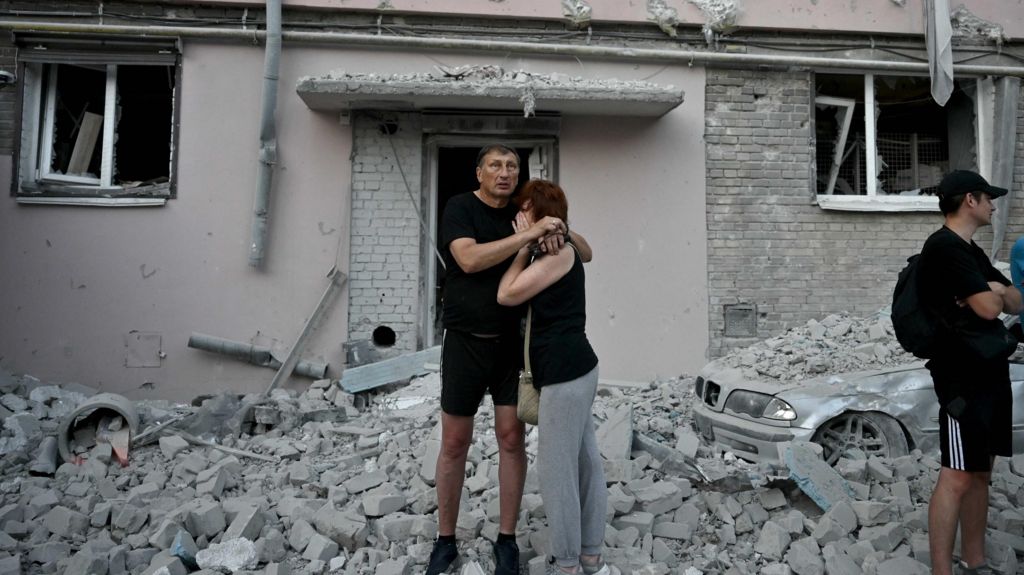
    Hours after a fragile ceasefire took hold between Israel and Hezbollah, displaced residents of Beirut’s southern suburbs — a long-standing Hezbollah stronghold — began a tentative journey home on Friday, threading past crumpled building facades and mountains of concrete rubble to assess what remains of their lives.

    Streaming back in private cars and on motorbikes, many carried only the few belongings they grabbed when they fled, their arrivals marked by equal measures of relief at the lull in fighting and heartbreak over the scale of destruction left by weeks of Israeli airstrikes that began on March 2.

    Among the early returnees was 42-year-old Insaf Ezzedine, who fled the neighborhood of Hay al-Sellom and spent the duration of the conflict bouncing between makeshift street shelters after formal evacuation centers hit capacity. Speaking to Agence France-Presse on a Hezbollah-organized media tour of the area — where independent journalist movement remains restricted — Ezzedine described the overwhelming force of the bombardments that shook the district’s aging, densely packed residential blocks. As her young daughter clung to a plastic doll on the back of their motorbike, she voiced what many returning residents echoed: a desperate longing for lasting peace. “We hope the war will stop and we’ll all go back to our homes and live in peace,” she said. “We want to live with our kids in safety. Our own home was badly damaged, so we’re heading to my brother’s place now.”

    The scope of damage is visible on every major thoroughfare in the southern suburbs. Piles of broken concrete, toppled solar panels and dented water tanks block roadside verges, while storefronts along main roads stand gutted, their metal doors blown off their hinges and shop windows shattered into shards. Occasional cars bearing Hezbollah’s yellow flags pass families walking and driving through the rubble-strewn streets, many loaded with whatever personal items they have been able to salvage.

    Seventy-five-year-old Samia Lawand traveled back with her daughter and grandchildren only to confirm the worst: their home was too damaged to reoccupy. “We came to check on the house and pick up a few things, but we found the place was too damaged, so we’re leaving again,” Lawand said from the front passenger seat of her family’s car. Her 42-year-old daughter Mariam added that shattered glass and scattered belongings made the space unlivable. In one particularly striking scene on a major artery, a mid-rise building had its entire side torn away by a strike, leaving office furniture and even a complete dentist’s chair exposed to open air. Opposite a blackened, destroyed building just steps from a large portrait of Hezbollah leader Naim Qassem, the twisted wreckage of burned-out cars sits abandoned.

    For 34-year-old Hassan Hanoud, who fled to central Beirut with his wife, children and mother to escape the bombardment, the ceasefire represented a chance to return to the only home his family has. “We left for the kids’ sake,” Hanoud explained, a young child resting in his lap as a young daughter behind him held a worn plush toy. “The last time we went back, all the doors and windows were broken, but now the kids just want to come home.”

    In the Tahouitet al-Ghadir neighborhood, the first signs of slow recovery are already emerging. Shopkeepers have begun sweeping away debris to reopen their storefronts, and small groups of residents have begun to gather. Long-separated relatives hugged and wept when reunited for the first time since the escalation of hostilities.

    Sixty-five-year-old Mustafa, who owns a local garage and spent the war moving between makeshift beachfront tents near the Beirut coast, was one of the first to return, arriving just minutes after the ceasefire went into effect at midnight. “There’s no better feeling than coming back to your area and your people,” he said.

    But for many, the fragile truce comes at a devastating cost, bringing a complex mix of fear and cautious hope. Seventy-six-year-old retired soldier Ezzedine Shahrour, who fled the southern Lebanese town of Kfar Hammam and now has one son serving in the Lebanese army and another in security forces, has been begging his children to take him home, even as they warn the security situation remains unstable. “There’s fear and hope” after the ceasefire, he acknowledged.

    Seventy-three-year-old Jaafar Ali, who fled the southern Lebanese city of Tyre with his family to shelter in Beirut, came to southern Beirut to check on the home of his relatives. He recalled fleeing so abruptly that the family left in their nightclothes, with no time to grab belongings. “We don’t know how we got out, and we don’t know what’s happened to the house,” he said. While he is relieved the fighting has paused, the loss has been overwhelming. “We’re happy about the ceasefire, but we’ve paid a high price. Our homes were badly damaged. We’ve lost a lot… I feel like crying. Thank God we’re still alive, but what about all the people who died under the rubble?”

  • Mugabe’s son pleads guilty to pointing a gun in South Africa

    Mugabe’s son pleads guilty to pointing a gun in South Africa

    Almost two months after his arrest over a shooting that left a 23-year-old security guard critically injured in South Africa’s Johannesburg, Bellarmine Mugabe, the youngest son of Zimbabwe’s late long-ruling former president Robert Mugabe, has entered guilty pleas to two of the charges against him: pointing a firearm and unlawful presence in South Africa. The 28-year-old entered the pleas following a pre-trial deal with prosecutors, leaving the original attempted murder charge against him unresolved as the National Prosecuting Authority (NPA) of South Africa has not issued any public comment on the status of that count. Mugabe appeared alongside his 33-year-old co-accused Tobias Matonhodze at the Alexandra Regional Court on Friday, with both men having remained in custody since their arrest on 19 February. Matonhodze has pleaded guilty to four separate charges: attempted murder, defeating the ends of justice, unlawful immigration and illegal possession of ammunition. According to prosecution accounts, the shooting broke out following a heated altercation between the two accused and the victim at Mugabe’s residential property in Hyde Park, one of Johannesburg’s most affluent suburban neighborhoods. As the victim attempted to flee the scene, he was shot twice in the back, and was rushed to a nearby hospital in critical condition. Law enforcement officers launched a full search of the property following the incident, but have not yet recovered the weapon used in the attack. Lawyers representing both defendants informed the court that their clients are willing to voluntarily return to Zimbabwe at their own cost if the court chooses not to hand down custodial sentences. Sentencing hearings have been scheduled for 24 April, the NPA confirmed. This high-profile case has already been marked by multiple procedural delays, with two postponements of Mugabe’s initial bail application since his arrest. This is not the first time Bellarmine Mugabe, one of two children Robert Mugabe shared with his second wife Grace, has run afoul of the law. In 2024, he was arrested on allegations of assaulting a police officer at the Zimbabwean border town of Beitbridge. Though he was granted bail after that arrest, a warrant was subsequently issued for his detention when he failed to appear for scheduled court proceedings, according to Zimbabwe’s state-owned *Herald* newspaper. Just one year later, in June 2025, he was taken into custody again for an alleged assault on a security guard at a mining site in Mazowe, located roughly an hour’s drive north of Zimbabwe’s capital Harare. That case remains pending before Zimbabwean courts. Robert Mugabe, the former Zimbabwean leader, held presidential power for 37 years before he was removed from office in a 2017 military-led coup, and he died in 2019 at the age of 95.

  • France’s foreign minister says 85-year-old widow detained by ICE returns home

    France’s foreign minister says 85-year-old widow detained by ICE returns home

    In a development that has sparked diplomatic friction between France and the United States, an 85-year-old French woman, widowed by a former U.S. Army captain, has returned to her home country after being held in U.S. immigration custody for over a month. French Foreign Minister Jean-Noël Barrot confirmed the veteran’s widow arrived back in France on Friday morning, framing the repatriation as an outcome that brings a measure of closure to French authorities.

    The case began on April 1, when U.S. Immigration and Customs Enforcement (ICE) agents took Marie-Thérèse Ross into custody in Alabama. According to the U.S. Department of Homeland Security, Ross was detained after she overstayed the 90-day tourist visa she had entered the country on. Public records from Calhoun County confirm Ross married William Ross, a long-time Alabama resident and retired U.S. Army captain, in April of the previous year. William Ross passed away just months after the wedding, in January, his family’s obituary confirms.

    Following her arrest, Ross was transferred to a federal immigration detention center based in Louisiana to await processing for deportation. Speaking to reporters during an official visit to the southern French city of Montpellier on Friday, Barrot acknowledged the French government’s satisfaction at securing her return, but did not shy away from harsh criticism of ICE’s handling of the case.

    While Barrot declined to offer detailed commentary on the specific circumstances of Ross’ detention, he emphasized that several tactics employed by the agency are misaligned with France’s accepted standards of treatment for immigration detainees. He described the methods used as unacceptable to the French government, referencing unelaborated claims of “violence that raised our concerns” among French diplomatic officials.

    Ross’ case is not an isolated incident: she is one of thousands of immigrants targeted for detention and deportation under the Trump administration’s aggressive mass deportation policy push. The policy reversed earlier executive guidelines that granted greater leniency to spouses of active-duty U.S. service members and military veterans, a change that has left hundreds of family members of veterans vulnerable to detention despite their longstanding ties to the United States.

  • Palestinians hand over suspect in 1982 attack on Jewish restaurant in Paris

    Palestinians hand over suspect in 1982 attack on Jewish restaurant in Paris

    Four decades after one of Paris’s most infamous anti-Semitic terror attacks, a long-sought key suspect has been extradited to France to face justice, marking a major milestone in a cold case that has haunted the country for generations. On Thursday, the Palestinian National Authority handed over 72-year-old Hicham Harb — also known by his legal name Mahmoud Khader Abed Adra — to French authorities, fulfilling an extradition request issued last September by France’s National Anti-Terrorism Prosecutor’s Office (PNAT).

    Upon Harb’s arrival at Paris’s Villacoublay air force base, investigating officials immediately took him into custody. He stands accused of both organizing the 1982 assault on the Jo Goldenberg restaurant in the Rue des Rosiers, a historic Jewish neighborhood in Paris’s Marais district, and serving as one of the attack’s active gunmen.

    The details of the 1982 attack remain chilling: attackers first launched a grenade into the crowded dining space before at least three armed men stormed in, opening fire with automatic machine guns on diners as they scrambled to escape. The violence left six people dead and more than 20 others injured, and until now, no defendant has ever been convicted for the killings.

    The Rue des Rosiers attack was widely attributed to the Abu Nidal Organization, a violent Palestinian splinter faction that split from the Palestine Liberation Organization in the 1970s. Led by notorious militant Abu Nidal — who was killed in Iraq in 2002 — the group carried out a wave of deadly attacks across the globe through the 1980s, killing roughly 900 people in total, including plane hijackings, airport shootings, assassinations, and a deadly attack on a Greek cruise ship.

    Judicial movement in the case gained momentum last year, when France’s highest court, the Court of Cassation, ordered a trial for six total suspects connected to the attack. Three of those suspects are being tried in absentia, currently residing in the West Bank, Jordan, and Kuwait. Two other suspects are already in French custody: Norwegian citizen Abou Zayed, who is also accused of being one of the attack’s gunmen, and Hazza Taha, who faces charges of hiding the weapons used in the assault. Zayed’s legal team has repeatedly denied any involvement in the 1982 attack on his client’s behalf.

    Following Harb’s extradition, his son Bilal al-Adra has publicly denounced the transfer as illegal, claiming the suspect has no guarantee of receiving a fair trial in the French judicial system. Despite these claims, Paris courts have already rejected an appeal to move the case from a special judicial panel to a jury trial.

    French President Emmanuel Macron has publicly praised the Palestinian Authority for its cooperation in the extradition, framing the handover as tangible proof of the productive judicial cooperation that has emerged since France officially recognized a Palestinian state in September 2025. French Foreign Minister Jean-Noël Barrot, who met with victims’ families last year, reiterated the government’s commitment to securing accountability. Forty-four years after the attack, Barrot noted that justice is finally within reach, saying, “Faced with anti-Semitism and terrorism, France never forgets and never gives up.”