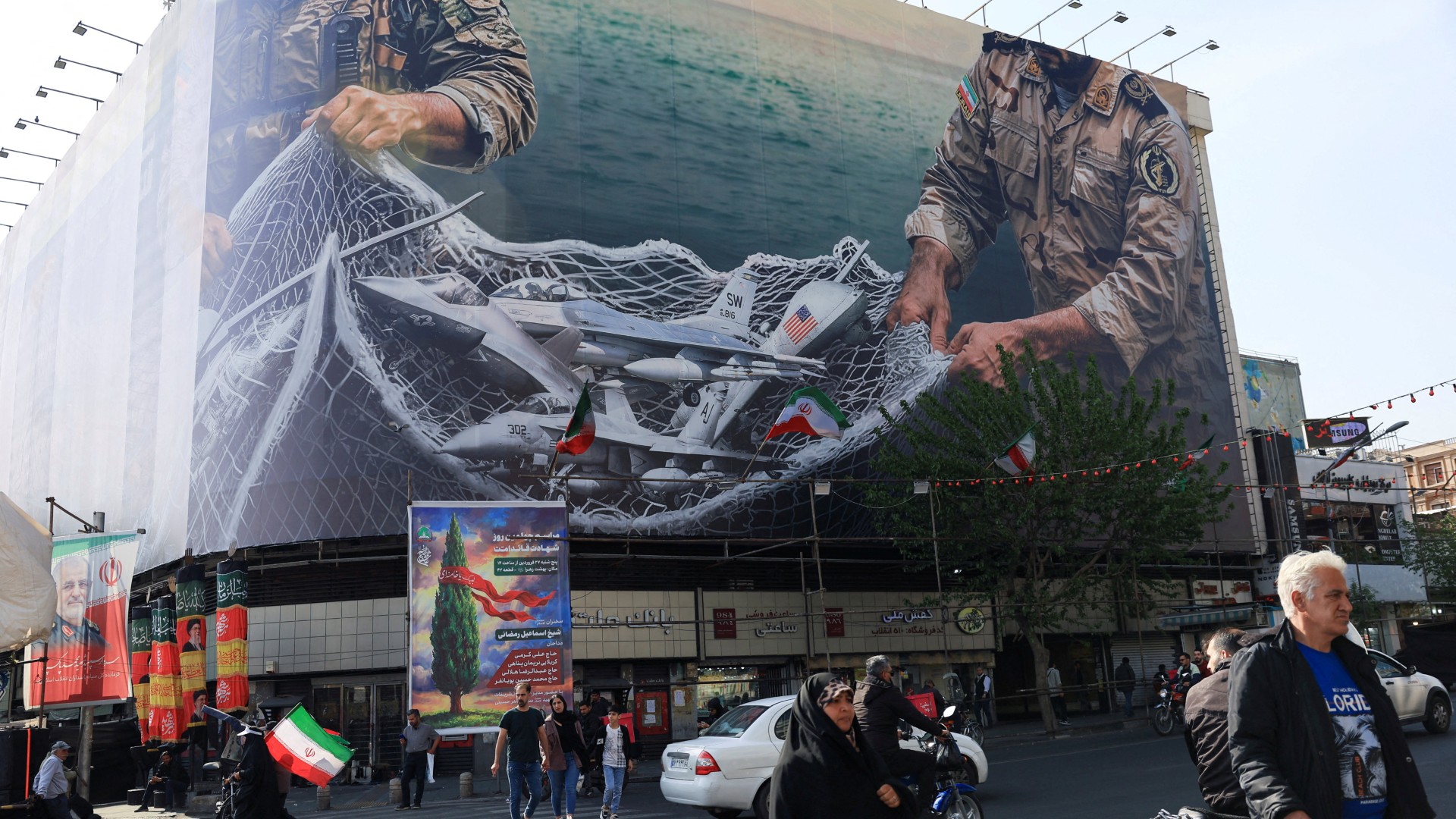
A fresh standoff between the United States and Iran has thrown the strategically critical Strait of Hormuz back into crisis, as Tehran rejected Washington’s unsubstantiated claims of a planned enriched uranium transfer and threatened to reclose the global energy chokepoint if the U.S. naval blockade on Iranian ports remains in place. The escalation unfolded Saturday even as a small group of commercial vessels began transiting the waterway, marking days of fragile progress that has been put at sudden risk.
The chain of tensions traces back to a U.S.-brokered 10-day ceasefire that halted Israel’s ongoing war in Lebanon, which prompted Iran to end its initial closure of the Strait of Hormuz this past Thursday. But just one day later, U.S. President Donald Trump announced that the American naval blockade imposed on Iranian ports earlier this week would remain in force until a comprehensive final agreement is reached between the two nations.
In the wake of Trump’s announcement, Iran quickly reversed its earlier stance on opening the strait. Parliamentary Speaker Mohammad Bagher Ghalibaf emphasized in a post on X that the waterway would not stay open as long as the U.S. blockade remains in place. “What they call a naval blockade will definitely be met with an appropriate response from Iran,” Ghalibaf wrote. As of overnight, U.S. Central Command confirmed it had ordered at least 21 ships to turn away from the region since the blockade was first implemented.
Hours before Iran issued its new threat, a convoy of eight commercial vessels — including one very large crude carrier (VLCC), oil product tankers, chemical carriers, and liquefied petroleum gas (LPG) carriers — was observed transiting Iranian waters south of Larak Island on Saturday morning, with additional vessels anchored in the Gulf preparing to follow the convoy. A spokesperson for Iran’s Islamic Revolutionary Guard Corps had previously stated that the limited passage was permitted under temporary negotiation terms, though it remains uncertain whether the initial convoy will be allowed to complete its full transit.
The Strait of Hormuz is widely recognized as the world’s most important energy chokepoint, carrying roughly one-fifth of the global supply of crude oil and liquefied natural gas. The International Energy Agency has already warned that any extended closure would trigger the largest global energy supply disruption in history: cutting more than 10 million barrels of daily oil output and reducing global LNG supplies by 20 percent.
Beyond the strait standoff, Tehran has issued a firm denial of a separate claim made by Trump Friday, in which the U.S. president stated that Iran had agreed to transfer its stockpile of enriched uranium to the United States. Trump told supporters at an Arizona rally that the U.S. would “very soon” retrieve what he called “nuclear dust” remaining from U.S.-Israeli strikes on Iranian nuclear sites in June 2024. “We’re going to get it together. We’re going to go in with Iran, at a nice leisurely pace, and go down and start excavating with big machinery… We’ll bring it back to the United States,” Trump said.
Iran’s foreign ministry spokesperson Esmaeil Baghaei rejected the claim outright in comments to state television, saying: “Iran’s enriched uranium is not going to be transferred anywhere. Transferring uranium to the United States has not been an option for us.” Currently, Iran is estimated to hold more than 900 pounds of uranium enriched to 60 percent purity, just a step away from weapons-grade material. The Trump administration has repeatedly listed preventing Iran from developing a nuclear weapon as a core war goal, while Iran has consistently maintained its uranium enrichment program is exclusively for peaceful civilian energy and medical purposes.
Negotiations between the two sides have also hit snags over other key sticking points, including the unfreezing of billions of dollars in Iranian assets held abroad. A senior Iranian official told Reuters that a preliminary agreement had been reached on the issue, but Trump denied any such deal Friday, saying “no money will exchange hands in any way, shape or form.” On nuclear terms, Washington has proposed a 20-year full suspension of all Iranian nuclear enrichment activity, while Tehran has countered with an offer of a three to five-year pause, according to anonymous sources familiar with the talks cited by Reuters. Two Iranian sources have noted preliminary signals of a possible compromise that would see part of Iran’s uranium stockpile removed, but no formal deal has been announced.
The broader conflict that sparked this crisis began on February 28, when the U.S. and Israel launched a massive coordinated barrage of strikes on Iranian targets across the Islamic Republic. Tehran responded with its own strikes against Israeli and Gulf targets, and the initial closure of the Strait of Hormuz. Days after the conflict began, Israel launched a ground invasion of Lebanon, which has killed more than 2,000 Lebanese people to date.
As tensions spike again, regional powers are ramping up diplomatic efforts to de-escalate. Pakistan concluded two parallel high-level diplomatic visits Saturday aimed at securing a permanent end to the conflict. Pakistani Army Chief Asim Munir completed a three-day visit to Tehran, where he held meetings with Iran’s president, foreign minister, parliament speaker, and top military commanders, according to an official statement from the Pakistani military. Separately, Pakistani Prime Minister Shehbaz Sharif wrapped up a three-day tour of Saudi Arabia, Qatar, and Turkey focused on building regional consensus for a peace deal.
A second round of direct high-level talks between the U.S. and Iranian delegations is scheduled to take place in Islamabad next week. The first round, held last week, marked the highest-level face-to-face diplomatic engagement between the two nations in decades, with Ghalibaf and Iranian Foreign Minister Abbas Araghchi leading the Iranian delegation to the Pakistani capital.