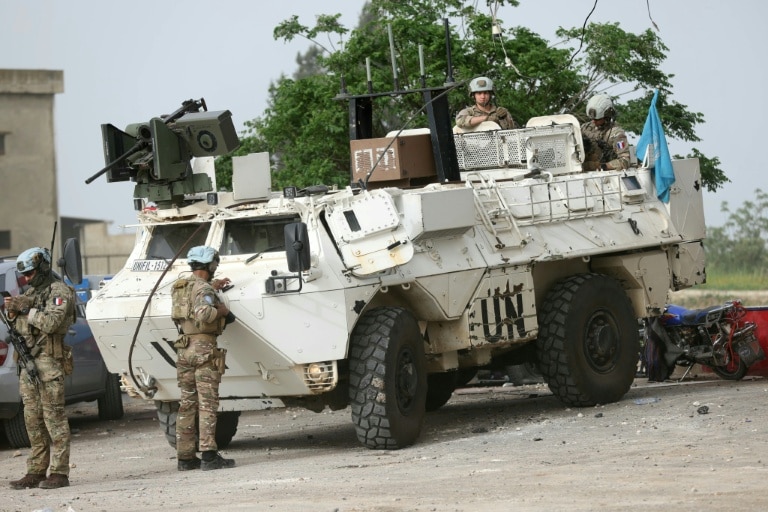
Just two days after Israel and Lebanon agreed to a 10-day ceasefire to negotiate an end to six weeks of cross-border conflict, a deadly ambush targeting United Nations peacekeepers in southern Lebanon has left one French soldier dead and three more wounded, with French President Emmanuel Macron publicly holding the Iran-backed militant group Hezbollah responsible — an accusation the organization has forcefully denied.
The fallen service member was identified as 24-year-old Staff Sergeant Florian Montorio, who died from a close-range gunshot wound during the attack Saturday in the Ghandouriyeh-Bint Jbeil region near the Israeli-Lebanese border. French Armed Forces Minister Catherine Vautrin confirmed in a post on X that Montorio’s unit was moving to resupply a UN Interim Force in Lebanon (UNIFIL) outpost that had been isolated by days of ongoing combat when they were ambushed by an armed faction. Despite Montorio’s comrades pulling him to safety under active fire, medical efforts to revive him were unsuccessful, Vautrin added.
In his own public statement on X, President Macron said “Everything points to Hezbollah being responsible for this attack,” and called on Lebanese national authorities to immediately apprehend and prosecute those behind the killing. This is not the first French military fatality linked to the broader regional conflict sparked by the October 7 Hamas attacks: last month, another French soldier, Arnaud Frion, was killed by an Iranian-designed drone in Iraq’s Kurdistan region.
Hezbollah, which has repeatedly denounced the upcoming ceasefire negotiations with Israel as a surrender of Lebanese sovereignty, quickly rejected all claims of involvement. In an official statement, the group said it “denies any connection to the incident that occurred with UNIFIL forces in the Ghandouriyeh-Bint Jbeil area,” and called for “caution in making judgments and assigning responsibilities” until the Lebanese army completes its official probe into the attack.
Senior Hezbollah official Mahmud Qamati doubled down on the group’s opposition to the talks Saturday, describing the negotiations led by the Lebanese government as “a failure, weak, defeated… and submissive,” and stressed the organization would not be bound by any outcome of the discussions. Lebanese President Joseph Aoun has pushed back against Hezbollah criticism, saying the negotiations do not represent any concession of Lebanese interests, marking the first direct formal talks between Lebanon and Israel in decades.
UNIFIL’s initial assessment echoed French claims that the attack was likely carried out by Hezbollah, with the peacekeeping force noting the gunfire came from non-state actors as peacekeepers cleared explosive ordnance from a local road to reach the cut-off outpost. UNIFIL added that the incident “may amount to war crimes,” and has launched an independent internal investigation into the attack. Both Lebanese President Aoun and Prime Minister Nawaf Salam have condemned the killing, with Salam ordering a national probe and Aoun pledging to hold all responsible parties accountable. In the wake of the attack, Macron held urgent phone calls with both Aoun and Salam to press for full guarantees of security for all UNIFIL personnel deployed in the country.
Tensions around UNIFIL’s mission have escalated sharply since the Israel-Hezbollah border conflict began six weeks ago, when Hezbollah launched rocket attacks on Israel in solidarity with Hamas, drawing Lebanon into the broader regional war. The peacekeeping force, which has served as a neutral buffer between Lebanon and Israel for nearly 45 years, has repeatedly been targeted by both Israeli and Hezbollah forces during the current fighting. Last month, three Indonesian UNIFIL peacekeepers were killed: a preliminary UN investigation found one was killed by Israeli tank fire, while the other two died in an improvised explosive device attack widely linked to Hezbollah. In separate incidents earlier this year, Israeli troops destroyed surveillance cameras at UNIFIL’s headquarters, and just last week an Israeli tank rammed two UNIFIL patrol vehicles, causing damage but no injuries. UNIFIL’s current mandate is set to expire at the end of 2024, adding further uncertainty to the force’s future in the region.