分类: world

  • US, Iran accuse each other of ceasefire breach

    US, Iran accuse each other of ceasefire breach

    Fresh geopolitical friction erupted between the United States and Iran on Sunday, as both nations traded sharp accusations of violating an existing ceasefire agreement, raising new risks to regional stability in the Persian Gulf.

    Speaking from Tehran, Iranian Foreign Ministry spokesperson Esmaeil Baghaei condemned what he called the U.S. unlawful naval blockade of Iran’s port facilities and coastal territories, labeling the action a criminal breach of the agreed ceasefire terms.

    Across the Atlantic in Washington, the mutual blame game continued: ABC News’ chief Washington correspondent Jonathan Karl reported via social platform X that U.S. President Donald Trump had directly told him Iran was responsible for a “serious violation” of the ceasefire. Trump added that a final diplomatic deal would be reached “one way or another. The nice way or the hard way,” according to Karl’s account.

    Earlier that same day, Trump expanded on his administration’s stance in a post on his Truth Social platform, confirming that U.S. diplomatic negotiators would travel to Islamabad on Monday to participate in a new round of bilateral talks with Iran. In a stark warning, Trump claimed the U.S. has put forward “a very fair and reasonable DEAL” to Iran, and threatened that if Tehran rejects the proposal, the United States will destroy every power plant and every bridge across Iran.

    The escalating verbal exchange comes amid a complete shutdown of commercial shipping through the Strait of Hormuz, one of the world’s most critical energy chokepoints. After the U.S. deployed naval forces to enforce a blockade of Iranian waters over the weekend, Iran moved to reassert its own sovereign control over the strategic waterway, leaving all maritime traffic at a standstill as of Sunday. The standoff has already raised global concerns over potential disruptions to international energy supplies, with the strait accounting for roughly a fifth of global oil trade volumes.

  • Trump says US envoys to arrive in Islamabad on Monday for talks

    Trump says US envoys to arrive in Islamabad on Monday for talks

    Former U.S. President and current leading political figure Donald Trump has confirmed that a delegation of American diplomatic envoys is scheduled to arrive in Pakistan’s capital city of Islamabad on Monday for official bilateral talks, according to an official announcement updated by Xinhua News Agency on April 19, 2026.

    The confirmation of the diplomatic visit comes amid a period of shifting regional and international diplomatic engagements, with multiple high-level diplomatic moves unfolding across South Asia, the Middle East, and the broader global stage in the same timeframe. This scheduled diplomatic mission marks a new step in bilateral interactions between the United States and Pakistan, two countries with long-standing but historically complex diplomatic and security ties.

    Alongside this announcement, a series of other major global developments are also unfolding: regional tensions remain high in the Strait of Hormuz amid ongoing conflict-related developments, while a newly implemented 10-day ceasefire between Israel and Lebanon has taken effect, with an upcoming high-profile meeting between the two nations’ leaders scheduled to be hosted on U.S. soil, per Trump’s confirmation. Other key international events include the 55th anniversary celebration of China’s iconic Ping-Pong Diplomacy held in New York, and policy shifts in regional nations such as Thailand’s regulatory move to reorient cannabis retail operations exclusively toward medical use.

  • Iran blocks two more oil tankers from transiting Strait of Hormuz: report

    Iran blocks two more oil tankers from transiting Strait of Hormuz: report

    Tensions over maritime access to the strategically critical Strait of Hormuz have flared once again, after Iranian armed forces intercepted two oil tankers attempting to traverse the waterway on Sunday, forcing them to turn back, according to a new report from Iran’s semi-official Tasnim News Agency.

    The two intercepted vessels were flying the national flags of Botswana and Angola, and were deemed to be attempting an “illegal” crossing before Iranian military intervention, the outlet confirmed.

    The interception comes amid sharp rhetorical friction between Iran and the European Union over rules governing passage through the strait, which handles roughly 20% of global oil trade and is one of the world’s most vital energy chokepoints. Iranian Foreign Ministry spokesman Esmaeil Baghaei recently delivered a scathing rebuke of European demands for unrestricted, toll-free access through the waterway, accusing the bloc of blatant hypocrisy in its application of international law.

    Baghaei’s remarks were a direct response to a social media post on platform X from EU High Representative for Foreign Affairs Kaja Kallas. In his response, Baghaei questioned the EU’s selective adherence to global rules, writing: “Oh, that ‘international law?!’ The one that the EU dusts off to lecture others while quietly green-lighting a US-Israeli war of aggression against Iran – and looking the other way on atrocities against Iranians?”

    “Spare the sermons; Europe’s chronic failure to practice what it preaches has turned its ‘international law’ talk into peak hypocrisy,” he added.

    Kallas had previously warned that any system requiring payment for passage through the strait would set a dangerous precedent that could disrupt maritime trade routes globally. She also noted that the EU’s Aspides naval mission, launched in February 2024 to protect freedom of navigation in the Red Sea and surrounding waters, could be rapidly expanded to safeguard shipping across the broader Persian Gulf region.

    The latest interception follows a weeks-long shift in Iran’s enforcement of control over the strait. Iran significantly tightened access restrictions after the U.S. and Israel launched large-scale airstrikes on Iranian territory, barring all vessels with links to Israel and the United States from transiting the waterway. The U.S. responded by imposing its own reciprocal trade restrictions after scheduled peace talks between Iran and the U.S. held in Islamabad collapsed without agreement.

    Earlier this month, a two-week ceasefire between Iran and the U.S. went into effect starting April 8. During the ceasefire, Iranian Foreign Minister Seyed Abbas Araghchi stated publicly that the strait would remain fully open to all legitimate commercial shipping. However, just one day before the latest interception, Iran’s top military body, the Khatam al-Anbiya Central Headquarters, announced it would resume strict enforcement of access rules, citing the continuation of U.S. trade restrictions against Iran.

    As of the report, Tehran has made clear it will maintain full control over maritime traffic through the Strait of Hormuz until all hostilities with the U.S. and Israel are permanently ended.

  • Iranian president reaffirms stance on nuclear rights

    Iranian president reaffirms stance on nuclear rights

    TEHRAN – In a firm public statement carried by the Iranian Students News Agency on Sunday, Iranian President Masoud Pezeshkian doubled down on his country’s long-held position, rejecting United States attempts to block Tehran from accessing its legally recognized nuclear rights. Pezeshkian specifically pushed back against recent remarks by US President Donald Trump, who has claimed Iran should not be permitted to exercise its sovereign rights to nuclear development, calling the argument fundamentally unreasonable.

    Pushing for clarity on the US position, Pezeshkian noted that Washington has yet to outline any specific violation or offense that would justify stripping Iran of the nuclear rights it is entitled to under international frameworks. Beyond the nuclear issue, the Iranian president added that the country remains committed to working toward ending ongoing regional conflicts, with the goal of reaching a resolution that preserves Iran’s national dignity.

    The statement comes amid long-running international tensions over Iran’s nuclear program, with successive US administrations imposing sanctions and diplomatic pressure to curb Tehran’s activities. Pezeshkian’s remarks mark the latest formal reaffirmation of Iran’s consistent stance that it retains full sovereign right to peaceful nuclear development for civilian energy and medical purposes.

  • Pakistan tightens security ahead of expected US-Iran talks

    Pakistan tightens security ahead of expected US-Iran talks

    As the second round of long-awaited negotiations between the United States and Iran draws near, Pakistan has rolled out one of its largest security deployments in recent years, locking down key urban centers to ensure the safety of the upcoming diplomatic talks.

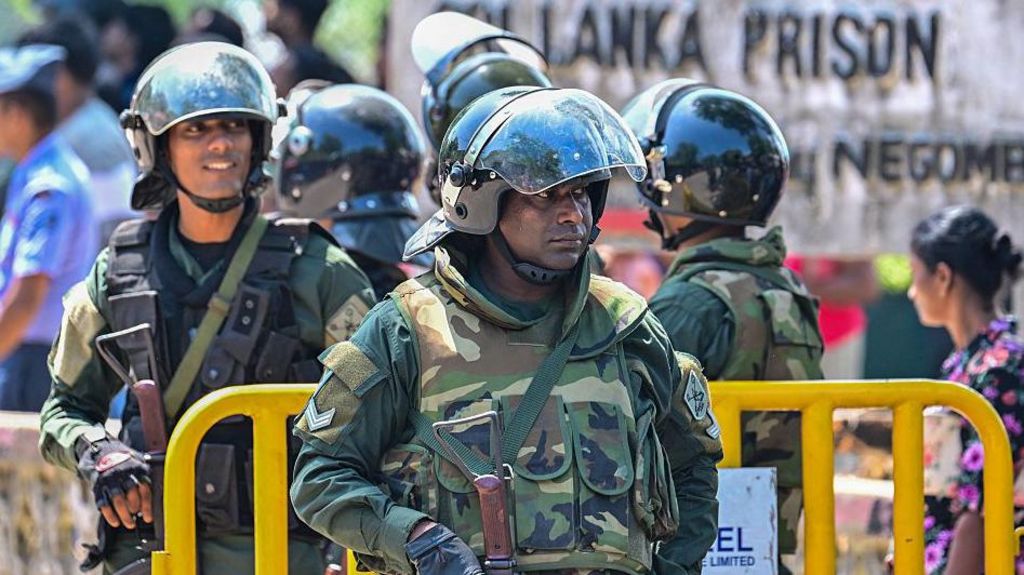
    Authorities in the South Asian nation have issued a high-level security alert for Islamabad, the national capital, and its adjacent garrison city Rawalpindi, the two primary hubs set to host the diplomatic event. Unnamed police sources familiar with the security plan confirm that around 20,000 regular police officers have been assigned to security duties across the so-called twin cities, with additional backup from hundreds of elite commandos including specially trained sniper units to counter potential threats.

    To reinforce the security perimeter, specialized rapid response units have also been put on high standby. Additional teams from the Punjab Highway Patrol, the Dolphin Force counter-terror unit, and the Quick Response Unit are positioned at key checkpoints and transit routes, while the integrated Safe City surveillance network and rooftop sniper outposts maintain continuous 24-hour monitoring of all public and sensitive areas across the region.

    This is not the first time Pakistan has rolled out such stringent security measures for US-Iran diplomatic engagement. Similar extensive security arrangements were implemented ahead of the first round of talks, which were launched to de-escalate rising tensions and hostilities that have disrupted stability across the Middle East in recent months.

    Security officials confirmed that advance delegations from the United States, including dedicated US security personnel, have already begun arriving in the country to coordinate logistics and security protocols ahead of the talks. As part of the finalized security plan, Pakistani authorities have enacted sweeping movement restrictions: all public and commercial transport services have been suspended across both Islamabad and Rawalpindi, and most access points to the capital’s high-security Red Zone, which houses key government buildings and foreign diplomatic missions, have been permanently sealed off for the duration of the event.

    Major five-star hotels frequently used to host high-profile international delegations, including the iconic Islamabad Serena Hotel and Islamabad Marriott Hotel, have been requisitioned by the government to accommodate negotiating teams and accompanying delegates. Hotel management has requested all existing non-official guests to vacate their rooms ahead of the talks. Additionally, all public hostels and private guest houses across the capital have been ordered to suspend operations until further official notice.

  • Aer Lingus cancels some flights from summer schedule

    Aer Lingus cancels some flights from summer schedule

    Irish national airline Aer Lingus has confirmed that it has slashed a slice of its scheduled summer flights, attributing the cuts to mandatory aircraft maintenance work. While the carrier says only a small share of its total seasonal schedule has been affected, independent media reports have put the number of canceled services at more than 500.

    In an official statement, Aer Lingus clarified that the adjustments affect roughly 2% of its overall flight schedule. The company added that it has rebooked the vast majority of impacted passengers onto alternate flights departing the same day, minimizing disruption to travel plans. According to earlier reporting from the *Sunday Independent*, the canceled routes cover popular short-haul connections out of Dublin Airport, including services to major European destinations such as Amsterdam, Athens, Berlin, Faro and Zurich, as well as key UK airports including London Heathrow, Manchester, Birmingham and Edinburgh across multiple dates in the summer season.

    The schedule changes come amid a growing regional jet fuel crisis that has sent global aviation fuel prices soaring, prompting industry analysts to question the official explanation for Aer Lingus’ cuts. The crisis traces back to the effective closure of the Strait of Hormuz — a critical chokepoint that carries much of the Gulf region’s oil and refined fuel exports to global markets — by Iran for more than six weeks. The closure was implemented in response to recent US and Israeli military attacks, and has already disrupted global supply chains, driving up jet fuel prices and stoking widespread fears of widespread shortages across Europe.

    Earlier this week, the head of the International Energy Agency (IEA) warned that Europe currently holds only around six weeks of commercially available jet fuel reserves. In an official briefing, the IEA noted that the ongoing supply crunch has thrown global aviation fuel markets into chaos, creating unprecedented cost pressures for air carriers worldwide. For most airlines, jet fuel accounts for between 20% and 40% of total operating costs, meaning even moderate price jumps can turn low-margin routes unprofitable overnight. As a result, carriers across the globe have already been forced to implement emergency cost-cutting measures to offset rising fuel expenses.

    While Aer Lingus has framed the cancellations as a routine response to mandatory maintenance requirements, veteran travel journalist Simon Calder argues the cuts are likely a symptom of the broader industry crisis hitting European aviation. “Airlines trimming some of their summer services is becoming widespread across Europe, because the doubling of the cost of fuel means some routes are no longer profitable,” Calder explained.

    Irish Transport Minister Darragh O’Brien has moved to reassure the public that the country’s jet fuel supply remains secure, brushing off concerns about immediate shortages. Speaking to Ireland’s national broadcaster RTÉ on the *This Week* program, O’Brien stated that Ireland maintains a robust 70-day jet fuel reserve, and sources most of its aviation fuel from the United States rather than Gulf markets. The minister added that decisions about flight scheduling remain independent operational choices for individual airlines, separate from government supply policy.

  • Thousands of Parisians evacuated as WW2 bomb detonated

    Thousands of Parisians evacuated as WW2 bomb detonated

    On a Sunday in April, a massive coordinated emergency operation unfolded in Colombes, a northern suburb of Paris, where authorities safely disposed of a decades-old unexploded World War II-era bomb after evacuating thousands of local residents. The operation, which required weeks of careful preparation and hundreds of law enforcement personnel, concluded successfully without any injuries or damage to surrounding infrastructure, allowing displaced residents to return to their homes by early Sunday evening.

    The journey to Sunday’s disposal operation began on April 10, when construction crews working on infrastructure projects along Rue des Champarons uncovered the large, intact wartime munition. Immediately after the discovery, local authorities moved quickly to secure the site, piling sand over the device to reduce potential risk while planners drew up a detailed strategy for its neutralization.

    In the lead-up to the operation, local officials made it clear that the mission carried inherent risks that demanded rigorous preparation. Alexandre Brugère, a leading local official, publicly described the task as inherently “risky” and noted that it required an extraordinary level of advance planning to protect public safety.

    To carry out the operation, a multi-tiered safety perimeter was established around the bomb’s location. A core 450-meter radius zone was cleared entirely, with all residents ordered to evacuate their homes by 7 a.m. local time (5 a.m. GMT). Beyond this inner zone, a wider 900-meter perimeter required nearly 800 deployed police officers to enforce evacuation rules, while a second extended zone stretching 1 kilometer from the site allowed residents to remain inside their homes but banned all outdoor activity for the duration of the operation.

    Local authorities distributed emergency alerts to all residents in affected areas, clearly outlining evacuation instructions and confirming that no one would be permitted to return until the device was fully neutralized. For many residents, the evacuation was sudden and unexpected. Alida, a local resident interviewed by Le Parisien, shared that “The authorities told us to close our windows and shutters when we left the house, but we didn’t take anything – we left everything as it was.”

    Local government set up dedicated reception centers to host displaced residents during the operation, with specialized support on hand for vulnerable community members who required ongoing medical assistance.

    According to reports from French media, bomb disposal experts initially attempted to remove the bomb’s original detonator, but the attempt was unsuccessful. Facing the risk of an accidental unplanned detonation, teams made the decision to carry out a controlled in-situ detonation to destroy the historic munition. The controlled explosion was carried out at 3:20 p.m. local time, and officials confirmed the operation was completed successfully just under an hour later, lifting the evacuation order shortly after 4 p.m.

    Unexploded ordnance from World War II remains a common discovery across Europe, 86 years after the outbreak of the global conflict. Most of these devices are uncovered during construction or excavation work, and those found in dense urban areas carry an amplified risk due to the large surrounding residential and commercial populations.

    In recent years, similar discoveries have prompted large-scale evacuations across major European cities. Dozens of WWII bombs have been found across London in recent years, forcing evacuations of popular tourist districts and even the temporary shutdown of London City Airport. Just one year ago, a 500-kilogram undetonated bomb was discovered and successfully diffused near Paris’ Gare du Nord train station during construction work to install a new bridge over existing railway lines.

  • Pope Leo XIV calls for ‘hope’ before 100,000 faithful in Angola

    Pope Leo XIV calls for ‘hope’ before 100,000 faithful in Angola

    On a sunlit open-air plain outside Angola’s capital Luanda this Sunday, nearly 100,000 devout Catholics gathered to greet Pope Leo XIV, the first American pontiff, who used his address to urge the resource-rich southern African nation to embrace a hopeful new future despite decades of conflict, systemic inequality, and corruption.

    The open-air Mass, held in the Kilamba district roughly 30 kilometers from central Luanda, drew pilgrims from across the country. Many attendees slept overnight on the open ground in the lead-up to the event, wearing printed T-shirts emblazoned with the pope’s image. After weaving through the dense throngs of worshippers in his popemobile, Leo centered his homily on the theme of collective renewal for Angola, a nation still grappling with the legacy of a 27-year civil war that concluded in 2002.

    “It is possible to build a country where old divisions are overcome forever, where hatred and violence disappear, where the wound of corruption is healed by a new culture of justice and sharing,” the pontiff told the crowd, encouraging Angolans to “look to the future with hope” and pursue a new national beginning.

    Leo’s arrival in Angola on Saturday marked the third stop of his ambitious 11-day, four-nation tour across Africa, a trip that has already seen the pope speak out forcefully against the systemic exploitation of the continent’s natural resources by global actors and domestic elites, while drawing international headlines for a high-profile public dispute with U.S. President Donald Trump.

    Shortly after touching down in Luanda following a leg of the tour in Cameroon, the pope joined a meeting with Angolan President Joao Lourenco and top government officials, where he renewed his criticism of the widespread suffering caused by deep poverty and unregulated resource extraction. He also pressed leaders to allow for open political disagreement, an implicit rebuke of the Lourenco administration, which has faced consistent international accusations of cracking down on human rights activists and political dissent.

    Angola’s paradox of wealth amid widespread hardship makes it a critical stop for the pontiff’s tour: the country ranks among Africa’s top oil producers and holds vast reserves of diamonds and other natural resources, yet economic inequality remains extreme. World Bank data shows that roughly one-third of Angola’s 36.6 million residents live below the poverty line, despite the nation’s abundant natural wealth. With a national median age of just 23, high youth unemployment has driven thousands of young Angolans to emigrate to Western countries in search of better opportunities.

    Patricio Musanga, a 32-year-old attendee at the Kilamba Mass, told reporters that he came seeking encouragement for Angola’s younger generation and hoped the pope’s platform would push leaders to address systemic inequity. “We are very rich in natural resources but… there is a glaring inequality between those who live well and the others,” Musanga said. “The pope must call our leaders to account… I believe that at least he will be listened to by the authorities.”

    Father Pedro Chingandu, a Catholic priest who traveled to the Mass from Angola’s eastern Moxico Province, echoed that sentiment, telling Agence France-Presse: “We need real democracy and the redistribution of wealth and justice.”

    After concluding the open-air Mass, the pope traveled south to the coastal town of Muxima, home to the 16th-century Mama Muxima shrine, one of the most revered Catholic pilgrimage sites in southern Africa. Hundreds of pilgrims camped overnight in multicolored tents ahead of Leo’s arrival, with many describing the shrine as the spiritual heart of the Angolan nation.

    Veronica Simao Teka, a 60-something pilgrim, called the site “the soul and the heart of all Angolans,” while 21-year-old nursing student Meraldo Amon Daniel said she hoped the pope’s visit would strengthen both public faith and the commitment of Angola’s leaders to reform. “It can strengthen the faith, not only of the faithful, but also of the country’s authorities,” Daniel said.

    Angola’s ruling party, the socialist MPLA, has held continuous control of the government since the nation gained independence from Portugal in 1975, and has faced growing criticism over its response to political unrest. Last July, a crackdown on three days of looting across Luanda and other urban centers left roughly 30 people dead, with analysts saying the unrest reflected widespread public dissatisfaction with the ruling party’s governance.

    Speaking to reporters on his flight to Luanda, Leo addressed the high-profile public dispute that has dominated international coverage of his tour, saying he regretted that his war of words with Donald Trump had overshadowed the trip’s focus on Africa. After Leo called for an immediate end to the ongoing Middle East war, Trump publicly labeled the pope “weak” in response. Leo, the first American to ever hold the papacy, said he had no interest in continuing the public feud: “It is not in my interest at all” to debate the U.S. leader, he said.

    Following the conclusion of his events in Angola, Leo will travel to Equatorial Guinea for the final stop of the 18,000-kilometer continental tour.

  • USS Rushmore conducts blockade operations in Arabian Sea: US Central Command

    USS Rushmore conducts blockade operations in Arabian Sea: US Central Command

    Fresh geopolitical friction has erupted across key strategic waterways in the Middle East, as the United States has deployed multiple major naval vessels to carry out blockade operations in the Arabian Sea, prompting an immediate countermeasure from Iran that closes off the vital Strait of Hormuz. The US Central Command made the official announcement of the deployment on Saturday, confirming that dock landing ship USS Rushmore is leading the ongoing blockade operations in the Arabian Sea.

    Earlier the same day, the command posted on social media that the guided-missile destroyer USS Pinckney is conducting routine patrols across regional waters to back up the blockade mission, while the amphibious transport dock ship USS New Orleans has been assigned to monitor commercial shipping traffic moving through the area.

    This American military move comes hours after Iran’s Islamic Revolutionary Guard Corps (IRGC) Navy made its own announcement: the Strait of Hormuz, one of the world’s most critical chokepoints for global oil and commercial shipping, has been fully blocked to traffic starting Saturday evening. Iranian officials have made clear the waterway will remain closed until the United States fully withdraws its ongoing naval blockade from the region.

    Just one day before the latest escalation, on Friday, both Washington and Tehran had confirmed that the Strait of Hormuz was fully open and accessible to all commercial vessels moving through the area. Despite that mutual confirmation, former US President Donald Trump stated on his social platform Truth Social that the US naval blockade would “remain in full force.” That statement directly triggered Iran’s warning, in which Tehran pledged to permanently close the strategic waterway if the US blockade is not lifted.

  • Russian attacks kill at least 2 as Ukraine strikes a Russian drone factory

    Russian attacks kill at least 2 as Ukraine strikes a Russian drone factory

    In the latest escalation of the ongoing Russia-Ukraine conflict, a wave of mass Russian drone strikes across Ukrainian territory over the weekend left at least two civilians dead and multiple others injured, while Ukrainian military forces carried out a retaliatory strike on a key drone manufacturing facility inside Russian territory. These tit-for-tat attacks underscore the persistent intensification of long-range strikes on both sides amid the grinding full-scale invasion.
    On Sunday morning, regional and local Ukrainian officials confirmed the civilian casualties from overnight airstrikes launched by Russia. In the northern Ukrainian city of Chernihiv, a 16-year-old teenager was killed when Russian drones hit residential areas during what local military administration head Dmytro Bryzhynskyi described as a massive nighttime attack. Bryzhynskyi announced on his Telegram channel that search and rescue teams recovered the teenager’s body while clearing rubble from damaged structures. The strike also left four additional people injured: three women and one man, and ignited destructive fires that gutted multiple residential homes, he added.
    Across southern Ukraine, a second civilian fatality was recorded in Kherson after a Russian drone targeted a civilian passenger van traveling through the city center. Oleksandr Prokudin, head of the Kherson regional military administration, confirmed that the driver of the vehicle died from his injuries, while a second male passenger was admitted to a local hospital with severe blast-related injuries.
    Ukraine’s Air Force released official figures confirming the staggering scale of the Russian attack, noting that Moscow deployed a total of 236 drones across Ukrainian territory between Saturday night and Sunday morning. Ukrainian air defense systems managed to intercept and destroy 203 of the incoming unmanned aerial vehicles (UAVs), while 32 Russian drones successfully breached defenses and struck targets across 18 separate locations around the country, the service reported.
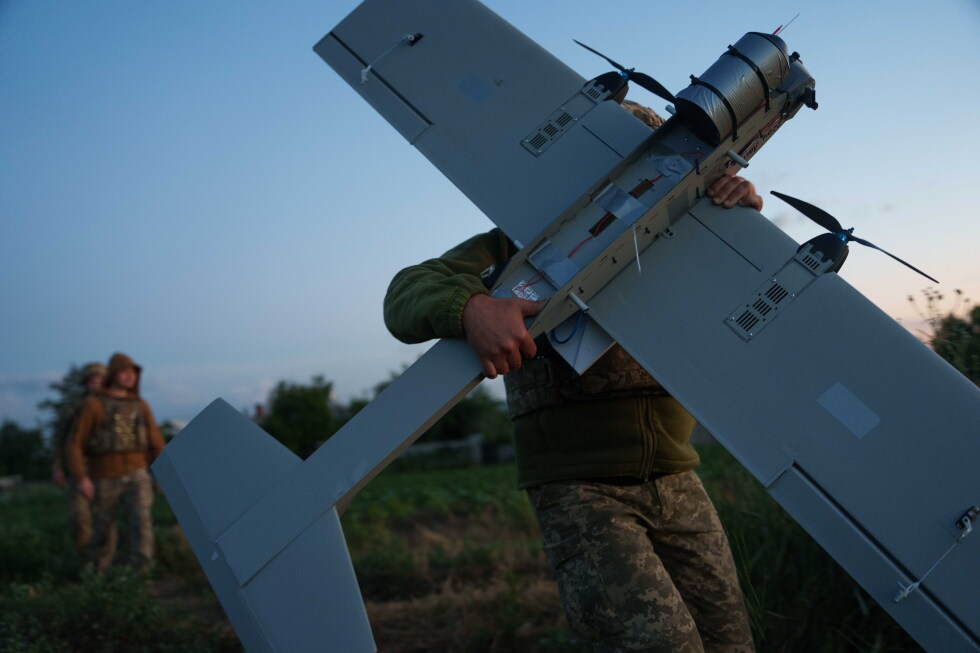
    In a coordinated retaliatory action, Ukraine’s General Staff announced that its own military forces had carried out a targeted strike on a Russian drone production facility in Taganrog, a city in southwestern Russia located roughly 35 miles east of the Russian-occupied eastern Ukrainian border. The targeted site was the Atlant Aero factory, a facility that designs and builds both reconnaissance and combat drones, as well as producing critical components for larger UAVs capable of carrying guided bombs weighing up to 550 pounds, according to Ukrainian military officials. The strike triggered a large fire at the factory site, they added.
    Russian authorities have confirmed the strike but have not explicitly acknowledged the target was the drone factory. Taganrog regional governor Yuri Slyusar stated that three people were injured in the overnight attack on commercial infrastructure in the city, and that the strike sparked fires that destroyed local warehouses. Taganrog Mayor Svetlana Kambulova further clarified that the attack damaged multiple local commercial enterprises, a city vocational school, and dozens of civilian vehicles parked in the area.
    Russia’s Ministry of Defense also released a statement about its own air defense operations over the weekend, claiming that Russian forces shot down 274 Ukrainian drones overnight, alongside multiple guided aerial bombs and one domestically produced Ukrainian Neptune anti-ship missile. The ministry did not provide details on how many Ukrainian munitions evaded interception to hit their intended targets.
    This exchange of large-scale long-range strikes comes as the conflict has entered a months-long stalemate along the front lines, with both sides increasingly turning to drone and missile strikes targeting infrastructure and military assets deep behind enemy lines.