分类: world

  • Winter storm batters western US, cuts power to around 750,000 customers

    Winter storm batters western US, cuts power to around 750,000 customers

    A catastrophic winter storm, fueled by a powerful atmospheric river, has wreaked havoc across the western and central United States, resulting in massive power disruptions affecting approximately 750,000 customers and causing severe flooding that claimed at least one life. The extreme weather system reached its peak intensity with hurricane-force wind gusts recorded at 231 km/h (143 mph) on Mount Coffin, Wyoming, according to recent meteorological data.

    The storm’s ferocity was further demonstrated by similarly extreme wind measurements: 228 km/h (142 mph) at Coldwater Ridge in Washington state and 222 km/h (138 mph) at Mount Hood, Oregon. These unprecedented conditions triggered widespread electricity failures, with online outage tracking systems indicating nearly 600,000 customers across Washington, Oregon, and Idaho remained without power as of Thursday.

    Washington state emerged as the most severely impacted region, where levee failures and dangerously swollen rivers forced emergency evacuations in multiple communities near Seattle. Tragedy struck in Snohomish, northeast of Seattle, where authorities confirmed one fatality after a man drove past road closure signs into floodwaters and became trapped in his submerged vehicle.

    Governor Bob Ferguson characterized the devastation as ‘profound,’ noting that critical infrastructure has suffered extensive damage. A significant portion of US Route 2, a vital east-west transportation artery connecting western Washington cities, has been severely compromised and will require extensive reconstruction efforts, resulting in prolonged closures.

    Meteorologists warn that additional atmospheric rivers are approaching the West Coast, with the National Weather Service forecasting a 60-70% probability of above-normal precipitation for California’s San Francisco Bay Area between December 19-25, raising concerns about further flooding potential in the already saturated region.

  • Cambodia counts the cost of its border war with Thailand

    Cambodia counts the cost of its border war with Thailand

    The simmering border conflict between Thailand and Cambodia has erupted into its most destructive phase in decades, with mounting casualties and infrastructure damage revealing the stark asymmetry between the two Southeast Asian nations. At Mongkol Borei hospital in northwestern Cambodia, the human cost is painfully visible as medical staff treat soldiers with catastrophic injuries from sustained artillery exchanges and airstrikes.

    Dr. Sar Chanraksmey, an anesthetist at the facility, displayed graphic images of blast injuries on his trembling phone while pleading for international attention. ‘My heart aches,’ he told reporters. ‘Please tell the world we just want peace.’

    The current hostilities, which resumed on December 7th, represent the second major outbreak of violence in six months and have already surpassed July’s five-day conflict in both duration and destructiveness. The fighting centers on disputed forested hilltops along the 800-kilometer border, but has expanded to include strategic bombing campaigns deep inside Cambodian territory.

    Thailand’s military superiority has proven decisive. With Cambodia possessing limited air defenses and no meaningful air force, Thai F-16 jets have conducted bombing runs with impunity. A key Chinese-built bridge over the Me Teuk river in Pursat province now bears a 20-meter gap where Thai bombs struck, severing a vital transportation link between Cambodia’s southern border regions and the interior.

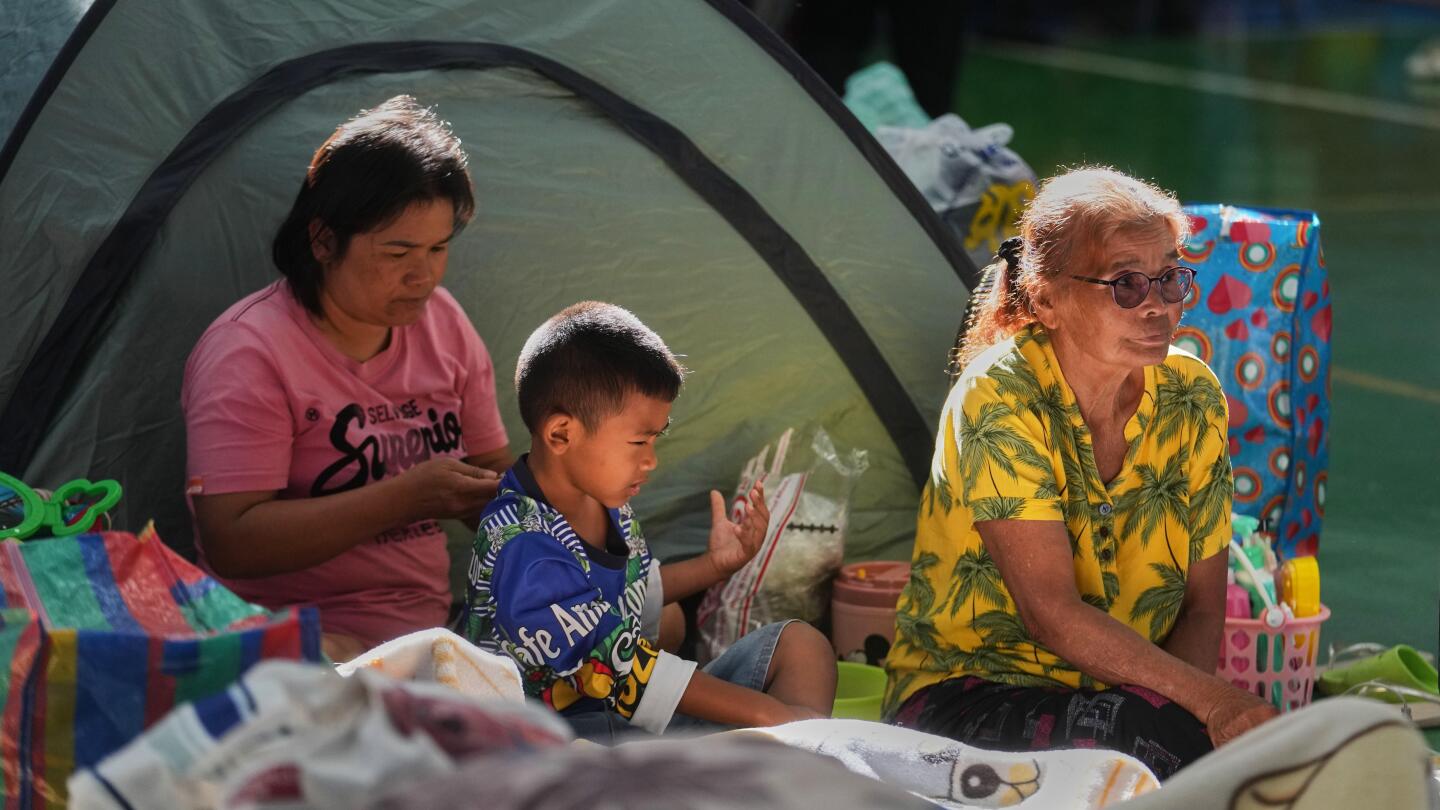
    The human toll appears dramatically lopsided. While Thailand acknowledges 21 military fatalities, estimates suggest Cambodian losses number in the hundreds—a disparity underscoring Thailand’s better-equipped armed forces. Civilian displacement has reached crisis levels, with approximately 480,000 Cambodians uprooted from their homes and over 700,000 migrant workers returning from Thailand amid rising hostility.

    The economic impact continues to deepen with the complete cessation of the $5 billion annual border trade. Meanwhile, Thailand has strategically targeted casino complexes associated with Cambodia’s lucrative scam industry, exploiting what international observers see as a vulnerability in Cambodia’s moral standing.

    Diplomatic efforts have stalled against Thailand’s hardened position. Prime Minister Auntin Chanvirakul has rejected ceasefire appeals from both Cambodia and international mediators including former President Trump, stating bluntly: ‘We don’t have to listen to anyone.’ Thai military commanders insist fighting must continue until Cambodia ‘no longer poses a threat on the border.’

    The conflict’s roots extend beyond the 120-year territorial dispute. Thailand remains embittered by what it perceives as Cambodian provocation, including leaked diplomatic communications by Cambodian leader Hun Sen that contributed to the collapse of Thailand’s previous government, and allegations that Cambodian forces laid landmines during the July ceasefire.

    With Thailand facing elections in February and nationalist sentiments surging on both sides, the prospects for near-term de-escalation appear dim. Both nations have embraced familiar narratives—Cambodia playing the victim seeking international intervention, Thailand positioning itself as the bully enforcing regional stability—but the amplification of these stereotypes through social media has created unprecedented public animosity that constrains diplomatic flexibility.

  • A look at the US military’s unusually large force near Venezuela

    A look at the US military’s unusually large force near Venezuela

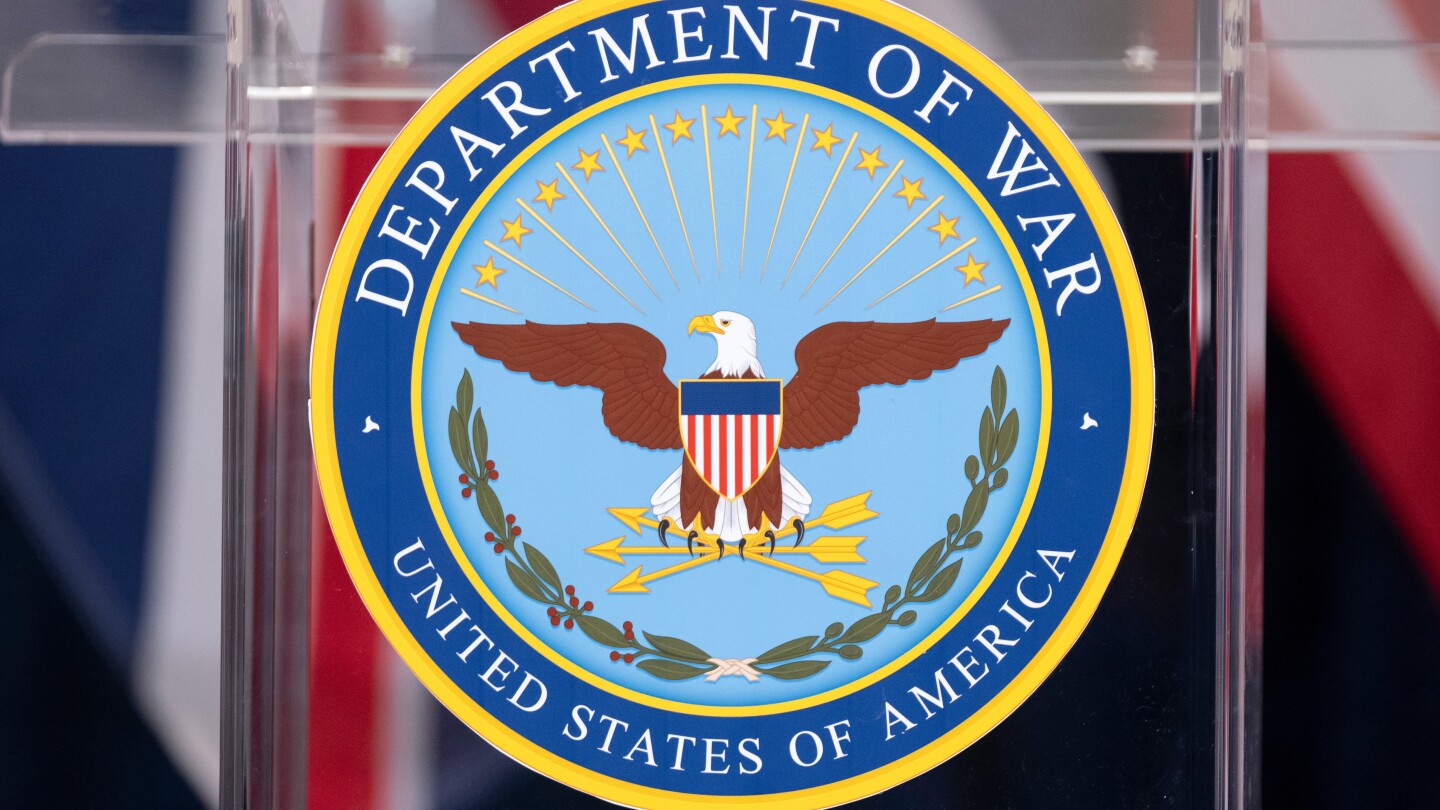
    The United States has initiated its most substantial military mobilization in the Caribbean region in decades, deploying approximately 15,000 personnel as part of an intensified counter-narcotics operation targeting Venezuelan drug trafficking networks. This strategic buildup represents the Trump administration’s most assertive military response to the narcotics trade in the Western Hemisphere.

    Naval forces constitute the operation’s backbone, featuring an impressive armada of 11 warships led by the USS Gerald R. Ford—the Navy’s most advanced aircraft carrier. The carrier strike group is complemented by five destroyers, three amphibious assault ships, and two cruisers, creating an unparalleled maritime presence. The amphibious readiness group transports a full Marine expeditionary unit equipped with specialized aircraft including Osprey tilt-rotor aircraft, Harrier jets, and various helicopter squadrons capable of executing both troop transport and precision strike missions.

    The naval firepower includes Tomahawk cruise missiles with significant strike range capabilities, while a nuclear-powered submarine operates covertly in South American waters, further enhancing the mission’s strategic reach.

    Air operations have similarly expanded with advanced aircraft deployed to Puerto Rico’s strategic airfields. The Marine Corps has stationed F-35B Lightning II stealth fighter jets, while Navy EA-18G Growler electronic warfare aircraft provide electronic countermeasures capabilities. Most significantly, MQ-9 Reaper drones—capable of extended endurance and precision strikes—have been actively conducting surveillance and targeting operations.

    The aerial component also includes P-8 Poseidon maritime patrol aircraft and the heavily armed AC-130J Ghostrider gunship, capable of delivering precision firepower against ground targets. Demonstrative flights by B-52 Stratofortress and B-1 Lancer bombers, including one mission explicitly labeled a ‘bomber attack demonstration,’ underscore the operation’s serious intent.

    In a particularly provocative maneuver, US F/A-18 fighter jets recently conducted extended flights over the Gulf of Venezuela, bringing American airpower within 150 miles of Venezuelan territory—the closest approach since operations commenced.

    The Pentagon maintains operational secrecy regarding specific troop distributions, but confirms that nearly 10,000 personnel are deployed aboard vessels, with additional support from various military branches and government agencies. This comprehensive military response represents the Trump administration’s tangible implementation of its narco-terrorism charges against Venezuelan leadership.

  • Heavy rains, thunderstorms: UAE embassy issues warning to citizens in Oman

    Heavy rains, thunderstorms: UAE embassy issues warning to citizens in Oman

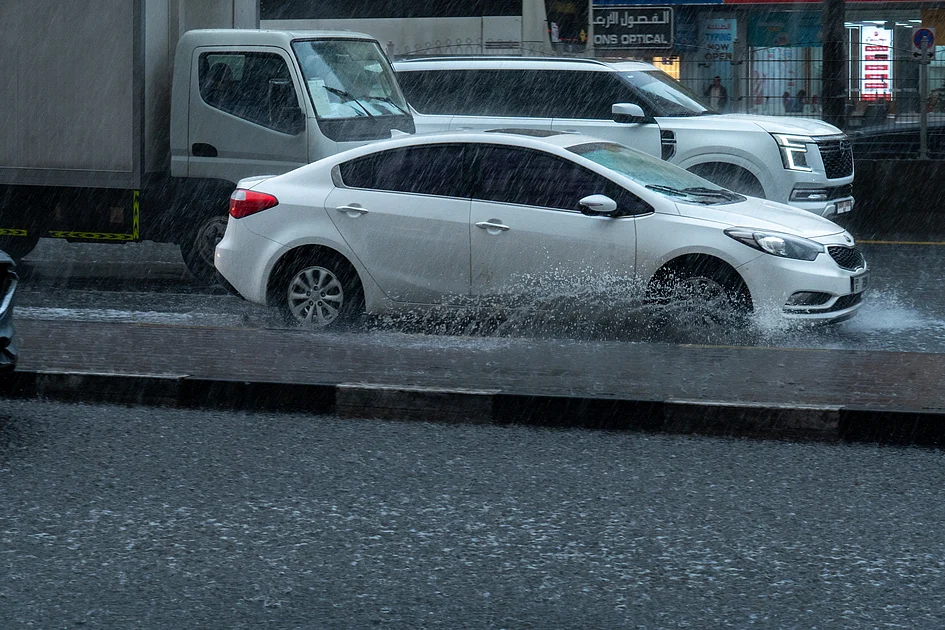
    The UAE Embassy in Muscat has issued an urgent advisory to Emirati citizens residing in or visiting Oman, urging extreme caution as a significant low-pressure system generates severe weather conditions across the Arabian Peninsula. This meteorological disturbance, tracking from west to east, has unleashed heavy rainfall and intense thunderstorms throughout the region, impacting Saudi Arabia, the UAE, Qatar, and Oman with particular severity.

    In response to the deteriorating conditions, the embassy emphasized the critical need for citizens to exercise utmost vigilance against hazards including flash flooding, waterlogged roadways, and powerful winds. Official safety protocols issued by Omani authorities must be strictly adhered to for personal safety.

    For emergency assistance, the embassy activated dedicated contact channels: 0097180024 and 0097180044444. Furthermore, citizens were strongly encouraged to register with the Tamheed service to ensure timely receipt of critical updates and support.

    This regional weather event has prompted widespread operational changes. Several Gulf Cooperation Council (GCC) nations, including the UAE, have preemptively implemented remote working arrangements and distance learning programs to mitigate risks and ensure public safety as the unstable conditions persist, significantly disrupting daily life and transportation networks.

  • Watch: Snow in the desert? Saudi Arabia has a white winter in some areas

    Watch: Snow in the desert? Saudi Arabia has a white winter in some areas

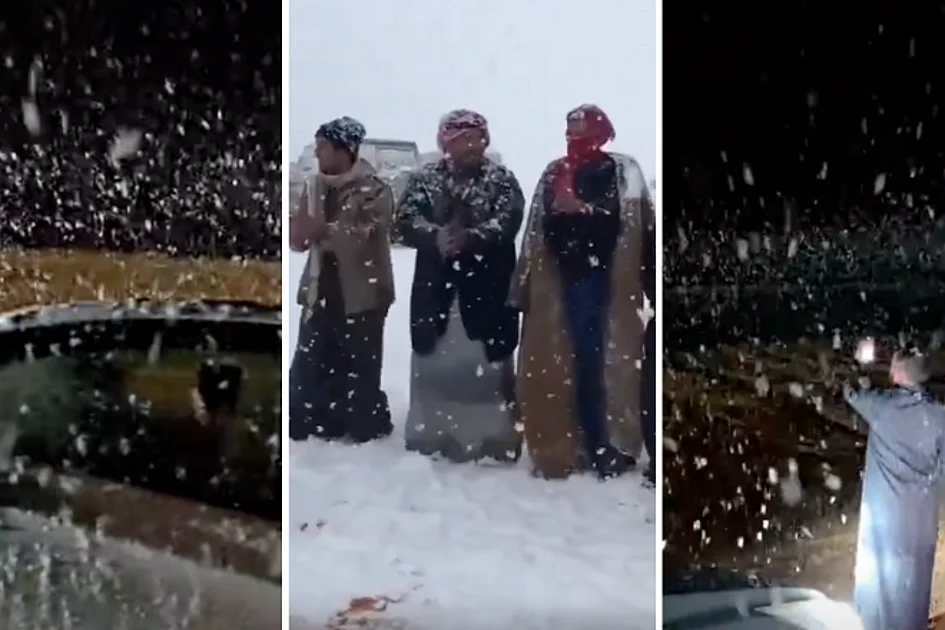
    In an extraordinary meteorological phenomenon, the arid landscapes of northwestern Saudi Arabia experienced a rare blanket of snowfall on Thursday, December 18th, 2025. The majestic Jabal Al Lawz mountain region witnessed desert dunes transformed into winter wonderlands as temperatures plummeted across the Arabian Peninsula.

    Social media platforms circulated captivating visuals depicting local residents, clad in winter attire, celebrating the unprecedented weather event with traditional songs and dances. Vehicle rooftops and desert surfaces alike disappeared beneath a layer of white precipitation, creating surreal contrasts against the region’s characteristic terrain.

    This exceptional weather occurrence stems from an extended period of low-pressure systems dominating Middle Eastern atmospheric conditions throughout the previous week. Meteorological authorities from BBC Weather indicated further intensification throughout Thursday, with anticipated thunderstorms progressing eastward toward the United Arab Emirates and Qatar by nightfall.

    The Saudi government, alongside neighboring Gulf nations, has issued comprehensive safety advisories urging citizens to exercise caution during these unusual weather patterns. While residents expressed awe and jubilation at the natural spectacle, authorities emphasized preparedness for continued precipitation and potentially hazardous travel conditions.

    This event marks one of the most significant winter weather occurrences in recent Arabian meteorological history, highlighting changing climate patterns across traditionally arid regions. Scientists and climate observers are particularly interested in documenting the duration and environmental impact of these unusual precipitation events.

  • ‘She’s a superhero’: The acts of bravery as Bondi horror unfolded

    ‘She’s a superhero’: The acts of bravery as Bondi horror unfolded

    In the wake of Australia’s deadliest terrorist attack at Sydney’s Bondi Beach, extraordinary accounts of human bravery have surfaced from the chaos that left 15 dead and dozens injured. The attack, carried out by two Islamic State-inspired gunmen during Hanukkah celebrations, revealed profound acts of selflessness from ordinary citizens.

    Among the most poignant stories is that of Jessica, a mother who, while separated from her own three-year-old, discovered another lost child—Gigi, wearing a rainbow skirt—crying for her parents. Without hesitation, Jessica used her body as a human shield, covering Gigi while repeating “I’ve got you” as gunfire erupted around them. They felt the impact when a woman just meters away was fatally shot.

    Meanwhile, Gigi’s father Wayne experienced what he describes as “the longest 10 minutes” of his life. While shielding his eldest daughter, he desperately searched for Gigi, eventually spotting her colorful skirt amidst the carnage. Finding his daughter safe beneath Jessica’s protection, Wayne declared her “an absolute superhero” to whom his family would be “indebted for the rest of our lives.”

    The heroism extended throughout the beachfront. Syrian-Australian shop owner Ahmed al Ahmed, having coffee nearby, sprang into action upon hearing gunshots. Viral footage shows him emerging from behind a car to wrestle a weapon from one attacker, sustaining multiple gunshot wounds that may cost him his arm. Reuven Morrison assisted by hurling objects at the disarmed attacker.

    Tragic bravery marked the attack’s beginning as well. The first victims, Boris and Sofia Gurman, were captured on dashcam footage grappling with a gunman for his weapon. Though they temporarily succeeded, the attacker retrieved another firearm and killed them. Their family expressed “overwhelming pride in their bravery and selflessness.”

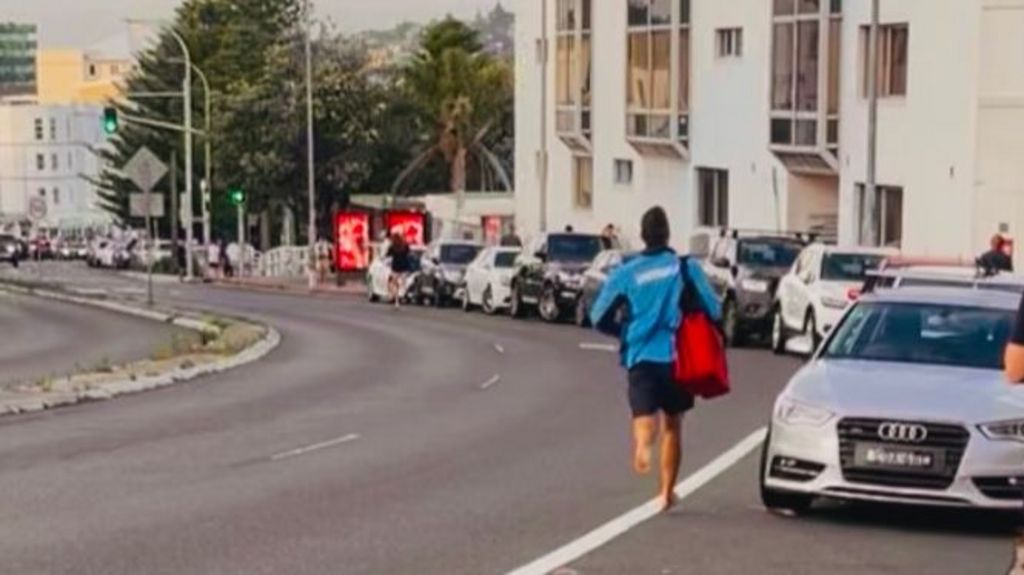
    Additional acts of valor included 14-year-old Chaya taking bullets in the leg while shielding younger children; rookie police officer Jack Hibbert, 22, continuing to aid victims after being shot in both head and shoulder; and lifeguard Jackson Doolan sprinting barefoot from a neighboring beach with medical supplies. Other lifeguards repurposed rescue boards as stretchers and even returned to the surf to save panicked swimmers.

    The response extended beyond the immediate scene. Thousands of Australians flocked to donation centers, shattering blood donation records. Off-duty first responders traveled up to two hours to assist, while healthcare workers rushed to hospitals—St Vincent’s Hospital operated eight theaters simultaneously instead of the usual one on Sunday nights.

    Prime Minister Anthony Albanese and State Premier Chris Minns have praised these extraordinary responses. Minns noted that despite “a terrible, wanton act of destructive violence,” Australians “showed their true colours” through their courage and compassion.

    As Wayne reflected after attending the funeral of 10-year-old Matilda, the attack’s youngest victim: “There could have been so much more devastation without the bravery of these people… That’s what the world needs more of.”

  • Pope blasts ‘irrationality’ of military deterrence in first annual peace message

    Pope blasts ‘irrationality’ of military deterrence in first annual peace message

    In his inaugural annual peace message, Pope Leo XIV delivered a powerful condemnation of contemporary global conflicts, labeling nuclear deterrence strategies as fundamentally irrational and criticizing the exploitation of religious rhetoric for political violence. The pontiff’s address, presented during an emotionally charged Vatican press conference, marked the Catholic Church’s preparation for its World Day of Peace observance on January 1st.

    Reflecting on his first words as pontiff—”Peace be with you”—delivered from St. Peter’s Basilica on May 8, Pope Leo challenged the normalization of fear and conflict in modern society. He asserted that treating peace as a distant ideal creates dangerous complacency when violence erupts. “When we treat peace as a distant ideal, we cease to be scandalized when it is denied, or even when war is waged in its name,” he declared in the document.

    The Pope specifically targeted the intersection of private economic interests with military technological advancement, noting how artificial intelligence is being leveraged to develop increasingly sophisticated weaponry. This convergence, he argued, accelerates the irrational logic of military deterrence that threatens global stability.

    In a significant ecumenical appeal, Pope Leo urged all religious communities to resist the temptation to weaponize faith language for violent purposes. “Unfortunately, it has become increasingly common to drag the language of faith into political battles, to bless nationalism, and to justify violence and armed struggle in the name of religion,” he wrote.

    The Vatican underscored the message’s urgency by translating it into Russian and Ukrainian alongside its usual eight languages, directly referencing Moscow’s ongoing conflict. The press conference featured poignant testimonies from survivors of European conflicts, including Maria Agnese Moro, daughter of assassinated Italian Premier Aldo Moro, who shared her experience with restorative justice through dialogue with former Red Brigades members. Croatian Catholic priest Rev. Pero Miličević provided a harrowing account of the Bosnian war, describing how his faith enabled him to overcome the trauma of losing 39 family members and surviving imprisonment.

    Both witnesses emphasized the transformative power of mutual recognition and forgiveness, with Moro noting that “true listening is a mutual recognition of humanity”—a principle that aligns with the Pope’s vision of achievable peace through genuine dialogue and moral courage.

  • Winter death toll in Gaza reaches 17 as calls on Israel to lift aid blockade grow

    Winter death toll in Gaza reaches 17 as calls on Israel to lift aid blockade grow

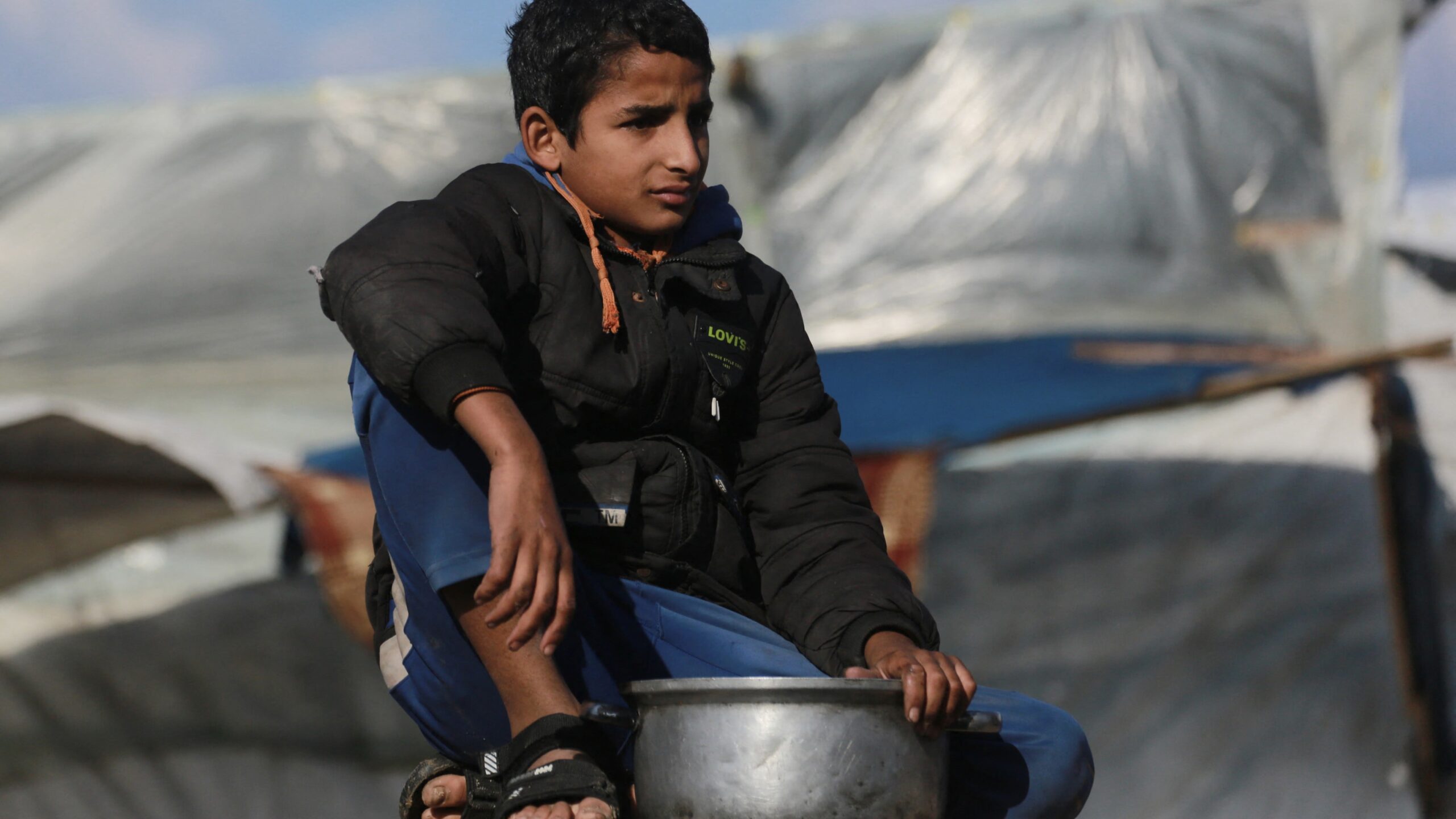
    A severe winter storm has exacerbated the humanitarian catastrophe in Gaza, claiming at least 17 Palestinian lives including four children who succumbed to hypothermia amid freezing temperatures. The youngest victim, one-month-old Saeed Asaeed Abdeen, died from severe hypothermia as Storm Byron swept through the territory with torrential rains and destructive floods.

    Medical authorities at al-Shifa Medical Complex report critical shortages of medicines and supplies, with over half of vital medications completely unavailable. Director Muhammad Abu Salmiya warned that children face extreme vulnerability from the combined threats of ongoing Israeli bombardment, freezing conditions, and rapidly spreading diseases.

    Gaza’s infrastructure collapse has turned winter weather into a lethal threat. According to Gaza Civil Defence spokesperson Mahmoud Basal, over a dozen compromised buildings have collapsed since heavy rainfall began last week, with emergency teams responding to damage at more than 90 structures and fielding over 5,000 distress calls within a month.

    The municipal government in Gaza City has raised alarms about a worsening waste management crisis, exacerbated by fuel shortages that have severely limited collection services. Approximately 90% of shelters across the territory have been submerged or swept away by floodwaters, leaving thousands of families without possessions or protection from the elements.

    Visual evidence circulating online shows tents being blown away by high winds, completely flooded shelters and hospitals, and collapsed concrete walls crushing temporary accommodations. In one tragic incident in Gaza City’s Tel al-Hawa neighborhood, a wall collapse on a displacement tent resulted in multiple fatalities.

    The crisis stems from what UN agencies and over 200 NGOs describe as Israel’s systematic obstruction of humanitarian aid. A joint statement condemned Israel’s ‘ongoing re-registration process and other arbitrary hindrances’ that have left millions of dollars worth of essential supplies stranded outside Gaza. The organizations emphasized that humanitarian access constitutes a legal obligation under international humanitarian law, particularly given Israel’s failure to ensure adequate supplies for the population.

    According to the latest UNRWA situation report, Israeli authorities continue blocking the agency from directly delivering humanitarian personnel and aid into Gaza. The territory has endured over two years of restricted goods entry, with only limited supplies entering under intense diplomatic pressure despite the destruction of nearly 80% of structures.

    The compounded crises have left Gaza’s population of over two million without reliable access to clean water, food, shelter, healthcare, clothing, or fuel. Rainwater accumulation combined with destroyed drainage and sewage systems creates additional environmental and health hazards for displaced Palestinians residing in inadequate temporary shelters.

    Israeli military operations continue despite ceasefire discussions, with UNRWA reporting multiple installations struck recently, causing additional casualties. The overall death toll from the conflict now exceeds 70,669, including more than 20,000 children, with thousands more missing and presumed dead.

  • In rare ruling, EU’s top court sides with refugee’s appeal in a landmark case against Frontex

    In rare ruling, EU’s top court sides with refugee’s appeal in a landmark case against Frontex

    In a groundbreaking legal development, the European Union’s highest judicial authority has issued a landmark ruling that could transform accountability mechanisms for border operations across the continent. The Court of Justice of the European Union (CJEU) has sided with Syrian refugee Alaa Hamoudi in his unprecedented damages claim against Frontex, the EU’s border and coast guard agency.

    The Luxembourg-based court determined that lower courts had inadequately assessed Hamoudi’s allegations regarding his collective expulsion from Greece to Turkey alongside 21 other migrants in April 2020. Judicial authorities found Hamoudi’s evidence “sufficiently detailed, specific and consistent” to warrant reconsideration, sending the case back to the General Court for comprehensive re-evaluation.

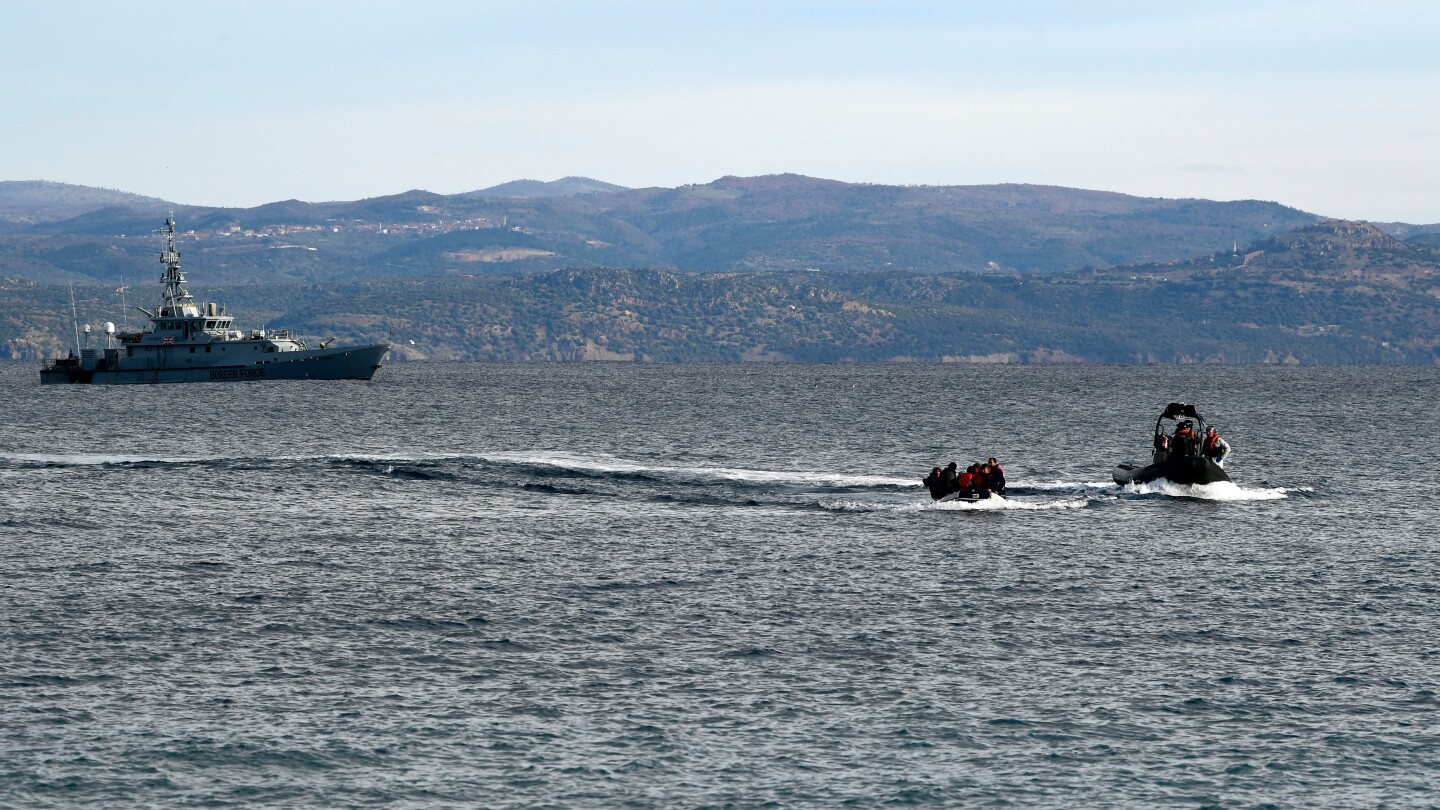
    Hamoudi’s harrowing account describes arriving on the Greek island of Samos only to have phones confiscated by police before being forced onto life rafts. The group was allegedly towed into Turkish waters and abandoned for 17 hours before rescue by Turkish coast guard, with Hamoudi reporting Frontex surveillance aircraft circling overhead twice during the ordeal.

    The ruling establishes crucial legal precedents regarding evidence standards in cases involving migrants and powerful institutions. The court acknowledged the profound power imbalance that typically prevents migrants from gathering comprehensive evidence against border agencies. This recognition potentially removes significant barriers to justice for thousands who have experienced similar pushback operations.

    Legal experts hail the decision as transformative. Iftach Cohen, lead counsel for Hamoudi, emphasized that this “historic” judgment could benefit tens of thousands of migrants subjected to similar expulsions along European borders. The case represents the first successful challenge to Frontex’s traditional legal impunity regarding border operations.

    Frontex responded to the ruling by committing to enhanced transparency and improved operational standards, stating courts now expect “close scrutiny where Frontex is involved and that fundamental rights must be taken seriously.” The agency maintains it chooses “engagement over withdrawal” to foster oversight and change from within operations.

    Human rights researchers note this decision arrives as summary expulsions have become increasingly normalized across Europe amid rising anti-migrant sentiment. The judgment potentially creates new accountability pathways for victims of border practices that human rights organizations have documented extensively for years.

    Hamoudi, now residing in Germany, described the ruling as both personal victory and critical step toward justice for countless others who “could not fight back” against similar experiences.

  • Thailand carries out more airstrikes on Cambodia as deadly border conflict flares

    Thailand carries out more airstrikes on Cambodia as deadly border conflict flares

    Cambodia has reported new Thai airstrikes targeting its northwestern regions, marking a significant escalation in the ongoing border conflict between the Southeast Asian nations. According to Cambodian officials, Thai F-16 fighter jets struck areas including Poipet—a crucial trade hub during peacetime—and Serei Sophaon, approximately 46 kilometers east, causing civilian injuries and property damage.

    Thailand’s military command acknowledged the operations but contested the characterization, asserting that targeted strikes focused on military installations storing BM-21 rocket systems allegedly used by Cambodian forces. Thai Air Force spokesperson Air Marshal Jackkrit Thammavichai emphasized precision targeting aimed at minimizing civilian impact, though substantial evacuations have emptied the border regions.

    The conflict, reignited on December 8 following border skirmishes, has witnessed extensive artillery exchanges and aerial bombardments. Cambodia employs truck-mounted BM-21 launchers capable of firing salvos of 40 rockets, while Thailand utilizes its air superiority for strategic strikes.

    Civilian casualties continue to mount with Cambodia reporting 18 fatalities and 79 injuries among non-combatants, while Thailand acknowledges one direct civilian combat death alongside 20 conflict-related fatalities. Military losses remain unofficially estimated in the hundreds, with Thai media citing 21 soldier deaths.

    The humanitarian situation deteriorates as hundreds of thousands evacuate to displacement camps along the border. Both nations maintain contradictory narratives, each accusing the other of initiating hostilities and claiming defensive postures.

    International mediation efforts persist despite failed ceasefire attempts. Malaysia continues peace brokering initiatives, while China—maintaining relations with both nations—dispatches a special envoy to facilitate negotiations. The conflict underscores regional instability and the fragility of previous diplomatic interventions, including a U.S.-brokered ceasefire in July that ultimately collapsed.