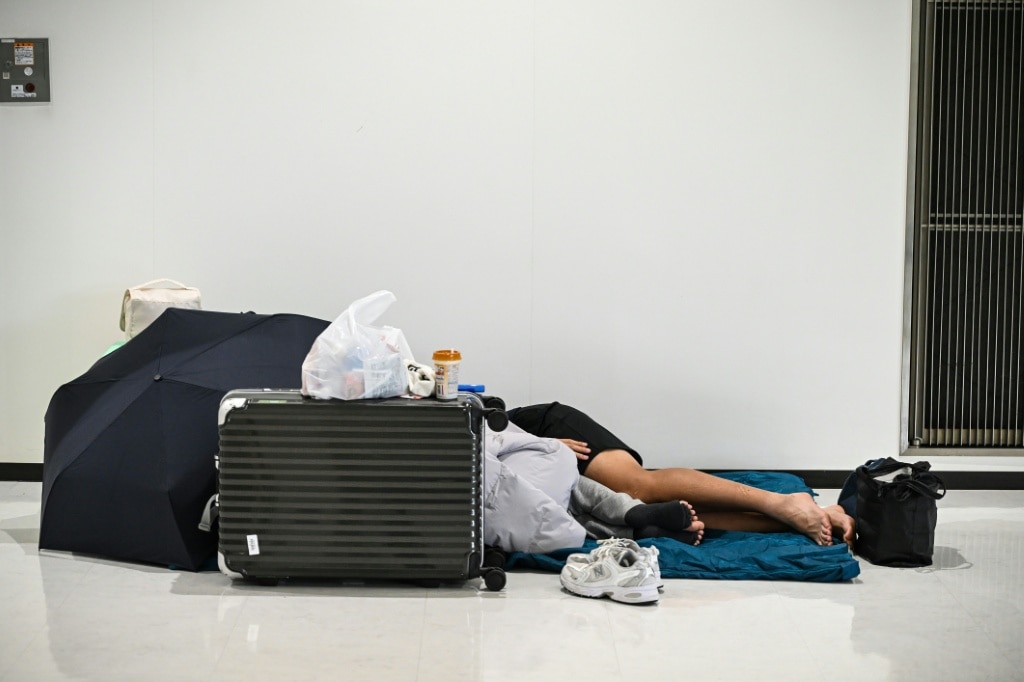
A catastrophic episode of “unprecedented” heavy rainfall battered eastern Japan this week, claiming the lives of at least four people and leaving thousands of passengers trapped overnight at Tokyo’s key Narita International Airport as widespread flooding and power failures disrupted road and rail networks, local authorities confirmed Friday.
The torrential downpours that swept through the region late Thursday triggered urgent landslide warnings and widespread power outages, pushing weather officials to issue the highest-level heavy rain emergency alert for the hard-hit Chiba region for the first time in the agency’s history. By Friday midday, Japan’s public broadcaster NHK updated the death toll to six, citing two additional fatalities not initially counted in official reports.
Among the early confirmed fatalities were an older man in his 60s or 70s found floating in a flood-swamped road, a 66-year-old woman who became trapped inside her submerged vehicle, a man of unknown age discovered collapsed on a public street, and a fourth victim whose age and gender have not yet been identified, according to the Chiba Prefecture Disaster Management Office.
Across the prefecture, nearly 26,000 households remained without electricity as of Friday morning. Official data shows 45 homes have been fully flooded in urban centers including Ichikawa, Kashiwa and Sakura, while an additional 39 properties have suffered damaging water seepage below floor levels.
A senior official from the Japan Meteorological Agency (JMA) noted at a press briefing Thursday that the storm was on track to reach a level of rainfall never before recorded in the region. Approximately 6,000 airport users were stranded overnight at Narita, one of two major international gateways serving the Japanese capital, after all passenger trains connecting the airport to central Tokyo were canceled through Friday afternoon. Images and on-the-ground reports show sleeping bags stacked throughout terminals as passengers rested across terminal floors, and long queues formed at check-in counters as operations struggled to resume.
Philip, a UK traveler who spoke to AFP, explained he endured a grueling nine-hour journey including a lengthy taxi ride before reaching the airport early Friday. Armed with a sleeping bag, he said, “I’ve just been trying to get some sleep and watching Netflix now. Just get on with it, really. Nothing else you can do.” Social media posts from stranded passengers confirm airport staff distributed complimentary bottled water, food and sleeping supplies to those stuck in the terminal.
An AFP reporter on the ground at Chiba Station also saw hundreds of commuters stranded there after all rail services were suspended, while NHK footage showed vehicles partially submerged up to their headlights in floodwaters in Kashiwa. Hundreds of displaced residents spent the night in emergency evacuation shelters set up across Chiba, according to local public media.
One small business owner from Ichikawa City told NHK Thursday that the sudden storm caught the entire community off guard. “This happened all of a sudden, so it was a complete surprise. The power is out, so I’m worried whether I can open my business in the next couple of days,” she said.
A stranded air traveler echoed that sense of disruption, telling NHK, “I never thought I’d spend the night at the airport, but it is what it is and we are learning. We’re never going to forget this trip.”
By Friday morning, all level-5 heavy rain emergency warnings for the region had been downgraded to level-4 alerts as rainfall began to ease. Scientists have long linked human-caused climate change to an increase in the frequency, duration and intensity of extreme weather events across the globe, a trend that has made severe flooding events more common in Japan in recent decades.