分类: world

  • Crisis in India-Bangladesh relations spirals amid violent protests

    Crisis in India-Bangladesh relations spirals amid violent protests

    A brutal mob killing has ignited dangerous tensions between South Asian neighbors India and Bangladesh, testing their historically close relationship. The crisis began when Dipu Chandra Das, a 27-year-old Hindu garment worker from Bangladesh’s minority community, was lynched in Mymensingh following blasphemy accusations. His death occurred amid violent protests over the separate killing of prominent student leader Sharif Osman Hadi in Dhaka.

    The incident has triggered reciprocal diplomatic actions, including visa service suspensions and security concerns over diplomatic missions. Both nations have summoned each other’s high commissioners as relations deteriorate to their lowest point in decades.

    Compounding the tension, Hadi’s supporters allege the primary suspect—reportedly linked to deposed Prime Minister Sheikh Hasina’s Awami League—fled to India, fueling anti-India sentiment in Muslim-majority Bangladesh. Although Bangladeshi police haven’t confirmed this claim, it has amplified existing resentment toward India’s perceived influence.

    The situation reveals deeper structural problems. Bangladesh’s interim government under Nobel laureate Muhammad Yunus faces criticism for failing to control rising religious extremism. Since Hasina’s ouster last year, radical elements have targeted minorities, desecrated Sufi shrines, and attacked cultural institutions accused of being pro-India.

    Analysts warn that hardline factions are exploiting anti-India sentiment for political gain, with both sides’ media potentially exacerbating tensions. The crisis has raised fundamental questions about minority safety and pluralism in Bangladesh while challenging India’s regional security calculations.

    With Bangladesh scheduled to hold elections on February 12th, and Hasina’s party banned from participating, experts caution that bilateral relations may deteriorate further unless diplomatic channels are restored and street anger contained.

  • Five Pakistani police personnel killed in bombing, shooting attack

    Five Pakistani police personnel killed in bombing, shooting attack

    In a devastating escalation of violence, five Pakistani police personnel were killed Tuesday in a coordinated militant ambush in the country’s northwestern Khyber Pakhtunkhwa province. The assault occurred in Karak district, a region previously considered relatively secure from such attacks.

    According to provincial police authorities, the attack unfolded in two phases: militants first detonated improvised explosives targeting the police vehicle, then opened fire on the disabled van. The assault resulted in the deaths of four officers and their driver.

    The Pakistani Taliban, formally known as Tehreek-e-Taliban Pakistan (TTP), claimed responsibility for the attack. The group has maintained its insurgency against the Pakistani state for nearly two decades, with this latest incident signaling a concerning resurgence of militant activity in the region.

    In response to the attack, Pakistani security forces conducted counter-operations, reportedly killing eight militants involved in the ambush.

    Prime Minister Shehbaz Sharif strongly condemned the violence, acknowledging that ‘police have always played a frontline role in the war against terrorism.’ His statement highlighted the ongoing challenges facing Pakistani security forces.

    The attack occurs amid deteriorating relations between Pakistan and neighboring Afghanistan. Islamabad has accused militant groups of using Afghan territory to plan and execute attacks against Pakistan, a charge that Kabul vehemently denies. The border region has witnessed increased tensions following recent clashes, with both nations struggling to maintain stability since the Taliban’s return to power in Afghanistan in October.

  • Libya’s army chief killed in air crash in Turkey

    Libya’s army chief killed in air crash in Turkey

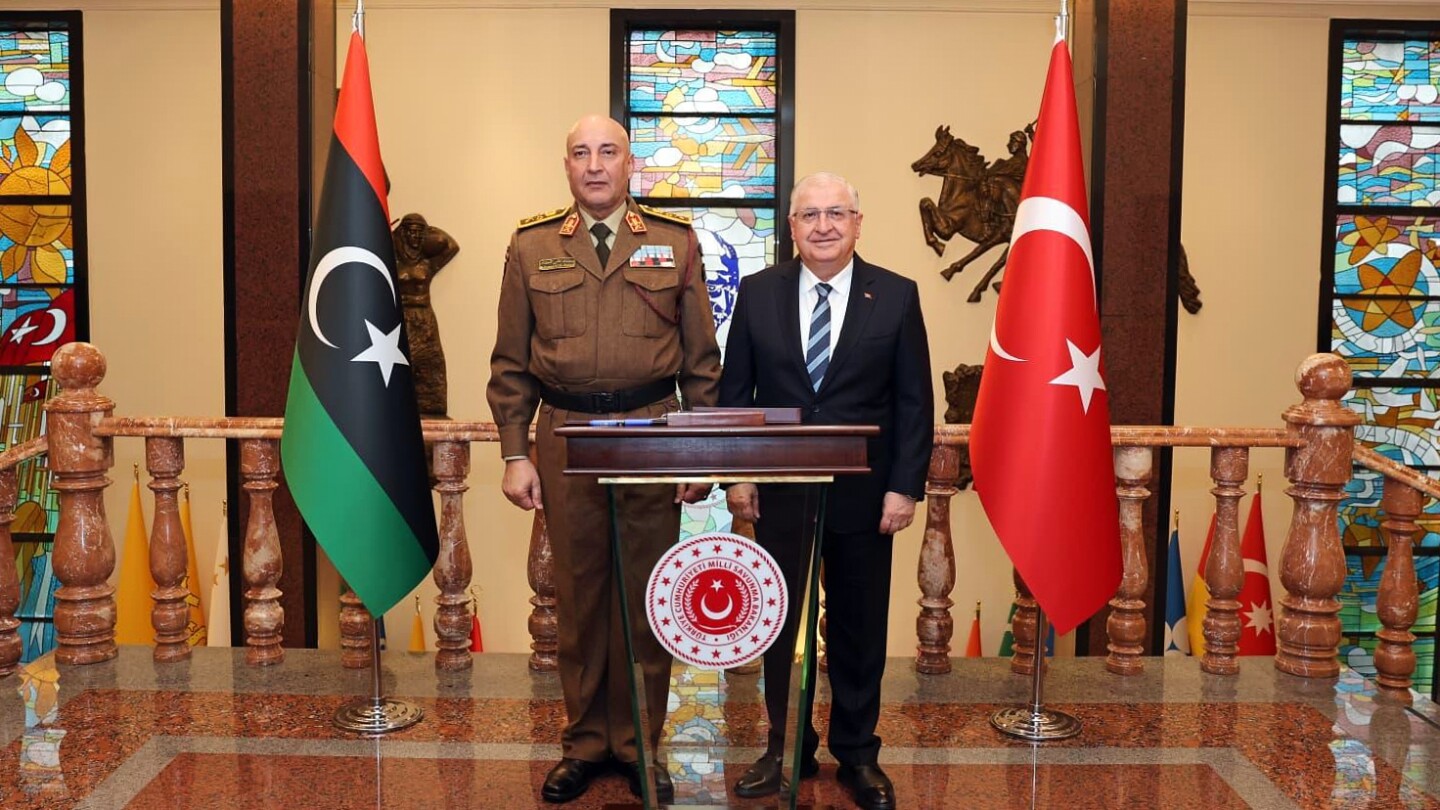
    Libya’s military leadership suffered a devastating blow as Army Chief General Mohammed Ali Ahmed al-Haddad was killed in a business jet crash near Ankara, Turkey, on Tuesday evening. The fatal incident occurred shortly after high-level defense discussions between Libyan and Turkish officials.

    The Falcon 50 aircraft, carrying General Haddad and four senior Libyan military officials, departed from Ankara’s airport at approximately 20:10 local time. According to Turkish Interior Minister Ali Yerlikaya, radar contact was lost at 20:52 (17:52 GMT) after the Tripoli-bound jet had issued an emergency landing request. Search teams subsequently located the wreckage near the village of Kesikkavak in Haymana district, southwest of the Turkish capital.

    Libyan Prime Minister Abdul Hamid Dbeibeh, leading the internationally-recognized Government of National Unity, confirmed the tragic loss of General Haddad and his delegation. In an official statement, Dbeibeh characterized the event as a ‘great national loss,’ praising the deceased as ‘men who served their country with sincerity and dedication.’

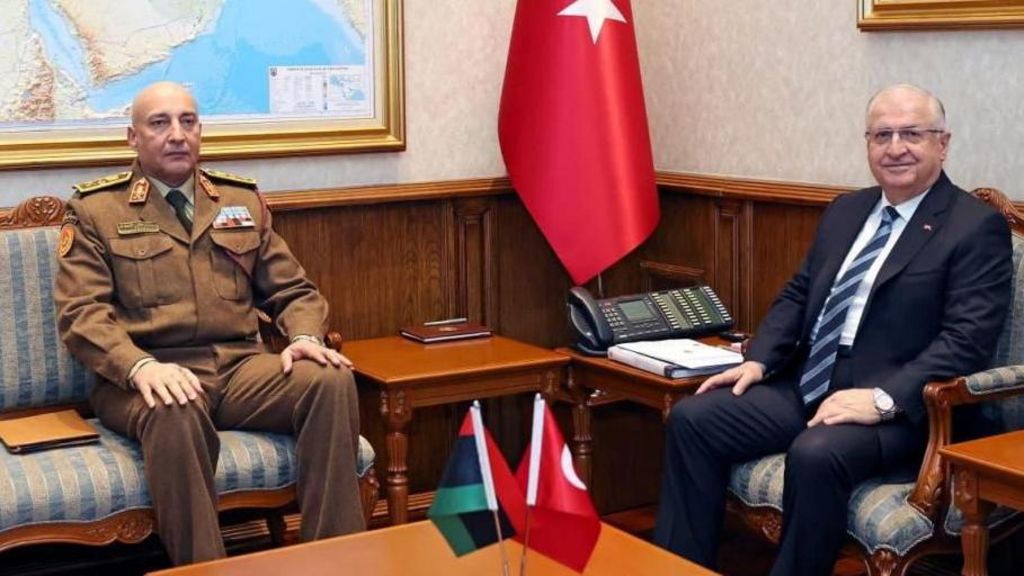
    The military delegation had been engaged in strategic talks with Turkish Defense Minister Yasar Guler aimed at enhancing bilateral security cooperation between the two nations. These discussions represented ongoing efforts to strengthen military ties between Turkey and Libya’s UN-backed government.

    Turkish authorities have launched a comprehensive investigation to determine the cause of the crash. Interior Minister Yerlikaya assured that ‘the public will be informed of further developments’ as the probe progresses. The incident marks a significant setback for Libya’s military establishment and its international partnerships during a period of ongoing political fragmentation in the North African nation.

  • Libya’s military chief and 4 others are killed in a plane crash after takeoff from Turkey

    Libya’s military chief and 4 others are killed in a plane crash after takeoff from Turkey

    A catastrophic aviation incident has claimed the lives of Libya’s senior military leadership, including Armed Forces Chief General Muhammad Ali Ahmad al-Haddad, when their private jet crashed shortly after departing from Turkey’s capital. The Falcon 50 aircraft, carrying five high-ranking Libyan officers and military staff, went down near the village of Kesikkavak approximately 70 kilometers south of Ankara on Tuesday evening.

    The delegation had been engaged in crucial defense negotiations with Turkish officials, including Defense Minister Yasar Guler, aimed at strengthening military cooperation between the two nations. Libyan Prime Minister Abdul-Hamid Dbeibah confirmed the tragedy via official statement, characterizing the event as a ‘great loss’ for the nation during this critical period of UN-brokered military unification efforts.

    Among the deceased were key figures in Libya’s military infrastructure: General Al-Fitouri Ghraibil (Head of Ground Forces), Brigadier General Mahmoud Al-Qatawi (Military Manufacturing Authority), Mohammed Al-Asawi Diab (Chief of Staff Advisor), and Mohammed Omar Ahmed Mahjoub (Military Photographer). The exact number of crew members remains unconfirmed.

    Turkish Interior Minister Ali Yerlikaya reported that the aircraft issued an emergency landing signal approximately 40 minutes after its 8:30 PM departure from Esenboga Airport, citing potential electrical failure before all communication ceased. Security footage captured a sudden explosive illumination in the night sky near the crash site.

    In response to the disaster, Ankara temporarily closed its airport and diverted incoming flights while assigning four prosecutors to investigate the incident. Both nations have committed to collaborative investigation efforts, with Libya dispatching a technical team to assist Turkish authorities in determining the precise cause of the malfunction that led to this devastating loss.

  • Hundreds protest in New Delhi over killing of Hindu man in Bangladesh

    Hundreds protest in New Delhi over killing of Hindu man in Bangladesh

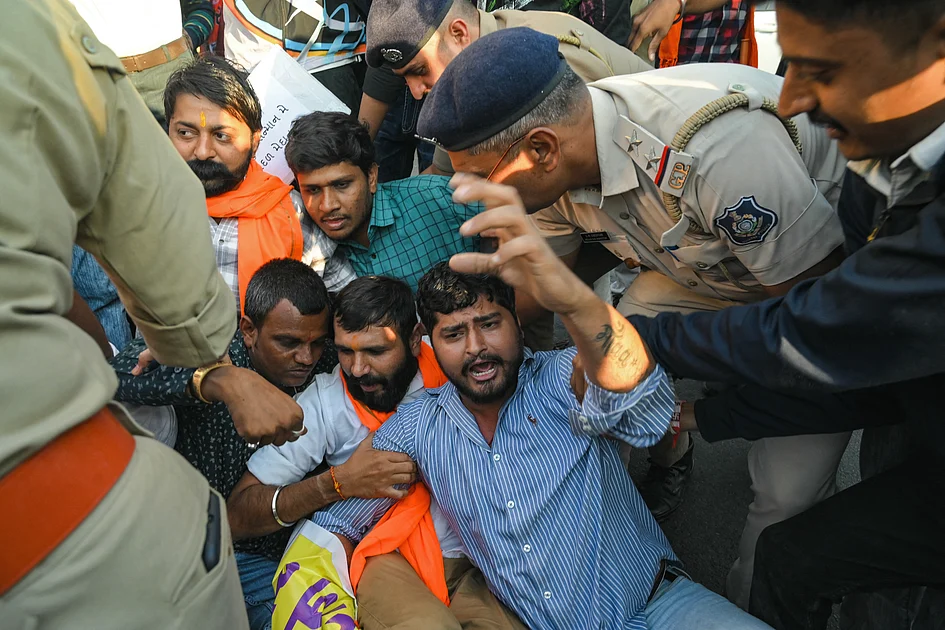
    New Delhi witnessed significant demonstrations on Tuesday as hundreds of protesters gathered near Bangladesh’s High Commission, expressing outrage over the brutal lynching of a Hindu man in neighboring Bangladesh. The incident has severely strained diplomatic relations between the two South Asian nations just weeks before Bangladesh’s scheduled parliamentary elections in February.

    The catalyst for these tensions emerged from the horrific death of 27-year-old factory worker Dipu Chandra Das, who was beaten and set ablaze in Bangladesh’s Mymensingh district after being accused of making derogatory remarks about the Prophet. Bangladeshi authorities have arrested at least ten individuals in connection with the religiously-motivated killing.

    Television footage captured dramatic scenes as protesters, primarily representing Hindu organizations, clashed with police personnel while attempting to breach security barricades surrounding the diplomatic mission. Demonstrators chanted slogans and burned effigies while displaying posters advocating for the boycott of Bangladesh. ‘We needed to raise the voice of Hindus in Bangladesh in Delhi,’ one protester told India Today, adding that their community would remain vigilant ‘as long as even one Hindu is being harmed there.’

    The diplomatic fallout has been substantial, with both nations suspending visa services indefinitely. Bangladesh’s government summoned the Indian envoy to express concerns about previous protests near its diplomatic missions, urging thorough investigations into what it described as ‘violent protests.’ India’s foreign ministry countered that Saturday’s demonstration involved only ’20-25 youths’ who were promptly dispersed by police, reaffirming India’s commitment to ensuring foreign mission security.

    These tensions compound Bangladesh’s existing domestic turmoil following the recent assassination of youth leader Sharif Osman Hadi, who was shot during his campaign launch for the upcoming parliamentary elections. Hadi’s killing triggered widespread protests that escalated into arson attacks targeting major media outlets and cultural institutions, creating a complex crisis environment for the Bangladeshi government.

    The current situation represents the most significant deterioration in India-Bangladesh relations since former Prime Minister Sheikh Hasina sought refuge in New Delhi following deadly protests against her administration last year.

  • North Korea’s Kim tours hot tubs, BBQ joints at lavish new mountain resort

    North Korea’s Kim tours hot tubs, BBQ joints at lavish new mountain resort

    North Korean leader Kim Jong Un has inaugurated an opulent new mountain resort in Samjiyon, featuring premium amenities including hot tubs, barbecue restaurants, and luxury hotel accommodations. State media documented Kim’s comprehensive inspection of the facility, during which he personally evaluated bedding quality and toured leisure spaces alongside his daughter, Ju-ae, who analysts identify as his probable successor.

    The Korean Central News Agency (KCNA) portrayed the development as evidence of North Korea’s “ever-growing ideal” and “state’s potential for development,” with Kim declaring the resort an “innovative and highly civilized city representing the tourism culture of the country.” The extensive complex lies near Mount Paektu, a site of considerable ideological significance in North Korean propaganda as the purported birthplace of Kim Jong Il.

    Analysts suggest the resort primarily targets international visitors rather than local citizens, given the extreme income disparity in a nation where average monthly wages approximate $3. Peter Ward of Seoul’s Sejong Institute noted that while foreigners constitute the primary demographic, the facility might also serve as incentive-based accommodation for productive worker units.

    The opening coincides with North Korea’s gradual reopening to tourism after pandemic restrictions, having recently permitted Russian tourist groups and brief Western operator visits. Professor Lim Eul-Chul of Kyungnam University suggested the five new hotels could facilitate large-scale group tourism through Chinese border regions, though Chinese tourists haven’t yet returned in significant numbers.

    This development occurs as Kim’s administration tours newly completed industrial facilities ahead of the Korean Workers Party’s first congress in five years, scheduled for early 2026, where economic planning will dominate the agenda.

  • Gazans fear renewed displacement after Israeli strikes

    Gazans fear renewed displacement after Israeli strikes

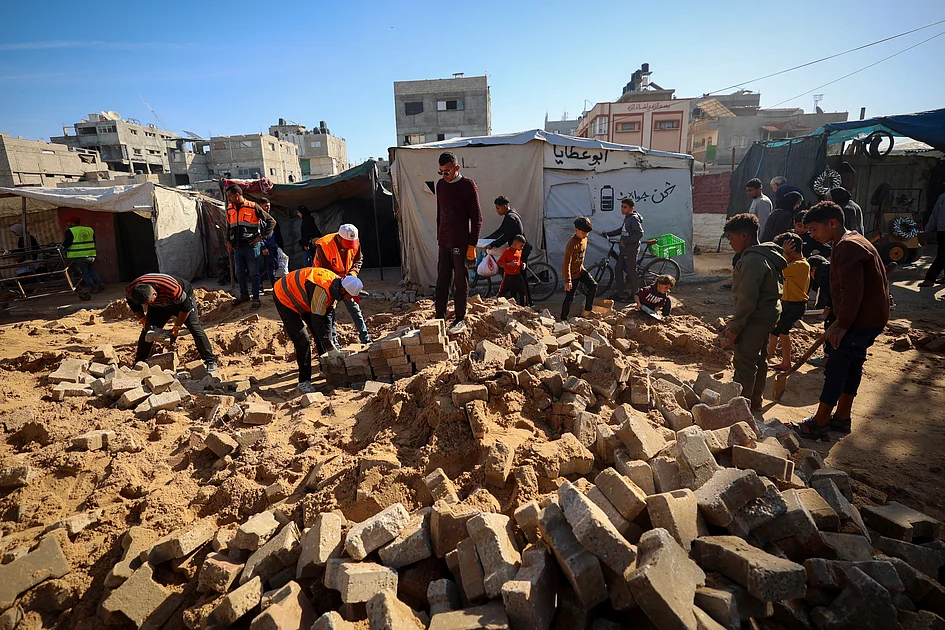
    Palestinian families in southern Gaza’s Khan Younis region are confronting renewed fears of displacement as Israeli military operations intensify near the contentious Yellow Line demarcation zone. Despite a ceasefire that has largely held since October 10, recent drone and artillery strikes have shattered the fragile calm in eastern neighborhoods, creating widespread anxiety among residents who have already endured more than two years of conflict.

    The Yellow Line, established under the truce agreement between Israel and Hamas, has become a focal point of tension. Israeli military authorities maintain that their deployment adheres to ceasefire provisions, asserting that operations target Hamas militants allegedly crossing the boundary to conduct terrorist activities. Conversely, Palestinian officials characterize these actions as systematic efforts to forcibly displace populations from their ancestral lands.

    Humanitarian conditions remain catastrophic throughout Gaza, where tens of thousands continue to inhabit temporary tents or structurally compromised homes. The makeshift camps west of the Yellow Line in Al-Mawasi present a bleak alternative, already stretched beyond capacity with inadequate food, water, and sanitation infrastructure for the existing displaced population.

    Personal accounts reveal the profound psychological toll on civilians. Umm Ahmed, a 40-year-old mother from Bani Suheila, describes children trembling at every explosion, questioning where their family might find safety. Like many others, her family resides beside their completely destroyed home, preferring the familiarity of ruins to the uncertainty of displacement.

    The conflict originated with Hamas’s October 7, 2023 attack on Israel, which resulted in approximately 1,221 fatalities according to Israeli figures. Subsequent military operations have claimed over 70,000 lives in Gaza according to local health authorities, with the vast majority of Gaza’s two million residents experiencing displacement multiple times during the conflict.

    Israeli Army Chief Lieutenant General Eyal Zamir recently characterized the Yellow Line as a “new border line” serving defensive and operational purposes. This framing has intensified concerns among Palestinian authorities about permanent territorial revision and systematic population transfer.

    Despite the pervasive atmosphere of fear and destruction, many residents demonstrate determined resilience. Seventy-year-old Abdel Hamid, residing north of Khan Yunis with his five children, embodies this sentiment: “We will not leave… this is our land. Moving would not be a solution, but yet another tragedy.”

  • Israeli settlers beat sheep to death and wound Palestinian farmers in Hebron attack

    Israeli settlers beat sheep to death and wound Palestinian farmers in Hebron attack

    A surge of violent attacks by Israeli settlers targeted Palestinian communities across the occupied West Bank this week, resulting in multiple casualties and significant property damage. The agricultural town of Samu, south of Hebron, witnessed particularly brutal assaults late Monday when masked settlers from the nearby Susya settlement stormed residential areas.

    The Daghameen family home was forcibly entered by settlers who physically assaulted several family members. Three injured Palestinians required medical transfer to a nearby healthcare facility for treatment. Surveillance footage documented the aftermath, revealing shattered windows, broken doors, and household items scattered in disarray.

    In a particularly disturbing development, attackers breached the family’s livestock pen where they systematically beat and shot multiple sheep to death. This incident marks the second time the Daghameen property has been targeted by settler violence. Video evidence captures settlers using long, sharp objects to batter the animals.

    This attack forms part of a broader pattern of violence across the territory. Similar incidents were reported in Aqraba and Khirbet Yanoun south of Nablus, where settlers attempted to seize Palestinian-owned land under Israeli military protection. Additional raids occurred in Beit Dajan and Beit Furik east of Nablus, where settlers used tractors to destroy extensive agricultural areas.

    The escalation occurs amid alarming statistics documenting violence against Palestinians. Over the past two years, more than 1,000 West Bank Palestinians have been killed by Israeli forces and settlers. According to the Colonisation and Wall Resistance Commission, November alone witnessed approximately 2,144 attacks against Palestinian civilians and property—1,523 perpetrated by soldiers and 621 by settlers.

    Since the beginning of Israel’s Gaza offensive, the commission estimates roughly 40,000 Israeli violations have been committed against West Bank Palestinians. Rights organizations note that recent attacks during the olive harvest season appear strategically designed to disrupt ordinary Palestinian life and force communities from their homes and farms.

  • Greater interdependence in Asia needed amid rising global conflicts

    Greater interdependence in Asia needed amid rising global conflicts

    Amid escalating global conflicts, the executive director of the Mekong Institute has issued a compelling call for strengthened regional interdependence among Asian nations. Suriyan Vichitlekarn emphasized that neighboring countries must deepen cooperative ties and economic integration as international tensions continue to rise.

    The Mekong Institute, an intergovernmental organization representing all six nations of the Greater Mekong Subregion, serves as a critical platform for regional collaboration. Member countries include Cambodia, China, Laos, Myanmar, Thailand, and Vietnam, representing one of Asia’s most economically dynamic corridors.

    Vichitlekarn’s statement comes at a time of increasing global instability, with multiple conflict zones creating ripple effects across international supply chains and diplomatic relations. The executive director positioned regional cooperation not merely as an economic advantage but as a strategic necessity in the current geopolitical climate.

    ‘The intensification of global conflicts makes it increasingly vital for neighboring countries to deepen interdependence and cooperation,’ Vichitlekarn stated, highlighting how regional solidarity can serve as a buffer against external shocks.

    The Greater Mekong Subregion has historically been a hub of economic growth and cultural exchange, with the Mekong River serving as both a geographical and symbolic connector between nations. The Institute’s work focuses on capacity building, policy dialogue, and development projects that benefit the entire region.

    This call for enhanced cooperation reflects a broader recognition among Asian leaders that regional stability and prosperity require coordinated responses to global challenges, from economic pressures to security concerns. The approach signals a shift toward more self-reliant regional frameworks in the face of international uncertainty.

  • Amsterdam-Hyderabad KLM Airlines flight gets bomb threat, lands safely

    Amsterdam-Hyderabad KLM Airlines flight gets bomb threat, lands safely

    Indian aviation authorities have responded to yet another security scare at Hyderabad’s Rajiv Gandhi International Airport after KLM Airlines Flight KL877 from Amsterdam received a bomb threat via email around midnight. The aircraft landed safely at approximately 1:00 AM local time with all passengers and crew members unharmed, according to official reports.

    Airport security personnel immediately activated established safety protocols upon notification of the threat. Comprehensive security sweeps of the aircraft were conducted, with no suspicious items or devices discovered during the inspection process.

    This incident represents the fourth such security alert at Hyderabad’s aviation facility within a three-week period. On December 6, two separate international flights—British Airways Flight 277 and Kuwait Airways Flight 373—received similar email threats. While the British Airways aircraft completed its journey successfully, the Kuwait Airways flight returned to its departure airport as a precautionary measure.

    The pattern of threats began on December 5 when Emirates Flight EK526 traveling from Dubai to Hyderabad was targeted. The previous day, an IndiGo flight from Madinah, Saudi Arabia, was diverted to Ahmedabad’s Sardar Vallabhbhai Patel International Airport following an identical threat. All affected flights in these incidents landed without incident, and thorough investigations revealed each threat to be unsubstantiated.

    Aviation security experts are increasingly concerned about the psychological and operational impacts of such repeated hoaxes, which strain emergency response resources and create unnecessary passenger anxiety. Indian authorities have launched investigations to identify the source of these threatening communications.