分类: world

  • Poland scrambles jets as Russia strikes Kyiv before US-Ukraine peace talks

    Poland scrambles jets as Russia strikes Kyiv before US-Ukraine peace talks

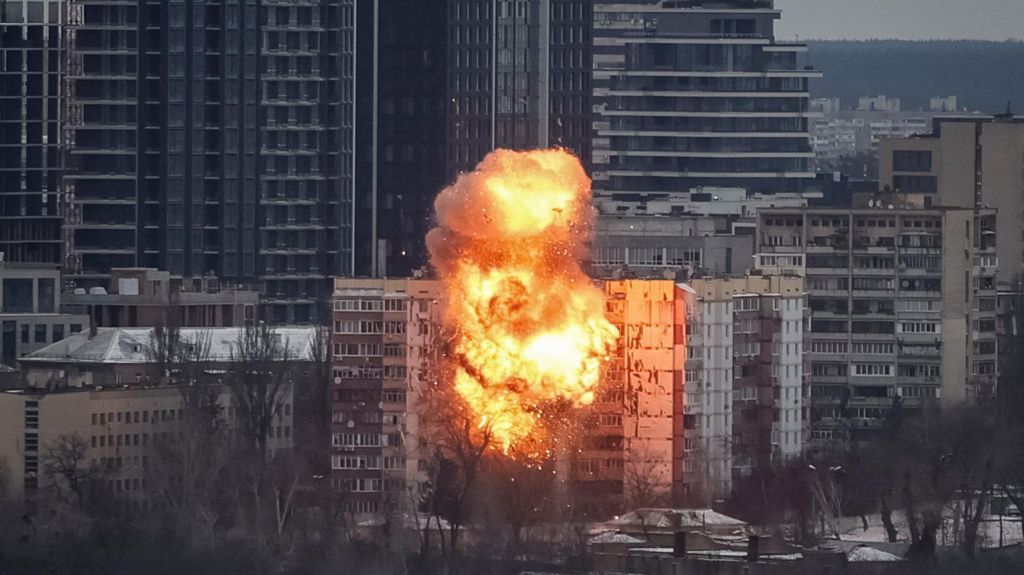
    Kyiv endured one of its most severe aerial assaults in recent months as Russian forces launched a coordinated offensive involving approximately 500 drones and 40 missiles against the Ukrainian capital overnight. The massive attack targeted critical energy infrastructure and residential areas, resulting in catastrophic damage across multiple districts.

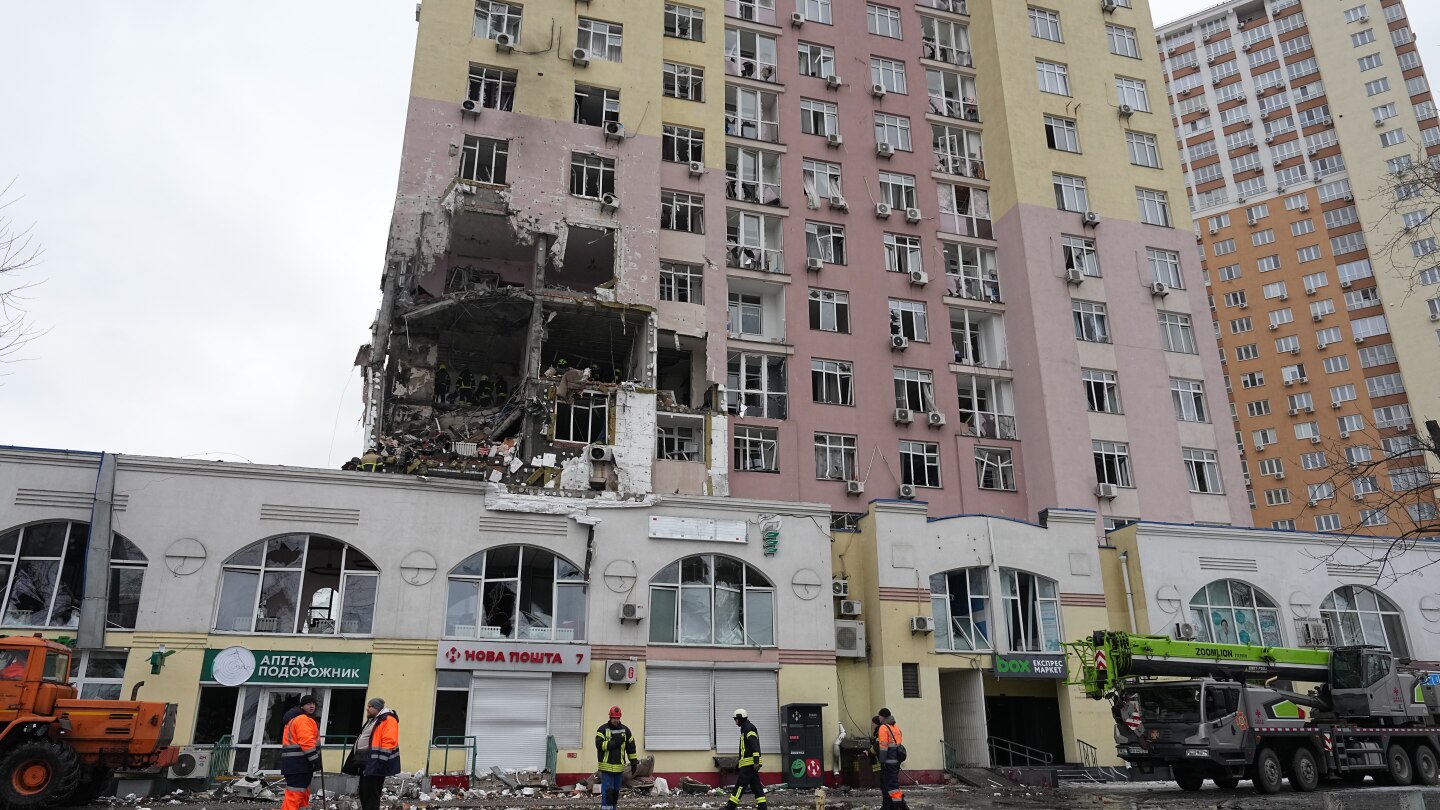
    Ukraine’s State Emergency Service confirmed at least one fatality and 28 injuries from the sustained bombardment. Visual evidence reveals apartment complexes with massive structural damage and residential buildings engulfed in flames following the direct hits. The assault created widespread disruption as Kyiv Mayor Vitali Klitschko reported thousands of buildings left without power and heating amid subfreezing temperatures, creating a humanitarian crisis for vulnerable residents.

    In response to the escalating violence, Poland’s military initiated preventative measures by scrambling fighter jets along its 530-kilometer border with Ukraine. The Polish Armed Forces activated ground-based air defense systems and radar reconnaissance to secure their airspace, though subsequent investigations confirmed no actual violation of Polish territory occurred during the incident.

    Ukrainian President Volodymyr Zelensky condemned the attacks through Telegram, asserting that Russia’s actions demonstrate Moscow’s unwillingness to pursue diplomatic solutions. ‘Russian representatives are having long conversations, but in reality the Daggers [missiles] and Shaheds [drones] are speaking for them,’ Zelensky wrote, emphasizing that Vladimir Putin shows no genuine interest in ending the conflict.

    The Ukrainian leader simultaneously issued urgent appeals to international partners, stating: ‘This sick activity can only be responded to with really strong steps. America has this opportunity, Europe has this opportunity, many of our partners have this opportunity.’ His statements highlighted the growing pressure on Western allies to enhance their military support against Russian aggression.

    Amid the devastation, emergency crews successfully evacuated 68 elderly residents from a retirement home in Kyiv’s eastern Darnytskyi district, preventing further casualties in the vulnerable facility.

    Diplomatic efforts continue parallel to the military developments, with President Zelensky preparing to present a revised 20-point peace plan during his scheduled meeting with Donald Trump in Florida on Sunday. This new draft, which replaces an earlier 28-point proposal criticized as overly favorable to Russia, reportedly includes security guarantees from NATO and European allies for coordinated military response should Russia invade Ukraine again.

    Trump expressed cautious optimism about the upcoming discussions, telling Politico: ‘I think it’s going to go good with him. I think it’s going to go good with Putin,’ while simultaneously asserting that Zelensky ‘doesn’t have anything until I approve it.’ The former president also revealed he expects to communicate with Vladimir Putin ‘soon,’ suggesting potential backchannel negotiations.

    Meanwhile, Russia’s defense ministry claimed its air defenses successfully destroyed seven Ukrainian drones overnight, though these assertions couldn’t be independently verified. The conflicting narratives highlight the ongoing information warfare accompanying the physical conflict.

    European leaders including EU representatives and European Commission President Ursula von der Leyen are scheduled to hold emergency discussions with Zelensky to address the deteriorating situation and potential pathways to peace, indicating the international community’s heightened concern about the escalating violence.
  • Russia attacks Kyiv with missiles and drones, killing 1 and wounding many ahead of Ukraine-US talks

    Russia attacks Kyiv with missiles and drones, killing 1 and wounding many ahead of Ukraine-US talks

    In a dramatic escalation preceding high-stakes diplomatic negotiations, Russian forces executed a large-scale multi-vector assault on Ukraine’s capital early Saturday. The coordinated offensive, employing ballistic missiles, hypersonic Kinzhal aeroballistic systems, and drone swarms, resulted in one confirmed fatality and 27 injuries according to Ukrainian authorities.

    The sustained bombardment, which continued for several hours until daybreak, specifically targeted Kyiv’s energy infrastructure and civilian residential areas. Ukrainian Interior Minister Ihor Klymenko reported extensive damage to more than ten residential buildings, with emergency teams conducting rescue operations to extract survivors from collapsed structures. Among the most harrowing accounts was that of resident Olena Karpenko, who witnessed a man perish in flames, his screams haunting those who heard the tragedy unfold.

    Ukrainian air defense systems intercepted a significant portion of the projectiles, but the intensity of the assault overwhelmed protective measures. According to military administration head Tymur Tkachenko, seven distinct locations across the capital sustained direct hits, including high-rise residential towers in the Dnipro and Darnytsia districts where major fires required extensive emergency response.

    The timing of the attack carried profound diplomatic significance, occurring just one day before Ukrainian President Volodymyr Zelenskyy’s scheduled meeting with U.S. President Donald Trump in Florida. En route to the critical summit, Zelenskyy characterized the assault as Moscow’s explicit response to peace negotiations, stating: “Today Russia demonstrated how it responds to peace talks between Ukraine and the United States on ending Russia’s war against Ukraine.”

    The Russian Defense Ministry acknowledged responsibility for what it termed a “massive strike,” claiming retaliation for Ukrainian attacks on Russian civilian infrastructure. The operation involved long-range precision weapons deployed from land, air, and sea platforms, specifically targeting Ukraine’s military-industrial capacity and energy infrastructure supporting defense operations.

    The geopolitical ramifications extended beyond Ukraine’s borders, with Polish armed forces scrambling fighter jets and temporarily closing airports near the Ukrainian frontier as a precautionary measure, though no airspace violations were confirmed.

    President Zelenskyy outlined the agenda for his meeting with President Trump, emphasizing that security guarantees resembling NATO’s Article 5 protection would constitute the primary focus. While acknowledging the necessity of discussing territorial issues concerning the Donetsk and Zaporizhzhia regions, the Ukrainian leader firmly reiterated that no recognition of Russian territorial claims would occur “under any circumstances.” The summit represents a crucial diplomatic effort to solidify international support while addressing the complex military and geopolitical realities of the nearly four-year conflict.

  • Porcelains shine light on China-Kenya links

    Porcelains shine light on China-Kenya links

    On the historic island of Lamu, Kenya, where monsoon winds once guided merchant vessels to East African shores, archaeological evidence continues to illuminate a centuries-old narrative of transoceanic exchange. The Lamu Museum houses an extensive collection of Chinese porcelain artifacts—from Tang dynasty celadon to Ming dynasty blue-and-white ceramics—that testify to a trading relationship spanning over a thousand years.

    Curator Mohammed Mwenje explains that these porcelain fragments, primarily excavated from ancient Swahili settlements including Shanga, Manda, and Gedi, represent more than mere commercial transactions. “In the 17th through 19th centuries, owning Chinese porcelain symbolized status and prestige,” Mwenje notes. “Families utilized these artifacts for home decoration, tomb ornamentation, and impressing distinguished visitors.”

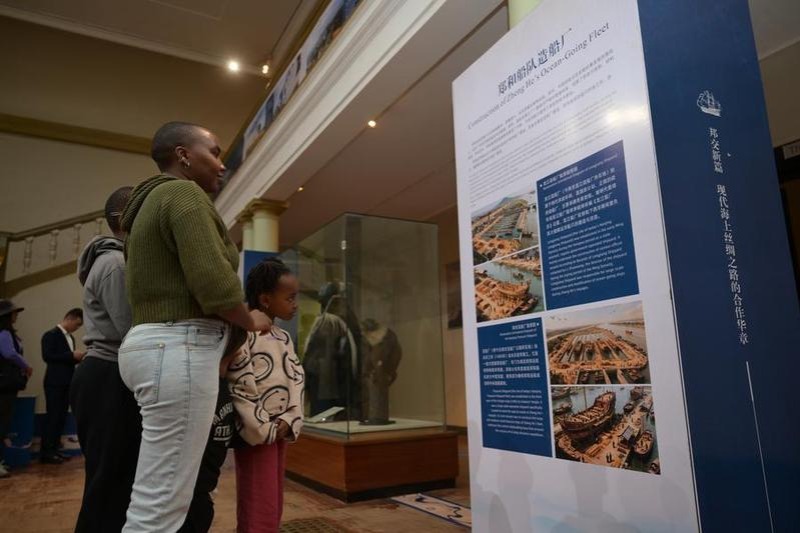
    The collection gains particular historical significance from its association with Admiral Zheng He’s legendary 15th-century voyages during the Ming Dynasty. The Chinese navigator’s fleet reached the East African coast approximately 620 years ago, leaving material evidence that challenges conventional timelines of Sino-African engagement.

    Beyond museum walls, local residents like Mansur Ile have become inadvertent custodians of this shared heritage. For fifteen years, Ile has meticulously gathered porcelain shards from abandoned homesteads and coastal areas, creating a personal archive that documents the region’s commercial past. Similarly, the Shee family in Siyu village preserves porcelain fragments handed down through generations, maintaining oral traditions that trace their ancestry to Chinese sailors.

    Archaeological potential remains largely untapped across Lamu’s ancient sites. Fishermen regularly recover ceramic jars from nearby waters, suggesting the possible existence of a significant shipwreck from China’s maritime era. Previous Sino-Kenyan archaeological collaborations attempted to locate such wreckage but were hampered by inadequate equipment and challenging oceanic conditions.

    Academic researchers like Rachel Maina from the University of Wisconsin-Madison are now exploring the sociocultural dimensions of these connections, examining how contemporary communities perceive their historical ties to China. Maina’s work seeks to complement archaeological findings with narratives from local perspectives.

    Despite imperial China’s withdrawal from large-scale maritime activities following the Ming voyages, the 20th century witnessed renewed diplomatic and cultural connections between China and Kenya after the latter’s independence in 1963. The porcelain collection in Lamu—currently mostly in storage—awaits comprehensive scholarly investigation and public exhibition to fully articulate its historical significance.

  • Thailand and Cambodia agree ceasefire after weeks of deadly clashes

    Thailand and Cambodia agree ceasefire after weeks of deadly clashes

    In a significant diplomatic breakthrough, Thailand and Cambodia have announced an immediate cessation of hostilities following weeks of intense border conflicts that resulted in substantial casualties and mass displacement. The agreement was formalized through a joint statement issued by defense ministers Tea Seiha of Cambodia and Natthaphon Narkphanit of Thailand after emergency negotiations at a border checkpoint in Chanthaburi province.

    The ceasefire, which took effect at noon local time (05:00 GMT) on Saturday, mandates both nations to freeze all military movements and facilitate the safe return of civilians to border regions. The accord stipulates that if the truce holds for 72 consecutive hours, Thailand will release 18 Cambodian soldiers currently in detention.

    The joint declaration outlines specific de-escalation measures, including the cessation of “attacks on civilians, civilian objects and infrastructures, and military objectives of either side.” It explicitly prohibits unprovoked firing or advancement of troops toward opposing positions.

    This resolution references the spirit of the Kuala Lumpur Declaration, a previous ceasefire agreement brokered in October with involvement from Malaysian mediators and U.S. President Donald Trump. That earlier accord, dubbed the “Kuala Lumpur Peace Accords,” had mandated weapon withdrawals from disputed territories and established monitoring mechanisms before collapsing earlier this month.

    The recent conflict escalation began when Thailand reported responding to Cambodian fire in Si Sa Ket province, resulting in two Thai soldiers injured. Cambodia countered that Thai forces initiated aggression in Preah Vihear province. Hostilities intensified throughout December, culminating in Thailand conducting airstrikes on Friday that Cambodia described as “indiscriminate attacks” on civilian areas.

    Historical tensions between the Southeast Asian neighbors date back over a century, with notable escalation occurring in May when a Cambodian soldier was killed. July witnessed five days of intense fighting that claimed dozens of lives and displaced thousands before the October ceasefire temporarily halted violence.

  • Cypriot fishermen battle invasive lionfish and turn them into a tavern delicacy

    Cypriot fishermen battle invasive lionfish and turn them into a tavern delicacy

    CYPRUS — Veteran fisherman Photis Gaitanos carefully disentangles the venomous spines of a lionfish from his net, a routine that has become emblematic of the ecological transformation occurring in Mediterranean waters. The 60-year-old marine hunter now primarily captures invasive species rather than the traditional sea bream, red mullet, and bass that once dominated his catches.

    The Mediterranean Sea, warming at a rate 20% faster than the global average according to the General Fisheries Commission for the Mediterranean, has become a welcoming environment for non-native species migrating from the Red Sea through the expanded Suez Canal. Two particularly destructive invaders—the strikingly striped lionfish and the silver-cheeked toadfish—are decimating local fish populations and threatening the livelihoods of approximately 150 professional fishermen in Cyprus.

    Lionfish, with their dramatic crimson stripes and defensive barbs, have spread as far north as the Ionian Sea, prompting Italian authorities to request public assistance in tracking sightings. The toadfish presents additional challenges with its powerful jaws capable of destroying fishing nets and a lethal toxin that renders it inedible.

    EU Fisheries Commissioner Costas Kadis, himself Cypriot, told The Associated Press that climate-linked extreme weather events are creating increasingly hospitable conditions for these invasive species. “The native marine biodiversity faces heightened competition and pressure,” Kadis stated, “with implications for local ecosystems and industries dependent on them.”

    The economic impact has been severe, with fishermen reporting diminished catches and increased costs due to damaged equipment. Gaitanos, who inherited his father’s boat in 1986, lamented that he hasn’t caught a red mullet in over two years—a species once abundant in the waters off Larnaca.

    European authorities have implemented multiple strategies to address the crisis. EU-funded compensation programs pay fishermen €4.73 per kilogram for toadfish catches, though the toxic fish must be incinerated. The RELIONMED project, initiated in 2017, enlists scuba divers to cull lionfish populations around wrecks and protected marine areas.

    A culinary solution is emerging simultaneously. The #TasteTheOcean social media campaign, launched in 2021, features top European chefs promoting invasive species as sustainable alternatives. Renowned Cypriot chef Stavris Georgiou has developed specialized lionfish recipes, while local tavernas are gradually introducing the species to customers.

    At Larnaca’s harbor fish market, lionfish now costs less than half the price of popular species like sea bass. Stephanos Mentonis, who operates a fish tavern in Larnaca, includes lionfish on his meze menu and reports positive customer responses. “When they try it, it’s not any less tasty than any other fish,” Mentonis noted, describing the meat as fluffy and tender.

    Commissioner Kadis emphasized the dual benefit of this approach: “By incorporating invasive species such as lionfish into our diet, we can turn this challenge into an opportunity for the fisheries sector while helping limit the environmental threat.”

  • Millions of Afghans face hunger as aid cuts deepen a humanitarian crisis

    Millions of Afghans face hunger as aid cuts deepen a humanitarian crisis

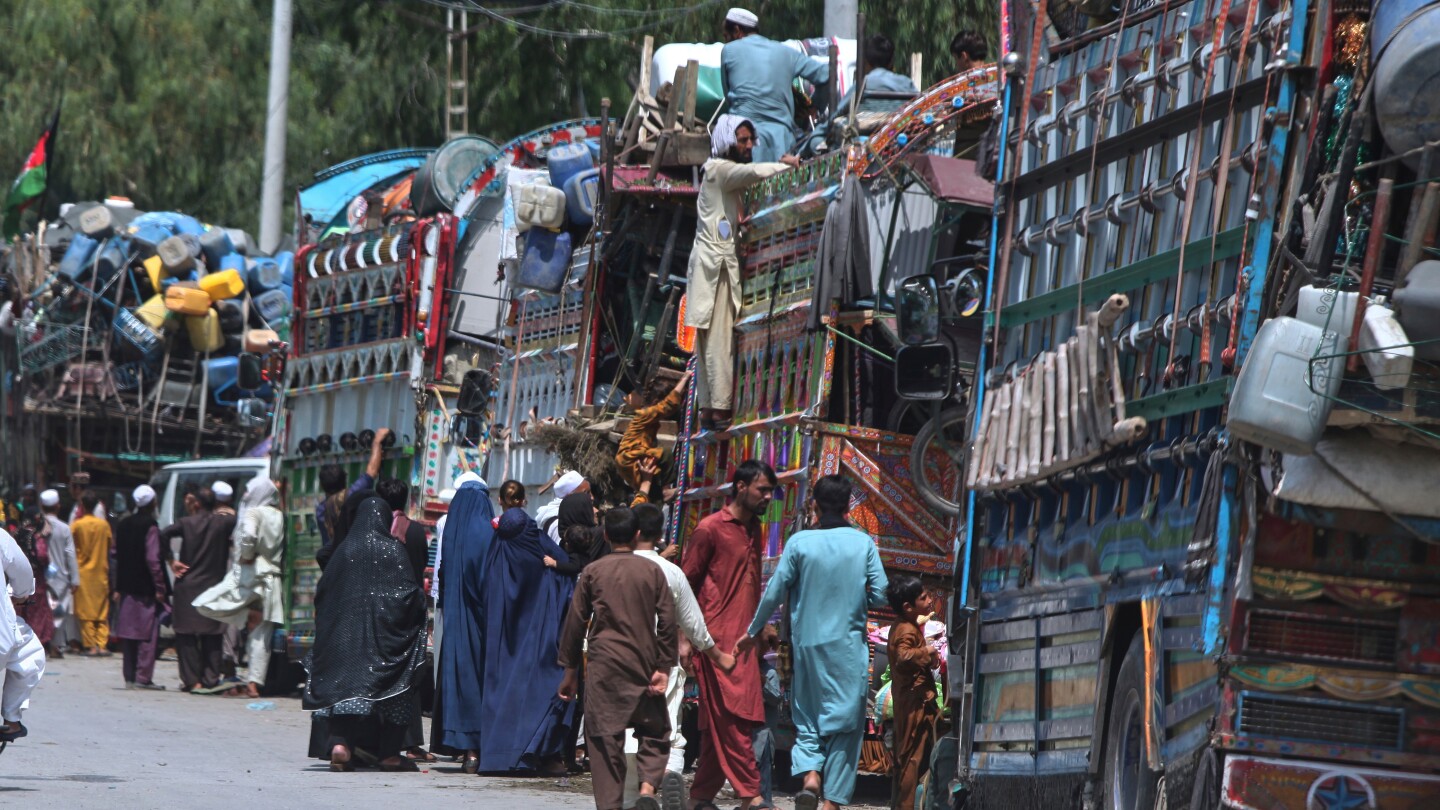
    KABUL, Afghanistan — A severe humanitarian catastrophe is unfolding across Afghanistan, where millions of citizens face extreme hunger and destitution following drastic cuts to international aid. The crisis has been exacerbated by a collapsing economy, recurrent natural disasters, and the mass return of refugees, creating a perfect storm of suffering as the harsh winter sets in.

    Rahimullah, a 29-year-old former soldier, epitomizes the struggle. After being deported from Pakistan, he now sells socks on the streets of Kabul, earning a meager $4.50 to $6 daily to support his family of five. His situation is precarious. ‘If I were to face a serious illness,’ he lamented, ‘it would be very difficult for me to handle because I don’t have any extra money.’ His plight is shared by an estimated 22.9 million people—nearly half the population—who required humanitarian assistance in 2025, according to the International Committee of the Red Cross.

    The World Food Program (WFP) issued a dire warning last week, stating that over 17 million people are now confronting crisis levels of hunger this winter, a staggering increase of 3 million from the previous year. This alarming surge is directly linked to the suspension of critical aid programs, including those previously funded by the United States. Tom Fletcher, the U.N. humanitarian chief, informed the Security Council that this winter marks ‘the first in years with almost no international food distribution.’ Consequently, aid reached only about 1 million of the most vulnerable people during the 2025 lean season, a drastic drop from the 5.6 million assisted the year before.

    Compounding the emergency are ‘overlapping shocks,’ as described by Fletcher. Afghanistan has been battered by two deadly earthquakes, severe droughts, and an unprecedented influx of returning refugees. The Ministry of Refugees and Repatriation Affairs reported that 7.1 million Afghan refugees have returned over the past four years. This massive return has strained resources to the breaking point, causing rents to skyrocket and further impoverishing families like Rahimullah’s, who now faces eviction after his rent nearly doubled.

    The Taliban government’s draconian restrictions on women have further crippled household economies. Rahimullah’s wife, once a teacher, is now barred from employment. This policy has had a devastating nationwide impact, depriving countless families of a vital source of income and pushing them deeper into poverty.

    In the northern province of Badakhshan, the cold winter intensifies the misery. Sherin Gul, a mother of ten, described the desperate situation her family endures. With her husband too weak to work and a ban preventing her from her former job as a cleaner, the family relies solely on her 23-year-old son’s sporadic construction work—which halts entirely in the snow. ‘There have been times when we have nothing to eat at night,’ she revealed. ‘My little children have fallen asleep without food… crying.’

    The U.N. appeals for urgent support, warning that with reduced donor contributions, life-saving assistance will contract further in 2026 just when needs are rising most acutely. The convergence of economic collapse, natural disaster, and policy-driven unemployment has created one of the world’s most severe humanitarian emergencies, leaving millions to face the winter with no safety net.

  • UAE strongly condemns deadly blast at Syria mosque, rejects all forms of violence

    UAE strongly condemns deadly blast at Syria mosque, rejects all forms of violence

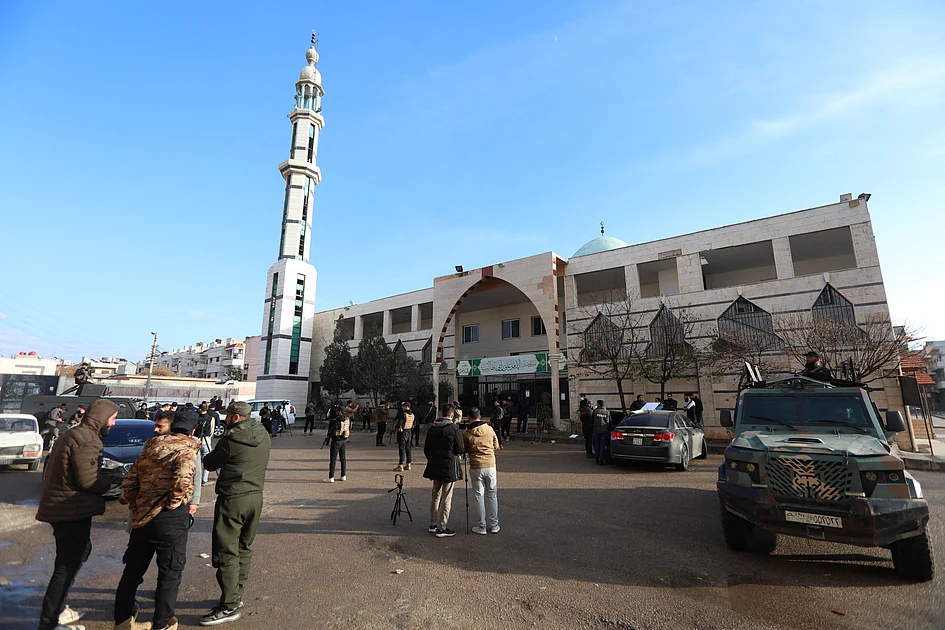
    The United Arab Emirates has issued a forceful condemnation of a lethal bombing that struck a mosque in Homs, Syria, during Friday prayers. The attack, which resulted in significant civilian casualties, has been met with international reproach from the Gulf nation.

    According to reports from the Syrian state news agency SANA, the explosion claimed eight lives and left at least eighteen individuals wounded. Syrian Health Ministry official Najib al-Naasan indicated these casualty figures were preliminary and subject to increase. Local official Issam Naameh confirmed to Reuters that the blast occurred during the congregation’s noon prayers.

    In an official statement, Afra Al Hameli, Director of Strategic Communications at the UAE’s Ministry of Foreign Affairs, articulated the nation’s position: “In the strongest terms, the UAE denounced the terrorist attack that took place inside a mosque in Homs, central Syria, which resulted in the death and injury of a number of innocent civilians.” The Ministry emphasized its unequivocal rejection of all manifestations of violence and terrorism that seek to destabilize regional security.

    The UAE extended profound condolences and sympathy to the bereaved families, the Syrian government, and its people, while also expressing wishes for the swift recovery of those injured in the assault.

    Responsibility for the attack has been claimed by Saraya Ansar al-Sunnah, an ultra-conservative Sunni Muslim Syrian faction, which announced its involvement through Telegram channels. This same group previously claimed responsibility for a suicide bombing at a Damascus church in June that resulted in twenty fatalities.

  • US airlines cancel over 1,000 flights, winter storm warnings issued

    US airlines cancel over 1,000 flights, winter storm warnings issued

    A severe winter storm system wreaked havoc on US air travel during the critical holiday period, forcing major carriers to cancel over 1,000 flights and delay thousands more. According to flight tracking data from FlightAware, the aviation industry experienced massive disruptions on Friday, December 26th, 2025, with 1,139 cancellations and 3,808 delays recorded by midday Eastern Time.

    The National Weather Service had issued urgent winter storm warnings covering the Great Lakes region, northern Mid-Atlantic, and southern New England, predicting hazardous travel conditions through Saturday morning. Major airports including John F. Kennedy International, LaGuardia, and Detroit Metropolitan Wayne County proactively alerted passengers about potential disruptions through social media channels.

    JetBlue Airways bore the brunt of the cancellations with 225 scrapped flights, followed closely by Delta Air Lines with 186 cancellations. Republic Airways canceled 155 flights, while American Airlines and United Airlines called off 96 and 82 flights respectively. In response to the deteriorating conditions, American Airlines implemented a travel waiver policy, allowing affected passengers to rebook without incurring change fees.

    The massive disruption occurred during one of the busiest travel periods of the year, stranding thousands of holiday travelers attempting to return home after Christmas celebrations. Airlines struggled to manage the cascading effects of the severe weather while maintaining communication with passengers about the evolving situation.

  • Israeli reservist rams vehicle into Palestinian man praying in West Bank

    Israeli reservist rams vehicle into Palestinian man praying in West Bank

    In a disturbing incident in the occupied West Bank on Thursday, an Israeli reservist soldier intentionally drove his vehicle into a Palestinian man engaged in roadside prayers. The attack occurred after the soldier had previously discharged his weapon in the vicinity, according to official military statements.

    The Israeli Defense Forces confirmed receiving footage showing ‘an armed individual running over a Palestinian individual.’ Military authorities characterized the reservist’s actions as constituting ‘a severe violation of his authority,’ resulting in immediate termination from service and confiscation of his weapon. Israeli media outlets reported the perpetrator is currently under house arrest pending further investigation.

    Video evidence broadcast on Palestinian television and authenticated by Reuters depicts a civilian-clad individual with a shoulder-slung firearm operating an off-road vehicle that deliberately strikes the praying victim. The Palestinian man received medical evaluation at a local hospital but was ultimately determined to be uninjured and has since returned home.

    This incident occurs against a backdrop of escalating violence in the region. United Nations documentation reveals 2025 as one of the most violent years recorded regarding Israeli civilian attacks against Palestinians in the West Bank, with over 750 documented injuries. Between October 7, 2023, and October 17, 2025, more than a thousand Palestinians lost their lives in the territory, predominantly during security operations with additional casualties resulting from settler violence. During this same timeframe, Palestinian attacks resulted in 57 Israeli fatalities.

    The violence continued into Friday with separate incidents, including a Palestinian assailant killing two individuals in northern Israel, according to police reports. Israeli law enforcement authorities have not provided immediate commentary regarding the reservist incident when contacted by Reuters.

  • Malaysia’s former PM jailed 15 more years, fined $2.8-billion in historic financial scandal

    Malaysia’s former PM jailed 15 more years, fined $2.8-billion in historic financial scandal

    In a landmark judicial decision with profound political implications, Malaysia’s former Prime Minister Najib Razak received an additional 15-year prison sentence and a staggering $2.8 billion fine on Friday for his central role in the colossal 1MDB financial scandal. The 72-year-old politician, already serving time since 2022 on previous convictions, was found guilty on all 25 charges brought against him—four counts of abuse of power and twenty-one counts of money laundering.

    High Court Judge Collin Lawrence Sequerah delivered the verdict after five hours of meticulous reading, systematically dismantling Najib’s defense that he had been deceived by other parties involved in the 1Malaysia Development Berhad state fund. The judge characterized this assertion as stretching “the imagination into the realms of pure fantasy.”

    The sentences will run concurrently following the completion of his current term in 2028. Beyond the prison time, the court ordered Najib to pay fines totaling 11.39 billion ringgit and to forfeit assets worth 2.08 billion ringgit. Failure to comply will result in additional jail time.

    This case represents just one segment of the broader 1MDB corruption scheme, which U.S. and Malaysian investigators estimate diverted at least $4.5 billion from the state fund Najib co-founded in 2009. More than $1 billion allegedly flowed into accounts connected to the former leader.

    The stolen funds financed unprecedented luxury, including a private jet, a $120 million superyacht, luxury real estate, fine art, jewelry, and even the production of the 2013 Hollywood film “The Wolf of Wall Street.” The scandal involved Malaysian financier Jho Low, who leveraged connections with A-list American celebrities during lavish parties that symbolized the audacious scale of the corruption.

    During the verdict reading, Najib appeared visibly defeated, frequently sitting with his head down and shoulders slumped, marking a dramatic fall for one of Malaysia’s most influential and divisive political figures.