分类: world

  • AP Exclusive: China threatens detention in Xinjiang over banned Uyghur songs

    AP Exclusive: China threatens detention in Xinjiang over banned Uyghur songs

    TAIPEI, Taiwan — Chinese authorities in Xinjiang have escalated their cultural suppression campaign by prohibiting dozens of Uyghur-language songs, including traditional folk ballads historically performed at weddings and social gatherings. According to an exclusive recording obtained by The Associated Press from the Norway-based nonprofit Uyghur Hjelp, officials during an October meeting in Kashgar warned residents that downloading, playing, or sharing these songs could result in imprisonment.

    The banned music includes the soulful folk ballad ‘Besh pede,’ a generations-old love song where a young man expresses his dreams to God. Authorities have categorized this and other songs as ‘problematic’ due to perceived religious content. The crackdown extends beyond music to linguistic expressions: officials instructed attendees to replace traditional Muslim greetings like ‘As-salamu alaykum’ with ‘May the Communist Party protect you.’

    This policy forms part of Beijing’s broader assimilation campaign in Xinjiang, where between 2017 and 2019, rights activists and foreign governments estimate at least 1 million Uyghurs and other ethnic minorities were extrajudicially detained. Despite China’s claims of normalcy and tourism promotion in the region, repression continues through more subtle means including music censorship, random phone checks, and boarding schools that separate children from families.

    Seven categories of songs have been prohibited, ranging from traditional folk music to diaspora-created tunes. Even songs previously featured on state television, such as ‘As-salamu alaykum’ which aired on Xinjiang Television’s ‘The Voice of the Silk Road’ in 2016, are now banned for ‘forcing people to believe in religion.’

    Enforcement appears arbitrary but severe. AP obtained court documents showing a 27-year-old Uyghur music producer, Yashar Xiaohelaiti, received a three-year prison sentence and fine for uploading 42 ‘problematic’ songs to NetEase Cloud Music. Former residents describe acquaintances detained for playing traditional instruments or merely sharing songs through messaging apps.

    China’s Foreign Ministry defended the policies as necessary to ‘eradicate the breeding ground for religious extremism,’ claiming ‘anti-China forces’ have maliciously hyped Xinjiang issues. However, Xinjiang government officials declined to comment on specific inquiries.

    Experts note the banned songs frequently share connections to imprisoned Uyghur cultural figures, suggesting deliberate targeting of cultural identity. ‘Music became part of my upbringing, and removing that is like removing the soul,’ said London-based Uyghur singer Rahima Mahmut, who performs songs with religious connotations abroad.
  • Chilly Gaza braces for winter rain

    Chilly Gaza braces for winter rain

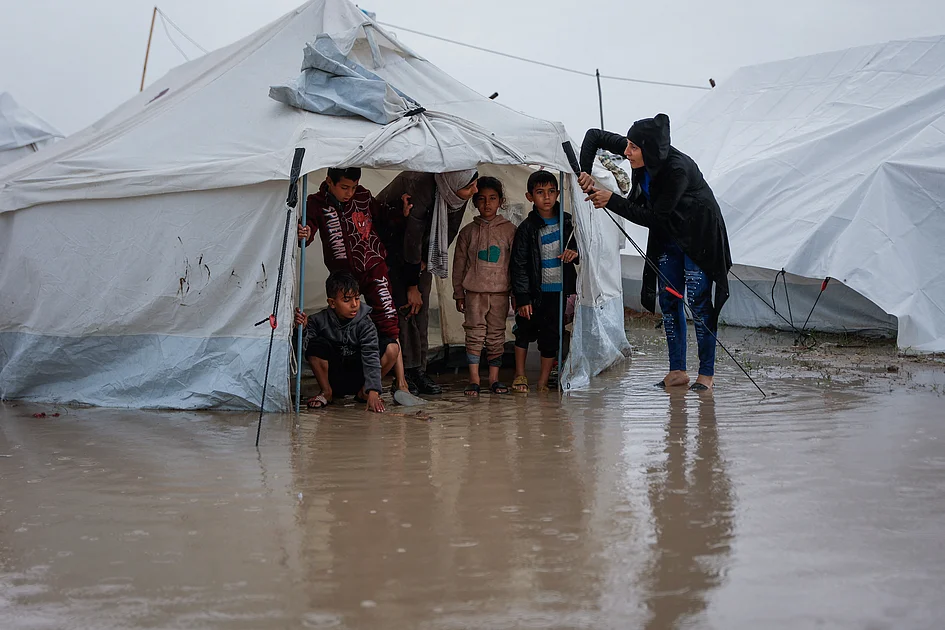
    DEIR AL-BALAH, Gaza Strip — Thousands of displaced Palestinians across Gaza are confronting increasingly dire conditions as winter rains intensify their humanitarian crisis. In the central town of Deir al-Balah, families who have inhabited makeshift tents for approximately two years now brace for another season of harsh weather with severely limited resources.

    The visual landscape reveals profound hardship: barefoot children play on chilled sand while fathers reinforce fraying tent structures with scavenged wood fragments. Inside these dim shelters, daylight filters through countless holes in tarpaulins, creating star-like patterns. Mothers wage constant battles against dampness, hanging sodden clothing on poles and cords during brief respites from rainfall that transforms pathways into muddy ponds.

    Shaima Wadi, a mother of four displaced from Jabalia in northern Gaza, articulated the relentless struggle: “Each rainfall collapses our tent overhead, forcing us to constantly seek new wooden supports. With soaring prices and no income source, we cannot afford proper clothing for our children or adequate sleeping mattresses.”

    Gaza’s Health Ministry reports dozens of fatalities, including a two-week-old infant, attributed to hypothermia and weather-related structural failures of war-damaged buildings. Aid organizations urgently appeal for increased humanitarian assistance and improved shelter solutions amid warnings from emergency responders about the dangers of remaining in compromised structures.

    Innovative yet desperate survival methods emerge throughout the camps. Ahmad Wadi described collecting nylon, cardboard, and plastic from streets to either burn for warmth or use as improvised blankets. “Proper covers are nonexistent,” he explained. “The freezing temperatures combined with high humidity and pervasive water infiltration create unbearable conditions.”

    Meanwhile, diplomatic developments continue as Israeli Prime Minister Benjamin Netanyahu prepares for upcoming Washington discussions regarding the second phase of the October 10 ceasefire. While the truce has generally held, implementation progress has slowed considerably. Critical outstanding issues include potential deployment of an international stabilization force, establishment of a technocratic governing body for Gaza, Hamas disarmament negotiations, and further Israeli troop withdrawals.

    Both conflicting parties have exchanged accusations of ceasefire violations. The Palestinian death toll has now reached at least 71,266 according to official ministry reports.

    Concurrently in the West Bank, Israeli forces imposed movement restrictions on multiple villages near Ramallah following reported shooting incidents near military checkpoints. Initial military statements described a Palestinian opening fire before fleeing, though officials later attributed the incident to “hunting activity.” Operations continue to locate individuals and confiscate weapons, disrupting mobility for residents across thirteen villages.

  • Indonesian rescuers find a body while searching for Spanish soccer coach and 3 children

    Indonesian rescuers find a body while searching for Spanish soccer coach and 3 children

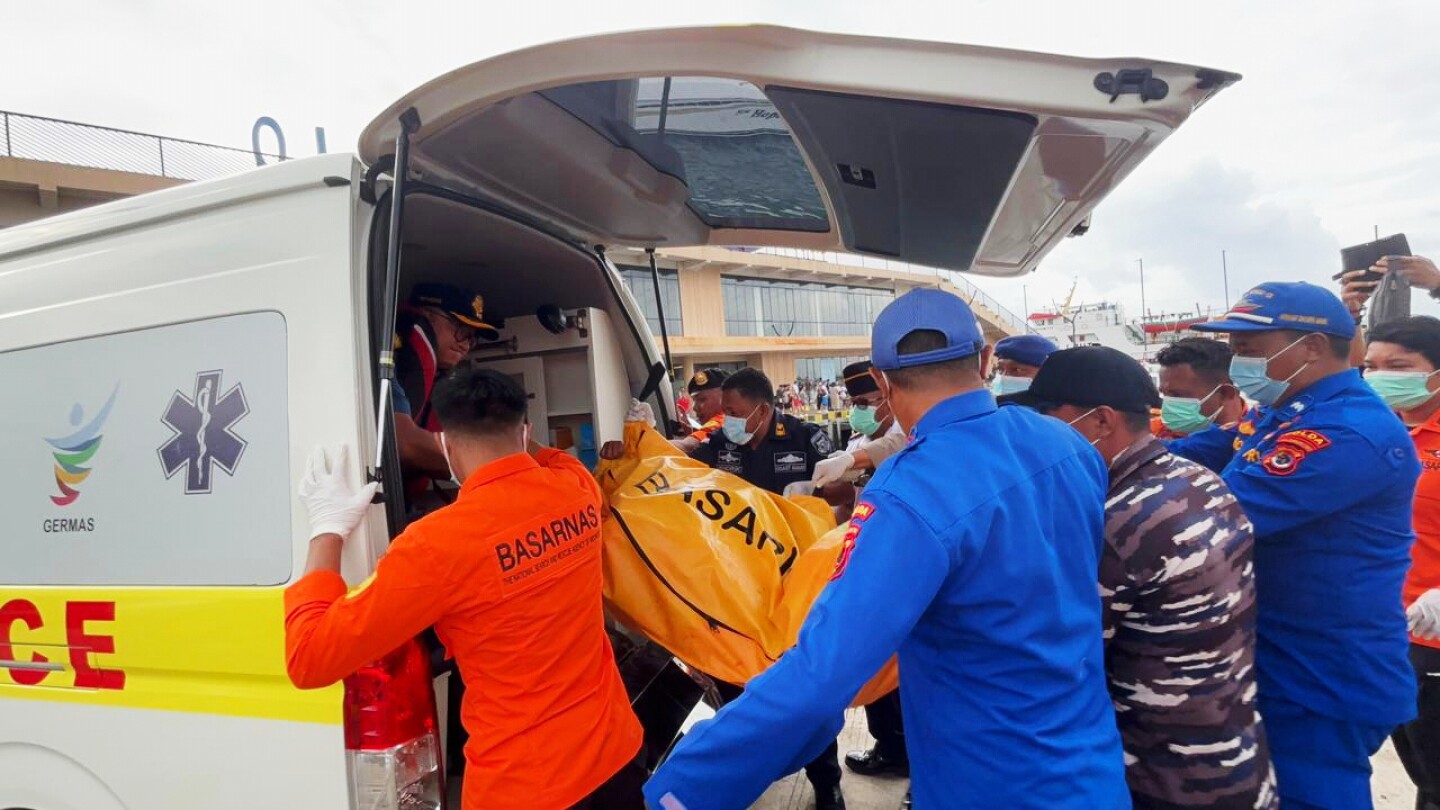
    JAKARTA, Indonesia — Indonesian search and rescue teams have recovered the body of a female victim believed to belong to the family of Spanish football coach Fernando Martín, who vanished alongside three of his children when their tour vessel capsized near Komodo National Park three days ago.

    The discovery occurred at dawn on Monday when local residents spotted the body floating in northern Serai Island waters, approximately one kilometer from the initial sinking location. Fathur Rahman, head of the Maumere Search and Rescue Office, confirmed the victim was transported to Labuan Bajo Hospital for formal identification procedures, with family members accompanying the ambulance to assist forensic authorities.

    The tragic incident unfolded Friday evening when the family’s holiday excursion turned catastrophic following apparent engine failure aboard their vessel. The boat carried Martín, 44—coach of Valencia CF Women’s B team—his wife Andrea, their four children, four crew members, and a local guide. While Martín’s wife and one child were rescued alongside the crew and guide shortly after the incident, Martín himself and three children—aged 9, 10, and 12—remain missing.

    Search operations have intensified with nearly 100 personnel from multiple agencies including police and naval forces. The coordinated effort now covers twice the original search area, spanning a 9-kilometer radius from the wreckage site where debris was previously located. Rescue teams utilizing inflatable boats, naval vessels, and diver units are being assisted by local fishermen and residents.

    Indonesian maritime law mandates search operations continue for seven days with possible extensions. The Komodo National Park, a UNESCO World Heritage Site renowned for its Komodo dragons and diving attractions, has been the scene of numerous maritime incidents due to lax safety enforcement and overcrowding issues in the archipelago nation of 17,000 islands.

    Valencia CF issued an official statement describing the event as ‘a devastating loss’ for the club community, while Spain’s La Liga and fellow football clubs including Real Madrid and Barcelona expressed solidarity with the affected family.

  • South Korea’s climate pledge to cut coal, lower emissions clash with US push for LNG purchases

    South Korea’s climate pledge to cut coal, lower emissions clash with US push for LNG purchases

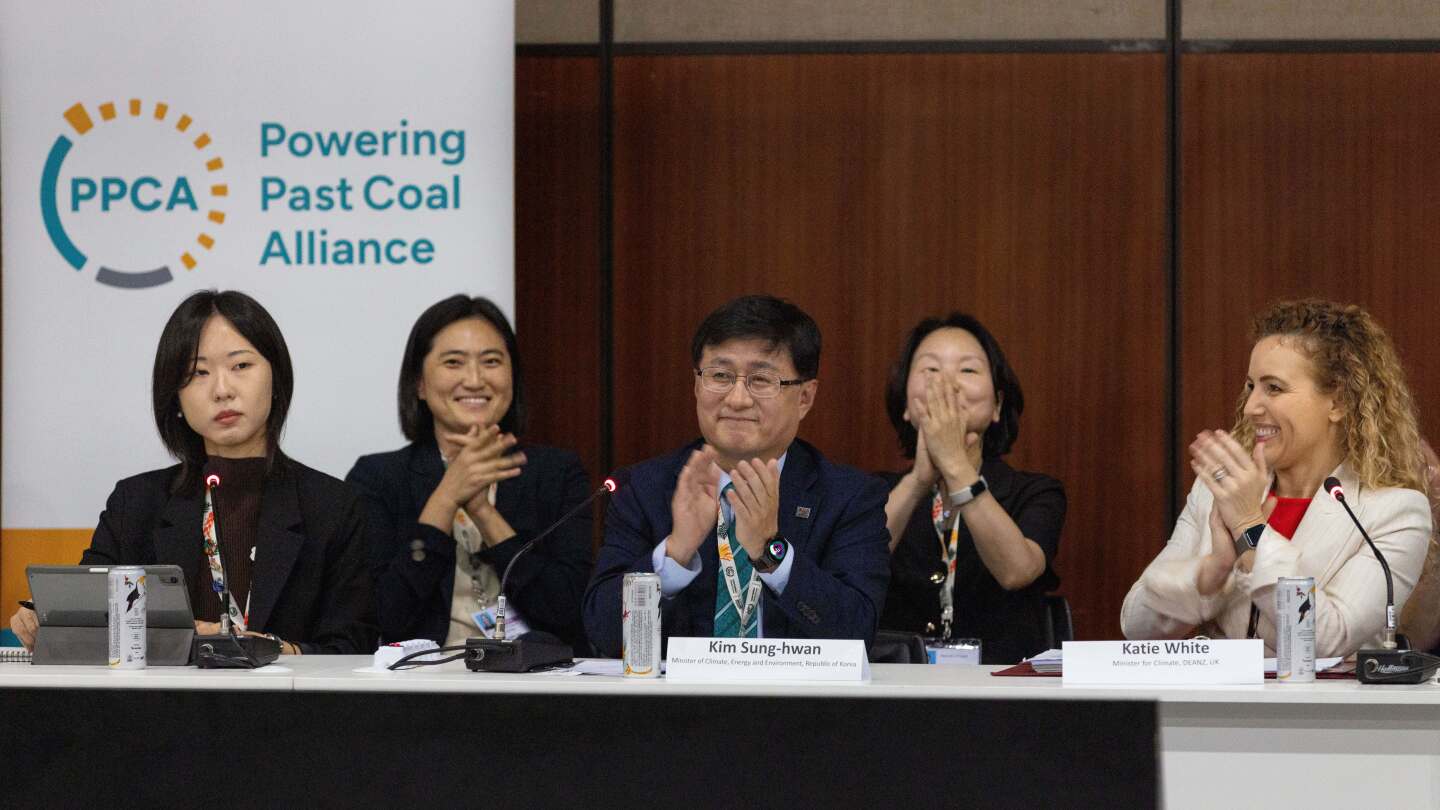
    SEOUL, South Korea — South Korea finds itself navigating a complex energy dilemma as its ambitious climate commitments collide with trade obligations to the United States. The newly established Ministry of Climate, Energy and Environment has unveiled sweeping plans to retire the majority of the nation’s coal-fired power plants by 2040 and slash carbon emissions by at least half within the next fifteen years. This bold initiative signals Seoul’s determination to accelerate its renewable energy transition, currently lagging behind both regional neighbors and global standards.

    However, this environmental ambition conflicts with substantial energy trade agreements negotiated during the Trump administration. As part of broader trade discussions, South Korea has committed to purchasing up to $100 billion worth of American energy products, including significant quantities of liquefied natural gas (LNG). While LNG burns cleaner than coal, it still generates substantial planet-warming emissions, particularly methane, raising concerns among climate activists about potential lock-in to fossil fuel dependency.

    Energy specialists highlight the inherent contradiction in these parallel initiatives. Michelle Kim of the Institute for Energy Economics and Financial Analysis notes the challenge of consolidating “somehow contradictory planning regarding its energy sector.” The administration of President Lee Jae Myung, who campaigned on strengthened climate action following his June election victory, now faces the difficult task of balancing environmental promises with economic considerations.

    South Korea’s current energy landscape reveals the scale of this challenge. Renewable sources generated merely 10.5% of domestic power last year—among the lowest percentages for major economies. By comparison, Japan derives 21% of its electricity from renewables, while Spain achieves 42%. Nuclear power provides a substantial 31% of South Korea’s electricity, with the government pledging to develop a new energy system emphasizing both renewables and nuclear capacity while gradually eliminating coal.

    The pending U.S. trade agreement, potentially lasting three to ten years, could require South Korea to import between 3 million to 9 million tons of American LNG annually. Environmental organizations like Greenpeace warn that simply replacing coal with LNG risks undermining genuine climate progress, potentially shifting the nation’s addiction from one fossil fuel to another rather than advancing a true green transition.

    As South Korea joins international alliances promoting renewable energy, including the Powering Past Coal Alliance, its decisions will reverberate through regional energy markets. The planned reduction in coal imports—primarily from Australia, Indonesia, and Russia—signals a market transformation that coal exporters must now confront, with one of the world’s largest energy customers beginning its transition away from fossil fuels.

  • Deadly clashes erupt in Tartous and Latakia as hundreds take to the streets

    Deadly clashes erupt in Tartous and Latakia as hundreds take to the streets

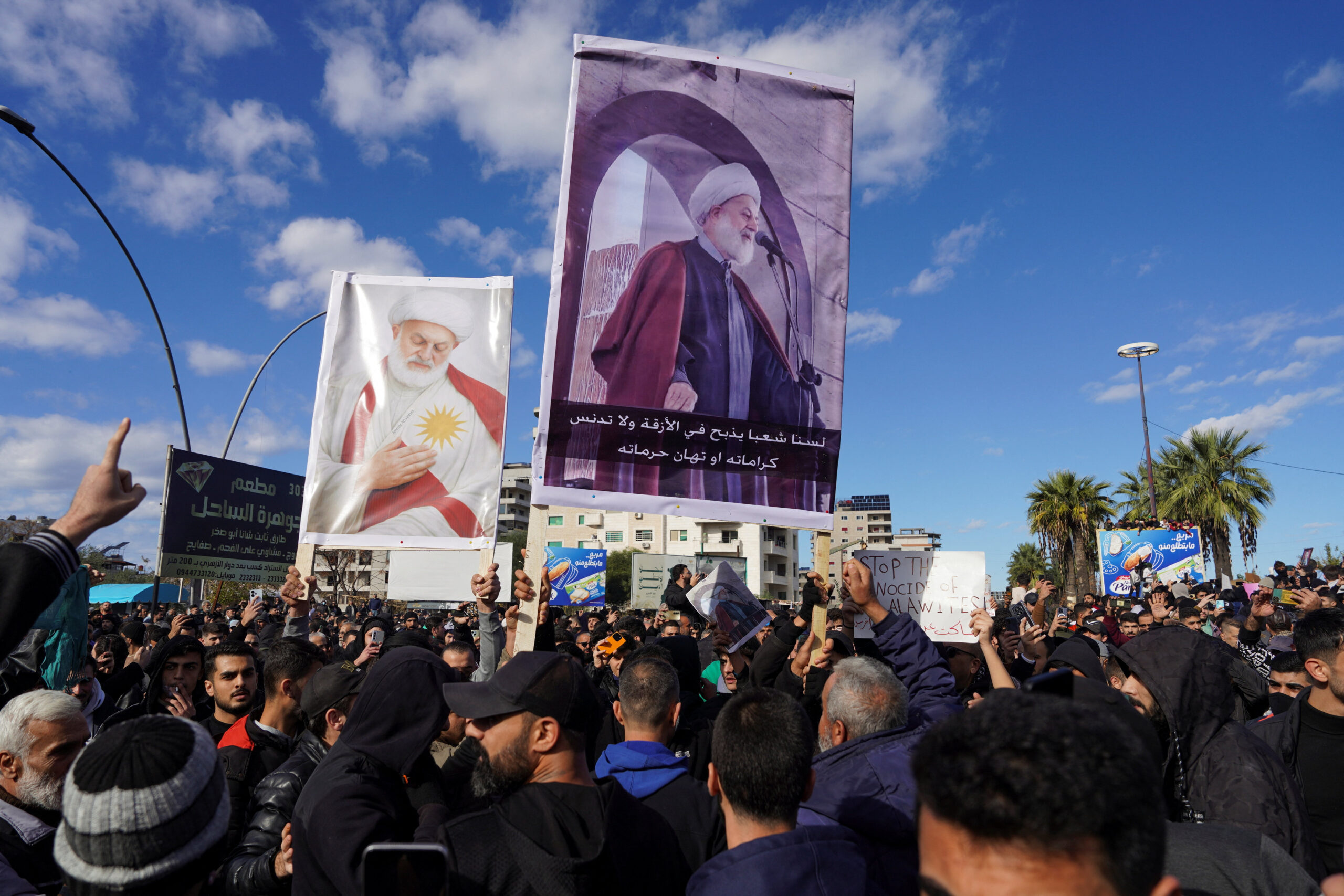
    Syria’s coastal region descended into violent turmoil on Sunday as deadly clashes between armed groups and state security forces resulted in multiple casualties across Latakia and Tartous. The unrest, which claimed at least three lives and injured over 60 individuals, represents one of the most significant security challenges since the fall of the Assad regime.

    The violence erupted during demonstrations organized by Alawite religious leader Ghazal Ghazal, who had called for peaceful protests demanding federal governance and condemning recent sectarian attacks. What began as organized gatherings quickly escalated into armed confrontations when elements described as former regime loyalists launched attacks against security personnel and civilians.

    According to Syria’s Interior Ministry, security forces deployed to protect demonstrators came under direct assault from armed factions associated with remnants of the ousted government. The ministry confirmed several arrests of armed individuals and announced the apprehension of Basel Issa Ali Jamahiri, a member of the extremist Saraya al-Jawad group linked to former Assad loyalists.

    Medical authorities reported treating victims with injuries ranging from blade wounds to gunshot trauma, while two ambulances were disabled during response operations. In a particularly concerning development, assailants targeted a police station in Banias, Tartous with a hand grenade that wounded two officers.

    The Syrian Defense Ministry responded by deploying army units with armored support to restore order in both coastal cities. Security forces established strategic positions at key intersections including al-Azhari and al-Zira’a roundabouts to protect public order.

    The unrest appears connected to Friday’s mosque bombing in Homs that killed eight worshippers and injured eighteen. The previously unknown Saraya Ansar al-Sunna claimed responsibility for the attack, explicitly citing targeting of Alawite community members.

    These events highlight the escalating sectarian tensions that have intensified since President Assad’s ouster in December 2024. The Alawite minority, historically associated with the former ruling establishment, now reports increasing vulnerability and targeted violence across Syria.

  • Mexico train crash kills 13 and injures almost 100

    Mexico train crash kills 13 and injures almost 100

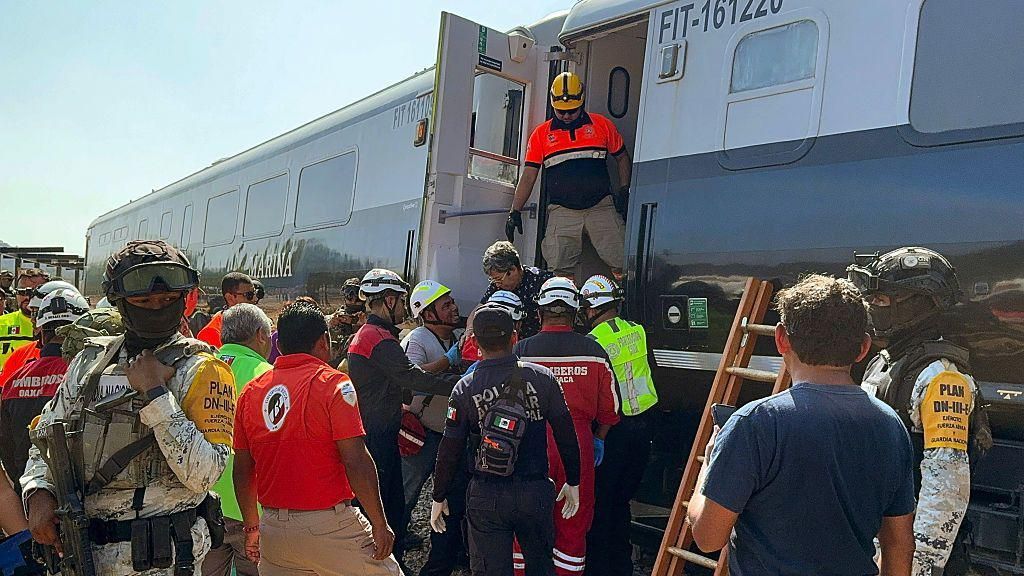
    A catastrophic derailment of Mexico’s Interoceanic passenger train has resulted in significant casualties, with 13 fatalities and nearly 100 injured individuals, according to the Mexican Navy. The incident occurred near Nizanda in Oaxaca’s southeastern region as the train navigated a curve, causing multiple carriages to leave the tracks and partially dangle over a cliff edge.

    The train, operational under naval administration, was transporting 241 passengers and 9 crew members along the strategic Coatzacoalcos-Salina Cruz corridor connecting the Gulf of Mexico and Pacific Ocean. Rescue operations unfolded with dramatic intensity as emergency workers assisted survivors from precariously positioned carriages while medical teams transported the wounded on stretchers.

    Mexican President Claudia Sheinbaum confirmed five critically injured patients among the 36 requiring hospitalization. The federal government has deployed high-level officials including the Secretary of the Navy to coordinate response efforts. Mexico’s Attorney General has initiated a formal investigation into the causes of the derailment.

    This rail service represents a cornerstone of Mexico’s infrastructure modernization program, inaugurated two years ago under former president Andrés Manuel López Obrador. The Interoceanic Railway was designed to transform the Isthmus of Tehuantepec into a vital trade corridor through port expansions and industrial development, serving both freight and passenger transportation needs.

    Oaxaca Governor Salomón Jara Cruz expressed profound sorrow over the tragedy while emphasizing coordinated state-federal assistance for victims and their families. The accident raises serious questions about safety protocols along this strategically important but geographically challenging route through mountainous terrain.

  • Living in fear of Lakurawa – the militant group Trump targeted in Nigeria strikes

    Living in fear of Lakurawa – the militant group Trump targeted in Nigeria strikes

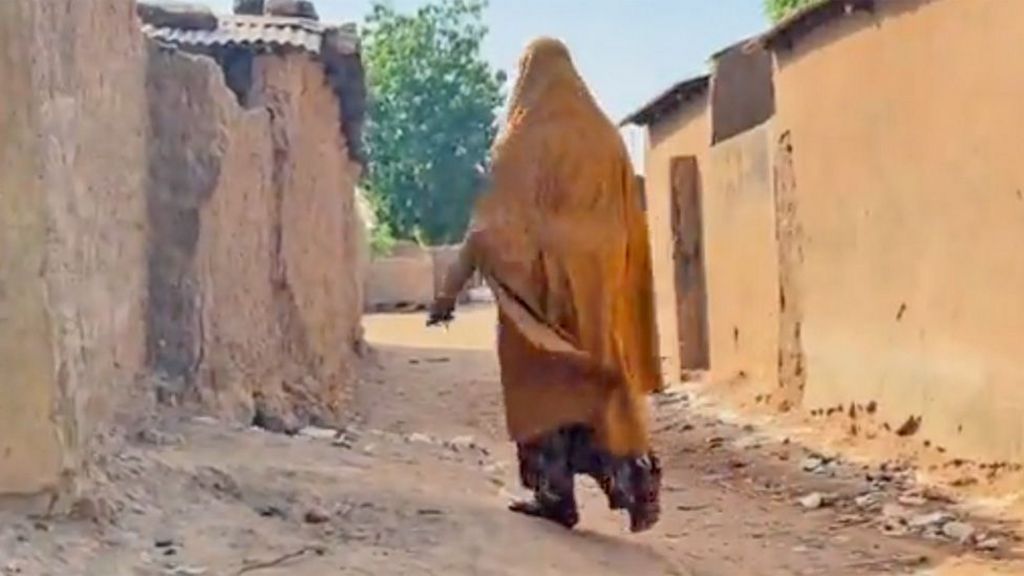
    In the arid plains of northwestern Nigeria, a joint US-Nigerian military operation targeted Islamist militant camps on Christmas Day, sending shockwaves through remote border communities. The strikes focused on Lakurawa militants operating in Tangaza, Sokoto state—a region near the Niger border where government presence is minimal and armed groups have established de facto control.

    Residents of Nukuru village, approximately 10km from the strike zone, reported intense vibrations and aerial explosions that shook their mud-walled homes. While the full impact remains unclear, fleeing militants were observed evacuating the area on motorcycles shortly after the bombardment.

    The Lakurawa group, which claims affiliation with Sahel-based Islamic State factions, has imposed a harsh regime on local communities. Villagers describe forced taxation, strict Sharia law enforcement including music bans, and violent reprisals for non-compliance. Despite their religious presentation, the militants primarily terrorize Muslim communities through cattle rustling, kidnappings, and armed intimidation.

    This operation marks the second Christmas Day intervention against Lakurawa, following Nigeria’s domestic counterterrorism strike in 2024. The timing and international nature of the latest action have raised questions about strategic objectives in a region where criminal banditry and Islamist extremism increasingly intersect.

    Security analysts note the challenges of sustained engagement in the rugged border terrain, where militants use motorcycles to navigate desert paths and maintain isolated camps on high ground. With minimal infrastructure and government services, these communities remain vulnerable to regrouping militants despite international military involvement.

  • Over 10,000 people displaced in 3 days in Sudan: UN

    Over 10,000 people displaced in 3 days in Sudan: UN

    The United Nations’ migration agency reported Sunday that escalating violence across western and southern Sudan has forcibly displaced more than 10,000 civilians within a devastating 72-hour period this week, marking one of the most intense displacement crises in the ongoing conflict.

    According to the International Organization for Migration, attacks on December 25-26 targeting the villages of Um Baru and Kernoi near Sudan’s western border with Chad alone displaced over 7,000 individuals. This surge in violence comes as the paramilitary Rapid Support Forces (RSF) continues its westward expansion after capturing the North Darfur capital of El-Fasher in October.

    The RSF’s recent offensive has pushed through territories inhabited by the Zaghawa ethnic group, areas traditionally controlled by militia forces allied with Sudan’s regular army. The conflict reached international dimensions on Friday when an RSF drone strike killed two Chadian soldiers in the border town of Tine, according to Chadian military sources.

    Simultaneously, between Christmas Eve and Friday, approximately 3,100 additional civilians fled the famine-stricken city of Kadugli in South Kordofan, which has endured a paramilitary siege for more than eighteen months. Resource-rich Kordofan has become the epicenter of intensified fighting as RSF and allied forces attempt to reclaim Sudan’s central corridor from Darfur toward the capital Khartoum.

    Since April 2023, the brutal confrontation between Sudan’s regular army and the RSF has created what the UN characterizes as a ‘war of atrocities,’ resulting in tens of thousands of fatalities and displacing over 11 million people nationwide. The conflict has effectively bifurcated the country, with army forces controlling northern, eastern, and central regions while the RSF dominates all five state capitals in Darfur and, through alliances, significant portions of southern territories.

    This devastating war has generated the world’s most severe hunger and displacement crises, with humanitarian conditions deteriorating rapidly as fighting intensifies across multiple fronts.

  • ‘Shivering from cold and fear’: Over 42,000 tents damaged as rains ravage Gaza camps

    ‘Shivering from cold and fear’: Over 42,000 tents damaged as rains ravage Gaza camps

    Heavy winter rainfall has plunged displaced Palestinians in Gaza into deeper misery, destroying or damaging over 42,000 tents and makeshift shelters according to United Nations assessments. The overnight deluge flooded camps within minutes, soaking food supplies and blankets while leaving vulnerable families exposed to freezing temperatures.

    Jamil al-Sharafi, a 47-year-old father of six sheltering in Al-Mawasi, described watching his tent flood instantly. ‘My children are shivering from cold and fear… The tent was completely flooded within minutes. We lost our blankets, and all the food is soaked,’ he reported. His family is among approximately 1.5 million Gazans displaced by recent conflict, now surviving in temporary camps with inadequate protection from the elements.

    This meteorological crisis follows similar heavy rains earlier in December that claimed at least 18 lives through building collapses and hypothermia according to Gaza’s civil defence agency. The UN humanitarian office confirmed 17 structures collapsed during the previous storm, compounding the devastation in a territory where 80% of buildings have already been damaged or destroyed by warfare.

    Despite a fragile ceasefire between Israel and Hamas, the humanitarian situation remains critical. Displaced families crowd into tarpaulin tents surrounded by mud and standing water, with nighttime temperatures hovering between 8-12°C (46-54°F). Elderly resident Umm Rami Bulbul pleaded for mobile homes rather than tents, stating ‘Living in tents means we die from the cold in the rain and from the heat in the summer.’

    The crisis is exacerbated by insufficient aid delivery. Amjad Al-Shawa, director of the Palestinian NGO Network in Gaza, revealed that of 300,000 tents needed, only 60,000 have reached the territory due to Israeli restrictions on humanitarian access. UNRWA chief Philippe Lazzarini condemned the situation on social media platform X, emphasizing ‘There is nothing inevitable about this. Aid supplies are not being allowed in at the scale required.’

    Samia Abu Jabba articulated the collective despair: ‘I sleep in the cold, and water floods us and my children’s clothes. They are freezing. What did the people of Gaza and their children do to deserve this?’ The compounded crises of war destruction, inadequate shelter, and restricted aid have created what humanitarian organizations describe as one of the most severe emergency situations in the region.

  • Bangladesh police say student leader’s killers fled to India

    Bangladesh police say student leader’s killers fled to India

    Bangladeshi authorities have confirmed that suspects in the assassination of prominent student activist Sharif Osman Hadi have fled to India, escalating diplomatic tensions between the neighboring nations. The development comes amid ongoing violent protests that have shaken the interim government in Dhaka.

    Hadi, a vocal critic of Indian influence in Bangladesh and participant in last year’s pro-democracy uprising, was fatally shot by masked assailants in Dhaka on December 12th. Despite being transferred to a Singapore hospital for emergency treatment, the student leader succumbed to his injuries.

    According to SN Nazrul Islam, a senior Dhaka Metropolitan Police officer, the investigation has determined the killing was premeditated. Two primary suspects—Faisal Karim Masud and Alamgir Sheikh—reportedly crossed into India through the Haluaghat border shortly after the attack. Indian citizens allegedly received the fugitives and escorted them into Meghalaya state before transferring them to accomplices.

    Bangladeshi investigators confirm coordination with Indian counterparts, who have reportedly arrested two suspected accomplices in Meghalaya. However, senior Meghalaya police officials declined to comment when contacted by international media.

    The assassination has triggered widespread unrest across Bangladesh, with protesters torching multiple buildings including two major newspapers perceived as pro-India and a prominent cultural institution. The violence has intensified pressure on the interim government to resolve the case, particularly since Hadi was expected to contest February’s general elections.

    Diplomatic relations between the nations have deteriorated significantly since former Prime Minister Sheikh Hasina fled to India following last year’s uprising. India maintains it is considering Dhaka’s extradition requests for Hasina, who received a death sentence in absentia for her alleged role in suppressing the pro-democracy movement.

    The recent lynching of a garment worker by a mob on December 18th has further strained bilateral ties. Amid the deteriorating security situation, Khuda Baksh Chowdhury, special assistant to interim leader Muhammad Yunus overseeing home affairs, resigned on Wednesday.