On an unseasonably frosty August dawn in central Ukraine, hundreds of newly graduated Ukrainian paratroopers trundled across sprawling fields of corn and rapeseed, gearing up for their first parachute jump as part of final qualification training. Strapped into heavy gear and waiting in formation for their turn to board aircraft, many of these rookie soldiers already know that the combat jump they are training for may never happen in an active warzone. Four years into Russia’s full-scale invasion, cutting-edge military technology has upended long-standing norms of warfare, reshaping the very purpose of frontline infantry and traditional airborne forces.
Today, the iconic image of war—massed infantry advancing across the front and intense dogfights between manned fighter jets—has largely become a relic of the past. Uncrewed aerial systems, commonly known as drones, now dominate the battlespace, while ground-based robotic platforms are increasingly integrated into frontline combat missions, carrying out offensive strikes and resupplying troops trapped in high-risk positions. Ukraine’s Ministry of Defense confirmed this paradigm shift in a July update, reporting that approximately 90 percent of all targets destroyed by Ukrainian forces are now taken out by drone strikes.
Despite this dramatic technological revolution, Ukraine’s newest generation of paratroopers remains convinced that traditional military skills and the human role in combat remain irreplaceable. Twenty-one-year-old recruit Karyi, who uses a callsign for operational security, noted that while advanced technology can deliver devastating firepower, it has inherent limits. “I’d love to see artificial intelligence winning wars, liberating territories,” he told AFP reporters on the training ground, “but that is not the reality we face today.”
Airborne forces have held elite status in militaries across the globe for nearly a century, with combat parachute drops a core tactic of warfare since World War II. But amid the current drone-driven conflict with Russia, newly trained paratroopers are now deployed for a more fundamental mission: holding critical frontline positions and repelling ongoing Russian advances. Large-scale parachute insertions behind enemy lines are “not practical at all” in modern drone-equipped warfare, explained young officer Roman Kulievych during the training exercise. Still, he added, the tradition of paratrooper training endures because it builds mental resilience that sets airborne forces apart from other branches of the military.
Instructors emphasize that traditional paratrooper training serves a far broader strategic purpose than just teaching the technical skill of jumping from aircraft: it is rigorous psychological preparation for the stresses of frontline combat. “It is essentially part of psychological training: this way we understand if the personnel are ready for stressful situations … and how they fight their fears,” said 24-year-old drill instructor Axel.
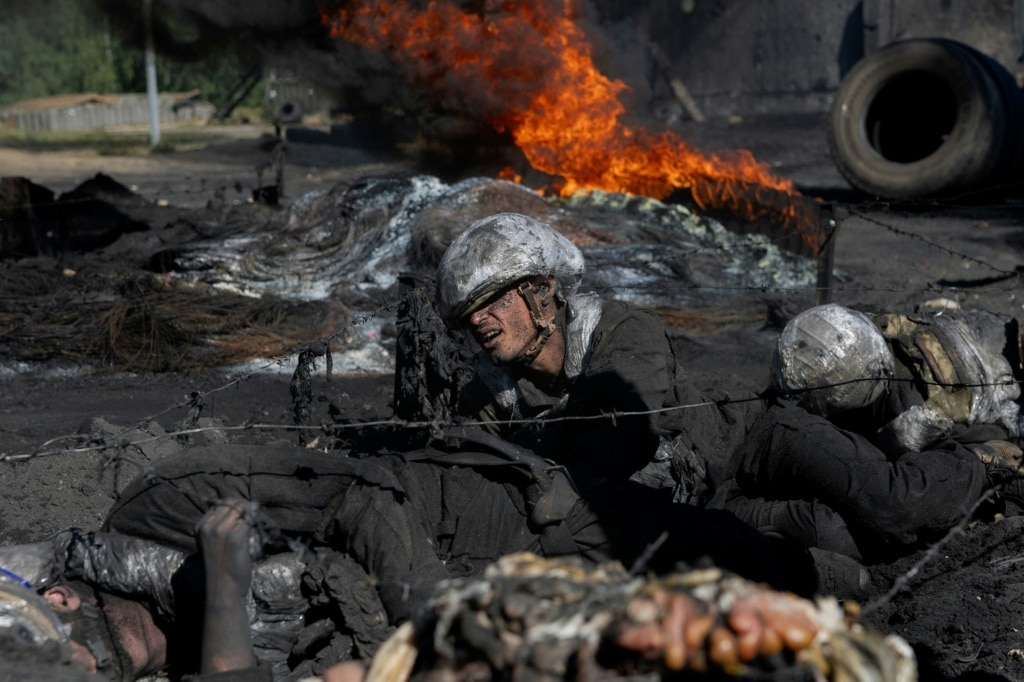
This philosophy is on full display during the final test to earn the coveted paratrooper beret: a grueling forced march through harsh terrain. Trainees navigate kilometers of sand bogs and swampy ground, surrounded by simulated explosions, constant gunfire, shouted instructor commands, the stench of rotting animal carcasses and artificial fake blood designed to replicate the chaos of combat. At the end of the march, recruits must go through consecutive hand-to-hand combat bouts against three experienced veteran paratroopers.
“It shapes your psyche and moulds your motivation to fight, so that in critical situations, you know you are capable of something more,” Karyi explained of the brutal training.
For modern frontline soldiers, the nature of fear has shifted dramatically amid the rise of drones. Instead of bracing for an enemy infantry charge, troops now live in constant fear of being spotted by an unseen drone pilot operating from miles away behind enemy lines. This new reality, Ukrainian instructors say, means conventional ground troops require even stronger mental preparation than in past conflicts. Daily life for frontline troops in the age of drone warfare includes days without rotation, chronic food shortages, and the constant stress of staying perfectly still to avoid revealing their position to circling enemy drones.
Midway through training, an air raid siren cut through the hum of conversation among the waiting paratroopers, forcing a halt to jump operations until the threat of enemy attack passed. The unit commander balanced strict discipline with dry, profane military humor and quiet paternal care for his young troops as he reorganized the trainees. “Gentlemen, stop screwing around and get over here to help your brothers gear up the parachute. Find yourself a good-looking life companion and get to work,” he shouted to the group. After helping a fellow trainee strap on his parachute rig, one recruit offered a firm handshake and a wish for good luck. “Luck is for losers,” the other replied. “In our line of work, it’s skill and courage.”
Senior instructor Yuriy, who leads one of the training squads through the punishing obstacle course, has occasionally questioned the need for such grueling traditional training in an era of autonomous drones and AI-assisted warfare. He acknowledged that one day, conflict could be dominated by technical specialists operating remote systems from safe positions behind the front. “But still, territory is only held by a unit when actual units are standing there — meaning people, not robots,” he argued.
Karyi echoed that conviction, summing up the shared perspective of the new generation of Ukrainian troops. “First and foremost, a human is still behind all of this, and these people must be of high quality,” he said.