分类: sports

  • Excitement and nerves in the US as football fans get ready for the World Cup

    Excitement and nerves in the US as football fans get ready for the World Cup

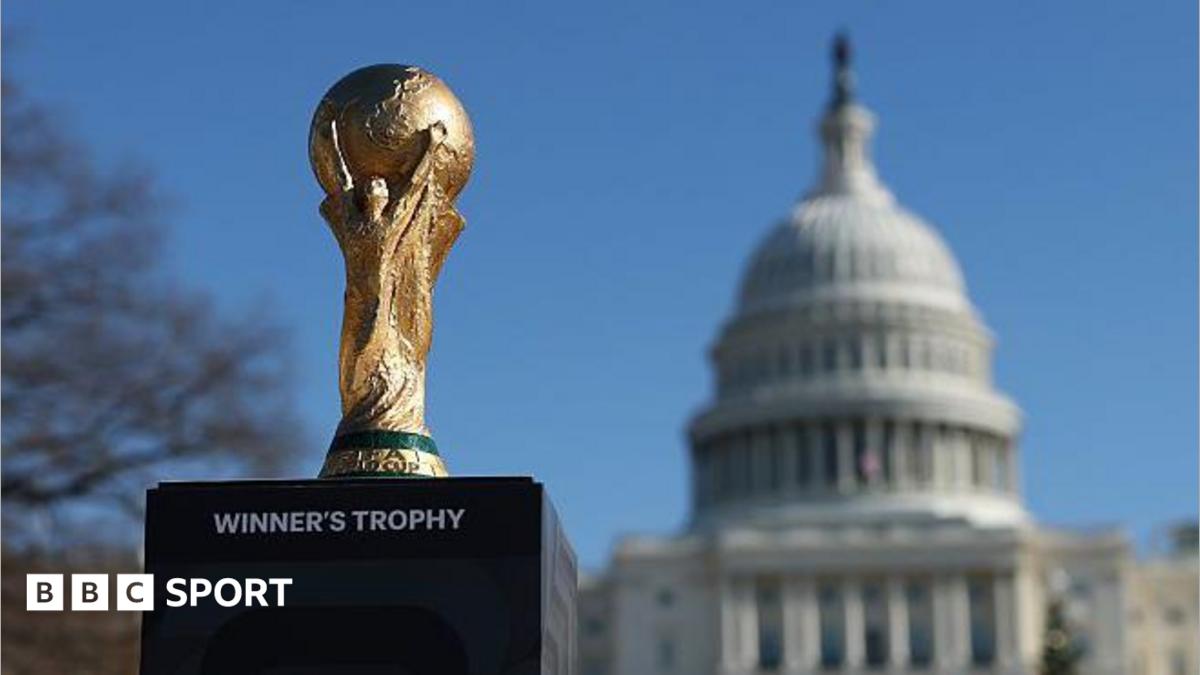
    It has been more than three decades since the United States last opened its stadium doors to the FIFA World Cup, and with the 2026 edition — the first expanded 48-team tournament, co-hosted alongside Canada and Mexico — just days away, the nation is caught between soaring anticipation and lingering uncertainty over whether it is fully prepared to welcome the global sporting event.

    Multiple growing pains have emerged in the final lead-up to kickoff. Geopolitical tensions, widespread frustration over strict visa entry requirements, and eye-popping match ticket prices have dominated pre-tournament conversations, casting a shadow of concern over what is supposed to be a unifying global celebration. Yet for millions of American soccer fans and small business owners across the country, the excitement of hosting the world’s most-watched sporting event on home soil has outweighed these growing pains.

    At the Red Bull training complex in Morristown, New Jersey, one of the world’s most successful national sides, Brazil, has already settled into its official base camp. As the Seleção runs through tactical drills and fitness preparations, crowds of giddy fans have gathered along the facility’s sidelines to catch a rare, close-up look at their favorite football stars. Many young fans have left with cherished autographs and selfie photos with the players.

    Brazilian forward Matheus Cunha, who plies his club trade at Manchester United, praised the host nation’s preparations in an interview with the BBC. “The fans have been amazing, and so far, it’s off to a good start,” he said, lauding the quality of the training facility, the pitch, and even the mild New Jersey summer weather, which he says reminds him of home back in Brazil. He only had one lighthearted quip for his hosts: “The only thing, it’s called football, not soccer.”

    Across the country in New York City’s Brooklyn neighborhood, young players with the S.C. Gjøa Soccer club are already counting down the minutes to kickoff, with many having secured coveted tickets to multiple matches. Dennis Wyrwoll, a long-time soccer fan who attended the last U.S.-hosted World Cup in 1994, is set to bring his 10-year-old son Nicholas to four matches. Recalling the 1994 tournament, he noted that “at that point, nobody knew anything about football” and tickets were easy to obtain. Today, he says there is undeniable buzz in major New York, but he remains curious to see if that excitement translates to smaller cities across the U.S. where soccer has historically had a smaller fanbase.

    Indeed, the profile of soccer in the U.S. has grown exponentially since the 1994 tournament, and many local coaches credit the 2026 hosting gig with accelerating that growth. S.C. Gjøa coach Kaha Tavadze told the BBC that his club has seen a threefold increase in youth player registrations and tryouts in just the past 12 months alone, a shift he directly attributes to the excitement of hosting the World Cup.

    “Children now follow the sport more closely, know every top player, and wear their favourite team’s jersey,” Tavadze explained. He added that the tournament could even inspire a new generation of American players to pursue professional careers: “Watching live games, especially at that level, will change their mindset.”

    For all the excitement, however, systemic barriers remain. Sky-high ticket prices have put in-person attendance out of reach for many working-class fans, even those with deep connections to the sport. Shantay Armstrong, whose 7-year-old son has played with the Brooklyn club for five years, says she and her son have long dreamed of attending a World Cup match together. She entered an official raffle for affordable tickets hosted by New York City, only to watch the raffle close to new entries within minutes of going live.

    “It’s almost heartbreaking that there’s like a lack of accessibility for people who can’t afford to go,” Armstrong said. “I wanted to give him that opportunity, but that lack of opportunity makes me feel locked out, like we’re here but we’re not really part of it.”

    Tournament organizers have moved to address this gap by opening free public fan zones across host cities, allowing fans without match tickets to still gather and experience the excitement of the tournament. Officials have also worked to direct foot traffic to local small businesses, in the hopes that communities across the country can share in the expected economic windfall from the global event.

    Enda Keenan, owner of Legend’s Bar — a popular destination for overseas soccer fans located just steps from the Empire State Building in Manhattan — says he already expects a historic boost to his business, so much so that he has even turned down extra event requests from FIFA. “I said we can’t help ourselves, it’s going to be so crazy, we’d love to help, but there’s nothing we can do,” Keenan explained. He anticipates that even New Yorkers who never watch soccer will flood bars and fan zones to join the fun, saying that “it’ll be that much of a buzz.”

    During last year’s UEFA Champions League final, Keenan’s bar hosted 1,300 fans inside and an additional 700 outside on the sidewalk, where the bar set up an 85-inch television for overflow crowds. He says the World Cup will be an entirely different scale of crowd, and he has already prepped by sending overflow customers to neighboring bars to avoid overcrowding.

    In total, roughly 1.2 million international and domestic visitors are expected to travel to the New York-New Jersey host region alone over the course of the tournament. Beyond ticket access, transportation and logistics remain a top concern for many attendees. Thirteen-year-old goalkeeper Baxter Rowland will attend two matches, traveling to one with his family and another with a group of friends on a chartered bus. But even with tickets secured, his mother Alice Baxter says she is already bracing for traffic and parking chaos when she drives to the stadium.

    “I think it’s going to be a little bit stressful, and I think it might be difficult for the first few games, at least,” she said. “And hopefully it’ll get better and they’ll work out the kinks before the final here in New Jersey and New York.”

    In just a matter of days, the world will turn its attention to North America, and the question on everyone’s mind — whether the U.S. is truly ready to host the world’s biggest sporting event — will finally get an answer.
  • A World Cup guide for new football fans

    A World Cup guide for new football fans

    The global buzz building ahead of the 2026 FIFA World Cup is impossible to ignore. As the most watched and beloved sporting event on the planet, this iteration of soccer’s biggest prize carries unprecedented historical significance: for the first time in the tournament’s 92-year existence, it will be co-hosted across three North American nations — the United States, Mexico, and Canada.

    Kicking off the month-long tournament on June 11 in Mexico City, the 2026 World Cup will wrap up with the final showdown on July 19 at MetLife Stadium in the U.S. state of New Jersey. This edition also marks a major expansion of the tournament format, growing from 32 to 48 competing nations drawn into 12 four-team groups based on global FIFA rankings.

    For new soccer fans new unfamiliar with World Cup rules, the tournament structure follows a straightforward framework. The top two finishing teams from each group advance automatically to the knockout round of 32, with the remaining eight knockout spots going to the highest-ranked third-place teams from the group stage. Match scoring awards three points for a win, one point for a draw, and zero points for a loss, with 16 teams eliminated in the first knockout round.

    Standard 90-minute matches are split into two 45-minute halves with a 15-minute halftime break, with stoppage time added at the end of each half to offset time lost to injury treatment, game delays, and mandatory water breaks implemented by FIFA to combat summer heat across the host cities. No penalty shootouts are held during the group stage; if a knockout match ends in a draw after regulation, 30 minutes of extra time is played, and a penalty shootout will determine the winner if the score remains tied.

    Host cities are spread across all three co-host nations: Mexico will host matches in Guadalajara, Monterrey, and Mexico City; Canada will host in Toronto and Vancouver; and 11 U.S. metropolitan areas — Atlanta, Boston, Dallas, Houston, Kansas City, Los Angeles, Miami, New York/New Jersey, Philadelphia, San Francisco Bay Area, and Seattle — will welcome teams and fans.

    Heading into the tournament, multiple squads enter as top contenders to lift the trophy. Two-time winners France, led by global superstars Kylian Mbappé and Ousmane Dembélé who consistently dominate Europe’s top club competitions, are widely tipped to reach the final again. 2010 champions Spain are banking on their new generation of young talent, headlined by 18-year-old Lamine Yamal, to claim their second major international title in two years. England, still recovering from back-to-back European Championship final heartbreaks, also enter as a strong contender, while five-time champions Brazil — the most successful nation in World Cup history — are chasing their first title since 2002 to extend their record.

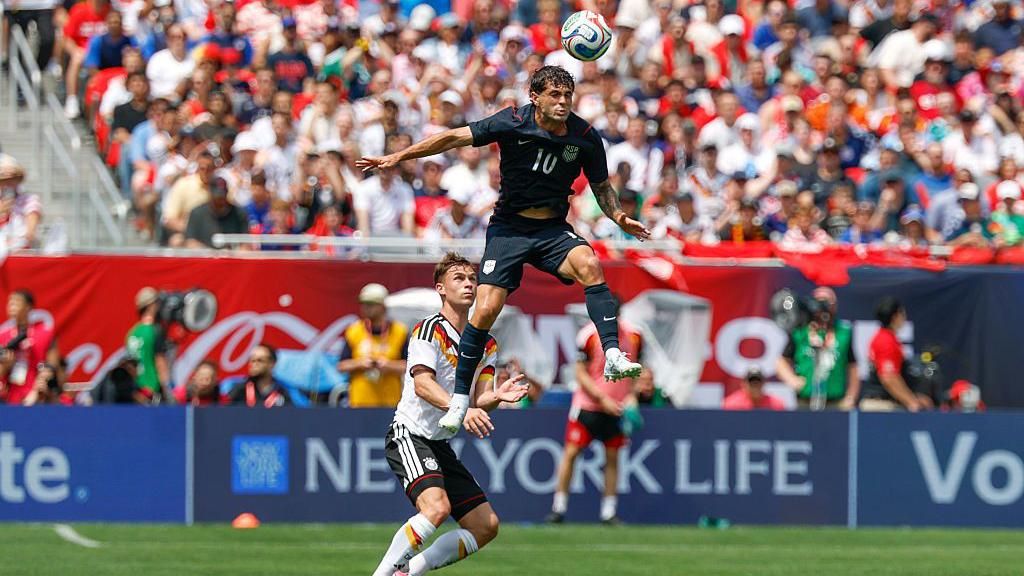
    This year’s tournament will feature no shortage of must-watch players. Mbappé, making his third World Cup appearance for France after leading the side to one title and one second-place finish in the last two tournaments, is expected to dominate the competition. Yamal, Spain’s teenaged prodigy, is poised to cement his status as one of soccer’s next global superstars. The tournament will also likely be the final major international appearance for two of the sport’s all-time greats: Argentina’s Lionel Messi, who will turn 39 in June, and Portugal’s 41-year-old Cristiano Ronaldo, whose two-decade rivalry shaped modern men’s soccer. Other standout players to watch include Brazilian playmakers Neymar and Vinícius Júnior, England’s Jude Bellingham, host nation standouts Christian Pulisic (USA) and Alphonso Davies (Canada), South Korea’s Son Heung-min, Ghana’s Antoine Semenyo, and record-breaking Norwegian striker Erling Haaland.

    The expanded 48-team format has created a historic moment for underdog soccer nations, with four countries making their World Cup debuts in 2026. Curaçao, a Caribbean nation with just 156,000 residents, will break Iceland’s 2018 record as the smallest country ever to qualify for the tournament. Fellow island nation Cape Verde, with a population of roughly 500,000, will enter as the third smallest qualifying nation in World Cup history. Jordan has also qualified for the first time in its history, with King Abdullah II granting Moroccan-born head coach Jamal Sellami Jordanian citizenship in recognition of his work leading the team to qualification. Rounding out the debutantes is Uzbekistan, led by head coach Fabio Cannavaro — a four-time World Cup participant who captained Italy to the 2006 tournament title.

    Beyond on-pitch action, the 2026 World Cup carries layered political and historical context that will shape key group stage matches. When France faces Senegal on June 16, the tie will be framed by their shared colonial history, echoing the 2002 World Cup where Senegal pulled off a legendary upset over the defending champion French side. Ghana and England, another pair tied by colonial history, will face off in Philadelphia on June 23. A June group stage match between Iran and Egypt in Seattle has drawn global attention after the match was branded a “Pride” match by local organizers to celebrate the city’s LGBT community, a move that prompted formal objections from both national federations. Same-sex relations remain criminalized in both nations, and the global football community will closely watch how the teams and FIFA navigate the situation. Iran’s participation also carries extra geopolitical weight amid ongoing tensions with co-host the United States; all of Iran’s group stage matches are held on U.S. soil, but the team has opted to base its training camp in Mexico and commute to matches. The tournament will also welcome two returning sides after long absences: Haiti will play its first World Cup match since 1974, while Scotland returns for the first time in 28 years.

  • Serena Williams makes winning return in Queen’s Club doubles

    Serena Williams makes winning return in Queen’s Club doubles

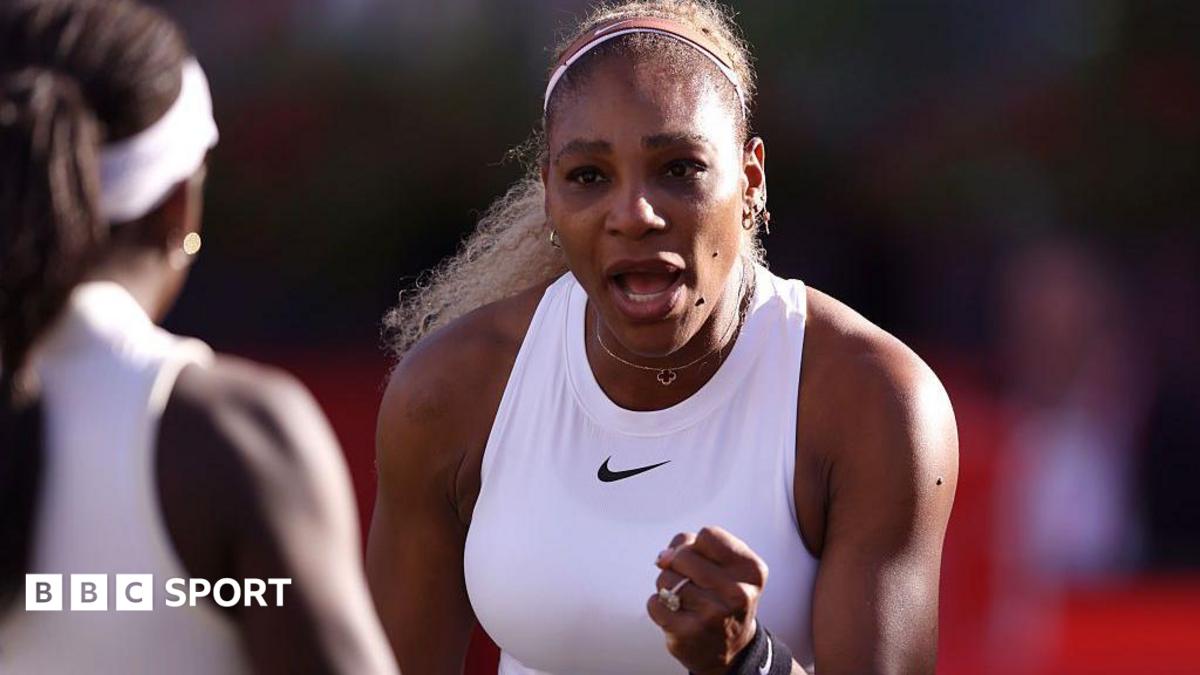
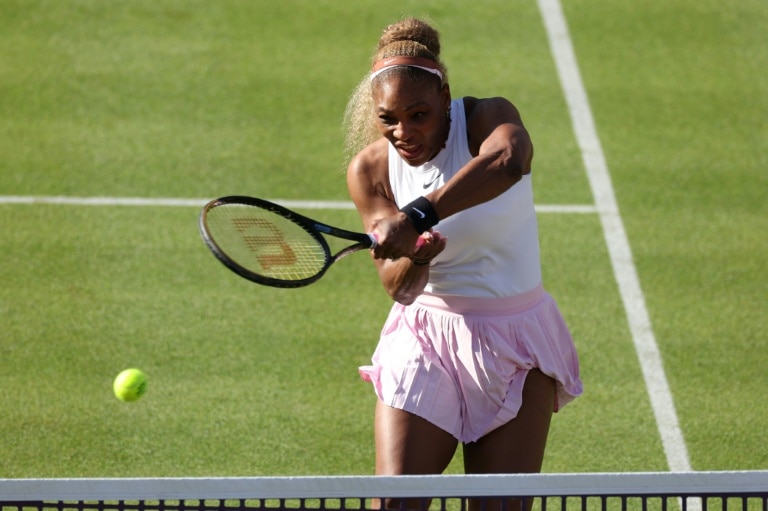
    Tennis icon Serena Williams has pulled off a fairy-tale return to competitive tennis, claiming a first-round doubles victory at London’s Queen’s Club Championships alongside 19-year-old Canadian partner Victoria Mboko on Tuesday, four years after stepping away from the sport. The 44-year-old American legend, a 23-time Grand Slam singles champion, dismantled third seeds Erin Routliffe and Nicole Melichar-Martinez in a 7-6(2), 6-2 triumph that left the sold-out Andy Murray Arena crowd electrified.

    Williams’ comeback had already sent shockwaves through the global tennis community just 24 hours earlier, when she dropped a last-minute surprise announcement that she would come out of retirement to compete in the grass-court event. Her first competitive appearance since a 2022 US Open defeat to Ajla Tomljanovic — where she signaled she was “evolving away” from professional tennis — had sparked widespread debate ahead of the match: could one of the sport’s greatest ever athletes recapture even a fraction of her iconic form, or would this return end as a humbling reminder of time passed?

    It took barely a game for Williams to answer those critics. While minor signs of rust were visible in her opening two touches — a missed volley from her partner’s serve, followed by a dumped volley into the net on her first touch of the ball — she quickly found her rhythm, notching her first comeback winner with a clean volley that sent the crowd roaring. From there, the hallmarks of her legendary game were all on display: the trademark thunderous serve that peaked at 120mph, matching the devastating speed of her prime; ferocious, accurate groundstrokes that held her own in long rallies; and the sharp competitive instinct that made her one of the most feared competitors in sports history.

    The match carried extra personal meaning for Williams, who was joined in the stands by her husband Alexis Ohanian and their two young daughters, Olympia and Adira — a presence she had already cited as a core motivation for her return. After hitting a stunning backhand winner from an impossible acute angle off the court, she broke into a wide grin and spread her arms, a moment that appeared to surprise even the champion herself. She celebrated a break of serve to go 4-1 up in the first set with her iconic clenched-fist roar, and closed out the opening-set tiebreak with dominant play, yelling “let’s go” as she and Mboko claimed the first set.

    In the second set, teenager Mboko stepped into the spotlight, firing off a string of winners that earned admiring fist bumps from her legendary partner. But fittingly, it was Williams’ lethal serve that sealed the victory four years in the making.

    The result has already reignited intense speculation over whether Williams will extend her comeback to singles competition at Wimbledon, the grass-court Grand Slam she has won seven times, which kicks off later this June. Williams already has another competitive doubles event lined up: the Berlin Open, scheduled to run from June 15 to 21. While she downplayed rumors of a singles return just days ago, insiders and fans alike note that the allure of competing at the All England Club, one of her most successful venues, will be hard to resist if she continues her winning run at Queen’s.

    For Williams herself, the focus remains on the experience rather than any final outcome. 31 years after her first professional match, the tennis legend framed this return as just another adventure in a groundbreaking career that has already redefined women’s tennis. Walking out to a standing ovation from the packed crowd, with signs reading “Welcome back Serena” dotting the stands and former Olympic skiing champion Lindsey Vonn watching from the guest boxes, Williams showed she has lost none of her magic — or her desire to compete.

  • Williams rolls back the years on return at Queen’s

    Williams rolls back the years on return at Queen’s

    One of the greatest tennis athletes in history has pulled off a remarkable fairy-tale return to competitive play: 44-year-old Serena Williams secured a straight-sets doubles win at London’s iconic Queen’s Club on Tuesday, 1,375 days after stepping away from elite competition. This performance capped off months of growing speculation around a potential comeback, ending with a triumphant opening match that thrilled a sold-out crowd of more than 9,000 passionate fans packed into the Andy Murray Arena.

    Teaming up with 19-year-old Canadian rising star Victoria Mboko, Williams and her untested partner upset third seeds Erin Routliffe and Nicole Melichar-Martinez with a 7-6(2), 6-2 victory. The result defied pre-match expectations that the long layoff would leave Williams rusty and out of place against top-level touring opponents. Far from showing signs of decline, the 23-time Grand Slam singles champion displayed many of the traits that made her a global icon: her signature serve hit speeds of up to 120mph, and her powerful groundstrokes remained as precise and devastating as fans remembered from her peak.

    While Williams admitted after the match that her first touch of the day was a misplayed close-range volley into the net that briefly stoked worries about lost form, any doubts were completely erased within 92 minutes of the first serve. By the final point, it was Williams’ serve that closed out the win, marking her first match victory since the 2022 US Open, when she originally announced she was “evolving away” from professional tennis after a 27-year legendary career.

    Speculation around a return began to build last year when Williams’ name reappeared on the official anti-doping testing pool roster, and speculation grew even louder in February 2024 when she was listed on the International Tennis Integrity Agency’s player reinstatement register. Her participation at Queen’s was only confirmed one week before the tournament, sparking a frenzy for tickets that made the clash the most in-demand event of the 2025 grass-court season to date.

    In post-match remarks, Williams downplayed any pressure to prove herself at this stage of her life, framing the comeback as a casual, fun opportunity rather than a full-time return to elite competition. “I had nothing better to do, I got tired of sitting at home,” she explained, noting that her children were on summer break from school, making the timing perfect for a return. She added that Queen’s Club had always been a men’s-only venue for majors during her career, so competing at the iconic London location felt like a special new experience she never got to check off her bucket list.

    For Williams, one of the biggest draws of the comeback was the chance to let her two young daughters watch her compete in person for the first time. Eight-year-old Olympia and 1-year-old Adira watched from the stands alongside their father, cheering on their mother as she recreated the shots that made her a legend. When asked what her daughters thought of the win, Williams joked that the young girls had different priorities: “Adira wanted to go to the toy store and Olympia wanted to know what’s for dinner.”

    From the moment the players walked onto the court, the raucous roar from the sold-out crowd was clearly directed at Williams, but the former world No. 1 stayed grounded and focused, offering only a brief wave before diving into warm-ups and locking in for the match. Though Williams had said just days earlier that winning was “not important” for her return, her legendary competitive instinct quickly shone through: after every winning point, she raised a clenched fist in celebration, conferred with Mboko on tactical adjustments, and roared in excitement when the teenager sealed key points at the net. She praised Mboko heavily after the match, noting that the pair had never played together before but clicked immediately, and that the young star stepped up in high-pressure moments to keep the pair on track.

    The opening win at Queen’s kickstarts Williams’ grass-court comeback, with fans already speculating about a potential appearance at the Wimbledon Championships in the coming weeks, though no official announcement has been made about further tournament plans.

  • Does referee case show Fifa has lost control of its own World Cup?

    Does referee case show Fifa has lost control of its own World Cup?

    As the 2026 FIFA World Cup, co-hosted by the United States, prepares to kick off in 48 hours, a high-profile immigration incident has thrown the tournament into fresh controversy, raising urgent questions about U.S. border policy, FIFA’s leadership, and the politicization of global football.

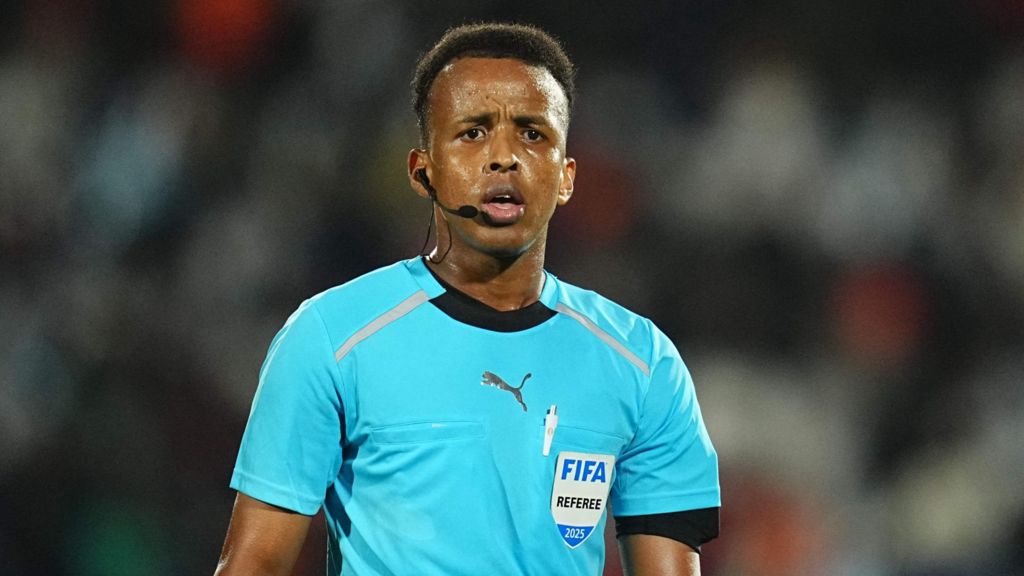
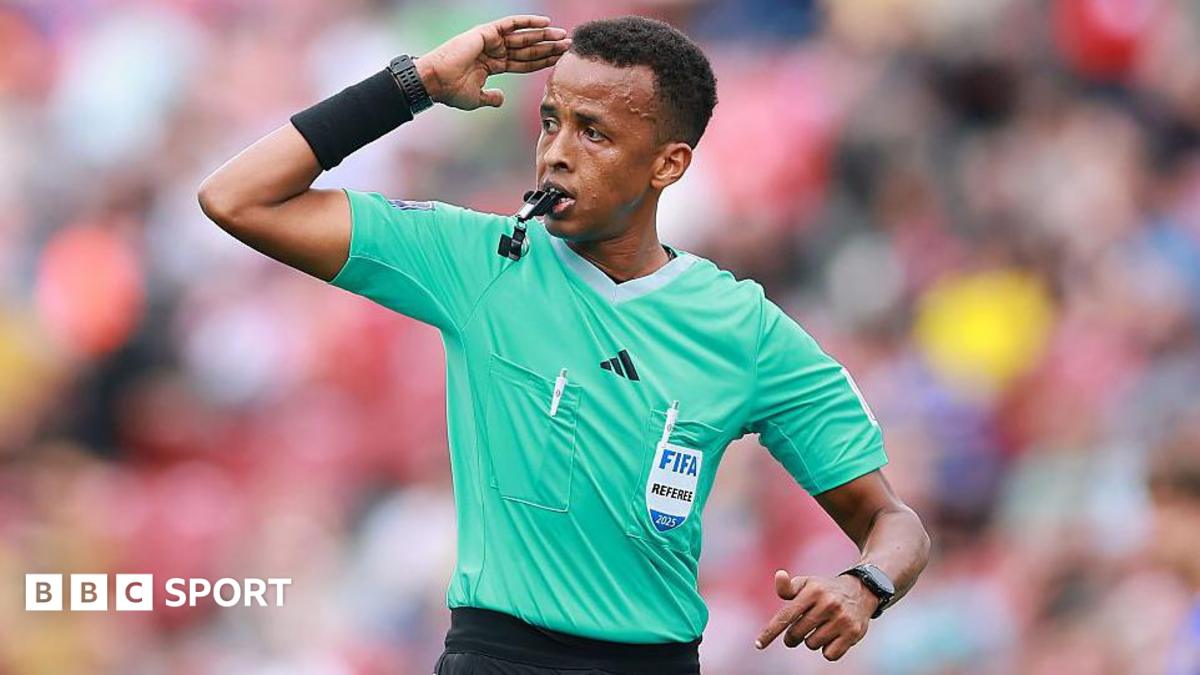
    Omar Artan, Somalia’s top-ranked international referee and one of 52 officials selected to officiate at this year’s tournament, arrived in Miami last week to join final pre-tournament preparations. Despite holding all required documentation, a valid visa, and a formal invitation from FIFA, Artan endured an 11-hour interrogation by U.S. Customs and Border Protection officials, was detained for several additional hours, and was ultimately forcibly placed on a return flight out of the country. He is now back in Mogadishu, denied the chance to make history as the first Somali referee to work at a men’s senior World Cup.

    Artan’s resume, which earned him the coveted World Cup appointment, speaks to his standing as one of the game’s elite officials. Over the past 18 months, he has officiated high-profile matches including the 2025 African Champions League final – the first Somali to ever lead a continental championship final – three matches at the 2025 U-20 World Cup in Chile (including the tournament’s third-place playoff), and multiple group stage matches at back-to-back Africa Cup of Nations tournaments in 2024 and 2025. Speaking before his travel, Artan called his World Cup selection the pinnacle of his career, saying “Every referee’s ambition is to go to the World Cup. When you are selected, you feel that all your hard work was worth it. Years of effort finally made sense.”

    The incident has validated long-held fears that U.S. immigration policy under the Trump administration would create discriminatory barriers for visitors from majority-Muslim and African nations ahead of the tournament. Piara Powar, executive director of anti-discrimination football advocacy group Fare, called Artan’s rejection an unprecedented farce. “It is pretty clear that the fears of an ideological and discriminatory visa policy from the US government is being realised,” Powar said. “Never have we seen the farce of an official Fifa referee being refused entry as he arrives for final preparations.”

    Artan’s exclusion comes as no surprise to observers tracking the Trump administration’s tightening travel restrictions. In 2017, one of Trump’s first executive orders implemented a travel ban on foreign nationals from seven majority-Muslim nations, including Somalia. That ban was expanded in June 2025 to a full entry ban across all visa categories for 12 countries, which includes not just Somalia, but three World Cup participating nations: DR Congo, Iran, and Haiti. Just weeks before the tournament draw in December 2025, Trump made inflammatory remarks about Somali people, claiming the country “barely exists” and calling Somali immigrants “garbage” that should “go back to where they came from.”

    The incident has also exposed a glaring contradiction in FIFA President Gianni Infantino’s approach to host nation compliance. When Indonesia’s Bali governor refused entry to the Israeli men’s U-20 national team ahead of the 2023 U-20 World Cup, FIFA stripped the country of hosting rights entirely, arguing that “any team, including the supporters and officials of that team, who qualify for a World Cup, need to have the access to the country, otherwise there is no World Cup.” That same policy is not being applied to the U.S., despite multiple entry denials for World Cup participants and officials.

    Infantino has cultivated a close political relationship with Trump over the past two years, culminating in the controversial decision to award Trump the first-ever FIFA Peace Prize during the 2026 World Cup draw in December. Critics say this alliance has left FIFA unwilling to push back against U.S. policy, even as it disrupts the core functioning of the tournament. When asked about Artan’s case, FIFA issued a neutral statement saying it “is not involved in host country immigration processes, including visa adjudications.” That response has drawn outrage from football figures, including former England and Arsenal striker Ian Wright, who wrote on Instagram: “Every few hours it’s another story, another story about fans denied, players denied, officials denied, journalists denied, now refs. This is a World Cup of chaos.”

    This controversy is just the latest in a string of problems plaguing the build-up to the 2026 tournament, which was billed as a return to normalcy after the politically fraught 2018 World Cup in Russia and 2022 in Qatar. Issues including exorbitant ticket prices, a legal subpoena into FIFA’s ticket sales practices, widespread criticism of overpriced hotel accommodations and transport, and repeated entry denials for fans and officials have left the tournament facing more controversy than its two predecessors.

    Beyond Artan’s case, broader concerns persist that U.S. Immigration and Customs Enforcement (ICE) will conduct enforcement operations at or near tournament stadiums, chilling travel for international fans with uncertain immigration status. Fan groups have repeatedly criticized the U.S. for creating unnecessary barriers to entry, a sharp break from past host nation practices that prioritized easy access for traveling fans. Russia eliminated all visa requirements for 2018 World Cup visitors, relying instead on a simple fan ID system tied to match tickets. Qatar used a similar pre-screened Hayya card system that doubled as an entry permit and match access. In contrast, U.S. policy has left many international fans too frustrated to proceed with travel plans. “You’re supposed to be welcoming fans from around the world,” Thomas Concannon, leader of the FSA’s England supporters group, told BBC Sport earlier this year. “And I think at this stage, fans couldn’t feel less welcome.”

    The next major test of U.S. policy will come this weekend, when the Iranian national team is scheduled to travel to the U.S. for its first group stage match. Iranian officials have already confirmed that U.S. authorities have denied visas to 16 key backroom staff members, and have only permitted the playing squad to enter the country via cross-border travel from Tijuana, Mexico, with a requirement to depart within 24 hours of each match. U.S. authorities have also revoked all pre-allocated group stage tickets for Iranian fans, a decision that has drawn widespread condemnation. This marks the first time in World Cup history that the host nation is actively engaged in military conflict with a participating nation, after the U.S. joined Israel in large-scale military strikes on Iran earlier this year.

    As the tournament prepares to kick off, Powar says Artan’s case raises a fundamental question about who is actually in charge of the 2026 World Cup. “Never have we seen so many World Cup coaches, team operations, fans and even senior administrators within Fifa member associations, subject to so much interrogation and exclusion,” he said. “The disruption is such that one has to ask who is running the World Cup. Is it Fifa or is it the US government with its racially charged immigration policies?” Right now, with one of FIFA’s selected referees barred from entering the country, the answer seems clear: U.S. immigration policy is calling the shots.

  • ‘Gridlock alert days’ and a race for tickets as US prepares to host World Cup

    ‘Gridlock alert days’ and a race for tickets as US prepares to host World Cup

    After more than three decades since the United States last welcomed the FIFA World Cup, the world’s most-watched sporting spectacle is returning to North American soil this summer, co-hosted jointly by the US, Canada and Mexico. As the kickoff draws near, organizers and local communities are navigating a range of pre-tournament challenges, from lingering geopolitical tensions and widespread frustration over strict visa rules to sticker shock from record-high ticket prices. At the top of many minds remains one pressing question: is the United States truly prepared to shoulder the pressure of co-hosting an event of this unprecedented scale?

  • Bangladesh beat Australia for first time in 21 years

    Bangladesh beat Australia for first time in 21 years

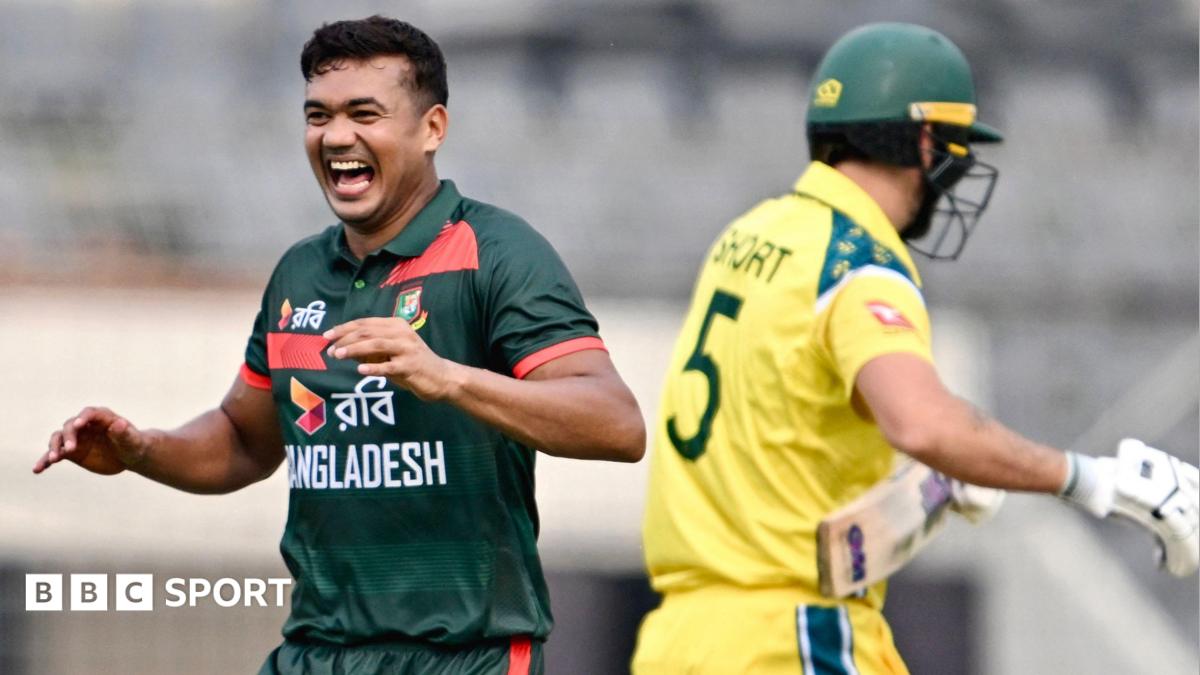
    It was a day for the history books at Mirpur’s Shere Bangla National Stadium, as Bangladesh pulled off one of the biggest upsets in recent one-day international cricket, securing their first victory over Australia in 21 years with a commanding 86-run win via the Duckworth-Lewis-Stern method in the opening match of their three-match series.

    Heading into the contest, Bangladesh carried the weight of a devastating 14-match losing streak against Australia, with their only previous ODI win against the cricketing powerhouse coming back in 2005 during a tri-series in Cardiff, Wales. That 18-year gap (updated to 21 years by the time of this 2025 fixture) made Wednesday’s result all the more remarkable for the underdog side.

    Bangladesh won the toss and elected to bat first, posting a competitive total of 284 for 8 off their full 50 overs. The standout performance of the innings came from all-rounder Mosaddek Hossain, who scored an unbeaten 86 – and he had plenty of help from Australia’s sloppy fielding, which dropped six catching chances throughout the innings, four of which came when Mosaddek was at the crease, gifting him multiple reprieves that allowed him to build his match-changing knock.

    In reply, Australia got off to a disastrous start, losing opener Matt Short to the very first ball of the innings, followed quickly by the wicket of star batter Marnus Labuschagne to leave the tourists reeling at 2 wickets for just 2 runs. Playing without several of their first-team regulars for this tour, Australia struggled to recover from the early collapse. Wicketkeeper Alex Carey contributed 47, and all-rounder Cameron Green hit an unbeaten 52, but the side could only limp to 191 for 9 before an incoming storm forced an early end to play.

    Bangladesh’s bowling attack was dominant throughout the chase. Young pace bowler Nahid Rana was the pick of the bunch, taking 4 wickets for just 41 runs, including the key scalps of Carey and stand-in Australian captain Josh Inglis. Spinner Mosaddek, playing his first ODI for Bangladesh in four years, chipped in with 2 wickets for 37 runs to cap off a man-of-the-match performance with both bat and ball.

    Beyond the bilateral series result, the contest carries wider implications for 2027 Cricket World Cup qualification, with ripple effects for third side England. Currently, England sit eighth in the ICC Men’s ODI Team Rankings, Bangladesh ninth, and the West Indies 10th. Only the top nine ranked teams by September will earn automatic qualification for the 2027 tournament, and England faces a tough test against India in their upcoming ODI series in July, leaving the door open for Bangladesh to jump ahead and claim a direct spot if they continue their strong form. The second ODI of the three-match series will be held back at the Shere Bangla National Stadium this coming Thursday.

  • Who is the Somali referee barred from entering the US for the World Cup?

    Who is the Somali referee barred from entering the US for the World Cup?

    For Omar Artan, a Somali referee who climbed from war-battered local neighbourhood pitches to the cusp of football’s grandest stage, the 2026 FIFA World Cup was supposed to be the crowning achievement of a remarkable career. It was set to be a moment of national pride: Artan, 34, would become the first Somali to ever serve in an on-pitch role at the World Cup finals, a beacon of hope for a young generation in a country fractured by decades of conflict. But that dream has been shattered, after U.S. border officials denied Artan entry into the country despite him holding a valid diplomatic passport and approved single-entry visa.

    Artan’s journey to the World Cup officiating panel is one of relentless grit against overwhelming odds. His playing career came to an early end following a leg injury, and he first picked up a referee’s whistle by accident: during a chaotic local match in Mogadishu, a dispute over the original official led both teams to ask Artan to step in. He accepted the role, and quickly carved out a space for himself in Somali football, honing his skills in informal and semi-organized fixtures at a time when the country’s football institutions operated with almost no structure or international support.

    A formative figure in Artan’s early career was Osman Jama Dirac, the former head of refereeing in Somalia, who provided not just technical coaching but also personal support to up-and-coming officials. “He was like a father to us,” Artan recalled of Dirac, who was killed in 2017, just as Artan was on the cusp of breaking into international officiating. “He was preparing me to become an international [referee]. He would have been proud to see a Somali reaching this level.”

    Artan earned his place on the FIFA listed referees roster in 2018, and steadily rose through the ranks of African continental football. In 2024, he made history as the first Somali to referee a match at the Africa Cup of Nations (Afcon), and by November of that year, the Confederation of African Football (CAF) named him the top male referee on the continent. He capped off this run by officiating the second leg of the 2025 African Champions League final, and in April 2026, FIFA included him in the 52-referee panel for the 2026 World Cup – a milestone celebrated by Somalia’s president Hassan Mohamud, who hailed Artan as “a symbol of inspiration for the new generation of Somalis.”

    In the months leading up to the tournament, Artan threw himself into rigorous preparation, training daily to meet the physical, mental and technical standards required of a World Cup referee. “Preparation for the World Cup is not small work… physically, mentally, and in knowledge,” he explained before departing. “In World Cup football you are dealing with world-class referees at the highest level. You have to reach that standard and stay there.”

    Artan traveled to the U.S. via Istanbul, Turkey, to attend the mandatory pre-tournament referee seminar hosted at FIFA’s Miami training hub – a requirement for all on-pitch officials, even those who would later officiate matches held in co-host nations Canada and Mexico. But upon his arrival in Miami, Artan ran into immigration barriers tied to a travel restriction policy first introduced by the Donald Trump administration, which lists Somalia as a restricted country.

    Artan told the New York Times he was held for questioning by border officials for 11 hours, with much of the interrogation focused on the Somali militant group al-Shabab. Ultimately, he was denied entry over unspecified “vetting concerns” and placed on a flight back to Turkey, where he currently remains, and is expected to return to Mogadishu this Wednesday.

    In a statement to the BBC, the U.S. State Department defended its process, noting it welcomes “legitimate travellers” to the World Cup and adjudicates each visa application individually “after rigorous review and thorough vetting,” with “national security and public safety” cited as core considerations.

    FIFA has confirmed it is unable to intervene in the case, as immigration and visa decisions fall exclusively under the authority of host nation governments. “FIFA is not involved in host country immigration processes, including visa adjudications, and has been informed by authorities that Mr Artan’s status will not be changed at present,” the global governing body said in a Monday statement. “A host government ultimately determines who receives a visa and who is admitted into their country.”

    The Somali government has launched diplomatic efforts to reverse the decision, but current indications suggest Artan will not take part in the 2026 tournament. Artan has responded to the setback with measured grace, expressing gratitude for the outpouring of support from the global football community and reaffirming his commitment to his refereeing career. “I would like to thank FIFA and CAF for all their support and I promise to keep my refereeing levels up as I concentrate on the future,” he told Reuters. “I wish my colleagues all the best success during the World Cup and I look forward to joining them again in future competitions.”

    Six referees from Africa will still take part in the 2026 World Cup, which kicks off Thursday and runs through July 19, representing Algeria, Egypt, Gabon, Mauritania, Morocco and South Africa. But for Artan and Somalia, what was set to be a groundbreaking, hope-filled milestone has been cut short by U.S. immigration policy.

  • Michael Olise could be France’s attacking star at the World Cup

    Michael Olise could be France’s attacking star at the World Cup

    As two-time World Cup champion France prepares to kick off its pre-tournament friendly campaign against Senegal on June 16 in New Jersey, a surprise star is stepping into the spotlight to lead Les Bleus’ attacking line, outshining even the sport’s biggest names ahead of the global competition.

    Unlike high-profile superstars Kylian Mbappé and reigning Ballon d’Or winner Ousmane Dembélé, 24-year-old Bayern Munich winger Michael Olise carries a quiet, unassuming demeanor — but his on-pitch impact has been anything but understated. He enters the World Cup in red-hot form, fresh off a stunning hat trick against Northern Ireland that pushed his senior international goal tally to seven across just 17 appearances for France.

    In a recent tune-up match where Didier Deschamps fielded his full first-choice attacking unit featuring Mbappé, Dembélé and breakout young talent Désiré Doué, it was Olise who emerged as the standout performer. Deschamps heaped praise on the in-form winger following the match, highlighting both his clinical finishing and relentless work ethic that have made him an invaluable member of the squad.

    “He’s been shining brightly this season at Bayern and he’s done great things for us. He’s brimming with confidence, he’s so decisive,” Deschamps said of Olise. “On top of that, as an attacking player he also has a remarkable capacity for hard work.”

    Olise’s signature attacking move — a sharp, sudden cut inside from the right flank followed by a curled effort on goal — proved deadly against Northern Ireland. After burying two close-range finishes inside the penalty box, he cut inside from his wing, changed direction with his trademark blistering speed, and bent a sublime strike into the top-left corner of the net. This deft, rapid skill has become his calling card, and it helped him net 22 goals for Bayern Munich during the 2025-26 domestic season.

    Deschamps first noticed Olise’s elite potential during the 2024 Paris Olympic Games, where Olise played under French and Arsenal legend Thierry Henry for France’s Olympic squad. Olise notched two goals and five assists throughout the tournament, leading Les Bleus to the Olympic final and cementing his status as a player worth promoting to the senior national side.

    For Olise, the Paris Games remain a career-defining experience. “It was the best football experience of my life, because it allowed people to get to know me,” he said, crediting Henry for shaping his understanding of the game and helping him unlock his potential at the international level.

    Despite his rapid success, Olise’s reserved personality initially slowed his adjustment to the senior national team, according to Deschamps. The France manager noted it took four or five matches for the shy winger to settle in and show his true quality on the pitch.

    “He’s not a very expressive character. He’s rather introverted, but he’s very endearing,” Deschamps added.

    Olise’s first senior international goal — a perfectly bent free kick into the top corner against Croatia in the 2025 Nations League — gave a clear preview of the clinical skill he would bring to the squad. His journey to the top of international football is also an underdog story: born in London, he was released by both Chelsea and Manchester City in his youth before launching his professional career with EFL Championship side Reading. He earned the league’s Young Player of the Season award during his time with Reading, earning a transfer to Premier League side Crystal Palace in 2021. Three impressive seasons at Palace convinced Bayern Munich to sign him for a 60 million euro ($65 million) transfer, and he has thrived at the German giant, scoring 42 goals in 103 appearances across all competitions while adding consistent goal-scoring to his already elite passing range.

    Olise’s match-winning performance against Northern Ireland also drew attention to a recent slump in form for France’s star man Kylian Mbappé, who failed to score for the second consecutive friendly after a 2-1 loss to Ivory Coast last Thursday. Deschamps acknowledged that Mbappé squandered multiple clear chances and was far from his clinical best, but played down any concerns about the forward’s form ahead of the World Cup.

    “It’s true that he had several chances and wasn’t efficient,” Deschamps said. When asked about Mbappè’s dry spell, the manager joked, “He told me he’s holding back for the United States. So that suits me.”

    Mbappé currently sits on 56 international goals for France, just two strikes away from breaking Olivier Giroud’s all-time senior goal record for the national team, a milestone he is widely expected to hit during the World Cup tournament in North America.

  • I have right papers and visa – barred referee Artan

    I have right papers and visa – barred referee Artan

    The 2026 FIFA World Cup, co-hosted by the United States, Canada and Mexico, has been hit by another high-profile controversy after Somali referee Omar Artan – set to make history as the first Somali official to work a World Cup finals – was denied entry to the US and removed from the tournament’s officiating roster.

    Artan, a FIFA-listed referee since 2018 with prior experience officiating at the 2025 Africa Cup of Nations, says he completed an grueling 11-hour immigration interview at Miami International Airport before being detained in a holding cell for several hours and ultimately repatriated on a flight back to Istanbul. The referee told reporters he carried all required documentation, including a specifically issued diplomatic passport arranged after earlier travel complications and a valid US visa aligned with World Cup requirements.

    “I am very, very disappointed,” Artan told the New York Times. “I’m just simply a referee who’s trying to live his dream – the biggest dream of my life, to come to the World Cup. I think that they have a problem with my country.”

    To date, US immigration authorities have not released any public explanation for the entry denial. Somalia is one of the Muslim-majority nations included in a travel restriction first implemented by the Trump administration, and President Trump reaffirmed his anti-immigrant stance toward Somalis just months ago, telling reporters Somali immigrants should “go back to where they came from.”

    FIFA confirmed Artan’s removal from the roster in an official statement earlier this week, noting that global governing body has no authority over host country immigration processes. “Fifa can confirm that match official Omar Abdulkadir Artan will be unable to train and officiate at the Fifa World Cup 2026 after he was denied entry into the United States,” the statement read. “Fifa is not involved in host country immigration processes, including visa adjudications, and has been informed by authorities that Mr Artan’s status will not be changed at present.”

    Senior advisors with Somalia’s Ministry of Youth and Sports and embassy officials based in Nairobi have both corroborated Artan’s account, confirming all of his travel documentation was valid and issued in accordance with US entry requirements for World Cup officials.

    Andrew Giuliani, who leads the White House Task Force for the 2026 World Cup, defended US Customs and Border Protection’s decision in comments to BBC World Service. “While I can’t go into the derogatory information on that I can tell you it was the right decision by customs and border patrol and I support that decision,” Giuliani said.

    The structure of the 2026 tournament leaves Artan no alternative path to participate: FIFA’s lead referee official Pierluigi Collina has centralized all 52 referees and 88 assistant referees at a training and preparation hub in Miami, requiring all on-pitch officials to remain based in Florida for the duration of pre-tournament preparations and the event itself. Allowing Artan to only officiate matches held in Canada or Mexico is not permitted under tournament logistics rules.

    Artan’s exclusion is just the latest in a string of disruptions that have marred the lead-up to the 2026 World Cup, which kicks off June 11 and runs through July 19. Just one day after Artan’s removal, Iran’s national football federation announced that all of its allocated fan tickets for the team’s group stage matches had been revoked by tournament organizers.

    Prominent British football pundit and former England striker Ian Wright has labeled the ongoing string of issues a “World Cup of chaos” in a viral Instagram video. “Every few hours, it’s another story about fans denied, player denied, officials denied, journalists denied, now refs,” Wright said. “I’m laughing but it’s not funny. The most expensive tickets ever, expensive accommodation, transport through the roof. Is this how the hosts behave for the greatest game, the greatest tournament in the world? I feel for the American fans who are desperate for this – how embarrassing for this must be for them.”