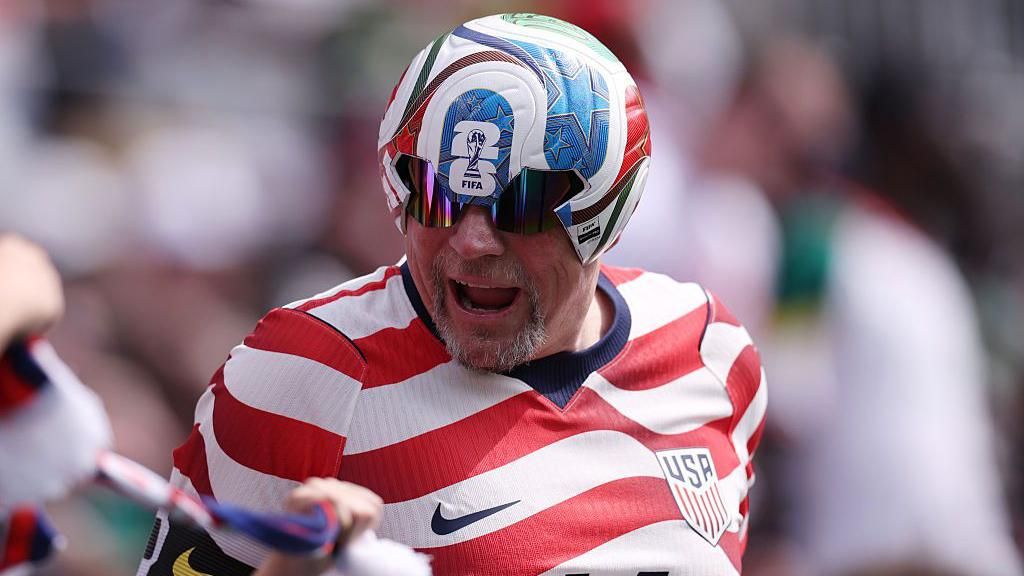
It has been more than three decades since the United States last opened its stadium doors to the FIFA World Cup, and with the 2026 edition — the first expanded 48-team tournament, co-hosted alongside Canada and Mexico — just days away, the nation is caught between soaring anticipation and lingering uncertainty over whether it is fully prepared to welcome the global sporting event.
Multiple growing pains have emerged in the final lead-up to kickoff. Geopolitical tensions, widespread frustration over strict visa entry requirements, and eye-popping match ticket prices have dominated pre-tournament conversations, casting a shadow of concern over what is supposed to be a unifying global celebration. Yet for millions of American soccer fans and small business owners across the country, the excitement of hosting the world’s most-watched sporting event on home soil has outweighed these growing pains.
At the Red Bull training complex in Morristown, New Jersey, one of the world’s most successful national sides, Brazil, has already settled into its official base camp. As the Seleção runs through tactical drills and fitness preparations, crowds of giddy fans have gathered along the facility’s sidelines to catch a rare, close-up look at their favorite football stars. Many young fans have left with cherished autographs and selfie photos with the players.
Brazilian forward Matheus Cunha, who plies his club trade at Manchester United, praised the host nation’s preparations in an interview with the BBC. “The fans have been amazing, and so far, it’s off to a good start,” he said, lauding the quality of the training facility, the pitch, and even the mild New Jersey summer weather, which he says reminds him of home back in Brazil. He only had one lighthearted quip for his hosts: “The only thing, it’s called football, not soccer.”
Across the country in New York City’s Brooklyn neighborhood, young players with the S.C. Gjøa Soccer club are already counting down the minutes to kickoff, with many having secured coveted tickets to multiple matches. Dennis Wyrwoll, a long-time soccer fan who attended the last U.S.-hosted World Cup in 1994, is set to bring his 10-year-old son Nicholas to four matches. Recalling the 1994 tournament, he noted that “at that point, nobody knew anything about football” and tickets were easy to obtain. Today, he says there is undeniable buzz in major New York, but he remains curious to see if that excitement translates to smaller cities across the U.S. where soccer has historically had a smaller fanbase.
Indeed, the profile of soccer in the U.S. has grown exponentially since the 1994 tournament, and many local coaches credit the 2026 hosting gig with accelerating that growth. S.C. Gjøa coach Kaha Tavadze told the BBC that his club has seen a threefold increase in youth player registrations and tryouts in just the past 12 months alone, a shift he directly attributes to the excitement of hosting the World Cup.
“Children now follow the sport more closely, know every top player, and wear their favourite team’s jersey,” Tavadze explained. He added that the tournament could even inspire a new generation of American players to pursue professional careers: “Watching live games, especially at that level, will change their mindset.”
For all the excitement, however, systemic barriers remain. Sky-high ticket prices have put in-person attendance out of reach for many working-class fans, even those with deep connections to the sport. Shantay Armstrong, whose 7-year-old son has played with the Brooklyn club for five years, says she and her son have long dreamed of attending a World Cup match together. She entered an official raffle for affordable tickets hosted by New York City, only to watch the raffle close to new entries within minutes of going live.
“It’s almost heartbreaking that there’s like a lack of accessibility for people who can’t afford to go,” Armstrong said. “I wanted to give him that opportunity, but that lack of opportunity makes me feel locked out, like we’re here but we’re not really part of it.”
Tournament organizers have moved to address this gap by opening free public fan zones across host cities, allowing fans without match tickets to still gather and experience the excitement of the tournament. Officials have also worked to direct foot traffic to local small businesses, in the hopes that communities across the country can share in the expected economic windfall from the global event.
Enda Keenan, owner of Legend’s Bar — a popular destination for overseas soccer fans located just steps from the Empire State Building in Manhattan — says he already expects a historic boost to his business, so much so that he has even turned down extra event requests from FIFA. “I said we can’t help ourselves, it’s going to be so crazy, we’d love to help, but there’s nothing we can do,” Keenan explained. He anticipates that even New Yorkers who never watch soccer will flood bars and fan zones to join the fun, saying that “it’ll be that much of a buzz.”
During last year’s UEFA Champions League final, Keenan’s bar hosted 1,300 fans inside and an additional 700 outside on the sidewalk, where the bar set up an 85-inch television for overflow crowds. He says the World Cup will be an entirely different scale of crowd, and he has already prepped by sending overflow customers to neighboring bars to avoid overcrowding.
In total, roughly 1.2 million international and domestic visitors are expected to travel to the New York-New Jersey host region alone over the course of the tournament. Beyond ticket access, transportation and logistics remain a top concern for many attendees. Thirteen-year-old goalkeeper Baxter Rowland will attend two matches, traveling to one with his family and another with a group of friends on a chartered bus. But even with tickets secured, his mother Alice Baxter says she is already bracing for traffic and parking chaos when she drives to the stadium.
“I think it’s going to be a little bit stressful, and I think it might be difficult for the first few games, at least,” she said. “And hopefully it’ll get better and they’ll work out the kinks before the final here in New Jersey and New York.”
In just a matter of days, the world will turn its attention to North America, and the question on everyone’s mind — whether the U.S. is truly ready to host the world’s biggest sporting event — will finally get an answer.