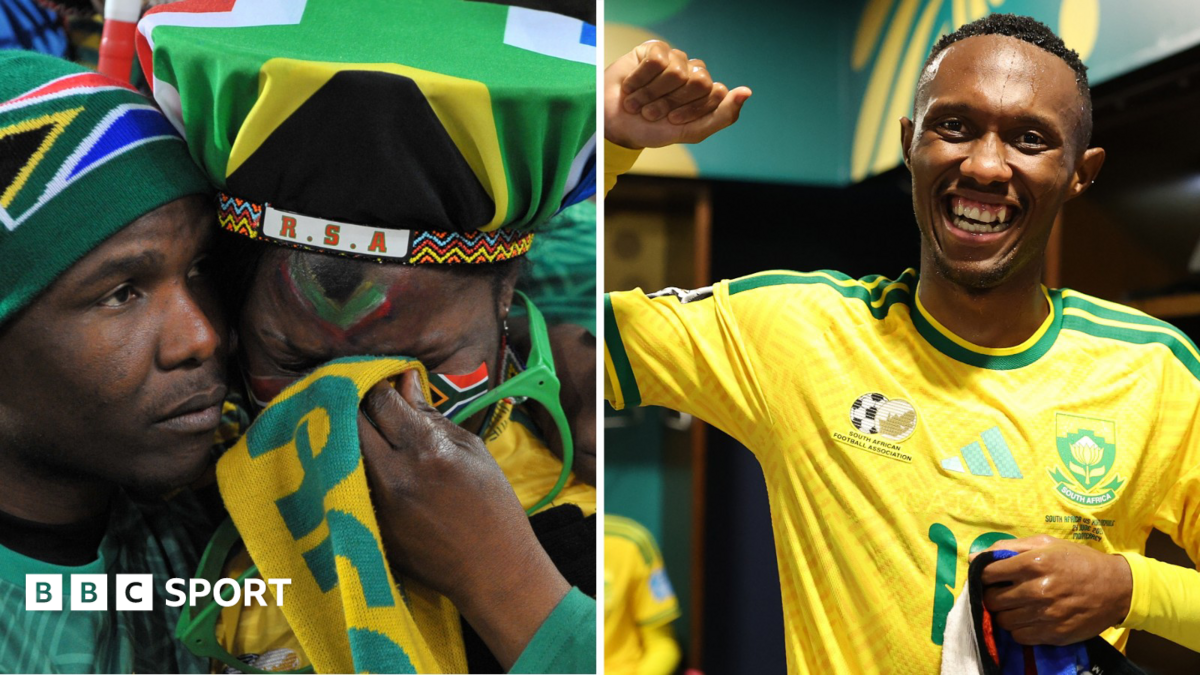
Sixteen years after a crushing early exit as the first African host nation of the FIFA World Cup, South Africa’s men’s national football team, Bafana Bafana, has rewritten its story by reaching the knockout stage of the 2026 World Cup for the first time in the country’s history.
The 2010 tournament remains a bitter memory for South African football supporters. Then, Siphiwe Tshabalala’s iconic opening-game opener against Mexico was hailed by a television commentator as “a goal for all of Africa”, but the moment quickly faded into disappointment. A 1-1 draw with Mexico and a final-group win over France were not enough to save Bafana Bafana from elimination on goal difference, making South Africa the first host nation in modern World Cup history to crash out in the group stage. That missed opportunity cast a long shadow over South African football for more than a decade.
Cape Town-based veteran sports journalist Mark Gleeson told BBC World Service that domestic football entered a period of stagnation after the 2010 tournament, exacerbated by a national economic downturn that drained sponsorship and funding from the local game. “There was much excitement in the build-up to 2010, but then it all went a little bit dead, combined with an economic downturn,” he explained. “There are not many sponsors in the domestic game. There’s not a lot of money floating around.” In the years that followed, South Africa missed out on three Africa Cup of Nations (Afcon) tournaments in 2012, 2017 and 2021, marking a prolonged lean spell for the national side.
In recent years, however, signs of a revival began to emerge. Top domestic club Mamelodi Sundowns claimed its first African Champions League title in 2016, then secured a second continental crown in May 2026, one year after finishing as runner-up. The national team’s qualification for the 2026 World Cup, paired with Sundowns’ continental success, has delivered a transformational boost to football across the country, Gleeson noted. “Hopefully this is the start of a new era for South Africa, maybe 16 years too late. This is how things should have been in 2010,” he said.
The turnaround for Bafana Bafana traces back to a key coaching change after the team failed to qualify for Afcon 2021. The South African Football Association sacked head coach Molefi Ntseki and turned to 74-year-old Belgian manager Hugo Broos, who had previously guided Cameroon to the 2017 Afcon title. A former defender who played for Belgium at the 1986 World Cup in Mexico, Broos set about overhauling the squad, prioritizing young domestic-based talent over aging veterans. His rebuild quickly bore fruit: Bafana Bafana finished third at the 2023 Afcon, then topped its 2026 World Cup qualifying group ahead of fan-favorite Nigeria to secure a spot in the tournament.
A rocky opening match against Mexico — a rematch of the 2010 opener — sparked fresh criticism of Broos’ conservative tactics. Bafana Bafana finished the game with nine players and dropped a 2-0 defeat, leading many fans and analysts to call for a change in leadership. The team quickly bounced back, however: they fought back from a deficit to earn a draw with the Czech Republic, then secured a crucial 1-0 win over South Korea to claim second place in Group A and a spot in the round of 32. After sealing qualification, Broos hit back at his critics, saying his side had silenced the “big mouths” that had questioned his approach.
Team captain and goalkeeper Ronwen Williams says Broos deserves the highest honor for transforming the team’s fortunes. “He deserves a statue. He deserves the highest recognition for the belief he has shown in this team. When our backs are against the wall and people don’t believe in us, he is always there,” Williams said.
Even Dean Furman, a former South Africa national team captain who was cut from the squad by Broos shortly after the Belgian took over, has praised the coach’s squad remodeling. “The first thing he did was get rid of the older players of the group and develop a younger team,” the former Oldham Athletic and Rangers midfielder told BBC Sport Africa. “I never got the chance to work with him, disappointingly. But in hindsight, it was the best decision. What he’s done with the team, to go third place in the Afcon, qualify for the World Cup and get to the knockouts, I think he’s done a phenomenal job.”
This breakthrough marks the first time Bafana Bafana has advanced past the group stage in four World Cup appearances, after early exits in 1998 and 2002 in addition to the 2010 heartbreak. Yet the achievement comes as South Africa faces significant socio-political unrest, with recent anti-migrant violence prompting several African nations to repatriate their citizens. While South African officials have condemned the violence and rejected accusations of xenophobia, some football fans across the continent celebrated Mexico’s opening-game win over South Africa at organized “hate-watch” gatherings.
Williams has called for pan-African unity, urging fans across the continent to put political tensions aside to support the team. Furman echoed that call, noting that South Africans have long celebrated the success of other African sides at the World Cup. “Despite the political unrest in the country I’m hoping that Bafana, on the football pitch, have given the continent a team to be proud of,” Furman said.
Furman also praised Williams, who he called an “incredible leader” for steadying the squad after the opening loss to Mexico. “I know how deflated the boys were, and then the added scrutiny and pressure that comes with playing in a World Cup,” he said. “Massive credit to him as captain to galvanize the team — to get the mood back in the camp and ultimately deliver the performances that have led the team to the knockouts.”
A striking feature of Bafana Bafana’s 26-man 2026 squad is its deep roots in domestic football: 16 of the 26 players come from just two top South African clubs, eight from Mamelodi Sundowns and eight from reigning league champions Orlando Pirates, with only seven players based at foreign clubs. Furman says this signals a bright future for South Africa’s domestic league, noting that the national team’s success will draw more international attention to local talent and open up more opportunities in top European leagues.
Now, South Africa prepares to face another knockout stage debutant, Canada, in their round of 32 clash at Los Angeles Stadium on Sunday at 19:00 GMT. The two sides have never faced each other in international competition, with both looking to add another historic chapter to their 2026 World Cup runs. Canada lost its final group match to Switzerland and lost its planned home advantage as co-hosts, creating a clear opening for South Africa to advance further, Gleeson said. “All of a sudden, from being outsiders and not really being given much of a chance of making it through to the knockout phase, they are perhaps staring at a possible place in the last 16,” he added.
With Broos expected to retire from management after the 2026 tournament, the squad has extra motivation to deliver a strong performance for the coach who engineered their remarkable comeback. Broos says his side is ready to fight for another historic result. “I know the players will be ready again and try to achieve the third round,” he said. “You will see a team that will believe and fight for the 90 minutes, and more if we have to. It should be even more historic.”