分类: sports

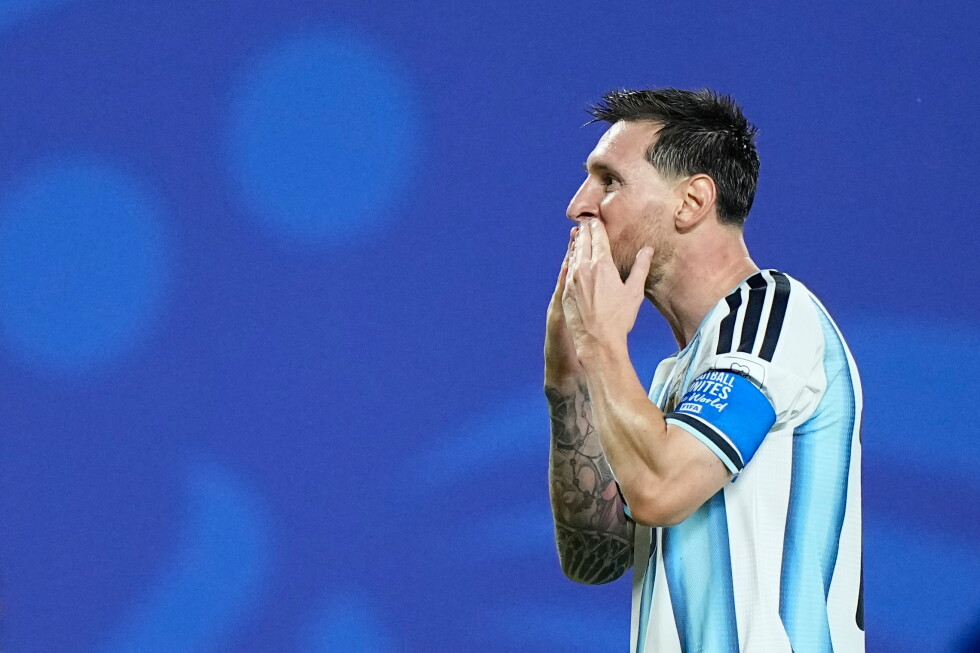
  • Lionel Messi to lead Argentina in friendly match against Guatemala ahead of World Cup

    Lionel Messi to lead Argentina in friendly match against Guatemala ahead of World Cup

    BUENOS AIRES, Argentina — The Argentine Football Association has unveiled its national team roster for an upcoming international friendly against Guatemala on March 31st at La Bombonera stadium. This match serves as crucial preparation for Argentina’s title defense in the forthcoming World Cup tournament.

    The scheduling of this encounter emerged following the cancellation of the highly anticipated Finalissima showdown between Argentina and Spain, originally set for March 27th in Qatar. The match was called off due to ongoing geopolitical tensions in the Middle East region.

    Head coach Lionel Scaloni has made several notable selections in his 23-man squad. The most prominent inclusion is captain Lionel Messi, who will lead the squad despite recent injury concerns. However, the team will be without several key players including Inter Milan striker Lautaro Martínez (calf strain), Manchester United defender Lisandro Martínez (physical discomfort), and Real Betis midfielder Giovani Lo Celso, who continues recovery from a muscle tear.

    In their absence, Scaloni has called up José Manuel López from Brazilian club Palmeiras as attacking reinforcement. The squad also features two debutants: Tomás Palacios from Estudiantes de La Plata and Gabriel Rojas from Racing Club, both receiving their first senior national team call-ups.

    A controversial selection involves Benfica winger Gianluca Prestianni, who remains embroiled in allegations of making racist remarks toward Real Madrid’s Vinicius Junior during a recent Champions League fixture. His inclusion has sparked debate among football analysts and fans alike.

    Argentina, having secured their third World Cup title in the previous tournament, finds itself grouped with Algeria, Austria, and Jordan in the initial stage of the competition. The Guatemala friendly represents the final preparatory match before the team begins its World Cup campaign.

  • Newcastle midfielder Tonali injured in Champions League ahead of Italy’s World Cup playoffs

    Newcastle midfielder Tonali injured in Champions League ahead of Italy’s World Cup playoffs

    BARCELONA — Italy’s crucial World Cup qualifying campaign suffered a significant setback Wednesday when midfield linchpin Sandro Tonali exited Newcastle United’s Champions League match against FC Barcelona with an apparent thigh injury. The incident occurred during the second half at Camp Nou stadium as Tonali strained his left leg while tracking back to defend against Barça’s Fermín López.

    The timing couldn’t be worse for the four-time World Cup champions, with Italy’s critical playoff match against Northern Ireland scheduled for March 26 in Bergamo. Tonali, who has been a consistent starter for the national team, now faces uncertainty just eight days before Italy attempts to qualify for its first World Cup since 2014.

    The injury proved doubly costly as the defensive sequence led directly to Barcelona’s decisive fifth goal. From the resulting corner kick, Robert Lewandowski powered home a header that essentially secured Barcelona’s advancement to the quarterfinals. The Spanish champions ultimately dominated the match 6-2 after the teams had drawn 1-1 in Newcastle the previous week.

    Italy’s playoff path requires victories against Northern Ireland and then either Wales or Bosnia-Herzegovina five days later. The ultimate bracket winner will join a World Cup group featuring co-host Canada, Switzerland, and reigning CONCACAF Gold Cup champion Qatar.

    The injury to Tonali represents a substantial concern for Italian manager Roberto Mancini, who must now evaluate alternative midfield options ahead of the nation’s most significant qualifying matches in nearly a decade.

  • Famous Iditarod dog sled race ends in repeat win for Jessie Holmes

    Famous Iditarod dog sled race ends in repeat win for Jessie Holmes

    In a stunning display of endurance and human-canine partnership, musher Jessie Holmes has secured his second consecutive championship in Alaska’s legendary Iditarod Trail Sled Dog Race. The former reality television personality, featured on National Geographic’s ‘Life Below Zero,’ masterfully guided his team across the race’s formidable 1,000-mile (1,609-kilometer) Arctic course.

    The victory was cemented after a relentless nine days, seven hours, and 32 minutes of navigating some of the planet’s most treacherous and isolated terrain. Holmes’s triumph underscores a remarkable transition from television fame to elite athletic prowess in the world’s most prestigious sled dog competition. The race, which commemorates the 1925 serum run to Nome, tests competitors against sub-zero temperatures, whiteout conditions, and unpredictable wildlife.

    This repeat win solidifies Holmes’s status not merely as a popular figure but as a formidable force in mushing history, demonstrating strategic planning, profound resilience, and an unparalleled bond with his canine athletes. The achievement places him among an elite group of mushers who have captured consecutive titles in the event’s demanding history.

  • ‘The longest VAR check in history’ – now African football needs to move on

    ‘The longest VAR check in history’ – now African football needs to move on

    African football faces unprecedented institutional crisis following the Confederation of African Football’s controversial decision to strip Senegal of their 2025 Africa Cup of Nations title and award it to tournament hosts Morocco. The stunning reversal, announced two months after Senegal’s dramatic victory in Rabat, has sparked widespread condemnation and threatens to damage the reputation of continental football.

    The contentious final match descended into chaos when Senegalese players temporarily walked off the pitch in protest of a disputed refereeing decision during normal time. Captain Sadio Mane eventually persuaded his teammates to return to the field, enabling the match to conclude with Senegal ultimately prevailing. However, CAF’s disciplinary committee subsequently ruled that Senegal’s temporary abandonment violated competition regulations, resulting in their disqualification.

    The decision has created deep diplomatic tensions between the two football powerhouses. Senegal’s government has alleged corruption in the process, while Morocco’s football community expresses mixed emotions about acquiring the title through administrative means rather than on-field achievement. Former Morocco international Hassan Kachloul described the situation as ‘bittersweet,’ noting that true players would never feel like genuine champions through such circumstances.

    African football experts warn that the controversy undermines years of progress in elevating the continent’s premier tournament. The 2023 edition in Ivory Coast had been widely praised for its quality football and organizational standards, with expectations high that Morocco’s modern infrastructure would further advance the competition’s prestige. Instead, the 2025 tournament will be remembered for its chaotic conclusion and subsequent administrative turmoil.

    Both nations are expected to appeal the decision to the Court of Arbitration for Sport, potentially prolonging the uncertainty surrounding the championship’s rightful winner. The incident has also prompted FIFA to consider implementing stronger sanctions against teams that abandon matches without official permission.

  • Argentina pushes forward with bid for men’s Rugby World Cup in South America in 2035

    Argentina pushes forward with bid for men’s Rugby World Cup in South America in 2035

    In a groundbreaking move for Southern Hemisphere rugby, Argentina has officially launched a multinational bid to host the 2035 Men’s Rugby World Cup. The Argentine Rugby Union (UAR) is spearheading this unprecedented initiative in collaboration with the rugby federations of Brazil, Chile, and Uruguay, marking the first concerted effort to bring the prestigious tournament to South American soil.

    The bid development enters a crucial phase with an upcoming working session between UAR representatives and World Rugby CEO Alan Gilpin to evaluate Argentina’s hosting feasibility. Gabriel Travaglini, President of the Argentine Rugby Union, characterized the proposal as “a federal objective and a legacy project that transcends our borders,” emphasizing the continent-wide significance of the endeavor.

    “Our vision is to deliver a World Cup that authentically captures the passion and remarkable development rugby has achieved throughout our diverse territories,” Travaglini stated, highlighting the bid’s commitment to regional representation.

    The 2035 tournament would represent the 13th edition of rugby’s premier global event, following the 2027 competition in Australia and the landmark 2031 event in the United States. Notably, three South American nations—Argentina, Chile, and Uruguay—will compete in next year’s Australian tournament, demonstrating the region’s growing rugby prominence.

    Argentina stands as South America’s rugby powerhouse, having achieved three semifinal appearances (2007, 2015, 2023) in World Cup history. This bid represents not just Argentina’s ambitions but a collective South American aspiration to elevate rugby’s global footprint and celebrate its expanding presence across the continent.

  • Venezuelans in Miami and Caracas celebrate historic WBC victory over USA

    Venezuelans in Miami and Caracas celebrate historic WBC victory over USA

    In an unprecedented triumph that captivated baseball fans worldwide, Venezuela secured its maiden World Baseball Classic championship with a nail-biting 3-2 victory over the United States. The monumental win sparked jubilant celebrations that transcended geographical boundaries, with Venezuelan communities from Miami to Caracas erupting in spontaneous festivities.

    The championship game evolved into a masterclass of tactical pitching and defensive excellence, with both teams demonstrating world-class athleticism throughout the nine innings. Venezuela’s strategic gameplay and remarkable composure under pressure ultimately proved decisive against the tournament hosts and defending champions.

    This historic achievement represents far more than just a sporting accomplishment for the Venezuelan people. Amid ongoing political and economic challenges facing the nation, this victory serves as a powerful symbol of national pride and unity. The team’s remarkable journey through the tournament showcased exceptional talent and unwavering determination, capturing the imagination of baseball enthusiasts globally.

    The victory celebrations created poignant scenes of cultural solidarity, with Venezuelans across the diaspora finding common ground in their shared triumph. From the streets of Caracas to neighborhoods in South Florida, the win provided a moment of collective joy and national pride that temporarily overshadowed political divisions.

    This championship victory not only establishes Venezuela as a new powerhouse in international baseball but also demonstrates the sport’s unique ability to unite communities across political and geographical boundaries. The team’s success story will undoubtedly inspire a new generation of Venezuelan athletes and baseball enthusiasts worldwide.

  • Celebrations in Morocco but devastation in Senegal after Afcon decision

    Celebrations in Morocco but devastation in Senegal after Afcon decision

    African football has been plunged into unprecedented controversy after the Confederation of African Football (CAF) stripped Senegal of their Africa Cup of Nations title and awarded the championship to tournament hosts Morocco. The dramatic decision comes two months after the contentious final in Rabat that ended with Senegal’s controversial pitch walkout.

    The governing body ruled that Senegal’s national team violated competition regulations by abandoning the field in protest of a refereeing decision during the final match. Although the match eventually resumed and Senegal secured a 1-0 victory, CAF determined the walkout constituted an automatic forfeiture under tournament rules.

    The announcement triggered diametrically opposite reactions across both nations. Moroccan cities erupted in spontaneous celebrations as ecstatic supporters flooded streets waving national flags, sounding car horns, and igniting flares in triumphant displays. Local media captured scenes of jubilant fans in Tangier and other cities experiencing what journalist Jalal Bounour described as “a sleepless night of great excitement and joy.”

    Many Moroccans expressed a profound sense of justice restored, with one woman telling sports channels: “The entire Moroccan people are out in every city happy with our cup. The cup has returned to us, the cup that was denied to us.” Another supporter admitted to being in “complete shock” at the unexpected reversal.

    Meanwhile, Senegal responded with outrage and accusations of institutional corruption. In the capital Dakar, the news landed like a bombshell, with young fan Daouda Seck telling AFP: “I’m stunned. Football no longer exists. This is not football. No-one here understands or accepts this decision.”

    The Senegalese government announced it would formally appeal the decision, warning that the ruling “undermined CAF’s credibility” and calling for an “independent international investigation into suspected corruption within CAF’s governing bodies.” This sentiment was echoed by student Ralf Nonga, who insisted that “the best team won on the pitch, and that should be respected off it.”

    Local media reflected the national mood, with one Senegalese newspaper leading with the headline: “The inside story of an unprecedented scandal.” The controversy has raised fundamental questions about sports governance, competitive integrity, and the balance between regulatory enforcement and competitive fairness in African football.

  • Argentina make pitch to host 2035 Rugby World Cup

    Argentina make pitch to host 2035 Rugby World Cup

    Argentina has officially launched an ambitious campaign to host the 2035 Rugby World Cup, potentially marking the first time the prestigious tournament would be held in South America. The Argentine Rugby Union, under President Gabriel Travaglini, is spearheading a regional bid that would include collaboration with neighboring nations Brazil, Chile, and Uruguay.

    World Rugby chief executive Alan Gilpin is currently conducting a fact-finding mission in Argentina to assess the country’s capabilities ahead of formal bid submissions scheduled for the latter half of 2026. This preliminary evaluation represents a crucial step in the selection process.

    “Our vision is to deliver a World Cup that truly reflects the passion and remarkable development rugby has achieved throughout our territory,” stated Travaglini, emphasizing the transformative potential of hosting the event.

    The South American bid faces significant competition from several global contenders. Japan and Spain have recently confirmed their intentions to bid for the tournament, while Italy has previously expressed interest. Additionally, rumors persist of a joint Middle East bid involving Saudi Arabia, Qatar, and the United Arab Emirates.

    Argentina’s rugby credentials are substantial. The national team, Los Pumas, has participated in all ten previous Rugby World Cups and reached the semi-finals in three of the past five tournaments. Despite being ranked among the world’s top eight rugby nations, Argentina remains the only team in that elite group never to have hosted a World Cup match.

    The country boasts several modern, multi-purpose stadiums capable of hosting international matches. These include the 57,000-capacity Estadio Mario Alberto Kempes in Córdoba, the 25,000-seater Estadio San Juan del Bicentenario, and the 30,000-capacity Estadio Único Madre de Ciudades in Santiago del Estero. Most notably, Buenos Aires’ Estadio Más Monumental, home to football club River Plate, stands as South America’s largest stadium with a capacity exceeding 85,000.

    World Rugby’s recent hosting strategy has balanced commercial considerations with expansion into new markets. The 2019 tournament in Japan marked the first time the event was held in Asia, while the United States is set to host in 2031. France (2023) and Australia (2027) represent traditional rugby nations that have hosted multiple times.

    The selection timeline will see World Rugby conduct thorough site visits and assessments before identifying a preferred host in May 2027. The final recommendation will be put to a vote in November of that year, determining which nation or region will host the 2035 tournament.

  • Afcon final chaos – key questions answered

    Afcon final chaos – key questions answered

    In an unprecedented decision that has sent shockwaves through African football, the Confederation of African Football (CAF) has officially overturned the result of the 2025 Africa Cup of Nations final, stripping Senegal of their championship title and awarding Morocco a 3-0 victory. The controversial ruling comes nearly two months after the dramatic final match on January 18th in Rabat.

    The original match concluded with Senegal claiming a 1-0 victory in extra time following Pape Gueye’s decisive goal. However, the game was marred by extraordinary circumstances during stoppage time when, with the score tied 0-0, referee Jean-Jacques Ndala awarded Morocco a penalty while simultaneously disallowing a Senegal goal. In protest, Senegal head coach Pape Thiaw instructed his team to leave the pitch, with only captain Sadio Mane remaining initially. The match was suspended for 17 minutes before players returned, ultimately leading to extra time.

    CAF’s appeal board, comprising representatives from nine African nations (excluding both Morocco and Senegal), ruled that Senegal violated Article 82 of competition regulations by leaving the field without referee authorization. The board’s statement cited this violation as grounds for forfeiture, though questions remain about the interpretation of related regulations.

    The Senegalese Football Federation has vehemently denounced the decision as “a travesty” and announced plans to appeal to the Court of Arbitration for Sport (CAS) in Switzerland. Legal experts suggest the appeal process could extend up to six months, potentially overlapping with the upcoming World Cup.

    Additional controversies from the final include physical altercations between Senegalese reserve goalkeeper Yehvann Diouf and Moroccan ball boys over the theft of goalkeeper Edouard Mendy’s towel, as well as multiple disciplinary appeals from the Moroccan federation regarding player suspensions and fines.

    The unprecedented decision raises practical questions about trophy presentation, medal reclamation, and prize money distribution. Meanwhile, betting companies including Paddy Power have already paid out on Morocco victory bets, while others await final resolution.

    The Senegalese government has called for an independent international investigation into “suspected corruption” at CAF, further escalating tensions surrounding African football’s governing body.

  • MLB teams pressure WBC managers to be careful with pitchers. Venezuela pushed back

    MLB teams pressure WBC managers to be careful with pitchers. Venezuela pushed back

    In a dramatic championship showdown, Venezuela secured its inaugural World Baseball Classic title with a narrow 3-2 victory over the United States, largely due to strategic managerial maneuvering regarding pitcher usage restrictions. Venezuela’s manager Omar López successfully negotiated with Major League Baseball organizations to relax initial limitations on his pitchers, enabling him to deploy Chicago Cubs closer Daniel Palencia for three appearances within four days. This contrasted sharply with U.S. manager Mark DeRosa’s approach, who strictly honored commitments made to MLB clubs by withholding his top reliever Mason Miller in non-save situations. The decisive moment came in the ninth inning when Venezuela’s Eugenio Suárez drove in the winning run against Boston reliever Garrett Whitlock. Palencia then sealed the victory with a dominant 11-pitch closing performance, striking out the final batter with a 99.7 mph fastball. The outcome highlighted the tension between national team ambitions and MLB organizations’ protective measures for their valuable pitching assets during international competition.