分类: sports

  • Deniz Undav’s World Cup success for Germany lifts Yazidi and Kurdish pride

    Deniz Undav’s World Cup success for Germany lifts Yazidi and Kurdish pride

    HOUSTON — As one of the breakout surprise stars of the 2026 FIFA World Cup, German striker Deniz Undav has climbed the tournament’s goal-scoring ranks through a standout run as a substitute. Beyond his on-pitch success, however, the 29-year-old forward carries a far greater weight: he stands as the first global sports representative for two long-persecuted, stateless communities that can never field their own official World Cup side. Born to Yazidi refugee parents and raised in Germany, Undav identifies as a Kurdish Yazidi, and his historic tournament run has sparked overwhelming joy and renewed visibility for Yazidi and Kurdish communities across the Middle East and Europe.

    Since entering the German lineup as a substitute, Undav has notched three goals and two assists, putting him just behind tournament leading scorers including Lionel Messi of Argentina, France’s Kylian Mbappé and Brazil’s Vinicius Jr. in the early standings. Speaking to reporters this week, Undav said he hopes his performance inspires young people across the globe, especially those who share his cultural and religious background.

    “I always get the news from my parents how they view me, how they see me and it’s making me proud, you know, that we finally have somebody,” he told reporters.

    Undav’s roots stretch across the Middle East: his mother traces her family line to a now-abandoned village near Khirbet al-Ghazal, a small Yazidi settlement in northeastern Syria. On Thursday night, dozens of community members gathered in the home of local Yazidi leader Ismail Dalaf to cheer on Undav during Germany’s match against Ecuador, many sharing family ties with the striker’s maternal line. Most residents of Undav’s mother’s original village left decades ago, driven out by economic instability or the violence of Syria’s 15-year civil war.

    For Dalaf, Undav’s rise is more than a sports story: it is a cultural turning point.

    “Undav’s World Cup performance has made him a symbol that shows Yazidis can reach a higher position and be seen with respect,” Dalaf said in an interview. “When people see a Yazidi entering the field, scoring goals and changing the result of matches, it changes public perception. It tells the world that Yazidis have a role in the world.”

    Kurds are the world’s largest stateless ethnic group, with roughly 30 million people living as minorities across Turkey, Iraq, Iran and Syria. Yazidis, a Kurdish-speaking monotheistic religious minority with ancient roots in the region, number roughly 1 million globally, with the largest concentration centered in Iraq’s Sinjar region, home to the faith’s most holy Lalish Temple. An estimated 235,000 Yazidis now reside in Germany, most having resettled after the 2014 Islamic State genocide that killed thousands of Yazidi and abducted thousands more, who were labeled heretics by the militant group. Many of those who survived remain displaced to this day.

    Irfan Ortac, chair of the Central Council of Yazidis in Germany, said Undav’s success has shifted global conversations about his community away from endless stories of trauma.

    “Until now, we have mostly been known as victims of violence,” Ortac said. “Whenever we spoke about Yazidis, we always had to talk about genocide, discrimination, and displacement. It makes us very proud and happy to be able to talk about something positive.”

    In Iraq, the global center of Yazidi life, community leaders have also embraced Undav’s run. “It makes me very happy to see a Yazidi bringing our name to the World Cup and playing in front of the whole world,” said Luqman Sleiman, spokesperson for the Lalish Temple. Diyar Bakir, a 29-year-old Yazidi from Sinjar whose community survived the 2014 IS onslaught, said he dreams of traveling to Germany one day to watch Undav play in person.

    “His family came from a place where his ethnicity and religion were not appreciated, yet he is now recognized and valued by a great team like Germany,” Bakir said. “He emerged from the womb of suffering, and we wish him every success.”

    Undav’s path to stardom has not been without hostility. He has faced repeated online and in-person abuse targeting his Yazidi-Kurdish heritage. Last year, when his club VfB Stuttgart played an away match against Turkey’s Fenerbahce, the striker was targeted with obscene chants about his mother. Two Kurdish anti-discrimination organizations documented a surge in racist, ethnically motivated insults targeting Undav on social media after the match. The striker also faced backlash from some Turkish fans after choosing to represent Germany at the international level, rather than Turkey, a path other German-born players of Turkish heritage have taken.

    But amid the abuse, Undav’s popularity has skyrocketed, and his presence has sparked a broader shift in conversations about migration, identity and belonging in Germany, a country that has welcomed millions of refugees from the Middle East over the past two decades.

    Düzen Tekkal, a German documentary filmmaker and author of Kurdish Yazidi heritage who co-founded Scoring Girls, a nonprofit that offers free soccer programming to girls from marginalized backgrounds, said the “Deniz Undav effect” extends far beyond the soccer pitch.

    “There definitely is a Deniz Undav effect and it’s very important,” Tekkal said. “It lets children who share our heritage celebrate who they are and feel they belong in Germany at a time when migration is often treated as a political problem. It is no coincidence that he plays with this lightness and freedom. People are asking how come he’s so good under pressure or he can cope with so much pressure? Because he doesn’t know it any other way. That is the DNA, that is the resilience. … That’s how he scores these goals because what is that pressure compared to being Kurdish or Yazidi?”

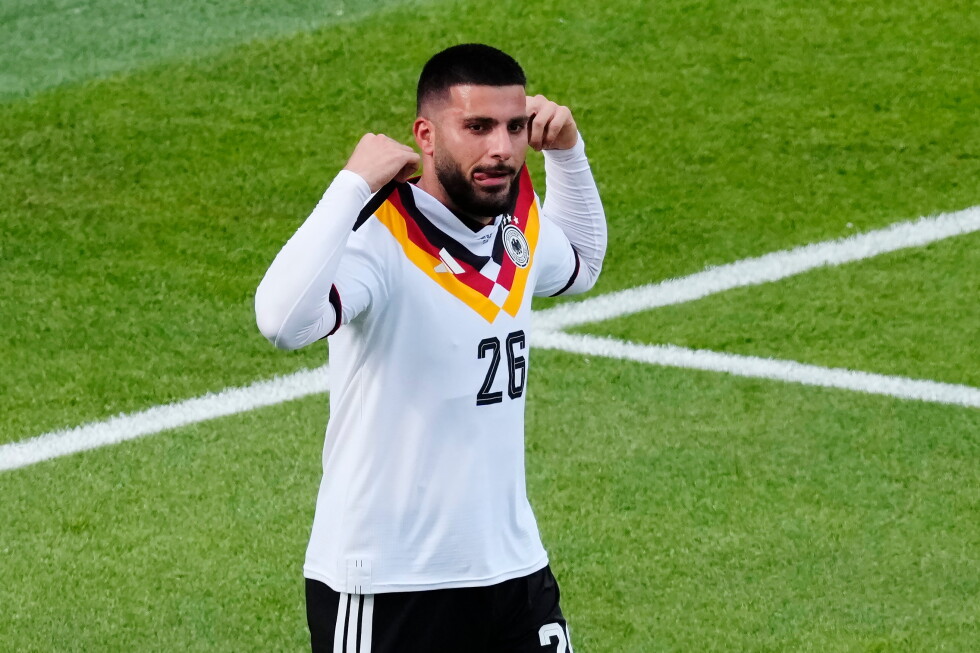
    After scoring against Curacao in the team’s opening group stage match, Undav celebrated with a traditional Yazidi jig, hands clasped behind his back. He was joined in the dance by German star Antonio Rüdiger, a Black German player who has faced repeated racist and anti-Muslim abuse throughout his career. Tekkal called the moment one of the most iconic of the entire tournament, regardless of how Germany fares in the coming matches.

    “Dancing is a form of expressing resistance for us,” Tekkal emphasized. “We dance on the graves of our dead. Our mantra is that resistance is life. He’s dancing there for his forefathers who were oppressed.”

    For many stateless Kurdish fans, Undav’s run gives them a team to cheer for at the World Cup, the global stage that excludes stateless communities by rule. Mahmoud Kanabi, a Kurd from Irbil who moved to Berlin in 2020 and works at a Kurdish restaurant in the city, bought his first ever Germany jersey this year because of Undav.

    “Unfortunately, for us Kurds, we don’t have a team because we don’t have a country,” Kanabi said. “Now, when a Kurdish player is in a team, we have to be fans of it. It doesn’t matter what team it is.”

    Reporting for this article was contributed by Martany in Irbil, Iraq; Fahey in Berlin; Ellingworth in Duesseldorf, Germany; and AP Sports Writer Ron Blum in East Rutherford, New Jersey. This coverage is part of AP’s religion reporting partnership with The Conversation US, supported by funding from Lilly Endowment Inc., with the AP solely responsible for all content.
  • Ireland stuns India in a historic first cricket win as Sooryavanshi sits out

    Ireland stuns India in a historic first cricket win as Sooryavanshi sits out

    In a landmark result that shook international men’s cricket, Ireland earned its first ever victory over India in a T20 international fixture at Belfast’s Stormont ground on Friday, just months after India secured back-to-back T20 World Cup titles. The historic upset came as India opted to rest 15-year-old batting sensation Vaibhav Sooryavanshi, whose senior team debut has been one of the most anticipated events in the global cricket community following his breakout IPL performance that saw him top the tournament’s batting averages against some of the world’s top bowlers.

    Ireland won the toss and chose to bat first, and got off to a rocky start, slipping to 51 runs for the loss of four wickets early in the innings. But a resilient lower-middle order fightback dragged the hosts to a competitive total of 182 for 9 wickets by the end of their 20 overs. The standout of Ireland’s batting performance was Gareth Delany, who delivered a blistering late finish, smashing three consecutive sixes off Indian paceman Prasidh Krishna before falling for 49 off 32 deliveries. Wicketkeeper-batter Lorcan Tucker, who stepped into captaincy after five of Ireland’s first-choice players picked up injuries, also contributed a quickfire 50 off 35 balls to anchor the recovery.

    India’s bowling attack made an early impact, with Harshit Rana claiming three powerplay wickets to leave Ireland reeling, and finished with Arshdeep Singh taking 2 wickets for 28 runs and Axar Patel claiming 2 for 33. However, dropped catches off both Tucker and Delany proved costly for the reigning world champions, allowing Ireland to post a challenging total.

    Chasing 183 for victory, India’s innings got off to a promising start via opener Abhishek Sharma, who raced to 49 off just 20 deliveries before being caught in the deep. But the visitors collapsed from there, losing regular wickets across the innings and being bowled out for 148 with seven balls still left in the chase, handing Ireland a 34-run historic win.

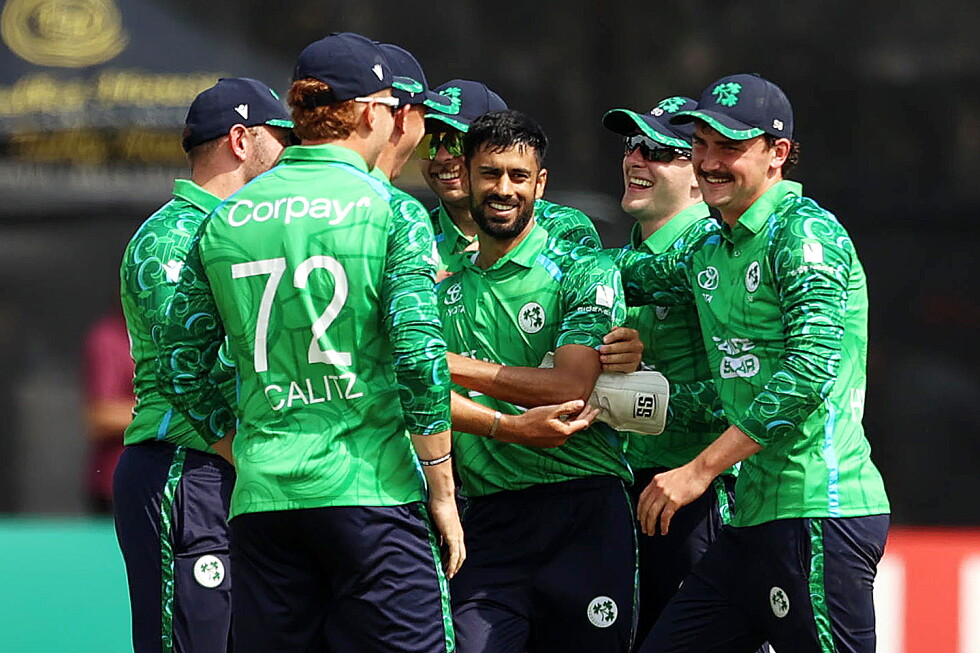
    The day belonged to Ireland’s two debutant bowlers, who produced match-winning performances on their first senior international appearance. India-born left-arm fast bowler Jai Moondra picked up 2 wickets for 25 runs, dismissing star Indian opener Sanju Samson with his very first delivery in international cricket, then later claimed the wicket of Shivam Dube, India’s last recognised top-order batter, caught and bowled. Medium-pacer Matt Hollard was even more impressive, claiming Indian captain Shreyas Iyer, Ishan Kishan, and Washington Sundar to finish with figures of 3 wickets for 28 runs. Left-arm spinner Matthew Humphreys matched Hollard’s return, also taking 3 for 28, despite injuring his hand while attempting a difficult caught-and-bowled chance. Strapping his hand up, Humphreys closed out the match by dismissing Harshit Rana and Arshdeep Singh in the 19th over, and was mobbed by jubilant teammates after the final wicket.

    India entered the match as heavy favourites, having won their second consecutive T20 World Cup in March, and retained seven players from that title-winning starting lineup for Friday’s fixture. Iyer, captaining the side for this series, noted after the match that the team opted to rest Sooryavanship to stick with the proven core that delivered the world title. “(Sooryvanshi) is a gun player but we have some tremendous players who have done well for us so we are backing them. He will get his chance,” Iyer said. This was Iyer’s first T20 international appearance since 2023.

    Reflecting on the upset defeat, Iyer emphasised that the result would be a key learning moment for his side. “We are not going to forget what happened and there’s a lot to learn from this game. Going to come out all guns blazing in the next game,” he added.

    Ireland’s stand-in captain Tucker called the win over the world champions one of the most special results of his career, played out in front of a home crowd. “It’s pretty special to beat the world champions at home. We scrapped through the game, we had some tough periods but we stuck to it, we were diligent,” Tucker said.

    The two sides will face off in the second and final T20 of the series at the same Stormont ground on Sunday, before India travels to England for a five-match series against the hosts.

  • The woman leading Cameroonian cricket’s ‘Roger Milla’ generation

    The woman leading Cameroonian cricket’s ‘Roger Milla’ generation

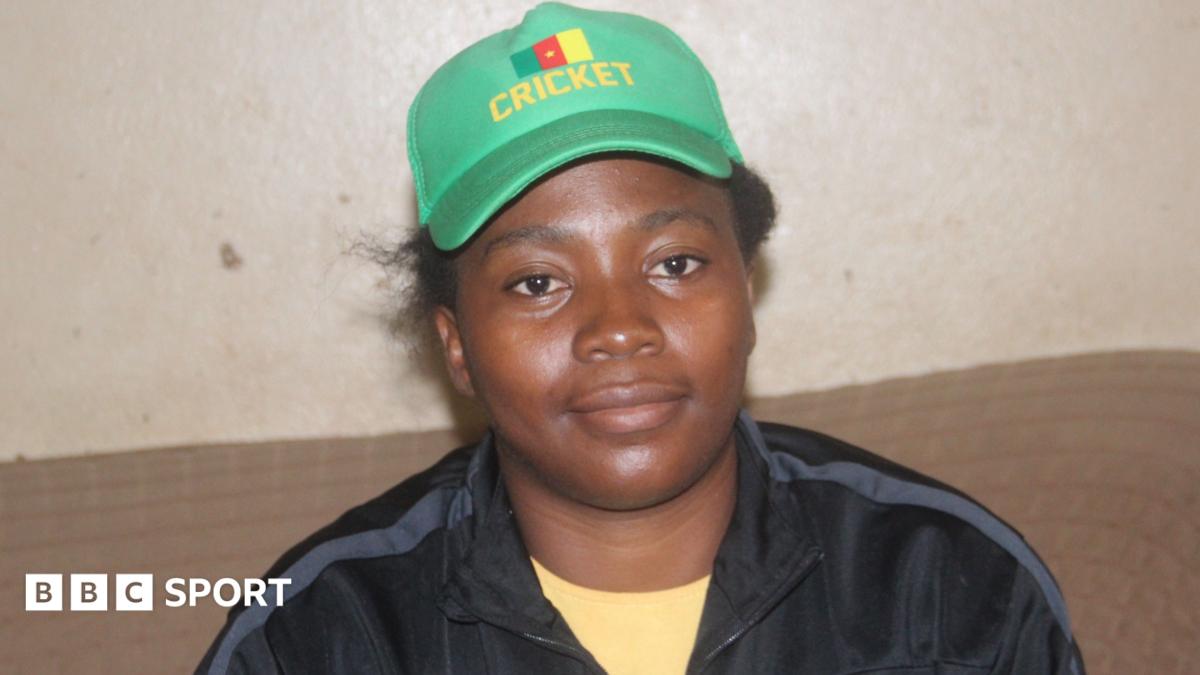
    When 29-year-old Madeleine Nseke Sissako first stepped onto an informal cricket pitch in Yaounde at the age of nine, she and her young teammates faced widespread ridicule. Neighbors, unfamiliar with the sport, mocked the group for carrying the cricket bats they called sticks, drawing an unlikely comparison to the pop-culture Ninja Turtles. Few locals believed the little-known sport could ever take root in the Central African country, where the word ‘cricket’ is most often associated with the common insect rather than a global team sport.

    Against that backdrop of skepticism, Nseke Sissako has emerged as one of Cameroon’s most accomplished and ambitious professional cricketers, leading a quiet revolution to grow the sport from its humble grassroots origins. Cricket runs deep in her family: eight members of the Nseke clan have represented Cameroon at the senior or youth international level, and it was her older brother Abanda Protais who first convinced the reluctant youngster to give the sport a chance. ‘I grew up always by his side, going with him to every practice,’ Nseke Sissako recalls. ‘At first, I had no real love for the game, but he talked me into it and taught me all the fundamentals.’

    Today, Nseke Sissako wears two pivotal hats: she serves as both captain and head coach of the Yaounde-based Emergence Ladies Cricket Club, which she has led to multiple domestic titles, and has represented Cameroon’s senior women’s national team, the Cricket Lionesses, since 2021. Ranked 67th out of 79 global sides in the ICC Women’s T20 rankings, Cameroon’s national program has marked steady progress in recent years, notching wins over Lesotho, Eswatini and Mozambique in 2024. ‘We’ve come so far,’ Nseke Sissako says. ‘When we first started competing internationally, we were the obvious underdogs, always the weakest team. Back then, we mostly traveled just for the experience, to get photos, and see new places. That’s changed now.’

    Her father, Eugene Nseke Toube, a former professional footballer, has supported his daughter’s work in cricket but keeps her grounded. ‘I always tell her she still has a lot to learn, and she has to keep putting in the work if she wants to reach her goals,’ he explains. ‘We encourage her to keep pushing, but where she is now isn’t the finish line.’

    Cricket’s journey in Cameroon began only in 2003, when a development project spearheaded by Victor Agbor-Nso — now president of Cameroon’s national cricket governing body Fecacricket — introduced the sport to the country. ‘We started from absolutely nothing,’ Agbor-Nso says. ‘No one knew what cricket was. It was just a joke, a laughing stock.’ The sport grew steadily enough for Fecacricket to earn affiliate membership with the International Cricket Council (ICC) in 2007, and the federation officially recognized by Cameroon’s ministry of sports two years prior, in 2005.

    Agbor-Nso credits the Nseke family, which received a special award from Fecacricket in 2024 for their contributions, with transforming the sport’s profile in the country. ‘The Nsekes have been absolutely critical to turning our dream for Cameroonian cricket into reality — starting from scratch to building a respected sport that people can look up to,’ he says. Today, the country counts 22 registered clubs (12 men’s, 10 women’s) with more than 550 top-level registered players, and Agbor-Nso estimates that roughly 70,000 Cameroonians across the country are learning the sport, mostly through school-based outreach programs.

    Still, major barriers remain. A lack of specialized cricket infrastructure and equipment is one of the biggest hurdles; Cameroon currently has no international-standard cricket venue. ‘If we had a proper stadium with the right playing surface, Cameroon could compete with the best in the world,’ Nseke Sissako says. Fecacricket also faces persistent funding shortfalls: the body only raises roughly a third of its annual budget target, even with support from the ICC and the Cameroonian government, slowing the federation’s progress. ‘We have huge ambitions, but the resources we have right now are nowhere near enough,’ Agbor-Nso explains. ‘We’re working to attract new sponsors to come and support our growth.’

    In recent years, Fecacricket has prioritized expanding women’s cricket, shifting from allocating just 20% of its resources to the women’s game to working toward a 50-50 split between men’s and women’s programming. Agbor-Nso points to Nseke Sissako as the perfect role model for this new era. Beyond leading her domestic club, she also served as head coach of Cameroon’s Under-19 women’s national team during recent qualifiers for the 2026 Women’s Under-19 T20 World Cup, working to inspire the next generation of female players. ‘All we can do now is keep working and believe in ourselves,’ Nseke Sissako says. ‘We need to boost the sport’s visibility, and keep planting the seed in schools through targeted development programs.’

    As the 2026 Women’s T20 World Cup unfolds across England, Wales and South Africa, Nseke Sissako is rooting for the tournament’s only African competitor — the two-time defending runners-up South Africa, who remain the only African nation to ever qualify for the tournament. ‘I will always support South Africa, because it’s because of their success that the rest of the world is paying more attention to African cricket,’ she says. ‘A South African win would give a huge boost to the sport across the whole region, including here in Cameroon.’ Drawing inspiration from Cameroonian football icon Roger Milla, who broke barriers for African football on the global stage, Nseke Sissako says she and her teammates see themselves as the trailblazers of Cameroonian cricket — and she holds an unshakable ambition to turn Cameroon into ‘one of the biggest cricket-playing nations in Africa and the world.’

  • The US that World Cup fans didn’t expect to love

    The US that World Cup fans didn’t expect to love

    In the weeks leading up to the 2026 FIFA World Cup this summer, nearly all global attention centered on the 16 host cities and their state-of-the-art stadiums where the world’s top football teams would compete. But just two weeks into the tournament, an unexpected and heartwarming trend has taken over social media: thousands of feel-good videos from international fans exploring the lesser-known, everyday parts of the United States that lie between the gleaming coastal skylines.

    For many foreign visitors, these off-the-beaten-path discoveries have become the highlight of their trip. A Norwegian visitor gasped in shock stepping into the sprawling outdoor retailer Bass Pro Shops. A British traveller could only describe Texas’ iconic Buc-ee’s – a one-stop destination combining a convenience store, full-service restaurant, gas station, and grocery superstore – as “absolutely insane”. Fans have posted gushing reactions to everything from the massive bulk sections of Costco and Walmart to the ubiquitous, creamy ranch dressing that has become an unexpected viral obsession. These moments are shining a light on a version of America rarely seen in international film or television: a quirky, unscripted, ordinary side of the country that has nothing to do with partisan politics and that most first-time visitors never get a chance to see. For Americans watching these reactions from home, the videos have become a gentle reminder of the small, unique joys that make the country special, rekindling a love for their own homeland that many had let fade.

    Spanning roughly 2,800 miles from coast to coast, with World Cup matches hosted in cities across both the Atlantic and Pacific shores, many international fans have opted to skip constant cross-country flights and embrace the classic American tradition of the open road. Road-tripping between matches has let them stumble upon kitschy nostalgic roadside attractions along historic Route 66, and experience the unrivaled grandeur of the U.S. National Park System. Videos of fans standing awestruck beneath the golden sandstone arches of Utah’s Zion National Park, gazing out over the layered red rock expanse of the Grand Canyon, and exploring the misty, cypress-draped lowland swamps of Louisiana have served as a reminder of the country’s staggering natural diversity. One British visitor who explored Zion put it simply: “I don’t think people realise how big, large, wild, full of wildlife America is. There is nothing quite like American national parks and state parks. It’s just incredible.”

    Intrigued by how deeply these fan reactions resonated with me as an American, I reached out to Charlotte Russell, a clinical psychologist and founder of The Travel Psychologist, to unpack why these simple videos feel so moving. Russell explained that for people who live in a place full-time, it is easy to take everyday cultural landmarks and natural beauty for granted. “Just like we don’t notice our wallpaper at home, we don’t spend much time thinking about our own culture in our day-to-day lives; it’s normal to us,” she said.

    Beyond natural landscapes, road-tripping fans have also fallen for the country’s diverse, unassuming regional cuisine – far beyond the global McDonald’s franchises most associate with American food overseas. Visitors are lining up at iconic Southern institutions like Waffle House, obsessing over crispy tater tots, and indulging in the classic American pastime of filling up on gas station snacks, from Buc-ee’s famous Beaver Nuggets to regional barbecue specialties. One Scottish traveller who spent his trip sampling everything from Dunkin’ Donuts to Atlanta seafood boils broke down in tears eating his last buttery, syrup-soaked waffle on the drive to the airport before his flight home. Two British football podcasters from *The England Pod* who detoured through Kansas City were so blown away by the city’s signature smoked ribs and brisket that they are already planning a follow-up trip to Dallas to test Texas-style barbecue, even as they admit: “It’s tough to imagine anything beating this.” The obsession with ranch dressing has gotten so out of hand that airport authorities have issued public warnings about legal carry-on limits after countless fans tried to smuggle large bottles of the dressing home in their checked luggage.

    Beyond viral clips of fans marveling at American food and scenery, the videos have also highlighted a quiet, powerful side of American generosity. Social media comment sections are flooded with local residents recommending hidden gems off the typical tourist trail, and even offering homemade meals to passing fans. That warmth feels particularly meaningful at a time when the U.S. has faced widespread international criticism for strict travel bans, tighter entry restrictions, and high visa rejection rates for citizens of many participating World Cup nations. For every video of a fan falling in love with American culture, there is a matching story of Americans opening their homes and communities to visitors. One traveller reported that Houston transit workers handed out free cold drinks to overheated fans heading to matches, while police officers across the country have been filmed cheering on and hyping up international supporters.

    Few communities have embodied this welcoming spirit more fully than the small college town of Lawrence, Kansas, which was chosen as the training base for the Algerian national team. The city’s 96,000 residents pulled out all the stops to welcome the team: the local university marching band learned to play the Algerian national anthem, community artists created a massive custom Algerian flag, and local pub staff studied basic Arabic phrases to greet guests. When the team arrived late at night, hundreds of local residents – many with no personal connection to Algeria – waited in total darkness to greet them, with one local telling the team: “Thank you for choosing our hometown.”

    These stories of unexpected cross-cultural connection have left many Americans feeling emotional during this tournament, and it is not hard to see why. As Russell notes, many U.S. citizens have felt discouraged about their country in recent years, and troubled by the negative global perception of the United States heading into the World Cup. “With all the negative news in the run-up to the World Cup… seeing people actually enjoying the US and its people feels more intensely joyful,” she explained. After scrolling through weeks of these warm, unscripted social media posts, I have felt a swell of national pride that I have not experienced in many years.

    Soon, this summer-long tournament will draw to a close: a new World Cup champion will be crowned, and fans will return home, most a few pounds heavier from all the ranch dressing and barbecue. But the hope this trend has sparked lingers – that Americans will continue to find joy in the quiet quirkiness of their own culture, take pride in the wild natural beauty that stretches across the country, and keep our doors open to visitors, so that more people can see the real America that we know and love.

  • Duckett leads counterattack as England reaches 73-1 at tea in reply to New Zealand’s 438

    Duckett leads counterattack as England reaches 73-1 at tea in reply to New Zealand’s 438

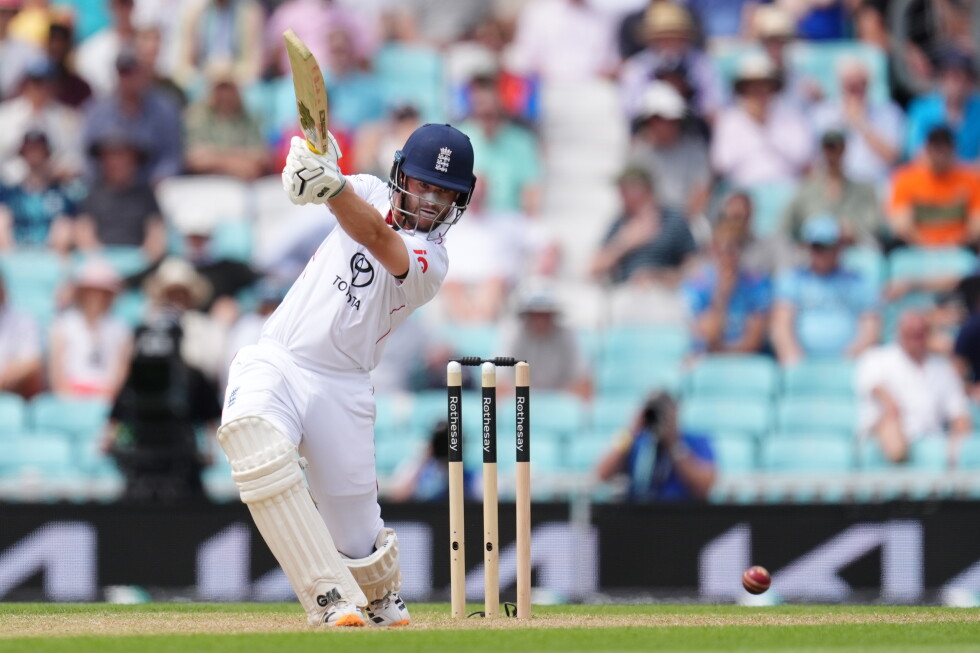
    NOTTINGHAM, England – The third and final Test of England’s summer series against New Zealand at Trent Bridge delivered a dramatic second day on Friday, turning the tide of momentum after the Kiwis had dominated the opening session. A blistering 317-run opening partnership between Tom Latham and Devon Conway on Day One had left the home side reeling, with New Zealand posting a mammoth first-innings total of 438 before being bowled out shortly after lunch on Day Two. What followed was a disciplined England fightback, headlined by a major career milestone for all-rounder captain Ben Stokes and a rapid counterattack from opener Ben Duckett heading into the tea break.

    On a sweltering afternoon where temperatures peaked at 34 degrees Celsius (93 Fahrenheit), Stokes picked up where England’s bowlers left off on Thursday evening, when the side had clawed back four late New Zealand wickets to stem the visitors’ momentum. The captain claimed the first wicket of the day, forcing Daryl Mitchell to edge a catch behind to wicketkeeper Jamie Smith for 11 runs. He followed that up by dismissing Will O’Rourke, who sliced a catch to Emilio Gay at point, before notching his long-awaited 250th Test wicket. The milestone came via a fiery bouncer to Mitchell Santner, who feathered a catch to Jacob Bethell in the gully. Santner immediately called for a Decision Review System (DRS) challenge, but television replays confirmed the ball had brushed his glove, upholding the on-field umpire’s decision.

    Spinner Shoaib Bashir picked up two more wickets for the home side: he secured a return catch at the second attempt to remove Nathan Smith for 6, then dismissed Tom Blundell via lbw on review after the New Zealand wicketkeeper missed a reverse sweep. Jofra Archer wrapped up the innings by trapping Ben Sears lbw for a duck, leaving New Zealand all out for 438. Stokes finished with match figures of 4 for 70, pushing him to ninth place on England’s all-time list of leading Test wicket-takers. The 35-year-old’s standout performance comes just one week after he was recalled to the side alongside fast bowler Gus Atkinson, following their suspension from the second Test for disciplinary reasons.

    With New Zealand’s innings closed, England stepped out to bat needing to respond to the huge total, and got off to a flying start despite an early setback. Opener Emilio Gay became England’s only wicket to fall before tea, caught down the leg side by Blundell off O’Rourke’s bowling without scoring a run. That brought Duckett to the crease, who entered the Test having struggled for runs throughout 2024. The left-hander was gifted a second chance early on, when New Zealand third slip Henry Nicholls dropped a catch off Nathan Smith’s bowling when Duckett had only scored 8 runs. He made the visitors pay immediately, playing with characteristic aggression to reach an unbeaten 52 off just 37 balls by the tea interval. At the other end, debutant batter Jacob Bethell was also not out on 16, leaving England 73 for 1 from 14 overs at the break, with the home side well placed to build on its early fightback. Heading into the weekend, the three-Test series remains level at 1-1, with the winner of this final match set to claim series bragging rights.

  • Rainbow flags await Egypt and Iran at awkward World Cup Pride Match

    Rainbow flags await Egypt and Iran at awkward World Cup Pride Match

    As the 2026 FIFA World Cup unfolds in the United States, a group stage match between Iran and Egypt set to take place in Seattle has sparked global discussion over clashing cultural values, inclusive event policy, and the intersection of sports and social identity. Scheduled for the Friday leading into Seattle’s annual LGBTQ+ Pride Weekend, local organizers have formally designated the fixture as the “Pride Match,” a decision that has drawn pushback from the two competing nations, where homosexuality remains criminalized.

    Central to the local celebration are symbolic gestures of inclusion: rainbow flags, the globally recognized emblem of LGBTQ+ pride, diversity and social acceptance, will be flown inside Seattle Stadium, alongside planned drag performances and Pride-themed watch parties spread across the city. Despite formal complaints lodged by both Iranian and Egyptian delegations, organizers have stood firm in their plans, emphasizing the pre-scheduled nature of the Pride celebration.

    When pressed about the event at pre-match press conferences, neither side’s coaching staff would engage with questions about the Pride designation. Iran’s head coach Amir Ghalenoei framed the discussion as off-topic, noting that his squad’s sole focus is on on-pitch competition. “We are here to play football, not for other things,” Ghalenoei told reporters. “As for things that are forbidden in our religion and do not exist [in our context], we do not want to talk about them. We only talk about the match, football and the beauty of the game.”

    Local organizing committee officials reject claims that the Pride Match was planned to provoke the visiting teams, explaining that Seattle’s Pride Weekend was scheduled long before the group stage draw paired Iran and Egypt in Group G. Rather than backtrack in response to discomfort, organizers say they are committed to leaning into the city’s core cultural values.

    “We’re thrilled,” Hedda McLendon, a member of Seattle’s local World Cup organizing committee, told BBC reporters after a press briefing on the event. “It might not be how you want to live or how things are in your country but this is something that makes us unique and we want you to experience it and be curious.” McLendon added that the Pride celebration was tied to the date of the match, not the competing teams, and that the event would proceed regardless of which nations had been drawn to play.

    That stance is echoed by Jess Fishlock, Wales’ all-time leading goalscorer, a 13-year veteran of Seattle’s Reign FC, and a member of the local host committee. “The match is about Seattle, not Egypt or Iran,” Fishlock said. “Regardless of who is playing we would be the same. It’s such an important part of Seattle’s identity and culture.”

    Global football governing body FIFA has weighed in to clarify its own position on the display of rainbow flags inside the stadium. The organization confirmed that the Pride celebration is a local initiative, not an officially sanctioned FIFA event, but confirmed that rainbow flags are permitted under 2026 World Cup rules.

    “The Fifa World Cup 2026 is an inclusive event that welcomes people from all backgrounds. Fans of all sexual orientations and gender identities are welcome at matches and events,” FIFA said in an official statement. “General statements of human rights, including rainbow flags and other flags representing sexual orientation and gender identity, are permitted under the Fifa World Cup 2026 stadium code of conduct and may be displayed inside stadiums provided they are used in a manner consistent with the code.”

    Reactions among fans on the ground in Seattle have been mixed. At the official fan zone, Egyptian fan Makarius Demian noted that for many supporters, the match’s Pride designation is irrelevant to the on-pitch competition. “Right now it’s about two teams trying to get to the next round,” Demian said, adding that he personally supports gay rights. “Pride match or no Pride match, that’s not what matters.”

    Nearby, Amani Abouammo and Ayman Almasri, owners of a local Egyptian restaurant, have closed their downtown location to run a pop-up serving traditional Egyptian street food Koshari to visiting fans at the fan zone. The pair described the clash of contexts as awkward, rooted in cross-cultural misunderstanding rather than intentional conflict.

    “Here it is the culture. People are used to that,” Abouammo said. “Back home, people are not used to it. It’s this piece of confusion that each party cannot understand the other party.”

    Beyond the cultural conversation, the match carries high stakes on the pitch. Egypt enters the fixture with momentum following a opening-round win over New Zealand, and sits in a strong position to claim a spot in the knockout stage if they secure another positive result. Iran’s road to the match has been far less smooth, with their tournament already marred by political disputes, travel restrictions, and complaints over insufficient preparation time, though the team was granted earlier access to Seattle than they received for their prior fixture.

    As kickoff approaches, scheduled for 04:00 BST Saturday, the match has emerged as more than just a group stage fixture: it offers a clear look at how different value systems interact when the World Cup, the world’s most global sporting event, lands in a host city with distinct cultural priorities, while two visiting teams bring their own long-held social and religious norms to the pitch.

  • Ferrari’s Hamilton faces Mercedes in Austria hoping to turn F1 win into a title shot

    Ferrari’s Hamilton faces Mercedes in Austria hoping to turn F1 win into a title shot

    The 2026 Formula 1 world championship battle has evolved into one of the most compelling generational clashes in the sport’s modern history, pitting 41-year-old veteran Lewis Hamilton against 19-year-old rising phenom Kimi Antonelli for the season’s biggest prize.

    Hamilton, who made history earlier this season by becoming Formula 1’s oldest race winner since 1950 with his victory at the Circuit de Barcelona-Catalunya, is now gunning for an unprecedented eighth world title. A win would cement his status as the sport’s oldest champion since 1957, capping a remarkable comeback year following his high-profile move to Ferrari. On the opposite side of the title fight, the teenage Italian Antonelli, driving for Mercedes, currently sits atop the drivers’ championship standings. If he maintains his lead through the final races of the season, he will secure his place as the youngest world champion in F1 history.

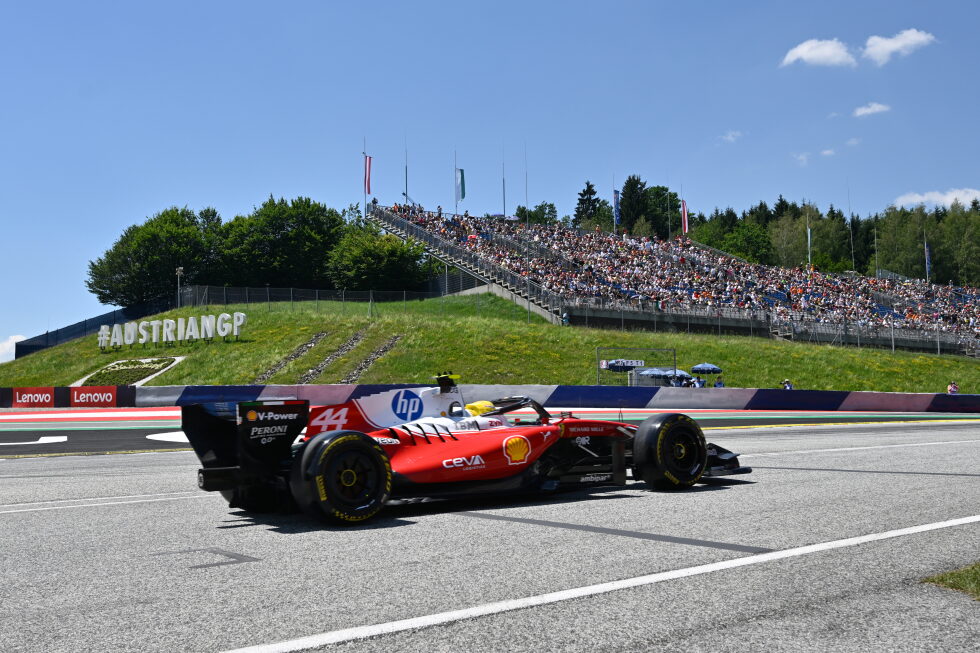
    This weekend’s Austrian Grand Prix, already classified as an official “heat hazard” event amid the record-breaking heatwave sweeping across Europe, will prove a critical turning point in the title race. Speaking ahead of the opening practice sessions, Hamilton made clear he was undaunted by the challenge ahead. “I’ve been here before. I know what I have to do, and there’s a long way to go,” the seven-time champion said. “We have a real battle on our hands, and it’s going to take everyone for the rest of the year to even come close to competing with (Mercedes), but I don’t think it’s impossible.”

    Antonelli wasted no time proving his title lead is well-deserved during Friday’s opening practice sessions, outpacing the entire field in both outings. In the first session, he led a Mercedes one-two finish, edging teammate George Russell by just 0.04 seconds. In the second session, he extended his advantage, beating McLaren’s Oscar Piastri by 0.237 seconds and Lando Norris by 0.325 seconds. Hamilton, meanwhile, posted a fifth-place finish in both sessions.

    Friday’s practice brought little joy for the Cadillac team, with Sergio Perez forced to stop on track during both sessions and Valtteri Bottas dealing with a small undercarriage fire that cut his running short.

    Hamilton’s surprise Barcelona win two weeks prior — his first victory for Ferrari after 18 months of underperformance and frustration — was the product of a perfect combination of clever race strategy, uncharacteristic reliability issues from Mercedes, and groundbreaking aerodynamic innovation from the Italian squad that rivals have already rushed to replicate. Ferrari has brought another upgraded power unit to Austria, signaling the team’s momentum is continuing to build.

    Russell, Antonelli’s Mercedes teammate and Hamilton’s former Mercedes teammate, admitted he had been caught off guard by the speed of Ferrari’s development under Formula 1’s strict cost cap regulations, but maintained his squad remains the team to beat. “At the end of the day, we’re still the team to beat. So this will be another good weekend to see if Ferrari are still on that good form or if that was a one-off,” Russell said. He added that critics who had written Hamilton off following his slow start at Ferrari were clearly wrong, saying: “For sure, he is a big threat. Ferrari are a huge threat. Kimi is still very much the driver out front and is performing really incredibly and consistently. Ferrari feel like they’re coming and Lewis is at the forefront of that.”

    For Antonelli, this weekend’s race at the Red Bull Ring is more than just another title round — it’s a chance to prove how far he has come in just 12 months. Three corners into the 2025 Austrian Grand Prix, a rookie mistake saw the teenager collide with Max Verstappen, ending both drivers’ races on the spot. Though Verstappen graciously accepted Antonelli’s apology, noting that every driver makes similar early-career errors, the points lost that day ultimately cost the four-time champion the 2025 title.

    That crash kicked off a disastrous summer stretch of results on European tracks for Antonelli, who later admitted he was overwhelmed by frustration. After Mercedes team principal Toto Wolff publicly described the teenager’s performance at his home Italian Grand Prix as “underwhelming”, widespread speculation emerged about the young driver’s future with the squad. Instead of breaking his confidence, however, the criticism pushed Antonelli to turn his season around. He used Wolff’s remarks as motivation to improve, scoring more points in the final eight races of 2025 than he had accumulated in the previous 16 rounds. That late-season form laid the groundwork for his breakout 2026 campaign that has put him in control of the championship fight.

    The Austrian round also brings ongoing uncertainty around Verstappen’s future, marking the third consecutive year the four-time champion has arrived at Red Bull’s home race without a clear long-term commitment. His current Red Bull contract runs through 2028, but includes clauses that would allow him to exit the team early. Speculation around his future has been fueled by long-rumored interest from Mercedes and public comments from Verstappen expressing frustration with the performance of 2026-specification cars, leading to questions about whether he could walk away from the sport entirely. In both 2024 and 2025, Verstappen eventually reaffirmed his commitment to the team that has supported him throughout his entire F1 career.

    Finally, controversy continues to simmer around the Monaco Grand Prix three weeks after the checkered flag fell, with final results still not confirmed. McLaren and Red Bull are both protesting the ruling that restored Alpine driver Pierre Gasly to third position after his time penalty was overturned. Multiple drivers received penalties after race officials misconfigured the circuit’s timing system, but only Gasly’s penalty was rescinded. If the original ruling is reversed, Red Bull’s Isack Hadjar would move up to third, with McLaren’s Piastri dropping to fourth.

  • Serena Williams to face 20-year-old Maya Joint of Australia in Wimbledon opening round

    Serena Williams to face 20-year-old Maya Joint of Australia in Wimbledon opening round

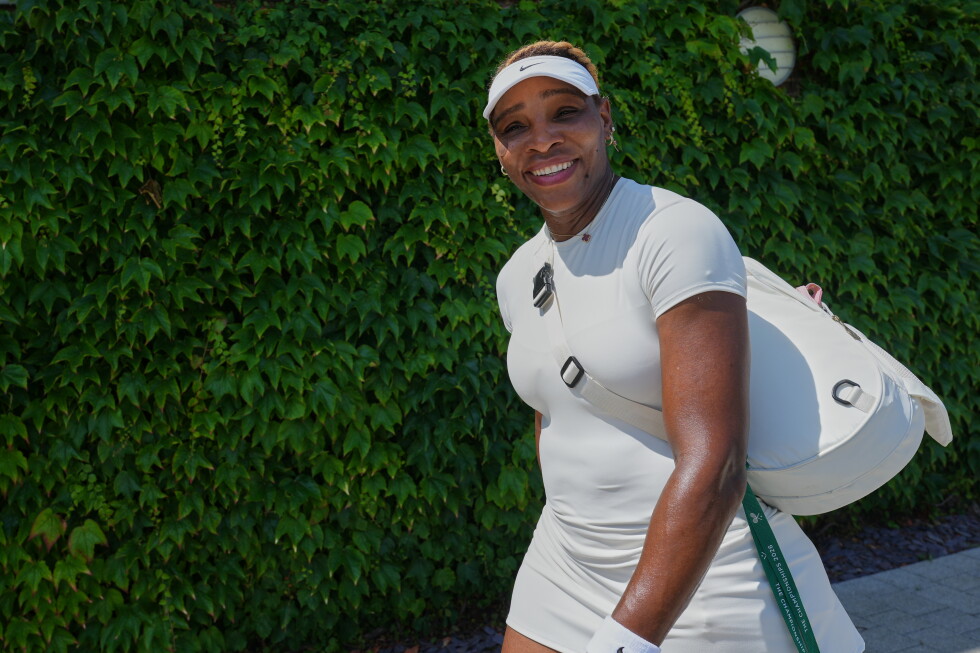
    As the 2025 Wimbledon Championships prepare to kick off Monday, one of the greatest tennis players in history is preparing to step back onto the iconic grass courts of the All England Club for her first singles match in nearly four years. Serena Williams, the 42-year-old seven-time Wimbledon singles champion, secured a wild-card entry to the prestigious Grand Slam, drawing an opponent less than half her age for the opening round: 20-year-old Australian rising star Maya Joint. The comeback will not stop at singles for Williams, either; she will also pair with her older sister Venus, who celebrated her 46th birthday just last week, for the doubles draw.

    Williams’ gradual return to competitive tennis began with two low-stakes doubles warmup matches, but the comeback gained mainstream attention Sunday when the All England Club formally confirmed her wildcard singles entry. Joint, currently ranked 53rd in the WTA singles rankings, is no stranger to the Wimbledon big stage: she made her debut at the tournament last year, though she fell in the opening round to Russia’s Liudmila Samsonova in straight sets, 6-3, 6-2.

    Williams has not competed in a top-level singles match since a third-round exit against Australia’s Ajla Tomljanovic at the 2022 U.S. Open. In the emotional post-match press conference following that defeat, Williams declined to frame the moment as a retirement, instead saying she was “evolving” away from professional tennis to focus on other parts of her life. She welcomed her second daughter in 2023, and has made only limited appearances on tour in the years since.

    Williams’ last trip to Wimbledon came in 2022, when she suffered a surprise opening-round loss to then-world No. 115 Harmony Tan. Beyond Williams’ historic comeback, this year’s tournament carries other notable storylines: Italian star Jannik Sinner, the defending men’s singles champion, enters the draw as the world No. 1 and top men’s seed, while Belarus’ Aryna Sabalenka claims the top seed in the women’s draw. Wimbledon follows standard ATP and WTA ranking protocols to determine its seedings.

    One of the tournament’s most decorated active players, seven-time champion Novak Djokovic, is seeded seventh this year after a season of mixed results. Fans will be missing one of the top contenders, however: two-time former champion Carlos Alcaraz, who fell to Sinner in last year’s 2024 Wimbledon final, has been forced to withdraw from the 2025 tournament due to a lingering wrist injury.

  • With US, Canada and Mexico through, the World Cup knockout round hinges on who finishes third

    With US, Canada and Mexico through, the World Cup knockout round hinges on who finishes third

    As the group stage of the 2023 FIFA Women’s World Cup draws to a close, the most gripping narrative unfolding across the tournament is not the race for top spot in each four-team pool, but the scramble to secure one of the coveted knockout round berths reserved for the best third-place finishers.

    Under this World Cup’s format, group winners and runners-up earn automatic progression to the Round of 32. Co-hosts United States, Canada and Mexico have all locked in their spots in the knockout stage, joining global powerhouses including France, Germany, Brazil and Norway, among other qualified sides. Several high-profile knockout matchups are already finalized: the U.S. will take on Bosnia-Herzegovina on July 1 in Santa Clara, California, while Canada travels to Los Angeles to face South Africa on June 28. Other marquee fixtures on the already-set schedule include Netherlands against Morocco and Japan clashing with five-time world champion Brazil.

    Unlike automatic qualification for top two sides, a third-place finish does not guarantee a knockout spot. Only the eight highest-ranked third-place teams across all groups advance, with tiebreakers decided by total goals scored and overall goal differential when teams finish level on points. This uncertain waiting game has left multiple sides in limbo, including South Korea, whose star forward Son Heung-min opened up about the frustration of watching his team’s fate hang in the balance.

    “I personally didn’t want to end up in this kind of situation, where we have to wait and see if we will reach the knockouts,” Son said. “It’s disappointing that we didn’t get the outcome we deserved, considering the amount of hard work we’ve done, but it’s out of our hands now and we will have to accept our fate, whatever it will be.”

    Across the standings, teams that have accumulated four points from one win, one draw and one loss have almost always punched their ticket to the Round of 32. Bosnia-Herzegovina, Sweden and Ecuador have already advanced through this pathway, with Paraguay on track to join them, leaving just four remaining third-place berths up for grabs among eight other third-place contenders.

    As final group stage matches kick off Friday, multiple fixtures will directly shape which sides claim those last spots. In Group G, Egypt takes on Iran: Egypt is nearly guaranteed a third-place qualification even with a loss, so long as the defeat is not by a wide goal margin. Iran would secure its own third-place spot with just a draw, while Belgium and New Zealand hold only mathematical outside chances to finish third in the group.

    In Group H, Cape Verde faces Saudi Arabia, with both sides needing a win to advance; a victory would lift Cape Verde into the knockout stage as either a first or second-place finisher, while Saudi Arabia requires all three points to keep its tournament alive. Later in the group, Uruguay meets Spain: a draw would be enough for Uruguay to claim a third-place spot, but a loss eliminates the side entirely.

    Group G’s final fixture between winless Senegal and Iraq also carries high stakes for third-place qualification: a draw would see both teams eliminated immediately. A win for either side would give it three points and a narrow shot at advancing, with its fate dependent on goal differential, while the loser would exit the tournament. Scotland’s slim qualification hopes rely entirely on an Iraqi win or a draw in this matchup.

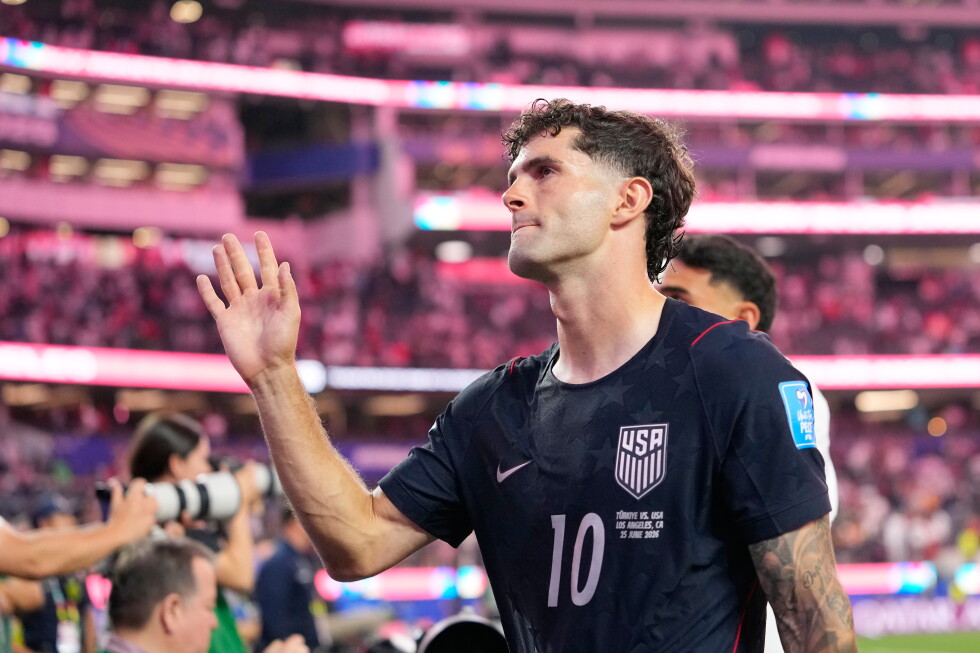
    Looking ahead to the already confirmed Round of 32 fixtures, the U.S. enters its matchup against Bosnia-Herzegovina after seeing its two-game winning momentum halted by a loss to Turkey. Star American winger Christian Pulisic made his return to the pitch against Turkey as a second-half substitute, after missing over a week of action with a calf injury sustained in the opening win over Paraguay. Bosnia-Herzegovina, which claimed third place in Group B with four points, enters the matchup as the lowest-ranked European qualifier at 62nd in the FIFA rankings. U.S. midfielder Sebastian Berhalter, who scored against Turkey, emphasized the team’s knockout-ready intensity.

    “We play every game like a knockout game,” Berhalter said. “You saw that in our intensity and the way we worked. For us, it’s keep doing what we’ve been doing.”

    For Canada and South Africa, their Round of 32 clash already marks a historic milestone: it is the first time both nations have reached the World Cup knockout stage. Canada advanced as Group B runner-up with four points from one win, one draw and one loss, while South Africa claimed second place in Group A with the same points total, highlighted by a shocking upset win over South Korea.

    Japan earned its spot as Group F runner-up after a hard-fought 1-1 draw with Sweden, setting up a dream matchup against five-time champion Brazil. The fixture carries special symbolic weight for Japanese soccer: in 1991, Brazilian legend Zico joined Japan’s newly formed professional league to help professionalize the domestic game and support Japan’s successful bid to co-host the 2002 World Cup. The matchup against Brazil will be a chance for Japan to showcase how far its program has come since that era.

    The Netherlands top Group F after a draw with Japan and a dominant 8-2 combined goal difference against Sweden and Tunisia, and will face Morocco, which finished unbeaten in Group C to take second place. Morocco, which reached the World Cup semifinals in 2022 in Qatar, is still chasing history as it aims to become the first African nation to win the tournament.

  • Australia clinches knockout round spot with 0-0 draw; Paraguay also likely to advance

    Australia clinches knockout round spot with 0-0 draw; Paraguay also likely to advance

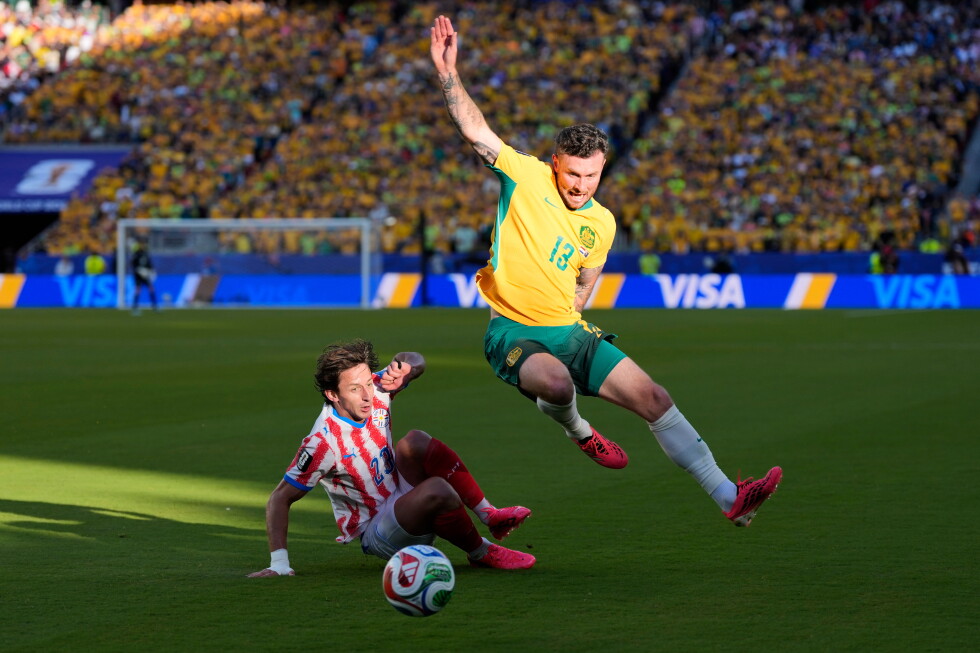
    SANTA CLARA, Calif. — In a strategically cautious final Group D World Cup clash played Thursday night, Australia and Paraguay battled to a scoreless draw that locked in Australia’s spot in the expanded tournament’s knockout round and left Paraguay overwhelmingly likely to join them.

    The 2026 World Cup’s new 48-team format created the low-tempo dynamic that defined the match: under revised rules, eight out of 12 third-place group finishers now advance to the round of 32, opening a path to progression for both sides even without a full three points. Entering the fixture, both nations held three points apiece from opening wins over Turkey, with the United States already guaranteed the Group D top spot. While a victory would have secured an automatic second-place finish for either side, Australia’s superior goal differential meant a draw was enough to push the Socceroos into the next stage regardless of Paraguay’s result. For the South American side, the draw pushed their total to four points, a tally that will almost certainly earn them a knockout spot unless a cascade of unexpected results over the final two days of group play eliminates their chances.

    This progression marks the third time Australia has advanced past the group stage in World Cup history, with their previous two knockout berths in 2006 and 2022 both ending in round of 16 exits. The Socceroos will kick off their knockout round campaign on July 3 in Arlington, Texas, where they will face the Group B runner-up, a position that will be finalized when Group G plays its final matches on Friday night.

    While Paraguay must wait to confirm its progression, the result puts the side in strong position to reach the knockout round for the fifth time in its World Cup history. On the pitch, Australia carved out the clearest scoring chances of the first half, but Paraguayan goalkeeper Orlando Gill delivered two key stops: an early save on a Jackson Irvine attempt, followed by a stoppage-time block to deny Cristian Volpato.

    Cautious, defensive play dominated the second half as both sides prioritized avoiding defeat over chasing a winning goal. Paraguay controlled more of the possession in the final 45 minutes than it had in the first half, but neither side managed a clear, high-quality look at goal. Australia’s Jordan Bos came closest to breaking the deadlock in the 90th minute, but his effort from the right side of the 18-yard box drifted wide of the target. Deep into second-half stoppage time, Australian goalkeeper Patrick Beach turned away a low, weakly struck effort from Paraguayan striker Mauricio to preserve the clean sheet.

    Australia head coach Tony Popovic made six alterations to his starting lineup for the decisive fixture, handing 18-year-old Colorado Rapids defender Lucas Herrington his first-ever World Cup appearance. With the cap, Herrington became the youngest Australian player to feature in a World Cup match.

    For Paraguay, the result came with one significant downside: midfielder Diego Gomez picked up his second yellow card of the group stage, meaning he will be forced to sit out the round of 32 if the side confirms its advancement.