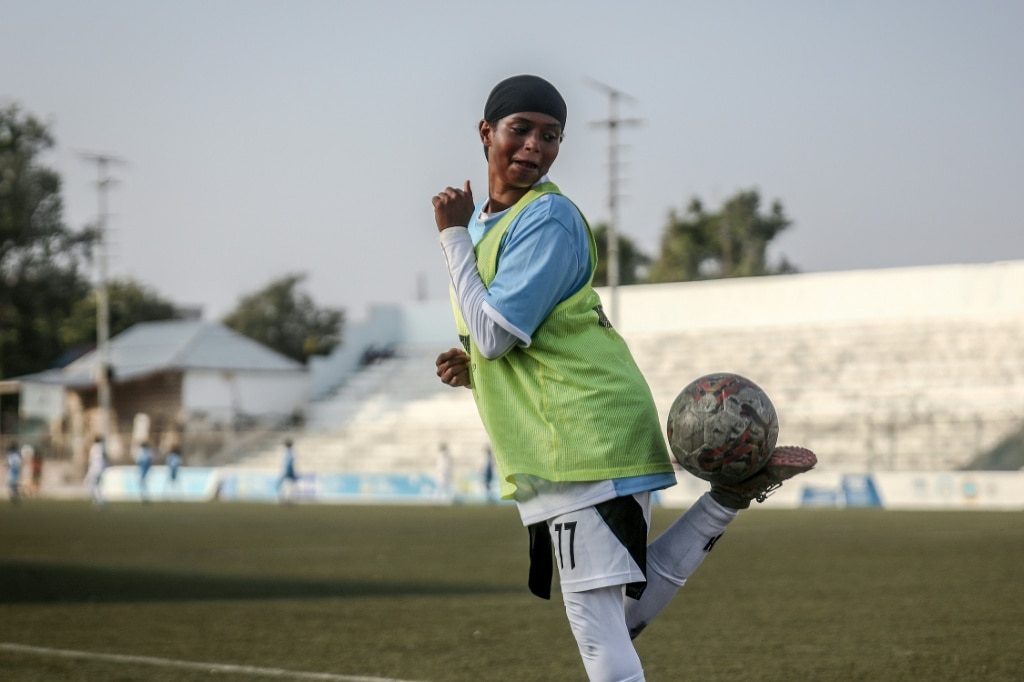
In a remarkable transformation for one of the world’s most conservative nations, Somalia is witnessing the unprecedented rise of women’s football. The recent championship match in Mogadishu drew hundreds of enthusiastic spectators who cheered as young female athletes competed on the pitch—a scene that would have been unthinkable just years ago in the conflict-ravaged country.
The development represents a significant cultural shift in a nation where the Al-Shabaab militant group, affiliated with Al-Qaeda, has historically prohibited entertainment activities including football, particularly for women. Despite the group’s continued influence behind the scenes, improved security conditions have created space for this sporting revolution to emerge.
From humble beginnings in 2024 with just 80 participants, Somalia’s women’s football league has expanded exponentially to include 600 athletes across 10 teams, drawing players not only from the capital but from various regions nationwide. The growth defies previous extremist declarations that labeled football as ‘un-Islamic’—a prohibition that once applied even to male players.
Ali Abdi Mohamed, president of the Somali Football Federation, expressed amazement at the rapid progress: ‘No one could have imagined that one day Somali women would play football in their country where even men were forbidden to play by fighters. But something we couldn’t even dream of has become a reality.’
The national women’s team, known as the ‘Ocean Queens,’ is preparing for its first international tournament—an under-17s event in Tanzania this May. While not yet ranked by FIFA, the team played its inaugural friendly match in Djibouti last October, marking another milestone in their development.
Players like 17-year-old midfielder Ramas Abdi Salah demonstrate how the sport is adapting to cultural norms. ‘For women to play football is not shameful or taboo,’ she explained, noting that she wears thick tights, long-sleeved shirts, and a headscarf during matches. ‘I’m fully covered except for my face and my hands. I haven’t received any bad comments.’
Though conservative attitudes persist and not all families permit their daughters to participate, the movement has faced surprisingly limited opposition. The players themselves remain undeterred by challenges, with goalkeeper Najma Ali Ahmed expressing determination after a tough match: ‘I’m sending a message to female footballers to work toward the dream of joining the national team.’