分类: sports

  • France, Morocco kick off blockbuster World Cup quarter-finals

    France, Morocco kick off blockbuster World Cup quarter-finals

    The 202X FIFA World Cup has entered its most intense phase, with the first of four eagerly anticipated quarter-final matches kicking off Thursday as defending runners-up France face off against Morocco at Foxborough’s Gillette Stadium, outside Boston. After four weeks of breathtaking on-pitch action that managed to overshadow pre-tournament concerns over exorbitant ticket prices and geopolitical tensions, the largest and most logistically challenging World Cup in history has been narrowed down to the final eight contenders, all still vying for the sport’s biggest prize.

    Heading into Thursday’s showdown, France stand out as the tournament’s most formidable attacking force, and are targeting their third World Cup crown overall. Les Bleus have stormed into the final eight in devastating form, racking up 14 goals across five matches, with captain and star forward Kylian Mbappe already netting seven of those strikes, putting him level with Norway’s Erling Haaland just one goal behind Golden Boot leader Lionel Messi of Argentina. England’s Harry Kane sits close behind on six goals, creating a four-way race for the tournament’s top scorer honor that adds extra drama to the remaining fixtures.

    Thursday’s clash is a rematch of the iconic 2022 Qatar World Cup semi-final, where France claimed a narrow victory over Morocco before going on to lose a legendary final against Argentina on penalties, a result that stoked long-running tension between the two nations. For Morocco, this tournament has already been a success: the African champions cruised through their group stage, knocked out the Netherlands in the round of 16, and comfortably defeated Canada to book their spot in the last eight. Under head coach Mohamed Ouahbi, who led Morocco to a surprise under-20 World Cup title last year, the Atlas Lions have built a reputation for a dangerous blend of technical skill, physical intensity, and sharp tactical discipline that makes them a serious threat to France’s title hopes.

    French head coach Didier Deschamps, who is set to step down from his role after the conclusion of this tournament, has moved to dismiss concerns over the appointment of Argentine match officials for Thursday’s tie, with a potential repeat of the 2022 World Cup final still on the cards if both France and Argentina progress to the final. “There is nothing I can do about refereeing appointments. I just try to have confidence in the officials,” Deschamps told reporters. “Our opponents are Morocco. I can’t consider the referee to be an opponent.”

    The winner of France vs Morocco will advance to the tournament semi-finals, where they will face the victor of Friday’s quarter-final between European champions Spain and Belgium, held in Los Angeles. Spain, who have not conceded a single goal across their run to the last eight, eliminated Cristiano Ronaldo’s Portugal in the round of 16, and while they have not matched France’s free-scoring attacking form, they are widely expected to give a strong test to Belgium, who defeated the United States 4-1 in their round of 16 tie to secure their quarter-final spot.

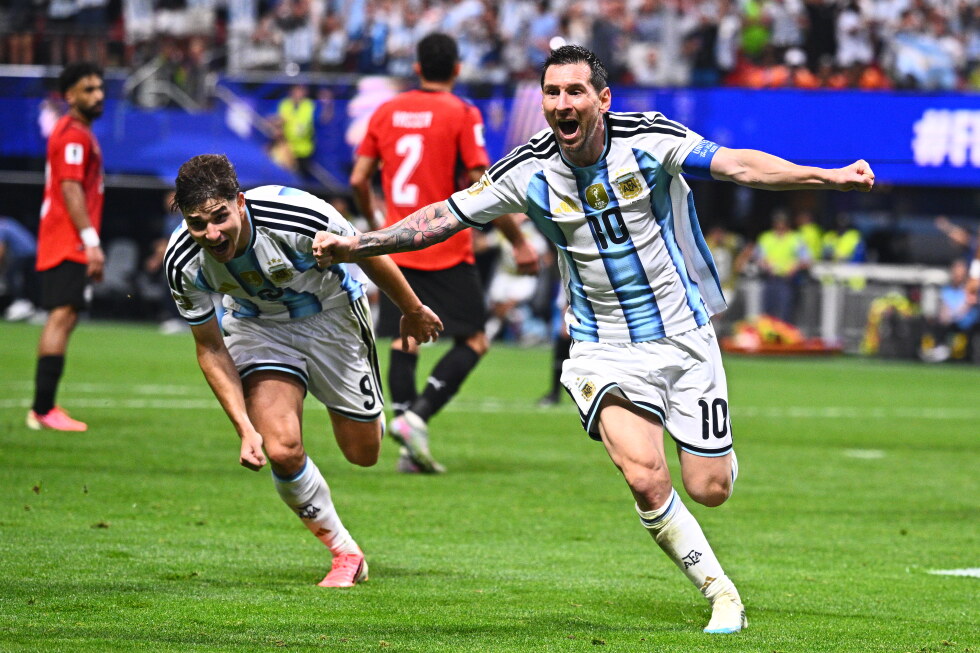
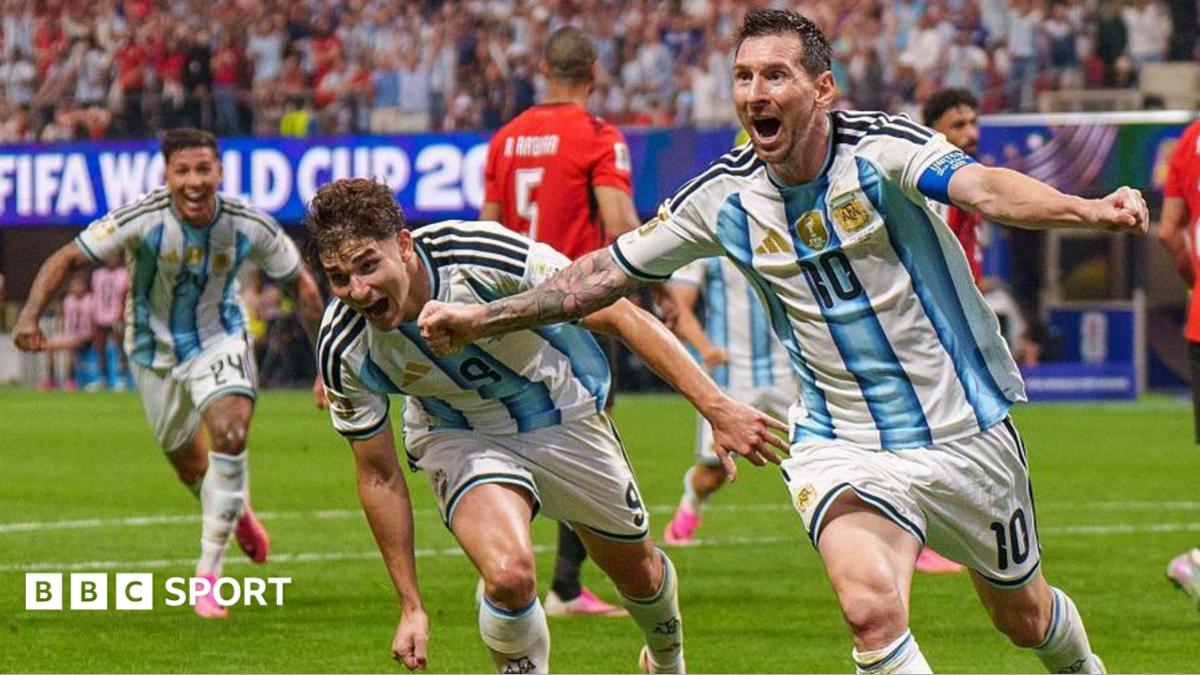
    On the opposite side of the draw, tournament holders Argentina will face Switzerland in Kansas City on Saturday, after a dramatic late comeback that kept their dream of becoming the first back-to-back World Cup winners since Brazil in 1962 alive. Argentina were pushed to the brink by Cape Verde in the round of 32, and pulled off an incredible “Houdini act” against Egypt in Atlanta on Tuesday, erasing a two-goal deficit late in the match to seal a 3-2 win that kept their title defense on track. “We didn’t want today to be the end, we didn’t want to go home,” Messi, who already has eight tournament goals, said after the comeback win.

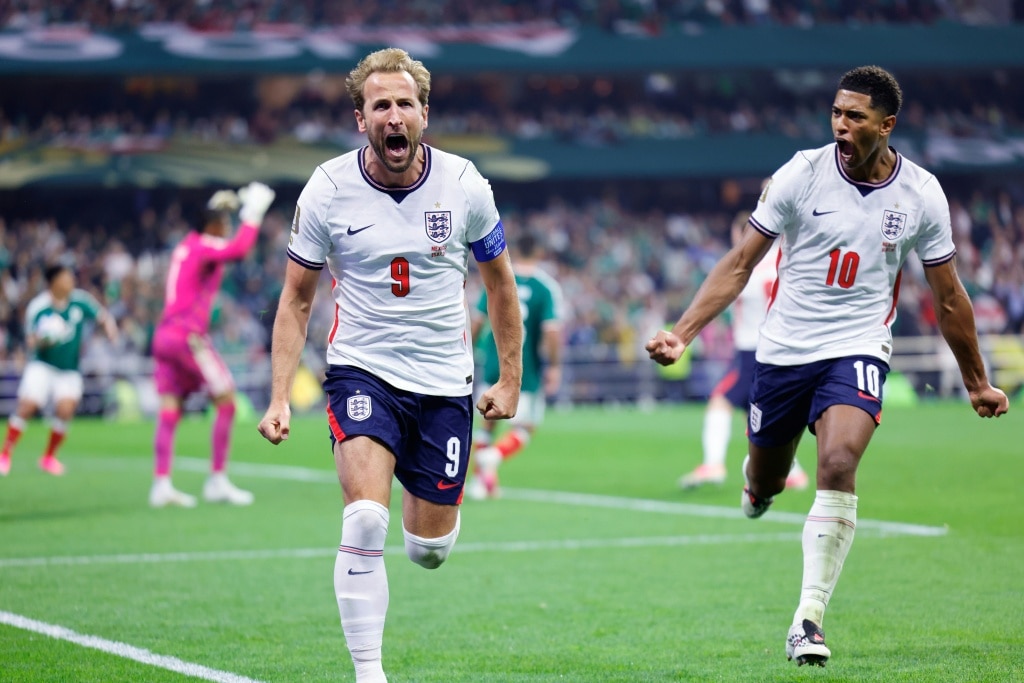
    The winner of Argentina’s clash with Switzerland will go on to face either Norway or England in Atlanta. England booked their quarter-final spot with a thrilling 3-2 victory over Mexico at Estadio Azteca, a drama-packed win that has renewed belief among the Three Lions that they can end their 58-year wait for a major tournament title. Standing in their way is a formidable Norway side led by in-form star Erling Haaland, who scored both of his team’s goals in a round of 16 win over Brazil on Sunday.

    Off the pitch, the Egyptian Football Association has filed an official complaint to FIFA over the officiating in their defeat to Argentina, calling for the entire refereeing team that oversaw the match to be removed from the remainder of the tournament. The complaint alleges “serious refereeing mistakes committed by the team of referees and double standards” that directly caused Egypt’s elimination. In unrelated off-the-field news, Croatia head coach Zlatko Dalic announced he would step down from his role after nine years in charge, a tenure that included a surprise run to the 2018 World Cup final.

  • France coach Didier Deschamps says Michael Olise’s World Cup yellow card appeal failed

    France coach Didier Deschamps says Michael Olise’s World Cup yellow card appeal failed

    FOXBOROUGH, Mass. – As France prepares for a highly anticipated World Cup quarterfinal showdown against Morocco on Friday, head coach Didier Deschamps confirmed Wednesday that FIFA has turned down the French Football Federation’s appeal to overturn a controversial yellow card issued to star winger Michael Olise during Les Bleus’ narrow 1-0 Round of 16 victory over Paraguay.

    “We received FIFA’s official ruling this morning, and Olise’s yellow card stands unchanged,” Deschamps told reporters at France’s pre-match press conference. The upholding of the caution means Olise will be at risk of automatic suspension for a potential semifinal spot if he picks up another booking in Thursday’s do-or-die clash with Morocco.

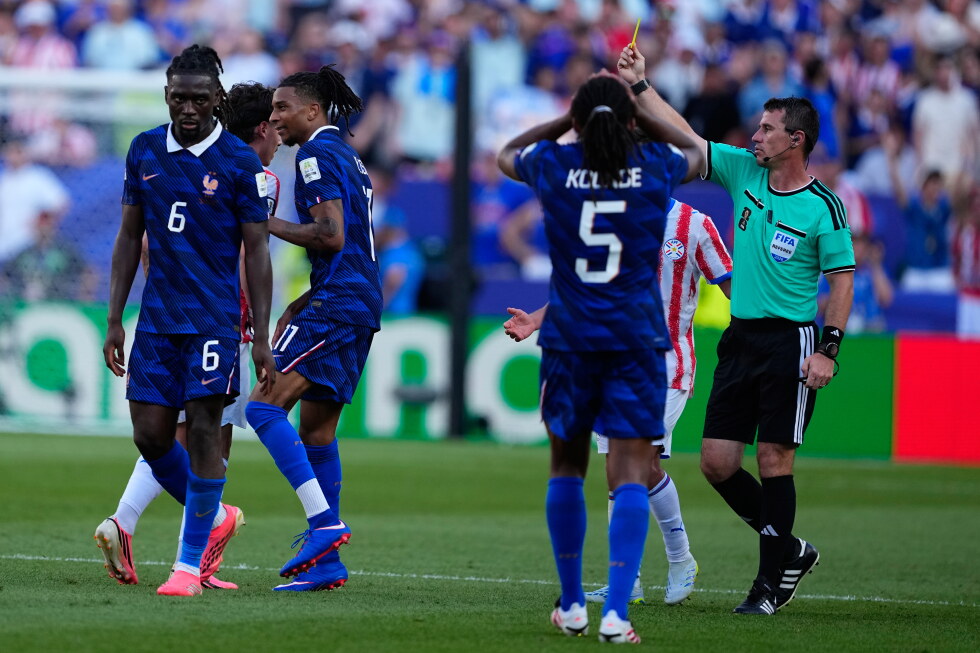
    The yellow card in question was handed to Olise in the 97th minute of the knockout stage match, following a brief altercation with Paraguayan midfielder Matías Galarza. Galarza fell to the turf during the exchange, but television replays offered no clear evidence of aggressive foul play from Olise, only showing the French attacker lightly grabbing Galarza’s jersey before the opposition player tumbled.

    France’s appeal gained added context from a recent high-profile precedent: last week, former U.S. President Donald Trump personally placed a phone call to FIFA President Gianni Infantino to lobby against a red card suspension for U.S. striker Folarin Balogun, who was set to miss the Stars and Stripes’ final group stage match against Belgium. FIFA ultimately reversed the suspension and cleared Balogun to play, though the decision did not save the U.S. team, which was eliminated from the tournament with a lopsided 4-1 defeat despite having Balogun in the starting lineup.

    Olise’s appeal outcome dominated the opening of Deschamps’ Wednesday press conference, with France bidding to become just the third men’s national team in history to reach three consecutive World Cup semifinals, joining Germany (which recorded three straight semifinal runs from 1982 to 1990, and four consecutive from 2002 to 2014) and Brazil (three straight from 1994 to 2002). Beyond the booking controversy, Deschamps was forced to address a string of off-field issues that have cast a shadow over France’s buildup to the massive quarterfinal tie, including racist remarks targeting superstar Kylian Mbappé, widespread concerns about refereeing, and questions about his own upcoming departure from the national team after the tournament.

    The racist comments targeting Mbappé came from a Paraguayan senator following Paraguay’s elimination by France in the Round of 16. Mbappé publicly condemned the remarks earlier this week, and Deschamps said Wednesday that the 35-year-old forward has remained focused on the upcoming match despite the abuse.

    “Kylian is fine. He is incredibly strong, both mentally and physically, and he does not want to waste energy looking back on this ugly incident,” Deschamps said. “His full attention is on tomorrow’s game, nothing else.”

    The Paraguayan match also drew referee criticism after three French players received cautions, while no Paraguayan players were booked despite the game’s physical, ill-tempered tone. Deschamps, however, played down concerns about officiating bias heading into the Morocco match.

    “Officiating is completely out of our control, and I trust the referees to do their jobs,” Deschamps noted. “Some decisions will always spark debate, that’s part of football, and different people will have different views. Our opponent tomorrow is Morocco, not the referee. The referee is there to apply the laws of the game fairly, that is all we ask.”

    Deschamps also pushed back on repeated questions about his impending departure from the French national team, a role he has held for 14 years. The 55-year-old won the 2018 World Cup as head coach, and he lifted the trophy as captain of France’s 1998 World Cup-winning squad as a player. He is set to step down after this tournament regardless of the team’s final result.

    “Thank you for the questions, but I am not thinking about what comes next right now,” Deschamps said. “Every game at this stage could be my last in charge, and that is exactly how I am approaching it. My entire focus, and the entire focus of our technical staff, is on beating Morocco tomorrow. That is our only goal. There are many possible outcomes in football, but right now we are only thinking about getting the win.”

    Ahead of the match, French law enforcement has already mobilized thousands of officers in anticipation of potential post-match unrest no matter the result, underscoring the high stakes of the clash between the two sides, who previously met in the 2022 Qatar World Cup semifinals.

  • From the 2010 Olympics to the World Cup, Vancouver has pioneered Indigenous inclusion

    From the 2010 Olympics to the World Cup, Vancouver has pioneered Indigenous inclusion

    As soccer fans pack Vancouver’s 2026 FIFA World Cup fan festival, filling the air with cheers broadcast on giant screens and the aroma of local Canadian specialties like poutine, one element sets this fan zone apart from those of many past major international tournaments: curated exhibits highlighting the three Indigenous nations that have lived on this land since time immemorial — the Squamish, Musqueam, and Tsleil-Waututh peoples. This inclusion is no afterthought: the three First Nations hold formal partnership status with the local World Cup organizing committee, building on a groundbreaking precedent set at the 2010 Vancouver Winter Olympics.

    This model of centering Indigenous voices in mega-sporting events has become an increasingly common industry standard, spreading from the 2023 Women’s World Cup co-hosted by Australia and New Zealand to the upcoming 2028 Summer Olympic Games in Los Angeles. For Vancouver organizers, the core goal was to move beyond performative recognition, seat Indigenous leaders at the planning table from day one, and create a sustainable platform that elevates public awareness of local Indigenous communities while leaving long-term, tangible benefits for future generations.

    “What we learned from the 2010 Games, and what we carry forward today, is that a key message of this partnership is to share the incredible cultural diversity that shapes this region,” explained Tewanee Joseph, who leads major events strategy for the Squamish Nation and previously served as CEO of the Four Host First Nations for the 2010 Vancouver Winter Olympics. “We are not a people who only exist in history books. We are still here, we are living, and our cultures are thriving today.”

    The 2010 Winter Games marked a historic turning point for Indigenous inclusion in global sports: it was the first time the International Olympic Committee formally granted Indigenous groups status as official co-host partners for the event, which was held on the traditional territories of the Squamish, Tsleil-Waututh, Musqueam, and Lil’Wat nations.

    Vancouver is not the only 2026 World Cup host city to embed Indigenous leadership in its planning. In Seattle, the Puyallup Tribe holds the title of official Presenting Legacy Sponsor for the city’s 2026 World Cup host organization, SeattleFWC26. Toronto opened its 2026 World Cup welcoming ceremonies with performances by Indigenous dancers and Grammy-nominated Peguis First Nation musician William Prince, while the city’s fan festival hosts the Tkaronto Market, which showcases handcrafted goods and art from local Indigenous creators. South of the border in Mexico, FIFA has partnered with the National Fund for the Promotion of Handicrafts to elevate Indigenous artisans, who create unique soccer-themed folk art for the tournament.

    FIFA has formalized this commitment for the 2026 tournament, naming Indigenous engagement as a central pillar of its global sustainability and human rights strategy, with a mandate to build respectful collaborative relationships with Indigenous communities across all three 2026 host nations: Canada, the United States, and Mexico. This policy builds on work the governing body launched in 2023, when it partnered with the Office of the United Nations High Commissioner for Human Rights to run the Unite for Indigenous Peoples campaign.

    The 2023 Women’s World Cup in Australia and New Zealand served as a test case for this new inclusive framework. Led by an advisory panel of six Indigenous women, FIFA fully integrated First Nations culture in Australia and Māori culture in New Zealand into every level of tournament operations. Indigenous place names and terminology were added to all official signage, Indigenous flags were flown full-time at match stadiums, New Zealand featured the traditional Māori karanga welcome call before every match, and Australia included formal Welcome to Country ceremonies led by Aboriginal or Torres Strait Islander elders at all pre-match events.

    The push for deeper Indigenous inclusion extends far beyond FIFA’s World Cup events. Organizers for the 2028 Los Angeles Olympics drew on the Indigenous origins of lacrosse to reinstate the sport as an official Olympic medal event for the first time in more than a century, since the 1908 London Games. The Haudenosaunee Confederacy, which is widely recognized as the original creator of lacrosse, has lobbied for years to compete as an independent delegation at the Olympics, though that bid has not yet been successful.

    For British Columbia’s Indigenous tourism sector, the World Cup partnership is more than a symbolic win — it delivers meaningful economic opportunity. Data from Destination British Columbia shows Indigenous tourism generates CAD 1.1 billion in annual economic activity for the province, with 31% of international travelers actively seeking out authentic Indigenous cultural experiences during their visits.

    Indigenous Tourism BC’s Paula Amos notes that the fan festival exposure is designed to create long-term demand, not just short-term buzz during the tournament. “We’re telling visitors that once the final whistle blows on the World Cup, the experience doesn’t end here,” Amos explained. “We want to inspire people to come back with their families, to explore authentic Indigenous tourism experiences across the province. Vancouver is the perfect gateway to British Columbia, so we’re using this platform to highlight destinations and experiences across every region of the province to encourage longer, deeper visits.”

    As formal planning partners, each of Vancouver’s three host First Nations will receive CAD 6 million to fund community legacy projects. The Squamish Nation has already announced plans to use its allocation to build a public youth soccer field in West Vancouver. But community leaders say the most important impact of the partnership cannot be measured in dollars or infrastructure.

    For Joseph, the most meaningful outcome is seeing Indigenous community members participate openly and proudly in the global tournament. “My favorite part of this whole experience is seeing our nation’s members walking the streets of Vancouver, joining in the fan festival, gathering at our community watch parties, and carrying themselves with such pride,” he said. “Visitors ask questions about our culture, they want to learn about our role on this land, and that recognition means everything. To see our people front and center, standing tall and proud of who they are — those are the memories that will last. This is all about people, and the connection between different cultures that comes from this work.”

  • World Cup quarterfinals: It’s Messi, Morocco, and 6 teams from Europe. And that’s not unusual

    World Cup quarterfinals: It’s Messi, Morocco, and 6 teams from Europe. And that’s not unusual

    MIAMI GARDENS, Fla. — The expanded 48-team 2026 FIFA World Cup has reached its final eight teams, and the competition’s historic power dynamic remains largely intact. Six of the eight remaining quarterfinalists call Europe home, with just one spot filled by a South American side and one by an African representative. Unless Morocco can pull off two consecutive upset wins to claim the trophy, the world championship will once again go to a nation from either Europe or South America — a trend that has held for nearly 100 years of World Cup history.

    Since the first tournament kicked off in 1930, 22 editions of the World Cup have concluded. All 22 championships have been split exclusively between European and South American teams: 12 titles have gone to European sides, while 10 have been claimed by South American squads. No nation from any other confederation has ever reached the top of the podium. This year’s quarterfinal lineup, with only two non-European/South American teams in the field, does little to upend that long-standing status quo.

    Even for Europe, this tournament has delivered stronger-than-expected results, according to some of the continent’s top stars. Erling Haaland, the talismanic Norwegian striker, notched a brace to lead his nation past Brazil and secure Norway’s first-ever World Cup quarterfinal berth — a result he called surprising. “I thought it was not possible to do some things,” Haaland said. “I guess I’m wrong.” Haaland’s unexpected success stands in sharp contrast to the disappointment suffered by this year’s joint tournament hosts, the United States, Mexico, and Canada, all from the North American, Central American and Caribbean Football Confederation (CONCACAF).

    Expanded to 48 teams for the first time, this World Cup gave North America three chances to break the European-South American stranglehold on the late stages of the tournament. All three hosts navigated the group stage and the newly introduced round of 32 with impressive form, posting a combined 9 wins, 2 draws, and 1 loss across those early matches while outscoring their opponents by a 20-goal margin. Early optimism quickly evaporated when the round of 16 kicked off, however.

    England eliminated Mexico 3-2, Belgium rolled to a lopsided 4-1 win over the U.S., and Morocco cruised to a 3-0 shutout of Canada. All three hosts exited the tournament in that round, finishing with a combined 0-3 record and being outscored by seven goals across their three knockout matches. The result extended a long drought for CONCACAF: no North American side has reached the World Cup quarterfinals since Costa Rica’s 2014 run, and the region’s most recent deep run before that was the U.S.’s historic third-place finish in 1930, followed by a quarterfinal appearance in 2002. Canada has never advanced past the round of 16, while Mexico has reached that stage eight times in its last nine World Cup appearances — and never moved further.

    “We need to get over that next hurdle,” U.S. star Christian Pulisic said in a post-elimination televised interview. “Trying to compete and beat the world’s best, that’s our next step … There’s still another step that we have to take.” Mexico midfielder Erik Lira echoed that sentiment, saying “Everyone gave everything. But, in the end, it wasn’t enough.”

    That refrain has become a familiar one for every region outside of Europe and South America. Only once in the last two decades has the quarterfinal field featured broad representation from across the globe: the 2002 tournament saw five different confederations — Europe, South America, Asia, Africa, and North America — all claim spots in the final eight. That tournament remains a rare outlier: across the six World Cups held since 2002, Europe has claimed 30 of 48 total quarterfinal spots, South America has taken 14, Africa has earned three, and North America has secured just one.

    This year, Africa entered the knockout stage poised for a potential breakthrough, sending 10 teams to the expanded tournament with nine advancing to the round of 32. Morocco is the only African side that remains, after most other African nations were eliminated by late, devastating goals. Ivory Coast, South Africa, and Congo all conceded match-deciding goals in the 86th minute or later to bow out of the competition. Cape Verde’s surprising run ended with an own goal against defending champion Argentina in extra time. Senegal and Egypt suffered particularly heartbreaking exits: both held 2-0 leads late in the second half, only to collapse to 3-2 defeats at the hands of Belgium and Argentina, respectively.

    Egypt’s coaching staff has alleged that biased officiating cost their team the win. “Perhaps they wanted to keep the world champion in the competition,” Egypt coach Hossam Hassan said. “Perhaps they wanted Messi to stay in the competition.” For Argentina and Messi, the comeback win simply延续了 the consistent success that elite powerhouses have enjoyed at the World Cup. Messi’s side has reached the quarterfinals in five of the last six tournaments, a reminder that some hierarchies remain hard to shift.

    “It wasn’t easy to come back from a 2-0 deficit in a World Cup knockout match — especially given how games are going these days, where no one gives you anything for free,” Messi said after the match. “But thank God, we did it once again.” As the tournament enters its final two weeks, all eyes will be on Morocco to see if it can finally rewrite the World Cup’s long-standing narrative.

  • Are Argentina being treated favourably at World Cup?

    Are Argentina being treated favourably at World Cup?

    Defending World Cup champions Argentina have booked their spot in the tournament’s quarter-finals, but their passage has been anything but smooth, and has sparked fierce debate over potential officiating favouritism. La Albiceleste entered the first two knockout rounds as heavy favourites to cruise past Cape Verde and Egypt, but on both occasions they scraped by with identical narrow 3-2 wins. Following their latest last-16 exit at the hands of Argentina, Egypt has launched an official complaint to FIFA, demanding the match officials be removed from the remainder of the tournament, and levelling claims of systemic bias designed to protect the defending champions and their global superstar, Lionel Messi.

    The dramatic nature of Egypt’s defeat has only amplified their frustration. On Tuesday, the African side held a shock 2-0 lead over Argentina with just 11 minutes left on the clock, on the cusp of pulling off one of the biggest upsets in World Cup history and securing the first quarter-final spot in their nation’s history. But Argentina launched a stunning late comeback, overturned the deficit, and scored the match-winning goal in stoppage time. Egypt has pinned its elimination on serious refereeing errors and inconsistent decision-making from French referee Francois Letexier and his team.

    Key contentious calls include a disallowed Egyptian goal chalked off after VAR intervention. Mostafa Zico’s well-taken strike was ruled out following a foul call on Marwan Attia for stepping on the foot of Argentina’s Lisandro Martinez in the build-up. Egypt also argues Argentina’s stoppage-time winner should have been ruled out, and that two clear penalty appeals for their side were ignored. Hamdi Fathy went down under a challenge from Alexis Mac Allister, while star forward Mohamed Salah claimed he was tripped by Julian Alvarez. While the decisions were controversial, BBC Sport’s analysis finds no concrete evidence to back the theory of a deliberate plot to favour Argentina.

    This dispute is not the only question mark over officiating and preferential treatment for the defending champions at this tournament. Ahead of Thursday’s high-profile quarter-final clash between France and Morocco, FIFA’s appointment of an all-Argentine on-field officiating team – the first of the tournament – has raised eyebrows. While top Argentine referee Facundo Tello is a highly experienced official who officiated at the 2022 World Cup quarter-finals and would be expected to uphold full professional integrity, critics argue the appointment creates a problematic perception of bias, given Argentina’s clear interest in seeing tournament favourite France eliminated earlier.

    Further questions have been raised over inconsistent disciplinary treatment of Messi earlier in the tournament. In the group stage, Messi escaped without even a yellow card for a challenge on Algeria captain Aissa Mandi that had clear contact with the opponent’s upper calf. Just days later, United States forward Folarin Balogun was sent off via VAR review for a near-identical challenge against Bosnia. The US has already formally appealed to have Balogun’s suspension overturned, with many pointing to the Messi incident as proof of double standards. Had Messi been sent off in that group stage match, he would have missed subsequent games, wiping out five of the eight goals he has scored at this tournament – which have already made him the World Cup’s all-time leading top scorer with 21 career tournament goals.

    Critics also point to off-field decisions that suggest FIFA has a vested interest in keeping Messi and Argentina in the tournament long-term. They note that FIFA president Gianni Infantino has previously made exceptions to allow Messi to compete in high-profile events, including the 2025 inaugural expanded Club World Cup hosted in the US. Despite MLS play-off winners LA Galaxy earning their spot through competitive merit, host nation berth was given to Inter Miami – Messi’s current club – allowing him to play the opening match of the tournament on home soil at the club’s Hard Rock Stadium.

    Structural tweaks to the 2026 World Cup format have also added fuel to the conspiracy claims. Last December, FIFA adjusted the final draw to ensure the world’s top four ranked teams – France, Argentina, Spain and England – were placed in separate quarter-brackets. This guaranteed that, if they won their groups (which all four did), they would not face each other before the semi-finals. While the official rationale is to keep elite matchups for the later stages of the tournament, the structure has given the top sides far easier routes through the knockout rounds – and none have benefited more than Argentina. So far, Argentina have faced only Cape Verde (ranked 67th globally) and Egypt (29th) to reach the quarter-finals, where they will next face 19th-ranked Switzerland. By comparison, Spain has already beaten 5th-ranked Portugal and will face 9th-ranked Belgium, while France takes on 7th-ranked Morocco in their quarter-final tie. Argentina’s path is by far the softest of the remaining elite sides.

    Disciplinary data also hints at potential favourable treatment for Argentina. Seventeen players across the remaining quarter-finalists are one yellow card away from suspension for a potential semi-final, but only one Argentine starter – Gonzalo Montiel – is at risk of missing the next round. When comparing the ratio of yellow cards issued to total fouls committed, Argentina receives a caution just once every 19.7 fouls. For context, England, who have committed fewer total fouls than Argentina, receive a yellow card once every 7.7 fouls, meaning Argentina have half as many cautions despite more fouls. Only three other remaining sides have a better (higher) yellow-to-foul ratio than Argentina, suggesting the defending champions have been let off far more lightly for foul play than other nations. This pattern echoes Argentina’s 2022 World Cup win, where they received five penalties – more than any other team in a single World Cup in history. At this tournament, they already lead all sides with three penalty awards, though Messi has missed two of them.

  • Queen Camilla visits Wimbledon and is joined by actor who played her husband

    Queen Camilla visits Wimbledon and is joined by actor who played her husband

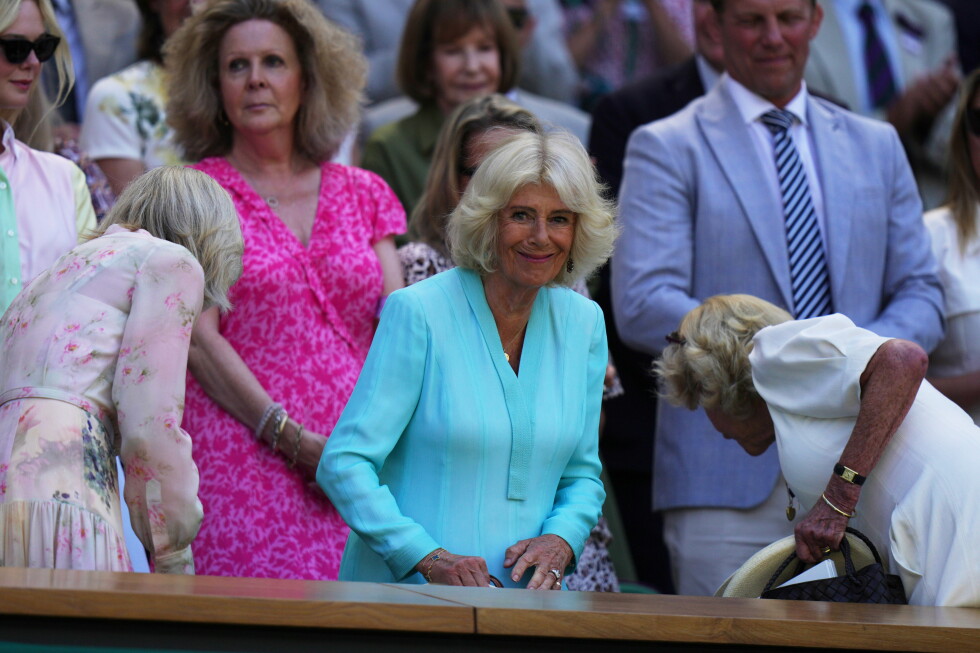
    LONDON – As the Wimbledon Championships reached its tenth day of competition on Wednesday, Queen Camilla, wife of Britain’s King Charles III, continued her annual tradition of attending the iconic Grand Slam tournament, marking her fourth straight year in attendance at the All England Lawn Tennis Club. This year’s outing brought an unexpected, charming twist: the British monarch was joined in the event’s exclusive Royal Box by Dominic West, the Emmy-nominated actor who famously brought King Charles III to life on the hit Netflix drama series *The Crown*.

    Queen Camilla stepped into Centre Court dressed in a soft light blue ensemble, taking her traditional seat to watch one of the women’s singles quarterfinal matches between Italy’s Jasmine Paolini and Ukraine’s Marta Kostyuk. Alongside West, other high-profile celebrity guests also occupied the Royal Box on the day, including acclaimed American actor Elle Fanning.

    After Kostyuk secured her spot in the semifinal with a victory over Paolini, the queen surprised the next scheduled players: British wild card entrant Arthur Fery and Italian star Flavio Cobolli. As the two athletes prepared to make their entrance onto Centre Court, Camilla walked over to greet the pair with personal handshakes, a warm gesture that delighted onlookers. Before the day’s tennis action got underway, the queen also carved out time to meet with a ball boy, a ball girl, and multiple long-tenured staff members who have dedicated decades of service to the All England Club.

    This year’s royal presence at the tournament has been split between two senior members of the British royal family. The Princess of Wales, Kate Middleton, who holds the ceremonial role of patron of the All England Club, made her own trip to Wimbledon the previous week. During her visit, she stopped to interact with thousands of tennis fans waiting in the legendary queue outside the tournament grounds, before taking her seat on Centre Court to watch early round play alongside two-time Wimbledon champion Andy Murray.

  • Kostyuk sets up Wimbledon semi-final against Noskova

    Kostyuk sets up Wimbledon semi-final against Noskova

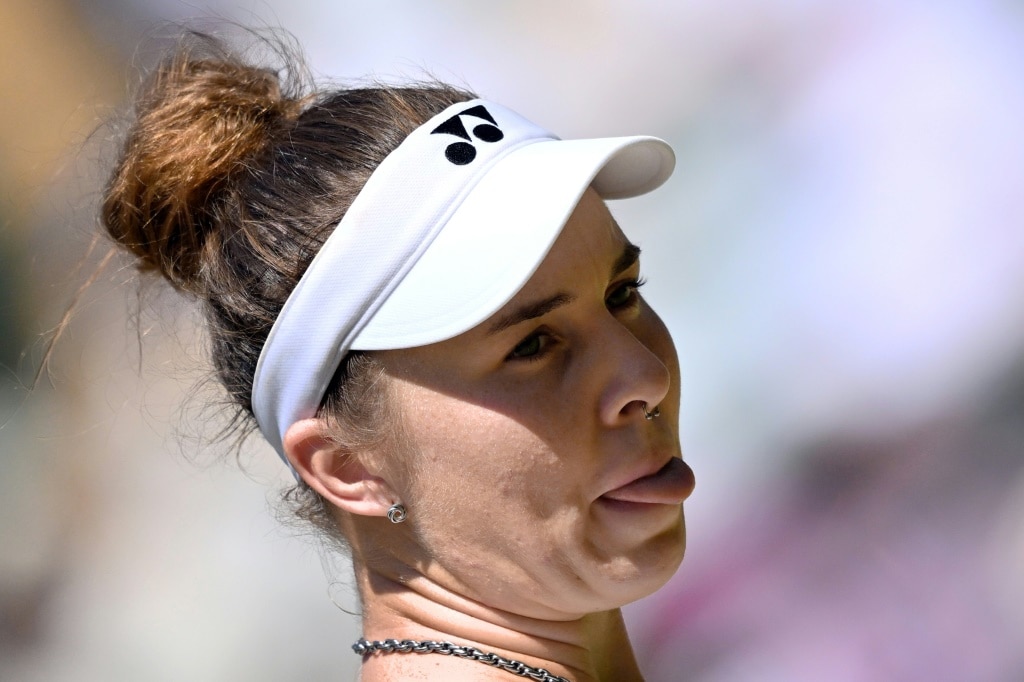
    The 2024 Wimbledon Championships delivered another dramatic day of women’s quarter-final action on Wednesday, as Ukraine’s Marta Kostyuk turned in a masterclass performance to crush Italy’s Jasmine Paolini and book her spot in the final four of the grass-court Grand Slam. The 12th-seeded Kostyuk needed just 69 minutes on Wimbledon’s iconic Centre Court to secure a lopsided 6-3, 6-2 victory over 2023 runner-up Paolini, booking a semi-final showdown with Czech ninth seed Linda Noskova for Thursday. For Kostyuk, the run marks her second consecutive Grand Slam semi-final appearance, and a particularly poignant moment on the sport’s most famous showcourt.

    Nine years before her quarter-final win, the 24-year-old Ukrainian visited the All England Club as a spectator, watching tennis legend Roger Federer compete on the very same court. “I was on this court as a spectator once nine years ago watching Roger (Federer) and to be back here as a player is amazing,” Kostyuk said after her first-ever Centre Court match at the championships. “I walked past the ‘wall of honour’, stood beside it and took a moment.”

    Kostyuk enters Thursday’s semi-final on one of the hottest streaks in women’s tennis, having dropped just one match across her last 22 outings. That sole defeat came in the French Open semi-finals last month, where she lost to eventual champion Mirra Andreeva. For Paolini, the result brings an end to her 2024 Wimbledon run; the Italian could not replicate the clinical form that carried her to a fourth-round win over Alexandra Eala, falling at the quarter-final stage of a major for the first time in her career.

    Standing between Kostyuk and a spot in her first Grand Slam final is 21-year-old Linda Noskova, who lived up to her top-seeded billing in the bottom half of the women’s draw to defeat experienced Belgian 25th seed Elise Mertens 6-3, 7-5 on Court One. The Czech has enjoyed a breakout grass-court season this year, claiming her second career WTA title in Berlin earlier this month before powering into her first ever Grand Slam semi-final at Wimbledon. After early upsets knocked out top contenders Iga Swiatek and Elena Rybakina, Noskova became the highest remaining seed in the bottom half of the draw, and she delivered against Mertens, who was playing her first major quarter-final since 2020. Though Mertens fought hard throughout the two-set clash, she could not match Noskova’s aggressive power from the baseline.

    Noskova acknowledged the challenge of facing in-form Kostyuk, who defeated the Czech in straight sets during the Madrid Open quarter-finals earlier this season, en route to lifting the Madrid title. “A tough one, it’s never going to be easy,” Noskova said of the upcoming semi-final. “Marta, she’s an incredible player.” The winner of Thursday’s clash will go on to compete for the Wimbledon crown on Saturday, against either American top seed Coco Gauff or Czech 10th seed Karolina Muchova.

    In the men’s draw, the quarter-final round continues Wednesday with two matches that could set up a rematch of this year’s French Open men’s final. Second seed Alexander Zverev, who claimed his maiden Grand Slam title at Roland Garros last month, will face sixth-seeded American Taylor Fritz for a spot in the semi-finals. A win for Zverev would set up a repeat clash with Italy’s Flavio Cobolli, who he defeated in a five-set French Open final. If Cobolli defeats British wildcard Arthur Fery in his own quarter-final clash, the two will meet again for a spot in the Wimbledon final four.

    Zverev enters the match as a respected contender, but he will face a tough test against Fritz, who has won seven consecutive matches against the German. Fritz boasts a proven record on grass, having reached the Wimbledon quarter-finals four times in the last five years, and his powerful serve makes him a dangerous opponent on the All England Club’s fast courts.

    For Cobolli, the quarter-final run marks his second consecutive deep run at Wimbledon; 12 months ago, he fell to Novak Djokovic in the last eight, and this year he faces a very different opponent in Fery. The Italian entered the tournament with an unexpected off-court hurdle: he did not book extended accommodation in London, forcing an Italian family to step in and “give him a house in Wimbledon” to stay for his deep run. Cobolli enters the match as the heavy favorite against Fery, who is ranked world number 114 and the lowest-ranked men’s player to reach the Wimbledon quarter-finals since Nick Kyrgios in 2014. However, Fery holds a win over Cobolli, having defeated the Italian in the first round of this year’s Australian Open — that win remains Fery’s only career Grand Slam match victory to date. If Fery upsets Cobolli, he will become the first men’s wildcard to reach the Wimbledon semi-finals since Goran Ivanisevic claimed his iconic title run in 2001. “I played really well in Australia,” Fery said. “Felt like I dominated the match. So we’ll use that experience for Wednesday.”

  • ‘Ferytale’ rolls on at Wimbledon as British wild card Fery into semifinals after meeting queen

    ‘Ferytale’ rolls on at Wimbledon as British wild card Fery into semifinals after meeting queen

    Wimbledon 2024 has delivered one of its most breathtaking underdog stories in recent memory, as British wild card Arthur Fery has etched his name into Grand Slam folklore by storming into the men’s singles semifinals — a feat only one other unranked qualifier has pulled off at the All England Club in more than two decades.

    Growing up just five minutes away from Wimbledon’s iconic grounds, the 23-year-old local hopeful has turned a childhood dream into reality, beating Italy’s ninth-seeded Flavio Cobolli in straight sets 6-4, 7-6(4), 6-0 in front of a raucous Centre Court crowd Wednesday. The stands were packed with cheering home fans, and the Royal Box even included Britain’s Queen Camilla, who got an early surprise meeting with both Fery and Cobolli in the player hallway moments before the match kicked off.

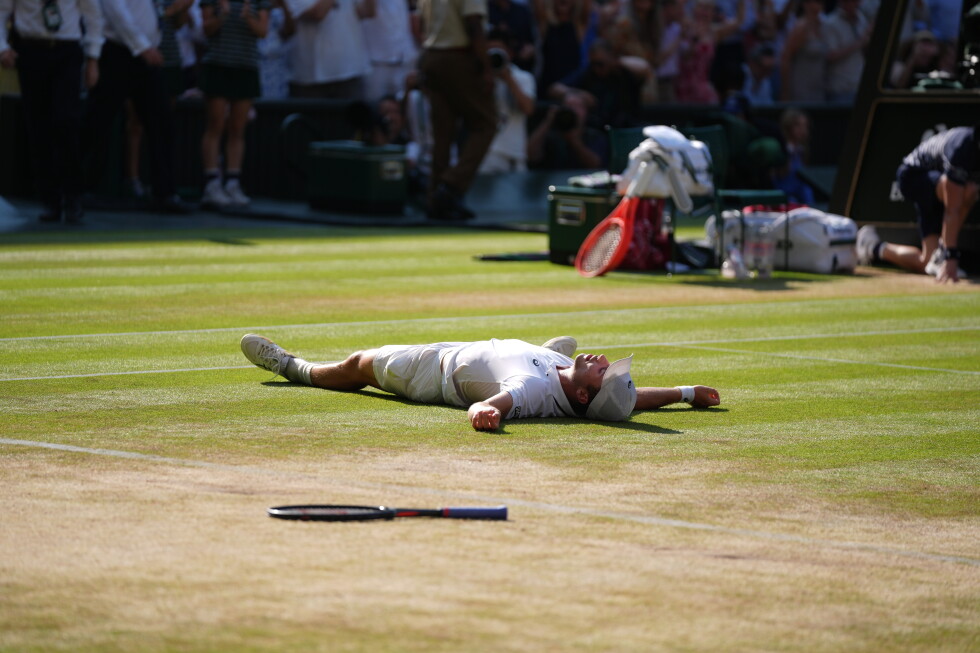
    Fery’s run has already made history: he is only the second men’s singles wild card to reach the Wimbledon semifinals, following Goran Ivanisevic’s legendary championship run in 2001. The young Brit’s emotional victory had the crowd roaring from start to finish. After clinching the opening set, he earned a full standing ovation from the Centre Court crowd, and the cheer that followed his tiebreak win to seal the second set was so loud it carried across to No. 1 Court, where Alexander Zverev was competing against Taylor Fritz. Fery sealed the match with a blistering ace, then fell onto his back to soak in the moment, overwhelmed by the support.

    “It gets better and better every match,” Fery told reporters in an on-court interview after the win. “I just can’t believe it. That last game, I felt emotions that I hadn’t experienced before in my life.”

    Zverev, who wrapped up his own straight-sets 6-4, 6-4, 6-2 win over Fritz shortly after Fery’s victory, will now face the local favourite in the semifinals on Friday. Friday’s other men’s semifinal will be a blockbuster clash between seven-time Wimbledon champion Novak Djokovic and 2023 title holder Jannik Sinner.

    The day also delivered historic milestones on the women’s side, as Ukraine’s Marta Kostyuk booked her spot in her first ever Wimbledon semifinal with a dominant 6-3, 6-2 win over Italy’s Jasmine Paolini. The 24-year-old 12th seed, who also reached the French Open semifinals earlier this year, called the moment surreal after the win, recalling that she watched Roger Federer play on Centre Court as a spectator just nine years ago.

    “I was flabbergasted by this entrance and everything inside,” Kostyuk said. “I was like, ‘wow,’ I need one day to recover from what I saw. I was on this court as a spectator once nine years ago watching Roger.” After Paolini misfired on second match point, Kostyuk dropped to her knees in celebration before spinning in a joyful pirouette for the crowd.

    She will face 21-year-old Czech rising star Linda Noskova, who notched a 6-3, 7-5 win over Belgium’s Elise Mertens on No. 1 Court to claim her first ever Grand Slam semifinal spot. Noskova, who carried a 9-1 grass court record into Wimbledon after winning the Berlin Open, said she thrives under pressure when stakes are highest.

    “I was a little bit nervous before the match,” Noskova admitted after the win. “Usually when it’s really, really important for me and I’m putting a little bit of pressure on myself, that’s when I play the best.”

    Kostyuk and Noskova will compete for a spot in Saturday’s women’s singles final on Centre Court Thursday, following the first women’s semifinal between American Coco Gauff and Czech player Karolina Muchova. As the tournament enters its final stretch, Fery’s historic Cinderella run has already given British fans something massive to cheer for, with local supporters already poised to celebrate wildly if the local wild card can keep his fairy tale run going.

  • Paris hosts the Esports World Cup with eight weeks’ notice

    Paris hosts the Esports World Cup with eight weeks’ notice

    In an extraordinary display of logistical agility and commitment to the global esports community, the French capital of Paris has stepped forward to host the prestigious Esports World Cup, organizing the major international event on a remarkably tight timeline of just eight weeks.

    The last-minute hosting arrangement came together after an unexpected shift in original planning, requiring local event organizers, city authorities, and esports stakeholders to rush through venue preparation, participant coordination, and spectator logistics in less than two months. Despite the compressed schedule, thousands of passionate French esports fans have already locked in their plans to attend the competition, eager to cheer on top professional players and teams from around the globe.

    The rapid organization of this high-profile tournament highlights Paris’ growing reputation as a leading hub for competitive digital gaming, as well as the surging popularity of esports across Europe. Fans are expected to fill the host venue across the tournament’s match days, creating a lively, energetic atmosphere that matches the intensity of the elite-level competition on display.

  • Egypt want officials kicked out of World Cup

    Egypt want officials kicked out of World Cup

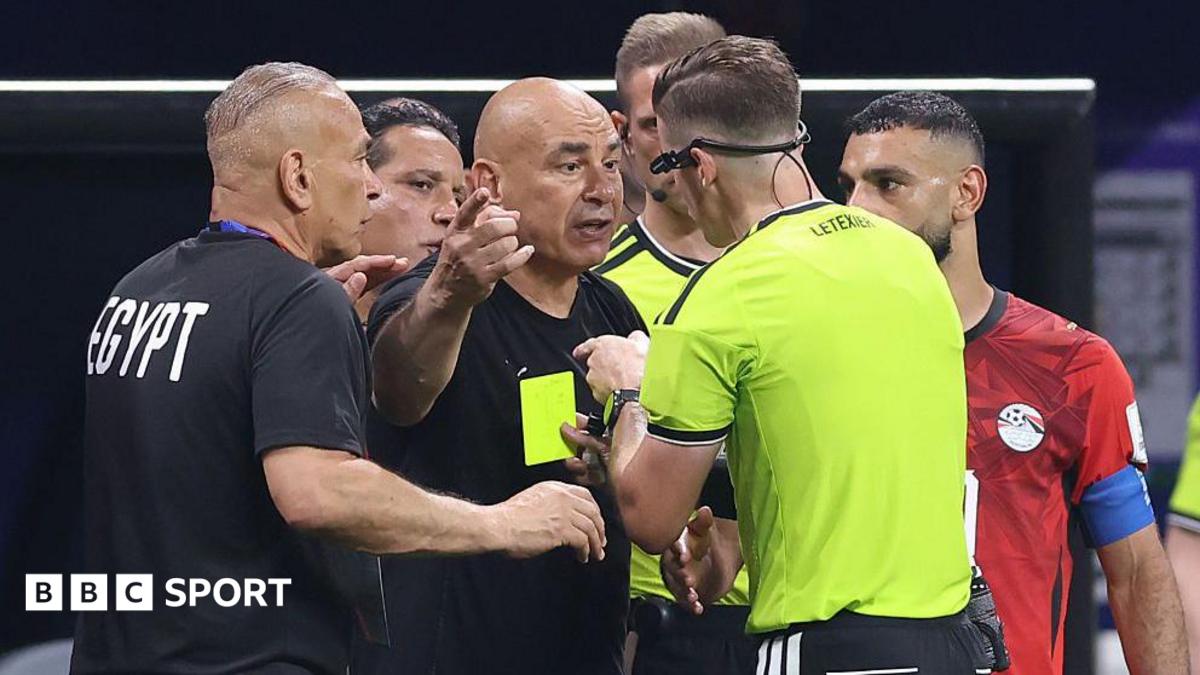
    The 2026 FIFA World Cup round of 16 clash between Egypt and defending champions Argentina has erupted into controversy after the Egyptian Football Association (EFA) submitted an official complaint to global football’s governing body, calling for the entire officiating crew to be removed from the tournament. Egypt fell to a dramatic 3-2 stoppage-time defeat, ending their bid to reach the first World Cup quarter-final in the nation’s history, and Egyptian officials have levied serious accusations of blatant mistakes, double standards, and even discriminatory officiating against the team led by French referee Francois Letexier.

    The most contentious decision came in the second half, when Egypt held a 1-0 lead. Attacking play for a potential second goal was built from a foul call against Egyptian midfielder Marwan Attia, who was penalized for stepping on Argentina defender Lisandro Martinez’s foot. The VAR overturned the would-be goal from Mostafa Zico, a call that immediately sparked outrage from the Egyptian side. Compounding their frustration, Egyptian players and staff say star forward Mohamed Salah was fouled inside Argentina’s penalty area just moments before the defending champions launched the counterattack that secured their stoppage-time winning goal.

    In an official statement released after the match, EFA president Hany Abou Rida confirmed the complaint had been lodged with FIFA, demanding a full investigation into the refereeing team’s actions. The federation specifically called out what it describes as “blatant errors” and the crew’s refusal to review key match footage, alongside the broader accusation of discrimination against the Egyptian national team. “It demands the exclusion of the referee and the entire crew from the World Cup after investigating these mistakes,” the statement read.

    Egypt manager Hossam Hassan doubled down on the criticism post-match, saying his side had been “treated unfairly” and “suffered injustice.” He pointedly suggested that officials favored Argentina to keep the defending champions — and captain Lionel Messi, widely expected to be playing in his final World Cup — in the competition. “Perhaps they wanted to keep the world champion in the competition. Perhaps they wanted Messi to stay in the running,” Hassan said. Striker Mostafa Zico echoed that anger, claiming outright that “this tournament has been fixed,” adding that unfair officiating had been evident from the opening kickoff.

    Messi, for his part, was central to Argentina’s comeback victory: the captain set up the side’s 79th-minute opening goal before scoring an 83rd-minute equalizer to set up the late winner. Argentina will next face Switzerland in a quarter-final clash in Kansas City this Saturday, with a kickoff scheduled for 02:00 BST on Sunday.

    As of publication, FIFA has not responded to requests for comment from BBC Sport. Looking at precedents for this kind of officiating protest, history suggests such complaints rarely result in meaningful action, according to football journalist Dale Johnson. Historically, FIFA has dismissed most post-match refereeing appeals with minimal explanation. For example, at the 2022 Qatar World Cup, France submitted an official protest after a late group-stage goal was ruled out by VAR in a 1-0 defeat to Tunisia, a decision that appeared to contradict existing VAR protocol. FIFA’s Disciplinary Committee dismissed the protest in a one-sentence statement with no further clarification.

    Experts note that most refereeing decisions carry an inherent element of subjectivity, and human error is an accepted, if frustrating, part of the sport. Most complaints raised in the immediate emotional aftermath of a knockout-stage exit tend to fade from public discussion without any formal action, and few expect FIFA to issue a substantive public response to the EFA’s grievance this time around.