分类: sports

  • Tears of relief? Messi adds another incredible chapter to World Cup career

    Tears of relief? Messi adds another incredible chapter to World Cup career

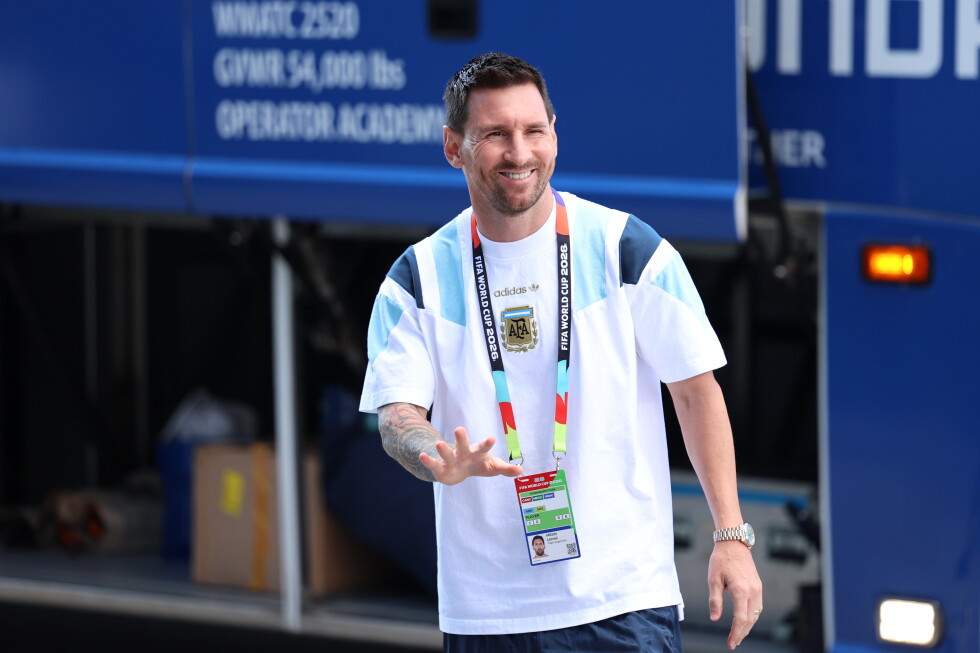
    The 2026 FIFA World Cup has already delivered its most dramatic contest, a clash that will be remembered as one of the tournament’s greatest underdog comebacks, as an aging but indefatigable Lionel Messi steered defending champions Argentina to a stunning 3-2 victory over Egypt at Atlanta Stadium. When the final whistle blew, the football icon stood center pitch, overcome with tears, collapsing into the arms of his teammates after scripting another legendary chapter in his already unparalleled career.

    With less than 20 minutes remaining on the clock, giant screens inside the stadium captured a look of uncharacteristic despair on Messi’s face. Egypt held a comfortable 2-0 lead, and elimination seemed all but certain for Argentina – a fate that would have mirrored the emotional World Cup exit endured by Messi’s contemporary Cristiano Ronaldo just days earlier, when Portugal fell to Spain in stoppage time. But this Argentina side, forged in the fire of championship glory, refused to accept defeat. Over a staggering 14 minutes, they rattled off three unanswered goals to pull off one of the most remarkable turnarounds in World Cup history.

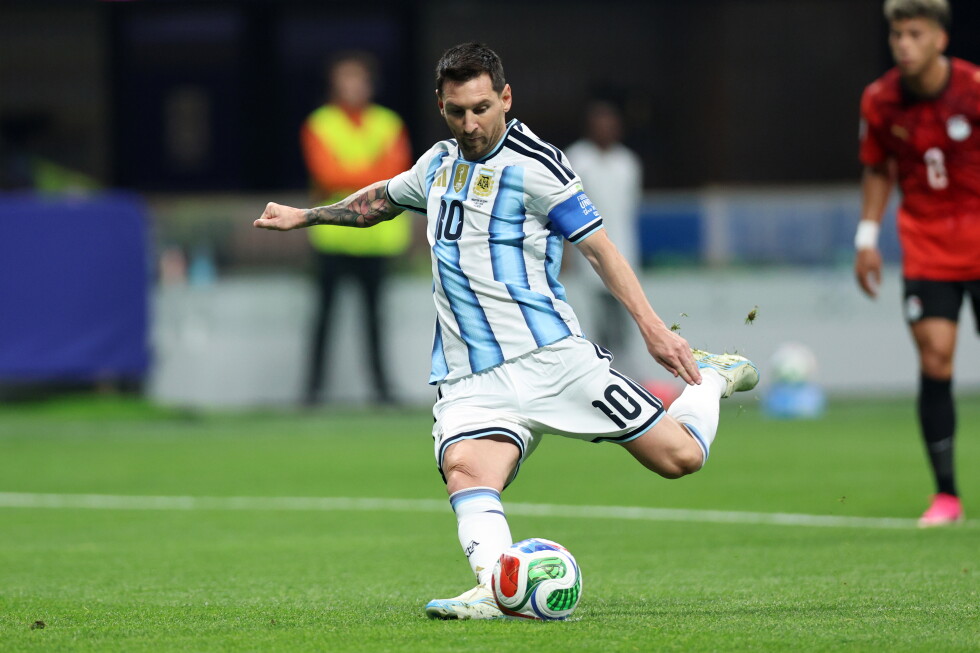
    At 39, Messi no longer dominates matches with the blistering pace that defined his peak. He conserves his energy, picks his moments, and relies on the razor-sharp footballing intelligence that has made him a generational talent. Even when his penalty was saved by Egypt’s inspired goalkeeper Mostafa Shobeir in the first half – marking the second penalty miss of this tournament for Messi, making him the only player in World Cup history to miss two non-shootout penalties in a single edition – the legend never wavered.

    Egypt had put in a near-perfect performance to that point. Yasser Ibrahim opened the scoring in the first half, and Mostafa Zico doubled their advantage after an earlier goal was disallowed by VAR for a foul far from the attacking box. Shobeir’s heroic stop from the spot kept Argentina off the board, and Egypt was on the cusp of pulling off one of the tournament’s biggest upsets.

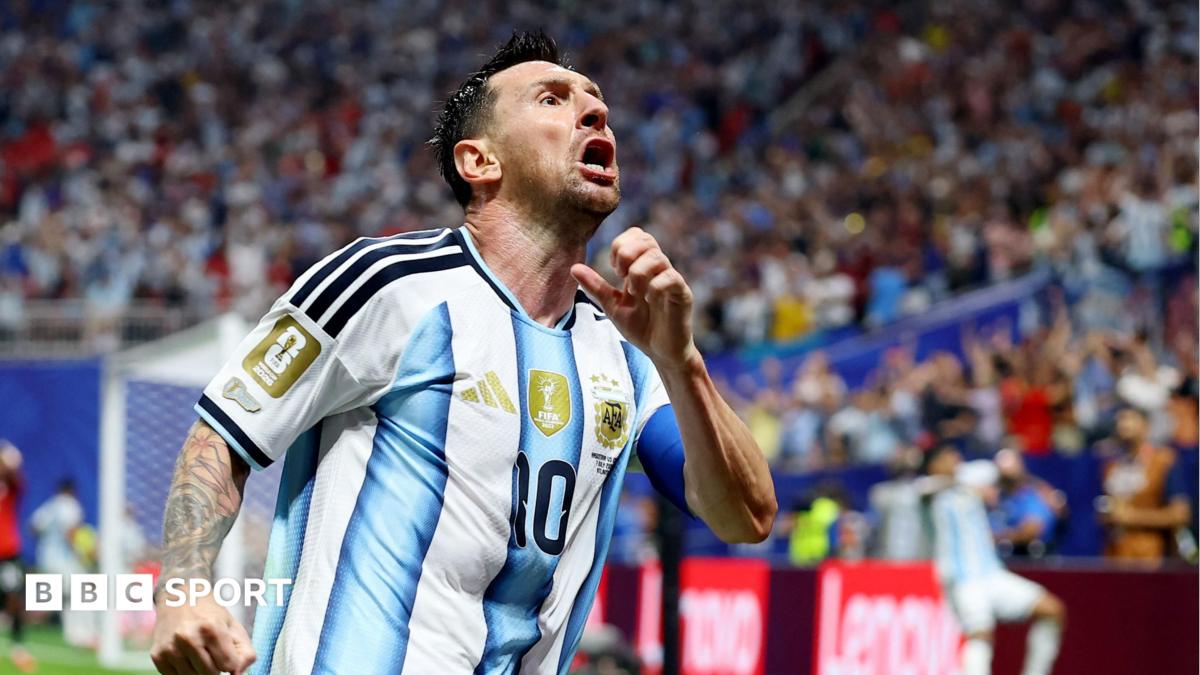
    That all changed with 11 minutes left on the clock. Messi delivered a pinpoint cross that Cristiano Romero nodded home, giving Argentina a flicker of hope. Just over four minutes later, Messi struck a blistering left-footed shot that cannoned off the crossbar and past Shobeir to level the score. In stoppage time, Enzo Fernandez headed home the winning goal, breaking Egyptian hearts and sending Argentina through to the quarter-finals.

    In the chaotic celebrations that followed, Messi’s teammates lifted their talisman high above their heads, while jubilant Argentine fans stayed in the stands long after the final whistle, singing their team’s anthems to a thundering drumbeat. That collective sacrifice from the side, the hard work off the ball and the willingness to play to their captain’s strengths, has been the backbone of Argentina’s run. As former England goalkeeper Paul Robinson, commentating for BBC Radio 5 Live, put it: “That was incredible. Spectacular. Argentina were down and out. They were out of the tournament at one point. Egypt are so frustrated with the refereeing decisions that have gone against them… Then Lionel Messi just stepped in and took over. Beautiful assist, great finish for his goal, and then the substitutions worked for Argentina.”

    The result also reshapes the tournament path for England, who had been gearing up for a potential semi-final clash with Egypt if the underdogs held on. Instead, England now faces the prospect of a meeting with Messi and Argentina in the semi-finals, should they get past Norway in the quarter-finals. Even at 39, Messi casts an intimidating shadow over any opponent, as Egypt learned the hard way.

    This tournament has already cemented another set of historic milestones for Messi. He became the first player in World Cup history to score in six consecutive knockout matches, and currently sits on eight goals at this 2026 tournament – the highest tally by any player through the first five matches of a World Cup since Gerd Muller scored 10 for West Germany at the 1970 Mexico edition. Across his last nine World Cup outings, Messi has now contributed directly to 16 goals: 13 goals and three assists, a run of form that has England bracing for a potential high-stakes meeting with the legend.

    Head coach Lionel Scaloni’s side are far from a one-man team, however. They blend attacking flair with defensive steel, anchored by a refusal to accept defeat that carried them through a 3-2 scare against Cape Verde in the knockout round opener. Statistics underscore just how unlikely this comeback was: Opta data gave Argentina just a 0.6% win probability when Romero scored their opening goal, making this the latest any side has come from two goals down to win a 90-minute World Cup match in tournament history.

    Amid a tournament already packed with dramatic contests, including England’s 3-2 thriller against Mexico at the Azteca, this matchup between Argentina and Egypt has emerged as the frontrunner for the best game of the 2026 World Cup so far. For Messi, the tears after the final whistle were a reminder that even after more than two decades at the top of global football, the emotion of the World Cup still hits as hard as ever. Now, the champion prepares for his next challenge: a quarter-final clash against the winner of the Switzerland vs Colombia match, with history still within his reach.
  • ‘This is our sport, not theirs’: Klopp attacks Fifa chief over Balogun red card reversal

    ‘This is our sport, not theirs’: Klopp attacks Fifa chief over Balogun red card reversal

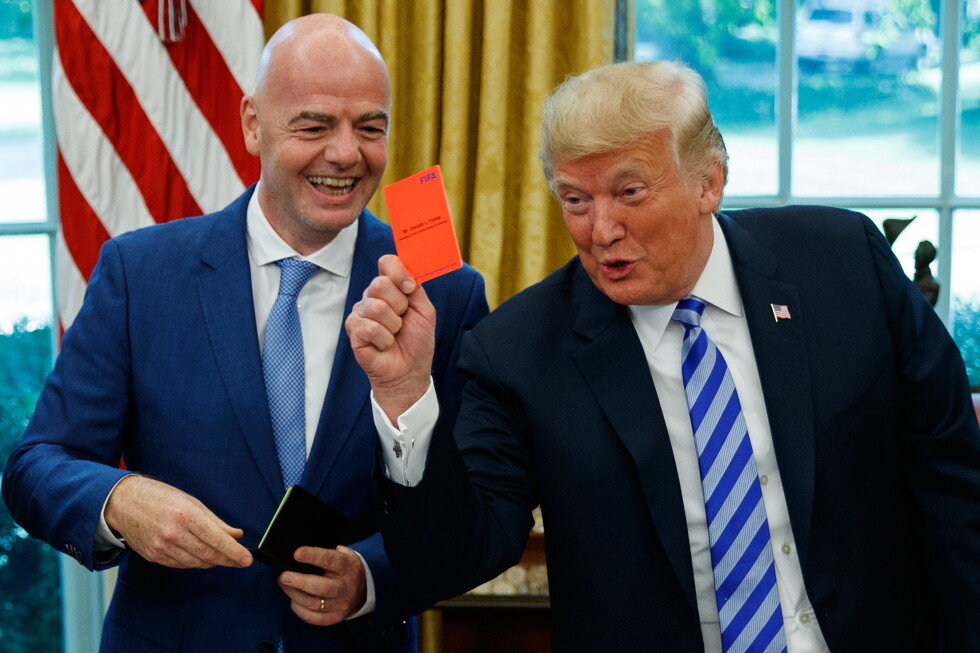
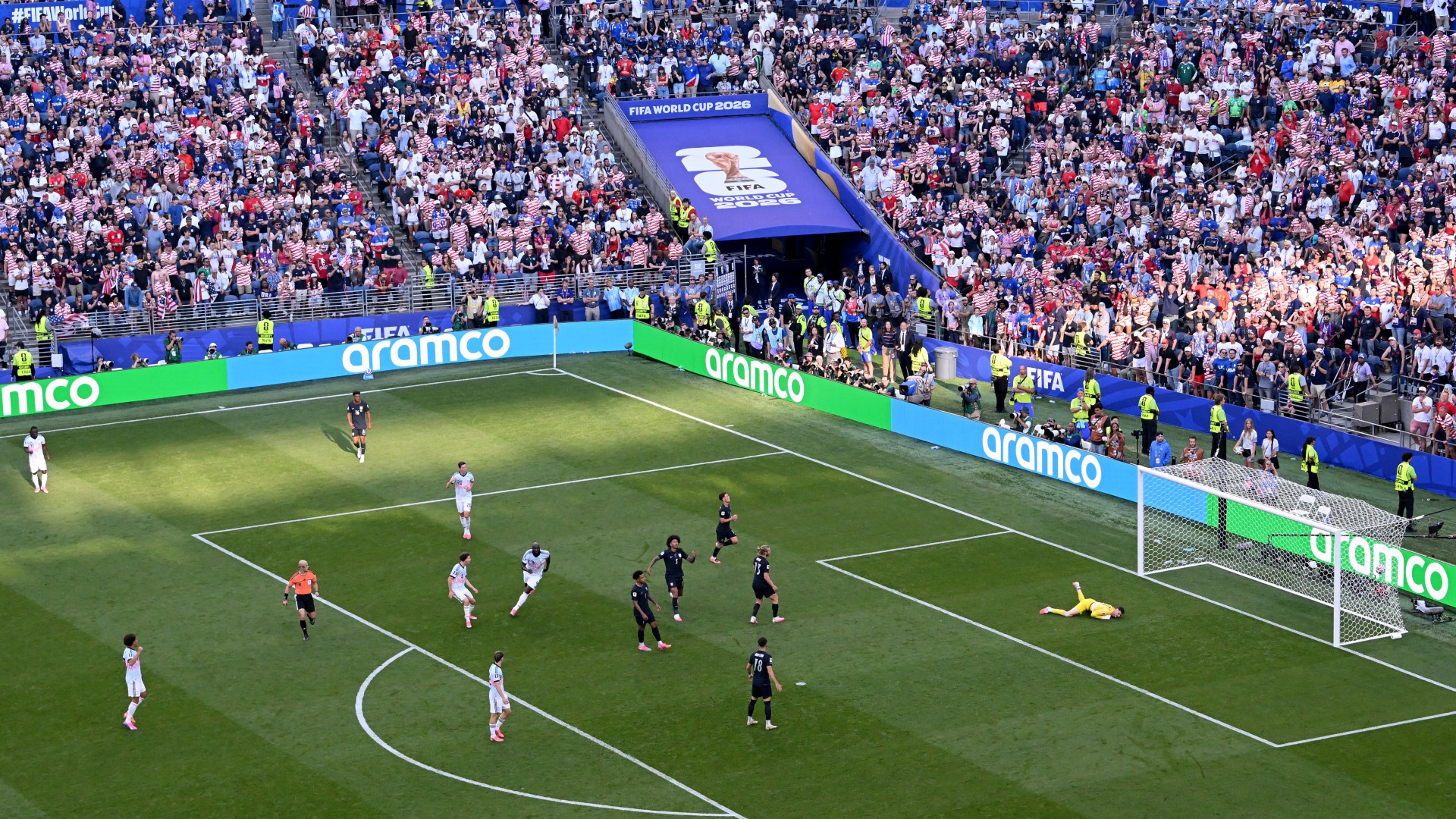
    A fiery global controversy has engulfed world football after global governing body FIFA overturned a red card issued to United States striker Folarin Balogun, a decision that came after former U.S. President Donald Trump personally lobbied FIFA President Gianni Infantino to revisit the call. The incident has sparked widespread condemnation from football figures, politicians and governing bodies, who warn the move has fatally undermined the sport’s core principle of impartial officiating.

    The controversy traces back to a recent qualifying match between the U.S. and Bosnia and Herzegovina, where referee Raphael Claus issued Balogun a straight red card for a collision with an opposing player. Per standard FIFA rules, a red card carries an automatic one-match suspension that would have ruled Balogun out of the U.S.’s next fixture against Belgium. That all changed when Trump confirmed on Monday he had directly called Infantino to demand a review of the red card, insisting the incident was not a foul at all.

    Speaking to reporters at the White House, Trump framed the call as a personal intervention rooted in his own self-described deep understanding of sport. “That wasn’t even an infraction, that was two guys running full speed that happened to crash into each other,” Trump said, before launching a personal attack on Claus, calling the referee “very suspect” and hinting at unspecified questionable past conduct. He also praised Infantino, claiming the FIFA chief’s respect had grown “tenfold” following their interaction.

    Behind the scenes, the lobbying effort was far broader than a single presidential phone call, reporting from Politico reveals: White House FIFA World Cup Task Force executive director Andrew Giuliani, U.S. Commerce Secretary Howard Lutnick, and senior United States Soccer Federation officials spent four days organizing and lobbying to overturn the suspension. On Sunday, FIFA stunned the global sports community by reversing the red card, replacing it with a one-year probationary period, by invoking Article 27 of the FIFA disciplinary code – a provision that is almost never used in practice. Balogun was cleared to start against Belgium on Monday, though he turned in an underwhelming performance as Belgium secured a comfortable 4-1 victory.

    Infantino has pushed back against claims of political interference, insisting the decision was made independently by FIFA’s judicial bodies and not as a result of his conversation with Trump. “During our conversation, I explained that there was an ongoing legal process involving Fifa’s independent judicial bodies and that the case would be decided in due course by the competent bodies,” Infantino said. “That is how Fifa’s system works, and it is a principle that I will always uphold.”

    That explanation has done little to quiet widespread outrage. Former Liverpool manager Jürgen Klopp, one of the most respected figures in top club football, delivered a rare public rebuke of Infantino in response to the debacle. “This is our sport, not theirs,” Klopp said. “If Donald Trump and Gianni Infantino really sorted this out between themselves, it is madness. It calls everything into question.”

    FIFA’s chief of referees, Pierluigi Collina, rushed to defend Claus, the referee at the center of Trump’s attack, calling him an “experienced and highly respected” official and confirming FIFA retains full confidence in his work. The South American Football Confederation echoed that defense in an official statement.

    The backlash has extended to political circles in the United Kingdom, where multiple senior politicians have called for Infantino’s immediate resignation. Clive Betts, chair of the UK Parliament’s all-party group for football and a member of the ruling Labour Party, said: “The first thing they’ve got to do is explain their decision and if it literally was just a phone call from Trump then I’m sorry, but I think he has to resign or Fifa has to sack him if he won’t.” Ed Davey, leader of the UK Liberal Democrats, added: “No matter where it’s held, the World Cup belongs to the fans – not gangsters like Trump.” Former British sports minister Gerry Sutcliffe called the situation “appalling”, saying: “This clearly is an appalling situation where politicians and sport executives have ruined the integrity of the game. Infantino should resign immediately and Fifa should hold an immediate inquiry. President Trump admits contacting Infantino.”

    Even disgraced former FIFA president Sepp Blatter, who was banned from FIFA activities in 2015 over a widespread corruption scandal, joined the criticism. In a post on X, Blatter wrote: “Red cards are not overturned by political phone calls. They are overturned by rules, evidence and independent bodies. If a US President intervenes with the FIFA President – and a player is suddenly cleared before a World Cup knockout match – the question is unavoidable: Quo vadis [where are you going], FIFA?”

    European football’s governing body UEFA went a step further, saying the decision to reverse the red card “crossed a red line” in its own official statement. “Football, like any other sports, relies on rules, which are the basis for fair, honest and transparent competition. Sometimes rules are open to interpretation. In this case not,” the statement read. “A minimum automatic suspension of one match following a red card is not a discretionary option and does not require the decision of a competent body to be enacted.”

    The Belgian Football Association, which was directly impacted by the decision since it was set to face the U.S. with Balogun in the line-up, challenged Balogun’s eligibility to play before the match, noting it would leave “all further actions open” if FIFA allowed him to take the field. FIFA rejected Belgium’s appeal, ruling the association was not an interested party in the proceedings and rendering the challenge inadmissible. After the match, Belgian midfielder Nicolas Raskin said his squad had been unified by a “sense of injustice” over the off-pitch chaos, saying the team was determined to respond on the pitch. Responding to the controversy, after Romelu Lukaku scored Belgium’s fourth goal the team celebrated by performing the “Trump dance” that the former president popularized during his 2024 election campaign. The Belgian FA also posted a photo of Lukaku cupping his ear to Instagram with the caption “overturn this”, a thinly veiled jab at FIFA’s controversial decision.

  • IOC eases restrictions on Russians before 2028 LA Games as anthem, flag ban remains

    IOC eases restrictions on Russians before 2028 LA Games as anthem, flag ban remains

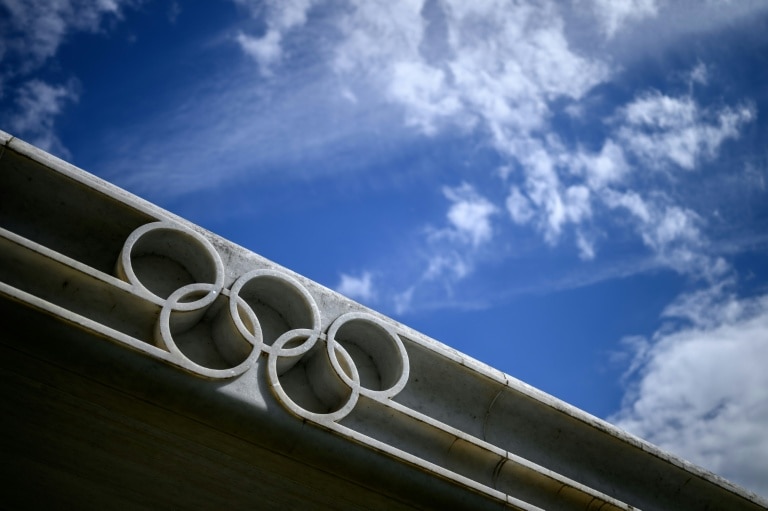
    More than four years after Russia launched its full-scale invasion of Ukraine, the International Olympic Committee (IOC) announced a landmark policy shift on Tuesday, rolling back some of the longstanding restrictions on Russian athletes to clear their path to compete in team events and qualifying tournaments for the 2028 Los Angeles Olympic Games.

    In remarks delivered during an IOC meeting in Lausanne, committee president Kirsty Coventry underscored the guiding principle behind the decision, noting that the governing body has long prioritized ensuring no athlete is penalized for the actions of their home government.

    While the IOC opened the door to expanded participation, it opted to retain the existing ban on the Russian national anthem and national flag for the time being. The committee also added a strict new stipulation: any Russian athlete seeking to return to international competition must pass multiple anti-doping screenings before being cleared to take part, a measure designed to address lingering distrust stemming from Russia’s decades-long history of state-sponsored doping programs.

    The announcement drew immediate pushback from Ukraine, whose own Olympic committee condemned the IOC’s move as premature and unfounded amid the ongoing war that has now stretched into its fifth year. In an official statement, Ukraine’s NOC emphasized that Russia’s full-scale armed aggression against Ukraine remains ongoing, with Russia continuing to violate core principles of international law, peace and global security, making the IOC’s decision out of step with current realities.

    Under the framework of new rules laid out by the IOC, individual international sports federations retain the autonomy to decide whether to allow the display of the Russian flag and performance of the anthem at their own standalone events, as well as whether to host competitions on Russian territory. For the 2028 LA Games themselves, which are still two years away, the IOC said it will revisit the question of flags, anthems and national identifiers at a later, more appropriate date.

    Russia, for its part, welcomed the IOC’s adjusted policy. In a post on the messaging platform Telegram, Russian Sports Minister Mikhail Degtyarev framed the decision as a clear signal that the global Olympic movement should remain free from political interference, adding that Russia is fully prepared to send athletes to compete in the Los Angeles qualifying process. Notably, Russia’s reintegration remains more restricted than that of Belarus, which the IOC readmitted fully in early May without any curbs on its national anthem or national symbols.

    The original restrictions on the Russian Olympic Committee (ROC) were first imposed in October 2023, 18 months after the invasion of Ukraine, after the ROC moved to absorb sports governing bodies from Ukrainian territories annexed by Russia. In its latest statement, the IOC confirmed that the ROC has now committed that it will not conduct any activities in those disputed territories now or in the future, and the committee will maintain close ongoing monitoring of the situation to ensure compliance.

    Despite the IOC’s policy shift, the global sports community remains deeply divided on the question of Russian athlete participation. IOC Sports Director Pierre Ducrey acknowledged this split, noting that reintegration will unfold across a “fractured landscape” with different rules applying to different sports.

    For example, World Athletics, the global governing body for track and field, reaffirmed its hardline stance just days before the IOC announcement, maintaining a total ban on all Russian and Belarusian athletes, citing the absence of any tangible progress toward peace negotiations between the two countries. By contrast, the international governing bodies for judo and swimming already moved to fully reinstate Russian and Belarusian athletes last November and April respectively, following the lead of the International Paralympic Committee, which approved full participation for the 2026 Milan-Cortina Winter Games.

    Russia’s suspension from full Olympic participation actually predates the 2022 invasion. The country has been barred from competing under its own national colors and symbols since 2016, when the first revelations of a widespread state-run doping program emerged. Just weeks after the conclusion of the 2022 Beijing Winter Olympics, Russia’s invasion of Ukraine, backed by Belarus, triggered a new wave of sweeping sports sanctions that expanded existing restrictions.

    After a period of full exclusion following the invasion, the IOC began a gradual process of reintegration starting in March 2023, allowing Russian athletes to compete as neutral individuals under strict conditions, but barring them from all team events for the 2024 Paris Olympics and 2026 Milan-Cortina Games. For months leading up to Tuesday’s announcement, Coventry had publicly signaled support for broader reintegration, repeatedly emphasizing that sport should remain a neutral space where all athletes can compete freely regardless of the political divisions of their governments.

    This principle was formally codified into the Olympic Charter during the IOC’s 142nd session in Lausanne in late June, which explicitly enshrined the organization’s mandate to maintain neutrality at all times, free from pressure from national governments, cultural divides, societal differences or economic interests. As a further step toward reintegration, the IOC Executive Board already recommended last December that Russian and Belarusian junior athletes be allowed to return to junior competition, including team events, competing under their own national flags and anthems.

  • Lionel Messi scores his eighth goal of this year’s World Cup, takes lead in Golden Boot race

    Lionel Messi scores his eighth goal of this year’s World Cup, takes lead in Golden Boot race

    ATLANTA — When the final whistle blew at Mercedes-Benz Stadium on Tuesday, Lionel Messi could no longer hold back his emotions. Tears streamed down the Argentina captain’s face, capping off one of the most dramatic comeback wins in recent World Cup history: his side roared back from a two-goal deficit to beat Egypt 3-2, punching their ticket to the tournament’s quarterfinal round.

    All three of Argentina’s winning goals came in the final 11 minutes of regulation plus stoppage time, and Messi was directly involved in two of the decisive strikes. In the 79th minute, the captain set up Cristian Romero’s game-opening header with a pinpoint assist that put Argentina on the board. Just four minutes later, he slotted a powerful shot past Egypt goalkeeper Mostafa Shobeir to level the score at 2-2, shifting the entire momentum of the match.

    Inside the sold-out Atlanta stadium, where the stands were flooded with Argentina’s iconic light blue and white stripes from the opening kickoff, the crowd exploded into celebration after Messi’s equalizer. For the Argentina squad, seeing their leader step up to rescue the match was nothing short of expected.

    “Watching Leo push himself harder every single day, running the way he does for this team — I told him after the match that he deserved this moment,” Argentina forward Lautaro Martínez told reporters after the win. “He is our role model, our guide, the player that lifts us up at every turn. This team never quits, we keep fighting until the final second, and that spirit starts with him.”

    Messi’s 79th-minute strike marked his eighth goal of this year’s World Cup, pushing him to the top of the tightly contested Golden Boot race, awarded to the tournament’s top goalscorer. The goal also extended a historic record: he has now scored in nine consecutive World Cup matches dating back to Argentina’s 2022 title run in Qatar. Across that nine-game stretch, Messi has found the back of the net 13 times.

    Heading into Tuesday’s match, Messi had entered tied with France’s Kylian Mbappé and Norway’s Erling Haaland on seven goals apiece, with Mbappé holding a tiebreaker advantage thanks to his two extra assists. England’s Harry Kane also remained in contention heading into the final group stage matches with six goals. The late brace against Egypt now gives Messi a two-goal lead over Mbappé on the all-time World Cup career scoring leaderboard as well.

    This isn’t the first time Messi has stolen the show on the World Cup stage: he finished second in the 2022 Golden Boot race behind Mbappé that year, notching seven goals while leading Argentina to their third World Cup title. He also tied for third in the 2014 race in Brazil with four goals. Even so, his performance this tournament has stood out even for a player of his already legendary caliber.

    Teammate Julián Álvarez says Messi’s impact on Argentina’s 2024 World Cup run is almost impossible to put into words. “There are truly no words to describe what Leo is doing at this tournament,” Álvarez said. “What he has accomplished is incredible, and all we can do as teammates is support him, help him where we can, and cherish every minute we get to play alongside him. We are so grateful for everything he does for this squad, and for the person he is.”

    Whether he holds onto his lead and claims his first career Golden Boot or not, Messi’s standing as one of the greatest players to ever step onto the pitch is already secure, according to his teammates. “He is a legend,” Álvarez said simply. “The greatest in history.”

  • Former Bucknell University football coach charged in hazing death of player

    Former Bucknell University football coach charged in hazing death of player

    A devastating tragedy that unfolded on a Pennsylvania college football practice field two years ago has led to criminal charges against a former Bucknell University strength and conditioning coach, shining a harsh new spotlight on the persistent dangers of hazing in collegiate athletics. Mark Kulbis, the former coach at the center of the case, faces felony charges of aggravated hazing alongside misdemeanor counts of involuntary manslaughter, according to announcements from the Pennsylvania Attorney General’s Office. The charges stem from the death of 18-year-old freshman player Calvin “CJ” Dickey Jr., who collapsed mid-practice in July 2024 and died two days later in a local hospital. Prosecutors lay out a damning narrative: Kulbis knowingly subjected Dickey to extreme, punishing hazing on the first day of freshman practice, even after being explicitly informed of the player’s pre-existing Sickle Cell trait, a genetic condition that puts carriers at severe risk of life-threatening complications during intense physical exertion. Per the investigation, Kulbis forced Dickey and other first-year players to complete 100 grueling “up-down” conditioning drills, followed by extended full-body planks—a regimen that prosecutors characterize as a deliberate hazing ritual, not a standard training practice. As the workout wore on, Dickey’s body began to fail under the strain. He lost consciousness on the practice field, and despite emergency medical intervention, he died on July 12. An official autopsy confirmed the cause of death was a combination of the extreme physical activity, Dickey’s Sickle Cell trait, and exertional rhabdomyolysis, a dangerous condition that causes rapid muscle breakdown when the body is pushed far past its safe limits. In their official statement, the attorney general’s office emphasized that this tragedy was entirely preventable. “The facts show this defendant received information about C.J.’s health condition, along with training about NCAA anti-hazing standards, and disregarded that information,” the office said. “This is an extraordinary tragedy, worsened by the fact that C.J.’s death was preventable.” Sickle Cell trait, a common genetic blood disorder, is widely documented to leave carriers vulnerable to life-threatening complications during strenuous exercise, a risk that collegiate athletic programs are trained to account for. The legal context of this case carries extra weight: Pennsylvania adopted its current felony-level anti-hazing law in 2017, following the death of 19-year-old Penn State University student Tim Piazza, who died after a brutal fraternity hazing incident. Kulbis’s defense team has pushed back vigorously against all charges. In a statement provided to the BBC, defense attorney Barbara Zemlock called Dickey’s death an unimaginable tragedy, but insisted her client bore no responsibility for the outcome. “The strength and conditioning program that was implemented was appropriate and in accordance with the training that Mr. Kulbis received, and with applicable standards,” Zemlock said. Long before criminal charges were filed, Dickey’s family launched a wrongful death civil lawsuit against Bucknell University and the entire coaching staff, including Kulbis. In their court filing, the family’s legal team reiterated what prosecutors now confirm: the 18-year-old’s death was entirely avoidable. “If Defendants had followed well-established, well-known practices to protect athletes who have sickle cell trait, CJ would still be alive today,” the family’s legal team wrote. The case has reignited national conversations about the enforcement of anti-hazing policies in college sports and the responsibility of coaching staff to prioritize athlete health over traditional, dangerous initiation rituals.

  • EU lawmakers call for probe of FIFA boss over Trump contact before US-Belgium match

    EU lawmakers call for probe of FIFA boss over Trump contact before US-Belgium match

    BRUSSELS — A growing coalition of European legislators has rallied behind a formal push to launch an official inquiry within the European Parliament into Gianni Infantino, the president of global soccer governing body FIFA, over his role in the controversial reversal of a suspension for United States men’s national team forward Folarin Balogun.

    The controversy traces back to a July 1 friendly match between the U.S. and Bosnia-Herzegovina, where Balogun received a straight red card before the U.S. secured a win. Under standard FIFA competition rules, a red card suspension automatically forces a player to sit out his team’s next scheduled match. But just days after the red card was issued, the suspension was lifted ahead of the United States’ next fixture on Monday, following reported direct intervention by former U.S. President Donald Trump, who personally appealed to Infantino to clear Balogun to play.

    Three European Parliament members — Barry Andrews, Lara Wolters, and Niels Fuglsang — leading the inquiry effort have issued a scathing joint statement condemning FIFA’s decision, calling it “a disgrace and a perversion of justice” to alter red card suspension rules in the middle of an international match window to accommodate political pressure. “Once again, we’ve seen Infantino and FIFA surrender to the demands of the Trump administration,” the statement added.

    As of this week, 35 additional European Parliament members have added their signatures to the letter calling for the inquiry. The legislators are also urging national soccer federations across all European Union member states to pressure FIFA’s independent Ethics Committee to open a broader probe. The investigation would specifically examine whether political pressure from the Trump administration directly influenced the decision to lift Balogun’s suspension, as well as probe other alleged violations of FIFA’s commitment to political neutrality — including the controversial 2021 decision to award Trump the FIFA Peace Prize.

    FIFA has pushed back against the allegations, asserting that the decision to lift the suspension was made exclusively by its internal disciplinary committee, with no outside political influence. The legislators, however, reject that explanation, arguing that core principles of fair play depend on consistent, impartial rule application across the sport. “The beauty of sport is that it is based on impartial and transparent rules. When Infantino allows political pressure to determine who gets to play, this sense of fairness goes out the window,” the legislators wrote in their joint statement.

  • Gauff beats Pegula to reach first Wimbledon semi-final

    Gauff beats Pegula to reach first Wimbledon semi-final

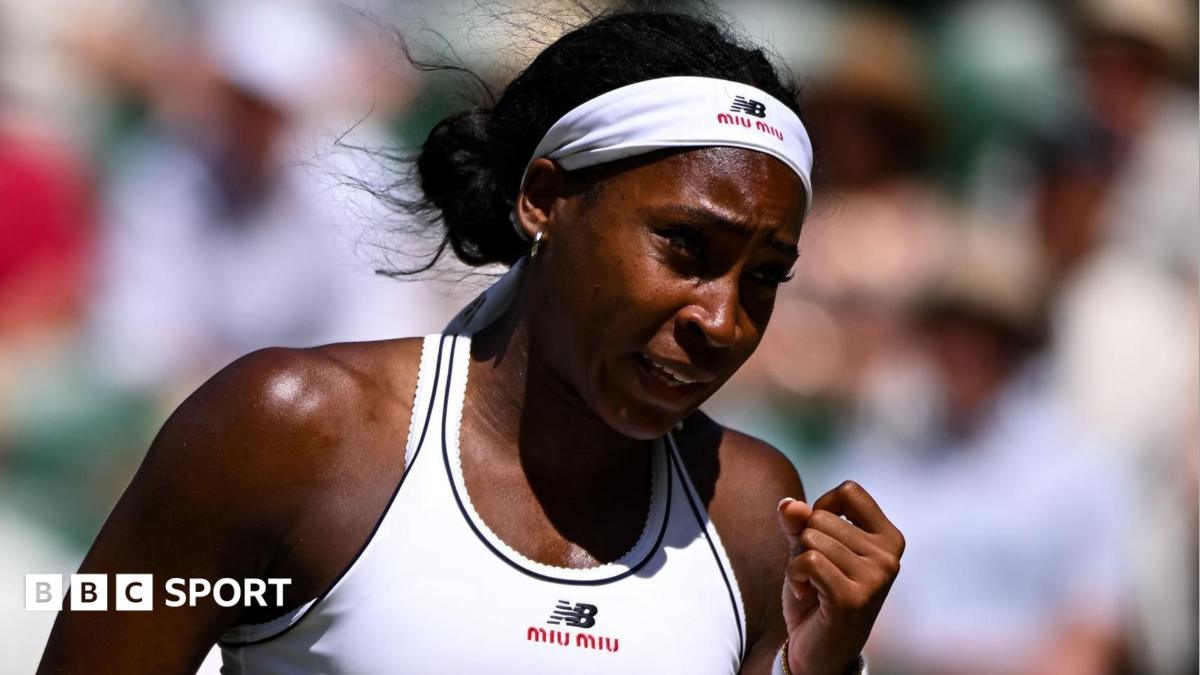
    One of tennis’s brightest rising stars has written a new chapter of her Grand Slam story at the All England Club, as 22-year-old Coco Gauff pulled off a thrilling comeback against world No. 4 Jessica Pegula to advance to her first ever Wimbledon semi-final on Tuesday.

    A two-time Grand Slam singles champion already with the 2023 US Open and 2025 French Open titles to her name, Gauff arrived at SW19 with unfulfilled potential on grass. She had never advanced past the tournament’s fourth round, and suffered a disappointing first-round exit 12 months ago. Few expected her to go deep into the draw this year, a doubt Gauff herself acknowledged after her historic win.

    Facing the highest-ranked player remaining in the women’s singles draw, Gauff got off to a shaky start. A rash of unforced errors and four double faults left her dropping the opening set 4-6, with Pegula looking on course to secure a straight-sets victory. But the young American dug deep, just as she had done throughout the entire tournament to reach this stage. Pegula had squandered three early break point chances in the second set, and Gauff seized the momentum shift, breaking Pegula to love in a pivotal game before holding firm from 0-30 down on her own serve to close out the second set 6-3 and level the match.

    The final set stayed tightly contested, but it was Gauff who lifted her game when it mattered most. After Pegula broke back to level the set, Gauff responded immediately to reclaim the lead at 4-3, then closed out the win on Pegula’s serve at her first match point. The 6-3 final set score locks in Gauff’s place in the final four, capping an unprecedented run to this stage: she is now the first woman in 30 years to reach a Grand Slam semi-final with four consecutive three-set wins, and the youngest player to have made the semi-finals of all four majors since Maria Sharapova achieved the same milestone at the 2007 French Open.

    Speaking to reporters after the match, Gauff joked about the low expectations surrounding her run, saying: “I think a lot of people had me going out in the first or second round this tournament. After seven years playing in this tournament, it is the first time I’ve walked onto Centre Court and not felt nervous. So I don’t know – am I becoming a veteran already?”

    In the day’s other quarter-final clash, Czech 10th seed Karolina Muchova ended former world No. 1 Naomi Osaka’s impressive tournament run with a 7-6 (7-4), 6-4 victory on Court One. Muchova, who fell at the quarter-final stage in both 2019 and 2021, will also make her first ever Wimbledon semi-final appearance, where she will face Gauff for a spot in Saturday’s women’s singles final.

    For Pegula, the defeat extends her long wait for a first ever Grand Slam singles title, with the result likely to leave her reflecting on the early opportunities she failed to convert against the in-form young champion.

  • Sinner eyes Djokovic showdown after moving into Wimbledon semis

    Sinner eyes Djokovic showdown after moving into Wimbledon semis

    Wimbledon’s 2025 quarterfinal round delivered two dramatic victories on Tuesday, as defending men’s champion Jannik Sinner and rising American star Coco Gauff booked their spots in the tournament’s final four, setting the stage for potentially historic showdowns in the coming days.

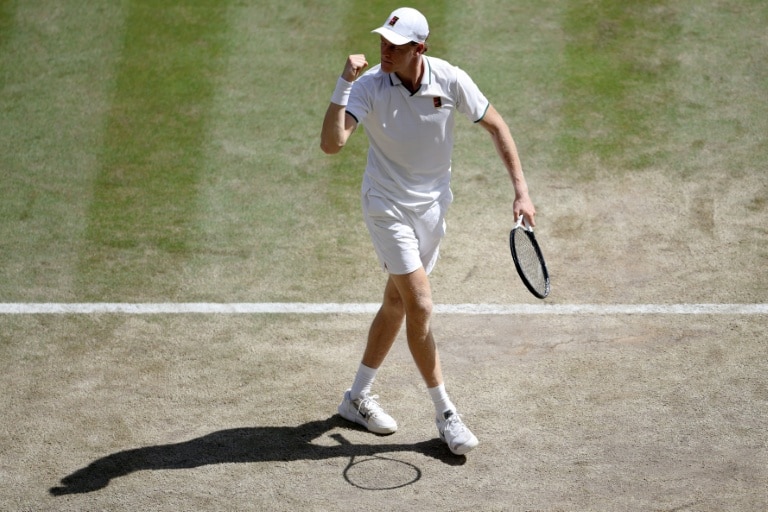
    World number one Sinner navigated both a tricky opponent and a punishing London heatwave to end 36-year-old German Jan-Lennard Struff’s Cinderella run, clinching a 7-5, 7-6(7/4), 6-3 victory on Court One. Struff’s run to the quarterfinals already made history: he is the oldest first-time major quarterfinalist in the Open Era. But Sinner, a four-time Grand Slam champion, relied on his powerful serve to keep the world number 74 under control, securing his 10th Grand Slam semifinal appearance and third trip to the Wimbledon last four.

    The result puts Sinner one step away from a highly anticipated semifinal clash with seven-time Wimbledon champion Novak Djokovic, who faces Canada’s Felix Auger-Aliassime in a later Tuesday quarterfinal. For Sinner, the win also silenced pre-match questions about his heat endurance, a weakness that derailed his French Open campaign earlier this year. At Roland Garros, he collapsed from physical fatigue after holding a two-set and 5-1 lead over Argentina’s Juan Manuel Cerundolo, suffering a stunning second-round exit. Speaking after his win over Struff, Sinner confirmed his team had reworked his preparation to address that shortcoming. “It was a huge test today. I felt comfortable on the physical side, a good step forwards,” he said. “We worked a lot after Paris trying to understand what went wrong and prepared in the best possible way.”

    For Djokovic, a win over Auger-Aliassime would mark a series of historic milestones. The 39-year-old Serb is chasing a record-tying eighth Wimbledon singles title that would also give him a record 25th Grand Slam crown, making him the oldest men’s Grand Slam champion of the Open Era. A victory would also push him into a record-extending 15th Wimbledon semifinal and 55th major semifinal overall, as well as an eighth consecutive trip to the All England Club’s last four — a new record for the longest streak of men’s singles semifinal appearances in Wimbledon history.

    In the women’s draw, Gauff fought back from an opening set loss to defeat fellow American Jessica Pegula 4-6, 6-3, 6-3, booking her first ever Wimbledon semifinal spot in an all-American clash on Centre Court. The seventh-seeded 20-year-old, a two-time Grand Slam champion, was competing in her first Wimbledon quarterfinal, and got off to a sluggish start, allowing 32-year-old fourth seed Pegula to take the first set. But Gauff shifted gears quickly, seizing momentum in the second set and closing out the win in the third to advance.

    The milestone caps a remarkable career arc for Gauff, who made history seven years ago as the youngest player to qualify for the Wimbledon main draw at 15, famously beating Venus Williams in her debut. Now, she is just two wins away from claiming the most prestigious title in tennis, and already has made history as the youngest player to reach the semifinals of all four Grand Slams since Maria Sharapova achieved the feat in 2007. It is also Gauff’s first Grand Slam semifinal appearance since she won the 2024 French Open. “Considering I hadn’t won a match in two years on grass before this tournament, I’m really happy with how I played today,” Gauff said. She will next face either Japanese four-time Grand Slam champion Naomi Osaka or Czech 10th seed Karolina Muchova, whose quarterfinal is scheduled for later Tuesday.

    Osaka, 28, is enjoying a career resurgence at this year’s Wimbledon, five years after her last Grand Slam title. While she has claimed two Australian Open and two US Open crowns, she had never found success at the All England Club until this tournament, where she pulled off a stunning fourth-round upset over world number one Aryna Sabalenka to reach her first Wimbledon quarterfinal. A fan favorite throughout the event for her bold, eye-catching entrance outfits, Osaka is now aiming to back up the off-court attention with a deep run in the draw. Muchova, a 29-year-old former French Open finalist, is also vying for her first Wimbledon semifinal spot.

    In other delayed action on Tuesday, 2024 French Open champion Alexander Zverev returned to finish his suspended third-round match against Czech player Jiri Lehecka. The match was called off at the 2200 GMT curfew on Monday evening, with Zverev holding a two-set lead.

  • Alvarez one of three changes for Messi-led Argentina against Egypt at the World Cup

    Alvarez one of three changes for Messi-led Argentina against Egypt at the World Cup

    ATLANTA — The 2026 FIFA World Cup round of 16 is set to deliver a high-stakes showdown between defending champion Argentina and historic underdog Egypt, with both teams announcing key starting lineup shifts ahead of Tuesday’s match. Argentine head coach Lionel Scaloni made three notable changes to his side, headlined by recalling Atletico Madrid striker Julian Alvarez to the starting frontline in place of Lautaro Martinez. Scaloni also swapped in left-back Nicolas Tagliafico and midfielder Leandro Paredes into the starting XI to shore up the side ahead of the knockout round test.

    On Egypt’s side, manager also adjusted his lineup, opting to bench Manchester City forward Omar Marmoush in favor of starting winger Haissem Hassan. Midfielder Mohanad Lashin reclaimed his spot in the starting group after serving a one-match suspension, returning to add defensive stability and distribution to the Pharaohs’ midfield.

    This knockout match carries historic stakes for both sides. Argentina enters the contest chasing a unique place in World Cup folklore: if Lionel Scaloni’s side can lift the trophy for a second consecutive tournament, they will become the first nation to win back-to-back World Cup titles since Brazil achieved the feat in 1958 and 1962. The defending champions already faced a major test in the round of 32, getting an unexpected scare from Cape Verde, an underdog ranked far lower in the global standings. Argentina ultimately scraped through with a 3-2 extra time win, but the tight contest proved that even the tournament favorites can be pushed to the limit by determined lower-ranked sides.

    For Egypt, this match already marks a watershed moment in the nation’s World Cup history. This is the first time Egypt has advanced past the group stage in five total World Cup appearances, having fallen at the first hurdle in each of its four previous campaigns. Led by star forward Mohamed Salah, the African side will look to add another chapter to its historic run by upsetting the defending champions and advancing to the quarterfinals.

    Full starting lineups for the match are as follows:
    – Argentina: E. Martinez; Molina, Romero, L. Martinez, Tagliafico; De Paul, Mac Allister, Paredes, Fernandez; Messi, Alvarez
    – Egypt: Shobeir; Hany, Ibrahim, Rabia, Hafez; Ashour, Attia, Lashin, Hassan; Salah, Zico

    Reporting by James Robson, additional coverage from the Associated Press.

  • Rodri sorry after World Cup spat with longtime Man City teammate Bernardo Silva

    Rodri sorry after World Cup spat with longtime Man City teammate Bernardo Silva

    ARLINGTON, Texas — Moments after a tense, high-stakes World Cup round-of-16 clash that saw Spain edge out Portugal 1-0 to secure a quarterfinal spot, 2024 Ballon d’Or winner Rodri has opened up about a heated in-game exchange with his former Manchester City teammate Bernardo Silva, admitting his on-field celebration was out of line.

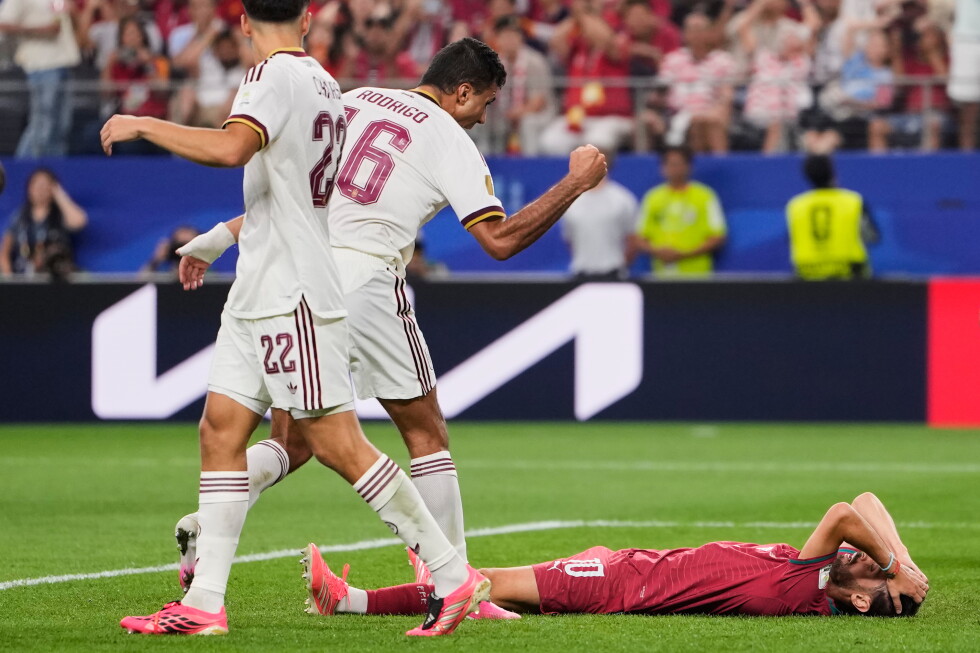
    The match, held on Monday, remained deadlocked until Spain secured a winning lead, holding onto the narrow advantage through 90 minutes of regular play. Deep into six minutes of stoppage time, Silva — who this summer left Manchester City after his contract expired to join Real Madrid — had a golden late opportunity to level the score and send the game to extra time. The Portuguese playmaker’s header, however, sailed over the crossbar, leaving him crumpled on the pitch with his head buried in his hands, devastated by the missed chance.

    In the heat of the moment, Rodri, Spain’s starting midfielder, approached the downed Silva and raised a clenched fist in a provocative, celebratory gesture. The reaction from Silva was immediate: he stood up, brushed past Rodri’s outstretched arm, and confronted the Spain international directly, pointing squarely at his face to express his anger.

    The two midfielders know each other well, having lined up together in Manchester City’s central midfield from 2019 until Silva’s summer departure. In post-match comments to reporters, Rodri made clear he regretted the split-second decision, saying he had already apologized directly to Silva after the final whistle.

    “I made a mistake, because I celebrated when he had missed,” Rodri told the press. “I apologized to him immediately. But that’s all, because of the trust we have.”

    The result sends Portugal packing from the 2026 World Cup, while Spain moves forward to face Belgium in the upcoming quarterfinal match.