
BANGKOK – Nearly five months after a projectile strike on a Thai cargo vessel in the politically charged Strait of Hormuz left three crew members dead, three surviving former crew have launched legal action against the ship’s operator over alleged labor rights abuses and wrongful early termination of their contracts. The incident, which unfolded on March 11 north of Oman, targeted the cargo ship *Mayuree Naree*, claiming three lives and leaving the remaining 20 crew rescued and repatriated to Thailand just seven days after the attack. The fatal strike came amid escalating cross-fire between the United States and Iran that has upended security in one of the world’s most critical global energy shipping corridors.
分类: society
-
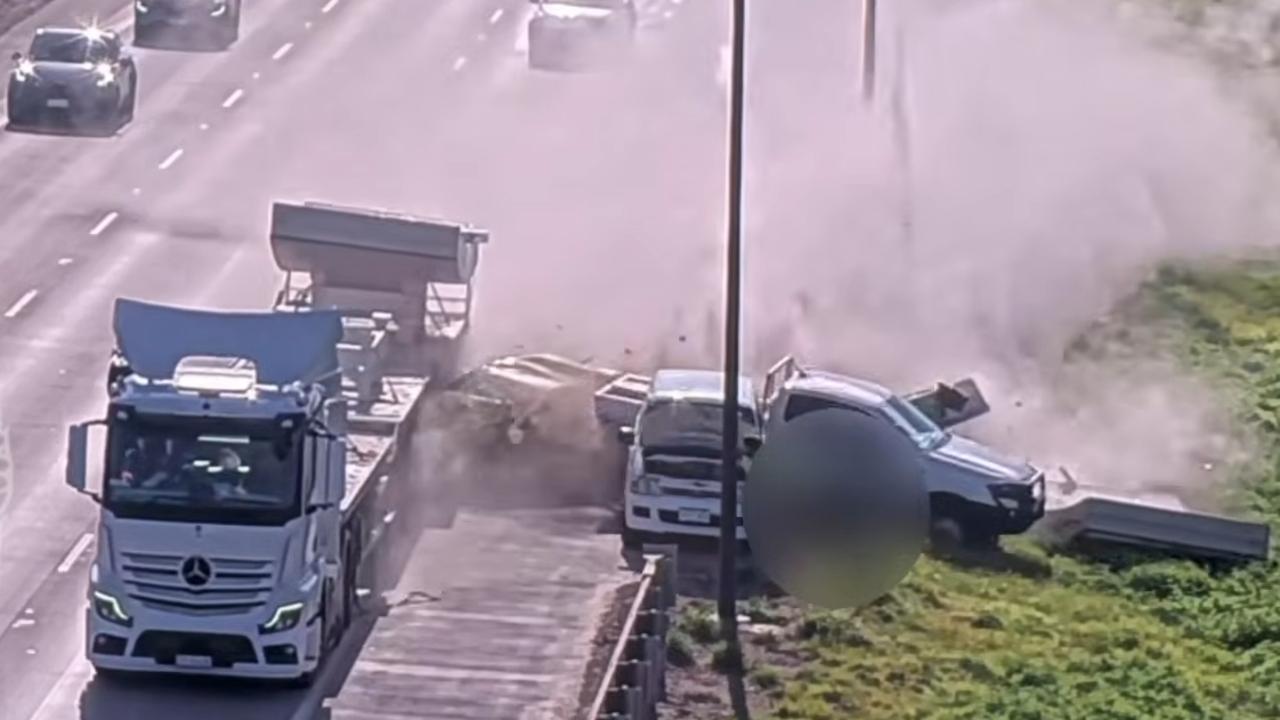
Carnage as truck loses load on Adelaide’s North-South Motorway
Dashcam and witness footage has captured the chaotic and terrifying moment a heavy goods truck carrying massive concrete slabs lost part of its cargo on one of South Australia’s busiest arterial roads, leaving a trail of destroyed vehicles and injured people in its wake. The near-catastrophic event unfolded just after 10:30 a.m. on Friday along the North-South Motorway in Bolivar, a suburb located on Adelaide’s outer northern fringe. According to initial reports from South Australia Police, the heavy vehicle was in the process of merging between lanes when several tonnes of unsecured concrete suddenly shifted and slid off the truck’s rear trailer.
Two 15-tonne concrete slabs slammed into the pavement with enormous force, kicking up a thick, blinding cloud of dust that obscured visibility for nearby drivers before the heavy blocks careened into three parked cars positioned on the motorway’s hard shoulder. The impact of the collision sent the stationary vehicles careening into two pedestrians who had pulled off the road to address an earlier vehicle breakdown, leaving the two people trapped and injured.
In a statement released by SA Police following the incident, authorities called the outcome of the crash nothing short of miraculous. Despite the enormous force of the falling slabs and subsequent collisions, none of the people involved sustained life-threatening injuries. One person was transported to a local Adelaide hospital with a suspected broken arm, while two additional people were treated for minor injuries at the scene. Emergency services including police, fire crews and highway clearance teams rushed to the site to secure the area, remove the destroyed vehicles and clear the fallen concrete from the roadway.
The unplanned incident caused major disruption to northbound and southbound traffic through the area, with long queues forming as emergency works were carried out. One passing motorist traveling in the opposite direction roughly 30 minutes after the crash told reporters that traffic backlogs stretched well over one kilometer along the motorway, leaving thousands of commuters stuck in delays through the Friday morning rush.
As of the latest update, investigators with SA Police are still working to determine the exact cause of the load shift, including whether the concrete slabs were properly secured by the trucking operator before the vehicle entered the motorway. “Police are amazed that no-one was killed during this incident,” the SA Police statement said. “This incident serves as a reminder that all road users have a responsibility to help keep South Australian roads safe. Motorists should allow heavy vehicles the space and stopping distance they need, and drivers transporting loads must ensure they are properly secured before commencing their journey.”
-

A shoe factory fire that killed 28 highlights China’s persisting worker safety risks
JINJIANG, FUJIAN – A devastating industrial fire that swept through a mid-sized shoe factory in China’s iconic sports footwear manufacturing hub of Jinjiang has claimed 28 lives, triggering a formal investigation into workplace safety failures and reigniting longstanding public concern over persistent lax standards in the country’s manufacturing sector.
The blaze broke out Thursday afternoon on the ground floor of the five-story Fujian Huitung factory building, a facility that houses both production workshops and raw material storage, according to official reports from China’s state-run broadcaster CCTV. At the time of ignition, 239 people – 237 on-site workers and two visiting guests – were inside the facility. First responders pulled 213 people to safety, but two of those rescued later succumbed to burn and smoke inhalation injuries at local hospitals. The remaining 26 people initially reported unaccounted for were later confirmed dead by Sunday morning.
Footage broadcast on local Chinese media captured chaotic scenes during the height of the emergency: dozens of workers trapped on the building’s roof, surrounded by plumes of thick black toxic smoke pouring from upper-floor windows, while water streams from fire department hoses failed to reach the entrenched flames on the upper levels. Fire department officials told CCTV that piles of highly flammable shoe sole materials illegally stored along the building’s stairwells created two critical barriers: they blocked escape routes for workers trapped on upper floors, and slowed firefighters’ progress as they attempted to reach and extinguish the fire. In total, more than 500 emergency personnel and 35 fire trucks were deployed to the scene, and it took nearly four hours to fully extinguish the open flames.
Fujian Huiteng, the facility’s operating company, produces footwear for both domestic Chinese and international consumer brands, according to public product listings on major import and e-commerce platforms. By Friday, authorities had arrested the factory’s owner and all senior management, and frozen all of the company’s financial accounts as part of the ongoing investigation. Chinese President Xi Jinping has called for a full, transparent probe of the disaster, and confirmed that all parties found responsible for safety failures will face strict legal accountability.
Jinjiang, the city where the factory is located, is widely known as China’s “shoe capital.” The region is home to thousands of footwear manufacturers, producing more than 1 billion athletic shoes annually – roughly one-fifth of the country’s total athletic footwear output, according to industry and state media reports. The region’s rise from a cluster of small, informal workshops to a global export manufacturing hub has been framed by the Chinese government as the “Jinjiang Experience,” a national model for successful industrial development that President Xi has repeatedly cited in policy speeches.
This fatal blaze is far from an isolated incident: workplace safety remains a longstanding systemic challenge across China’s industrial sector. Just months earlier in May, an explosion at a fireworks manufacturing plant in Changsha, Hunan, killed 37 people, and earlier in 2024, a fire at a under-construction refrigeration facility in Jiangxi’s Xinyu killed 39 people, making the Fujian factory fire one of the deadliest industrial accidents in China in recent years. National official data from 2025 shows that 18,261 people died across 19,900 reported workplace accidents, a slight decline from 2024’s total, but still a staggering toll that underscores the gap between national safety regulations and on-the-ground enforcement. Chinese authorities have repeatedly mandated that all private and state-owned businesses conduct regular screenings for workplace hazards, but enforcement remains inconsistent, particularly among small and mid-sized manufacturing firms.
-

Srinivas Achanta charged with murder after wife Lavanya Achanta’s death in Melbourne
A 39-year-old Melbourne man has been formally charged with the murder of his 39-year-old wife, following her fatal stabbing at their family home in Melbourne’s eastern suburb of Vermont. Srinivas Achanta made a short, silent appearance before the Melbourne Magistrates Court on Friday, three days after first responders were called to the couple’s Delatite Court residence just after 10 p.m. on July 7.
Law enforcement officials confirm that when emergency crews arrived at the property, they found Lavanya Achanta dead at the scene. Two young children who were present in the home at the time of the incident were discovered unharmed, and have since been supported by local social services. Achanta was taken into custody at the scene immediately after the incident, but was transported to a local hospital for medical evaluation under armed police guard. It was not until more than 24 hours after his hospital admission, and three days after the killing, that detectives completed a formal interview with the accused and laid the murder charge.
During Friday’s court hearing, Achanta sat flanked by court security and was not required to enter a plea or make any public statement. Prosecutors requested a 12-week adjournment to allow investigators to compile evidence, finalize case files, and serve the full case briefing on Achanta’s defense team. Magistrates granted the adjournment, remanding Achanta into official custody until his next scheduled court appearance on November 13.
Achanta’s defense lawyer, Alex Wolf, submitted written arguments on confidential custody management issues that were not discussed in open court to protect the privacy of all involved parties. Neighbors of the quiet cul-de-sac property told reporters the couple had moved to the leafy, residential suburb with their two children roughly two years ago, and were known to keep a low profile, rarely interacting with other residents on the street.
In the days following the discovery of Lavanya Achanta’s body, forensic investigation teams could be seen processing the crime scene, collecting evidence and examining the property for clues related to the killing. The case has shocked the otherwise peaceful suburban community, where violent crime is extremely rare.
-

Victoria Police make chilling discovery in hunt for missing girl, 13
A week-long search for a missing 13-year-old girl in regional Victoria has ended in a devastating discovery, with police confirming they found human remains believed to belong to the missing teenager in a remote bushland area.
The case began when the young girl was reported missing to Victoria Police last week, prompting authorities to launch a large-scale multi-team search operation across the region. She was last seen publicly on McCracken Street in Donald, a small town located in Victoria’s northwest, on Saturday, July 4. No contact from the girl has been recorded since that date, leaving her family and local community on edge for six days.
According to official police updates, search teams located the remains late Thursday afternoon in a stretch of bushland west of Byrne Street, not far from the area where she was last spotted. While formal forensic identification processes are still underway, law enforcement officials have stated they are confident the remains are those of the missing 13-year-old.
In the immediate wake of the grim finding, police executed a search warrant at a residential property within Donald, the girl’s hometown, as part of their expanding investigation. Authorities have confirmed they are treating the death as suspicious, and they are continuing to piece together the full sequence of events that led to her disappearance and death.
Investigative teams are urging members of the public who may have any relevant information about the girl’s movements in the week before she went missing, or any details connected to the case, to come forward. Tips can be submitted anonymously to Crime Stoppers Victoria by calling the 24/7 hotline at 1800 333 000, or through the organization’s official website at www.crimestoppersvic.com.au.
-

Hong Kong eateries welcome dogs as city relaxes ban
After nearly 30 years of strict restrictions, Hong Kong has rolled out a landmark policy change that opens the doors of hundreds of local eateries to domestic dogs, marking the city’s most visible step yet toward building a more inclusive, animal-friendly community.
Since 1994, Hong Kong’s food safety regulations only permitted service animals such as guide dogs and working dogs on official duty inside restaurant dining areas. That rule officially changed on Thursday, when the first phase of the relaxed policy went into effect, granting access to dogs at more than 900 government-approved food establishments across the city. This update is part of a broader series of reforms to accommodate pet owners across the region: in recent years, Hong Kong has already allowed pets on select ferry routes and rural metro lines, and public hospitals now permit supervised pet visits for palliative care patients to support patient well-being.
Official government data underscores the growing need for pet-inclusive policies: more than 240,000 households across Hong Kong, roughly 9% of all private households in the city, own more than 400,000 cats and dogs combined, making pet-friendly public spaces an increasingly urgent public demand.
For local business owners and pet parents, the change has been widely welcomed. Kelvin Chan, owner of Wan Land Cafe, was quick to display a new dog-friendly welcome poster at his establishment. Before the rule change, Chan could only allow dogs in his cafe’s outdoor seating area, a restriction that proved particularly uncomfortable for four-legged visitors during Hong Kong’s hot, humid summer months. Though Chan does not expect the policy to drive a dramatic surge in customer numbers, as a dog owner himself, he frames the change as a critical step toward shifting cultural attitudes. He acknowledges that the adjustment may feel challenging for diners unaccustomed to sharing dining spaces with dogs, but he hopes that responsible behavior from pet owners will gradually help non-pet owners embrace the shift. “Inclusivity for pets is a progressive move, and it could become a normal part of our daily lives,” Chan explained.
Franco Li, a regular customer at Wan Land Cafe who owns a Shiba Inu named Piku, says the new rule has already transformed his routine. Now, Piku can join Li at the dining table and socialize with other dog companions during outings. “This is such a great step forward for civilization,” Li said while holding Piku in his arms.
To help dogs adapt to their new dining environment, many owners have turned to specialized training ahead of the policy change. Heyton Lee, a professional dog trainer with 19 years of experience, saw a sharp increase in demand for his dog dining etiquette workshops in the weeks leading up to the policy launch. His two-hour training programs simulate full restaurant settings, walking owners through how to help their dogs stay calm in busy social spaces, avoid overexcitement when encountering other dogs, and get comfortable with passersby. Lee also teaches hand signals to reinforce good behavior, noting that dogs that spend most of their time at home often become nervous or defensive in public when unfamiliar people approach. The core goal of the training, he says, is to help dogs integrate smoothly into human public spaces.
The new policy comes with clear rules to uphold food safety and public comfort: all dogs must be kept on a leash no longer than 1.5 meters (5 feet), held by an adult or secured to a fixed fixture. Dogs are not permitted on dining tables, and they cannot eat directly from reusable human tableware. Dogs classified as fighting breeds under local government guidelines are banned from participating restaurants entirely, and eateries are prohibited from cooking food for dogs, though they are allowed to offer pre-packaged pet treats and meals.
Many local restaurants have invested in upgrades to welcome their new furry guests, and some business owners are optimistic the change will lift their bottom line. Old Fung Teahouse, a popular dim sum restaurant, spent more than 10,000 Hong Kong dollars (approximately $1,276 USD) on preparations: the venue installed new air purifiers, added simple partitions to create a separate dog-friendly dining zone, and offers complimentary access to pet strollers and pet-safe cleaning supplies for owners. The restaurant’s operators estimate that opening to dogs could boost their monthly revenue by as much as 15%. The proactive approach has already won praise from visitors, including Ma Ke, a tourist from mainland China. “By separating an area for dogs and their owners, this restaurant is managing the situation well, because it makes it easier for customers who are not that used to being with dogs to accept the situation,” Ma noted.
-

Tofu vendor delivers much more than healthy food to an east Tokyo neighborhood
On narrow, winding residential streets in eastern Tokyo, 53-year-old Akiko Sugaya pushes her signature pink cart, straw hat perched on her head and a small brass bugle at the ready. The familiar toot of her horn signals her arrival for locals, who know her not just as a seller of fresh, protein-rich tofu and prepared groceries, but as a trusted guardian and friend in a community grappling with Japan’s growing crisis of aging and social isolation.
For 23 years, Sugaya has filled a role that goes far beyond traditional street vending. Her weekly three-hour routes, which she runs rain or shine three afternoons a week, weave through the Ojima neighborhood, an area dotted with cramped single-family homes and sprawling mid-rise apartment blocks. Where modern convenience has replaced face-to-face interaction with app-based deliveries and contactless checkout, Sugaya has kept the vanishing tradition of neighborhood roaming vendors alive, while quietly stepping in to address a gap that formal social services have not fully filled: checking on isolated elderly residents who live alone.
Sugaya knows her customers’ routines as intimately as if they were her own family. Over decades of rounds, she has spotted the subtle warning signs that something is wrong: piling uncollected newspapers left on porches, laundry that hangs untouched for days, a usually regular shopper who fails to appear when she sounds her bugle. Sadly, she has on multiple occasions been the first person to discover the bodies of elderly customers who died alone — a tragedy that has become increasingly common in Japan, which holds the title of the world’s oldest population, with more than 29 percent of residents aged 65 or older.
“In a neighborhood like this, many long-time residents leave their doors unlocked, and landlords will grant me access if I haven’t seen someone in a few days,” Sugaya explained in an interview at her small brick-and-mortar shop, which operates as a takeout lunch spot by day and a small dine-in restaurant in the evening. “These small, tight-knit streets let me see the signs of trouble easily, but even in large apartment blocks that hide those clues, I know to check in on anyone I haven’t seen in a while.”
What many see as a quiet act of community service has also been a life-changing healing journey for Sugaya herself. Before starting her vending work, she faced years of rejection and trauma: she was bullied relentlessly in school, and was fired from multiple jobs as an adult, leaving her with crippling low self-esteem. It was only when she began pushing her tofu cart through the neighborhood that she found a sense of purpose and belonging that had long eluded her.
“Selling tofu from my cart taught me that it’s okay to just be myself,” she said. “I was put down over and over again for years, but this work let me build my self-esteem back up. I used to be so nervous around people my own age, but when I’m with the elderly, their warm smiles make me feel safe. This job didn’t just give me work — it saved me.”
Long-time regular Shinji Saito, who lives with epilepsy and visits Sugaya’s shop every day, describes her open, accepting nature as “magical.” Another customer, 78-year-old Toshi Niiyama, says she intentionally waits for Sugaya to come through her street even when she could buy tofu at a local supermarket or convenience store. “Cart selling is such a disappearing craft,” Niiyama said. “We used to have a vegetable vendor who came around here too, but he retired years ago and nobody took his place. I wouldn’t buy my tofu from anyone else — waiting for Ako-chan is as much about seeing her and chatting as it is about the food.”
Sugaya has watched firsthand as Japan’s modernization has eroded casual daily social interaction. What were once routine moments of human connection — a newspaper carrier stopping to say hello, a street vendor chatting about the weather — have been replaced by algorithm-driven delivery apps and contactless self-checkout at convenience stores, where customers can complete a purchase without exchanging a single word with another person.
“You can spend an entire day now without having a single verbal conversation with another person,” Sugaya noted. “You go to a convenience store, tap a screen, grab your item, and leave. It’s fast, but it leaves you feeling empty inside. That’s what I see a lot with the elderly who live alone — that emptiness just gets bigger every day.”
Unlike many of the roaming vendors that once defined Japanese neighborhood life, Sugaya has no plans to stop her rounds. She sticks to a fixed weekly schedule: one route on Mondays, a second on Thursdays, and a third on Saturdays, and she never skips a day even when the rain is pouring. For her, it’s not just a business — it’s a promise to the community that gave her back her life. “My customers expect me,” she says simply. “They don’t just want tofu. They want someone to talk to. And I’ll be there.”
-

How an app in South Korea will let victims track their stalkers
South Korea is set to introduce a groundbreaking mobile application designed to empower survivors of stalking by giving them the ability to directly monitor the movements of their perpetrators. The initiative comes as part of the country’s broader push to address growing public concern over gender-based violence and stalking, which has remained a persistent social issue in the nation for years. Government officials have emphasized that the tool is tailored to give victims greater autonomy and peace of mind, noting that it will be integrated with existing law enforcement data systems to deliver real-time location alerts when a perpetrator is in close proximity to the user.
The app is designed to operate with strict privacy safeguards to prevent misuse of location data, according to state authorities, who argue that it will fill a critical gap between police response and personal safety planning for at-risk individuals. Stalking victims in South Korea have long reported that delayed police interventions and limited access to real-time safety information leave them vulnerable to repeated harassment and harm; policymakers frame the new app as a concrete solution to these systemic shortcomings.
However, the innovation has drawn measured scrutiny from legal and safety experts, who have raised questions about the actual public safety impact the tool will deliver. Some critics warn that overreliance on the app could create a false sense of security for victims, diverting attention from the need for broader systemic reforms such as tougher legal penalties for stalkers and expanded training for law enforcement personnel. Other experts have pointed out unaddressed privacy risks, noting that a data breach or unauthorized access to the app’s location information could inadvertently put victims in greater danger by exposing their whereabouts to perpetrators. The debate around the app underscores the ongoing tension between tech-driven safety solutions and longstanding calls for institutional change to combat stalking in South Korea, as officials prepare to roll out the tool to the public in the coming months.
-

E-bike rider critically injured after being struck by a car in Wynnum
A severe collision between an e-bike and a passenger vehicle has left a 19-year-old rider critically injured in a coastal Brisbane suburb, prompting an ongoing police investigation into the incident. The crash unfolded shortly after 6 p.m. Thursday near the busy intersection of Claymeade Street and Sandy Camp Road in Wynnum, when the teen rider’s e-bike collided with a BYD Shark utility vehicle driven by a 43-year-old man.
Queensland Ambulance confirmed the teenager sustained extensive, life-threatening damage across his head, face, legs and pelvis in the impact. Emergency medical teams immediately transported the injured rider to Brisbane’s Princess Alexandra Hospital in Woolloongabba, where he was admitted to intensive care. As of Friday, a hospital spokesperson confirmed the patient remained in a critical but stable condition. Remarkably, the driver and his two teenage passengers walked away from the collision without any physical harm, according to official reports.
Local law enforcement has launched a full investigation into the circumstances that led to the crash, and is asking for public assistance to piece together a clear timeline of events. Investigators are calling on any motorists who captured dashcam footage of the intersection around the time of the collision, or any bystanders who witnessed the crash firsthand, to come forward and share their information with police. This incident comes amid growing public and regulatory scrutiny of e-bike safety across Australia, with recent announcements of new regulatory crackdowns and policy plans to address what some policymakers have described as an unregulated ‘wild west’ for electric two-wheelers.
-
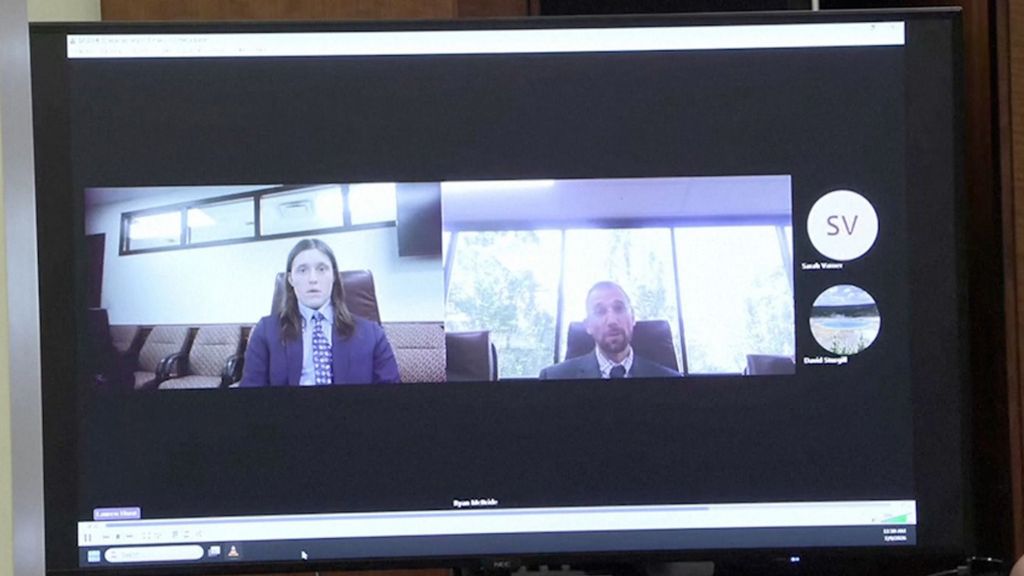
Watch: Roommate says Charlie Kirk murder suspect confessed to killing
A dramatic development unfolded in a preliminary hearing for the Charlie Kirk murder case this week, when a court played audio recordings from a law enforcement interrogation of the suspect’s roommate, Tyler Robinson. According to the transcribed and recorded account of the police interview, Robinson told investigators that the individual accused of carrying out the killing of Charlie Kirk confessed directly to him about the crime shortly after the incident occurred.
The preliminary hearing, which is designed to determine whether there is sufficient evidence to move the case forward to a full jury trial, has already drawn significant public attention given the high profile of the victim in the case. The playing of the confession-related recording marks one of the most substantial pieces of prosecution evidence presented to the court so far in the early stages of the legal process.
Legal observers note that the inclusion of a third-party confession statement from a close associate of the suspect—here, a roommate who shared living space with the accused—often carries heavy weight in preliminary hearings, as it provides direct, firsthand testimony linking the defendant to the alleged crime. As the hearing continues, attorneys for both the prosecution and the defense are expected to present additional evidence and cross-examine witnesses before the judge issues a ruling on whether the case will proceed to trial.