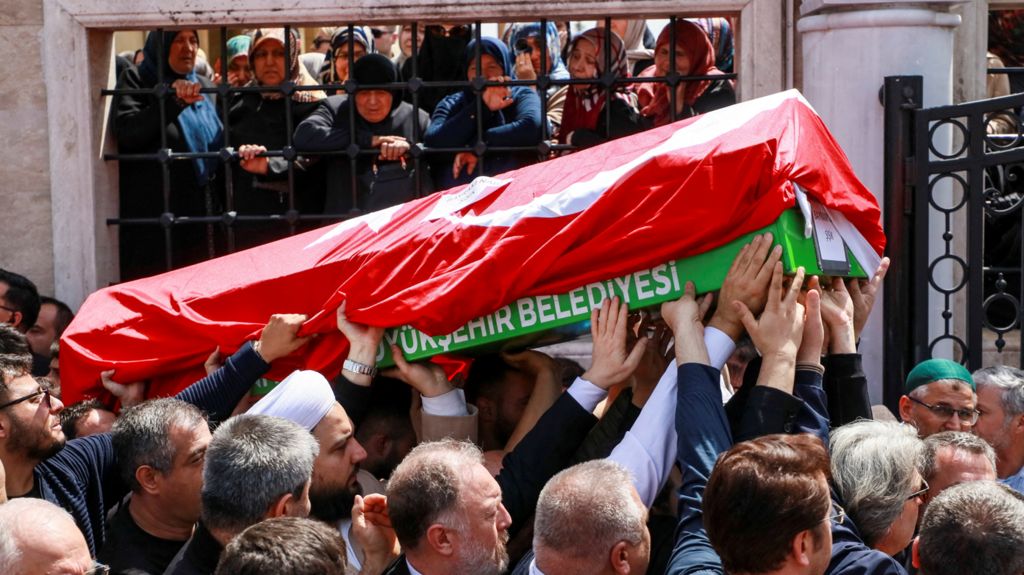
On a gray, somber day in Kahramanmaras, a southeastern Turkish city long known for its creamy, renowned pistachio ice cream, a grim procession unfolded outside a local morgue. A dozen men stepped forward quickly to lift a simple wooden coffin, and those watching caught their breath when they felt how light it was: it held the body of just a 10-year-old child. Behind the group of bearers walked the boy’s father, held upright by relatives flanking his sides, his entire frame bent under the unbearable weight of unthinkable loss. “Oh, my martyred child,” he wailed into the quiet air, “oh my darling.”
This 10-year-old boy was one of eight children cut down in a shooting rampage that shook Turkey on Wednesday, carried out by a 14-year-old fellow student who also took the life of a teacher before being killed at the scene. The attack marks the first deadly mass school shooting in Turkish history, a new, horrific milestone for a country that had previously avoided this particular type of public tragedy that has become all too common in other parts of the world.
As coffins wrapped in the red and white Turkish flag were carried out one by one, hundreds of grieving relatives, neighbors and first responders crowded the surrounding streets, their sorrow mixing with raw anger. One woman shouted angrily at a line of standing police officers, repeating “Too late, too late” through her tears, blaming authorities for failing to stop the attack and save the children. Another demanded the teenage attacker be publicly hanged in the city’s main square, a demand that went unanswered – the gunman had already died at the scene before any arrest could be made.
Outside the city’s main mosque, a mother leaned over the casket of her 10-year-old daughter Zeynep, her shoulders shaking with sobs as she stroked the flag covering the wood. From the family home, just steps away from Ayser Calik Secondary School, she had heard the gunshots that ended her child’s life, shots that have sent shockwaves across the entire country. Zeynep’s uncle Mahmut described his niece as a clever, respectful girl who had her whole life ahead of her. “She became an angel, and she flew away,” he told reporters, his voice breaking with emotion. “My only wish is to have more security at the schools, so this does not happen again. This pain landed on us. I do not want it to fall on anyone else.”
The Kahramanmaras shooting was the second school attack in the same region in 48 hours. Just a day earlier, a former student entered another local school, opened fire on those inside, wounded 16 people and ultimately killed himself. Experts warn that these clustered attacks could signal a dangerous new trend for Turkey. Asli Carkoglu, a professor specializing in teen psychology, noted that both attacks took place in lower-income cities within a short window of time, and that high-profile acts of violent violence often have a contagion effect. “These things do have a way of spreading,” she explained. Carkoglu added that she fears this deadly attack could become a template for other young people who are struggling with anger and frustration. While the shooting is an unthinkable tragedy, it is not a surprise to experts who work with Turkish adolescents, she said: “There have been stabbings, beatings and attempted suicides in the school system. The guns weren’t there before, but the violence was.”
As the last victims were being lowered into their graves, new details emerged about the 14-year-old Kahramanmaras attacker. Turkish authorities say the teen referenced American mass killer Elliot Rodger – who murdered six people near a University of California campus in 2014 – in posts he shared on social media. They also found an entry on his computer dated April 11 that warned a major attack would come “in the near future.” The gunman did not have to travel far to obtain his weapons: he took them from the bedroom of his father, a former police officer who is now in police custody. Local media reports quote the father’s statement to investigators, which describes a boy who was academically bright but deeply troubled, spent hours playing violent war games online, and had previously been attending therapy with a psychologist.
While mass school shootings have been a recurring nightmare for the United States for decades, this pair of attacks is an unprecedented trauma for Turkey. In an effort to calm public panic and control public discussion of the tragedy, Turkish authorities have taken aggressive action online: around 150 people have been detained over social media posts about the killings, with authorities accusing them of spreading misinformation or glorifying the attacker and his crime. More than 1,000 social media accounts and Telegram discussion groups have been blocked. Police have confirmed there is no evidence linking the two recent attacks, and initial investigations show the Kahramanmaras gunman acted alone with no connections to any terrorist organization.
Today, the gates of Ayser Calik Secondary School remain locked, guarded by uniformed police. Outside, teachers have laid a small, growing pile of flowers at the entrance, a quiet tribute to the nine victims who lost their lives in a place that was supposed to keep them safe.