分类: society

  • US mother’s mental health was getting ‘worse and worse’ before her children’s  murders, ex-husband says

    US mother’s mental health was getting ‘worse and worse’ before her children’s murders, ex-husband says

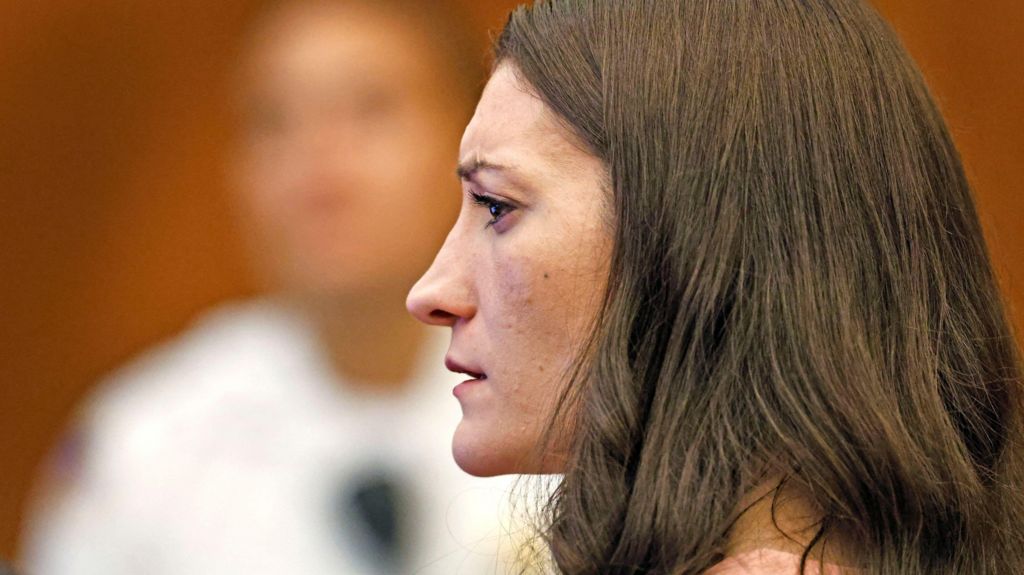
    The closely watched murder trial of Lindsay Clancy, a Massachusetts woman accused of killing her three young children in January 2023, has begun with starkly conflicting narratives about her mental state in the months leading up to the tragedy. The case, which is scheduled to unfold over several weeks, has already sparked debate over mental health care access and postpartum complications, after Clancy’s legal team launched an insanity defense centered on claims of severe psychosis.

    Clancy, 32, faces three counts of first-degree murder for the deaths of 5-year-old Cora, 3-year-old Dawson, and 8-month-old Callan. She has pleaded not guilty to the charges, and does not dispute that she caused the children’s deaths, but argues she was not criminally responsible due to her mental condition at the time. If convicted, she will be sentenced to life in prison without the possibility of parole.

    The first witness called to the stand was Patrick Clancy, Clancy’s ex-husband, who delivered emotional testimony about his wife’s gradual mental decline in the months before the killings. Patrick told jurors that Clancy had long struggled with anxiety and depression, and had intermittently sought treatment from medical providers while taking multiple psychiatric medications. He recalled that Clancy had shared growing suicidal thoughts with him, and that her condition steadily deteriorated despite efforts to adjust her care, including switching to a new psychiatrist when her original treatment failed to improve her symptoms.

    By December 2022, one month before the children’s deaths, Patrick said Clancy’s mental health entered a severe downward spiral. “She started to lose a lot of weight, and she became very depressed, and she was having a really hard time,” he testified, adding that watching her struggle was an incredibly stressful experience. “She kept getting worse and worse.”

    Prosecutors have rejected the defense’s framing of the tragedy, arguing that Clancy made a deliberate, calculated choice to kill her children and was fully aware of her actions when she carried out the attack. In opening remarks, Assistant District Attorney Shanan Buckingham told the 12-member jury that Clancy acted “intentionally, rationally, and swiftly to accomplish a very specific goal – to kill.” “She is criminally responsible for the murders, because the evidence will prove to you that she knew exactly what she was doing,” Buckingham said, prompting a visible emotional reaction from Clancy, who shook and cried in the courtroom as the prosecution described her children.

    The defense has pushed back aggressively against the prosecution’s narrative, painting Clancy as a loving, involved mother who had no motive to harm her children, and whose breakdown was the result of untreated severe postpartum psychosis – a rare, life-threatening emergency that impacts approximately 1 in 1,000 new mothers after childbirth, according to the UK National Health Service. Symptoms of the condition include delusions, hallucinations, extreme mood swings, and cognitive confusion, and Clancy’s legal team argues that she was completely overcome by psychosis at the time of the killings.

    “This is a woman that did not get the medication, did not get the medical treatment, that she so deserved,” defense attorney Kevin Reddington told the jury. While prosecutors asked jurors not to frame the trial as a broader debate on women’s mental health care, Reddington pushed back on that framing, telling the court “It sure as hell is,” arguing that the core question of the trial is what was happening in Clancy’s mind at the time of the deaths. In opening arguments, the defense displayed graphic evidence of Clancy’s subsequent suicide attempt, including photos of her self-inflicted wounds, the weapon she used, and images of her intubated in a hospital bed after the attack.

    Over the coming weeks, both sides will call a wide range of witnesses, including law enforcement officers, first responders, family members, friends, and psychiatric experts, to build their cases for the jury. The case has already drawn widespread attention for its disturbing details, and for its focus on gaps in mental health care for postpartum people, a leading public health advocacy topic across the United States.

    A public warning accompanies all coverage of the case: this story includes distressing details of violence, child death and suicide. Anyone experiencing suicidal thoughts or mental distress is encouraged to reach out to a local medical provider or a global support organization such as Befrienders Worldwide, which maintains a directory of support services across the world at www.befrienders.org.


  • ‘Do the right thing’: Savannah Guthrie makes another plea to mom’s kidnappers

    ‘Do the right thing’: Savannah Guthrie makes another plea to mom’s kidnappers

    Six months have passed since 84-year-old Nancy Guthrie vanished from her Tucson-area home against her will, and her daughter – prominent US television host Savannah Guthrie – has issued a urgent new emotional appeal directly to the people responsible for her abduction, begging for information that could lead to Nancy’s recovery.

    In a video posted to social media this week, Guthrie laid bare the unending pain her family has endured since Nancy’s disappearance in late January. “It has been months since our mom was taken from us,” Guthrie said in the video address. “Our family is in agony. We are trapped in a nightmare that will not end. Nothing about our situation has changed. We have done everything in our power to find her, and we will never stop looking. We will always ache for her and carry that empty hole in our hearts forever.”

    Looking directly at the camera, she issued a plea to anyone holding information about her mother’s location: “I’m asking you, begging you, to do the right thing now. Help us find her – tell us where to look for her. Help us bring this suffering to an end. For all of us, no matter where we’ve been and what we’ve done, I believe there is always a chance to make things right. Please make the right choice.”

    Investigators with the Pima County Sheriff’s Department and the FBI have been working the high-profile case for six months, but the investigation has hit a dead end with no suspects arrested and no clear publicly disclosed motive for the abduction. Nancy, who requires daily prescription medication, was dropped off at her home by relatives on the evening of January 31. When she failed to arrive at a friend’s home the next morning to join a virtual church service, family members raised the alarm.

    Authorities previously released surveillance images of an armed, masked suspect who was captured disabling the front door security camera at Nancy’s home shortly before she disappeared. Multiple ransom notes have been sent to the family and leaked to news outlets, two of which law enforcement have deemed credible. The first, sent the day after Nancy’s disappearance, demanded a multi-million dollar ransom paid in Bitcoin for her safe release – it included specific, accurate details about the layout of her home, her bedroom and the surrounding property, according to law enforcement statements to CBS. A second credible note sent days later claimed the 84-year-old had already died. Savannah Guthrie has previously acknowledged that some other ransom communications were confirmed to be hoaxes, and has gone on public record saying she accepts her mother may no longer be alive.

    Law enforcement requested that media outlets delay publishing details of the ransom notes during the early stages of the investigation, a request that major US outlets including CBS honored. The Pima County Sheriff’s Department has declined to publicly confirm the contents of the notes, but confirmed in a statement that the investigation “remains active and ongoing” more than half a year after Nancy was taken.

  • Watch: Police officers free owl tangled in football net

    Watch: Police officers free owl tangled in football net

    A remarkable story of quick compassion and careful action unfolded recently in Avon, Ohio, when two local police officers stepped in to save a wild owl that had become dangerously entangled in a football net.

    The incident, which was captured on camera, shows the two law enforcement members approaching the distressed bird with deliberate calm, well aware that a sudden or clumsy move could worsen the animal’s injuries. Working slowly and with great focus, they used cutting tools to carefully snip away the netting that had wrapped around the owl’s body and wings, taking care not to nick the creature’s skin or damage its feathers.

    Once the last strands of netting were removed, the owl was gently released. To the relief of the officers and any onlookers present, the bird showed no visible signs of harm, and immediately stretched its wings and took flight back into the surrounding wild.

    This heartwarming rescue highlights the often unseen acts of care that public safety officials carry out beyond their regular law enforcement duties, extending their protection to vulnerable wildlife in the community.

  • US Secret Service agent among three charged over alleged violent fraternity hazing

    US Secret Service agent among three charged over alleged violent fraternity hazing

    A violent, abuse-driven hazing scandal at one of Florida’s most prominent higher education institutions has led to the arrest of three people, including an active-duty United States Secret Service agent, according to official court and law enforcement records. The accused are 29-year-old Marquez Pinder, the Secret Service agent named as the fraternity’s pledge oversight officer, 26-year-old Lamar James, and 29-year-old Elijah Delano Dyous. All three face severe felony charges: organized hazing, attempted manslaughter, and aggravated battery using a deadly weapon.

    Details laid out in an official arrest warrant acquired by major U.S. media outlets paint a brutal picture of the four-day hazing campaign, which unfolded across multiple off-campus residential properties near the University of Miami’s Coral Gables campus. Investigations from the Miami-Dade State Attorney’s Office confirm the hazing ritual included repeated, prolonged beatings carried out with wooden paddles and solid canes. The violence was triggered when prospective new members failed to answer questions about fraternity history and protocol correctly.

    Two student recruits were hospitalized as a result of the assault. One victim, a current law student, suffered acute kidney failure that required urgent, life-saving surgery. Court documents note that without prompt emergency medical intervention, the young man would have died from his injuries, and he continues to experience severe chronic pain months after the attack. Both injured students were going through the membership intake process for the Kappa Alpha Psi fraternity chapter at the university, according to official records.

    In the aftermath of the arrest, Michael Townsend, head of the Secret Service’s Miami field office, confirmed that Pinder has been placed on paid administrative leave pending the outcome of the criminal investigation. Townsend emphasized in an official statement that the agency “takes seriously any criminal allegations involving one of our employees” and is fully cooperating with local law enforcement and prosecutorial investigations. The BBC has reached out to Pinder’s legal representation for comment on the charges, but no statement has been released as of press time.

    Miami-Dade State Attorney Kathrine Fernandez Rundle released a public statement reaffirming the severity of hazing under Florida state law, noting that “hazing is abuse and it is a crime.” She added that harmful hazing rituals have too often resulted in severe lifelong injury or death for young recruits across the country. This arrest marks the latest in a string of high-profile hazing prosecutions across the United States; earlier this month, a Pennsylvania college football coach was among those charged in connection with a separate violent hazing incident at his institution.

  • ‘This is a Jewish state’: Arabic banned at work for Palestinian citizens of Israel

    ‘This is a Jewish state’: Arabic banned at work for Palestinian citizens of Israel

    For 19-year-old Salma, a Palestinian citizen of Israel working at a retail shop, a routine workplace message from her manager upended her sense of safety and belonging. The instruction was clear: all staff were banned from speaking Arabic while on the job. Salma and her predominantly Palestinian colleagues first dismissed the order as absurd, but a rapid, hostile escalation quickly changed their minds.

    When one coworker briefly spoke Arabic to announce she was moving a box to the storeroom – even inserting the Hebrew word for storeroom to clarify the work-related conversation – the manager exploded in anger. “She started shouting, kicking boxes and telling us we were forbidden to speak Arabic,” Salma recalled. The manager’s final rebuke encapsulated the prejudice driving the ban: “This is a Jewish state. Here we speak only Hebrew. Arabic stays at home.”

    Salma’s experience is far from an isolated incident. Over recent months, Palestinian workers across Israel have reported a growing wave of workplace Arabic-speaking bans, with complaints spanning retail outlets, pharmacies, and public hospitals. One of the highest-profile recent cases unfolded at a Good Pharm branch in the coastal city of Jaffa, where local media obtained WhatsApp messages showing a manager threatening workers caught speaking any language other than Hebrew. The manager justified the ban by claiming Arabic could upset customers traumatized by the October 7 attacks. In a statement, Good Pharm said it is committed to equality, employs people from all communities, and would address the manager’s behavior internally. But Palestinian workers say no meaningful changes have followed the public disclosure.

    In Salma’s case, the ban extended even beyond customer interactions: it remained in place when the shop was closed and no customers were present, with only Palestinian staff on site. When Salma and her colleagues protested the policy, the company responded by removing them from the work schedule for nearly two months, then offering transfers to distant branches that were practically unreachable. “Instead of removing the manager or holding her accountable, the company preferred to ask us to change our workplace,” Salma said. While the retail chain has publicly condemned racism and discrimination, the experience has left a lasting mark on Salma, who is preparing to begin university this year. She says she now feels deep anxiety about entering another majority-Jewish work or academic environment. “I had heard about racism before this, but I never understood the feeling until now,” she said. “It was the first time I understood what it means for someone to treat you badly simply because of your identity.”

    Palestinian citizens of Israel are the descendants of the native population of historic Palestine who remained in their lands after the 1948 Nakba, when Zionist militias displaced an estimated 750,000 Palestinians to establish the state of Israel. Today, the community makes up roughly 20 percent of Israel’s total population, numbering around two million people. Since the October 2023 outbreak of the Israel-Gaza war, Palestinian citizens have faced a sharp rise in arrests, professional disciplinary action, and job losses linked to their political expression regarding the conflict in Gaza.

    Legal advocates who represent Palestinian workers warn that the public cases that have emerged are only a small fraction of the total number of discriminatory incidents taking place across the country. What has shifted, they argue, is not the existence of anti-Palestinian discrimination in workplaces, but the open confidence with which employers now impose discriminatory policies. Alya Zoabi, an employment lawyer who specializes in representing Palestinian workers, told Middle East Eye that her office has seen a dramatic jump in racism-related workplace claims. “Most of the cases now reaching my office from Jewish workplaces involve racism,” she said. “There has been a significant increase.”

    Zoabi shared details of two extreme cases her office has handled recently: one involved a young Palestinian employee who suffered a full panic attack after months of ongoing discrimination from her manager. When an ambulance was called to the workplace, the employer forced the worker to go to the hospital alone. In a second case, a pregnant Palestinian employee was fired without obtaining the legally required authorization for dismissing a pregnant worker.

    The growing push to ban Arabic in workplaces builds on a 2018 controversial piece of Israeli legislation: the Nation-State Law, which enshrined Hebrew as the country’s only official language, downgrading Arabic from an official language to one with “special status.” While the law preserved the practical use of Arabic in government services, public signage, and education, Palestinian communities report that pressure to suppress public expressions of their cultural and linguistic identity has intensified steadily in the years since the law passed.

    From a legal perspective, the biggest barrier to holding discriminatory employers accountable is not the absence of rules against bias, but the difficulty of proving an employer’s discriminatory motive to meet Israel’s court standards. Israel’s Equal Employment Opportunities Law prohibits discrimination on the basis of nationality, race, and religion, but it does not explicitly guarantee the right to use any language in all workplace settings. Legal experts note that a full, blanket ban on Arabic – particularly for private conversations or in roles where Hebrew is not required for job duties – can qualify as unlawful discrimination, but enforcement of this standard remains deeply uneven.

    “But formal legal protection means little when enforcement is slow, costly and uncertain,” Zoabi explained. She added that since October 7, there has been a clear leniency toward employers in discrimination cases that cannot be ignored. Claims that would normally be worth tens of thousands of shekels in compensation often end in settlements that award workers only a small fraction of that amount. The high cost and low odds of success discourage both workers and their legal representatives from pursuing claims, even when discrimination is obvious. Both Salma and the Good Pharm employee ultimately abandoned their plans to file lawsuits after being advised the cases would drag on for years, cost more than they could afford, and have little chance of a ruling in their favor. As a Palestinian woman working within Israel’s legal system, Zoabi says she experiences the impact of this discrimination firsthand. “When I stand in court, I feel I am both the lawyer and the client,” she said. “As a Palestinian woman in Israel, I experience this racism too.”

    (Note: The source’s name has been changed to protect their identity, per the original reporting)

  • A gay belly dancer turns grief into joy after fatal attack on Berlin’s Pride festival

    A gay belly dancer turns grief into joy after fatal attack on Berlin’s Pride festival

    BERLIN — Just hours after a deadly extremist terror attack targeting Berlin’s annual Pride celebrations left one person dead and nearly 30 others injured, the city’s LGBTQ+ community and its allies refused to let hate steal their space, with a collective performance of resilience kicking off as scheduled on Sunday night at Museum Island.

    Haidar Darwish, a 30-year-old Syrian belly dancer and performance artist who fled his home country for Germany in 2016, opened the show clad in a dramatic hoop skirt and a bold red fez, opening with a call for a quiet moment of remembrance before declaring that artistic expression and community solidarity would not be canceled by violence. “Yesterday there was an attack and a hate crime on our community in Berlin during the Pride Parade,” Darwish told the gathered crowd, his voice thick with emotion as he fought to retain his composure. “It’s heavy on our community but we are pushing through, and we are here specifically today, myself and my artists, to show up and be visible.”

    Authorities confirmed on Sunday that Saturday’s attack, which involved a suspect ramming a van into crowds near the Pride festival and carrying out a stabbing spree, was classified as an extremist terrorist act. The suspect, identified as Abdul Ballout, a 21-year-old German citizen born in the country to Lebanese family, was shot and killed by police Sunday evening after he charged toward responding officers wielding a bladed weapon. The case has already sparked urgent official scrutiny: multiple public officials are now questioning how Ballout was able to move freely across Germany despite a prior conviction tied to his documented connections to the Islamic State extremist group.

    Darwish took the stage as a core member of Queens Against Borders, a Berlin-based performance collective built to foster solidarity among LGBTQ+ refugees, migrants, and immigrants. He was joined on Sunday by fellow multidisciplinary queer artists: Egyptian belly dancer Aleya and Nigerian drag performer Countess Sasha Seduction, all of whom opted to proceed with the planned performance rather than cancel in the wake of the attack.

    After his opening remarks, Darwish pushed through the collective grief of the community to begin his performance, starting with a slow, meditative spin in the style of traditional Anatolian dervishes. His voluminous red skirt billowed into a graceful cone as traditional Arabic melodies echoed through the venue. As the music rose in volume and tempo, Darwish shed his outer skirt, and launched into dynamic, rhythmic belly dance moves to roaring cheers from the audience.

    Speaking to the Associated Press after the performance, Darwish, who performs under the stage name “The Darvish,” emphasized that the decision to perform the night after the attack carried intentional meaning beyond the queer community, reaching out to Berlin’s diverse general population and the many international tourists visiting the city. He acknowledged the exhaustion that comes with constant resistance: “we are tired to constantly be put in a position where we have to fight endlessly.” But he added that the choice to step on stage was a deliberate rejection of despair. The troupe could have easily chosen to stay home in mourning, he noted, but instead opted to channel shared pain into collective joy.

    By the end of the night, that choice resonated: Darwish and the other performers danced until the entire audience rose from their seats, joining the dance floor and transforming what was expected to be a somber night of grief into a powerful demonstration of solidarity and joy in the face of hate.

  • Heat, overcrowding, pushes Italian prison guard union to sue

    Heat, overcrowding, pushes Italian prison guard union to sue

    A landmark legal action is set to shake Italy’s long-troubled prison system this week, as a prison guard union in the southern region of Puglia will file a formal complaint with Taranto prosecutors, demanding a full investigation into persistent workplace safety abuses that have pushed conditions inside the region’s most overcrowded lockups to dangerous extremes. According to reporting from Agence France-Presse (AFP), which was the first outlet to obtain advance access to the legal filing, the case marks the first collective legal action ever brought on behalf of Italy’s national prison police, making it a trailblazing test for reform of the country’s chronically dysfunctional carceral system.

    The 40-page complaint, known under Italian law as an esposto, does not seek financial damages. Instead, it asks judicial authorities to open a full fact-finding probe into what the union describes as a “structural and persistent situation” of negligence by senior prison department officials. The legal document accuses leaders of failing to address decades of entrenched problems: extreme overcrowding, life-threatening summer heat that has already pushed internal temperatures above 50°C in some facilities, pervasive second-hand smoke exposure, and inadequate management of inmates with severe psychiatric conditions. Union leaders hope the legal action will set a national precedent, inspiring identical challenges across Italy to force systemic change.

    This is not the union’s first push for accountability. On June 22, the Puglia branch of the SAPPE union filed a related complaint with the Court of Auditors in Bari, accusing prison leadership of “grossly inefficient management” that has squandered public funds by refusing to tackle overcrowding. That filing asks the court to calculate how much public money Italy has paid out in compensation to prisoners for violating the European Court of Human Rights’ mandated minimum of 3 square meters of personal space per detainee. The union estimates the annual cost of these violations hits roughly €15 million ($17 million), a steady drain on public funds caused by decades of government inaction.

    Prison officials are not ignorant of the crisis, the new complaint emphasizes. Italy’s national prison department issued a warning to regional supervisors back in March, urging preparation for summer heat and advising measures including extra shade, expanded clean water access, cellblock refrigerators, and moving outdoor inmate recreation away from the hottest midday hours. But independent watchdog inspections across the country have confirmed that implementation of these guidelines has been inconsistent at best, with almost no meaningful upgrades to outdated infrastructure.

    Most of Italy’s prisons, including many built in the 1970s and 1980s to reduce escape risk with thick, solid concrete construction, trap heat during summer months. Prison monitors report this can push internal cell temperatures as much as 10°C higher than external temperatures. Federico Pilagatti, head of SAPPE in Puglia, described conditions as outright torture, saying cells remain “like ovens” even after the sun goes down. “Already the inmates are crammed in like sardines, and then we have to add the dilapidated buildings,” Pilagatti said, noting that the few fans available to inmates often fail due to outdated, overloaded electrical systems that cannot support extra power use.

    Data from Italy’s prison department, dated July 24, confirms the scope of overcrowding at Taranto Prison: the facility was built to hold just 430 inmates, but currently houses 852, pushing capacity to 200 percent of design limits. Since June, parts of the prison have recorded sustained temperatures at or above 50°C. Basic resources run out constantly, Pilagatti explained: “The water runs out, everything runs out because there are far more people than the infrastructure was built for.” While AFP’s request to tour the Taranto facility was denied, the crisis is far from isolated. According to Italian prisoner advocacy group Antigone, Foggia Prison, also in Puglia, holds 2.19 times its design capacity, making it one of eight Italian prisons operating at more than 200 percent overcrowding. As of April 30, 73 of Italy’s 189 total prisons are operating at 150 percent capacity or higher.

    For prison staff, the extreme summer heat acts as a magnifying glass for long-standing systemic failures, said the union’s lawyer Fabrizio Lofoco. “It’s as if a yellow highlighter had suddenly been run over all issues that torment not only those who are in prison — the inmates, who are human beings too — but also the prison guards,” Lofoco told AFP. He added that all political factions have long been aware of the “disgrace” of Italy’s prisons, but no national leadership has had the political courage to address it, calling the union’s action “trailblazing” as the first collective legal action of its kind.

    The complaint also documents widespread violations of health and safety rules for guards, who face systemic mandatory overtime, often working 12-hour shifts due to chronic staffing shortages in an already high-stress environment supercharged by extreme heat. Union leaders warn conditions are already at a breaking point, and major unrest is imminent. “You’ll see before long there will be prison riots, because the heat increases stress and then the inmates lose their grip and protest, commit suicide, etc.,” Pilagatti said. Data bears out the severity of the mental health crisis: Antigone records 82 inmate suicides across Italy in 2023, and prison watchdogs note that the suicide rate for prison guards is three times the national average for Italian workers.

    The crisis extends far beyond southern Italy, with reports of dangerous conditions in facilities across the country. During a recent heatwave in Rome, prisoner rights activists visited the aging Regina Coeli prison, a 17th-century former convent converted into a jail. Senator Ilaria Cucchi, who joined the visit, told AFP that conditions inside are unimaginable for anyone who has not seen them firsthand. Inmates are locked in overcrowded cells for 23 hours a day, with their single daily hour of outdoor recreation scheduled during the hottest part of the day. Outside the facility, 67-year-old Silvia Presti told AFP her son Ivan, an inmate at Regina Coeli, has no access to a refrigerator and cannot afford a fan for his cell. “They’re dying from the heat,” Presti said, adding that even the food she brings her son spoils before he can eat it due to the lack of cooling.

  • ‘Dr Death’, Body Worlds creator Gunther von Hagens, dies at 81

    ‘Dr Death’, Body Worlds creator Gunther von Hagens, dies at 81

    Gunther von Hagens, the polarizing anatomist behind the globally famous *Body Worlds* exhibitions that put preserved dissected human and animal remains on public display, has passed away at 81, his family confirmed in an official statement this week.

    Born in Nazi-occupied Poland during the final months of World War II, von Hagens spent his childhood in communist East Germany before escaping to West Germany in 1970. It was in the years following his escape that he revolutionized anatomical preservation with the invention of plastination, a groundbreaking technique that replaces bodily fluids and fatty tissue in deceased specimens with durable rubber and polymer plastics. Initially, plastinated specimens were primarily used as educational tools for university medical programs and scientific research institutions, but von Hagens always harbored a goal of making anatomy accessible to people outside academic circles. That goal came to fruition in the late 1990s, when he launched the first touring *Body Worlds* exhibitions, opening the inner workings of the human body to millions of everyday people around the globe.

    Von Hagens, who was often nicknamed “Doctor Death” by the media and public due to his work with human remains, had lived with Parkinson’s disease for nearly 20 years before his death. According to his family, he was admitted to a clinic in Heidelberg, Germany, last Thursday after suffering a brain hemorrhage, and died the following day.

    True to his life’s work, von Hagens left a clear final wish: that his own body undergo the plastination process after his death, to be added to future exhibitions. His family confirmed in their statement that they will honor this request fully. To date, more than 58 million people across the world have attended *Body Worlds* exhibitions, a milestone that cemented von Hagens’ status as one of the most recognizable figures in public anatomy education.

    Throughout his decades-long career, von Hagens drew both lavish praise and fierce condemnation from communities around the world. Supporters, including many of his academic colleagues, remember him as a pioneering innovator who demystified human anatomy for the general public, turning a topic once reserved for medical students into something accessible and engaging for all. But his work also sparked persistent controversy: religious organizations and ethicists repeatedly objected to the public display of human remains, while critics have accused him of voyeurism and turning human death into a commercial profit stream. One of his most controversial acts came in 2002, when he conducted the first public, televised autopsy in London in 170 years. Though UK authorities had warned the event could violate local laws, no criminal charges were ever filed against him.

  • Law student charged over bomb faces bail delay

    Law student charged over bomb faces bail delay

    A 25-year-old law student from County Kildare, Ireland, has seen her planned release on bail delayed after the court was unable to complete required vetting of an independent surety put forward for her release. Isobella Perrie Sullivan, a resident of Abbeylands Park in Clane, faces charges of unlawful possession of explosives following the discovery of an explosive device in a vehicle she was driving last week.

    The seizure took place last Wednesday, when Irish police (known locally as gardaí) intercepted Sullivan’s car on a stretch of the N2 national road close to Carrickmacross, a town in County Monaghan. Sullivan appeared before Monaghan District Court on Monday via video link from her pre-trial detention, marking the second court appearance she has made since her arrest.

    During an earlier hearing held this past Friday, a judge had already approved the outline terms of bail, which included a set of strict conditions for Sullivan’s release. One of the core requirements was the placement of a €15,000 (£12,800) independent surety to secure her temporary release ahead of a full trial. As of Monday’s hearing, however, law enforcement officials confirmed that background inquiries into the surety are still ongoing, with no final vetting outcome submitted to the court.

    Judge Raymond Finnegan told the court he had received correspondence via email from Sullivan’s solicitor, who was not in attendance for the Monday proceeding. But no formal application requesting court approval of the vetted surety was filed, leaving the judge unable to sign off on Sullivan’s release. When the court explained the delay to Sullivan, she responded that she had expected to be granted release on bail that same day.

    Sullivan has now been further remanded in custody until her next scheduled court appearance on 7 August. At that hearing, she will appear either in person or again via video link if she remains in detention by that date.

  • ‘I can’t take it anymore’: Residents evacuated from town west of Madrid

    ‘I can’t take it anymore’: Residents evacuated from town west of Madrid

    A growing humanitarian crisis has emerged in central Spain, after all residents of the small town of Navas del Rey, located approximately 50 kilometers west of the Spanish capital Madrid, were forced to leave their homes at the end of last week. With no permanent alternative accommodation arranged for the displaced population, many locals are now speaking out about their despair, with multiple residents saying openly that they “can’t take it anymore” amid growing uncertainty over their future.

    Local emergency services confirmed the evacuation order was issued late last week, though details have not yet been released on the specific trigger for the mass evacuation – common causes for such measures in the region include wildfire risk, flash flooding, or structural hazards. What is clear, however, is that the displaced population has been left in a precarious position, with no long-term housing solution offered to the hundreds of residents affected.

    Interviews with displaced residents paint a grim picture of the current situation. Many have been staying in temporary emergency shelters set up in nearby communities, but these facilities are only intended to provide short-term respite, not long-term housing. Others have been forced to rely on the goodwill of family and friends to open their homes, putting additional strain on households across the region. With no clear timeline for when residents might be able to return to Navas del Rey, or what support the regional government will offer moving forward, anxiety and frustration are boiling over among the affected population.

    Regional authorities have not yet issued a formal update on the evacuation or the ongoing support being offered to residents. Local advocacy groups have called on the Madrid regional government to speed up the provision of alternative housing and financial support to help displaced residents get back on their feet. The situation remains fluid, with many Navas del Rey residents just hoping they will soon have a stable place to call home again.