分类: society

  • Scented candle sold in coconut bowl recalled amid fire hazard warning

    Scented candle sold in coconut bowl recalled amid fire hazard warning

    A popular Australian home goods brand has issued a urgent recall of one of its best-selling scented candle products after regulators identified critical fire risks that violate national safety standards.

    Verve & Vibe, an Australia-based home fragrance brand, is pulling its scented candles housed in combined wooden and coconut bowl holders from the market, according to a notice from the Australian Competition and Consumer Commission (ACCC). The recall covers all units sold between September 1 of last year and the projected end of sales in February 2026, with distribution across three major retail channels: the brand’s official website, eBay, and global e-commerce platform Amazon.

    The hazard stems from the product’s design: the candle is held in a container made from combustible natural materials (wood and coconut shell) and also includes decorative dried flowers placed near the wick. When the candle burns, these flammable components can easily catch fire, turning a routine home fragrance product into an immediate danger for households. This design directly violates the ACCC’s existing ban on combustible candle holders, which was put in place to prevent exactly this kind of fire risk.

    Verve & Vibe Australia has moved quickly to notify consumers and address the safety issue. The company is urging every customer who has purchased this specific candle to stop using it immediately, and to store the product in a secure location far from any potential ignition sources until it can be disposed of or returned. To compensate affected consumers, the brand is offering two no-cost resolution options: a full refund of the purchase price, or a free replacement non-hazardous candle product.

    Household product safety regulators have repeatedly highlighted the danger of untested combustible container candles in recent years, noting that undetected fires from these products can spread quickly in residential spaces while residents are sleeping or away from home. Consumers who purchased the recalled Verve & Vibe candle are encouraged to reach out to the brand’s customer service team as soon as possible to process their refund or exchange.

  • Ryan Meuleman: Man injured in crash with Dan Andrews’ car in 2013 charged over alleged carjacking

    Ryan Meuleman: Man injured in crash with Dan Andrews’ car in 2013 charged over alleged carjacking

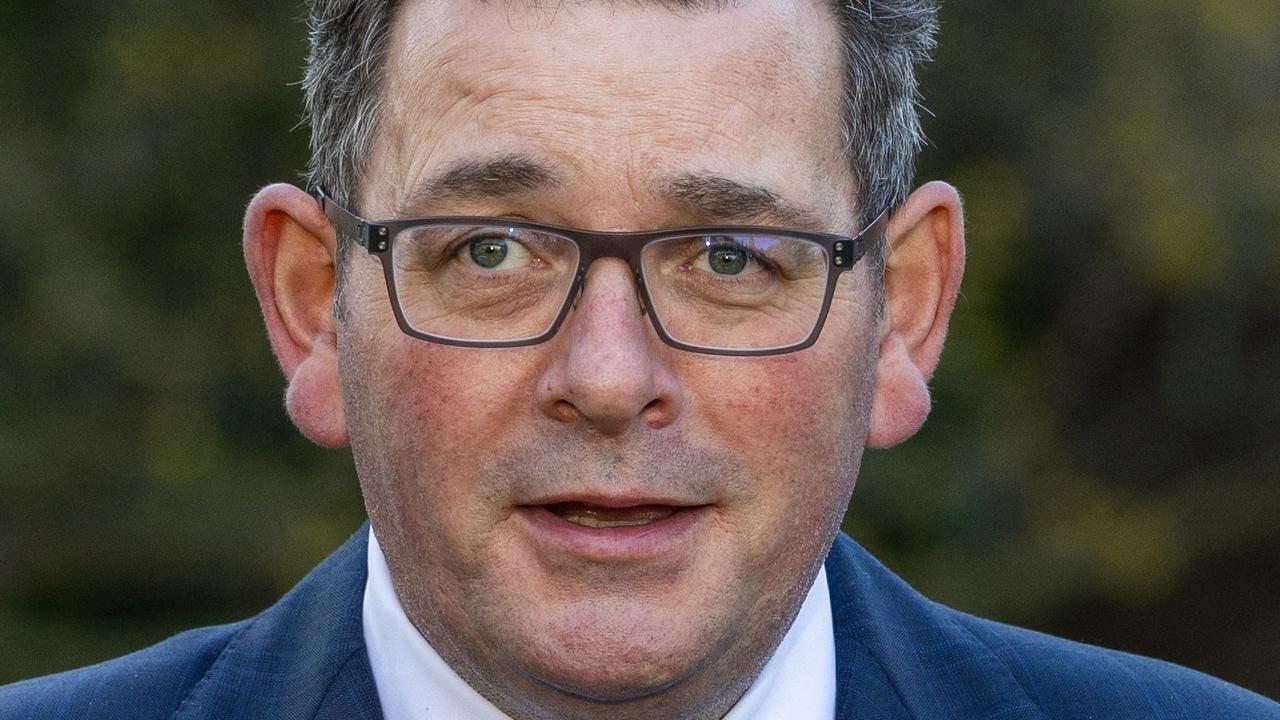
    A high-profile legal matter involving a 28-year-old man with a long-running dispute connected to former Victorian Premier Daniel Andrews has taken a new turn, after the man was arrested on alleged carjacking charges and is now fighting for release from custody.

    Police have laid out their case against Ryan Meuleman, accusing him of attempting to steal a vehicle with a woman and her young twin children in the backseat outside a laundromat in Pakenham, a suburb of Melbourne, on the evening of May 3. According to law enforcement testimony during a Wednesday bail hearing at the Melbourne Magistrates’ Court, the childrens’ father had stepped inside the laundromat around 9:40 p.m. to collect pre-washed laundry when Meuleman allegedly climbed into the car’s front driver’s seat and shifted the vehicle into drive.

    The children’s mother, who was already seated in the car, physically struggled with Meuleman over the gearshift and screamed to alert her husband, Detective Senior Constable Sean McIntyre told the court. The father immediately rushed back to the vehicle, punched Meuleman through the open driver’s window, dragged him out of the car onto the laundromat’s front sidewalk, and held him down until officers arrived to place him under arrest, the detective added.

    McIntyre told the court Meuleman appeared heavily impaired by drugs at the time of his arrest and gave police a false name, identifying himself as “Crew Thompson.” He was deemed unfit to participate in a police interview following his arrest. The court also heard Meuleman was already free on bail at the time of the alleged carjacking, awaiting trial on separate burglary and theft charges connected to a break-in at a commercial property.

    This new arrest comes 12 years after a collision that left Meuleman seriously injured, and which has sparked years of legal conflict. In January 2013, when Meuleman was 15 years old, he was hit while cycling by a Ford Territory driven by Catherine Andrews, wife of Daniel Andrews, who was then leader of Victoria’s Labor opposition. Daniel Andrews and the couple’s three children were passengers in the vehicle at the time. A post-crash investigation by Victoria Police resulted in no charges being filed against anyone in the Andrews family.

    Meuleman spent 11 days recovering in a hospital after the collision. He has long claimed the Andrews vehicle struck him as he cycled, while the Andrews family has consistently maintained that Meuleman crashed into their stationary car.

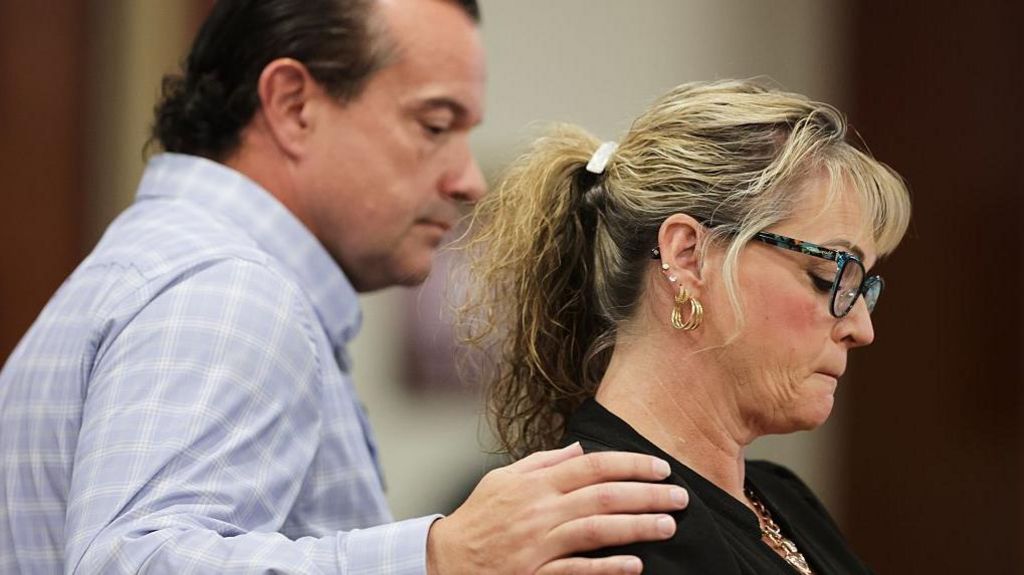
    Meuleman’s defense attorney, Tom Smedley, referenced the 2013 collision during the bail hearing, arguing the crash left his client with long-term, unresolved trauma that has severely impacted his mental health. “Ryan identified this period as a significant turning point in his life,” Smedley told the court. “He identifies his substance use has been a longstanding coping mechanism connected to unresolved psychological distress and trauma.”

    Smedley told the court Meuleman had already spent 87 days in pre-trial custody and was requesting bail so he could enroll in a 12-week inpatient rehabilitation program based in regional Victoria. Meuleman’s father, Peter, was present in the court gallery to support his son during the hearing.

    Magistrate Phillip Goldberg adjourned the bail application to a future hearing date after raising concerns about the rehabilitation facility’s security protocols, noting the center does not offer 24-hour on-site monitoring of patients. Smedley requested additional time to arrange alternative security measures, including fitting Meuleman with an electronic monitoring ankle bracelet, to address the magistrate’s concerns. The bail application will resume on August 5.

    The alleged carjacking is separate from an ongoing defamation lawsuit Meuleman filed against Daniel and Catherine Andrews last year. The defamation case stems from a 2013 injury compensation claim Meuleman filed over the collision. Earlier this year, Meuleman settled a separate lawsuit against his former legal team, Slater and Gordon, over claims the firm failed to properly represent him during negotiations for an $80,000 settlement with Victoria’s Transport Accident Commission. That case concluded in April 2025 with a confidential, out-of-court settlement that Meuleman’s current legal team described as “too good to refuse.”

    During the public proceedings around that lawsuit, the Andrewses released a joint media statement in September 2024 that noted they were not involved in the case against Slater and Gordon and repeated their assertion they “did nothing wrong” in the 2013 collision. Meuleman claims the statement falsely implies he lied about the details of the 2013 crash to seek undeserved financial compensation. The Andrewses have denied the defamation claim and are defending the lawsuit, which is scheduled to return to court later this year.

  • ‘Don’t wait until you want revenge’ – why prenups are on the rise

    ‘Don’t wait until you want revenge’ – why prenups are on the rise

    For decades, prenuptial agreements were widely associated only with billionaires, A-list celebrities, and old-money families — seen as a legal tool for the ultra-wealthy to protect massive fortunes ahead of marriage. But that stereotype is rapidly fading, as a growing share of ordinary couples of all income levels are choosing to sign these contracts before walking down the aisle, driven by shifting cultural attitudes, greater accessibility, and pragmatic life experience.\n\nOne of the earliest examples of this modern trend is the young couple Celine Tsoi and Charles Mock, who first crossed paths two years ago in Goleta, California, when Tsoi was 23 and Mock was 27. Just eight months after their first meeting, the pair got engaged — and almost immediately, their friends began asking one question: had they planned to sign a prenup?\n\nRather than brushing the idea off as unromantic, the couple embraced it. Though their financial gaps are small — Mock, a nurse, earns a higher annual income than Tsoi, a PhD student, while Tsoi has slightly more personal savings — they saw the process as an opportunity to address potential conflict points head-on. Tsoi says she was particularly moved by Mock’s willingness to stipulate that she would keep the shared home if the couple ever split. For her, the act of negotiating the agreement revealed more about her fiancé’s character than any casual date could. “A lot of things could happen in a marriage,” she explains. “You want to discuss them when you still love each other rather than when things go bad and you want to take revenge.”\n\nHigh-profile celebrity engagements, including the 2026 wedding of Taylor Swift and Travis Kelce and 2025 nuptials of Jeff Bezos and Lauren Sanchez, have kept public attention focused on prenups in recent months, but data shows the trend extends far beyond Hollywood and Silicon Valley. While official national tracking does not exist for the U.S., where divorce courts have a long history of upholding prenuptial agreements, surveys indicate that nearly half of all married millennials and more than one in three married Gen Z adults currently have a prenup. Across all age groups, roughly one in five married American couples hold these contracts.\n\nAcross the Atlantic, the trend is also gaining traction following legal reforms that give greater recognition to prenups in England. Research shows that around one in 10 all British couples now have a prenup, with younger couples leading the charge: roughly one in three married adults under 35 in the UK have signed an agreement.\n\nLondon-based family lawyer Mark Gilmartin, of JMW Solicitors, says he has seen a sharp spike in demand for prenuptial services over the past 18 months. The old stereotype of a billionaire seeking to protect his fortune from a much younger partner has been replaced, he says, by requests from everyday professionals: startup founders, entrepreneurs, social media influencers, and working couples from all income brackets. Gilmartin explains that many modern clients are not protecting existing massive fortunes, but rather the future gains they expect to build over their careers — “the fruits of what’s going to be, rather than what is.” A large share of ordinary clients also seek prenups to ring-fence inherited wealth they expect to receive from their families.\n\nFor Becca Gibson, who is set to marry Dave Howells in West Sussex, the decision to sign a prenup grew out of personal experience and a desire for pragmatic fairness. Gibson, 33, went through a messy first divorce that ended poorly, and the couple have unequal incomes and blended families: Gibson has three children from her first marriage, while Howells has one, and Howells, who works in finance, earns more than three times Gibson’s income from her eyelash extension business. Though a court could potentially award her a larger settlement than the prenup outlines, Gibson says the agreement is a fair arrangement that protects assets both sides bring to the marriage. She expects to inherit substantial property from her parents, and the agreement stipulates that each partner will keep what they entered the relationship with if the marriage ends. “It’s nice knowing that if anything were to happen, I would just go back to how life was before,” she says.\n\nHowells, 45, acknowledges that talking about prenups feels unromantic, but says the national divorce rate makes pragmatism a necessity. “I built a home for myself. I’ve built a future for myself, including pensions,” he explains. “Park the emotional side of me loving both her and the kids… Why on earth would I have to pay something towards her life in the event of us splitting up?”\n\nLawyers point to a handful of key drivers that have pushed prenups from the fringes to the mainstream. For many couples, a primary motivation is a desire to avoid repeating the pain of past separation or the messy divorces they watched their own parents go through. Second, the rise of low-cost, semi-automated online platforms has made prenups far more accessible and affordable than the traditional route of hiring expensive family lawyers. Howells initially planned to use a local law firm, which quoted him roughly £5,000 for the service, before switching to a digital semi-automated platform called Wenup that charged a fixed fee of just £1,600.\n\nJulia Rodgers, co-founder of U.S.-based online prenup platform HelloPrenup, notes that shifting marriage timelines also play a role. Today, couples are marrying later in life, meaning most have already accumulated assets — from homes and businesses to student loan debt — by the time they walk down the aisle. “So you have a lot to protect and to lose by the age of 34,” she says. The ongoing “Great Wealth Transfer”, which is passing trillions in assets from older generations to millennials and Gen Z, has also pushed demand: many parents of engaged couples insist on prenups to protect family inheritances.\n\nRodgers adds that the reputation of prenups as an instrument that disadvantages women has also become outdated. Today’s agreements often empower women by clarifying their legal rights and financial expectations from the start of the marriage, creating space for open conversation about core topics before conflict arises. “We want to make sure we have the honest, open, transparent conversations about life goals, about finances, about roles and responsibilities in the home, so that we can have a long, happy marriage and not end up in that position that we saw our parents in,” she says.\n\nFor Tsoi, the decision to sign a prenup has already paid off, even before marriage. The online agreement cost her just a few hundred dollars, and she calls it a worthwhile investment that is far more important than the wedding itself. The hardest conversations about finances are already done, she says: “We haven’t had a single argument about finances.”

  • eBay agrees $56m settlement with bloggers over harassment case

    eBay agrees $56m settlement with bloggers over harassment case

    Five years after a brazen, coordinated campaign of retaliatory harassment against a married couple who ran an independent online publication critical of eBay’s business practices, the e-commerce giant and its former top executives have agreed to pay $56 million in civil damages to close the high-profile case.

    The victims, David and Ina Steiner, founded and operated EcommerceBytes, a website and industry newsletter that regularly published coverage scrutinizing eBay’s policies and corporate decisions. In 2019, that critical coverage drew a aggressive, unacceptable response from a cohort of then-current eBay executives, who orchestrated a months-long pattern of intimidation designed to silence the couple’s reporting.

    Court records and federal investigation documents detail a series of disturbing, threatening acts carried out against the Steiners, who reside in Massachusetts. The group sent the couple unwanted, menacing packages: a costume mask coated in pig’s blood, a funeral wreath left at their home, and a copy of a book about coping with the death of a spouse, messages clearly intended to frighten the pair by implying harm could be coming. Beyond sending disturbing parcels, executives sent repeated harassing messages to the couple via the social media platform X, then known as Twitter. In one of the most alarming breaches, multiple members of the group traveled to the Steiners’ home and attempted to place a tracking device on their personal vehicle to monitor their movements.

    Between 2022 and 2024, all seven former eBay executives implicated in the scheme pleaded guilty to federal criminal charges connected to the harassment, following an investigation by the U.S. Department of Justice and the FBI. In 2024, one lead FBI investigator on the case described the operation as an “unprecedented, relentless, and over-the-top harassment campaign,” a characterization that underscored the severity and audacity of the corporate-led intimidation. eBay itself was also criminally charged in the scheme, and reached a deferred prosecution agreement with the DOJ that required the company to pay a $3 million criminal fine.

    The newly announced $56 million civil settlement resolves the separate civil suit the Steiners brought against eBay and the involved executives. Under the terms of the agreement, the bulk of the payment comes from eBay, which has also committed $6 million of the total sum to go to various nonprofit organizations. Former eBay CEO Devin Wenig, who stepped down from the company the same year the harassment took place, will personally contribute $1 million to the settlement. Court records show that in 2019, Wenig sent a text message to the company’s top communications executive that read “Take her down,” in reference to Ina Steiner.

    A representative for Wenig clarified this week that earlier legal proceedings had established the text was meant to reference a public relations strategy to counter what the company claimed were factual errors in Ina Steiner’s reporting, not a directive for harassment. “No one should ever have been subjected to what the Steiners endured in 2019, and I’m saddened by it, especially because it occurred during my time as CEO of eBay. The harassment was deliberately done in secret,” Wenig said in a statement this week. According to the Steiners’ legal team, Wenig’s $1 million personal contribution will be donated to an unnamed nonprofit that works to protect First Amendment rights to free speech, and will be gifted in Ina Steiner’s name. The U.S. Constitution’s First Amendment, which protects free expression, is a central issue in the case, as the harassment was carried out to punish the couple for critical speech.

    Christopher Murphy, lead counsel for the Steiners at Scalli Murphy Law PC, celebrated the settlement as a landmark moment for accountability. “We believe this resolution sends a clear message that corporations and their executives cannot engage in this type of misconduct without facing significant consequences,” Murphy said in a statement Tuesday.

    eBay also issued an official acknowledgement of wrongdoing as part of the settlement announcement. “What the Steiners were subjected to by former eBay employees in 2019 was wrong, reprehensible and should never have happened,” the company said. eBay formally condemned the former employees who pleaded guilty to criminal charges that prompted the civil suit, and admitted that internal communications between Wenig and other former executives carried an “unprofessional tone.” The company added: “This agreement is consistent with our commitment to fairly compensate the Steiners and fulfills our efforts to make things right.”

  • 10-year-old girl dies days after collision in which mother was killed

    10-year-old girl dies days after collision in which mother was killed

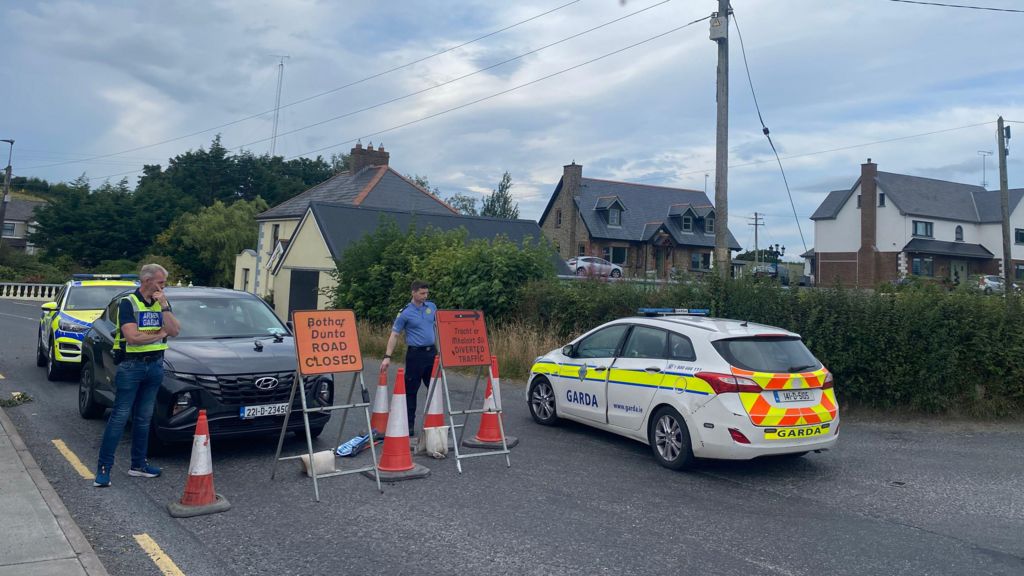
    A devastating road traffic collision in County Cavan, Republic of Ireland, has claimed a second life this week, after a 10-year-old girl passed away in hospital Tuesday, just days after her mother was killed at the crash site.

    The fatal incident unfolded shortly after 4:30 p.m. local time this past Friday on the R162 regional road at Corclare, near Shercock, when a passenger car collided head-on with a flatbed utility van. The driver of the car, a woman in her 50s, was pronounced dead at the scene by emergency responders.

    The 10-year-old girl, who was riding as a passenger in the car during the collision, was rushed to Dublin’s Temple Street Hospital for urgent medical care. Despite efforts from medical teams, Gardaí – the national police service of Ireland – confirmed the child passed away at the hospital on Tuesday afternoon.

    In the wake of this second death, investigators have issued a renewed public appeal for anyone who witnessed the collision, or who may have captured dashcam footage of the vehicles or the crash scene in the moments before or after the incident, to contact investigators immediately. Law enforcement officials note that any information, even what witnesses may consider to be minor details, could prove critical to building a full understanding of how the collision occurred and advancing the official investigation.

  • Bystander video shows teen lifeguard’s dramatic ocean rescue

    Bystander video shows teen lifeguard’s dramatic ocean rescue

    On a sun-soaked Southern California beach, what started as a routine day of recreation quickly turned into a life-or-death emergency, when a 10-year-old child was pulled out to sea by a powerful rip current. In a remarkable display of quick thinking and courage, 16-year-old local lifeguard Jaxson Meeks sprang into action, launching an immediate ocean rescue that has since been immortalized in raw bystander footage shared across social media.

    Rip currents are a persistent, dangerous hazard at many California coastal destinations, capable of dragging even experienced swimmers far from shore in minutes. On the day of the incident, the young victim had been wading in shallow water with family when the unexpected current pulled him offshore. Witnesses on the beach reported panicked screams from the child’s relatives, drawing immediate attention to the struggling 10-year-old.

    Meeks, who had completed advanced lifeguard training just six months prior, did not hesitate. He grabbed his rescue buoy, sprinted into the surf, and swam out against the strong current to reach the child before he could be swept further into open ocean. The bystander video, filmed by a beachgoer waiting on the sand, captures the tense moments of the rescue: Meeks pulling the panicking child onto the buoy, then battling the pull of the current to bring both of them safely back to shallow water. Once on shore, the child was checked by waiting emergency medical personnel and found to be unharmed, aside from minor shock.

    Local lifeguard services have praised Meeks for his calm response and adherence to safety protocols, noting that his quick action likely prevented a tragic outcome. The video of the rescue has circulated widely online, with thousands of viewers celebrating the teen lifeguard’s heroism. Coastal safety officials have also used the incident as a reminder to beachgoers of the importance of swimming near lifeguard stations and heeding current safety warnings.

  • Ghana mourns its tallest man – a ‘generous and popular giant’

    Ghana mourns its tallest man – a ‘generous and popular giant’

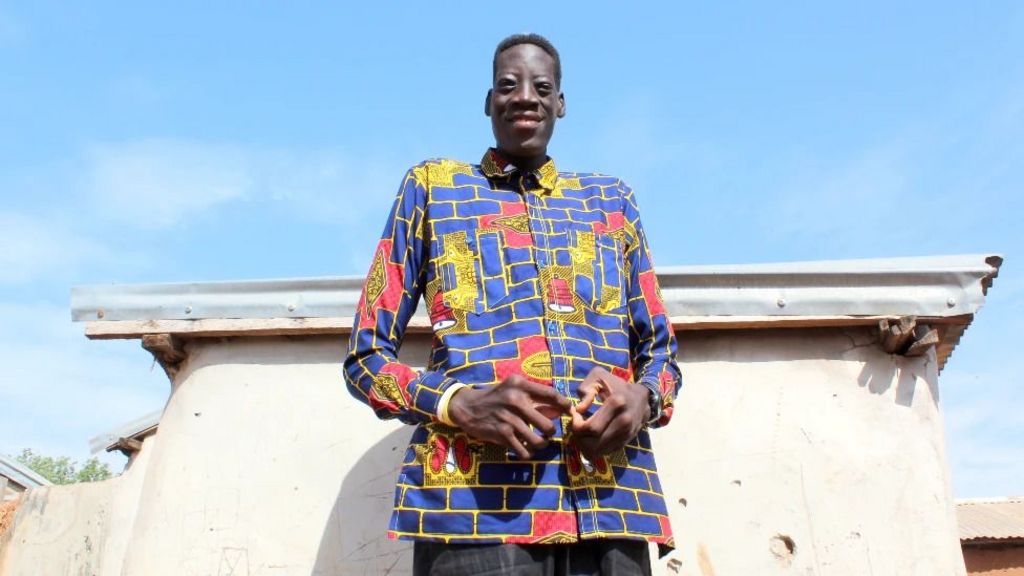
    Ghanaians, particularly residents of the country’s northern region, are mourning the passing of Sulemana Abdul Samed, widely known as Ghana’s tallest man and a beloved local icon who died at 33.

    Samed, who went by the popular Hausa nickname Awuche meaning “Let’s Go”, passed away on a Monday morning at Tamale Teaching Hospital, a major medical facility located roughly 160 kilometers south of his home village of Gambaga. He had been admitted to the facility to treat infected sores that developed on his legs, a secondary complication linked to the genetic condition that defined his life.

    Born and raised in Gambaga, Samed did not begin experiencing unusual growth until his early 20s. While working at a butcher shop in Ghana’s capital Accra at age 22, he first noticed alarming changes to his body: his tongue swelled to the point that he struggled to breathe, followed by rapid, abnormal growth across his entire frame. He was eventually diagnosed with Marfan syndrome, a genetic disorder that affects the body’s connective tissue, which triggered extreme growth of his limbs and a diagnosis of gigantism in his late 20s. When a BBC measurement team documented his height in 2023, he stood at 223 centimeters (7 feet 4 inches) tall, and medical experts suspect he grew even taller in the years leading up to his death. It marked the first accurate official measurement of his height.

    The condition brought extensive, life-altering challenges. A curved spine, limited mobility, and persistent health complications forced Samed to abandon his dream of working as a professional driver just nine years after his symptoms first appeared, prompting him to return to his rural home village. He once shared that he had been an active, athletic young man who loved playing football with friends, but the disorder eventually left him unable to walk even short distances and curtailed his social life. For years, he also struggled to cover the cost of ongoing medical care. However, despite the constant hardships of his condition, Samed maintained a remarkably optimistic outlook on life and embraced his local celebrity status.

    Earlier in 202[EDIT: 2025, per context of the 2026 date of this report], a prominent Ghanaian businessman stepped forward to support Samed’s care. Ibrahim Mahama, brother of Ghanaian President John Mahama, agreed to cover all of his medical expenses at Tamale Teaching Hospital and shared an update on his planned treatment just weeks before his passing.

    Samed’s sudden death has come as a shock to his community, even after doctors had reported he was responding well to treatment for his leg infection. “Everyone knew how generous and kind he was. From when he died until now a lot of people are still coming to the house to find out what exactly happened,” his cousin Sulemana Abdul Kudus told the BBC. Kudus added that Samed’s fame put Gambaga on the map across Ghana, giving the small rural community a unique national identity. “Anywhere he found himself in the country and they asked him, he would say he is from Gambaga and people knew that was where the tallest man was from. It gave the community identity, and he was popular as well,” Kudus explained.

    In response to the expected outpouring of grief, Samed’s family has made the decision to hold his burial in Tamale rather than his home village of Gambaga, to avoid overwhelming the small community with the large number of expected mourners.

  • ‘Something broke’: Italy’s Arab communities increasingly fearful of police violence

    ‘Something broke’: Italy’s Arab communities increasingly fearful of police violence

    Two recent fatal incidents involving men of North African descent have reignited deep-seated, long-standing concerns within Italy’s Middle Eastern and North African (MENA) communities over systemic police excessive force, institutional discrimination, and political neglect, sending a wave of anxiety through marginalized migrant and racialized neighborhoods across the country.

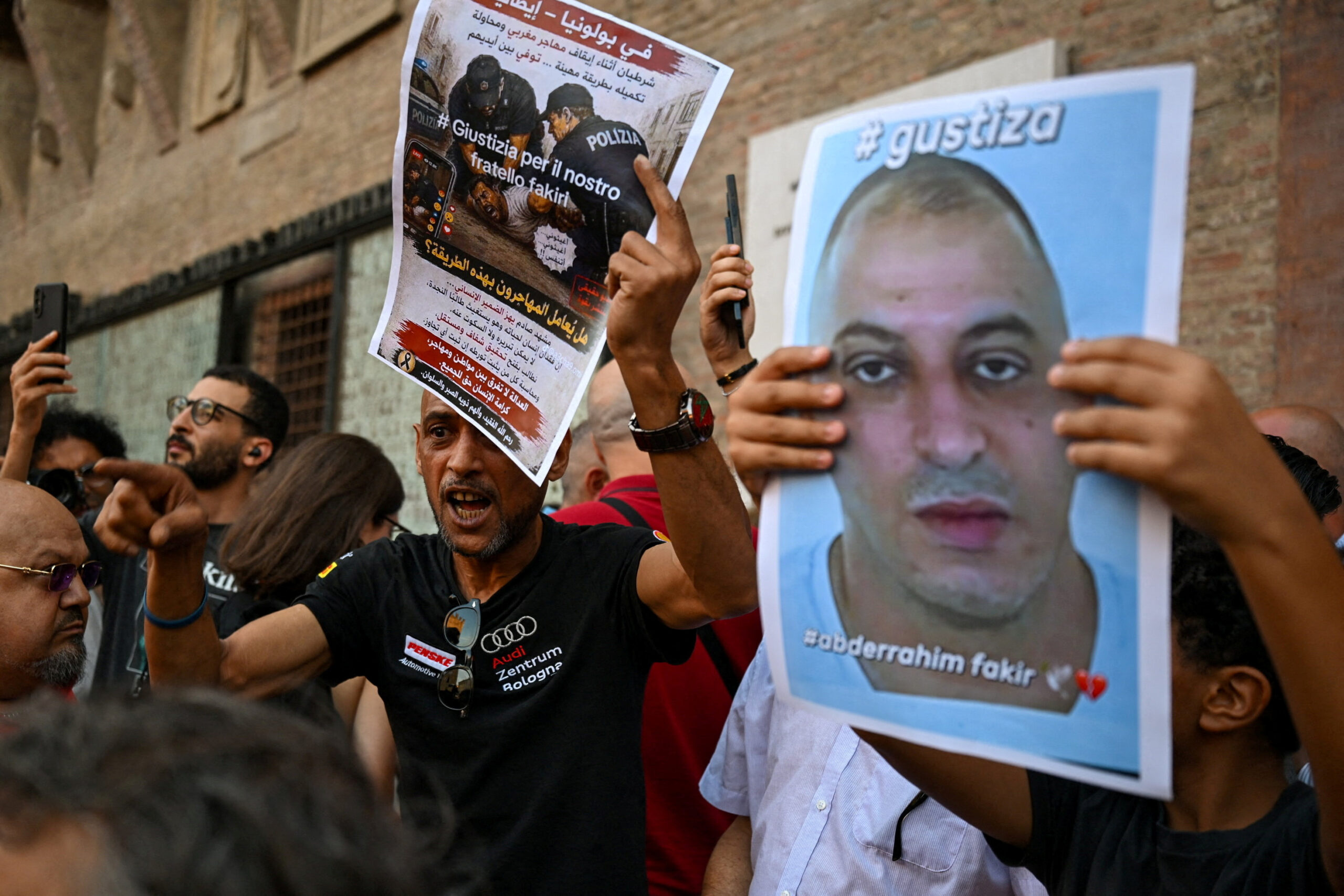
    The first tragedy unfolded on July 19 in Bologna, where 42-year-old Moroccan-born Abderrahim Fakir died after being restrained by two police officers and a civilian. Local authorities had been called to the scene after Fakir, experiencing an acute episode of psychological distress, claimed he faced imminent danger and damaged nearby residential garage doors.

    Amateur footage captured from a neighboring apartment contradicted initial police accounts, showing Fakir handcuffed, struck with tear gas, and pinned face-down to the ground by officers for multiple minutes as he repeatedly screamed for help. Strikingly, Italian Red Cross volunteers already on site stood idle throughout the nearly seven-minute incident, offering no medical intervention. The graphic footage spread virally across social media platforms within hours, sparking widespread public outrage and triggering two separate official inquiries: one into the officers’ use of force, and a second into the Red Cross’s failure to intervene. Bologna’s public prosecutor’s office has since opened a formal manslaughter investigation into Fakir’s death.

    Just four days later, a second death amplified public anger in the southern city of Cosenza. Twenty-five-year-old Mohamed Amin Bessioud, who was born in Italy to Tunisian parents, died after jumping from a third-floor balcony while Carabinieri military police conducted a residential search. Bessioud’s mother told local media her son had long struggled with clinical depression and had grown increasingly tormented by repeated police harassment, saying he lived in constant fear of officer check-ins. Local prosecutors have launched an investigation into the circumstances of his death, while community activists frame the incident as another preventable fatality rooted in systemic police targeting of MENA communities.

    These two deaths are not isolated incidents, community leaders and analysts emphasize: they are the latest in a growing string of fatal encounters stretching back years that have left a deep mark on Italy’s Arab communities. Previous high-profile cases include the 2021 shooting death of Youns El Boussettaoui by a former police officer in Voghera, the 2024 death of 19-year-old Ramy Elgaml following a high-speed police chase in Milan that sparked weeks of mass protests, and the January 2025 shooting death of Abderrahim Mansouri by police during a drug operation in Milan’s Corvetto district.

    In the wake of Fakir’s killing, thousands of demonstrators marched through central Bologna to demand accountability and justice for his death. Protests quickly spread to more than a dozen other Italian cities, and isolated clashes between small groups of demonstrators and riot police pushed the issue to the top of Italy’s national political agenda. Bologna’s center-left Democratic Party mayor Matteo Lepore has found himself caught between competing pressures: police unions and right-wing politicians have accused him of tacitly endorsing violence against law enforcement, while grassroots community groups argue his administration has responded to decades of social neglect in the working-class Pilastro neighborhood—where Fakir was killed—with expanded aggressive policing rather than targeted investment in housing, education and social services. The far-left communist party Power to the People has gone further, accusing both Lepore’s municipal government and Prime Minister Giorgia Meloni’s national government of accelerating the militarization of low-income, majority-migrant neighborhoods. The party argues that current security policies pursued by both levels of government frame working-class, majority-migrant districts as public security threats rather than addressing the deep structural inequalities that have shaped these communities for generations.

    For MENA communities in Italy, the two deaths cannot be separated from a broader shift toward restrictive security policies that disproportionately target racialized groups under the current far-right government. Since taking office in 2022, Meloni’s administration has introduced a series of harsh decrees targeting street protest and petty crime, a policy framework that consistently frames MENA and Muslim communities as inherent public security risks. A controversial February 2025 law that grants law enforcement greater flexibility to bypass standard investigative procedures is now being applied for the first time to the two officers charged in Fakir’s death, a move that has reinforced community claims of institutional favoritism for police.

    Emmanuele Jonathan Pilia, editor at independent Italian publisher D Editore, says the current crisis is the outcome of decades of systemic practice. “Italian policing has long been used to control populations considered marginal,” Pilia explained in an interview. “Today that same logic is increasingly directed towards neighbourhoods where many Arab, Muslim and migrant families live.” Pilia notes that years of political rhetoric linking migration, Islam and public insecurity have normalized aggressive policing and legitimized anti-Muslim hostility in mainstream public life, pointing to high-profile incidents such as far-right Lega Party MEP Silvia Silvia Sardone’s public harassment of a woman wearing a niqab in Turin, where Sardone filmed the encounter and told the woman to “move to Islamabad.”

    Decolonial psychotherapist Camilla Ponti, whose work centers on migration, racialization and mass incarceration, argues that systemic police violence is rooted in cultural dehumanization that predates any law enforcement interaction. “Before violence becomes institutional, it becomes cultural,” Ponti said. “When non-white people are consistently portrayed as dangerous, their dehumanisation becomes normalised.” Ponti adds that this same framing has shaped Italy’s response to pro-Palestine activism since the start of Israel’s military campaign in Gaza: dozens of Arab pro-Palestine organizers have been arrested and detained on unsubstantiated terrorism charges, framed as security threats under the same national security framework that targets racialized communities.

    Italian-Pakistani journalist Sara Tanveer argues that mainstream Italian media plays a central role in reinforcing these harmful stereotypes. “Italian journalism still struggles to recognise its own biases,” Tanveer said. “Too often, Arabs and Muslims become visible only through stories about crime, terrorism or security.” She notes that coverage of cases like Fakir’s typically prioritizes unproven accusations about the victim’s past over contextual details of his death or the concerns raised by his family, reinforcing public suspicion rather than empathy. The same pattern, she says, shapes coverage of detained pro-Palestine activists, where reports rarely scrutinize investigations that rely heavily on Israeli intelligence, reinforcing the harmful link between Muslim identity and terrorism in public discourse.

    For many activists, the latest deaths have not opened a new national conversation—they have revived one that has festered in Italian politics for decades, recalling earlier high-profile cases of police impunity such as the 2001 killing of left-wing activist Carlo Giuliani during the G8 summit protests in Genoa, and the 2009 death of Stefano Cucchi, who was beaten to death by Carabinieri after being arrested for minor drug possession. Strikingly, Fakir’s death came exactly as thousands of demonstrators were gathering in Genoa to commemorate the 24th anniversary of Giuliani’s killing, drawing a direct line between decades of police impunity and the current crisis facing MENA communities.

    Many community members now report a growing, pervasive sense of insecurity, saying they are increasingly identified by their Arab identity first, and their Italian citizenship second. “After Youns El Boussettaoui was killed, something broke,” said Rajaa Ibnou, an Italian-Moroccan activist at Milan’s Lambretta social centre. “Many of us realised we were no longer seen first as citizens, but as Arabs. The Arab community in Italy is under growing pressure. Not only because of increasingly restrictive security policies, but also because of the silence of much of the political opposition.”

  • Drone footage shows Wisconsin tornado damage

    Drone footage shows Wisconsin tornado damage

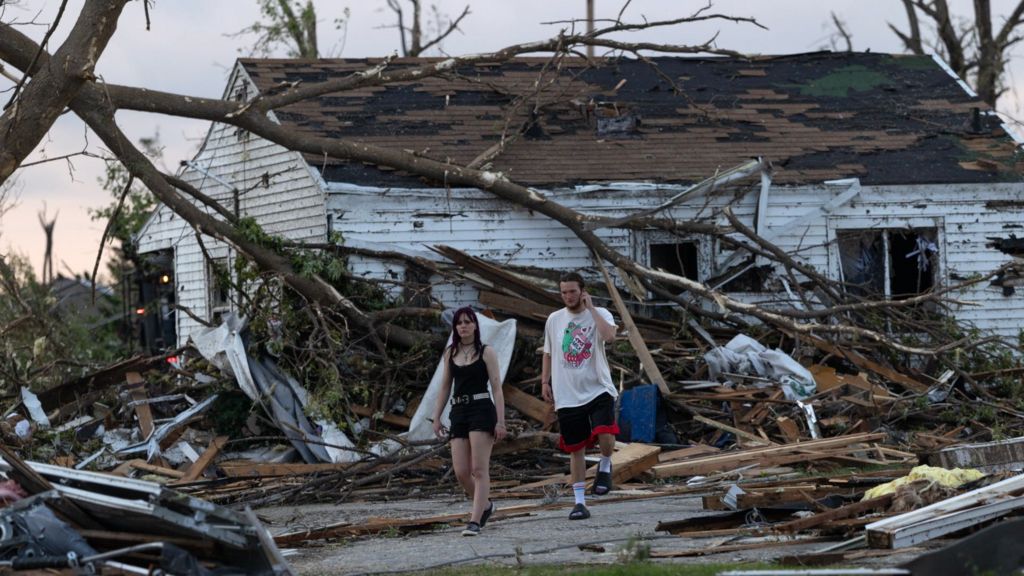
    Recently, a powerful EF-2 tornado tore through multiple communities in Wisconsin, leaving a trail of damaged infrastructure and disrupted lives in its wake. Dramatic drone footage, captured in the immediate aftermath of the storm, offers a sweeping bird’s-eye view of the destruction, showing uprooted trees, damaged residential structures, and debris scattered across large swathes of the affected Midwest region. Emergency management teams have already deployed to the hardest-hit areas to conduct preliminary damage assessments and support local residents whose properties have been impacted. As of the latest updates from state emergency officials, there have been no immediate reports of fatalities or injuries connected to the twister, a outcome that has brought relief to response coordinators and local communities bracing for potential loss of life. Crews are now working around the clock to clear roadways, restore essential utilities, and begin the long process of rebuilding for affected households.

  • ‘A narcissist’: Family hit out at Bryan Kohberger for challenging murder conviction

    ‘A narcissist’: Family hit out at Bryan Kohberger for challenging murder conviction

    More than three years after four University of Idaho students were brutally stabbed to death in their off-campus Moscow home, a shocking new development has reignited agony for the victims’ loved ones. Bryan Kohberger, the former criminology PhD student from Washington State University who was sentenced to four consecutive life terms last year for the November 2022 killings, has announced he is withdrawing his guilty plea – a deal he originally accepted to escape the possibility of capital punishment. In an exclusive interview with *The New York Times*, Kohberger claimed his original 2023 plea was based on “false promises and blatant disinformation” from his legal team, and he now intends to enter a plea of not guilty. He even went so far as to say prosecutors are welcome to pursue the death penalty against him again if they wish. For the family of Kaylee Goncalves, one of the four young victims killed in the attack, Kohberger’s latest move is nothing more than the manipulative act of a narcissist who is once again stealing the spotlight from the people whose lives he cut short. In a scathing public statement, the Goncalves family pointed out that Kohberger voluntarily made the choice to forego a jury trial, turning over control of his fate and the presentation of the case’s facts to the court. They emphasized that in the two years preceding his sentencing, Kohberger and his legal team had full access to all discovery materials, reviewing every piece of evidence compiled in the case. At no point prior to the sentencing did he raise objections to the process, claim he was pressured or misinformed, or challenge the evidence shared with his defense. “The real tragedy,” the family wrote, “is that Kohberger continues to receive an outsize amount of public attention, all at the expense of the four victims who can no longer speak for themselves.” The 2022 murders sent shockwaves through the tight-knit college community of Moscow, Idaho, and dominated national news headlines for nearly two months before Kohberger’s arrest in December 2022. To this day, investigators have not identified a clear motive for the attack: Kohberger had no documented connection to any of the four victims, and he has never publicly explained why he drove across state lines to the University of Idaho campus to carry out the brutal stabbing. While prosecutors never established a personal link between Kohberger and the victims, they did present overwhelming forensic and circumstantial evidence that placed him at the off-campus home where the killings took place, leading to his conviction. Idaho Attorney General Raúl Labrador has expressed solidarity with the grieving families, acknowledging that they have already “endured unimaginable loss” and now must grapple with fresh, devastating pain from Kohberger’s decision to reverse his plea. “My office stands ready to do whatever is necessary to ensure justice is fully carried out,” Labrador said in a formal statement reaffirming the state’s commitment to upholding the original conviction. Separately, one of the victims’ aunts has made public a surprising personal revelation, saying she has already forgiven Kohberger for the killing of her niece – a stance that has added another layer of complexity to a case that continues to grip the American public.