分类: society

  • Water outage at UK’s Gatwick airport leaves toilets out of order and restaurants closed

    Water outage at UK’s Gatwick airport leaves toilets out of order and restaurants closed

    On a Sunday travel day, a sudden power failure at a regional water treatment facility in southeast England triggered cascading disruptions that spilled over into one of the United Kingdom’s busiest international airports, Gatwick, leaving essential facilities nonfunctional and forcing food and beverage outlets to shut their doors.

    The power outage hit SES Water’s Bough Beech Water Treatment Works, which serves communities across Kent and East Sussex. The incident caused a widespread drop in water system pressure, leading to temporary service interruptions for hundreds of domestic customers in the two counties, as well as critical infrastructure connected to the regional network, including Gatwick Airport, located just south of central London.

    Within hours of the outage being reported, Gatwick Airport issued a public apology via the social media platform X to passengers traveling through both of its main terminals, acknowledging the significant inconvenience caused by the loss of water service. Airport officials noted that the facility had arranged to distribute bottled water to mitigate the impact of the outage, but that claim was immediately challenged by passengers on the ground.

    Paul Lee, one of the thousands of passengers passing through Gatwick that day, told reporters that he had received no official announcements about the water shutdown and had not witnessed any bottled water being distributed to travelers. “For people who need to access restrooms, this situation is absolutely unacceptable,” Lee said in an interview with the BBC. “I’m fortunate that my flight is departing soon, so this won’t affect me for long, but for passengers with connections or departures still hours away, this is going to create major problems.”

    Michael Dugher, a former British Member of Parliament, also documented the chaos on social media, noting that with all airport bars and restaurants closed due to the water outage, there was a severe shortage of available seating for waiting passengers. Many travelers were forced to sit directly on the terminal floor to wait out the disruption. Dugher called on Gatwick management to quickly reopen the closed dining and lounge spaces to ease the seating crunch and improve passenger comfort.

    As of Sunday afternoon, SES Water confirmed that crews were working around the clock to restore full power and water pressure to all affected areas, but did not issue an immediate timeline for when service would return to normal.

  • The notorious Cameroonian prison with its own record label

    The notorious Cameroonian prison with its own record label

    Deep inside the overcrowded, crumbling concrete barriers of New Bell Prison in Douala, Cameroon, a self-sustaining parallel world thrives. Inmates operate informal delivery services nicknamed “prison taxis,” self-appointed inmate enforcers assist overstretched security staff, and open-air markets sell homemade fried cassava and beignets to the facility’s population. Now, a gritty, transformative initiative born from this adaptive culture is turning incarcerated artists into global creative voices: Jail Time Records, an in-prison independent music label and documentary project that just earned international acclaim.

    Against the harsh backdrop of one of Africa’s most notoriously violent and overcapacity prisons, Jail Time Records offers more than just a recording space. It is a space of catharsis, rehabilitation, and freedom beyond the four concrete walls that hold its artists. The project was born by chance in 2018, when Italian artist Dione Roach volunteered with a non-profit running arts programming inside New Bell. During a casual dance workshop for inmates, a group of aspiring rappers grabbed the microphone to deliver raw, unplanned freestyles. Blown away by their talent and vulnerability, Roach approached prison officials for permission to build a small on-site studio. When authorities approved the request, she partnered with Steve Happi, a former New Bell inmate with first-hand experience of the prison’s injustices, to lead the project as producer and sound engineer.

    Happi’s own path to New Bell underscores the arbitrary nature of justice that many incarcerated people face. After a bitter family dispute over his late father’s remains, his aunt—a high-ranking Cameroonian judge—allegedly arranged to have him imprisoned on false charges of patricide. He was ultimately acquitted two years later, and carried a deep understanding of how the carceral system strips people of agency and voice. For Happi, the studio became a tool to push back against that erasure: “It’s this instrument of resistance… where we can really share friendship, love and our voices can be heard,” he told the BBC’s *Talking Movies* program. “We don’t think anymore about the four walls – we find the freedom.”

    That freedom has resonated far beyond New Bell’s gates. Today, tracks recorded in the studio’s spartan 100-square-foot booth—where a single desktop computer powers all recording work—have earned fans across South Africa, the United States, and Argentina. One of the label’s biggest stars, Empereur, a longtime gang leader serving a 10-year sentence for multiple violent offenses, has accumulated 24,000 YouTube views for a music video filmed entirely on-location inside the prison. The initiative has grown to include artists from the prison’s women’s wing, where Jeje, the label’s first female signee, debuted her brooding 2022 Afrobeats track *Show Me The Way*, exploring her experience of incarceration after fleeing an abusive uncle. In 2022, the collective released *Jail Time Vol 1*, their first full album, with half of all profits going directly to the incarcerated artists and the rest reinvested into expanding the label.

    The story of the project has now been captured in an eponymous feature documentary, co-directed by Happi and Roach over six years of on-site filming. Last month, the film took home three top awards, including Best Documentary Feature, at New York’s prestigious Tribeca Film Festival, with Oscar-winning New Zealand director Taika Waititi and his wife, pop star Rita Ora, signing on as executive producers. Waititi praised the project for the profound role it plays for incarcerated people, many of whom are serving life sentences: “Just in terms of the power of art in relation to redemption and what that can mean to someone who, you know, some of these people are in prison for life. I think having an outlet is an incredibly powerful and humane thing.”

    The documentary pulls no punches about the grim realities of life inside New Bell. A 2022 Human Rights Watch report found the facility, originally built to hold just 1,175 people, crammed with 4,700 inmates—four times its intended capacity. Unsaniatry, overcrowded conditions fueled a deadly cholera outbreak in 2020 that killed at least six prisoners, and the prison has a long history of violence: in 2008, guards shot and killed 16 inmates during an attempted uprising. The film itself shows Empereur shaking down a young, newly arrived inmate for his necklace and flip-flops, a raw depiction of the coercive power dynamics that shape daily life inside.

    Critics have questioned whether the project risks glorifying incarcerated people who have committed violent offenses, but Roach pushes back on that framing, emphasizing that the initiative is rooted in harm reduction and rehabilitation, not glorification. “The process we’re doing is a rehabilitation process, basically. We enter the prison without any judgment and it’s the only way we can really approach this kind of work,” she explained. “Music, as with any creative process, is also a way of self-discovery… coming to terms with things you’ve done and hopefully changing for the better.”

    Prison officials have embraced that approach, with the prison’s warden even attending the label’s 2024 courtyard concert and dancing alongside performing inmates. With official support and growing international attention, the project is expanding: in 2023, Roach and Happi opened a second Jail Time Records studio inside a maximum-security prison in Ouagadougou, the capital of Burkina Faso, 1,600 kilometers from the original New Bell location, with plans to replicate the label, video production, and documentary model there.

    For the artists who record at New Bell, the impact goes far beyond streaming numbers or festival awards. The documentary profiles Stone, a former presidential guard serving 10 years for armed robbery (a crime he maintains he did not commit), who raps in his track *Heart of Stone*: “I’m closed and tight like a cell door. No solid ground I slip like a fish.” The film captures his repeated, often unsuccessful attempts to call his young daughter Maira, moments that lay bare the deep pain of separation that incarceration brings. Even for those who will never leave New Bell alive, the film closes with a quiet tribute to six inmates who died during the project’s six years of filming, the project offers something no prison can take away: a sense of purpose.

    As Happi puts it, music acts as a “lantern for a brighter future” for men and women who have been written off by society. “Before that, they had the stubborn mentality: it’s them against the world,” he says. “They feel now important – they feel like they have a place in the society.”

  • Several people are injured at Berlin’s LGBTQ+ march after a car drives into the crowd

    Several people are injured at Berlin’s LGBTQ+ march after a car drives into the crowd

    BERLIN — One of Europe’s largest annual LGBTQ+ pride celebrations was abruptly cut short in the German capital Saturday, when law enforcement authorities called off the event midway through its start after a car drove into a crowd near the march route, leaving multiple people injured. The incident unfolded in Tiergarten, a central public park adjacent to the established parade path, where the vehicle struck multiple attendees before the situation was contained.

    In an official public statement posted to the social platform X, Berlin Police urged all participants and bystanders at the event to evacuate the area immediately. While authorities confirmed that several people sustained injuries, they have not yet released a specific number of those affected. Law enforcement also noted that a large contingent of officers has been deployed to the scene to respond to the incident, though they could not immediately specify the exact number of personnel on site.

    The Berlin pride parade, locally called Christopher Street Day, draws hundreds of thousands of attendees from across Germany and the broader European region each year, making it one of the continent’s most high-profile and well-attended LGBTQ+ community gatherings. Saturday’s shutdown marks an unexpected and violent interruption to what organizers had planned as a day of celebration and advocacy for queer rights.

  • Watch: Protesters celebrate resignation of India’s education minister

    Watch: Protesters celebrate resignation of India’s education minister

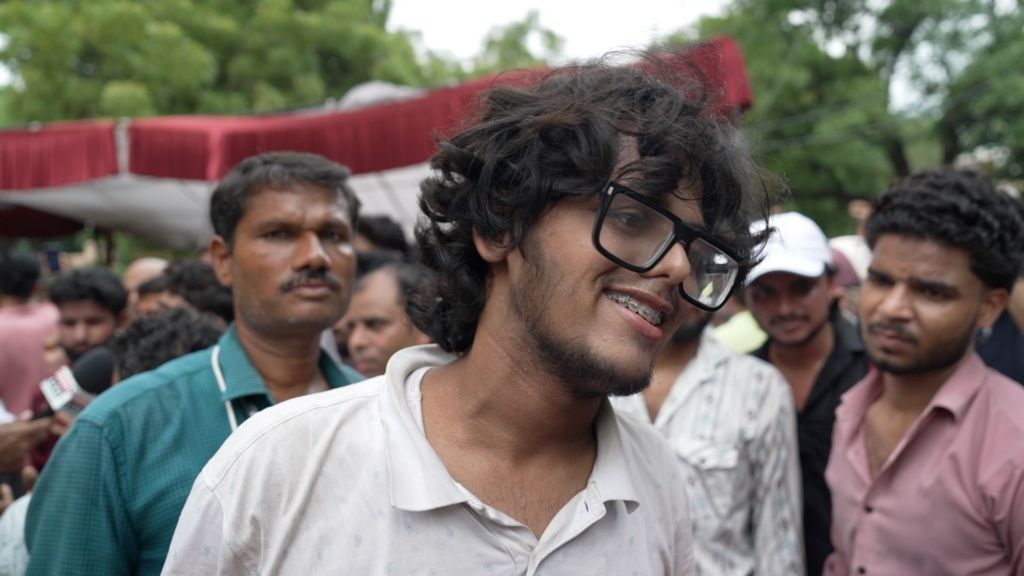
    In a significant turn of events that has captured national attention in India, widespread public celebration has broken out among demonstrators following the announcement that the country’s education minister has resigned from their post. The demonstration, which was organized and led by the youth-focused activist group the Cockroach Janta Party (CJP), had drawn growing public momentum in recent weeks, and the minister’s departure marked a major victory for the movement. Within hours of the official confirmation of the resignation, CJP leadership announced that the group would be ending its protest, fulfilling one of the core demands that had anchored their demonstration. Footage shared across social media and news outlets shows crowds of demonstrators cheering, waving placards, and marking the moment as a win for grassroots youth advocacy in the country. The outcome of the protest highlights the growing influence of youth-led political organizing in India, where young voters and activists have increasingly pushed for systemic changes across key public sectors including education. While the resignation has resolved the immediate trigger for the demonstration, CJP leaders have hinted that the group will continue pushing for broader reforms to India’s education system in the coming months. The event has sparked widespread discussion across Indian political circles about the power of grassroots public pressure to shape government leadership and policy priorities.

  • Woman dies and child injured in collision between car and truck

    Woman dies and child injured in collision between car and truck

    A devastating road traffic collision has claimed one life and left a child in critical condition in the Republic of Ireland, according to official updates from local law enforcement. The accident, which involved a passenger car and a heavy goods truck, unfolded shortly after 5 p.m. local time on Friday along the R162 roadway in the Corclare area of Shercock, County Cavan.

    The fatality identified was a woman in her 50s, who was behind the wheel of the car involved in the crash. She was pronounced dead at the scene of the collision, Gardaí, the national police service of Ireland, confirmed in a statement. A young girl traveling as a passenger in the same car suffered severe life-threatening injuries and has been transported to a local hospital for emergency treatment, where she remains in critical condition as of the latest update.

    While several other people were travelling in the two vehicles involved, all other occupants only sustained minor injuries that did not require hospital admission, with first responders able to provide on-site medical treatment for those affected. No additional fatalities or serious injuries have been recorded in connection with the incident.

    In the wake of the crash, investigators have closed the R162 route at the collision site to conduct full forensic collision examinations, which are standard practice to determine the cause and circumstances of the incident. Local transport authorities have put in place signed diversion routes for motorists to navigate around the closed section of road while the investigation proceeds.

    Gardaí have now issued a public appeal for any road users or members of the public who were in the area at the time of the crash, and who may have witnessed the collision or captured relevant dashcam footage, to come forward to assist with the ongoing investigation.

  • Japan’s monkey sensation Punch gets thousands of birthday messages as he turns 1 on Sunday

    Japan’s monkey sensation Punch gets thousands of birthday messages as he turns 1 on Sunday

    At Ichikawa City Zoological and Botanical Garden, located east of Tokyo, a once-orphaned baby macaque that captured global attention for his endearing attachment to an orangutan stuffed toy is celebrating a major milestone: his first birthday. One year to the day after he was abandoned by his exhausted mother shortly after birth, Punch is marking the occasion with a flood of warm birthday wishes from fans across the world — a far cry from his lonely early days when the plush toy was his only constant companion.

    When Punch was first rejected by his mother, zoo caregivers stepped in to raise him by hand. To help the newborn macaque build the natural gripping skill that all infant macaques rely on to cling to their mothers and survive, staff gave him the soft orangutan plushie as a substitute. For months, the tiny baby depended on both the toy and the round-the-clock care of his two dedicated keepers, who worked tirelessly to nurture him through the unusually hot summer of his birth.

    Six months of specialized care later, in mid-January, Punch made his big transition: zookeepers introduced him to the zoo’s main macaque enclosure, where he would join a troop of roughly 50 other monkeys. The adjustment was not easy. When older members of the group chased the tiny newcomer away, Punch would retreat back to his trusted plush toy, clinging to it for comfort. In February, the zoo shared photos of Punch hugging his toy on social media, and the images immediately went viral. The hashtag #HangInTherePunch quickly spread across platforms, turning the little monkey into a global sensation.

    Today, Punch is unrecognizable from the tiny orphan that once depended on a stuffed toy. He has fully integrated into the macaque troop, playing and socializing with the other monkeys so seamlessly that he blends right in with the group. But his fame has not faded — he still draws massive crowds of admirers to the zoo, and for his first birthday, the facility has hosted a special indoor exhibit celebrating his first year of life. The exhibit’s walls are lined with roughly 2,500 birthday cards sent by fans from Japan and across the globe, alongside a video timeline chronicling Punch’s journey from a vulnerable newborn to a thriving young macaque.

    Zoo director Takashi Yasunaga reflected on the past year, noting that the extreme heat of the summer when Punch was born remains a vivid memory for staff, who all pulled together to support the baby monkey and his two primary keepers. He added that after the viral social media posts, the zoo saw a surge of tens of thousands of new visitors, half of whom traveled from overseas to catch a glimpse of Punch.

    For many fans, Punch’s story resonated far beyond his cuteness. His quiet struggle to win acceptance from the troop and reliance on his comfort toy struck a chord with people facing their own challenges. Kumi Ishizawa, a resident of Kobe who visited the birthday exhibit, said she first found Punch on social media earlier this year while she was battling an illness. At the time, recovering enough to travel to see Punch in person became her personal goal. Now fully recovered, she made the trip after a business trip, saying “I kept on telling myself that I’m going to get well and come visit to see Punch… And here I am, I made it. I’m very happy I could finally see him in person.”

    Yeye Lights, a long-time Ichikawa resident who had never visited the zoo before becoming a Punch fan, now holds an annual pass. She first learned about the monkey from her daughter living in the Philippines, and joined other local fans to celebrate Punch’s birthday with a custom cake. Using the affectionate Japanese honorific “-kun” for young boys, she thanked the zookeepers for their gentle care of the little celebrity macaque.

    This report was compiled from contributions by Yamaguchi, who reported from Tokyo.

  • Berlin’s first drag march brings protest, pride and flamboyant celebration to the streets

    Berlin’s first drag march brings protest, pride and flamboyant celebration to the streets

    BERLIN – On a sunny Friday afternoon in late July 2026, Berlin made history with its first ever official drag march, an energetic, glitter-filled opening event that kicked off one of Europe’s largest annual LGBTQ+ Pride celebrations. Organized in part by veteran LGBTQ+ activist and drag queen Sister Daphne OSPI, the march drew hundreds of participants ranging from drag queens and drag kings to allied supporters, building momentum ahead of the main Christopher Street Day parade, which was projected to bring hundreds of thousands of attendees to Berlin’s streets the following Saturday.

    As the march got underway, Sister Daphne – a member of the German chapter of the Sisters of Perpetual Indulgence (SPI), an international LGBTQ+ advocacy organization – stepped forward to address the crowd. Pushing back her signature pink veil, fluttering her dramatic purple false lashes, and lifting her hands in a playful blessing, she declared, “Every step is a declaration, every kiss an act of revolution, every wig is a war cry.” Her words were met with roaring cheers from the crowd, which immediately fell into step behind the Transophonix brass band, dancing and marching through central Berlin to the beat of live music.

    The procession made its way past iconic Berlin landmarks, starting near the Reichstag parliament building before heading toward the Brandenburg Gate. Along the route, the band played *Das lila Lied* (The Lavender Song), a groundbreaking 1920s anthem that has remained a symbol of the global gay rights movement for a century. Participants turned heads with vibrant, over-the-top looks: towering high heels, sequined and glittering gowns, bold artistic makeup, and creative wigs that embodied the drag community’s ethos of unapologetic self-expression.

    In an interview ahead of the march, Sister Daphne explained the core philosophy driving the event: “We’re combining protest and resistance with joy and celebration. That’s what makes us so unique and that’s also what makes our demonstrations so popular.” Like all Pride events held around the world, Berlin’s annual celebration traces its roots to the 1969 Stonewall Rebellion in New York City, when LGBTQ+ patrons of the Stonewall Inn – a Greenwich Village gay bar located on Christopher Street – led an uprising against discriminatory police raids, a movement that redefined global queer advocacy.

    Sister Daphne’s organization, the Sisters of Perpetual Indulgence, was founded in San Francisco in 1979, with its German chapter OSPI established in 1991. Beyond large public events like Pride, the group’s core work centers on community outreach: members regularly distribute safer sex education materials in nightlife venues, raise funds for people living with HIV and AIDS, and support grassroots queer projects across Germany and Europe. “Usually, we sisters are out and about in the nightlife scene, handing out safer-sex materials and collecting donations for people affected by HIV and AIDS, as well as for queer projects,” Sister Daphne noted. “Or we’re out at Pride parades, all over the country — across Germany, and sometimes even throughout Europe.”

    By the time the march got underway, crowds continued to grow as onlookers joined the procession along the route, a trend Sister Daphne said she was delighted to see. Standing with her fellow SPI Sisters Pia and Clementia in front of the Reichstag ahead of the march, she beamed – her face painted the traditional white makeup that is a signature of the Sisters of Perpetual Indulgence – and raised a clenched left fist in a universal symbol of protest and queer pride. For her, the event was as much about personal joy as it was political action. “It brings me incredible joy to get ready, put on my makeup and get into the right mindset,” she said. “I really enjoy being out and about the way I am.”

    The inaugural drag march marked a new milestone for Berlin’s long-standing Pride celebrations, cementing the city’s reputation as a welcoming hub for queer community and advocacy ahead of what organizers expected would be one of the largest Christopher Street Day parades in the event’s history.

  • Texts reveal 14-year-old allegedly murdered by singer D4vd had pregnancy and abortion

    Texts reveal 14-year-old allegedly murdered by singer D4vd had pregnancy and abortion

    A preliminary hearing unfolding in a Los Angeles courtroom has laid bare damning text message exchanges that link rising TikTok singer D4vd — whose legal name is David Anthony Burke — to the pregnant 14-year-old he is accused of murdering, exposing a years-long pattern of alleged abuse that preceded the teen’s death. The chilling communications, presented by prosecutors this week, offer unflinching insight into the dynamics between Burke, now 21, and victim Celeste Rivas Hernandez, whose remains were discovered last September hidden in the trunk of Burke’s Tesla, one day after she would have marked her 15th birthday. The hearing’s core purpose is to determine whether there is sufficient evidence to order Burke to stand trial for the killing.

    According to testimony from law enforcement and iCloud data recovered from Burke’s iPhone, the text exchanges lay out that Celeste became pregnant when she was 13, when Burke was already 19, and underwent an abortion before her death. In a message sent to Burke in June 2024, Celeste asked, “What [if] the first abortion didn’t work?” Five months earlier, in January 2024, Burke had apologized to the teen for “putting her through this,” court records show. Celeste responded that neither of them was prepared to care for a child, writing, “neither of us are capable of watching and taking care of the baby. it’s for the best no?”

    In a line that underscores his awareness of the situation, Burke asked Celeste to confirm the pregnancy was his, writing, “also my mother always told me to ask this question if I was ever in this situation … it is mine right?” Celeste replied affirmatively, per detective testimony. Months later, Burke texted a comment that hints at ongoing contact, writing: “Let’s let this abortion be the last one til we have the real one…”

    Prosecutors have advanced the theory that Burke murdered Celeste after she threatened to expose his long-term sexual abuse of a minor, a move that would have destroyed his burgeoning music career. Burke has entered a plea of not guilty to all charges, which include murder, continuous sexual abuse of a child, and mutilation of human remains.

    The recovered iCloud data pushes the start of the pair’s inappropriate contact back even further than prosecutors initially alleged: messages date to August 8, 2022, when Celeste was just 11 years old and Burke was 17. Prosecutors and Los Angeles Police Detective Corey Farell also confirmed Friday that Burke’s iPhone contained explicit photos of Celeste taken during the period of alleged abuse. When details of these graphic images were read aloud in court, Celeste’s mother, Mercedes Rivas Hernandez, became visibly overwhelmed with emotion and left the courtroom alongside her husband.

    Burke catapulted to mainstream fame after his tracks *Romantic Homicide* and *Here With Me* went viral on TikTok, launching him on a planned worldwide tour that was immediately scrapped after Celeste’s remains were found in September 2025. Following the discovery, Burke withdrew almost entirely from public life and social media, and he was formally arrested by authorities in April 2026. Celeste had been reported missing by her family months earlier, after she was last seen at Burke’s Hollywood Hills home on April 3, 2025 — five months before her remains were uncovered. Prosecutors note the pair first connected online when Celeste was 11, with the alleged sexual abuse beginning two years later, when she turned 13 and Burke was 18.

  • ‘It eats away at my body’: The human cost of S Korea’s ultra-convenient overnight deliveries

    ‘It eats away at my body’: The human cost of S Korea’s ultra-convenient overnight deliveries

    Six years ago, 27-year-old Jang Deok-jun collapsed unconscious in his bathtub after working more than a year of overnight warehouse shifts for Coupang, South Korea’s largest online retail platform. He was pronounced dead of a heart attack shortly after arriving at the hospital, and a subsequent investigation by South Korea’s state-run workers’ compensation insurer Comwel officially ruled his death a work-related fatality caused by chronic overwork.

    Jang’s death was not an isolated incident. Between 2000 and May 2026, Comwel has attributed 46 work-related deaths of warehouse and delivery workers to stroke or heart disease, conditions widely linked to excessive overwork. Today, his mother Park Mi-suk has spent six years carrying on a relentless advocacy campaign to ban overnight deliveries, the working practice she blames for robbing her of her son.

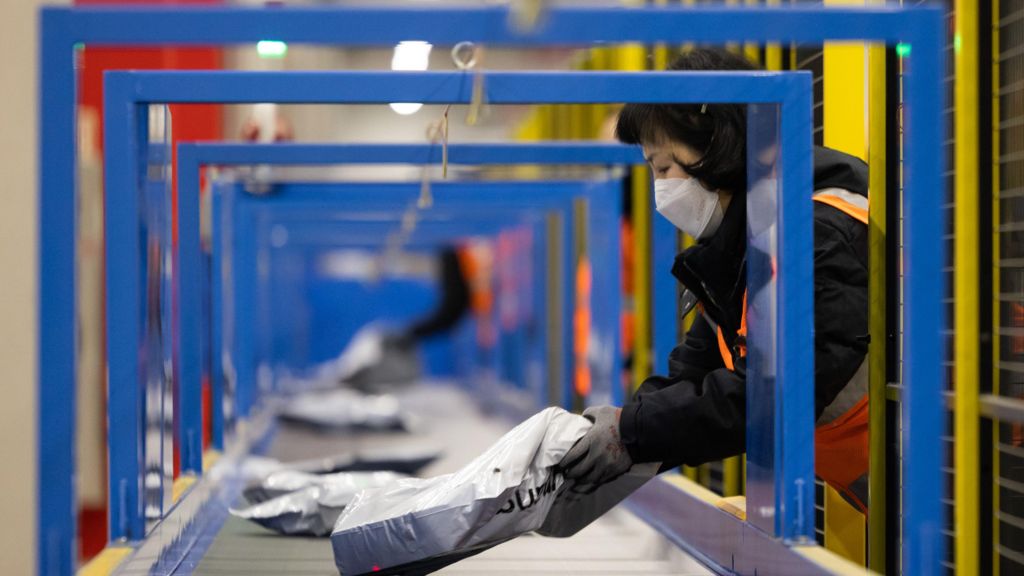
    South Korea’s delivery sector has exploded into a massive industry built on the promise of unrivaled speed and convenience. In the country’s hyper-connected digital economy, customers who place orders before midnight are guaranteed delivery by 7 a.m. the next day – a service that relies entirely on an sprawling network of overnight warehouse staff and delivery drivers. Coupang, founded by a Korean-American entrepreneur, has dominated this market since expanding its overnight fresh produce delivery in 2015, now employing nearly 100,000 workers across its nationwide logistics network.

    But this industry-defining convenience has come at a steep hidden cost to frontline workers, public health experts and labor advocates warn. The UN International Agency for Research on Cancer classifies overnight work as a probable human carcinogen, and research from South Korea’s Catholic University of Korea professor of occupational medicine Kang Mo-yeon adds that mounting evidence also links irregular night shifts to elevated risks of cardiovascular disease, diabetes, and chronic mental illness.

    Unlike the UK, which caps overnight delivery driving at 10 hours per 24-hour period, South Korea imposes no legal limits on overnight working hours, creating a regulatory gap that has allowed extreme working conditions to become normalized. The debate over overnight delivery also reveals deep divides among workers themselves: while the national delivery workers’ union has called for a full ban on overnight deliveries since 2025, many drivers opt for night shifts voluntarily, drawn by higher pay and the flexibility to care for children or ill family members during the day.

    One subcontracted Coupang driver, who spoke to the BBC on condition of anonymity, explained that he earns roughly 7 million won ($4,600) per month – nearly double South Korea’s national average income – working 10-hour overnight shifts five to six days a week. “I know this is destroying my body long-term, but the pay makes it worth it,” he said. “Critics who call for banning overnight deliveries aren’t listening to the choices we’ve made to support our families.” Still, he acknowledged the constant pressure: drivers are paid per package, and failure to complete all deliveries by the 7 a.m. deadline can result in losing their assigned delivery route to a competitor, leaving no time for scheduled breaks. His wife, he added, still worries he will fall asleep at the wheel during long shifts.

    Park argues that as demand for faster deliveries grows, the sacrifice of these frontline workers has been rendered invisible to the consumers who benefit from their labor. In Jang’s case, she says, holding the company accountable was an uphill battle: South Korean law places the burden of proving overwork on grieving families, and Coupang was only required to share Jang’s work records and CCTV footage with Comwel, not with Park. It took months of lobbying lawmakers and government agencies for her to obtain the documents that confirmed Jang’s working hours met the legal threshold for overwork-related death: his shift count met the standard of an average 60-hour workweek over 12 weeks, with overnight hours weighted 30% more heavily under Comwel rules.

    The controversy deepened in 2025, when local media published leaked chat logs allegedly between Coupang’s chairman Bom Kim and a former chief privacy officer, showing Kim ordering staff to remove references to Jang “working hard” from internal reports. Coupang has dismissed the claim as groundless, alleging the leak came from a disgruntled former employee, but labor unions filed a criminal complaint alleging evidence tampering, and South Korean police launched a formal investigation into the company in December 2025. Coupang maintains it has fully cooperated with all investigations and submitted all requested documentation to regulators.

    Jang’s case was followed by another high-profile death that renewed public anger: 34-year-old Oh Seung-yong, a driver for a Coupang-contracted logistics firm, died after crashing his truck into a pole during an overnight delivery run. Comwel also ruled Oh’s death work-related. His sister told parliament that Oh had worked six days a week, clocking more than 11 hours per shift almost entirely overnight – and even continued working for four hours after his father’s sudden death before traveling to the hospital to be with his family. Coupang says it enforces a 52-hour weekly cap for all employees, gives subcontracted drivers a full weekend off every two weeks, provides free health screenings for all direct and contracted staff, and claims it holds the best safety record in the global logistics industry with no recorded industrial accident deaths. Unions argue that safety rules are rarely enforced by third-party subcontractors.

    In December 2025, Coupang CEO Harold Rogers was summoned to South Korea’s national parliament to answer questions about the deaths of Jang and Oh, as well as the country’s largest ever data breach that exposed the personal information of 37.5 million Coupang users, resulting in a record $410 million fine against the company. During the televised hearing, Park publicly demanded Chairman Bom Kim be held criminally liable for her son’s death, while Oh’s sister pressed Rogers for a formal apology. Rogers offered “deepest condolences” and said he was sorry for the families’ loss, but remained silent when pressed for further comment.

    The controversy has also put pressure on South Korean President Lee Jae Myung, who made reducing workplace injuries and deaths a top campaign priority, capitalizing on his own experience of a disabling factory injury earlier in life. South Korea has long struggled with one of the highest workplace fatality rates among developed nations, and the government has already passed major labor reforms: capping overall weekly work hours at 52, and introducing legislation that allows for jail time for executives found negligent in workplace death cases. Ironically, the governing party recently proposed new legislation to relax overnight delivery restrictions for smaller retailers to weaken Coupang’s market monopoly, a move that has angered unions and activists, including Park, who argue the core problem is unregulated overwork, not just Coupang’s market dominance.

    Six years after her son’s death, Park’s advocacy has upended her own life. She was forced to close her small furniture-making business after spending years navigating legal battles for compensation and accountability, and moved from her longtime home to a small rental apartment in Daegu. She still keeps all of Jang’s belongings, including his collection of action figures, stored in a box in her home – not ready to let go, and not ready to end her fight.

    Jang once compared his job to a seesaw: if he stepped down, his overworked colleagues would be left struggling to cover his load. Today, Park reframes that analogy for South Korea’s delivery industry: Jang and thousands of workers like him hold down one end of the seesaw, so consumers can enjoy the convenience of fast, early-morning deliveries on the other. “I hope we never become a society that closes our eyes to other people’s sacrifice just for a little bit of convenience,” she says.


  • India cockroach protests: Videos show officers firing ‘pellet guns’

    India cockroach protests: Videos show officers firing ‘pellet guns’

    Thousands of residents in India’s capital New Delhi have filled public thoroughfares in a widespread demonstration that has come to be known as the ‘cockroach protests’, with demonstrators uniting around a single core demand: sweeping, long-overdue changes to the country’s education system. Viral video footage shared widely across social media platforms has captured the moment law enforcement officers responded to the unrest by discharging pellet guns into the crowd, a escalation of force that has amplified public anger and drawn sharp scrutiny from rights observers. The unusual ‘cockroach’ moniker for the protests has its roots in demonstrators’ framing of themselves as marginalized groups that have been ignored and dismissed by authorities for years, much like unwanted pests that are pushed aside rather than addressed. While the immediate trigger for the mass mobilization varies across different segments of protesters, the overarching grievance centers on systemic flaws in India’s education sector, including underfunding, inequitable access to quality learning, outdated curriculum structures, and persistent job gaps for graduating students. As footage of the pellet gun use continues to circulate online, the demonstration has grown in size, with solidarity protests popping up in other major Indian cities, and calls growing louder for central and state education officials to open formal negotiations with protest leaders to address the community’s demands.