分类: society

  • Australian Jews tell antisemitism inquiry of surge in hate before Bondi Hanukkah massacre

    Australian Jews tell antisemitism inquiry of surge in hate before Bondi Hanukkah massacre

    SYDNEY, Australia — One month after a father-son terrorist attack left 15 Jewish worshipers dead at a Hanukkah gathering on Sydney’s iconic Bondi Beach, Australia’s highest-level formal inquiry into growing antisemitism and social cohesion has convened its first public hearings, kicking off a two-week examination of how hate targeting Jewish communities has spread across Australian institutions and broader society. The massacre, which authorities confirmed was inspired by the Islamic State group, marked the deadliest antisemitic attack in modern Australian history and came amid an unprecedented nationwide surge in hate crimes against Jewish people that has shaken a community long unaccustomed to such widespread levels of threat.

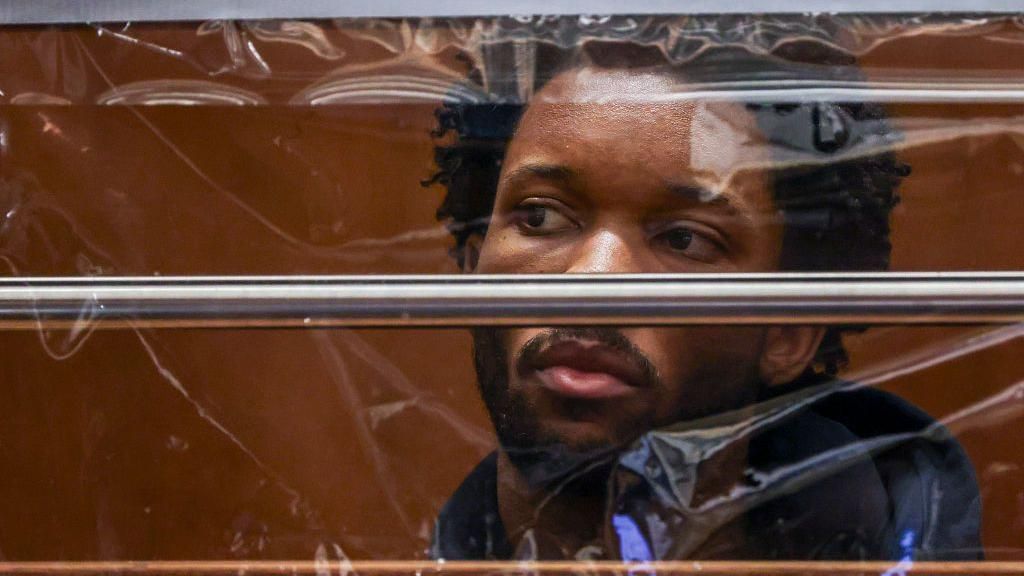
    The attack was carried out by Sajid and Naveed Akram, a father and son who were legally licensed to own the firearms they used – a striking detail in a country that has kept some of the world’s strictest gun control regulations for nearly 30 years, following the 1996 Port Arthur massacre. Sajid Akram was killed by responding police at the scene, while Naveed Akram survived his wounds and has been charged with terrorism, 15 counts of murder, and 40 counts of attempted murder; he has not entered any pleas to the charges.

    In opening remarks at Monday’s first sitting, commission head Virginia Bell connected the sharp rise in Australian antisemitism to parallel surges across Western nations, noting the clear tie between escalating tensions and the outbreak of the Israel-Hamas war in October 2023. “It’s important that people understand how quickly those events can prompt ugly displays of hostility toward Jewish Australians simply because they’re Jews,” Bell said. Additional hearings on targeted topics will be held throughout the year, with the commission’s final binding report and policy recommendations due for publication in December.

    All witnesses who appeared before the commission on opening day were Jewish Australians, many of whom requested to testify under pseudonyms to protect their personal safety from further harassment. For community members, the hearing was a chance to lay bare the daily fear that has reshaped life for Australia’s small Jewish population after a year of mounting attacks. Sheina Gutnick, the daughter of 62-year-old victim Reuven Morrison – who died after charging one of the gunmen with a brick to stop the attack – recounted a harassment incident she experienced a year before the massacre: while walking through a Sydney shopping mall carrying her infant child, a stranger verbally abused her after spotting her Star of David necklace, with no bystanders stepping in to intervene. “I felt shocked, exposed and unsafe,” Gutnick told the commission. She added that she now avoids large public family gatherings and hesitates to travel to certain neighborhoods across Sydney.

    Data presented to the inquiry underscores the scale of the surge: in the 12 months following the October 2023 start of the Israel-Hamas war, more than 2,000 antisemitic incidents were reported to the Executive Council of Australian Jewry, which tracks hate crime against Australian Jewish communities. That figure represents a more than fourfold increase from the previous annual record of just under 500 incidents recorded the year before the war. While similar increases have been documented in the United Kingdom and other Western countries, witnesses told the commission the speed and severity of the shift has been particularly jarring for Australia’s tight-knit Jewish community, which had never before faced such a volume of serious, violent threats.

    Toby Raphael, vice president of Sydney’s Newtown Synagogue, which was defaced with swastikas during a 2025 wave of antisemitic attacks, told the commission that constant fear has become the new normal for Australian Jews. “Now everyone is scared all the time,” Raphael said. He recalled that just a few years ago, he had reassured synagogue congregants that no security was needed for weekly services; today, the synagogue is guarded, and Raphael serves on a parent-led security team at his son’s Jewish day school, which is also protected by armed professional security guards. “Why do kids have to go to school like that? This is the world that the Jews of Australia live in now and it needs to change,” he said.

    The rise in high-profile antisemitic attacks predated the Bondi Beach massacre: last August, the Australian government cut diplomatic ties with Iran after concluding the Iranian state had orchestrated at least two separate antisemitic attacks on Australian soil. Many witnesses told the commission the ongoing escalation has pushed them to consider leaving Australia entirely to seek safety for their families elsewhere. Alex Ryvchin, a leader of a major Australian Jewish organization whose home was targeted in an arson attack in early 2025, told the commission he had warned for months that the unaddressed rise in antisemitism would lead to mass casualties. “This was January, and by December there was a horrific massacre which has transformed us permanently,” Ryvchin told the hearing. He added that he now believes Australia is “on a path to catastrophe” if urgent action is not taken.

    The Bondi Beach massacre has also reignited national debate over gun regulation in Australia, a policy area that has remained largely settled since the 1996 Port Arthur shooting that led to the country’s strict current laws. The Royal Commission released an interim report in April that examined gaps in law enforcement and security response to antisemitic crime, and recommended that Australian policymakers prioritize passing nationally consistent gun laws and implementing a new national weapons buyback program. Federal and state governments are currently reviewing the proposal and considering further regulatory changes.

  • Man rushed to hospital with serious injuries after alleged horror attack on busy Melbourne CBD street

    Man rushed to hospital with serious injuries after alleged horror attack on busy Melbourne CBD street

    A violent midday incident on one of Melbourne’s most crowded commercial thoroughfares has left a local man hospitalized with life-threatening upper body trauma, prompting an active police investigation into the circumstances of the attack. Emergency response teams were dispatched to the intersection of Collins Street and Elizabeth Street, a bustling hub in Melbourne’s central business district, shortly after 2:10 p.m. on Wednesday following reports of an injured individual at the scene. The victim, identified only as a 37-year-old resident of the Melbourne suburb of Mill Park, was urgently transported to the Royal Melbourne Hospital after first responders assessed his condition. As of Wednesday afternoon, the victim remains in serious but stable condition, according to initial updates from emergency services. A spokesperson for Victoria Police confirmed Wednesday that investigators have not yet established how the man sustained his injuries, noting that the case remains open and active. Police have not yet released any information about potential suspects or motives for the incident, and additional details are expected to be released as the investigation progresses. Local witnesses reported a heavy emergency services presence at the downtown intersection in the minutes after the incident, though traffic and pedestrian activity in the area had returned to near-normal levels by late Wednesday afternoon.

  • Three dead after monster truck crashes into crowd

    Three dead after monster truck crashes into crowd

    A tragic accident at a monster truck exhibition in southern Colombia has left three people dead and at least 38 others injured after the vehicle lost control and crashed into a gathered crowd on Sunday. The incident unfolded in Popayán, the capital city of Colombia’s Cauca province, when the truck’s braking system reportedly failed mid-show, according to initial law enforcement assessments.

    Graphic footage circulating from the event captures the moment the out-of-control truck smashed through a protective barrier separating the vehicle from spectators. After barreling into the standing crowd, the truck only came to a halt after colliding with a nearby electricity pole, leaving panicked attendees scrambling for safety.

    Local official reports, shared by Colombian newspaper El Espectador, confirm that a 10-year-old girl was among those killed at the scene of the crash. Popayán’s police commander Colonel Julián Castañeda told local outlet El Tiempo that preliminary investigations point to a mechanical failure as the root cause of the disaster. “The vehicle accelerated, it couldn’t brake, and the driver is in stable condition,” Castañeda confirmed in his statement to press.

    Local and regional leaders have moved quickly to respond to the tragedy, announcing a full, transparent probe into the incident to determine what led to the crash and hold any responsible parties accountable. “These events, which should never have happened, will be clarified with total responsibility and transparency,” said Juan Carlos Muñoz Bravo, mayor of Popayán, in an official address following the accident.

    Regional governor Octavio Guzmán also extended public condolences to grieving families and the community of Popayán. “We express our solidarity with the families of those affected by this tragic accident, as well as with our capital city, Popayán,” Guzmán said. As of the latest updates, authorities have not released additional details on the condition of the injured, and the formal investigation remains ongoing.

  • South Australian farmer charged after worker loses part of arm from feed mixer accident at Hillier Poultry

    South Australian farmer charged after worker loses part of arm from feed mixer accident at Hillier Poultry

    A devastating workplace accident on a South Australian poultry farm has left a worker with a life-altering injury and triggered criminal health and safety charges against the property’s retired former owner, in a case that has reignited debates over workplace safety accountability across regional Australian agricultural operations.

    The incident unfolded on April 22, 2024, at Hillier Poultry, a farm located near the regional town of Gawler, roughly an hour north of Adelaide. According to official allegations filed by Safe Work SA, the state’s workplace safety regulator, the injured worker was carrying out routine cleaning of the outlet at the base of a stationary feed mixer when the machinery unexpectedly powered on. The worker’s left forearm became caught in the equipment’s internal auger, leading to an immediate traumatic partial amputation before emergency responders could extract him.

    Safe Work SA has brought charges against both the Hillier Poultry business and its 78-year-old former owner Ashley Duffield, who sold the operation and retired shortly before the incident. The regulator alleges that Duffield failed in his legal duty to maintain safe operating conditions for on-site workers. Specifically, the charges claim he neglected to implement safe machinery protocols, did not conduct adequate hazard identification and risk assessments for the feed mixer, and failed to provide sufficient safety training, information and on-site supervision to prevent such an accident.

    Duffield is charged with a Category 2 offense under Section 32 of South Australia’s Work Health and Safety Act 2012, which carries significant legal penalties for breaches of duty that expose workers to serious risk of harm. He is scheduled to make his first court appearance at the South Australian Employment Court on May 21 to answer the charges.

    In an interview with NewsWire, Duffield has forcefully rejected the allegations, saying he will vigorously contest every charge in court. The retired farmer, who says he never had a single workplace safety incident across decades of operating the business, argues the accident was the result of workers failing to follow the clear safety protocols he had already put in place. He explained that his mandatory training required all workers to disconnect the feed mixer from its power source before any cleaning or maintenance work, a rule that was not followed on the day of the incident. According to Duffield’s account of the accident, one worker was inside cleaning the machine while a second colleague, unaware his co-worker was in the equipment, accidentally switched the power back on.

    “It do not think it is fair to be charging me as I do not consider myself to be involved in causing the accident,” Duffield said in the interview, adding that he had always prioritized worker welfare and that the incident had already caused severe, lasting disruption to the business before his retirement.

    The case comes as Australian agricultural industry groups continue to grapple with high rates of workplace injury in the sector, with regulators repeatedly calling for stricter proactive safety measures on small and medium-sized regional farms to prevent preventable traumatic accidents.

  • ‘Couldn’t care less’: Drunk-driver jailed over pub crash

    ‘Couldn’t care less’: Drunk-driver jailed over pub crash

    A violent drunk driving incident that left multiple people seriously injured, one fighting for his life, has resulted in a significant prison sentence for the perpetrator at a South Australian court this week. The case, which unfolded in the small coastal town of Port Elliot in October 2024, has drawn condemnation from the judge over the offender’s complete disregard for human life.

    The defendant, Eric Cooper, a New Zealand-born father of four who has resided in Australia since 2006, appeared before South Australia’s District Court for sentencing on Monday. The court heard how a night of drinking escalated into chaos outside the local Royal Family Hotel, starting with aggressive driving before exploding into violence.

    Witnesses and court documents outline that Cooper was heavily intoxicated, driving through Port Elliot’s streets at high speeds with his engine revving, when members of the public confronted him, asking him to slow down and leave the area. Cooper took profound offense to the request, triggering a physical brawl between himself and other people at the scene. When Cooper retreated to his vehicle, members of the crowd smashed his car window in retaliation — an action the judge acknowledged was unacceptable, but one that Cooper himself provoked.

    Instead of leaving the scene to de-escalate the conflict, Cooper made the deliberate decision to retaliate with deadly force. He drove roughly 2 meters forward, then slammed his vehicle into reverse, accelerating at full speed directly into a crowd of nine people gathered outside the pub. Tragically, many of those injured were innocent bystanders who had not been involved in the earlier brawl, merely caught up in the violent aftermath.

    At the time of the crash, Cooper’s blood alcohol concentration measured 0.12, one and a half times the legal driving limit in Australia. In his remarks from the bench, Judge Heath Barklay delivered scathing criticism of Cooper’s actions. “There is no condoning their actions, but you brought it all on yourself – you were the initial aggressor,” Judge Barklay told the court. “You made a deliberate decision to drive dangerously. You say you are sorry that you hurt innocent bystanders, but at that time clearly you could not have cared less. You also appear to have a complete lack of insight into the fact it was your actions which caused this situation.”

    The extent of the harm inflicted by Cooper’s choices is severe. The most critically injured victim, 22-year-old Jonathan Hogg, was pinned between Cooper’s Ford hatchback and the exterior wall of the pub. He was immediately left fighting for his life, requiring emergency life-saving surgery to stabilize his condition, and suffered two broken leg bones that required multiple follow-up procedures. Two other victims — a 35-year-old and an 18-year-old — also required surgery for serious sustained injuries, while all nine people impacted by the attack have reported long-term trauma beyond their physical injuries. “The harm they have suffered was not simply physical,” Judge Barklay noted.

    Cooper had previously pleaded guilty to nine counts of aggravated dangerous driving, acknowledging his role in the attack. At the time of the incident, he had been residing in a caravan park in Goolwa, south of Adelaide, after separating from the mother of his four children, who range in age from 12 to 22.

    In handing down the sentence, Judge Barklay ordered Cooper to serve six years in prison, with a non-parole period of three years and 10 months. The sentence was backdated to the date of the crash, meaning Cooper will remain behind bars at minimum until August 2028. Upon his release, he will be subject to a 12-year total driving ban. Additionally, as a New Zealand citizen residing in Australia, Cooper faces potential deportation to his home country following the completion of his prison term.

  • Wildfire tears through hundreds of acres in Arizona

    Wildfire tears through hundreds of acres in Arizona

    A fast-moving wildfire has swept across hundreds of acres of land in Arizona, triggering an urgent firefighting response from local emergency crews. Local authorities have conducted rapid aerial and ground assessments of the blaze, putting the total burned area at 558 acres, equal to roughly 2.3 square kilometers of terrain. At the time of reporting, firefighting teams were already on the ground working aggressively to contain the spread of the fire, clear affected boundaries, and prevent the blaze from extending into nearby populated areas or ecologically sensitive zones. While details on the cause of the wildfire and any reported injuries or structural damage have not yet been released, local emergency management departments have activated their standard wildfire response protocols to coordinate resource deployment across the affected region. Firefighters are expected to remain on site for coming days to fully extinguish hot spots and secure the burned area.

  • BBC uncovers the Ugandan scammers abusing dogs to elicit donations from animal lovers

    BBC uncovers the Ugandan scammers abusing dogs to elicit donations from animal lovers

    On a dusty roadside in Mityana, a small Ugandan trading hub 70 kilometers outside the capital Kampala, a rust-furred dog named Russet lay panting in visible agony. His broken hind legs, hidden from initial view in a 15-second TikTok clip posted in January last year, became the centerpiece of hundreds of fraudulent fundraising campaigns that scammed thousands of dollars from animal lovers across Europe, North America and Australia. What looked like a plea to save an injured accident victim was actually part of a multi-million-dollar hidden industry built on animal cruelty, exploitation of Western stereotypes, and viral social media engagement, a year-long investigation by BBC Africa Eye has uncovered.

    Mityana has become globally infamous among animal rescue activists as the global hub for fake online dog rescue operations. The scam relies on a simple, highly effective formula: local scammers exploit Western audiences’ widespread love for companion animals, lean into outdated stereotypes of African poverty and widespread animal neglect to trigger emotional giving, and convert viral social media content into untraceable donations that flow straight into the scammers’ pockets. Bart Kakooza, chairman of the Uganda Society for the Protection and Care of Animals, explained that the scam has flourished as unemployed young people in rural Uganda recognized they could turn global social media’s obsession with dogs into fast, easy income. “On one side, you have young people looking for any way to make money online, and on the other, you have Western donors who are deeply passionate about animal welfare,” Kakooza told the BBC. “These scammers quickly realized that putting those two together equals profit.”

    Scammers operating out of Mityana have flooded major platforms including TikTok, Instagram, Facebook and YouTube with hundreds of thousands of emotionally charged clips featuring underfed, injured dogs and cats. A typical video shows a makeshift shelter, with a voiceover or on-screen text claiming dogs have gone days without food, face eviction, or need urgent life-saving veterinary care. The videos intentionally lean into harmful stereotypes about Africa, framing young local animal rescuers as fighting against a society that does not care about animals to elicit sympathy from foreign donors. BBC Africa Eye’s data analysis found the scam has been extraordinarily lucrative: over the past five years, more than $730,000 has been raised via the popular donation platform GoFundMe alone for fake Ugandan animal shelters, with nearly 40% of all fundraisers linked to operations based in Mityana. In Mityana, the fake shelter industry is an open secret: local residents told the BBC that scammers are easily identified by the new status-symbol Subaru cars they buy with stolen donations, and are among the most respected young people in the town. Few locals dare to speak out publicly, however, for fear of retaliation from criminal scam networks.

    To uncover the inner workings of the industry, BBC Africa Eye sent an undercover reporting team to Mityana, posing as new operators looking to learn the fake shelter trade. The investigation revealed a structured, organized system: multiple content creators rent space at pre-established fake shelters, paying an entrance fee to film with the owner’s dogs. The same dogs and the same shelter are then used by dozens of separate accounts to run independent fundraisers, each claiming to be the sole caretaker of the animals. One shelter owner, Charles Lubajja, openly admitted to undercover reporters that the entire operation is a fraud built to steal money from foreign donors. He shared the common tricks scammers use to inflate donations: lying that a shelter faces imminent eviction to drive urgent giving, faking veterinary treatment by placing unused syringes on dogs’ fur without giving any actual care, and inflating the reported cost of dog food by more than 11 times. “Once you get the money from GoFundMe, you use it to buy a car or build a house,” Lubajja said in a secret recording. “Once you get a white donor, you don’t treat them like a brother. You squeeze them, you drain them dry.”

    Inside the shelters, undercover reporters found dogs kept in horrific conditions: 15 dogs crammed into a single cage, lying in their own waste, most severely underweight and lethargic. Most disturbingly, Lubajja confirmed what activists have long suspected: some scammers deliberately injure dogs to create more emotional, high-performing content. When scammers run out of new content to post, they cut or break dogs to create new fundraising appeals, he explained. The practice only slowed after donors started recognizing the pattern of abuse and warning others, leading to falling donations. “When the white people realized what was happening, they stopped giving, so scammers don’t cut dogs as often now,” he said.

    The death of Russet the dog exemplifies the full human and animal cost of this scam. After Russet’s video went viral and was shared across hundreds of accounts run by different scam groups, a British donor who wished to remain anonymous paid scammers to release the dog to a veterinary clinic in Kampala. Dr Isa Lutebemberwa, the vet who treated Russet, found his injuries were almost certainly not the result of a random traffic accident, as Lubajja claimed. An X-ray showed all of Russet’s leg bones were broken in the exact same spot – the weakest point of the bone, the place someone would target if they intended to break the leg on purpose. Though Lutebemberwa operated on Russet, the dog died a few days after the procedure, having endured weeks of unneeded suffering while scammers profited off his pain. “If you looked at his face, you could see how much he had been through,” Lutebemberwa said. “He did not deserve to die like that.” When contacted by the BBC for comment on the investigation’s findings, Lubajja denied owning Russet or harming any animals, though he did confirm that content creators pay to film at his shelter.

    As the scam has grown, a global movement of activists has emerged to shut it down. The most prominent campaign, called We Won’t Be Scammed, is run by Nicola Baird, a 49-year-old activist from Yorkshire in the UK who became an anti-scam campaigner after she was scammed herself. Baird sent money to a Mityana scammer who claimed his dog needed emergency surgery, but when she received photos of the procedure, local vets confirmed the images showed abuse, not legitimate care. “I realized I had enabled this cruelty,” Baird told the BBC. “That’s when I became determined to stop it. These scammers are the epitome of evil.” We Won’t Be Scammed now has 20,000 followers on Instagram, where the group names and shames fraudulent accounts and warns potential donors about the scam. Lubajja named the campaign as the biggest threat to the scammers’ business.

    Activists and Ugandan animal welfare leaders say the root of the problem is impulsive, unvetted giving from foreign donors, who unknowingly fuel the cycle of cruelty. “People who donate without checking are the ones causing this animal suffering – they keep fanning the fire,” Kakooza said. Baird echoed that assessment, pointing to Russet’s case as evidence: “Donations prolonged Russet’s agony. If people had not given money to those scammers, he would never have suffered as long as he did.” Activists agree that increasing awareness to cut off the flow of donations would reduce the profitability of the scam, discouraging new scammers from entering the trade and reducing the number of dogs captured for fake content. However, there is still no clear solution for the hundreds of dogs currently being held in Mityana’s fake shelters.

    Local law enforcement has struggled to address the problem: a 2023 police operation rescued 24 severely injured dogs from a Mityana fake shelter and arrested three suspects on animal cruelty charges, but the case was eventually closed, the suspects were released, and they only received a warning. Now, a coalition of Ugandan and international activists is turning to private prosecutions to hold scammers accountable, with the first case already in preparation. “We hope this case will act as a deterrent for anyone who wants to get involved in this illegal trade,” Kakooza said. For Russet and the other dogs that have already died at the hands of scammers, however, any justice will come too late.

  • United flight landing in Newark strikes light pole on New Jersey Turnpike, FAA says

    United flight landing in Newark strikes light pole on New Jersey Turnpike, FAA says

    A routine commercial flight landing at one of the busiest air hubs on the U.S. East Coast took an unexpected turn on Sunday afternoon, when a United Airlines passenger jet made contact with a light pole along the adjacent New Jersey Turnpike before touching down at Newark Liberty International Airport. Federal transportation officials have since launched a full investigation into the collision, which surprisingly resulted in no injuries to anyone on board the aircraft.

  • Police officer lowered into crocodile-infested river to recover human remains

    Police officer lowered into crocodile-infested river to recover human remains

    In the aftermath of devastating floodwaters that swept through northeastern South Africa last week, a daring, high-stakes recovery operation led by elite South African police has yielded human remains from the belly of a massive 4.5-meter, 500-kilogram crocodile, in the search for a missing local businessman.

    The ordeal began when the unidentified man attempted to cross a submerged low-water bridge over the Komati River, located in South Africa’s Mpumalanga province. His vehicle quickly became trapped in the rushing floodwaters, and by the time first responders arrived at the scene, the car was empty. Authorities concluded the man had been swept away by the powerful current, according to Mpumalanga provincial police spokesperson Colonel Mavela Masondo, who shared details with South African national broadcaster SABC.

    Launching a large-scale search operation that deployed both drones and helicopters to cover the wide, fast-moving river, search teams spotted a cluster of crocodiles basking on a small exposed sandbar. As commander of the police diving unit, Captain Johan “Pottie” Potgieter told local news outlet News24 that years of field experience allowed his team to immediately identify one reptile as suspicious: unlike the other crocodiles that scattered at the noise of approaching aircraft, this giant animal stayed motionless on the bank, its abdomen visibly distended from a recent large meal.

    Teams humanely euthanized the suspected reptile before planning the dangerous recovery. In an operation police have labeled “highly dangerous and complex”, Potgieter was lowered via rope from a hovering helicopter directly to the sandbar, where he secured the massive crocodile before both he and the animal were hoisted back into the aircraft and flown to nearby Kruger National Park for examination. Potgieter acknowledged to News24 that the mission was an inherently tense experience: “The sharp-end of a crocodile is not the best place to approach it,” he said.

    Upon dissection, search teams recovered partial human remains from the crocodile’s digestive tract, along with six separate shoes. Potgieter noted that while the presence of multiple footwear suggests the crocodile may have claimed other victims in the past, crocodiles are opportunistic feeders that often swallow non-food debris that washes into their habitat, so the find does not confirm additional deaths.

    DNA testing is now underway to formally confirm whether the recovered remains belong to the missing businessman. Following the successful completion of the risky operation, South Africa’s acting police chief Lieutenant-General Puleng Dimpane publicly recognized Potgieter for his extraordinary bravery in carrying out the high-risk task.

  • Second unexploded shell found at illegal French rave: minister

    Second unexploded shell found at illegal French rave: minister

    A massive unauthorized rave that drew tens of thousands of partygoers to a former French military firing range has sparked public safety outrage after officials confirmed a second unexploded World War II-era shell was discovered at the site, just one day after the first dangerous ordnance prompted an emergency bomb disposal response.

    The unsanctioned gathering, commonly called a “free party” by organizers, launched Friday on the 10,000-hectare decommissioned firing range located near the central French town of Bourges, roughly 120 miles south of Paris. The rave was coordinated via encrypted messaging platforms, allowing crowds to converge quickly before authorities could block access, with conflicting estimates of attendance: organizers claim up to 40,000 people traveled to the site from France and nearby neighboring countries, while French Interior Minister Laurent Nunez pegs the total number at 17,000.

    Local authorities had explicitly warned the crowd that holding a dance event on the former military site was an extreme safety risk, as the ground still holds unaccounted-for unexploded ordnance dating back to World War II. Despite repeated warnings, partygoers entered the site anyway. On Saturday evening, bomb disposal squads were called to the location after the first unexploded shell was unearthed near a main road cutting through the party grounds.

    After conducting an aerial inspection of the site via helicopter Sunday, Nunez confirmed to reporters that a second unexploded shell had been located and that disposal experts were working to neutralize the new threat. “When the prefect warned that this was dangerous land, it was not a joke,” the minister emphasized.

    In a surprising twist, organizers have openly acknowledged they deliberately selected this specific firing range—located in Nunez’s own hometown—to stage the protest against a pending national bill that would dramatically increase criminal penalties for people who organize and participate in unauthorized free parties.

    Organizers have claimed the event has proceeded without major disruptions or safety incidents, but Nunez refuted this account. He told reporters that 12 attendees have already been transported to local hospitals, multiple for drug-related complications, and five participants have been taken into police custody. Authorities have so far issued more than 600 fines for trespassing on military land and participating in an illegal gathering.

    Once a little-known underground tradition, illegal raves have become a growing issue for French law enforcement. Nunez reported that officials recorded 337 unauthorized music events across the country in 2025. Most of these gatherings draw around 300 attendees, but roughly four percent attract crowds of more than 1,000, creating major public safety and logistics challenges for local communities.

    The gathering has already hardened the government’s commitment to passing stricter penalties for illegal rave organizers and participants. Back in April, France’s lower parliamentary house approved a draft bill that would impose up to six months of prison time for anyone directly or indirectly involved in organizing or facilitating unauthorised raves. The legislation’s broad definition of organizing extends even to sharing logistical information about planned events online. Nunez argued that current penalties are far too lenient, classifying violations as minor offenses that do little to deter organizers.

    By early Sunday afternoon, an AFP journalist on the ground observed that many performance stages had been cleared out and a large portion of attendees had begun departing the site. The incident has reignited national debate over balancing personal recreation freedoms with public safety, and is expected to speed up passage of the stricter rave regulation legislation.