A landmark legal action is set to shake Italy’s long-troubled prison system this week, as a prison guard union in the southern region of Puglia will file a formal complaint with Taranto prosecutors, demanding a full investigation into persistent workplace safety abuses that have pushed conditions inside the region’s most overcrowded lockups to dangerous extremes. According to reporting from Agence France-Presse (AFP), which was the first outlet to obtain advance access to the legal filing, the case marks the first collective legal action ever brought on behalf of Italy’s national prison police, making it a trailblazing test for reform of the country’s chronically dysfunctional carceral system.
The 40-page complaint, known under Italian law as an esposto, does not seek financial damages. Instead, it asks judicial authorities to open a full fact-finding probe into what the union describes as a “structural and persistent situation” of negligence by senior prison department officials. The legal document accuses leaders of failing to address decades of entrenched problems: extreme overcrowding, life-threatening summer heat that has already pushed internal temperatures above 50°C in some facilities, pervasive second-hand smoke exposure, and inadequate management of inmates with severe psychiatric conditions. Union leaders hope the legal action will set a national precedent, inspiring identical challenges across Italy to force systemic change.
This is not the union’s first push for accountability. On June 22, the Puglia branch of the SAPPE union filed a related complaint with the Court of Auditors in Bari, accusing prison leadership of “grossly inefficient management” that has squandered public funds by refusing to tackle overcrowding. That filing asks the court to calculate how much public money Italy has paid out in compensation to prisoners for violating the European Court of Human Rights’ mandated minimum of 3 square meters of personal space per detainee. The union estimates the annual cost of these violations hits roughly €15 million ($17 million), a steady drain on public funds caused by decades of government inaction.
Prison officials are not ignorant of the crisis, the new complaint emphasizes. Italy’s national prison department issued a warning to regional supervisors back in March, urging preparation for summer heat and advising measures including extra shade, expanded clean water access, cellblock refrigerators, and moving outdoor inmate recreation away from the hottest midday hours. But independent watchdog inspections across the country have confirmed that implementation of these guidelines has been inconsistent at best, with almost no meaningful upgrades to outdated infrastructure.
Most of Italy’s prisons, including many built in the 1970s and 1980s to reduce escape risk with thick, solid concrete construction, trap heat during summer months. Prison monitors report this can push internal cell temperatures as much as 10°C higher than external temperatures. Federico Pilagatti, head of SAPPE in Puglia, described conditions as outright torture, saying cells remain “like ovens” even after the sun goes down. “Already the inmates are crammed in like sardines, and then we have to add the dilapidated buildings,” Pilagatti said, noting that the few fans available to inmates often fail due to outdated, overloaded electrical systems that cannot support extra power use.
Data from Italy’s prison department, dated July 24, confirms the scope of overcrowding at Taranto Prison: the facility was built to hold just 430 inmates, but currently houses 852, pushing capacity to 200 percent of design limits. Since June, parts of the prison have recorded sustained temperatures at or above 50°C. Basic resources run out constantly, Pilagatti explained: “The water runs out, everything runs out because there are far more people than the infrastructure was built for.” While AFP’s request to tour the Taranto facility was denied, the crisis is far from isolated. According to Italian prisoner advocacy group Antigone, Foggia Prison, also in Puglia, holds 2.19 times its design capacity, making it one of eight Italian prisons operating at more than 200 percent overcrowding. As of April 30, 73 of Italy’s 189 total prisons are operating at 150 percent capacity or higher.
For prison staff, the extreme summer heat acts as a magnifying glass for long-standing systemic failures, said the union’s lawyer Fabrizio Lofoco. “It’s as if a yellow highlighter had suddenly been run over all issues that torment not only those who are in prison — the inmates, who are human beings too — but also the prison guards,” Lofoco told AFP. He added that all political factions have long been aware of the “disgrace” of Italy’s prisons, but no national leadership has had the political courage to address it, calling the union’s action “trailblazing” as the first collective legal action of its kind.
The complaint also documents widespread violations of health and safety rules for guards, who face systemic mandatory overtime, often working 12-hour shifts due to chronic staffing shortages in an already high-stress environment supercharged by extreme heat. Union leaders warn conditions are already at a breaking point, and major unrest is imminent. “You’ll see before long there will be prison riots, because the heat increases stress and then the inmates lose their grip and protest, commit suicide, etc.,” Pilagatti said. Data bears out the severity of the mental health crisis: Antigone records 82 inmate suicides across Italy in 2023, and prison watchdogs note that the suicide rate for prison guards is three times the national average for Italian workers.
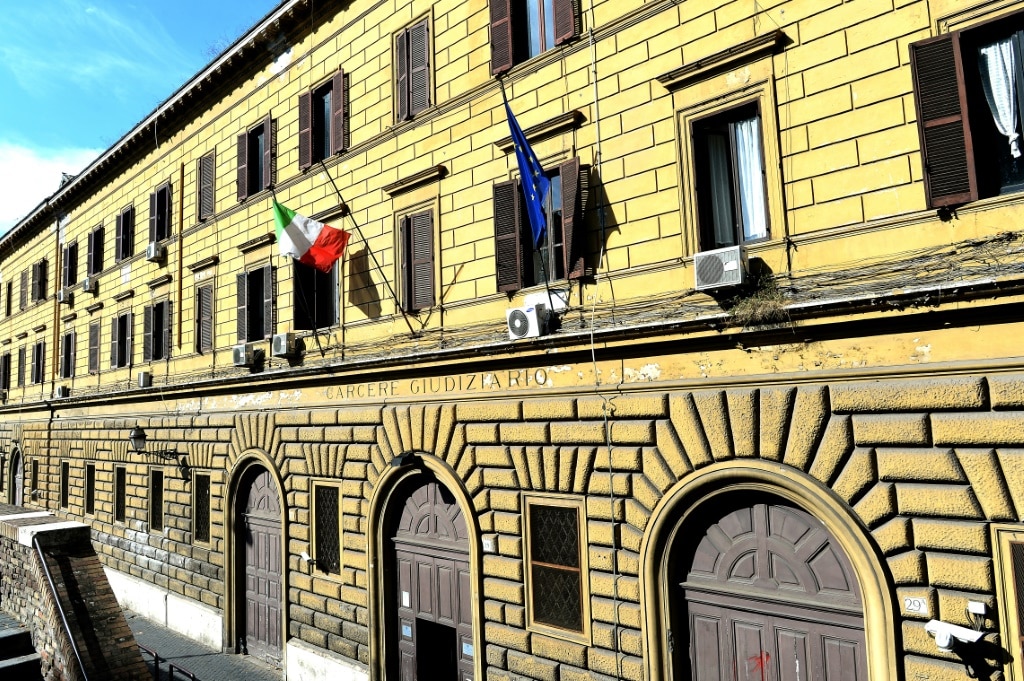
The crisis extends far beyond southern Italy, with reports of dangerous conditions in facilities across the country. During a recent heatwave in Rome, prisoner rights activists visited the aging Regina Coeli prison, a 17th-century former convent converted into a jail. Senator Ilaria Cucchi, who joined the visit, told AFP that conditions inside are unimaginable for anyone who has not seen them firsthand. Inmates are locked in overcrowded cells for 23 hours a day, with their single daily hour of outdoor recreation scheduled during the hottest part of the day. Outside the facility, 67-year-old Silvia Presti told AFP her son Ivan, an inmate at Regina Coeli, has no access to a refrigerator and cannot afford a fan for his cell. “They’re dying from the heat,” Presti said, adding that even the food she brings her son spoils before he can eat it due to the lack of cooling.