分类: society

  • Two dead after military helicopter crashes in Texas

    Two dead after military helicopter crashes in Texas

    A deadly crash of a U.S. Army AH-64 Apache attack helicopter in central Texas has claimed the lives of two people on board, military and local law enforcement officials have confirmed.

    Local emergency dispatch received a 911 call reporting aircraft wreckage in an open field south of the small village of Salado at approximately 13:33 local time (18:33 GMT). First responders rushed to the remote crash site immediately, where they confirmed both casualties had died at the scene.

    According to statements from U.S. military authorities, the downed helicopter was assigned to Fort Hood, one of the largest active U.S. Army bases located in close proximity to the crash area. Bell County Sheriff’s Office spokesperson Cliff Coleman noted that when law enforcement and firefighting teams arrived, they encountered a large blaze that was spreading at a rapid pace, requiring urgent containment efforts.

    As of the latest update, official investigations into the root cause of the crash are still in the early stages, while coordinated emergency response operations continue to secure and clear the site. Brigadier General Ethan Diven, acting commanding general of the 1st Cavalry Division, which oversees aviation units based at Fort Hood, released an official statement following the incident.

    “Our immediate priority is securing the site and supporting the initial response efforts,” Diven said, adding, “Our thoughts are with the crew and their families as we await further information.” No additional details on the identities of the deceased or the nature of the flight the helicopter was conducting have been released to the public as the investigation progresses.

  • New indictment alleges Nick Reiner was lying in wait before killing parents Rob and Michele Reiner

    New indictment alleges Nick Reiner was lying in wait before killing parents Rob and Michele Reiner

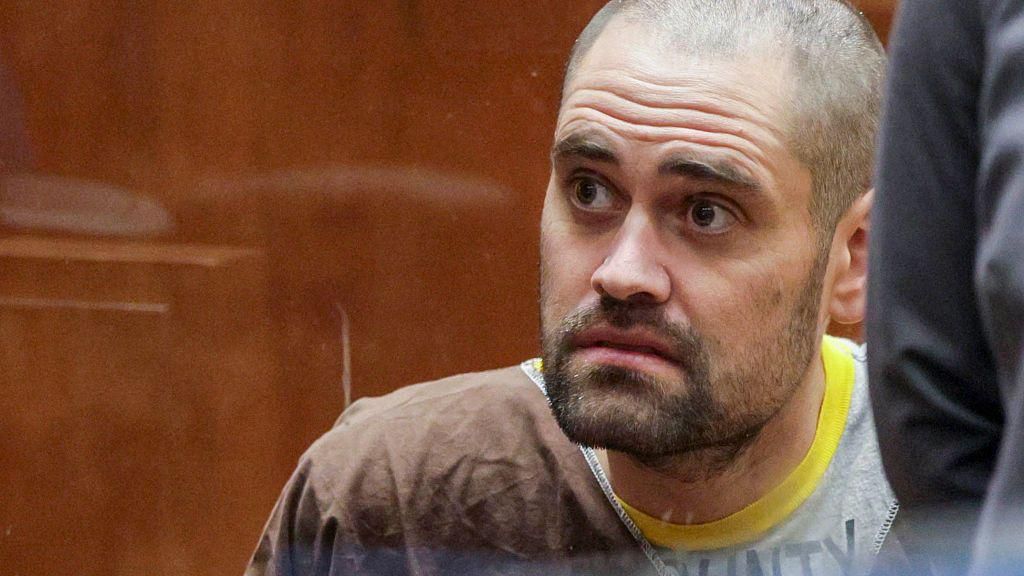
    A shocking development has emerged in the high-profile double murder case of iconic Hollywood filmmaker Rob Reiner and his wife Michele Singer Reiner, with a new grand jury indictment formally alleging that the couple’s son Nick laid in wait before carrying out the fatal attacks. Thirty-two-year-old Nick Reiner, who stands accused of fatally stabbing the 78-year-old director and his 70-year-old photographer wife inside their Los Angeles home last December, entered a not guilty plea on Wednesday to the updated charges. The revised indictment includes two counts of first-degree murder paired with a special circumstance allegation of premeditated murder by lying in wait, alongside an additional special aggravation that Reiner personally used a knife, a deadly weapon, to commit the crimes.

    The unsealed grand jury indictment allows California prosecutors to bypass the standard preliminary hearing process that would typically be held to determine if there is sufficient evidence to proceed to trial. While the indictment does not outline new granular details of Reiner’s alleged actions on the night of the couple’s death, prosecuting officials described the alleged crime as an unfathomable breach of the trust the victims placed in the accused. Prosecutors stated in a release: “This was a profound betrayal by someone who was loved and trusted by the very people he is accused of killing.”

    Returned by the grand jury on July 20, the addition of the lying-in-wait special circumstance makes Reiner legally eligible for the death penalty, a punishment currently under a temporary moratorium across the state of California. As of Wednesday, prosecutors have not yet confirmed whether they will formally seek capital punishment in the case. Los Angeles County District Attorney Nathan Hochman emphasized that the indictment moves the case one step closer to a resolution for the victims. “We hope that by having a grand jury return an indictment in this case it will bring us one step closer to a trial and achieving justice,” Hochman said.

    Rob Reiner, one of Hollywood’s most beloved directors, was widely known for his decades-spanning career and landmark films including *This Is Spinal Tap*, *Misery*, and *A Few Good Men*. He and Michele Singer Reiner, a professional photographer, were found dead on December 14 inside their home in Brentwood, an affluent upscale neighborhood in Westside Los Angeles. Authorities confirmed at the time that their bodies were discovered by the couple’s daughter, and Nick Reiner was taken into custody at a Los Angeles location the same day. An autopsy conducted by the Los Angeles County Medical Examiner ruled the couple’s deaths were caused by multiple sharp force injuries consistent with a stabbing. Nick Reiner first entered a not guilty plea to the initial murder charges against him back in February, and he is scheduled to return to the Los Angeles courtroom for his next procedural hearing on September 15.

    In the months following the tragedy, the couple’s eldest son Jake Reiner opened up about the devastating personal toll of the killings and the subsequent charges against his brother. Writing in a post on the online publishing platform Substack this past April, Jake Reiner shared that his entire world “collapsed” in the wake of the tragedy. “Nothing compares to losing both of them at the same time and, on top of that, having your brother be at the centre of it,” he wrote.

  • Marc Anthony, Chayanne and more to play benefit concert for Venezuela and Colombia earthquake relief

    Marc Anthony, Chayanne and more to play benefit concert for Venezuela and Colombia earthquake relief

    A star-studded roster of Latin music’s biggest names will gather in Miami next month for a global benefit livestream aimed at lifting up communities shattered by back-to-back devastating earthquakes across Venezuela and Colombia. Scheduled for August 16 at the Kaseya Center, the “Unidos por Los Nuestros” (United for Our Own) concert will bring together performers spanning multiple genres and nationalities, with all proceeds directed to both immediate humanitarian relief and long-term recovery projects.

    What began as a relief effort focused solely on Venezuela expanded rapidly after a second major disaster struck neighboring Colombia in late July. The initiative was first launched in response to twin 7.2 and 7.5 magnitude earthquakes that hit northern Venezuela just 39 seconds apart on June 24, which killed at least 6,300 people. Just six weeks later, a 7.4-magnitude quake rocked western Colombia, leaving at least 181 people dead, more than 2,500 injured, and widespread destruction across hard-hit regions including the iconic salsa hub Cali. Organizers quickly moved to add Colombian survivors to the concert’s beneficiary list, uniting two affected nations under a single fundraising mission.

    All funds raised through ticket sales and online donations will support a range of recovery priorities, from rebuilding destroyed homes and repairing damaged schools and community gathering spaces to providing dedicated support for children and access to critical mental health services. Five respected international nonprofits — All Hands and Hearts, CARE, Global Empowerment Mission, Techo, and World Central Kitchen — will manage on-the-ground implementation of the programs. Marc Anthony, the multi-Grammy Award-winning artist whose Maestro Cares Foundation co-administers the concert funds alongside the Univision Foundation, emphasized that collective action to support people facing crisis is a shared global responsibility. Anthony, who previously led fundraising efforts after Hurricane Maria devastated Puerto Rico in 2017, noted, “The need is immense.”

    For Venezuela, the benefit concert arrives at a critical juncture, as global public and media attention has already started to fade from a humanitarian crisis that experts warn will last for years. Rodner Figueroa, co-founder and vice president of the I Love Venezuela Foundation, a partner of Global Empowerment Mission, explained that sustaining awareness and funding remains the biggest ongoing challenge. “The need in Venezuela continues to be at a scale that is unbelievable,” Figueroa said, adding that six weeks after the quakes, tens of thousands of displaced survivors still lack adequate housing, clean drinking water, sanitation infrastructure, and ongoing medical care, with many searching for missing loved ones without any official government support.

    The concert lineup features dozens of prominent artists drawn from across Latin America, including Marc Anthony, Luis Fonsi, Chayanne, Feid, Jay Wheeler, Piso 21, Gente de Zona, Elena Rose, Gilberto Santa Rosa, Ricardo Montaner, Mau y Ricky, and Olga Tañón. The roster spans iconic salsa, reggaeton, and pop acts, with performers hailing from Venezuela, Colombia, Argentina, Cuba, and Puerto Rico. Medellín-born urbano artist Feid, who committed to the fundraiser before the Colombian earthquake struck, has already mobilized his more than 14 million Instagram followers to back relief efforts for his home country. A host of prominent Latin television personalities, journalists, and public figures will co-host the event, including legendary “Sábado Gigante” host Don Francisco and former Miss Universe Dayanara Torres.

    The 6 p.m. ET show will be broadcast live globally across multiple platforms, including Univision, ViX, WAPA, TelevisaUnivision radio stations, iHeartLatino, and Venevision Play for audiences in Venezuela. Viewers can make direct donations during the broadcast by scanning an on-screen QR code, texting the code UNIDOS to 707070, or visiting the official Univision donation website.

    “Unidos por Los Nuestros” is not the only major benefit event planned for earthquake recovery. A separate high-profile benefit concert led by renowned Venezuelan conductor Gustavo Dudamel is scheduled for August 23 at the Hollywood Bowl in Los Angeles, marking Dudamel’s final performance with the Los Angeles Philharmonic before he takes up leadership of the New York Philharmonic. That event, titled “A Concert for Venezuela,” will feature guest artists including Beck, Natalia Lafourcade, and Carlos Vives, with proceeds going to recovery funds managed by the United Nations Development Programme and the CAF Development Bank of Latin America and the Caribbean. Additional independent relief efforts have already launched across the global music community: Venezuelan band Rawayana founded Fundación El After to support affected young people shortly after the Venezuela quake, Colombian superstars including Shakira, Karol G, Ryan Castro, and J. Balvin mobilized massive social media support for Colombian relief immediately after their country’s quake, and Metallica’s charitable foundation donated $100,000 to Venezuelan relief efforts through humanitarian organization Direct Relief.

  • Under strain, Australia’s world-leading disability support faces major restructure

    Under strain, Australia’s world-leading disability support faces major restructure

    Eight goals in a single season, a spot on the Panthers hockey team, and an unshakable love for the sport: for 13-year-old Western Australian Year 8 student Annabelle Shaw, hockey is more than just a hobby—it is a gateway to independent, community-embedded life. Annabelle, who has Down Syndrome, has built that life thanks to funding from Australia’s National Disability Insurance Scheme (NDIS), a landmark social program that has transformed disability support across the country. But now, proposed federal government cuts to rein in the scheme’s ballooning budget could force her to give up the sport she loves.

    Annabelle’s story is far from unique. She is one of more than 700,000 Australians relying on NDIS funding, a figure that has already far outpaced initial projections when the scheme launched under the Gillard government in 2012. Designed as a revolutionary alternative to Australia’s patchwork, underfunded pre-NDIS disability support system, the program was built around a core principle: putting disabled people and their families in control of their own care by providing individualised funding that they could allocate to their own needs. The goal was simple: to boost independence and improve quality of life for people living with severe, permanent disabilities.

    When the NDIS was first rolled out, planners projected it would reach 475,000 participants and cost around $22 billion annually by 2020. This financial year, the scheme is set to hit $54 billion in spending serving 700,000 participants, with growth projected to continue. To address this unsustainable trajectory, the federal government introduced amendments earlier this year that would implement tighter budget controls, stricter compliance rules, revised assessment processes, and cuts to funding for social participation—slashes that could reach 50 percent for some participants.

    The NDIS Amendment Bill passed the House of Representatives in early July, but has since been delayed by an extended Senate inquiry, with the inquiry’s final report due August 14 and a final Senate vote expected shortly after. As the legislation nears a final vote, disabled participants, their families, and experts are sounding the alarm over the far-reaching harm the cuts could cause.

    For Annabelle specifically, NDIS funding covers the cost of a dedicated support worker who accompanies her to hockey training, where up to 50 girls often train at once. Her mother, Gillian Croft, explains that the on-field support is critical: Annabelle can struggle to keep up with fast-paced instructions and disengage when she can’t follow what’s being asked of her. Without the support worker paid for through NDIS social participation funding, she would have to step away from the team.

    Croft adds that the benefits of Annabelle’s participation in mainstream hockey stretch far beyond the pitch. Years of training and playing alongside her peers builds the independence and social skills she will need to join the workforce after graduation—an outcome that will ultimately reduce long-term costs for the government, not increase them. “This is independence training for her,” Croft says.

    Debate over the reforms has split experts and advocates, even as many acknowledge the need for changes to secure the scheme’s long-term future. Hannah Orban, senior associate at the Grattan Institute and co-author of a report on NDIS sustainability, agrees that rapid, unregulated growth has left the program on an unsustainable path, and that thoughtful reforms are needed to ensure it survives for future generations. But even Orban argues that cutting core social participation funding runs counter to the NDIS’s core mission. “It is a core goal of the NDIS to help people with disability participate in society and their communities,” she says. “So it really doesn’t make sense to be attacking this part of the scheme.”

    Bill Shorten, who was instrumental in designing and launching the NDIS as a junior Labor minister, and now serves as Minister for the NDIS, acknowledges that structural issues have driven the scheme’s rapid growth. After the NDIS launched, other mainstream systems—including hospitals, schools, and community health services—pulled back on disability support, leaving the NDIS to cover gaps it was never intended to fill. He also admits that some unethical providers have gamed the scheme: the NDIS’s integrity commissioner estimates that $3.7 billion in funding was distributed inappropriately in 2025 through a combination of fraud and misuse. But Orban notes that cracking down on fraud would generate only a tiny fraction of the savings the government is targeting through its broader reforms.

    Critics of the cuts argue the proposed changes miss the mark entirely on the value the NDIS generates for the Australian economy. Darryl Steff, CEO of Down Syndrome Australia, points out that every dollar spent on the NDIS generates more than two dollars in activity for the broader national economy, through direct job creation in the disability and health sectors and increased economic participation by disabled people.

    Disability advocate Hannah Diviney, an actor and author with cerebral palsy, told a parliamentary inquiry in June that the proposed cuts show a fundamental misunderstanding of disabled people’s daily lives. For Diviney, NDIS funding covers the support she needs to leave her home, build her career, and participate in community life—opportunities non-disabled people take for granted. “Freedom, ambition, career, a social life—all of the things other people in this room take as a given, or as a right—has a price tag for someone like me,” she said. “This amendment is reckless, ill thought-out and entirely devoid of any shred of understanding of what living a disabled life is actually like.”

    As the Senate prepares to vote on the changes, Annabelle and thousands of other disabled Australians are waiting to see if their access to the community life the NDIS promised will remain within reach.

  • Sixteen inmates injured after lightning strikes US prison

    Sixteen inmates injured after lightning strikes US prison

    A dangerous outbreak of severe thunderstorms and flash flooding has swept across the U.S. Midwest this week, leaving at least three people dead, wounding dozens, and cutting power to more than 600,000 homes and businesses across three states. The extreme weather has also damaged hundreds of structures, downed countless trees, and disrupted air travel across the region, with emergency crews still working to respond to widespread emergencies.

    One of the most striking incidents came Tuesday, when a lightning bolt hit a state correctional facility in Ohio as 16 inmates were moving between buildings on foot following their evening meal. The Ohio Department of Rehabilitation and Correction confirmed all 16 prisoners suffered injuries from the strike, with one patient airlifted to a tertiary care center for urgent treatment. As of Wednesday morning, nine of the injured inmates have been cleared to return to the facility, while seven remain in local hospitals – including the airlifted patient, who is listed in serious condition. No correctional staff were harmed in the incident, and officials have not yet released details on the specific nature of the most seriously injured inmate’s wounds.

    The prison strike is just one part of a broader regional weather disaster that has unfolded since Monday. The National Weather Service (NWS) confirmed Tuesday that three separate tornadoes touched down in southern suburbs of Chicago, Illinois, amid the broader storm system. Widespread visual footage shared on social media and local news outlets shows collapsed home roofs, uprooted trees, and submerged roadways across Indiana, Ohio, and Illinois.

    Three fatalities have been confirmed across the region so far. In Indiana, a 4-year-old boy was killed when a large tree fell onto his family’s mobile home as storms pushed through. A second Indiana resident, an adult woman, died following a home explosion that occurred during a period of wind gusts exceeding 100 miles per hour, according to CBS News, the BBC’s U.S. partner. Police Captain Rob Maynard noted that first response teams were delayed from reaching the scene by blocked, flood-damaged roads, and while investigators believe the extreme weather was a contributing factor in the woman’s death, a final cause has not yet been determined. Maynard added that the storms have also triggered multiple gas leaks across the state, most caused by falling trees shifting or breaking underground pipeline infrastructure. In Ohio, a third person died in a flooding incident when emergency crews could not reach the victim in time, Governor Mike DeWine confirmed.

    In a public address Tuesday, DeWine urged all residents in affected areas to stay alert and prioritize safety amid the ongoing hazard. “This is a very dangerous weather situation,” DeWine said, advising residents to monitor official weather updates and rely on common sense to avoid risky situations.

    As of Wednesday, power outage trackers report more than 295,000 customers remain without electricity in Indiana, alongside more than 185,000 in Ohio and 145,000 in Illinois. Many downed power lines and blocked access routes have slowed repair crews’ efforts to restore service.

    The NWS has extended flash flood warnings across most of Ohio and Indiana, and continued to urge residents to prepare for additional severe weather. “Now is the time to plan for severe weather and flooding!” the agency said in a public advisory, warning that wind gusts remain strong enough to knock down trees, large branches, and power infrastructure.

    Air travel across the region has also faced major disruptions. The Federal Aviation Administration implemented mandatory ground stops at two of the nation’s busiest airports – Chicago O’Hare International and Chicago Midway International – that continued into Wednesday afternoon, leaving thousands of passengers facing delayed or canceled flights.

  • Man airlifted to hospital after being bitten by shark

    Man airlifted to hospital after being bitten by shark

    On Tuesday, a recreational boating outing off Ireland’s southern coast ended in a medical emergency after a man sustained a suspected shark bite roughly four miles offshore from Ram Head, Ardmore in County Waterford. The injured man was one of five people aboard a 5-meter pleasure craft that called for help when the incident unfolded.

    The alarm was first raised with Dublin Coast Guard, which issued an assistance request to Ballycotton RNLI at 16:16 local time. By 16:30, Ballycotton RNLI launched its all-weather Trent-class lifeboat, the Austin Lidbury, with calm waters and clear visibility allowing the crew to reach the incident site by approximately 17:10. Multiple emergency and rescue agencies mobilized quickly to the scene, including the Irish Coast Guard’s Rescue 117 helicopter, plus both Ballycotton and Youghal RNLI lifeboat crews.

    By the time the Ballycotton team arrived, both Youghal RNLI and Rescue 117 were already on location alongside the affected pleasure craft. The injured man was lifted from the small vessel via winch onto Rescue 117, with the two RNLI lifeboats standing by to support the operation. The casualty was then airlifted to Cork University Hospital, where he remains in care as of the latest updates.

    Following the operation, the Ballycotton RNLI crew returned to their home harbor by 18:15. After refueling the lifeboat, the all-volunteer crew went on to complete their pre-scheduled weekly training session, highlighting the organization’s constant state of readiness for maritime emergencies.

    Eolan Walsh, on-duty coxswain for Ballycotton RNLI, praised the seamless collaboration between all responding teams. “This was a well-coordinated multi-agency response, with Ballycotton RNLI, Youghal RNLI and Rescue 117 working together to ensure that the casualty received urgent medical assistance as quickly and safely as possible,” Walsh said.

    He also used the incident to issue an urgent safety reminder for all people heading offshore. “Incidents such as this are a reminder that conditions at sea can change quickly and that anyone heading offshore should make safety a priority,” he explained. He urged mariners and recreational boaters to confirm their vessel is suited to expected conditions, wear properly fitted lifejackets or personal flotation devices, carry reliable communication equipment, and share their route and expected return time with a contact on shore before departing.

    This latest suspected shark bite is not the first recorded incident of its kind along the Irish coast. In 2018, a Belfast angler suffered severe injuries to his lower arm after he caught a blue shark and was bitten while pulling the animal aboard his fishing boat. Crosshaven RNLI based in Cork responded to that 2018 incident to provide emergency assistance to the injured man.

  • Indian labourers dream of striking it rich after ‘$52,400’ diamond find

    Indian labourers dream of striking it rich after ‘$52,400’ diamond find

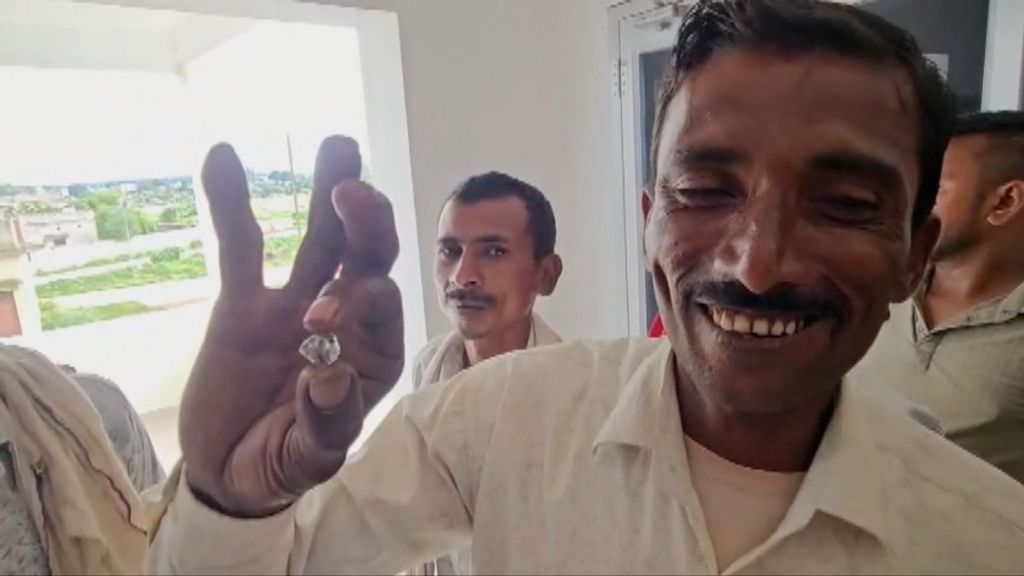
    In the impoverished diamond mining region of Panna, central Madhya Pradesh, a remarkable stroke of luck has fallen on seven working-class laborers, who have uncovered a 17.96-carat gem-quality diamond that stands to reshape their financial futures in ways they never thought possible.

    Two years ago, the group — led by Akhilesh Pal — secured a lease for the mining plot in Sarokha village for an extremely low sum. Like most small-scale prospectors in the region, their work had yielded little reward for months on end, forcing them to shutter the old mine a full year ago and shift their efforts to a new adjacent site. It was only during a routine inspection of the area following recent heavy monsoon rains that Pal made the stunning discovery: the large, precious stone sitting exposed on the mine floor.

    Local diamond industry officials have confirmed the stone meets the highest standard of “gem quality”, a classification reserved for the rarest and most valuable natural diamonds. Ravi Patel, a senior Panna diamond official, described the find as exceptionally precious, noting that it will go up for public auction in the first half of October, with registered domestic and international buyers eligible to place bids. Early valuations peg the stone’s minimum market value at 5 million Indian rupees, equivalent to roughly $52,400 or £38,800.

    Panna district, which holds the majority of India’s proven diamond reserves, is one of the country’s least developed regions. Decades of underdevelopment have left local residents grappling with systemic poverty, persistent water scarcity, and widespread chronic unemployment. For generations, small-scale prospectors have held out hope for a life-changing diamond find, drawing thousands of amateur diamond hunters to the area each year. But unlike most finds in the region, where daily wage laborers work for wealthy leaseholders who claim all profits from any discoveries, this find will directly benefit the seven men who uncovered it.

    Under Indian mining regulations for small leaseholders, the state government will only deduct a 12% royalty from the final auction proceeds. The remaining 88% of the revenue will be split equally between all seven members of the group. For three of the laborers, who told local media they have long been too poor to afford marriage, the unexpected windfall will finally let them achieve the life milestone they had long been denied. The auction scheduled for October will mark the culmination of years of thankless work, turning a lifetime of hardship into an opportunity for long-term financial stability.

  • Landslide in Mumbai kills 6 as India is drenched by monsoon rains

    Landslide in Mumbai kills 6 as India is drenched by monsoon rains

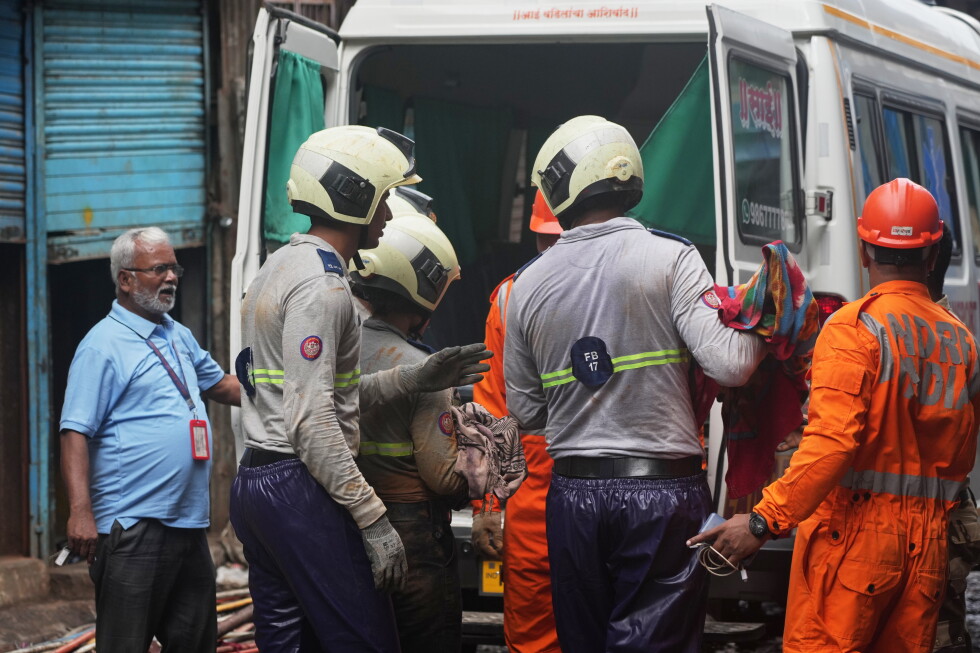
    In the early hours of Wednesday, a devastating landslide triggered by extreme monsoon downpours swept through a crowded residential neighborhood in Mumbai, India’s financial and commercial hub, leaving at least six people dead and four others injured, local authorities confirmed.

    The disaster struck before sunrise, when a fractured segment of a steep hillside gave way and crashed onto a cluster of informal homes in Ghatkopar, a densely populated suburb of the megacity. According to civic official Tanaji Kambli, between two and three residential structures were fully buried under the mud and debris when the slope collapsed.

    Emergency response teams including municipal workers, local police, firefighters, and personnel from the National Disaster Response Force were deployed to the site immediately after the collapse to launch search and rescue operations. However, their life-saving efforts were significantly slowed by the area’s extremely narrow access lanes, which make it impossible to bring in heavy excavation equipment to clear debris efficiently.

    By the latest update, rescue workers have managed to extract 10 people from the rubble. All of those pulled from the debris were transported urgently to a public city hospital. Kambli confirmed that six of those patients, including two young children and two teenagers, were pronounced dead on arrival at the medical facility. The remaining four injured people remain in the hospital receiving ongoing care for their injuries.

    Mumbai Mayor Ritu Tawde traveled to the affected neighborhood within hours of the landslide to meet with survivors and local residents. During her visit, she announced that the city government would provide formal monetary compensation to the families of those killed in the disaster to help them cover funeral costs and other expenses.

    India’s national weather department has issued a forecast warning of more intense monsoon activity across the entire western region of the country in the coming days. Local authorities have already issued repeated urgent calls for residents living in areas known to be at high risk of floods and landslides to stay on high alert and evacuate to safer locations if instructed.

    Home to more than 20 million residents, Mumbai receives the bulk of its annual rainfall during the June-to-September monsoon season. Torrential seasonal downpours have long created major disruptions for the city, routinely flooding major roads and railway lines, halting air and rail travel, and triggering destructive landslides and building collapses. These risks are concentrated especially in crowded informal settlements built onto steep, geologically unstable hillsides, where most of the city’s low-income population resides.

    Climate and disaster experts have warned for decades that Mumbai’s growing vulnerability to deadly monsoon disasters is driven by multiple manmade factors: unplanned rapid urbanization, unregulated construction of housing on geologically fragile hillside terrain, and a severely underbuilt and inadequate urban drainage system. These longstanding risks are now amplified by human-caused climate change, which is bringing heavier, more erratic, and more unpredictable rainfall patterns to the region every monsoon season.

  • Former disability carer worker Adam Mason jailed for nine months for sexual assault of two vulnerable clients

    Former disability carer worker Adam Mason jailed for nine months for sexual assault of two vulnerable clients

    A former disability support worker in Victoria, Australia, has been sentenced to nine months in prison followed by a two-year community corrections order after pleading guilty to sexually abusing two cognitively impaired women he was hired to care for, the County Court of Victoria confirmed this Wednesday.

    Adam Mason, 31, entered the disability support sector in 2022, and by October of that year, he began working with his first victim. Court documents outline that the relationship quickly crossed professional boundaries within just a few appointments: Mason admitted to the woman he had strong romantic feelings, began giving her unauthorised gifts and hugs, and shared his first kiss with her that December. By January 2023, the pair had engaged in sexual intercourse, after which Mason stepped down as the woman’s official carer. Even after a new support worker was assigned, Mason continued meeting the first victim in secret, with two more sexual encounters occurring before the abuse came to light.

    In March 2023, the first victim disclosed the inappropriate relationship to a replacement support worker during a dispute, raising concern that Mason was also involved with another of his clients. Shortly after Mason was suspended from his role, the second victim came forward to report that Mason had also kissed her – an experience that left her deeply distressed, the court confirmed. When interviewed by police the following year, Mason admitted his actions were wrong, framing the kiss with the second victim as a “moment of weakness” and telling investigators he believed he had fallen in love with the first victim.

    Mason pleaded guilty to five total criminal charges: three counts of sexual penetration of a person with a cognitive impairment or mental disorder, and two counts of sexual assault against the same protected class of people. In her sentencing remarks, Judge Nola Karapanagiotidis emphasized the inherent gravity of Mason’s offences, noting that the crimes represented a profound breach of the public trust placed in disability care workers.

    “You breached the trust placed in you and offended against two vulnerable women,” the judge stated in court. She added that while there were no allegations of force or coercion in Mason’s interactions with the victims, Australian criminal law specifically criminalizes sexual relationships between care workers and disabled clients under their supervision to protect vulnerable people from exploitation of their power imbalance.

    Both victims provided impact statements to the court, detailing the lasting harm inflicted by Mason’s actions. The first victim explained that the abuse left her unable to trust others with her personal care and deeply suspicious of support system workers similar to Mason. For the second victim, the incident resurfaced unresolved past trauma and left her with persistent fear and distrust of all male disability support workers.

    The court acknowledged that Mason has expressed remorse for his crimes, has strong ongoing support from his family, and has generally favourable prospects for rehabilitation. It was also revealed that Mason has received post-offending diagnoses of ADHD, borderline personality disorder, and depression. Prior to his sentencing, the National Disability Insurance Scheme (NDIS) Quality and Safeguards Commission permanently banned Mason from working as a disability support worker in December 2023.

    Under the terms of his sentence, Mason will serve nine months of imprisonment before being released to serve the remaining sentence under a two-year community corrections order. As part of this order, he will be required to complete targeted rehabilitative treatment and 80 hours of unpaid community service.

  • Thai government vows tougher gun controls after 2 deadly shootings near Bangkok

    Thai government vows tougher gun controls after 2 deadly shootings near Bangkok

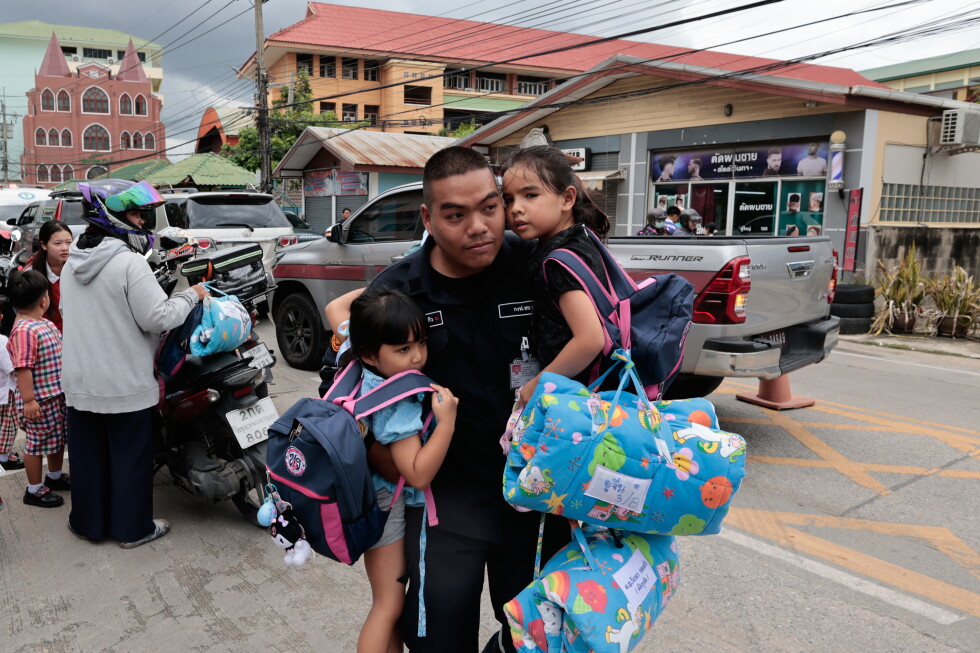
    BANGKOK – In response to two fatal mass shootings that occurred within five days just outside the Thai capital, the Thai administration has announced sweeping new measures to tighten firearm regulations and crack down on the country’s sprawling illegal gun market, addressing longstanding public pressure to curb rising gun violence.

    Thailand already holds the unenviable title of having one of the highest civilian gun ownership rates in Asia, a stat that has persisted even with formally restrictive national gun laws on the books. The back-to-back attacks, both staged in Nonthaburi province – a densely populated suburban area located just northwest of Bangkok – have amplified widespread demands from the public and policy critics for stronger enforcement and more rigorous oversight of legal and illegal gun access.

    The first incident, which unfolded last Friday, saw a teenage student open fire at his high school campus and a private residential property, leaving at least eight people dead and more than 20 others wounded. Authorities confirmed the shooter died by suicide after the attack. Just three days later, a second deadly shooting shook the province at a local government administrative building. One person was killed in that attack, another suffered injuries, and a former Thai lawmaker was taken into custody as the primary suspect.

    Government spokesperson Lalida Persvivatana confirmed in an official statement Wednesday that the administration is pursuing three core priorities: updating and strengthening existing gun regulations, cracking down on unlicensed illegal firearms trafficking and possession, and launching public awareness campaigns to clarify legal responsibilities and restrictions for licensed gun owners. “Our ultimate goal is to find ways to remove guns from people’s daily lives as much as possible and make Thai society safer,” Persvivatana stated.

    The policy push comes directly from top leadership: On Tuesday, Prime Minister Anutin Charnvirakul issued an order for an urgent national review of all existing gun regulations. The review includes a temporary suspension on approvals for new gun purchase permits, alongside a comprehensive audit of all currently active gun licenses to weed out invalid or improperly issued permits. Anutin also instructed the Ministry of Interior to draft targeted amendments to Thailand’s national Gun Control Act within a 60-day deadline. Proposed changes are expected to improve centralized civilian gun ownership data collection, tighten licensing and sales rules for the legal gun trade, and ramp up criminal penalties for individuals caught violating firearm laws.

    Current penalties for illegal gun possession in Thailand range from 1 to 10 years of prison time and fines of up to 20,000 Thai baht, equal to roughly $600. While the country’s formal licensing laws are already strict on paper, critics have long argued that systemic weaknesses in enforcement have allowed unregulated gun circulation to grow unchecked.

    Data from the 2017 Small Arms Survey collated by GunPolicy.org estimates that Thai civilians own approximately 15 firearms per 100 residents, a rate that far outpaces neighboring Southeast Asian nations. For comparison, neighboring Malaysia reports less than one gun per 100 residents, and Thailand’s gun ownership rate across Asia is only surpassed by Pakistan. 2023 statistics from World Population Review put Thailand’s national gun homicide rate at 3.49 deaths per 100,000 people. While that rate is far lower than the levels seen in high-violence regions of Latin America and the Caribbean, it remains among the highest in Asia, with only the Philippines recording a higher rate in Southeast Asia.

    Although large-scale mass shootings remain relatively uncommon events in Thailand, the country has recorded a steady rise in high-profile, deadly gun attacks in recent years, prompting growing public demand for systemic regulatory reform.