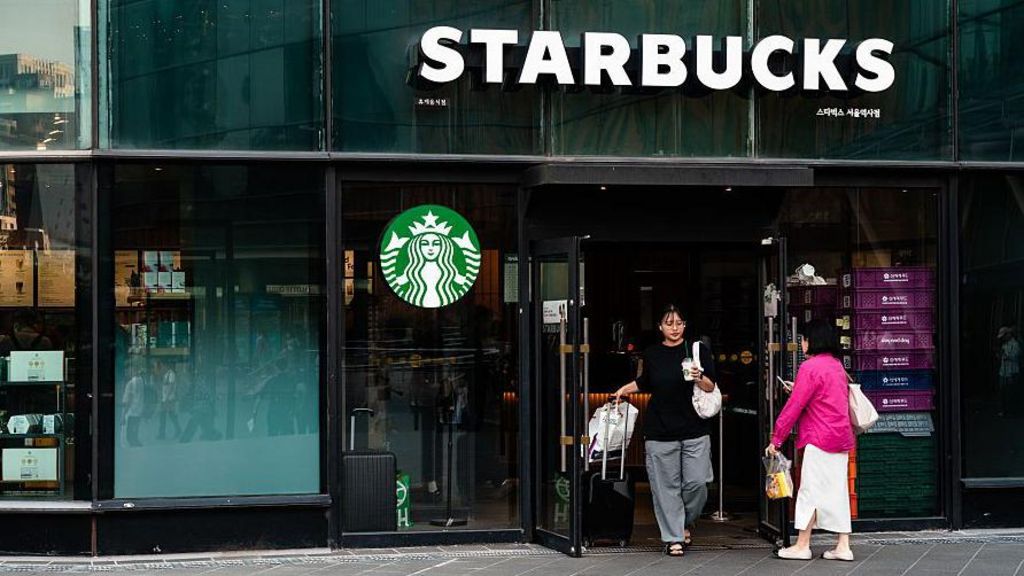
A major marketing misstep has roiled South Korea this week, ending with the abrupt dismissal of Starbucks Korea’s top executive after a coffee tumbler promotion was widely linked to the country’s deadly 1980 Gwangju Uprising crackdown, triggering mass boycott calls and harsh condemnation from South Korean President Lee Jae Myung.
Launched on Monday, the annual national commemoration of the 1980 pro-democracy uprising, the limited-time “Tank Day” promotion for the chain’s new Tank Series insulated tumblers quickly ignited public anger. For many South Koreans, the “tank” branding was an unforgivable nod to the military tanks deployed by former dictator Chun Doo-hwan’s authoritarian regime to crush the 18 May 1980 pro-democracy protests in Gwangju. The incident, a foundational moment in South Korea’s transition to democracy, left hundreds of protestors dead, and subsequent probes confirmed widespread atrocities including extrajudicial killing and sexual violence committed by regime troops.
Within hours of the promotion going live, Starbucks Korea pulled the campaign. Shinsegae Group, the South Korean conglomerate that holds a 67.5% controlling stake in the local Starbucks franchise (US-based Starbucks Corporation divested its remaining operational stake in 2021), moved quickly to address the public fury: it issued a formal apology for the “inappropriate marketing” and announced the immediate termination of CEO Sohn Jeong-hyun.
Company officials initially attempted to clarify that the Tank Series was just one of several new tumbler lines rolled out as part of a broader promotion running from 15 to 26 May, with the “tank” label meant to reference the containers’ advertised “spacious volume” for large coffee servings. The explanation did little to calm public anger. Critics also pointed to a second, equally incendiary detail in the promotional material: a Korean phrase “tak on the table!” The word “tak” matches the onomatopoeia used in a notorious 1987 police statement about the death of student activist Park Jong-chul, who died in police custody after being tortured. Police infamously claimed Park collapsed after an interrogator slapped the table — a lie that fueled the 1987 pro-democracy movement that ultimately ousted Chun’s regime.
Public reaction was swift and fierce across South Korean social media. “I can’t believe they thought they could pull off something like this and people would just let it slide… it’s utterly absurd and infuriating,” one X (formerly Twitter) user posted early Tuesday. Thousands of users shared calls to boycott both Starbucks Korea and all Shinsegae Group affiliates.
President Lee joined the widespread condemnation, writing in his own X post that the campaign “insults the victims and the bloody struggle” of Gwangju residents. “What on earth were they thinking, knowing how many lives were taken that day and how seriously that set back our country’s justice and history?” Lee wrote. “I am outraged by such a low-class merchant’s inhumane behaviour, which denies our country’s values of basic human rights and democracy.”
For South Korea, 18 May is far more than a historical date: it is recognized annually as a sacred day of national remembrance for the pro-democracy movement, etched into public consciousness as a core national trauma that paved the way for the country’s democratic transition. The 1980 uprising became a unifying rallying cry for pro-democracy activists over seven years, leading to the 1986 June Democracy Movement that forced Chun Doo-hwan to step down and cemented democratic rule in South Korea.
Shinsegae Group chairman Chung Yong-jin echoed the public anger in his own official statement Tuesday, calling the marketing campaign “an inexcusable mistake that trivialised the suffering and sacrifices of all those who have dedicated themselves to the democracy of this country”. Chung pledged to launch a full investigation into the event’s internal approval process and implement a top-down re-examination of all marketing review protocols across every Shinsegae affiliate. The remaining 32.5% stake in Starbucks Korea is held by Singapore’s sovereign wealth fund GIC, and US-based Starbucks has no operational involvement in the South Korean chain following Shinsegae’s 2021 buyout.