分类: society

  • African migrants warned to close shops during South Africa anti-migrant march

    African migrants warned to close shops during South Africa anti-migrant march

    Hundreds of demonstrators gathered in the streets of South Africa’s administrative capital Pretoria on Tuesday for an organized march against illegal immigration, triggering urgent safety advisories for African migrant communities across the country and reigniting fierce debate over long-simmering xenophobic tensions. The protest, organized by anti-immigration group March and March, saw participants march toward the Union Buildings, South Africa’s official seat of national government, carrying hand-painted signs, chanting slogans, and wearing branded T-shirts emblazoned with their messaging.

    One protester spoke to BBC correspondent Thuthuka Zondi, explaining that he joined the demonstration over frustrations that national politicians have failed to address what he frames as a crisis of unregulated migrant entry. “We are grateful that we now have groups like this that have come up to aid the voice of what we have always been preaching about — illegal immigration is a big problem to our society,” he said. The demonstration follows a years-long rise in anti-migrant political sentiment, fueled by widespread beliefs among some South Africans that foreign-born workers take available jobs from citizens and disproportionately draw on taxpayer-funded public services. South Africa currently faces one of the world’s highest unemployment rates, hovering near 33% — a statistic that anti-immigration groups have leveraged to grow their support base.

    In response to the planned demonstration and credible fears that the protest could escalate into targeted xenophobic violence, diplomatic missions and migrant community organizations have issued urgent warnings urging African migrants to practice maximum vigilance. Ghana’s High Commission in Pretoria issued an official advisory Tuesday urging all Ghanaian nationals in the country to prioritize personal safety, close their businesses, avoid protest hotspots, and maintain a low public profile to reduce the risk of confrontation. Similarly, Olaniyi Abodedele, chairman of the Nigerian Union of South Africa, instructed all community members to stay indoors and shutter their businesses amid the unrest.

    Abodedele told the BBC’s Pidgin service that the entire community is on edge, noting that xenophobic targeting often does not distinguish between legal and undocumented migrants. “As long as you are a Nigerian, you are profiled and you are stereotyped immediately,” he said, adding that many community members feel uncertain about what protection their home government will provide if violence breaks out. A second demonstration focused on restricting immigration is scheduled to take place Wednesday in South Africa’s largest city, Johannesburg, which hosts one of the country’s largest migrant populations alongside Pretoria.

    Speaking to the BBC on the sidelines of the Pretoria protest, affected Nigerian migrants expressed fear and frustration over the restrictions they have been forced to adopt. One small business owner, who closed his shop in line with the safety advisory, said he resented being targeted when most migrants only come to South Africa to earn a living. “It is not okay because we are blacks, we are brothers… everybody comes here just to survive,” he said. A security guard who was unable to report for work due to the unrest added: “It’s just making us scared — imagine if we’re scared in our own African continent — what if we go to Europe?”

    Senior political and international leaders have moved quickly to condemn rising xenophobic violence and anti-migrant rhetoric in South Africa. In his annual Freedom Day address Monday, which marks the anniversary of the country’s first post-apartheid democratic elections in 1994, President Cyril Ramaphosa rejected growing anti-migrant sentiment. Ramaphosa reminded South Africans that the wider African continent provided critical support to the anti-apartheid struggle, urging citizens not to let legitimate economic frustrations “breed prejudices and hatred towards our fellow Africans.” He also explicitly condemned recent targeted attacks on foreign-born residents.

    United Nations Secretary-General António Guterres echoed that condemnation in remarks released by his spokesperson Stéphane Dujarric on Monday. Guterres criticized “criminal acts perpetrated by individuals inciting violence and exploiting socio-economic conditions,” and also recalled the international and African solidarity that sustained South Africa’s fight against apartheid. The UN chief stressed that he is deeply concerned by ongoing reports of “xenophobic attacks and acts of harassment and intimidation,” adding: “Violence, vigilantism and all forms of incitement to hatred have no place in an inclusive, democratic society.”

    Xenophobic violence and anti-migrant sentiment have been persistent challenges in South Africa for decades, with occasional deadly outbreaks of targeted attacks on migrant communities. Official government data shows that approximately 2.4 million migrants live in South Africa, making up just under 4% of the national population. The vast majority of these migrants come from neighboring Southern African countries including Lesotho, Zimbabwe, and Mozambique, which have a long history of supplying labor to South Africa’s economy. In recent years, organized anti-migrant groups such as Operation Dudula and March and March have gained increasing public traction for their demands that all foreign-born nationals be expelled from the country. Earlier this year, Zulu King Misuzulu kaZwelithini drew widespread condemnation for using a derogatory slur to refer to foreigners and calling for all migrants to leave South Africa, 11 years after his father made a similar call.

    Past anti-immigration demonstrations in South Africa have escalated into violent attacks on migrant communities and their businesses, prompting civil society groups to repeat calls for calm and enhanced protection for vulnerable migrant populations. A second planned protest in Johannesburg on Wednesday has communities bracing for further tension across the country’s most populous urban center.


  • Ex-actor Nathan Chasing Horse jailed for at least 37 years for sexual assault

    Ex-actor Nathan Chasing Horse jailed for at least 37 years for sexual assault

    A once-recognizable face from Oscar-winning cinema who positioned himself as a respected spiritual leader across Indigenous communities in North America has been handed a mandatory minimum 37-year prison term following his conviction on a litany of sexual assault charges. Nathan Chasing Horse, 49, who earned public recognition for his 1990 role as a young Sioux tribe member in *Dances With Wolves*, was found guilty of 13 out of 21 total charges brought against him, with the majority of convictions tied to repeated assaults of three victims—one of whom was just 14 years old when the abuse began.

    Beyond his small but notable Hollywood career, Chasing Horse built a widespread reputation as a medicine man among Indigenous tribes spanning both the United States and Canada. Prosecutors and survivors revealed during the trial that he deliberately exploited the trust and vulnerability of community members who turned to him for spiritual guidance and healing, weaving a pattern of abuse that stretched across nearly two decades.

    In a harrowing public statement following the verdict, victim Corena Leone-LaCroix—who was 14 when Chasing Horse first targeted her—spoke of the irreversible damage inflicted by the abuse. “There is no way to get back the youth, the childhood loss, my first time, my first kiss, the graduation I never got to have,” she told the court. “The life that little girl could have lived has been taken from me forever,” she added, per reporting from the Associated Press, which confirmed she chose to go public with her allegations to encourage other survivors to come forward.

    Prior to issuing the sentence, District Court Judge Jessica Peterson directly addressed Chasing Horse, condemning his calculated exploitation of vulnerable people seeking spiritual support. “You preyed on women’s spirituality,” Peterson said, adding that he “manipulated them for your own personal gratification.”

    Prosecutors laid out disturbing details of Chasing Horse’s manipulative tactics during the trial. Deputy District Attorney Bianca Pucci told the jury that the former actor had built an elaborate “web of abuse” over 20 years. In one particularly chilling example, Pucci explained that Chasing Horse told the underage Leone-LaCroix that spirits demanded she surrender her virginity to him in order to save her mother, who was suffering from cancer at the time.

    Chasing Horse has consistently denied all allegations against him. Under the terms of his sentence, he will not be eligible for parole consideration until he has completed the full 37-year prison term. For anyone affected by the sexual abuse issues raised in this case, support and resources are available through the BBC ActionLine service.

  • Swarm of 10,000 bees settles on bike outside Louvre in Paris

    Swarm of 10,000 bees settles on bike outside Louvre in Paris

    In a surprising urban wildlife encounter that unfolded steps from one of Paris’s most iconic cultural landmarks, a massive swarm of roughly 10,000 wild bees made an unexpected home beneath the saddle of a parked bicycle, prompting a coordinated safe removal by local authorities and a veteran urban beekeeper.

    The unusual incident took place on a Saturday afternoon, just minutes after the bicycle’s owner locked their retro “grandfather’s old bike” to metal railings outside the Palais Royal-Musée du Louvre metro station, a busy transit hub that sits directly across from the world-famous Louvre art museum. Within half an hour of the bike being parked, the entire swarm had settled into the tight space under the saddle, a spot that drew the attention of passing commuters and tourists almost immediately.

    After receiving reports of the large insect cluster, Paris transport authorities made the call to temporarily close the affected metro entrance as a safety precaution, while reaching out to a local beekeeper to handle the relocation. Volkan Tanaci, an experienced urban beekeeper who actually cycled to the scene himself, arrived quickly to assess and resolve the unusual situation.

    Speaking to local French outlet France Info, Tanaci noted that the swarm’s choice of location was highly out of the ordinary. “It was certainly in an unusual place, right next to the entrance to a metro,” he said. On closer inspection, Tanaci confirmed the dense cluster of bees matched the structure of a migrating swarm, noting that “it was a real cluster of bees, and probably there was a queen bee right in the middle” — the key reason the entire group had settled in that specific spot, as bee swarms travel and cluster around their queen during relocation to new nesting grounds.

    The bicycle’s owner documented every step of the unexpected incident, sharing photos and updates on their Instagram account @ma_pauvre_lucette, where they noted the bees’ rapid arrival just half an hour after the bike was parked, and confirmed that the beekeeper successfully removed the entire swarm without incident. No injuries to commuters or damage to the bicycle were reported following the removal, and the metro entrance was reopened to passengers shortly after the operation concluded.

    The encounter comes as urban beekeeping has grown in popularity across major European cities in recent years, as communities work to support declining bee populations critical to global pollination and ecosystem health. Encounters like this, while rare, highlight how wild bee populations are increasingly adapting to urban environments as they search for new nesting locations.

  • Manhunt for suspected gunman aged 89 as five wounded in Athens

    Manhunt for suspected gunman aged 89 as five wounded in Athens

    A wide-scale manhunt is ongoing across Athens for an 89-year-old gunman after a two-site shooting spree on Tuesday left five people wounded, Greek law enforcement and local media have confirmed. The violent incident began at a social security agency located in the Athens neighborhood of Petralona, where the suspect first opened fire, striking an employee in the leg.

    After the initial attack, the shooter traveled a short distance to a nearby courthouse in the Ampelokipi district, where he injured four additional people before fleeing the premises. Law enforcement officials confirmed that the suspect abandoned his shotgun at the courthouse after the attack, leaving the weapon behind as he escaped.

    All five casualties – one man and four women – have been confirmed to have non-life-threatening injuries, according to public broadcaster ERT. Stratis Dounias, head of Athens’ judiciary employees’ union, clarified that the four people hurt at the courthouse were all female court staff working at the small claims division, and all suffered only minor wounds.

    At present, heavily armed police units have deployed to both attack sites to secure the areas and support the ongoing investigation, though authorities have not yet identified a clear motive for the coordinated attacks. ERT’s reporting notes that the gunman concealed his shotgun under his coat when he entered both buildings to carry out the attacks. As of the latest updates, the suspect remains at large, and investigative teams are working to trace his whereabouts and unpack the context of the incident.

    Notably, gun violence remains a rare occurrence in Greece, where the country’s strict regulatory framework allows limited firearm ownership only under heavy oversight and rigorous checks.

  • May Day travel surge expected, says NIA

    May Day travel surge expected, says NIA

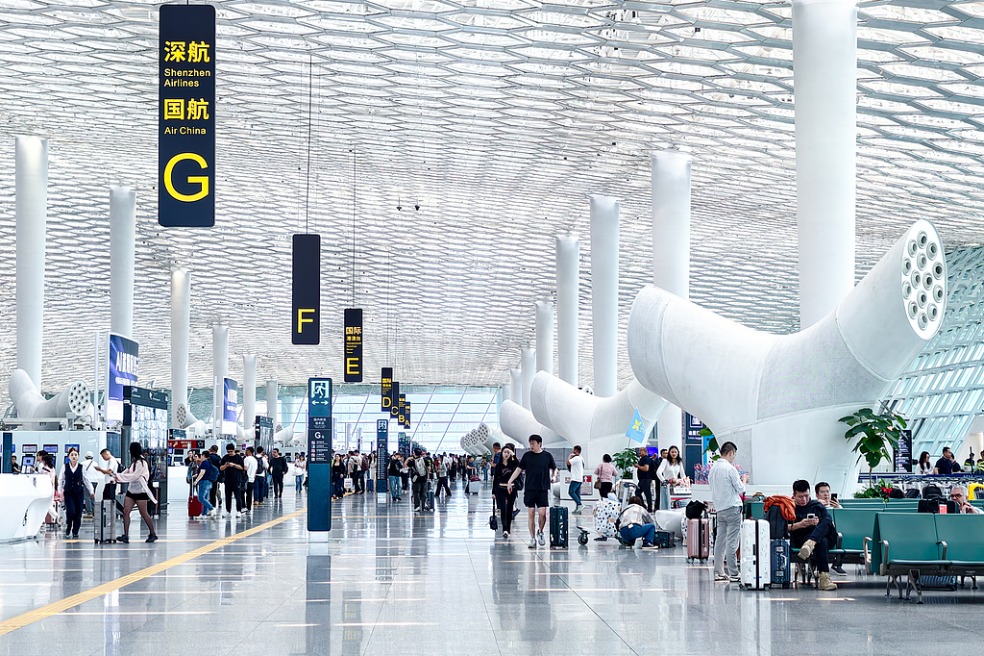
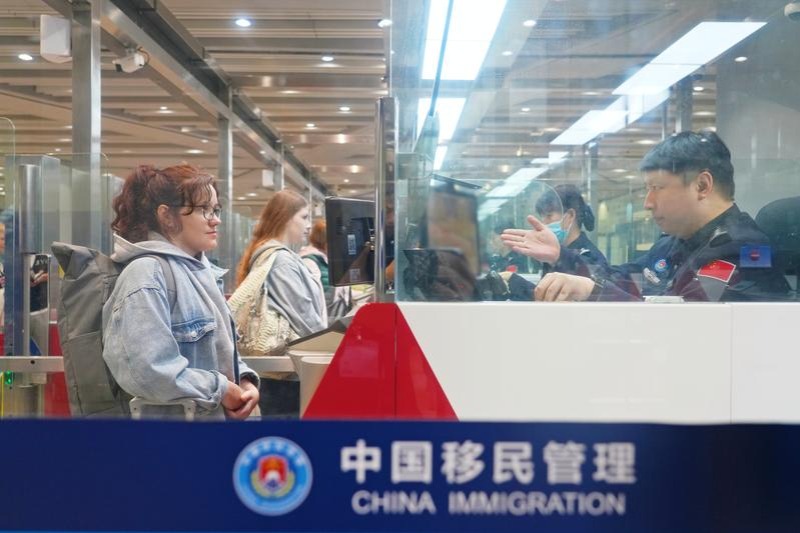
    As China prepares to welcome its five-day May Day holiday starting this Friday, the National Immigration Administration (NIA) has released projections of a significant surge in cross-border passenger travel, laying out comprehensive operational plans to keep border clearance efficient and safe for travelers.

    In an announcement made Tuesday, the NIA forecasts an average of 2.25 million inbound and outbound passenger trips will pass through China’s border checkpoints each day throughout the holiday period, with daily volumes peaking above 2.4 million trips on the busiest days. The expected boom is concentrated across two key categories of ports: major international aviation hubs and land border crossings connecting the Chinese mainland with Hong Kong and Macao special administrative regions.

    Leading the country’s international airports in projected cross-border volume is Shanghai Pudong International Airport, which is set to handle an average of 102,000 inbound and outbound trips daily. It is followed by Guangzhou Baiyun International Airport with 55,000 daily trips, Beijing Capital International Airport with 49,000, and both Chengdu Tianfu International Airport and Shenzhen Bao’an International Airport projected to average 20,000 daily cross-border trips each.

    Land ports serving cross-border travel between the mainland and Hong Kong and Macao are projected to remain at high capacity throughout the break. In the southern Guangdong province city of Shenzhen, which borders Hong Kong, the Luohu Port is expected to average 230,000 daily trips, with the Futian Port close behind at 210,000. The Shenzhen Bay Port will see an average 180,000 daily trips, the West Kowloon Station of the Guangzhou-Shenzhen-Hong Kong Express Rail Link is projected to hit 120,000 daily trips, and the Liantang Port will average 100,000 trips per day.

    Across the Pearl River Delta in Zhuhai, which borders Macao, the Gongbei Port — one of the busiest land crossings for Macao-bound travel — is forecast to handle an average of 396,000 passenger trips per day, the highest volume of any individual port on the Chinese mainland during the holiday. The Hong Kong-Zhuhai-Macao Bridge crossing is projected to see 129,000 daily trips, the Qingmao Port will average 121,000, and the Hengqin Port, which serves travel to Macao’s Cotai district, will see 116,000 average daily trips.

    To accommodate the unexpected travel boom, the NIA has rolled out targeted holiday arrangements for border inspection agencies across the country. All local authorities have been instructed to maintain real-time monitoring of passenger flow dynamics and port operational conditions, and release up-to-date travel information to the public to help trip planning.

    A key requirement mandates that agencies open enough inspection lanes to ensure waiting times for Chinese citizens clearing customs do not exceed 30 minutes, cutting down on holiday travel delays. The NIA also called for strengthened inter-agency coordination between border inspection units, other port regulatory authorities and transport departments, to manage peak-hour crowds, upgrade transport support, and guarantee that border clearance remains safe, efficient and smooth throughout the five-day holiday period.

  • China’s job market stable in Q1, 2.99 million urban jobs added

    China’s job market stable in Q1, 2.99 million urban jobs added

    China’s national labor market maintained broad stability through the first three months of 2026, official data released by the Ministry of Human Resources and Social Security shows. The country created 2.99 million new urban employment opportunities over the quarter, with the average surveyed urban unemployment rate landing at 5.2 percent, according to ministry spokesperson Cui Pengcheng.

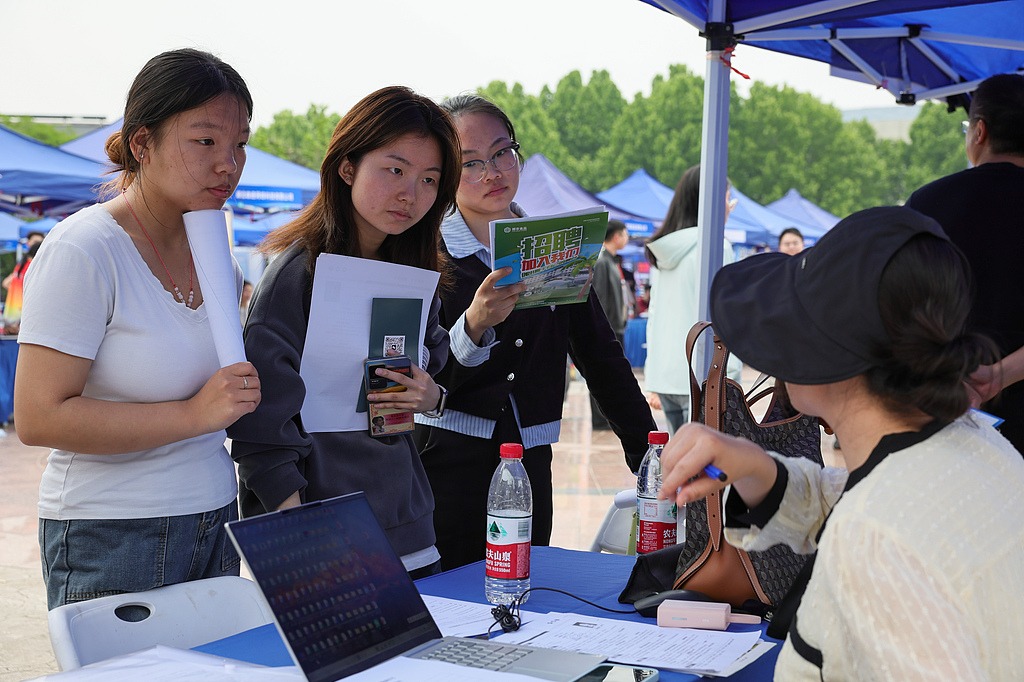
    Speaking at a Tuesday press briefing, Cui outlined that policymakers prioritized targeted employment support for high-need groups, particularly recent college graduates and younger job seekers. The first quarter marks a critical window for new graduates entering the workforce, so officials moved quickly to roll out accelerated support measures designed to help this cohort secure employment as early as possible.

    For the full 2026 calendar year, China has set clear national employment targets: an average surveyed urban unemployment rate capped at approximately 5.5 percent, and the creation of more than 12 million new urban jobs nationwide. To help meet these goals, officials have rolled out a suite of targeted policy interventions focused on expanding access to large-scale vocational skills training. A core focus of this training push is strengthening the supply of high-quality development resources for fast-growing, high-demand sectors including artificial intelligence, the low-altitude economy, new energy vehicles, and elderly care services – fields that are projected to generate sustained job growth in coming years.

    In collaboration with other national and local government departments, the ministry has already organized roughly 59,000 targeted job fairs across the country, connecting job seekers with more than 36 million open employment positions. For migrant workers returning to or seeking new urban employment, authorities have also arranged nearly 1 million “point-to-point” direct transportation trips to remove barriers to labor mobility, Cui added.

  • Intl influencers embark on a cultural journey in Nishan

    Intl influencers embark on a cultural journey in Nishan

    Nestled in Qufu, Jining, Shandong Province—the birthplace of Confucius and the cradle of Confucian civilization—Nishan has opened its doors to global visitors eager to dive into thousands of years of Chinese traditional culture, seek unique travel experiences, and discover fresh cultural insights. From April 24 to 26, a curated cohort of international content creators and digital influencers gathered in this historic site, launching a immersive three-day journey to unpack the depth of local cultural landscapes and connect with centuries-old Confucian heritage on a personal level. Unlike traditional academic study tours, the trip invited participants to engage with cultural heritage through hands-on interactive activities, blending age-old traditions with contemporary perspectives to bring thousands of years of history to vivid life. During their stay, influencers got the chance to wander through the sacred landscapes closely tied to Confucius, interact with local cultural inheritors, and experience core Confucian values through immersive, modern-designed experiences that bridge ancient wisdom and 21st-century expression. For many participants, the trip offered a rare, unfiltered look at how traditional Chinese culture continues to evolve in the modern era, turning abstract cultural heritage into a tangible, personal experience. This initiative is part of broader efforts to showcase Chinese cultural heritage to a global audience, leveraging the reach and authentic voices of international influencers to share the nuanced, living tradition of Confucian culture with communities around the world. In Nishan, ancient tradition meets modern creativity, turning static historical legacy into a dynamic, accessible experience that resonates with visitors from across the globe.

  • China expects cross-border travel surge during May Day holiday

    China expects cross-border travel surge during May Day holiday

    Just days ahead of China’s annual five-day May Day holiday, national immigration authorities have projected a significant uptick in cross-border passenger movement, as robust demand for international tourism and family reunification drives one of the country’s busiest travel windows of the year.

    In an official statement released Tuesday, the National Immigration Administration outlined projections that average daily inbound and outbound traveler volumes will hit 2.25 million across the holiday period, which kicks off on May 1. The daily peak is expected to surpass 2.4 million single-day crossings, marking a notable jump from off-peak travel periods and aligning with broader trends of growing post-pandemic cross-border mobility in China.

    The May Day holiday has long stood as one of China’s peak domestic and international travel seasons, alongside the October National Day holiday and the Lunar New Year. This year, the combination of an extended five-day break and rising consumer willingness to travel abroad has created conditions for a surge in cross-border activity, with many holidaymakers planning international trips to visit relatives, explore new destinations, or take advantage of the extended break for longer overseas getaways.

    Industry analysts note that this projected growth in cross-border travel also reflects improving connectivity between China and global destinations, alongside sustained recovery in the international tourism sector that has gained momentum in recent years. The expected surge is also poised to deliver a boost to regional tourism economies across border regions and major international gateway cities in China, as well as tourism markets in popular destination countries.

  • Tradition on the terraces

    Tradition on the terraces

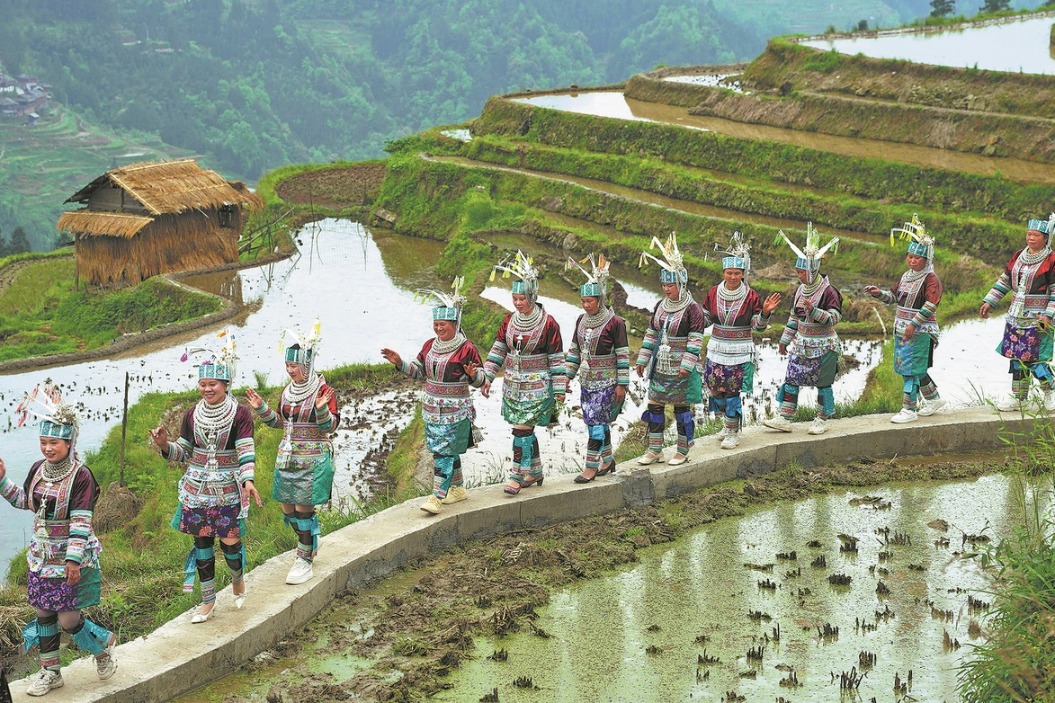
    Nestled among the rolling green terraces of Congjiang county in Southwest China’s Guizhou province, hundreds of villagers clad in vibrant traditional ethnic attire gathered on Sunday to celebrate the annual Kaiyang Festival, the traditional ceremonial kickoff to the annual rice-planting season that has sustained communities in the region for generations.

    As one of the most enduring cultural rituals of southern China’s rice-growing regions, the Kaiyang Festival carries centuries of history, woven into the agricultural cycles that have shaped local life. This year’s main celebration unfolded in Jiabang, home to the region’s spectacular layered terraced fields that draw both cultural preservationists and tourists each year.

    Local Miao ethnic community members led the day’s proceedings: groups of villagers carried hand-woven ceremonial flags down into the flooded terraces, while respected village elders presided over traditional blessing rites. The elders laid out offerings of locally brewed rice wine, cured pork, and incense, before leading the assembled community in collective prayers for favorable seasonal weather, strong crop growth, and a plentiful harvest at the end of the growing cycle. The day also featured cultural competitions, including a popular race up the steep slopes of Jiabang’s terraces, drawing participants from nearby Miao villages and visitors from across the country.

    Rooted in the region’s agrarian heritage, the Kaiyang Festival serves not only as a practical marker for the start of planting season but also as a vital gathering that strengthens intergenerational community bonds and preserves centuries-old ethnic cultural traditions for younger generations.

  • Youth who died saving a boy honored

    Youth who died saving a boy honored

    On April 27, 2026, Beijing hosted a national awarding ceremony where China’s most prestigious youth honor, the China Youth May Fourth Medal, was granted to 29 outstanding individuals and 30 exemplary organizations in recognition of their extraordinary contributions to society. Hosted jointly by the Central Committee of the Communist Youth League of China and the All-China Youth Federation, this year’s awards highlighted two recipients whose stories of courage, selflessness and relentless ambition have resonated deeply across the country.

    One of the most moving honorees was 26-year-old Jin Chenglong, a medical student at Liaoning University of Traditional Chinese Medicine, who received the award posthumously. Jin grew up in Fushun, Liaoning province, a city widely known as the second hometown of Lei Feng, the iconic Chinese soldier celebrated nationwide for his lifelong commitment to selfless public service. From a young age, Jin embraced the core value of serving people, which led him to pursue a career in medicine with the firm goal of saving lives.

    Long before his final heroic act, Jin dedicated himself quietly to helping others. Three personal items found among his belongings offer a clear window into his lifelong commitment: a portable red first-aid kit he always carried after failing to save an elderly man who suffered a sudden heart attack when Jin had no emergency tools on hand; a voluntary organ donation registration card he signed as a first-year college student, unknown to most until after his death; and a worn handwritten notebook filled with his personal reflections, including the powerful line: ‘Do earthshaking deeds while remaining unknown.’ It was also revealed that Jin had donated blood 13 times over six years, totaling 4,000 milliliters, with his final donation taking place just two days before he died.

    Jin’s final act of heroism came on a frigid January day in Shenyang, Liaoning. When he heard desperate cries for help coming from a frozen river, he did not hesitate. Grabbing a wooden plank to stabilize himself, he rushed onto the thin ice to rescue those trapped. The ice cracked beneath his weight shortly after he began, plunging all three—Jin, the 7-year-old boy he ultimately saved, and the boy’s father—into water chilled to below minus 20 degrees Celsius. Jin successfully pulled the boy to safety, but both Jin and the boy’s father lost their lives to the deadly cold.

    Jin’s parents accepted the highest youth honor on his behalf at the Beijing ceremony. Through tears, his mother Ning Xiaoguang shared that Jin had long planned to visit Beijing again during the 2026 winter break, booking a train ticket for February 8, but he lost his life on January 23. ‘Now we have come to Beijing in his place, and I miss him deeply,’ she said. Jin’s father, Jin Hai, noted that his son never shrank from danger, adding: ‘As his father, I am proud, and grateful to the country for bestowing such a high honor upon him.’

    Alongside Jin Chenglong, another award winner, Wang Qinjin, captured public attention with his rags-to-riches story of relentless ambition that took him from a rural village childhood to the cockpit of a cargo plane. Growing up in a rural area of Jiangxi province in southeast China, Wang developed a childhood dream of flying after watching planes soar overhead. When he chased passing planes across open fields as a small boy, no one would have guessed that he would one day captain a 60-ton cargo aircraft.

    After graduating from college in 2009, Wang took an entry-level position as a warehouse clerk with major logistics company SF Express, sorting parcels day after day. Even at this most basic grassroots position, Wang held fast to his standards: ‘Even at the most grassroots post, I told myself to do every small thing to perfection,’ he said.

    His chance to chase his long-held dream came in 2010, when SF Express launched an internal recruitment drive to hire new cargo pilots. Wang applied immediately, despite facing steep barriers. He had only barely passed the national College English Test Band 4 after five attempts, but pilot training abroad required full English proficiency for academic study and daily communication. For Wang, there was no turning back: ‘There was no retreat, only a fight to the end,’ he said. Over three months, he fully immersed himself in study, memorizing thousands of vocabulary words and technical aviation terms day and night, and ultimately passed the rigorous entrance interview.

    Additional challenges waited for Wang at flight school overseas. As a non-aviation major, he was initially barred from operating aircraft, and many peers and instructors doubted his ability to succeed. While his classmates spent their free time on leisure activities, Wang dedicated every spare moment to reviewing flight theory and completing extra training practice. He eventually finished all required assessments ahead of schedule, winning high praise from his lead instructor. In 2019, Wang earned his promotion to captain. To date, he has inspired dozens of frontline logistics workers to pursue their own career dreams in aviation.

    Reflecting on his journey, Wang shared a thoughtful reflection at the award ceremony: ‘The power that lifts a 60-ton cargo plane into the sky is silent and invisible, but it is the power of our era and the power within us that lift me up so I can continue to realize my dream in the sky.’