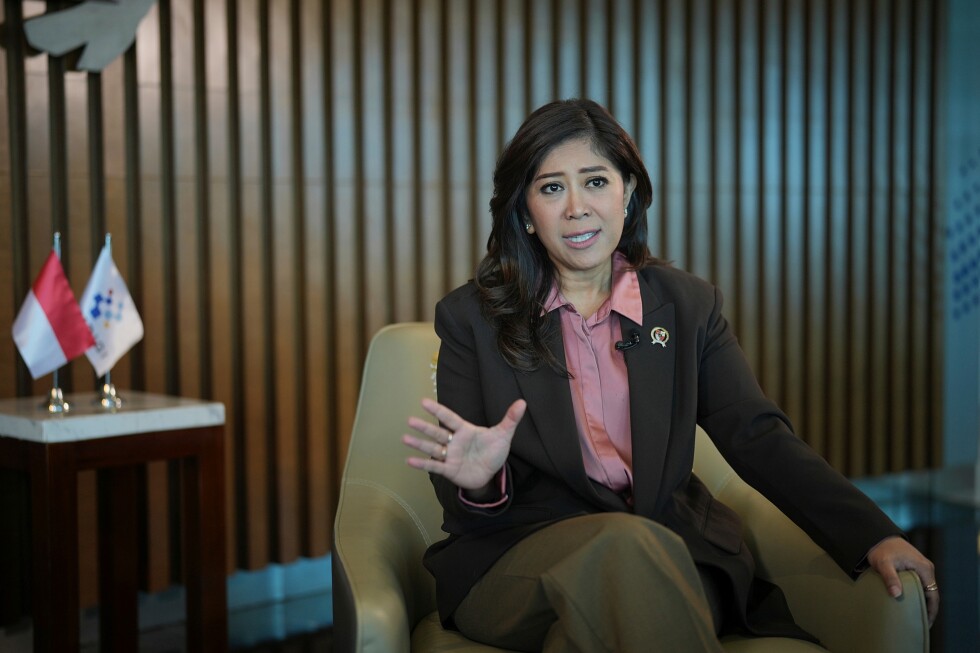
Against a rising global tide of concern over the risks unregulated digital content poses to minors, Indonesia’s government is ramping up pressure on social media and digital platforms to meet transparency requirements, as the country rolls out landmark regulations banning children under 16 from accessing unfiltered online services. Speaking Wednesday, Communication and Digital Affairs Minister Meutya Hafid emphasized that mere compliance with the new rules is insufficient — platforms must publish concrete data on how many underage accounts they have suspended to keep the public informed of progress.
分类: society
-

UK prime minister condemns attack after 2 stabbed in a Jewish neighborhood of London
LONDON – A Wednesday morning stabbing incident in Golders Green, a northwest London neighborhood with one of the largest Jewish communities in the United Kingdom, has left two people injured and sparked a cross-unit counterterrorism investigation into what officials have formally classified as an antisemitic attack. A 45-year-old suspect is currently in custody, facing suspicion of attempted murder following the violent assault.
According to local Jewish security organization Shomrim, witnesses observed the suspect moving along Golders Green Road armed with a large blade, actively targeting Jewish civilians going about their daily routines. Members of Shomrim, a community patrol group that provides supplementary security for Jewish neighborhoods across the U.K., managed to detain the suspect before law enforcement arrived. Metropolitan Police officers subsequently took the suspect into custody, deploying a stun gun to subdue him during the arrest. Officials confirmed the suspect also attempted to stab responding officers, though no law enforcement personnel were harmed in the confrontation.
The two victims, a man in his 30s and a second man in his 70s, were transported to local hospitals for treatment. As of the latest update, both are reported to be in stable condition, with no immediate threat to their lives.
Counterterrorism detectives have taken lead on the investigation to determine whether the stabbings are connected to a recent string of arson attacks targeting synagogues and other Jewish community sites across London. While investigators are probing potential extremist links, the incident has not yet been formally designated as an act of terrorism. Detectives are still working to establish the suspect’s full background, nationality and potential motives, with Detective Chief Superintendent Luke Williams noting that “investigators are considering all possible motives” tied to the attack.
The stabbing comes on the heels of multiple arson incidents over recent weeks that have all targeted Jewish infrastructure within a few miles of Golders Green. Those attacks damaged a Jewish charity’s ambulance fleet parked in the neighborhood and hit a synagogue located a short distance away. No injuries were reported in any of the arson attacks, and law enforcement has already arrested and charged multiple suspects ranging in age from teenagers to people in their 40s. Counterterror officials are currently examining whether the arson attacks were carried out by proxies linked to Iran, a line of inquiry that has now expanded to include the Wednesday stabbing.
Local residents expressed shock and unease following the latest attack, which comes amid a sustained rise in antisemitic aggression across the country. “It happens in Israel, but happening on our own doorstep, of course it’s shocking,” said Golders Green resident Moishe Grunfeld, who spoke of his concern for his children and grandchildren who live in the area. Golders Green has long been a central hub for British Jewry: the neighborhood is home to dozens of synagogues, multiple Jewish day schools, and a wide array of kosher businesses, alongside sizable Asian and Middle Eastern communities. The broader U.K. Jewish community numbers roughly 300,000 people, a small share of the country’s total population but one with deep, centuries-long roots in British society.
Top political leaders across the U.K. united to condemn the attack. Prime Minister Keir Starmer emphasized the inseparable link between attacks on British Jews and attacks on the nation itself, stating that “attacks on our Jewish community are attacks on Britain.” London Mayor Sadiq Khan echoed that condemnation, noting that “London’s Jewish community have been the target of a series of shocking antisemitic attacks.” He added, “There must be absolutely no place for antisemitism in society.”
The incident is the latest in a dramatic nationwide surge in antisemitic hostility recorded since the October 7, 2023, Hamas attack on Israel and the subsequent outbreak of the Gaza war. Data from the Community Security Trust, the leading organization tracking antisemitic incidents in the U.K., shows recorded attacks jumped from 1,662 in 2022 to 3,700 in 2025. Britain’s Chief Rabbi has warned that British Jews are now facing an organized campaign of violence and intimidation. The Golders Green stabbing also comes just months after a fatal antisemitic attack in Manchester in October 2025, when an attacker drove a vehicle into a crowd gathered outside a synagogue on the Jewish holy day of Yom Kippur, stabbing one person to death. A second person at the scene died after being inadvertently shot by responding police.
-
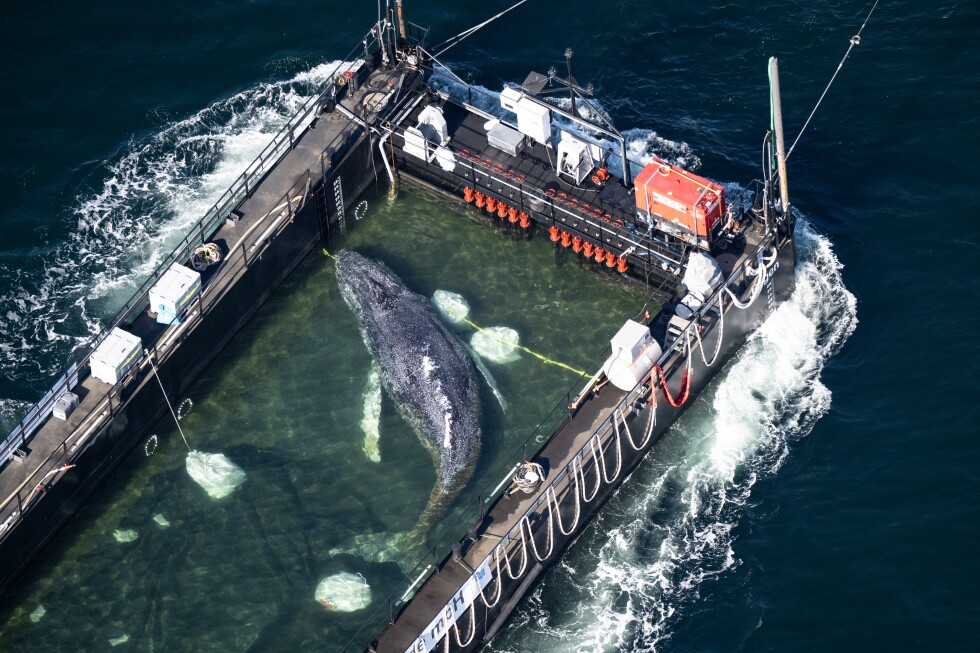
A barge carrying Timmy the humpback whale begins journey to the North Sea
BERLIN – For nearly five months, a wayward humpback whale that wandered hundreds of kilometers off its natural migration route has captured global public attention, and on Wednesday, a long-planned rescue operation finally moved the ailing animal one step closer to its intended home in the Atlantic Ocean.
Nicknamed Timmy by German media outlets, the young humpback was first spotted off Germany’s Baltic Sea coast on March 3, thousands of kilometers from the cool Atlantic waters that make up the species’ native habitat. Since its unexpected arrival, Timmy has faced repeated stranding events in the region’s shallow coastal waters, and its overall health has steadily declined. Multiple earlier attempts to guide the whale out to deeper open water failed, with every step of these efforts streamed live to audiences around the world, turning the stranded mammal into an international headline maker.
According to Germany’s national press agency dpa, rescuers worked for hours on Tuesday to secure the whale with heavy-duty straps and pull it through a specially dredged channel onto a flooded cargo barge, marking the start of the most ambitious rescue attempt to date. By early Wednesday morning, the barge had already reached the northern German island of Fehmarn, which sits just a short distance from Danish territorial waters. From there, the vessel will travel around the northern tip of Denmark, through the Skagerrak Strait, before reaching the North Sea, where the whale is scheduled to be released to make its own way back to the Atlantic.
The high-stakes operation has sparked widespread public and scientific debate across Germany, dividing experts, officials and animal welfare activists over the best course of action for the ailing whale. Till Backhaus, environment minister for the northeastern state of Mecklenburg-Vorpommern, where Timmy has been stranded, publicly threw his support behind the private rescue initiative that planned the transport, even saying Tuesday that he was “on the verge of jumping into the water to help the whale get through the last few meters.” Despite warnings from some scientific experts that the stress of the transport could be fatal for the already weakened animal, Backhaus greenlit the operation following sustained pressure from activists, who held public protests on Wismar beaches demanding the whale be rescued and returned to its natural habitat.
Critics of the operation, however, argue that repeated rescue attempts have only caused unnecessary suffering for Timmy, who many scientists confirm is severely ill. Thilo Maack, a marine biologist with the environmental organization Greenpeace, told the Associated Press earlier in the month that the ongoing interventions have already placed extreme, harmful stress on the animal. “I believe the whale will die very soon now. And I would also like to raise the question: What is actually so bad about that?” Maack said. “Yes, animals live, animals die. This animal is really, really very, very, very sick. And it has decided to seek rest.” Many scientists have echoed this position, noting that Timmy likely sought out shallow coastal waters intentionally because his declining health left him too weak to swim further and he needed to rest. Still, the veterinary team working with the private rescue initiative maintains that the whale is healthy enough to withstand the multi-day journey to the North Sea, leaving the final outcome uncertain as the barge continues north.
-
Outrage after Indian man carries his sister’s skeleton to a bank to prove her death
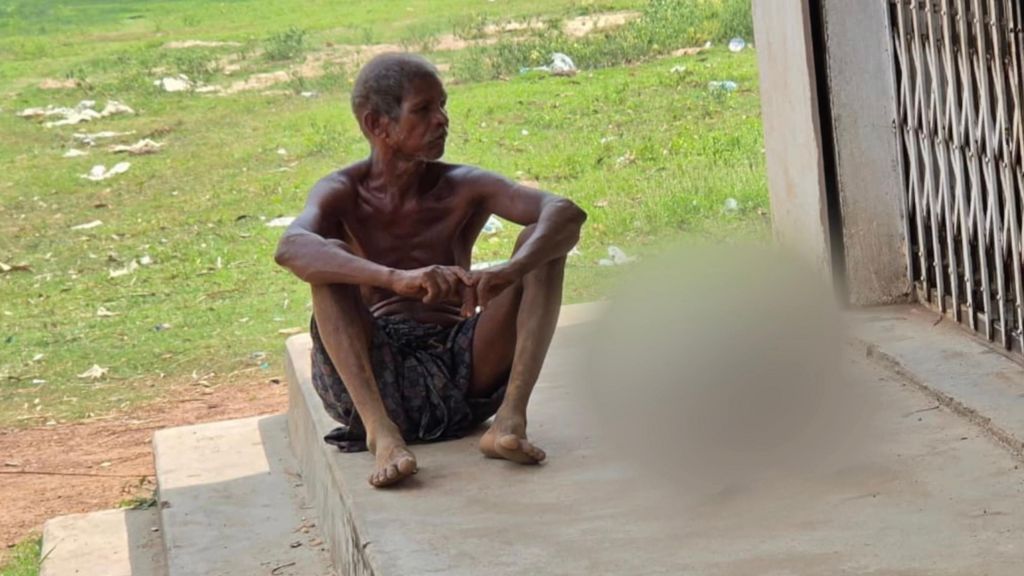
A shocking incident from the eastern Indian state of Odisha has captured national attention this week, after a 52-year-old man named Jitu Munda went to extreme lengths to claim his late sister’s savings: he carried her exhumed skeletal remains to his sister’s local bank branch to prove she had died. The graphic footage of the act quickly spread across social media platforms, sparking widespread public outrage over systemic bureaucratic barriers and the struggles of low-income rural families navigating India’s formal financial system.
According to Munda’s account, the ordeal began earlier this year when his 56-year-old sister Kalara passed away. A daily wage laborer who had returned to her maternal home following the deaths of her husband and only son, Kalara had sold her livestock a few months before her death and deposited roughly 19,300 rupees (equivalent to around $203) into her bank account at Odisha Grameen Bank, a regional rural financial institution operated by Indian Overseas Bank. After her death, Munda attempted multiple times to withdraw the funds to settle her final affairs, but was repeatedly turned away for lack of official death documentation— a requirement to access funds when an account holder dies without naming a formal nominee.
Frustrated by repeated refusals and unresponsive bank staff, Munda made the decision to exhume his sister’s remains from her burial ground and carry the bundled skeleton to the bank branch in Keonjhar district on Monday. The viral video, filmed by an unknown person, shows Munda placing the sack-wrapped remains at the entrance of the bank building. Within hours, the footage spread widely across Indian social media, drawing immediate condemnation from the public and senior officials alike.
The bank has pushed back against Munda’s account of the incident. In an official statement, the institution denied ever requesting the physical remains as proof of death, claiming that it only asked for standard legally-mandated documentation to process the claim. Bank representatives added that the incident appeared to stem from Munda’s lack of awareness of required procedures, and alleged that he first arrived at the branch in an inebriated, disruptive state before returning with the remains. Sushant Kumar Sethi, the branch manager at the center of the controversy, also disputed key details of Munda’s claims: he told BBC Hindi that staff had even offered to visit Kalara at home when Munda initially claimed she was paralyzed, that Munda had not visited the branch in the two months prior to the incident, and that conflicting claims from other potential heirs prompted the request for formal documentation.
Public backlash following the video’s spread quickly forced intervention from local authorities. Odisha’s Revenue Minister Suresh Pujari announced that a formal investigation into the incident was underway, and confirmed that disciplinary action would be taken against the branch manager for his alleged conduct. The Keonjhar district administration also issued a statement expressing “deep concern” over the incident, affirming that protecting the rights and dignity of local residents is its top priority.
Police and local administrative officials ultimately intervened to de-escalate the situation, persuading Munda to return his sister’s remains to the burial ground and guaranteeing that his claim would be processed immediately. Officials also offered Munda a one-time assistance payment of 30,000 rupees to compensate for his ordeal. By Wednesday, just two days after the incident made headlines, local authorities had issued the required death certificate and legal heir documentation, and the bank confirmed that the full deposit amount had been released to Kalara’s legal family heirs.
The incident has reignited longstanding conversations about the persistent bureaucratic hurdles that disproportionately impact low-income and rural communities across India. Under current Indian banking rules, when an account holder dies without naming a nominee, surviving family members must produce a formal death certificate and legal heirship documentation to access funds. For residents of remote villages, obtaining these official documents can take weeks or even months, as government offices are often far removed from local communities and administrative processes remain slow and paper-heavy. Many commentators have pointed to the Odisha incident as a stark example of how rigid procedural requirements can dehumanize vulnerable families during an already devastating time of loss.
-

Two dead after small plane crashes into Australia airport hangar
A devastating aviation incident has left two people dead after a light aircraft crashed into an airport hangar and erupted in flames in Adelaide, South Australia, local authorities confirmed. The crash unfolded on Wednesday afternoon local time at Parafield Airport, triggering an immediate large-scale emergency response.
According to reporting from Australia’s ABC News, the aircraft involved in the accident is a twin-engine Diamond DA42, a model manufactured by Diamond Aircraft Industries. The manufacturer’s official website notes the plane is designed to carry a maximum of four passengers and crew.
Local media outlets have confirmed that additional people sustained injuries in the incident, though the exact count of wounded individuals has not been finalized as of the latest updates.
In an official statement, South Australia Police confirmed that the immediate surrounding area of the crash site was evacuated shortly after the incident to ensure public safety as first responders worked to contain the emergency. Parafield Airport administration also released a public statement via its social media channels, acknowledging the serious event and confirming that the airport is extending full logistical and operational support to emergency teams working on the response.
The Australian Transport Safety Bureau, the nation’s lead agency for aviation accident investigations, has launched a formal probe into the circumstances that led to the crash.
Peter Malinauskas, the Premier of South Australia, released a public comment via social media expressing his condolences for the tragedy. “My thoughts are with the families and loved ones of those who have passed away, and with everyone affected by this devastating event,” Malinauskas wrote.
The premier also confirmed that the fire that broke out in the hangar following the crash has been fully extinguished by emergency crews. Parafield Airport remains closed to all air traffic as the investigation and cleanup operations continue, with emergency personnel still on site working with professional urgency to process the scene. Malinauskas commended first responders for their rapid, professional response to the incident.
-
Japan zoo staffer allegedly dumps wife’s body inside incinerator
One of Japan’s most beloved tourist attractions, Asahiyama Zoo, has been forced to postpone its highly anticipated summer season reopening after a shocking local scandal emerged. A serving employee at the northern Japanese facility has confessed to Japanese law enforcement that he disposed of his wife’s remains in the zoo’s on-site incinerator, local media outlets have confirmed.
Originally, the zoo — located in Asahikawa, Hokkaido — was scheduled to welcome back visitors this Wednesday, just in time for Japan’s annual Golden Week holiday, one of the busiest travel periods of the year. The facility had already closed its doors on April 8 for a routine three-week seasonal maintenance break, with all preparations on track for the summer opening. However, the ongoing criminal investigation has pushed the reopening to at least Friday, and city officials have not ruled out further unannounced closures if investigators require extended access to the grounds.
The sequence of events began when a friend of the missing woman filed a missing person report with local police. After launching an inquiry, authorities were stunned when the zoo employee confessed to his alleged crime, telling investigators he had used the zoo’s incinerator — which is normally used only to cremate deceased animal carcasses from the facility — to dispose of his wife’s body. Last week, investigative teams carried out a full search of the zoo grounds to collect evidence, according to local reporting.
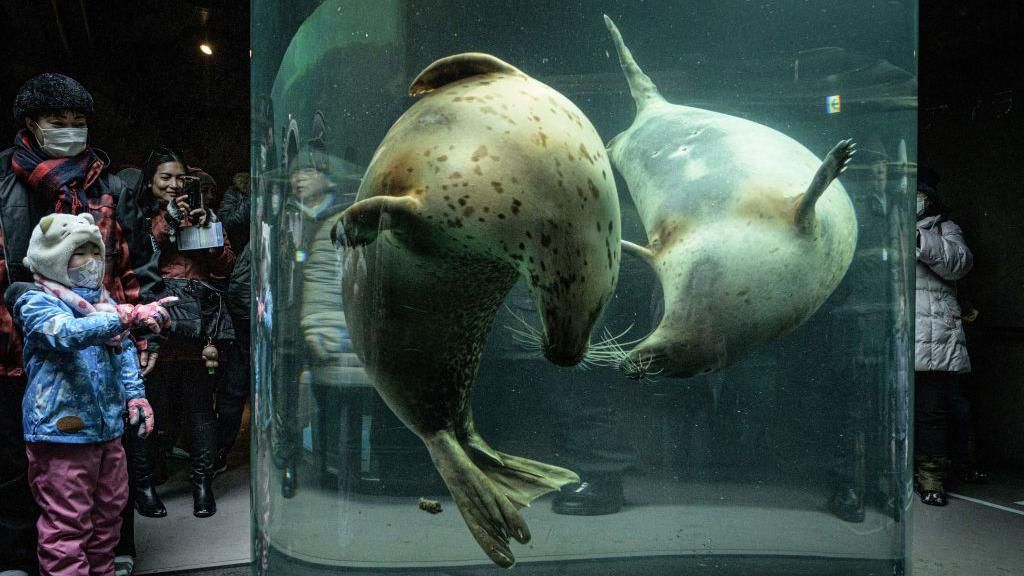
First opened to the public in 1967, Asahiyama Zoo has grown into one of Japan’s most popular zoological attractions, drawing more than one million annual visitors. It has earned widespread acclaim for its innovative enclosure design, including glass domes and overhead viewing cages that give guests the chance to observe animals in close, immersive settings that are rare at other Japanese zoos.
Addressing reporters at a press conference held on Tuesday, Asahikawa Mayor Hirosuke Imazu described the situation as an unparalleled crisis for the city and its flagship attraction. “No one could have predicted this,” Imazu told the gathered media. “I am overcome with immense anxiety, and I am facing a crisis of unprecedented magnitude.”
City authorities have issued a formal apology for the last-minute disruption to visitor travel plans, noting that the ongoing investigation requires the facility to remain closed. Officials also added that they are continuing preparations to welcome guests as soon as the investigation allows, and they hope tourists will still choose to visit the zoo once it reopens. “We are making preparations to welcome you, so we hope that as many people as possible will come to the park,” Imazu added.
-

Olympic breakdancer Rachael ‘Raygun’ Gunn loses lecturing gig at Macquarie University amid staff redundancies
The Australian breakdancer who became a global viral sensation after her zero-score performance at the 2024 Paris Olympic Games’ inaugural breaking competition has reportedly lost her long-held academic position amid sweeping cost-cutting at one of Australia’s top higher education institutions.
Rachael Gunn, professionally known by her stage name Raygun, catapulted to worldwide notoriety last summer when her routine at the Paris Games — which included novelty moves inspired by hopping kangaroos, wriggling snakes, and the popular 20th-century party dance the sprinkler — earned no points from judges. The clip of her performance spread rapidly across social media, spawning thousands of memes and turning the relatively little-known breakdancer into a household name overnight.
Before her Olympic debut, Gunn had built a 10-plus-year academic career at Sydney’s Macquarie University, where she worked as a lecturer in media and popular culture. She earned her PhD from the institution in 2017, with a doctoral thesis examining the gender politics of Sydney’s underground breaking culture. Her research agenda has long centered on the cultural politics of street dance, including a commissioned study for the City of Sydney analyzing the experiences of street dancers performing in public urban spaces.
According to new reporting from the *Australian Financial Review*, Gunn is among the staff cut in Macquarie University’s latest round of program redundancies, which is part of broader cost-saving initiatives sweeping Australia’s higher education sector. The report notes that widespread declines in international student enrollment — a key source of revenue for Australian universities — have pushed dozens of institutions to eliminate roles to balance their budgets, with Macquarie’s Arts department the latest to undergo restructuring.
A spokesperson for Macquarie University declined to confirm or comment on details of Gunn’s employment status, citing longstanding institutional policy to protect the privacy and legal rights of individual staff members. “This is our standard practice for legal and privacy reasons,” the spokesperson reiterated to media.
Gunn’s redundancy comes months after her Olympic performance drew public criticism from Australian Senator Gerard Rennick, who used her profile to attack publicly funded academic programs he deemed unproductive. In a public Facebook post following the Games, Rennick questioned how many “obscure and pointless courses” Australian universities offered with taxpayer subsidies, adding, “It also goes to show just because you have a PhD in something doesn’t mean you are any good at it.”
In the months following her viral Olympic moment, Gunn capitalized on her newfound global fame by launching a venture on the celebrity personalized content platform Cameo, where she charges fans approximately AU$70 for custom greeting videos. The platform allows supporters of public figures from sports, entertainment, and politics to purchase one-of-a-kind personalized messages directly from creators.
-
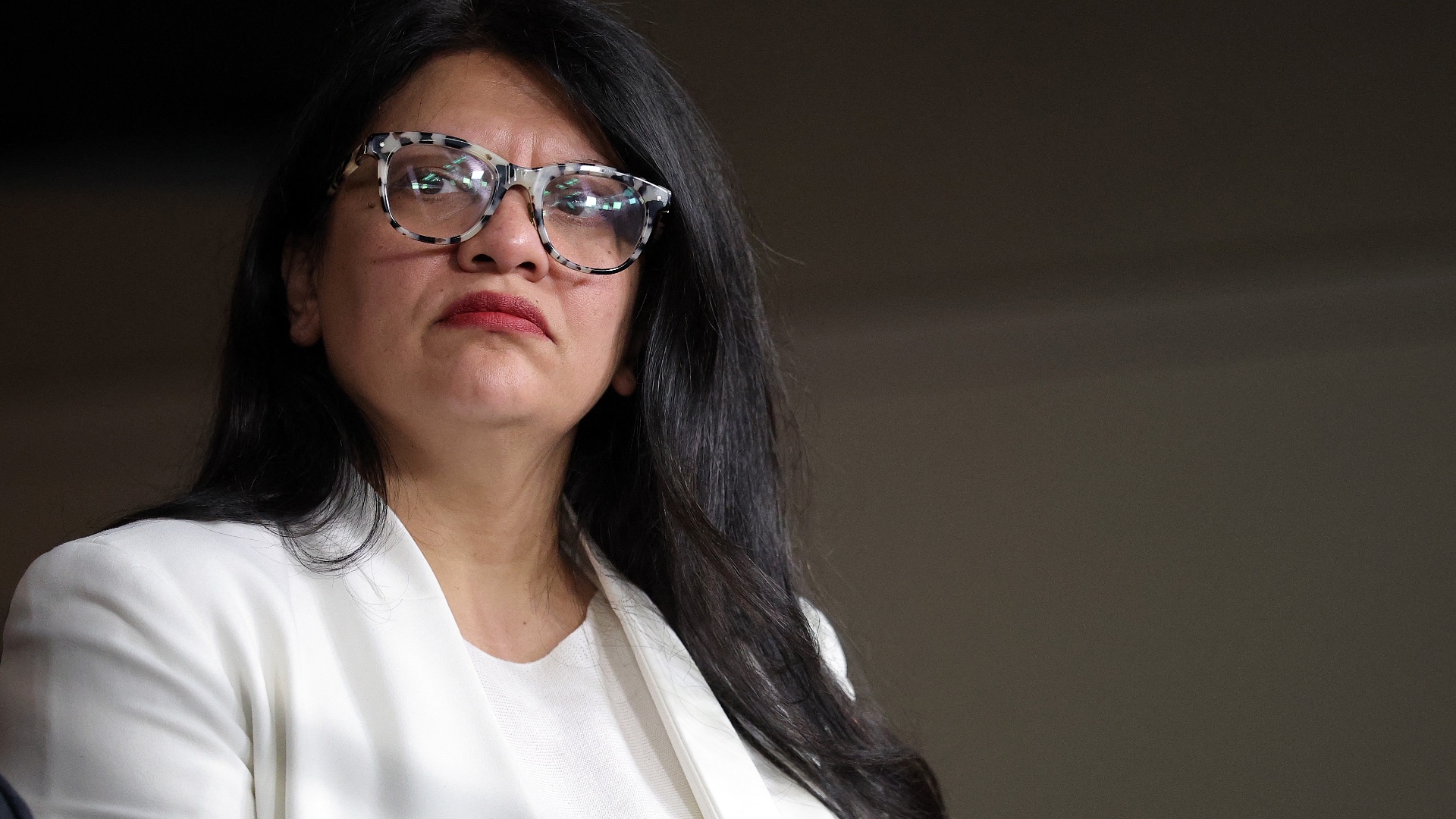
Leading Arab-American advocacy group roiled by calls for leaders to resign and donations to be returned
One of the United States’ most prominent Arab American civil rights and pro-Palestine advocacy organizations is facing cascading calls for its entire leadership to resign, following widespread allegations of long-unaddressed sexual harassment, assault, and a toxic work environment that disproportionately harmed women. Multiple former and current staff, volunteers, and even sitting U.S. Congresswoman Rashida Tlaib have joined the pressure campaign against the American-Arab Anti-Discrimination Committee (ADC), which has already ousted its executive director and a board member in response to the growing scandal.
The crisis erupted into public view on April 25, when all current ADC employees – a group of Arab women – launched an Instagram account to amplify their demands. In their public statement, the staffers emphasized that the organization’s mission is accountable first to the Arab American community that built it, not a small group of entrenched leaders. “No small group of individuals has the right to compromise that mission while expecting staff and community members to absorb the consequences,” the statement read. The group also made clear it stands with more than a dozen women who say they were harmed by leadership failures, including Tlaib, adding: “We believe survivors, and we are committed to ensuring their safety and dignity moving forward.”
Tlaib, one of the highest-profile Arab American elected officials in the U.S., previously released a video detailing her own experiences with harassment at the organization, as well as accounts from other survivors who reached out to her after she took office. She publicly called on the ADC to remove her official photo from the organization’s website, and specifically named then-national executive director Abed Ayoub as complicit in downplaying reports of misconduct. Within hours of Tlaib’s video being posted, Ayoub was removed from his role and replaced by the group’s national legal director, Jenin Younes. The ADC framed the leadership shakeup as a deliberate shift to prioritize its expanding legal advocacy work, but critics dismiss the move as an insufficient half-measure that leaves the most accused leaders in place.
To date, neither Tlaib nor Ayoub have issued public comment on the allegations, as requests for response from Middle East Eye went unanswered before publication. In an official statement shared to the ADC’s social media channels last Monday, attorneys for board chair Safa Rifka acknowledged past allegations, noting that some reported incidents date back more than a decade, when the group says it previously took corrective action. “Because we recognize that the passage of time does not erase harm, we reiterate our previous apology sincerely and without reservation today,” the statement read, adding that the organization has maintained a zero-tolerance policy for harassment for more than 10 years. The group invited anyone impacted by negative experiences to reach out directly via private message.
But survivors and critics say the apology and limited leadership changes do not go far enough. Multiple women who have accused top ADC leaders of misconduct told Middle East Eye they delayed speaking out for years due to fear of retaliation, compounded by cultural stigma around reporting sexual harm within Arab communities. Documentation reviewed by MEE shows formal written complaints about the workplace culture date as far back as 2006.
Ed Hasan, a long-time ADC donor and governance expert who was invited to join the ADC board last December to help address organizational issues, was fired from his volunteer board role within five months after raising formal concerns about misconduct and governance failures. In an interview with MEE, Hasan called the situation one of the worst cases of institutional dysfunction he has seen in nearly 20 years of work in the field. “Nobody was transparent with me,” he said. “I’ve been doing this for almost 20 years. This is one of the worst cases I’ve seen.”
A demand letter sent to ADC leadership by Hasan’s attorneys alleges his firing was a direct act of retaliation for fulfilling his fiduciary duty as a board member by raising documented concerns about harassment, broken governance rules, conflicts of interest during internal investigations, and a legally flawed confidentiality agreement. The letter characterizes his removal as “procedurally void, substantively baseless, and retaliatory in nature,” and the move puts the organization at risk of a future lawsuit. Hasan also noted that nearly all of the 10-member board are men over the age of 60, most have overstayed their term limits laid out in the organization’s bylaws, and leadership has repeatedly changed bylaws to consolidate power. He added that the ADC has no dedicated human resources team to address workplace complaints, and that the board customarily investigates itself when allegations arise, creating widespread conflicts of interest.
The growing scandal has already sparked backlash from long-time supporters of the organization, with many donors demanding refunds of their contributions in comments across the ADC’s social media platforms. “I can no longer in good faith support this organization. I am shocked at this level of infighting, corruption and lack of accountability… Can someone contact me to issue a refund?” wrote Ali Dabaja, a Lebanese-American physician. Another donor, Rania Masri, added: “I will stop my donation to ADC. Pushing Abed Ayoub out of the organization AND pushing Ed Hassan out of the board and maintains those who are accused of sexual harassment AND maintaining Safa as the board chair – none of these actions bodes well. How shameful.”
Hasan summed up the frustration with the organization’s response, saying: “They don’t respect women. They really don’t. I get the culture stuff, but this is ADC. It’s a firm. It’s an organisation to help people.”
Founded to combat anti-Arab discrimination in the U.S., the ADC has grown into one of the nation’s largest pro-Palestine advocacy groups, particularly since the October 7, 2023 attacks on Israel and the subsequent Israeli military campaign in Gaza that has killed more than 72,000 people. Since the start of the second Trump administration in January 2025, the group has also taken on high-profile legal work defending Arab Americans’ free speech rights, and launched a hotline for community members targeted for harassment or detention by federal immigration officials.
-

Australian mother who faked son’s cancer to fund ‘lavish’ lifestyle jailed
In a case that has shocked communities across South Australia, a 45-year-old local mother has been handed a four-year and three-month prison sentence for orchestrating an elaborate scam that saw her fake her six-year-old son’s terminal eye cancer to steal thousands of dollars in charitable donations for her own extravagant spending.
The court outlined how the deceptive scheme began shortly after the young boy received a routine visit to an ophthalmologist for a minor accident-related eye checkup. Rather than sharing the benign outcome of the appointment, the mother wove a lie that her child had developed aggressive eye cancer, spreading the false narrative to her husband, extended family, friends, and members of the local school community.
To sell the hoax, she took deliberate steps to physically fake the symptoms of a child undergoing cancer treatment: she shaved the boy’s head and eyebrows, wrapped his head and hands in unnecessary bandages, and administered regular medication to mislead observers. She even confined her son to a wheelchair and restricted his normal daily activities, convincing everyone around them that he was receiving ongoing radiation therapy. Prosecutors told the court these actions were not reckless mistakes, but a cold, calculated plan that selfishly turned a vulnerable child into a prop to exploit the kindness of others.
Over the course of the scam, the mother collected tens of thousands of dollars in donations, which she used to fund a luxury lifestyle beyond her income, including purchases of high-end brand-name goods to match what she claimed her family “needed.” Her defense team told the court that the woman developed a severe gambling addiction in the wake of the COVID-19 pandemic, which left her in crippling financial stress. They argued that the crime was a catastrophic lapse in judgment, not a premeditated plan to harm her child, and added that she had been formally diagnosed with borderline personality disorder and had taken responsibility for her actions by entering a guilty plea.
The woman pleaded guilty to 11 total charges: one count of intentional conduct likely to cause serious harm to her child, and 10 counts of fraud and deception. Her husband was initially charged as an accomplice in the case, but prosecutors later dropped all charges against him after clearing him of any involvement. In his emotional victim impact statement, the husband described how his wife’s betrayal had completely destroyed his family’s life. “I had complete trust in you as my wife and I never doubted you. I was devoted to our family. Now I feel like a pawn in a chess game,” he wrote. Speaking to reporters outside the District Court following the sentencing, he added that no amount of prison time could ever repair the harm done to his two children.
Judge described the mother’s actions as exceptionally cruel, manipulative, and premeditated during the sentencing hearing on Wednesday. While the woman will serve a total of four years and three months behind bars, she is set to become eligible for parole in April 2025. The case has sparked widespread debate across Australia about the need for tighter regulation of community fundraising, and the long-term harm that fraudulent charity scams can inflict on both donors and the children exploited in these schemes.
-
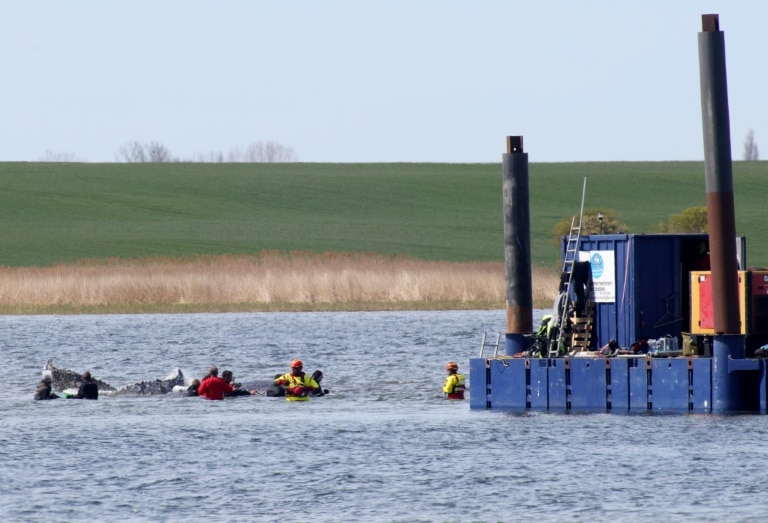
Germany holds breath as stranded whale ‘Timmy’ sets off in barge
For weeks, a lost humpback whale’s fight for survival has held the entire nation of Germany in suspense. On Tuesday evening, that saga took a pivotal turn: the 20-ton marine mammal, dubbed Timmy by local media, was successfully guided into a converted cargo barge fitted with a water-filled hold, and the vessel departed for the North Sea to carry out what many call a last-ditch effort to return the animal to its natural habitat.
Timmy’s ordeal began in late March, when the young humpback – which normally makes its home in the cold, nutrient-rich waters of the Atlantic Ocean – strayed hundreds of kilometers off course and became stuck on a sandbank off the Baltic coast near the northern German city of Luebeck. After the whale freed itself only to become re-trapped multiple times, rescue teams attempted a series of interventions, from digging artificial escape channels to using inflatable flotation devices, but every attempt ended in failure. By early April, state officials formally abandoned rescue efforts, concluding that Timmy could not be saved.
That decision sparked immediate public outcry, pushing authorities to reverse course and approve a new privately funded rescue plan put forward by two German entrepreneurs. The proposal, which involves transporting Timmy via barge to the North Sea for release if the animal remains strong enough, was dismissed by many marine experts as a long shot, with critics arguing that the stress of capture and transport would only worsen the whale’s condition and reduce any chance of survival.
Despite the skepticism, rescuers pulled off a breakthrough earlier on Tuesday. Teams fitted stabilizing straps around the 13-meter whale, then guided it down a specially dug sand channel toward the waiting barge. With rescue divers swimming alongside, Timmy picked up speed and voluntarily swam into the water-filled hold, drawing cheers from on-site teams and spectators watching live streams and shore-side broadcasts.
“I can’t even put my happiness into words,” Karin Walter-Mommert, one of the entrepreneurs backing the mission, told German tabloid Bild. “You could see that the whale was fighting, that he wanted to live. Knowing he’s now safely in the barge is simply wonderful – it proves the fight for Timmy was worth every effort.”
The operation received official approval after government vets confirmed the whale was healthy enough to withstand the journey north to the North Sea, his intended release site. A temporary green net barrier has been fitted across the barge’s entrance to keep Timmy contained during the voyage. Till Backhaus, environment minister for the state of Mecklenburg-Western Pomerania where the stranding occurred, praised the round-the-clock work of rescue teams, saying “In the end, we have saved this animal.”
Backhaus has defended the controversial mission against criticism from the scientific community. “I’ve always said: those who do nothing make no mistakes,” he told reporters Tuesday. “If the scientists who claimed this was all pointless had seen the young whale just now, how he swam into the barge all on his own, they would understand.” In a written statement responding to critics who accused officials of sidelining scientific input, Backhaus countered that authorities had always based their decisions on available evidence: “No one could tell us with certainty that the whale would die, or when. On the basis of these uncertain conclusions, we decided to allow the rescue attempt to go forward.”
The weeks-long saga of Timmy the stranded whale has dominated German media, with rolling coverage on national television, constant updates from online news outlets, and widespread discussion across social media platforms. But the high-profile rescue has also sparked fierce public debate, angry exchanges between supporters and critics of the operation, and even the spread of unfounded conspiracy theories about the whale’s stranding and the rescue’s motives. As the barge carrying Timmy makes its way toward the North Sea, the entire country continues to hold its breath, waiting to see if the high-risk effort will end with the young whale swimming free.