分类: society

  • Search called off after Indonesia landfill collapse kills seven

    Search called off after Indonesia landfill collapse kills seven

    Indonesian search and rescue teams have terminated operations following a catastrophic landslide at the nation’s largest open-air landfill, which resulted in seven fatalities. The incident occurred Sunday afternoon at the Bantargebang waste site, located merely 25 kilometers from Jakarta, after prolonged heavy rainfall triggered the collapse that buried multiple trucks and food stalls beneath tons of debris.

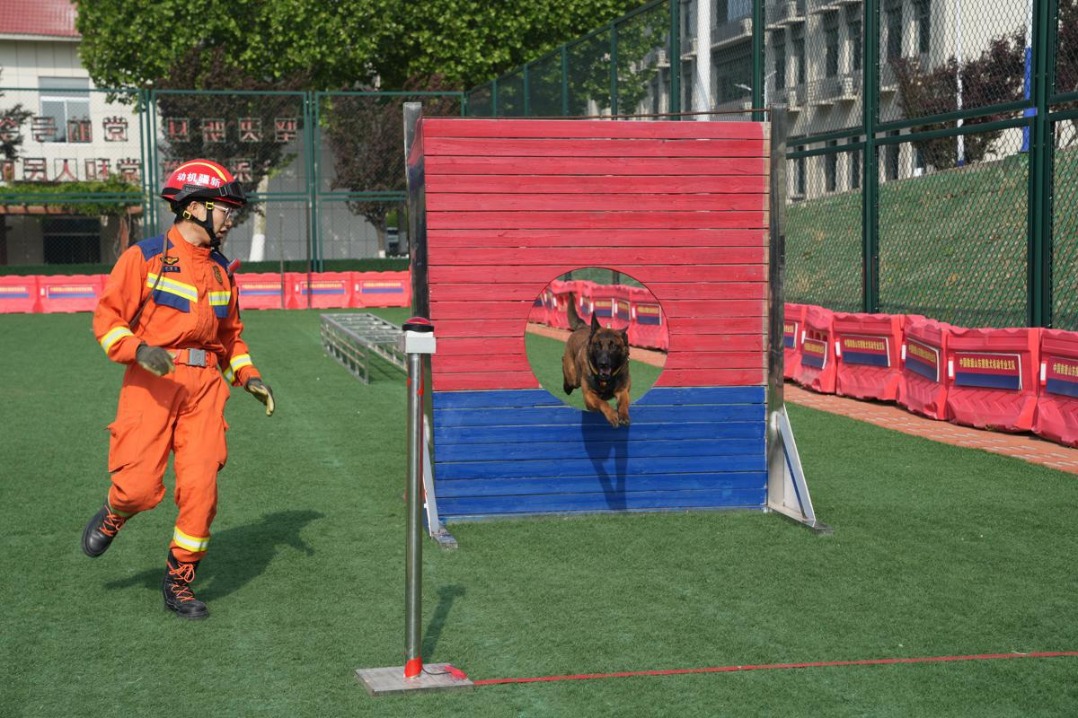
    Desiana Kartika Bahari, head of Jakarta’s search and rescue agency, confirmed the recovery of three bodies on Sunday and four additional victims on Monday. Six individuals were successfully rescued alive during the intensive operation that employed backhoes, canine units, and thermal drone technology to locate casualties. Authorities have verified that all missing persons have been accounted for.

    The National Disaster Mitigation Agency (BNPB) has initiated weather modification procedures to mitigate further rainfall intensity. This sophisticated technique involves dispersing sodium chloride particles via helicopter to induce premature precipitation over ocean areas rather than populated regions.

    The Bantargebang facility, spanning over 110 hectares and containing approximately 55 million tonnes of waste, represents one of the planet’s largest open landfills. The Jakarta metropolitan area and its satellite cities (collectively known as Jabodetabek), housing about 42 million residents, generate an estimated 14,000 tonnes of daily waste.

    President Prabowo Subianto recently warned that most Indonesian landfills would exceed capacity by 2028 as the nation phases out such facilities. The government has committed $3.5 billion to develop 34 waste-to-energy plants within two years, converting garbage into electricity through incineration processes.

    This tragedy echoes a 2005 landfill disaster in West Java that claimed 143 lives when methane gas explosions combined with heavy rains caused catastrophic collapse.

  • 15 years after Fukushima meltdown, an innkeeper makes radiation surveys to revitalize her hometown

    15 years after Fukushima meltdown, an innkeeper makes radiation surveys to revitalize her hometown

    Fifteen years after the catastrophic Fukushima nuclear disaster, a dedicated network of citizen scientists continues to monitor radiation levels in the affected regions, challenging official narratives of complete safety. Tomoko Kobayashi, who operates the family-run Futabaya Ryokan inn in the nearly deserted town of Odaka, has transformed her personal tragedy into a lifelong mission of radiation documentation and education.

    Kobayashi’s journey began when she returned to her hometown in 2012, conducting independent radiation surveys before reopening her inn in 2016. She now collaborates with fellow monitors who gather twice annually for intensive two-week measurement campaigns across hundreds of locations. Their color-coded radiation maps adorn the walls of her establishment, serving as both scientific record and memorial to the pre-disaster community that once thrived in this northeastern Fukushima region.

    The March 11, 2011 disaster unfolded when a magnitude 9.0 earthquake triggered a tsunami that overwhelmed the Fukushima Daiichi nuclear plant’s cooling systems, causing three reactor meltdowns. The subsequent hydrogen explosions released radioactive particles that forced hundreds of thousands to evacuate, with some areas remaining uninhabitable to this day.

    Despite government assurances of safety, Kobayashi’s team maintains a testing laboratory where they examine local produce and environmental samples. Their work reveals ongoing contamination challenges, with recent tests showing wild boar meat measuring 100 times above safety limits. Yukio Shirahige, a 76-year-old former plant worker who now assists the monitoring project, acknowledges that while radiation levels have significantly decreased, he remains cautious about declaring the area completely safe.

    Meanwhile, at the Fukushima Daiichi facility itself, decommissioning efforts continue using advanced robotics and remote-controlled technology. Plant officials have successfully collected minute melted fuel samples and deployed micro-drones to examine reactor interiors—technologies unimaginable at the time of the disaster. However, the process remains extraordinarily complex, with at least 880 tons of highly radioactive fuel debris still requiring removal, a task experts believe may take decades.

    As Japan reverses its nuclear phase-out policy in favor of reactor restarts, these citizen scientists face increasing pressure to silence their findings. Yet they persist in their mission, documenting radiation levels, testing local products, and maintaining a folk museum that preserves the disaster’s memory through art and photography—ensuring that both the physical and cultural aftermath of Fukushima’s nuclear crisis remains visible to future generations.

  • ‘Not making rational decisions’: Diabetic Driver William Swale breaks silence on horror Royal Daylesford hotel crash

    ‘Not making rational decisions’: Diabetic Driver William Swale breaks silence on horror Royal Daylesford hotel crash

    A Melbourne coronial inquest has opened into the devastating Daylesford beer garden crash that claimed five lives in November 2023, with the driver providing his first public testimony about the tragedy. William Herbert Swale, 69, appeared before the Coroners Court of Victoria describing a complete memory blackout surrounding the incident that killed two families.

    The court heard how Swale’s BMW X5 plowed into outdoor seating at the Royal Daylesford Hotel at approximately 6:00 PM on November 5, resulting in the deaths of Pratibha Sharma, 44, her nine-year-old daughter Anvi, her husband Jatin Kumar, 30, along with family friends Vivek Bhatia, 38, and his eleven-year-old son Vihann. Multiple other patrons sustained injuries in the horrific collision.

    Medical evidence presented to the inquest revealed Swale was experiencing a severe hypoglycemic episode with blood sugar levels recorded at dangerously low 2.9mmol/L shortly before the crash. Swale testified that his last conscious memory was entering the Winespeake deli seeking food to address his condition, after which he recalls nothing until waking in an ambulance.

    The diabetic driver described feeling “dark,” “hazy,” and “vague” prior to the incident, acknowledging he was not making rational decisions due to his medical state. Court documents indicated his continuous glucose monitor had triggered ten separate alarms on his phone that evening, though Swale claimed he never heard them, suggesting his car’s Bluetooth connection may have muted the alerts.

    Significant questions emerged during testimony regarding Swale’s medical management and driving certification. The 69-year-old revealed he had only learned of mandatory diabetes reporting requirements for Victorian drivers in 2019, and described a concerning gap in communication between his general practitioner and endocrinologist regarding his fitness to drive. Despite having been certified by endocrinologist Dr. Matthew Cohen just months before the tragedy, Swale admitted to not recalling educational materials about diabetes management and safe driving practices that had been provided to him.

    Coroner Dimitra Dubrow opened proceedings by acknowledging the profound grief and lasting trauma experienced by the victims’ families and survivors. The two-week inquest will continue examining the circumstances surrounding the tragedy, including medical oversight protocols and safety measures for diabetic drivers.

  • Viral drone video fuels debate about Rio favela tourism

    Viral drone video fuels debate about Rio favela tourism

    A viral drone video showcasing panoramic views of Rio de Janeiro’s Rocinha favela has ignited intense social media debate, coinciding with the city’s record-breaking tourism surge. The footage captures tourists primping and posing on a rooftop dubbed ‘Porta do Ceu’ (Gate of Heaven), set to an infectious rhythm that has garnered millions of views. While proponents argue it showcases community resilience, critics condemn it as poverty tourism that glamorizes structural inequalities.

    The video’s popularity has transformed this hillside community into an unexpected influencer hotspot, attracting international visitors and even marriage proposals. Access to the iconic rooftop requires guided tours through Rocinha’s labyrinthine alleyways, costing approximately $30 per drone selfie with wait times exceeding two hours. Brazilian influencer Ingrid Ohara, with over 32 million combined followers, defended her participation: ‘This showcases our culture and country to the world.’

    Behind the spectacle lies a carefully engineered safety system. Local entrepreneur Renan Monteiro developed monitored tourist routes and a real-time tracking app after past tragedies, including the 2017 fatal shooting of a Spanish tourist during police operations. His company trains local guides and drone pilots, while compensating residents for rooftop access. ‘We’re combating prejudice, not romanticizing poverty,’ Monteiro insists, noting the initiative has created 300 local guiding jobs.

    The debate reflects deeper tensions about representation and economic opportunity. While cleaner Claudiane Pereira dos Santos welcomes the tourist ‘frenzy’ that challenges negative stereotypes, researchers like Cecilia Olliveira of the Fogo Cruzado Institute warn against reducing complex communities to ‘exotic backdrops for impactful content.’ As Rio welcomes unprecedented visitor numbers—290,000 international tourists in January alone—the drone footage continues fueling discussions about ethical tourism in marginalized communities.

  • ‘Sharp spike’ in anti-Muslim posts on X since US-Israel war on Iran, study shows

    ‘Sharp spike’ in anti-Muslim posts on X since US-Israel war on Iran, study shows

    A dramatic escalation in anti-Muslim content has flooded Elon Musk’s X platform following the commencement of joint US-Israel military operations against Iran on February 28th, according to a comprehensive study by the Center for the Study of Organized Hate (CSOH). The Washington DC-based research organization documented an alarming tripling of explicitly dehumanizing, exclusionary, and violence-inciting posts targeting American Muslims, soaring from approximately 2,000 daily instances to over 6,000 immediately after the conflict initiation.

    The comprehensive monitoring, conducted between January 1st and March 5th, revealed that despite a subsequent decline in volume by early March, the underlying conditions fueling this digital hatred remain persistently active. The research specifically examined US-originating content targeting domestic Muslim communities, excluding international sources to focus on domestic hate patterns.

    Perhaps most disturbingly, the analysis demonstrated the viral amplification mechanics of digital hatred. When accounting for reposts and shares, the total visibility of Islamophobic content reached 279,417 instances—representing an eleven-fold multiplication beyond the original hate posts. This massive dissemination network allowed harmful content to transcend its original sources, reaching audiences far beyond the initial hate circles.

    The content spectrum ranged from personal vitriol to organized political advocacy, including calls for legislative measures such as a proposed ‘Muslim Exclusion Act’ and mass deportation initiatives. Particularly alarming was the normalization of dehumanizing rhetoric describing Muslims as ‘rats,’ ‘pests,’ ‘vermin,’ and ‘parasites’—linguistic patterns that historically precede extreme violence against targeted communities.

    The report identified concerning parallels with genocidal rhetoric, noting how calls for violence were frequently framed as matters of ‘self-defense’ or ‘civilizational survival,’ thereby granting perpetrators a false veneer of patriotic justification. This narrative construction effectively weaponizes nationalist sentiment against religious minorities.

    Platform enforcement mechanisms proved woefully inadequate. When CSOH reported 30 explicit violations under X’s own ‘Violent Speech’ and ‘Hate, Abuse or Harassment’ policies, only 11 were removed, with 19 remaining publicly accessible as of March 9th. This enforcement gap highlights critical disconnects between platform policies and their practical implementation, particularly regarding protections for Muslim communities.

    The report concludes with urgent recommendations, including establishing ‘Trusted Flagger status’ for Muslim civil rights organizations, creating dedicated reporting channels for mass incitement content, and enhancing monitoring capabilities for community organizations. Additionally, it calls for political accountability regarding rhetoric that conflates military conflicts with religious or civilizational struggles, noting how such language dangerously inflames domestic hostility toward minority communities.

  • Victorian government crackdown on ‘price gouging’ servos

    Victorian government crackdown on ‘price gouging’ servos

    The Victorian government has enacted groundbreaking legislation to shield consumers from volatile fuel pricing practices, implementing a mandatory daily price disclosure system for all service stations across the state. Effective immediately, fuel retailers must lock in and register their next day’s pricing by 2:00 PM daily, with these rates becoming publicly available through the government’s Servo Saver application by 4:00 PM.

    Premier Jacinta Allan unveiled these measures as a direct response to concerns about opportunistic pricing during global oil market instability. ‘How often do you see a cheap price in the morning, only for it to jump in the afternoon?’ Premier Allan stated during the announcement. ‘We’re stopping families from getting ripped off at the servo and helping them save hundreds a year.’

    The regulatory framework establishes that once prices are set and published, they must remain fixed for a full 24-hour period beginning at 6:00 AM the following day. While retailers retain the flexibility to reduce prices during this window, any increase beyond the registered rate constitutes a violation of the new regulations.

    Enforcement mechanisms include significant financial penalties for non-compliance. Service stations failing to register or accurately report their prices face fines exceeding $3,000 per individual breach, with court actions potentially resulting in penalties surpassing $24,000. The legislation empowers authorities to monitor pricing practices closely and take immediate action against retailers exploiting market fluctuations for excessive profit.

    This consumer protection initiative represents one of Australia’s most comprehensive fuel market regulations, designed to create pricing predictability and prevent the sudden price surges that have characterized Victoria’s fuel retail landscape. Government officials emphasize that these measures will provide households with greater budgeting certainty while promoting fair competition among fuel retailers.

  • UK government unveils new definition of anti-Muslim hatred

    UK government unveils new definition of anti-Muslim hatred

    The United Kingdom has formally established its first official definition of anti-Muslim hatred in a landmark move to address rising religious-based hostility. Communities Secretary Steve Reed presented the new framework to Parliament on Monday, emphasizing the government’s duty to confront record levels of faith-targeted crimes.

    Speaking before the House of Commons, Reed revealed that nearly half of all religious hate crimes in Britain are directed at Muslims, creating widespread fear within communities. ‘Many live in fear that they will be targeted because of how they look or assumptions over where they come from,’ he stated, underscoring the necessity for clear parameters against prejudice.

    The newly adopted non-statutory definition specifically encompasses both Muslims and individuals perceived as Muslim, acknowledging that hatred frequently manifests through ethnic or racial targeting rather than solely religious identification. This approach mirrors the existing framework for antisemitism, addressing the complex nature of discrimination.

    The development follows extensive consultation led by former Conservative minister Dominic Grieve in collaboration with British Muslim representatives. Javed Khan, managing director of think tank Equi and member of the government’s working group, praised the definition’s comprehensive scope, noting it ‘acknowledges the reality that hatred often targets people because of their ethnicity or racial background.’

    However, the initiative faces scrutiny from critics questioning its practical implementation. Concerns have emerged regarding sufficient resource allocation for enforcement mechanisms and whether the definition adequately addresses structural Islamophobia beyond individual incidents.

    The policy forms part of the broader government action plan ‘Protecting What Matters,’ designed to strengthen national social cohesion amidst rising extremism and global tensions. Additional measures include establishing an annual state of extremism report and enhancing the visa watchlist taskforce to prevent entry by hate preachers.

    Recent research by Equi indicates a 43% surge in anti-Muslim incidents between 2023-2024, with summer riots alone costing approximately £243 million. Despite these challenges, public attitudes show promising trends—most British citizens hold favorable or neutral views of Muslims, particularly when exposed to examples of community contributions.

  • Nation intensifies crackdown on telecom, online fraud

    Nation intensifies crackdown on telecom, online fraud

    China’s judicial authorities have significantly escalated their campaign against transnational telecommunications and cyber fraud networks, achieving substantial breakthroughs in prosecuting criminal organizations operating from northern Myanmar. The Supreme People’s Procuratorate (SPP) and Supreme People’s Court (SPC) presented comprehensive work reports to the National People’s Congress on Monday, detailing their intensified efforts against sophisticated fraud operations targeting Chinese citizens.

    According to the judicial reports, Chinese prosecutors brought charges against approximately 69,000 individuals for telecommunications and online fraud offenses throughout 2025. Among these cases, 285 defendants faced prosecution for severe crimes including fraud, intentional homicide, and intentional injury – all committed under the direction of criminal syndicates based in Myanmar’s northern regions.

    The judicial crackdown has yielded decisive outcomes, with Chinese courts concluding 41,000 fraud-related cases in 2025, representing a 1.2 percent increase from the previous year. In a landmark development, sixteen members of family-operated criminal syndicates in Myanmar received death sentences for their roles in orchestrating fraud operations against Chinese nationals. These sentences underscore China’s determination to extend legal jurisdiction beyond its borders when its citizens are victimized.

    Notable cases include the Wenzhou Intermediate People’s Court’s sentencing of eleven criminal group members from northern Myanmar, including leaders Mg Myin Shaunt Phyin and Ma Thiri Maung, to death for multiple offenses. Court documents revealed the organization had established an armed faction in Myanmar’s Kokang region, engaging in telecommunications fraud, casino operations, drug trafficking, and organized prostitution since 2015. Their criminal activities resulted in fourteen Chinese fatalities and six injuries, with illegal proceeds exceeding 10 billion yuan ($1.5 billion). The executions were carried out earlier this year following mandatory review and approval by the SPC.

    Similarly, the Shenzhen Intermediate People’s Court sentenced five members of another prominent syndicate to death in November. Led by Bay Saw Chain and Bay Yin Chin, this group utilized its military influence to establish forty-one compounds in the Kokang region, resulting in six Chinese deaths and multiple injuries. Following Bay Saw Chain’s death from illness, the SPC approved the execution of the remaining four defendants in February.

    Yang Jianbo, Director-General of the SPP’s Law and Policy Research Office, confirmed that since the special operation’s inception in 2023, arrest warrants have been approved for 49,000 individuals, with 47,000 already prosecuted. “This has effectively deterred cross-border telecom fraud offenders,” Yang stated.

    Legal experts emphasize the jurisdictional legitimacy of China’s actions. Professor Peng Xinlin of Beijing Normal University explained that under Chinese law, jurisdiction applies regardless of the perpetrator’s nationality or crime location when actions harm Chinese interests and constitute crimes in both jurisdictions, carrying potential sentences of three or more years. “Telecom fraud, including online scams, is criminalized in both China and Myanmar,” Peng noted, “and because these offenders have inflicted significant harm on Chinese citizens, they can be prosecuted under China’s Criminal Law.”

  • Iran’s Jews feeling fear and heartbreak as US-Israeli strikes rain down

    Iran’s Jews feeling fear and heartbreak as US-Israeli strikes rain down

    Amidst escalating tensions between Iran and Israel, the nation’s dwindling Jewish population finds itself caught in a complex web of identity, politics, and survival. With fewer than 10,000 Jews remaining in the country of 90 million, community members express diverse perspectives on the conflict while navigating daily security concerns.

    Yosef, an Iranian Jewish historian, draws a sharp distinction between his religious identity and political Zionism. “Zionism has damaged Israel’s reputation globally,” he asserts, noting the absence of influential left-wing movements in contemporary Israeli politics. Like many in his community, Yosef shelters from aerial strikes originating from Israel—a nation he’s expected to feel affinity toward but criticizes for its role in regional destabilization.

    The ongoing warfare presents profound personal dilemmas for Iranian Jews who watch conflicts between their homeland and the Jewish state. Sara, a 46-year-old businesswoman from Shiraz, directs her anger toward Israeli Prime Minister Benjamin Netanyahu, whom she describes as a “charlatan” using military escalation to divert attention from domestic corruption charges. Despite her Jewish faith, she maintains: “I cannot see the country where I was born and raised as my enemy.”

    Historical context reveals a dramatic demographic shift: Iran’s Jewish population has declined from approximately 70,000-100,000 before the 1979 Islamic Revolution to just over 9,000 according to the 2016 census. This transformation occurred alongside the severing of diplomatic relations between Tehran and Jerusalem.

    Daniel, a 52-year-old Tehran jeweler, expresses dual sorrow witnessing missiles strike Israeli cities while Israeli and American warplanes fly over his own home. “The explosions keep us awake at night,” he confesses, reflecting the anxiety many feel about speaking openly during wartime.

    Contrary to expectations, some community members report improved attitudes toward Jews within Iran. Arash, a 71-year-old restaurant owner, observes: “The level of anger toward the Islamic Republic is so high that many Iranians today see Jews as friends.” However, he quickly affirms his primary identity as Iranian and laments governmental policies that have brought the country to its current situation.

    As the conflict enters its second week with strikes targeting Tehran’s oil infrastructure, the community’s deepest fear extends beyond immediate violence to concerns about Iran’s future. Yosef articulates this apprehension: “What I fear most is that the final result of this war will destroy the country I love,” capturing the profound tension between national loyalty and religious identity that defines the experience of Iran’s Jewish minority.

  • High-profile real estate brothers convicted in sex trafficking case

    High-profile real estate brothers convicted in sex trafficking case

    In a landmark verdict that has sent shockwaves through New York’s elite social circles, three brothers from a prominent real estate family have been found guilty of operating a sophisticated sex trafficking ring spanning nearly two decades. Tal Alexander, 39, Oren Alexander, 38, and Alon Alexander, 38, were convicted on all ten criminal counts including sex trafficking and sexual exploitation of a minor after a five-week trial that exposed their predatory exploitation of wealth and privilege.

    The brothers, who built their reputation selling luxury properties to celebrities including Kim Kardashian and Kanye West through Douglas Elliman before founding their own firm Official, systematically used their industry connections to target vulnerable women. Prosecutors demonstrated how they lured victims to exclusive parties and high-end properties with promises of career opportunities and lavish gifts, only to administer drugs without consent and commit brutal sexual assaults.

    During emotional courtroom testimony, eleven women—several of whom were minors at the time of their assaults—detailed a consistent pattern of manipulation and violence. Evidence presented included surveillance footage from Oren Alexander’s Manhattan apartment showing the assault of a drugged 17-year-old in 2009. The prosecution characterized the brothers’ actions as demonstrating ‘callousness’ and ‘a perverse sense of pride,’ noting they physically restrained victims despite explicit pleas to stop.

    The defense team, which included Marc Agnifilo who previously represented Sean ‘Diddy’ Combs in similar proceedings, argued the interactions were consensual and that the brothers were merely ‘womanizers.’ These claims were systematically dismantled through forensic evidence and victim testimony describing covertly drugged beverages and coordinated assaults.

    In a related development, reality television personality Tracy Tutor filed a separate civil lawsuit alleging Oren Alexander assaulted her in 2024, though his legal representatives dismissed this as a media-seeking fabrication. Sentencing is pending for the brothers, who face substantial prison terms for their crimes that prosecutors described as ‘committed without remorse’ across multiple jurisdictions.