分类: society

  • Between ballet and war: Japanese dancers pursue dreams in Russia

    Between ballet and war: Japanese dancers pursue dreams in Russia

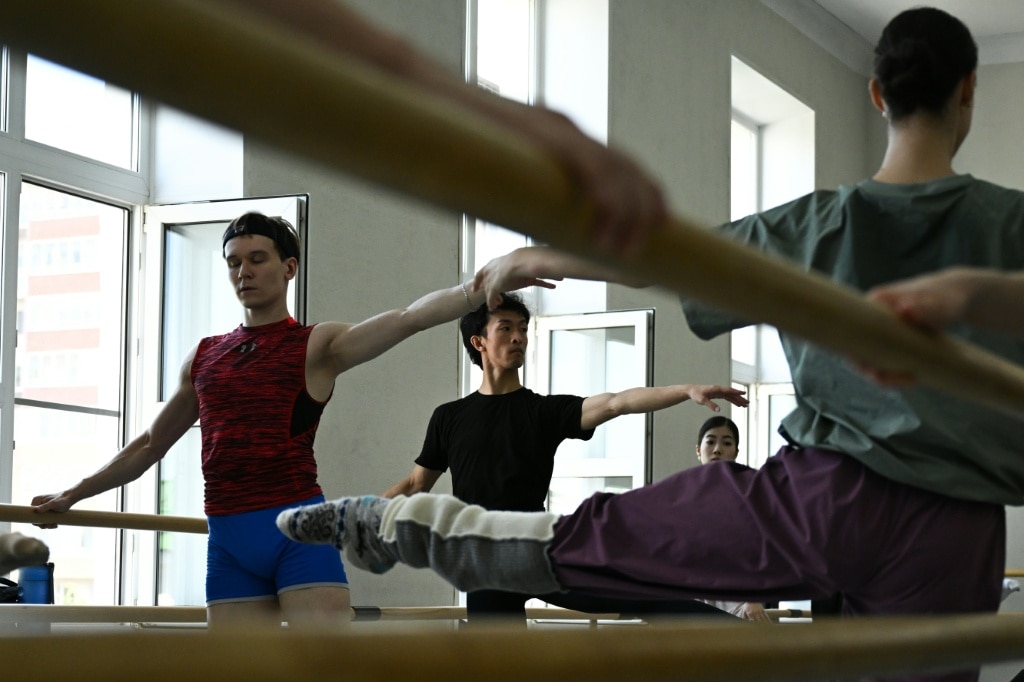
    Deep in Russia’s historic Volga region city of Nizhny Novgorod, two Japanese ballet artists have built their entire lives around the rigorous, demanding craft they traveled halfway across the world to master – even as geopolitical upheaval and the ongoing war in Ukraine have created unexpected disruptions to their daily routines.

    Thirty-two-year-old Jotaro Kanazasi first made the decision to move to Russia 14 years ago, drawn to the country’s unrivaled legacy in classical ballet, home to world-renowned institutions like Moscow’s Bolshoi Theatre and St. Petersburg’s Mariinsky Theatre. Speaking in measured Russian, Kanazasi explains his choice was rooted in a desire to grow and reach his full potential as a professional dancer. Today, he holds the position of principal dancer at the Nizhny Novgorod Opera and Ballet Theatre, located roughly 400 kilometers east of Moscow, where he seamlessly transitions from iconic role to iconic role: the scheming sorcerer Rothbart in Swan Lake, the tragic noble Albrecht in Giselle, and more. When many foreign artists made the choice to leave Russia immediately following the start of the 2022 full-scale military campaign in Ukraine, Kanazasi made the deliberate decision to stay.

    For 20-year-old Haruka Takemi, who has now lived in Russia for six years, the draw of Russian ballet was similarly life-altering. “I love Russian ballet and I have always dreamed of being a professional dancer, but Japan does not have a national-level ballet school that offers the training I needed,” she explains. “That is why I chose to move here.”

    Both dancers say they prioritize their craft above all else, and only follow breaking news about the war in Ukraine very loosely. Takemi notes that it is her family back in Japan that monitors current events closely, constantly sharing news articles and updates to make sure she stays informed. That dynamic reflects the broader geopolitical context of their lives: Japan has stood firmly with Ukraine since the start of the Russian offensive, joining Western nations in imposing sweeping economic sanctions on Moscow, while Russia has introduced strict new censorship laws over the course of its military campaign, unmatched since the Soviet era.

    “I am either at the theatre rehearsing or performing, or at home resting – it is a constant cycle. I work all the time, and I only focus on ballet,” Takemi says, adding that her family back home is the one who carries the worry for her safety.

    Nizhny Novgorod, despite sitting more than 800 kilometers from the Ukrainian border, has not escaped the ripple effects of the conflict. In recent weeks, a major Lukoil oil refinery located in the nearby city of Kstovo was hit in a Ukrainian cross-border strike, part of Kyiv’s regular targeting of Russian military and energy infrastructure designed to weaken Moscow’s ability to sustain its offensive. The digital space has also seen significant changes: Russia has imposed sweeping new digital restrictions over recent months, particularly limiting open access to mobile internet, and many popular foreign apps are now blocked.

    “There are difficulties with internet access, so we have to use a VPN to connect,” Takemi says. “But it is important for me to stay in touch with my family, so they know I am safe.”

    Valeri Konkov, director of the Nizhny Novgorod ballet company, notes that Japanese dancers are far from an anomaly in Russia’s professional ballet scene. Many are graduates of the country’s most elite ballet academies, including the Moscow State Academy of Choreography, St. Petersburg’s legendary Vaganova Academy, and the Perm State Ballet School. For Japanese artists, building a sustainable career in classical ballet in their home country remains incredibly challenging, even now. Despite all the disruptions and uncertainties that have come with the conflict, Kanazasi says his resolve to stay has never wavered.

    “As long as I am still able to dance, I will stay here,” he says.
  • Teen, 16, dies after allegedly stolen car rolls on Stuart Hwy in the Northern Territory

    Teen, 16, dies after allegedly stolen car rolls on Stuart Hwy in the Northern Territory

    A 16-year-old boy has lost his life after a stolen vehicle, at the center of a damaging multi-vehicle crime spree through a Northern Territory town, crashed and rolled on one of Australia’s major intercity highways. The sequence of dangerous events unfolded on Monday night in Katherine, a regional community located roughly 320 kilometers southeast of Darwin, according to Northern Territory Police.

    Authorities allege the trouble began just after 10:30 p.m. Monday, when offenders broke into a residential property on Zimin Drive and stole a parked car. The group of young people driving the stolen vehicle traveled to the local Charles Darwin University campus, where they abandoned the first stolen car before stealing two additional vehicles from the area.

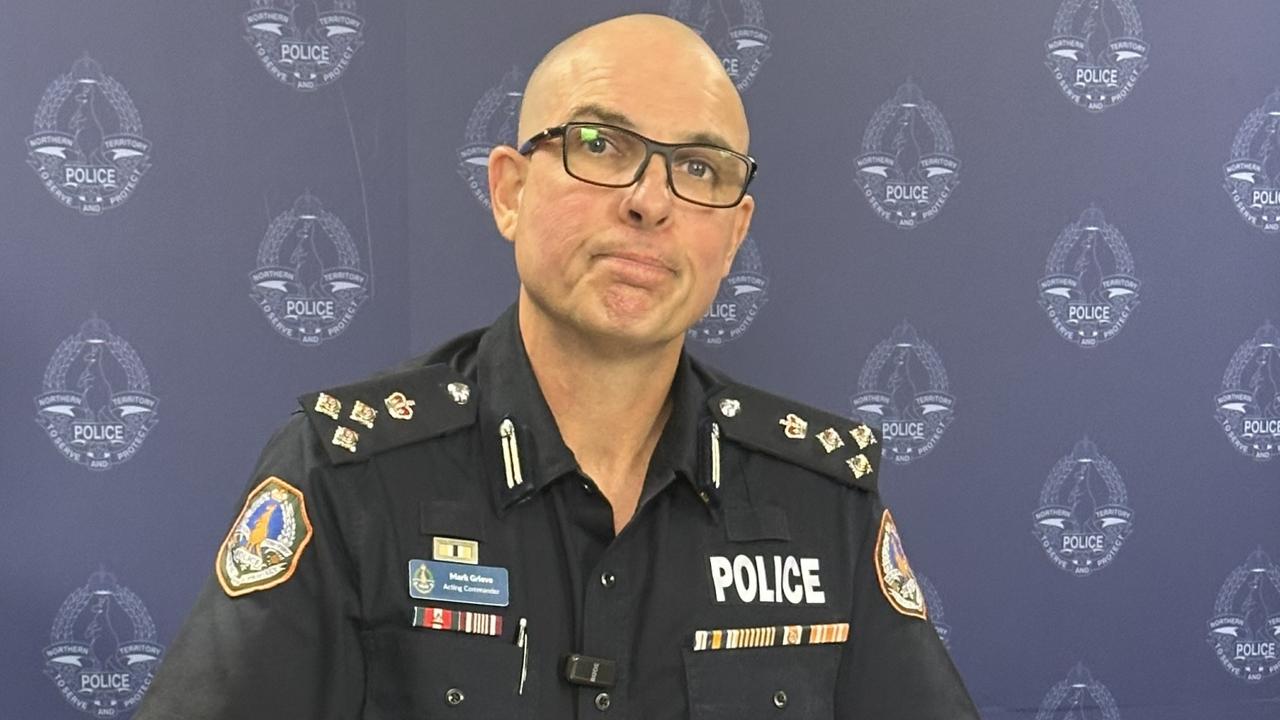
    Over the following hours, the young drivers engaged in reckless, threatening behavior through Katherine’s central business district, police confirmed. The occupants of the stolen vehicles taunted responding officers and hurled objects, including a hammer, at police patrol cars while driving erratically through the town center. Acting Commander Mark Grieve of NT Police clarified that officers made the decision not to initiate a pursuit, a choice driven by the extremely dangerous driving that already put innocent bystanders at risk. In a separate pre-crash incident, Grieve added, a stolen vehicle drove past a parked police car whose officers were responding to an unrelated call, and threw objects at the unoccupied patrol vehicle.

    By roughly 6 a.m. the next day, Tuesday, one of the stolen vehicles carrying a group of teenagers rolled over on the Stuart Highway just north of Katherine. First responders arrived quickly at the crash site, transporting three 14-year-olds to a local hospital for treatment of injuries. The 16-year-old driver suffered critical trauma and could not be saved, dying at the scene of the crash.

    In the aftermath of the incident, police located two additional girls near the crash site, and investigators are working to confirm how many people total were in the vehicle when it rolled. The Stuart Highway was temporarily closed to all traffic to allow for forensic crash investigation, reopening once evidence collection was completed.

    Grieve described the incident as both tragic and deeply complex, noting that the series of dangerous criminal acts put the entire local community at grave risk. “We are investigating a significant series of offences, as well as the death of a 16-year-old male following extremely dangerous driving behaviour that placed the lives of the community at risk,” Grieve told reporters. “Our investigators will work to establish the full circumstances surrounding these events, and we continue to appeal to anyone with information to come forward.”

    The acting commander also highlighted a growing, nationwide concern: rising dangerous criminal activity among young people, a trend that has impacted the Northern Territory in particular. “It’s a trend and one we’re probably starting to see more of, we’ve been seeing it for quite a bit of time, unfortunately youth engage in this type of behaviour and see it as a bit of a game,” he said. “The youth space we’re dealing with is quite complex in nature, in the NT we’re trying to grapple with an increase in youth behaviours in the criminal space. It’s not only NT but Australia-wide and it’s not just a policing problem, it needs to be a whole community approach whether education, health or parental responsibility, it’s a big question to answer.”

    NT Police are continuing to urge any member of the public with details about the sequence of events leading to the crash to contact their investigators to assist with the ongoing inquiry.

  • Western Australia leads population boom as nation’s total tops 28 million

    Western Australia leads population boom as nation’s total tops 28 million

    Australia has hit a landmark demographic milestone this week, with its total population officially crossing the 28 million threshold early Tuesday, according to real-time data from the Australian Bureau of Statistics (ABS).

    The ABS’s population clock, which generates continuous live estimates by tracking births, deaths and net international migration, ticked past the 28 million mark in the early hours of Tuesday. Current demographic trends show the nation adds one new resident to its population every 75 seconds on average.

    Digging into state-level growth data, Western Australia (WA) stands out as the primary engine of this national population expansion. ABS demography chief Phil Browning confirmed that WA recorded a 12-month growth rate of 2.2% between September 2024 and September 2025, outpacing every other state and territory across the country. At the opposite end of the spectrum, Tasmania recorded the nation’s slowest annual growth, with its population expanding by just 0.3% over the same period. These divergent state growth trends aligned exactly with forecasts published in last year’s annual population statement from Australia’s Centre for Population.

    While the nation celebrates the 28 million milestone, official projections paint a slowing growth picture for the coming year. The Centre for Population’s latest outlook forecasts that national population growth will cool to 1.3% for the 2025-2026 period, driven by two key factors: a projected decline in net overseas migration and a continued drop in national birth rates that is set to hit a historic new low.

    The report projects Australia’s national fertility rate will fall to a record low of 1.42 children per woman in 2025-2026 – far below the 2.1 children per woman rate required to sustain stable long-term natural population growth without migration. Net overseas migration, which surged to unprecedented highs in the post-pandemic 2022-2023 period, is also expected to continue normalizing to pre-pandemic levels, with the centre projecting net migration of 260,000 for 2025-2026. This pullback is largely attributed to a drop in temporary arrivals, particularly students and international visitors holding travel and study visas.

  • Shocking dashcam captures moment alleged drink driver smashes head-on into couple’s vehicle

    Shocking dashcam captures moment alleged drink driver smashes head-on into couple’s vehicle

    Terrifying dashcam footage has documented a near-catastrophic wrong-way collision outside Adelaide, Australia, that left two vehicles totaled, but all people involved surprisingly walked away with no life-threatening harm. The incident unfolded at 6:44 p.m. local time on a Sunday, as 27-year-old Abissantun Priyambodo traveled along Whites Road in Paralowie, a northern suburban area of the state capital. As Priyambodo stayed in his designated travel lane, a Honda station wagon driven by a 56-year-old Paralowie resident suddenly veered across the center line directly into the oncoming path of Priyambodo’s Mitsubishi Lancer. Seconds later, the two vehicles slammed into one another in a violent head-on impact.

    Priyambodo, who captured the entire incident on his vehicle’s dashcam, described the aftermath of the crash in comments to local media. The force of the collision crumpled the front end of his Mitsubishi, leaving the vehicle too damaged to drive and requiring it to be towed from the crash site. Photographs from the scene confirm the extensive wreckage: both vehicles suffered severe structural damage, with the front ends of the cars compressed by the force of the impact.

    In a striking stroke of luck, Priyambodo, his wife, and the 56-year-old Honda driver all escaped serious injury in the crash. While the pair did not suffer life-altering harm, they developed minor body aches after the collision and sought a medical check-up with their general practitioner the next day as a safety precaution. “We are grateful that both of us were able to walk away safely from what could have been a much more serious incident,” Priyambodo said of the near-tragedy.

    Following the collision, South Australia Police officers arrived at the scene and administered a breath and blood alcohol test to the Honda driver. Officials confirmed the driver recorded a blood alcohol content of 0.130, well above the legal limit for operating a motor vehicle in South Australia. In response to the violation, police issued the driver an immediate six-month license suspension, an immediate penalty for high-range drink-driving offenses in the state. The crash has renewed public calls for stricter enforcement of drink-driving laws to prevent preventable, dangerous incidents on suburban roads.

  • Six people killed in Iowa domestic dispute, police say

    Six people killed in Iowa domestic dispute, police say

    A series of domestic violence-linked shooting sprees left six people dead in the eastern Iowa city of Muscatine on Monday, with the identified 52-year-old suspect later found dead from a self-inflicted gunshot wound, local law enforcement confirmed this week.

    Authorities identified the shooter as Ryan Willis McFarland, a resident of Muscatine. All six victims are believed to be immediate or extended family members of McFarland, according to official statements from the Muscatine Police Department.

    The first emergency call about an active shooting reached local police dispatch just after noon on Monday. When first responding officers arrived at a residential address in the city, they discovered four people already suffering from fatal gunshot wounds; all four were pronounced dead at the scene shortly after. By the time law enforcement arrived, McFarland had already fled the property.

    A coordinated search across the city quickly located McFarland on a public riverfront trail close to a pedestrian bridge. He had already shot himself, and despite immediate emergency medical intervention, first responders were unable to save him and declared him dead at the location.

    The investigation did not end there. Detectives continued clearing locations connected to the suspect, and found a fifth victim, a man, dead from a gunshot wound at a separate Muscatine residence. A subsequent search of a local business address — listed on public online maps as a metal workshop — yielded the sixth and final fatal victim, also killed by an apparent gunshot wound.

    In an official press statement, Muscatine Police Chief Anthony Kies described the violence as an “act of evil.” Preliminary investigative results confirm the entire incident originated from an ongoing domestic dispute, Kies added. As of the latest update, authorities have not released the names or ages of the victims, citing an ongoing active investigation. Kies also confirmed that McFarland had a prior criminal record, but declined to release additional details about that record to avoid disrupting the investigation.

    Local city leadership has reacted with grief to the unprecedented tragedy. Muscatine Mayor Brad Bark shared his condolences in a public Facebook post, writing, “Our hearts are heavy tonight after the tragic shootings that claimed innocent lives.”

    Located on the banks of the Mississippi River in eastern Iowa, Muscatine has a recorded population of roughly 23,500 residents, according to the latest U.S. Census data released last year. The mass shooting adds to the growing national conversation around gun violence and domestic abuse-related attacks in the United States.

  • Benjamin Swann: Jailed baby killer admits assault on infant boy’s mother

    Benjamin Swann: Jailed baby killer admits assault on infant boy’s mother

    A Melbourne man already imprisoned for the 2024 killing of his girlfriend’s 115-day-old infant has entered a guilty plea for a savage, previously unreported assault on the mother of the child that took place less than two weeks before the baby’s death.

    Thirty-one-year-old Benjamin Joseph Swann, a former carpenter, was sentenced to 13 years in prison in November 2024 after being convicted of the homicide of 3-month-old Elijah, the infant son of his partner whom he began dating while she was pregnant. The fatal attack unfolded in the early hours of January 19, 2024, when Swann stayed overnight to help care for the newborn.

    On Tuesday, Swann appeared before the Melbourne Magistrates’ Court via video link to answer for the assault that occurred at his Manor Lakes home 13 days prior, on January 6, 2024. Court documents detail that the attack erupted after an argument when the woman told Swann she intended to leave him. Swann proceeded to punch her repeatedly in the head and torso, before grabbing her by the neck, pinning her to a bed and choking her. Prosecutors told the court he then pressed a pillow over the woman’s face, leaving her terrified she would lose consciousness. The woman managed to push Swann off and begged him to stop, convinced he intended to kill her. Swann pleaded guilty to a single charge of recklessly causing injury.

    Swann’s defense told the court that in the week leading up to the January 6 assault, their client had reached out to his general practitioner seeking treatment for persistent anger issues. Medical records show Swann told his doctor his anger had recently worsened and was damaging his relationship with his partner. The defense added that Swann came from a supportive, upstanding family and maintained consistent full-time employment before he was taken into custody following Elijah’s death. The court also heard that Swann has spent the majority of his 2.5 years of incarceration to date in protective custody, and he was supported by family members during the virtual hearing, waving to his mother as the proceeding concluded.

    In handing down the new sentence, Magistrate Kieran Gilligan ruled that a prison term was the only fitting penalty for the offense, calling out family violence as a growing threat to Australian communities. “Family violence is a scourge on society,” Gilligan told the court. “I’m afraid it’s my experience in this court it continues to grow exponentially.”

    Gilligan sentenced Swann to 12 months behind bars for the assault, to be served concurrently with his existing 13-year sentence for the infant homicide, meaning no additional custodial time will be added to Swann’s term. Under the sentence handed down for Elijah’s killing by the Victorian Supreme Court last year, Swann will become eligible for parole after serving 9.5 years of his sentence.

    The fatal circumstances surrounding Elijah’s death were previously laid out during Swann’s homicide sentencing. Last year, Justice James Gorton noted that Swann had initially expected to step into a father figure role for the newborn. In the early hours of January 19, the baby’s mother asked Swann to feed Elijah while she rested, before she heard a loud bang coming from the infant’s room. When Swann returned to the bedroom, he handed the unconscious baby back to his mother, telling her “Take this f**king baby.” The mother noticed Elijah was struggling to breathe and immediately called emergency services, while Swann performed cardiopulmonary resuscitation. The infant was diagnosed with severe, unsurvivable traumatic brain injury and major cranial trauma, and was taken off life support the following day. In the immediate aftermath of the attack, Swann initially denied harming Elijah and falsely attempted to direct blame to the boy’s mother, according to court records. Justice Gorton described the killing as an unpremeditated outburst of frustration common to tired caregivers, but noted that the infant was completely defenseless and could not recover from the harm inflicted.

  • Hanoi curbs kerb culture as city clamps down on pavement vendors

    Hanoi curbs kerb culture as city clamps down on pavement vendors

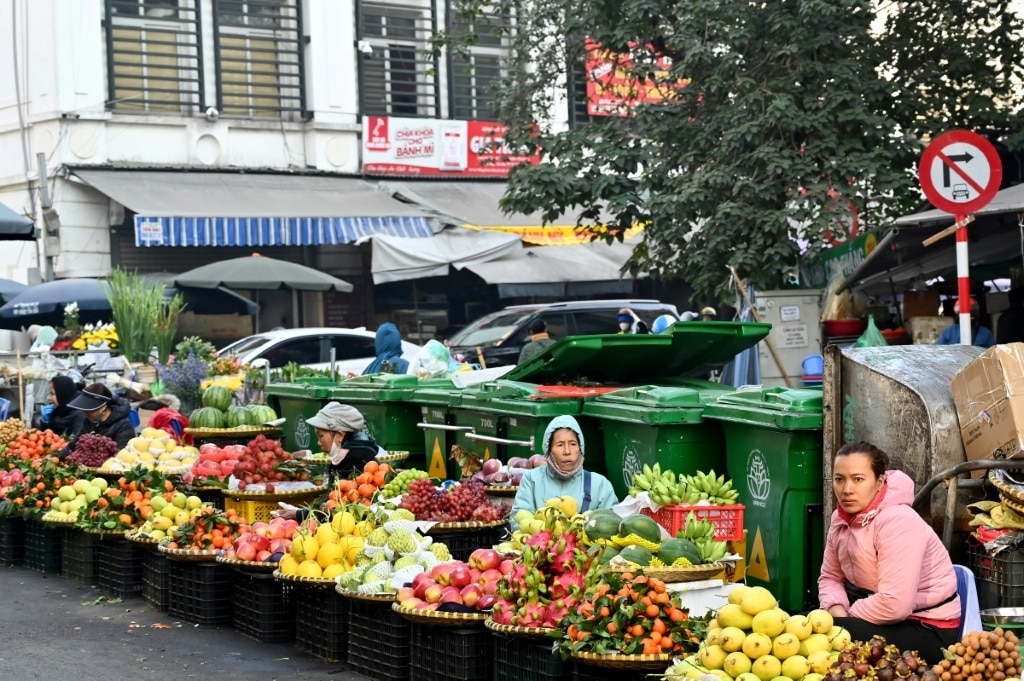
    For decades, the iconic streetscape of Vietnam’s capital Hanoi has been defined by its chaotic, beloved kerb culture: colorful food stalls line narrow lanes and wide boulevards, groups of locals and tourists huddle on low plastic stools sipping cold bia hoi and iced tea, and scooters weave between crowds of hawkers selling everything from fresh flowers to haircut services. This informal, spontaneous way of life has drawn millions of visitors, captivated global figures from former US President Barack Obama to celebrity chef Anthony Bourdain, and sustained tens of thousands of working-class vendors who rely on footpath trade to make a modest living. But in recent months, a sweeping new enforcement campaign to clear illegal pavement occupation has upended this centuries-old tradition, splitting public opinion across the rapidly growing city of 8 million.

    Unauthorized vending, parking and footpath obstruction have long been informally tolerated by local authorities, a quiet compromise that allowed informal commerce to flourish even as the city expanded. Today, however, that compromise is over: municipal officials have rolled out a sustained crackdown, installing nearly 2,000 new surveillance cameras to track violators, issuing more than 3,000 fines since December, and currently debating a proposal to double existing penalty amounts. Under current rules, businesses that block pedestrian space face fines as high as 6 million Vietnamese dong ($230), while unregistered street vendors pay penalties of 250,000 dong. Many unauthorised vendors have already been relocated to underused vacant lots far from the dense, high-foot-traffic downtown areas that made their businesses viable.

    For long-time vendors like 58-year-old Nguyen Thi Hoan, who sold flowers from the same downtown pavement spot for 10 years, the crackdown has gutted her livelihood. Relocated to a low-traffic vacant lot, her daily turnover has fallen by roughly half. “Without vendors, I don’t think Hanoi is Hanoi anymore,” Hoan said, acknowledging that she supports the goal of clearer pedestrian space but adding she has no alternative way to make ends meet. “Street vending is the tradition of people in Hanoi.”

    The debate over the crackdown cuts across all segments of Hanoi’s population. The kerb culture that draws vendors and tourists has long come with well-documented downsides: chronic traffic congestion, frequent noise complaints from local residents, and ongoing public concerns over food safety and sanitary conditions. Many city residents welcome the new order, saying the cleared footpaths have eliminated the daily danger of being forced into active roadways to get around. Le Trung Chien, a marketing professional working in downtown Hanoi, recalled for years being forced to walk in moving traffic because vendors and parked scooters blocked the entire sidewalk. “I completely support the city’s efforts to make the sidewalks clear and tidy,” he said. “I don’t like my city to be a mess as it has always been.”

    City authorities frame the campaign as a necessary step to bring order and cleanliness to Hanoi as it undergoes rapid economic development, a priority for Vietnam’s national leadership that has overseen years of breakneck growth. This is not the first time Hanoi has launched a footpath clearing initiative—previous campaigns often fizzled out after a short period of enforcement—but this iteration has been far more sustained and better resourced, with digital surveillance to ensure consistent compliance. As part of the new regulatory plan floated this month, officials are also considering a scheme that would allow vendors to pay to rent officially authorized kerb space, combining order with limited preservation of the traditional street trade.

    For registered businesses that built their model around outdoor sidewalk seating, the crackdown has already hit bottom lines. Tran Trung Van, manager of a three-story downtown coffee shop, says around a third of his customers prefer to sit outside, especially during cool mornings, evenings and winter months. Now, he has to turn away those customers, and has lost business as a result. “Culture and habits mean people want to be outside,” he explained. That sentiment is widely shared among young, local patrons: office worker Dinh Tung says he misses lingering with colleagues at outdoor tables that once spilled into the street, echoing Hoan’s view of what makes Hanoi unique. “I hope things will return to normal soon,” he said. “Hanoi is only Hanoi if we can have sidewalk iced tea.”

    Hanoi’s kerb culture gained global fame after a 2016 visit where former President Barack Obama shared a bun cha meal with the late chef Anthony Bourdain for Bourdain’s CNN travel show Parts Unknown. While the pair ate their $6 meal indoors, the Hanoi episode of the show was widely seen as a love letter to the city’s streetscape, highlighting everything from outdoor pavement Zumba classes to street food vendors to the local cheap draft beer tradition that draws visitors from across the globe. In recent years, Hanoi has hit record numbers of annual tourist arrivals, many of whom come specifically to experience the iconic street culture that is now at the center of the city’s regulatory shift.

  • Nine-year-old boy rushed to hospital after being hit by police car in Sydney

    Nine-year-old boy rushed to hospital after being hit by police car in Sydney

    A 9-year-old child is recovering in a Sydney hospital after a collision with a marked police car that was en route to an emergency fire call on the city’s North Shore. The incident unfolded at approximately 7:20 p.m. on Monday along the Pacific Highway in St Leonards, just a short distance from the Christie Street blaze that officers were rushing to contain.

    Upon impact, first responding officers immediately provided on-site emergency care to the injured boy, before teams of paramedics arrived to upgrade treatment ahead of transport. After stabilizing the child at the crash site, medical teams transferred him to Sydney Children’s Hospital in Randwick, where he remains in stable condition as of Tuesday.

    The driver of the police vehicle, a male senior constable with New South Wales Police, underwent mandatory breath alcohol testing at the scene immediately after the collision, and the test returned a negative result, ruling out impairment as a factor in the incident.

    Authorities confirmed on Tuesday that formal investigations into the full circumstances of the crash are still ongoing. No further details about the child’s identity or the extent of his injuries have been released to the public at this time.

  • Takedown call as banned and ‘deadly’ magnets being sold on Amazon, eBay

    Takedown call as banned and ‘deadly’ magnets being sold on Amazon, eBay

    Australia’s top consumer protection watchdog has taken urgent action against four major online retail platforms, calling for the immediate removal of banned toys containing small, high-powered magnets that pose life-threatening risks to consumers, particularly young children.

    The Australian Competition and Consumer Commission (ACCC) confirmed it has issued formal takedown requests to global e-commerce giants Amazon and eBay, along with Australian online retailer Kogan and global marketplace Fruugo. The targeted products include popular items such as Magnetic Chess and Magnetic Battle Chess, all of which contain the small, extremely strong magnets that have been permanently banned from sale in Australia since 2012.

    This nationwide ban was implemented over well-documented safety concerns: if multiple magnets are swallowed, they can bond together through intestinal walls and digestive tissue, causing catastrophic internal damage, life-threatening complications, and even choking hazards that primarily impact young children who are most likely to put small objects in their mouths. Despite the decade-long ban, ACCC’s recent investigation discovered that these prohibited products remain readily available for purchase by Australian consumers through the major online marketplaces, prompting the regulator’s formal intervention.

    “Small, high-powered magnets can cause catastrophic, life-threatening internal injuries if swallowed, particularly for young children,” said ACCC Deputy Chair Catriona Lowe in a formal statement. “Multiple magnets can stick together in the intestine or digestive tissue. They are a choking hazard. We are extremely concerned that our investigation has detected sellers listing these banned products on online marketplaces and we urge all online marketplaces to do more to prevent listings of these products to keep consumers, especially young children, safe.”

    Beyond issuing the takedown notices, the ACCC has also enforced a mandatory product safety standard that governs all toys containing these dangerous magnets to strengthen long-term consumer protection. Following the regulator’s intervention, all four targeted platforms have publicly committed to implementing immediate measures to warn consumers of the existing hazards. Amazon, Kogan, and Fruugo have gone a step further, agreeing to offer full refunds to any Australian customers who have already purchased these banned products.

    For consumers who currently own these magnet-containing toys, Lowe issued a clear urgent advisory: “We are urging consumers who have bought this type of product to stop using them immediately, keep them out of reach of children and contact the seller for a refund.”

    Lowe emphasized that online marketplaces hold a core responsibility for keeping the domestic market safe. “Online marketplaces have a critical role in preventing listings of unsafe or banned products. We are continuing to engage with online marketplaces to ensure affected customers are contacted and warned about the risks and that adequate steps are taken to prevent future listings of these products,” she added. The ACCC’s ongoing engagement with the platforms aims to close the regulatory gap that allowed banned dangerous products to remain accessible to Australian families.

  • British woman dies after Pyrenees peak fall

    British woman dies after Pyrenees peak fall

    A 42-year-old British woman who resided in Finland has lost her life after a devastating 500-meter fall from Balaitús Peak while hiking in the Pyrenees mountain range along the Spain-France border, according to updates from Spanish local authorities and law enforcement.

    The incident unfolded on Saturday as the woman and her hiking companion, a 53-year-old uninjured man, were descending the mountain via the Gran Diagonal route. Local emergency responders received the distress alert at approximately 19:30 CEST (18:30 BST). Teams from the Mountain Rescue and Intervention Group (GREIM) and the Huesca Air Unit were quickly dispatched to the remote accident site, where the hiker was pronounced dead on arrival.

    Following the recovery operation, the woman’s body was transferred to the Forensic Medicine Institute in Zaragoza to undergo a mandatory post-mortem examination, which will help formalize details of the accident for judicial procedures.

    The UK Foreign Office confirmed it has been notified of the death and maintains ongoing communication with Spanish authorities to support next steps. A spokesperson for the Spanish Civil Guard told media outlets that the death is officially classified as a tragic hiking accident, and an official investigation remains active. Once the post-mortem results are finalized, a full case report will be submitted to the local investigating court for review.

    This fatal accident comes in the wake of a string of mountain emergencies in the Pyrenees over the preceding week. Between May 26 and May 30 alone, GREIM teams responded to nine separate mountain rescue calls across the region. In the aftermath of this latest fatality, the Spanish Civil Guard renewed its public appeal for hikers to prioritize safety before undertaking mountain expeditions. Key precautions highlighted by the force include packing sufficient drinking water, carrying fully charged mobile devices with location services activated, wearing adequate sun protection, and thoroughly reviewing planned routes and up-to-date weather forecasts before setting out.