分类: society

  • How deepfake porn scandal surrounding TV star rocked Germany

    How deepfake porn scandal surrounding TV star rocked Germany

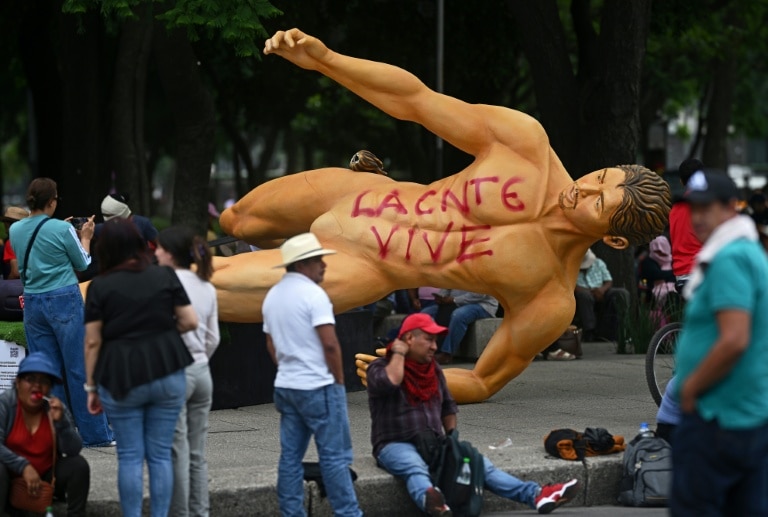
    A high-profile scandal involving allegations of non-consensual deepfake pornography has captivated Germany, triggering widespread protests and prompting calls for urgent legal reforms. Television personality Collien Fernandes, 44, has become the focal point of this national conversation after publicly accusing her ex-husband, Christian Ulmen, of distributing manipulated pornographic content featuring her likeness.

    The controversy erupted when Fernandes detailed her allegations in Der Spiegel, claiming Ulmen confessed to disseminating the fabricated sexual images during Christmas 2024. The emotional impact was profound, with Fernandes describing the revelation as ‘like receiving news of a death.’ Her subsequent public appearances, including a Hamburg rally where she appeared in a bulletproof vest citing death threats, have galvanized public opinion.

    Ulmen, through his legal representatives Christian Schertz and Simon Bergmann, has categorically denied all allegations, stating he never ‘produced and/or distributed deepfake videos of Ms Fernandes or any other individuals.’ His legal team has initiated proceedings against Der Spiegel, asserting that reported details are ‘demonstrably incomplete and incorrect.’

    The case has exposed significant gaps in German legislation regarding digital sexual violence. Currently, German law only addresses the dissemination of such materials when they violate personal image rights, leaving creation largely unregulated. In response, Federal Justice Minister Stefanie Hubig has announced draft legislation that would explicitly criminalize both production and distribution of pornographic deepfakes, with proposed penalties of up to two years imprisonment.

    A coalition of 250 prominent women from politics, business, and culture has issued ten demands for legal reform, including clear criminalization of non-consensual sexualized deepfakes. The group includes Labour Minister Bärbel Bas, rapper Ikkimel, and climate activist Luisa Neubauer.

    The scandal has also entered the political arena, with Chancellor Friedrich Merz facing criticism for his response to questions about violence against women. His remarks attributing a ‘considerable portion’ of violence to immigrant groups drew mixed reactions, applauded by conservative and far-right lawmakers but criticized by others as misjudged and dismissive of structural issues.

    Meanwhile, police statistics reveal that reports of violence against women reached record levels in Germany during 2024, adding urgency to the ongoing debate about legal protections in both physical and digital spaces.

  • India restoring a centuries-old royal kitchen that never stopped serving food

    India restoring a centuries-old royal kitchen that never stopped serving food

    In the heart of Lucknow, Uttar Pradesh, a remarkable preservation project is breathing new life into a nearly two-century-old royal kitchen that continues to serve thousands despite its historical significance. Originally constructed in 1837 by Muhammad Ali Shah, the last ruler of the Awadh kingdom, this culinary landmark represents an enduring legacy of communal generosity that has outlived the monarchy itself.

    The kitchen, nestled within the Chota Imambara complex, stands as a testament to architectural ingenuity and cultural continuity. What makes this restoration extraordinary is the Archaeological Survey of India’s commitment to historical accuracy, employing traditional Mughal-era construction methods. Artisans are recreating authentic lime-based mortar—soaked for a month and mixed with wood apple pulp, black gram, natural gum (gond), jaggery, and red brick dust—while using period-appropriate ‘lakhauri’ bricks to maintain structural authenticity.

    Beyond architectural preservation, the kitchen maintains its original purpose of serving meals to the community. During Ramadan and Muharram, it feeds approximately 700 people daily through a coupon system, with meals distributed to 16 local mosques. The menus, meticulously detailed in Muhammad Ali Shah’s will nearly two centuries ago, continue to dictate portion sizes and dish specifications—from meat curries and kebabs during Ramadan to vegetarian offerings during Muharram’s initial mourning days.

    The restoration, scheduled for completion by March, addresses concerning structural decay while preserving intricate wall carvings and iconic brickwork. Funded through a unique historical endowment—originally 3.6 million rupees given to the East India Company in 1839 with the stipulation that interest would maintain Awadh monuments—the kitchen now operates under the Hussainabad Trust using the same financial mechanism.

    For descendants of the Awadh royalty and longtime community members like 80-year-old Syed Haider Raza, the kitchen represents living history. ‘The spirit of the place is still the same,’ Raza observes, ‘It feels as if the food is still being sent by Muhammad Ali Shah.’ This project demonstrates how functional preservation can maintain both physical structures and the cultural traditions they embody.

  • Travel blogger: Shopping in China is more than just buying

    Travel blogger: Shopping in China is more than just buying

    Australian travel influencer Jack Torr has unveiled a refreshing perspective on China’s retail landscape, positioning shopping as far more than mere commercial transactions. The content creator emphasizes that China’s markets offer profound cultural immersion opportunities for international visitors willing to engage authentically with local experiences.

    Torr identifies three distinctive elements that transform Chinese shopping into memorable encounters: the dynamic art of price negotiation, meaningful interactions with store proprietors, and the excitement of uncovering unique items. These components collectively create what he describes as a multidimensional experience that transcends conventional retail therapy.

    ‘The genuine magic occurs when travelers approach these interactions with open-minded curiosity,’ Torr explains. ‘The process becomes less about acquisition and more about connection – you’re not just purchasing products, you’re participating in cultural exchange.’

    His observations highlight a growing trend among international travelers seeking authentic engagement beyond typical tourist activities. The blogger’s account suggests China’s retail environments function as informal cultural classrooms where visitors can develop deeper understanding of local customs and social dynamics.

    This perspective emerges as China continues to enhance its tourism infrastructure and international accessibility. Torr’s experiences demonstrate how everyday activities like shopping can bridge cultural divides when approached with respect and genuine interest in local practices.

    The narrative challenges conventional Western perceptions of Chinese commerce, presenting it as a vibrant ecosystem of human interaction rather than purely transactional space. Torr concludes that visitors who embrace this approach depart with not merely souvenirs, but enriched perspectives and memorable human connections.

  • Blogger: Walk, see, feel China to understand its story

    Blogger: Walk, see, feel China to understand its story

    Anayat Ali, an Indian travel blogger, has transformed from a visitor who couldn’t decipher local menus to an adventurer who has bungee jumped off a 335-meter cliff during his remarkable three-year exploration of China. His extensive travels have revealed a nation where ancient traditions seamlessly integrate with technological advancement, creating a unique social fabric where historical legacy isn’t discarded but serves as foundation for progressive development.

    Ali’s immersive journey across China’s diverse regions has provided him with profound insights that challenge superficial perceptions. He emphasizes that authentic understanding of China requires firsthand experience—walking its streets, witnessing its transformations, and engaging with its people with genuine openness. His account reveals a country of surprising contrasts where centuries-old customs coexist with cutting-edge innovation.

    This perspective comes as China continues to attract international visitors seeking to comprehend its complex narrative. The blogger’s experience aligns with a growing trend of foreign content creators discovering China’s multifaceted reality beyond mainstream media portrayals. His adventures demonstrate how personal exploration can bridge cultural divides and foster deeper cross-cultural appreciation.

    Ali’s testimony underscores the importance of experiential learning in international understanding, suggesting that China’s true story emerges not from abstract concepts but from direct engagement with its landscapes, people, and evolving social dynamics.

  • Frosting, sprinkles and layers of fun: Giant cake picnic hits Sydney

    Frosting, sprinkles and layers of fun: Giant cake picnic hits Sydney

    The viral Cake Picnic movement has expanded its sugary reach to Australian shores, with Sydney’s Botanic Gardens serving as the latest backdrop for this international baking phenomenon. Founded by Elisa Sunga, a Google AI specialist and part-time hobby baker, the event has rapidly evolved from a small San Francisco gathering into a global sensation with sold-out events across four continents.

    What began as a simple online invitation two years ago—requesting attendees bring cakes to a casual gathering—has transformed into a major culinary movement. The Sydney edition attracted over 500 participants who displayed more than 1,600 homemade creations under the iconic Harbour Bridge. The non-competitive event requires cakes to meet specific dimensions (minimum 20cm wide and 7.5cm tall) but imposes no restrictions on creativity.

    The diversity of offerings reflected both international influences and local Australian themes. From a life-sized swan sculpture cake to Filipino-inspired ube creations and Swedish princess cakes, the display showcased remarkable culinary artistry. Notably, the event featured both sweet and savory innovations, including a focaccia cake with pesto and feta icing that particularly delighted founder Sunga.

    Participants ranged from professional bakers to complete novices, with many working through the night to prepare their contributions. Hilary Lindgren, 54, who attended with her daughter, captured the prevailing sentiment: ‘There’s just so many negative things happening in the world that it’s nice to do something like this.’

    Food technology expert Associate Professor Lindsay Kelley notes the event’s appeal lies in its design for sharing: ‘Cakes are designed to be sliced and shared. When we see a whole cake at parties, we understand that everyone gets a slice and shares that experience.’

    For Sunga, who balances her tech career with baking passions, the events represent a tangible counterpoint to digital life. ‘AI every day can do an increasingly terrifying amount of things,’ she observes, ‘but to this day it can’t bake a cake—yet. Cake Picnic forces people to not only come outside but spend a day on the grass.’

    The movement continues to expand, with future events planned across multiple international cities, demonstrating that in an increasingly digital world, the simple joy of sharing homemade cake maintains powerful appeal.

  • New generation of international visitors follows in Edgar Snow’s footsteps

    New generation of international visitors follows in Edgar Snow’s footsteps

    ZHENGZHOU – More than six decades after American journalist Edgar Snow documented China’s transformative era, a new wave of international visitors is discovering the same fundamental truth he championed: genuine understanding of China emerges only through firsthand experience.

    The revelation became the central theme at the ‘Telling Story Well: From Empathetic Communication to Cultural Identity’ forum, held March 28th in Zhengzhou, Henan province, as part of the 2026 China Internet Media Forum. The gathering brought together over 200 participants—including content creators, academics, business leaders, and descendants of Snow himself—to explore the power of immersive cultural exchange.

    Edgar Snow’s groundbreaking 1937 work ‘Red Star Over China’ first introduced Western audiences to the Chinese revolution. His subsequent 1960 journey through Henan province captured the essence of a ‘newly born’ People’s Republic, creating a historical benchmark for cross-cultural understanding.

    The forum honored this legacy through field tours retracing Snow’s path through Zhengzhou and Luoyang. Participants shared personal experiences of cultural immersion, unanimously affirming that authentic connection transcends headlines and abstract narratives.

    The event featured compelling cross-cultural performances, including a collaboration between American wushu practitioner Jake Pinnick and Chinese guzheng performer Peng Jingxuan, symbolizing the bridge-building potential of cultural dialogue.

    Contemporary content creators emphasized how digital platforms have revolutionized cultural storytelling, enabling deeper empathetic communication while preserving cultural identity in an increasingly interconnected world. The consensus emerged that Snow’s methodology—prioritizing direct engagement and personal observation—remains as relevant today as it was six decades ago.

  • Flag-raising ceremony at Potala Palace Square in Lhasa marks 18th Serfs Emancipation Day

    Flag-raising ceremony at Potala Palace Square in Lhasa marks 18th Serfs Emancipation Day

    Lhasa witnessed a solemn flag-raising ceremony at Potala Palace Square on Saturday as the Xizang Autonomous Region commemorated its 18th official Serfs Emancipation Day. The March 28 observance, established in 2009, recognizes the historic democratic reforms implemented in 1959 that abolished feudal serfdom throughout the region.

    The ceremony attracted participants from diverse social backgrounds who gathered to reflect on Xizang’s transformative journey. Regional government chairman Karma Tsetan delivered a televised address on Friday evening, emphasizing the significance of the 67th anniversary of emancipation for approximately one million former serfs.

    Karma Tsetan characterized the 1959 reforms as a watershed moment that eradicated what he described as ‘dark, cruel, barbaric, and backward theocratic feudal serfdom.’ He contrasted contemporary conditions with historical circumstances, noting that current life expectancy has dramatically increased from 35.5 years prior to 1959 to 72.5 years today. The chairman also highlighted that childhood mortality rates have substantially decreased from approximately 40% during the pre-reform era.

    ‘Present-day Xizang residents experience comprehensive human rights protections that stand in stark opposition to the historical reality of serfs living in perpetual fear and dignity deprivation,’ Karma Tsetan stated during his address.

    Seventy-one-year-old Lhasa resident Tsewang, who learned about pre-reform conditions through elder accounts, acknowledged the region’s developmental progress. ‘Although I never personally endured the sufferings of old Xizang,’ he remarked, ‘the continuous improvement of living standards demonstrates how contemporary happiness emerges from hard-won achievements.’

    Various commemorative activities have been organized across Xizang to mark the anniversary, fostering public reflection on the region’s socioeconomic evolution and current prosperity.

  • Looksmaxxing influencer Clavicular arrested on battery charge in Florida

    Looksmaxxing influencer Clavicular arrested on battery charge in Florida

    Florida law enforcement authorities have apprehended Braden Eric Peters, a controversial internet personality known as ‘Clavicular,’ on charges of misdemeanor battery and criminal conspiracy to commit battery. The arrest follows an investigation into a February altercation that Peters allegedly instigated between two women at his rented Osceola County residence.

    According to official reports from the Osceola County Sheriff’s Office, the incident occurred on February 2nd when Peters reportedly orchestrated a physical confrontation between Violet Marie Lentz, 24, and a 19-year-old woman. Following the altercation, Peters allegedly recorded the incident and distributed the footage through his social media channels. When deputies responded to the scene, both Peters and Lentz refused to cooperate with investigators.

    The subsequent investigation resulted in arrest warrants for both individuals. Peters was taken into custody by Fort Lauderdale police on Thursday with bond set at $1,000, from which he was released on Friday. Lentz remains at large with an active warrant for her arrest on battery charges.

    Peters has gained notoriety as a central figure in the ‘looksmaxxing’ subculture—an online movement focused on extreme physical enhancement techniques. His content documents radical methods purportedly aimed at maximizing physical attractiveness, including controversial practices that have drawn significant criticism.

    In a separate development, the Florida Fish and Wildlife Conservation Commission has initiated an investigation into a video depicting individuals, including Peters, discharging firearms at an alligator in the Everglades. While the commission has not confirmed Peters’ involvement in their investigation, the footage has raised additional concerns about the streamer’s activities.

    The case highlights growing concerns about social media influencers promoting potentially harmful content and the legal implications of orchestrating confrontations for online engagement. Law enforcement officials continue to investigate both incidents as the looksmaxxing subculture gains increased mainstream attention.

  • Pope denounces widening gap between the rich and poor on Monaco visit

    Pope denounces widening gap between the rich and poor on Monaco visit

    Pope Leo XIV delivered a powerful critique of global economic inequality during his landmark visit to Monaco, marking his first papal journey to Western Europe. The American pontiff arrived by helicopter in the affluent principality, where he was formally greeted by Prince Albert II and Princess Charlene under clear Mediterranean skies.

    From the balcony of the Prince’s Palace, Pope Leo issued a stark condemnation of what he described as ‘unjust configurations of power’ that create ‘chasms between poor and rich, between the privileged and the rejected.’ His address, delivered in French, emphasized that wealth must serve ‘law and justice,’ particularly during a period of global conflict where ‘displays of force and the logic of omnipotence jeopardise peace.’

    The visit transformed the tiny city-state, with bells pealing across the principality and streets adorned in both Monegasque and Vatican colors. Billboards featuring the pontiff created a striking contrast against Monaco’s luxury sports cars and tourist crowds. The papal itinerary included visits to the Cathedral of the Immaculate Conception and the Church of Saint Devota, culminating in an open-air mass at Louis II Stadium expected to draw 15,000 attendees.

    According to Vatican press director Matteo Bruni, the Pope’s agenda included addresses on environmental protection—a priority shared with Prince Albert—Monaco’s European role, and ‘the protection of life in all its forms.’ This phrasing encompasses both the principality’s anti-abortion laws and broader condemnation of global conflicts, particularly referencing Middle East tensions affecting the world economy.

    Monaco remains one of Europe’s few states with Catholicism as the official religion and maintains longstanding diplomatic relations with the Holy See. Though only 8% of citizens identify as practicing Catholics, church services represent rare social spaces where billionaires, cleaning staff, and construction workers intermingle.

    Prince Albert characterized the visit as ‘a powerful sign testifying to the Principality’s importance within the Catholic Christian world,’ noting shared commitments to international solidarity and peace promotion through sports. Local jeweler Isabel Fissore, 62, captured the historic significance: ‘The two smallest states in the world come together to spread a message of peace, light and love. We may be a small nation, yet our hearts are big.’

    Archbishop Dominique-Marie David highlighted how the pontiff’s visit reached Monaco’s diverse population of approximately 140 nationalities, demonstrating outreach to ‘other cultures, countries, backgrounds and languages.’

  • Beijing schools launch student sports leagues citywide

    Beijing schools launch student sports leagues citywide

    In a sweeping citywide initiative aligned with China’s Health First education strategy, Beijing has launched an extensive network of student sports leagues this month. The ‘banchao’ program, encompassing primary and secondary schools across the capital, represents one of the most comprehensive youth sports mobilization efforts in recent memory.

    At Hepingjie No. 1 Middle School in Chaoyang District, students are actively participating in diverse athletic competitions including soccer, basketball, and handball. Yang Yan, president of the Hepingjie No. 1 Middle School Education Group, confirmed that all 11 campuses under their administration are participating, with approximately 8,300 students engaged in competitions expected to continue through December.

    The movement has gained equal momentum at the primary school level. The primary school affiliated with the Beijing Academy of Education Sciences anticipates organizing over 400 banchao matches, ensuring inclusive participation across all grade levels.

    Thirteen-year-old student Li Yiren expressed enthusiasm for the initiative, stating: ‘These games bring me joy and have opened doors to higher-level competitive opportunities.’

    According to Beijing education authorities, the ambitious program is projected to host up to 400,000 competitions throughout the year, creating over 10 million participation opportunities. This massive undertaking aims to cultivate a robust culture of health consciousness, teamwork, and active living among the city’s youth population, marking a significant step in promoting holistic student development through physical education.