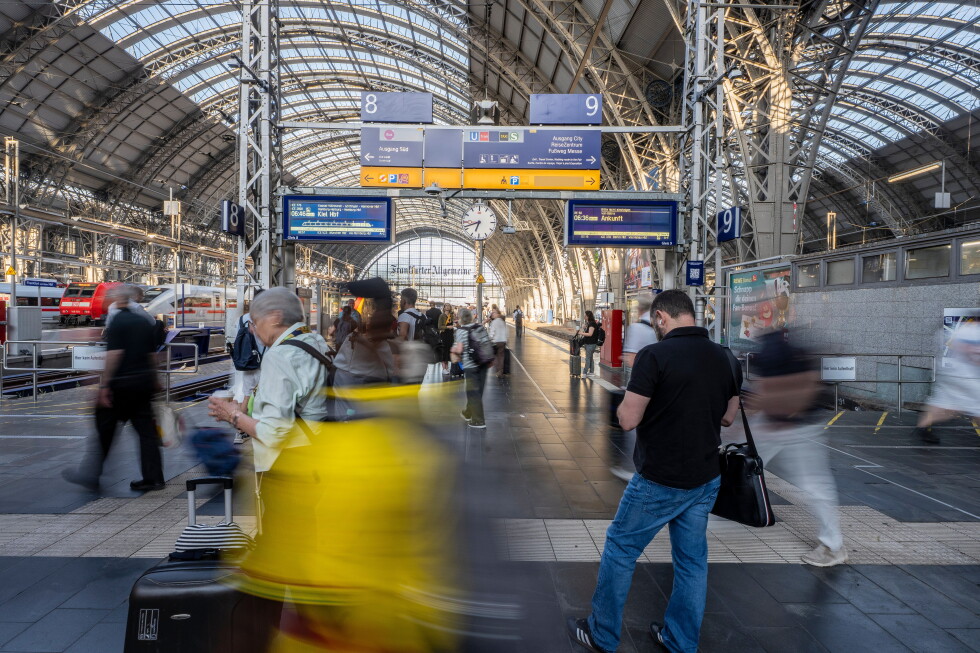
BERLIN – Less than 24 hours after a sudden, widespread communications system failure brought Germany’s entire national rail network to a standstill and left thousands of passengers stranded across the country, services have returned to near-normal operations – but the state-owned national rail operator is now facing mounting public and political backlash over the disruptive incident.
The chaos unfolded late Tuesday evening, when a critical failure struck the GSM-R digital communications infrastructure. This specialized system serves as the backbone for internal communications across Germany’s rail network, and its sudden outage forced an immediate, nationwide halt to all train services. For roughly two hours, passengers were left stuck at stations and on board trains, with long queues quickly forming at station information desks as anxious travelers sought updates on their journeys. Service gradually resumed after technicians addressed the outage.
By Wednesday morning, Deutsche Bahn, Germany’s federal government-owned main rail operator, confirmed that most services were running “largely seamlessly” across the network, though it warned passengers of a small number of isolated service cuts that could remain in place for part of the day.
As of Wednesday, officials have not yet released any details on what caused the widespread communications failure. The incident comes amid years of growing public frustration over consistent delays, frequent service interruptions, and underperformance across Germany’s rail network. For years, the system suffered from chronic underinvestment, and Deutsche Bahn is currently in the middle of a series of extensive, disruptive overhauls of the country’s busiest major routes, an effort designed to reverse years of neglect and boost long-term service quality.
The total shutdown of national rail service triggered by a single technical failure has been widely condemned as a new low for German rail. Oliver Krischer, regional transport minister for Germany’s most populous state North Rhine-Westphalia, described the incident in comments to German news agency dpa as “a new low in already poor operating quality.” Krischer emphasized that robust emergency protocols must be put in place to prevent similar widespread disruptions going forward, noting that German commuters and travelers depend on rail to reach their destinations with at least basic reliability.