
A decades-old tourist tradition targeting a beloved 19th-century mosaic in one of Milan’s most famous historic landmarks has sparked unexpected social media uproar, as locals and travelers alike question the fate of the artwork’s most iconic—if irreverent—feature. The piece in question is a blue and beige mosaic depicting a prancing bull, set into the floor of Milan’s Galleria Vittorio Emanuele II, the iconic glass-vaulted shopping arcade at the heart of the city. Designed to represent Turin, Italy’s first national capital, the mosaic has over generations become a bucket-list stop for visitors thanks to a folksy good luck legend. The tradition holds that spinning one’s heel three times clockwise on the bull’s genital region will bring good fortune and guarantee a return trip to Milan. For years, thousands of tourists have followed the ritual, and the constant friction gradually wore away the stone tiles, leaving a noticeable small crater on the mosaic’s surface. Last week, municipal authorities launched long-planned restoration work to repair the damaged section of the artwork, with master artisan Gianluca Galli carrying out the handcrafted repairs to the 100-plus-year-old floor. Over the weekend, Milan local councillor Marco Granelli announced that the mosaic had been “completely restored,” sharing the update on his social media channels. But what was meant as a routine cultural heritage update quickly went viral, as hundreds of social media users pointed out an apparent change to the famous feature: the bull’s iconic “lucky charm” testicles seemed to have vanished entirely. Comments flooded Granelli’s post, with users joking that the bull had been “castrated,” and many questioning why the landmark’s most famous feature was removed. “What happened to the testicles?” one user asked, while another simply noted, “Something is missing.” The widespread online bemusement and criticism quickly prompted a response from Milan’s city council, which moved quickly to clarify that the restoration project is not actually complete. Officials explained that the restored section remains partially covered to allow the new stone tiles’ color to set properly, and the feature was never intentionally removed. The council added that restorers chose light pink marble for the repaired area, a material selected to match the original 19th-century color palette more closely than the darker marble used for the mosaic’s previous repair in 2017. Master restorer Galli confirmed the timeline in an interview with Italian daily newspaper Corriere della Sera, noting that his work is still in progress, and he has not received any formal objections to the work, which is being carried out under direct municipal supervision. For now, tourists and locals alike will have to wait a little longer to see the fully restored iconic bull—and confirm that its famous good luck charm remains intact for future generations of visitors.
分类: society
-

Protesters in Kenya call for national crisis declaration over gender-based violence
On a tense Monday in Kenya’s capital Nairobi, hundreds of women marched through downtown streets to amplify urgent demands for government intervention into a steep rise in gender-based violence (GBV) and the targeted killing of women, known as femicide. What began as a peaceful but impassioned demonstration drew heavy public attention, with participants carrying hand-painted placards emblazoned with slogans including “Stop Killing Women” and a symbolic empty coffin to honor victims who have been killed. Protesters also used the rally to raise public awareness of a string of unexplained child disappearances and murders that have shaken local communities over the past several weeks, with uniformed police officers assigned to escort the march throughout its route.
The demonstration was triggered by the brutal recent killing of a local Kenyan singer, who was doused in petrol and set on fire by an attacker before dying of her injuries. In response to growing public anger, women’s rights advocacy groups have spent weeks sounding the alarm over the climbing GBV caseload across the country, calling on the Kenyan government to formally declare the crisis a national emergency to unlock emergency funding and coordinated policy action.
Lobby groups originally gave the government a 40-day ultimatum to implement concrete reforms on May 21, threatening escalated nationwide protests if officials failed to act. But the early outbreak of public demonstrations in Nairobi shows that activists have grown frustrated with the slow pace of official response, choosing to mobilize sooner than planned.
Following mounting pressure, Kenya’s national police force announced on May 23 that it had assembled a new specialized investigative task force dedicated to addressing gender-based violence. The unit brings together cross-disciplinary experts, including criminal intelligence analysts, forensic specialists, veteran homicide detectives, and other specialized personnel to streamline investigations into GBV cases. Law enforcement officials also noted that the vast majority of reported GBV incidents are tied to domestic disputes, intimate partner violence, sexual assault, and unresolved family conflicts.
Data from the Federation of Women Lawyers (FIDA) Kenya underscores the scale of the crisis: the organization’s three regional offices in Nairobi, the coastal port city of Mombasa, and the lakeside city of Kisumu receive an average of 70 new gender-based violence cases every week, a figure that activists say points to a widespread underreporting of abuse across the country. For the women who marched on Monday, the demonstration is just the first step in a sustained campaign to force systemic change and end the cycle of violence targeting women and children in Kenya.
-

Passengers trapped, explosions break out in train carriage after Melbourne Metro line rocked by overhead power fault
A critical infrastructure failure has thrown Melbourne’s suburban rail network into chaos, after an overhead power fault in the North Melbourne area sparked visible explosions aboard a passenger train and left dozens of commuters trapped inside carriages. The incident, first reported early June 1, 2026, has triggered major service disruptions along the Craigieburn line, with delays expected to stretch to as long as one hour for affected travelers.
User-generated and broadcaster-obtained footage from the scene captured dramatic moments inside the affected carriage: bright sparks flew across the cabin as sudden explosions erupted, prompting passengers to immediately take cover to avoid injury. Images from the scene also confirm the visible electrical activity that terrified commuters on board.
Officially, Metro Trains Melbourne issued an urgent public alert via its official social media channel, warning passengers of the widespread service disruptions. In the alert, the transit authority confirmed the root cause was an unexpected overhead power fault in the North Melbourne precinct, noting that trains could be held at platforms or stuck between stations for extended periods as response teams work to resolve the issue.
To minimize further spread of disruption across the city’s network, transit officials have implemented a revised temporary routing for all services. Instead of running through the central City Loop, all affected services will now travel directly between Flinders Street Station and Southern Cross Station. Transport Victoria’s official website also updated its public travel advisory to reflect the major delays, urging commuters to check real-time information displays and listen for on-station announcements, as service adjustments could be made with very little advance notice.
As of the latest update from news teams on the ground, recovery work is still ongoing, and no further details about passenger injuries or an estimated timeline for full service restoration have been released. This breaking story is still developing, with new updates expected to be published as more information becomes available to reporters.
-
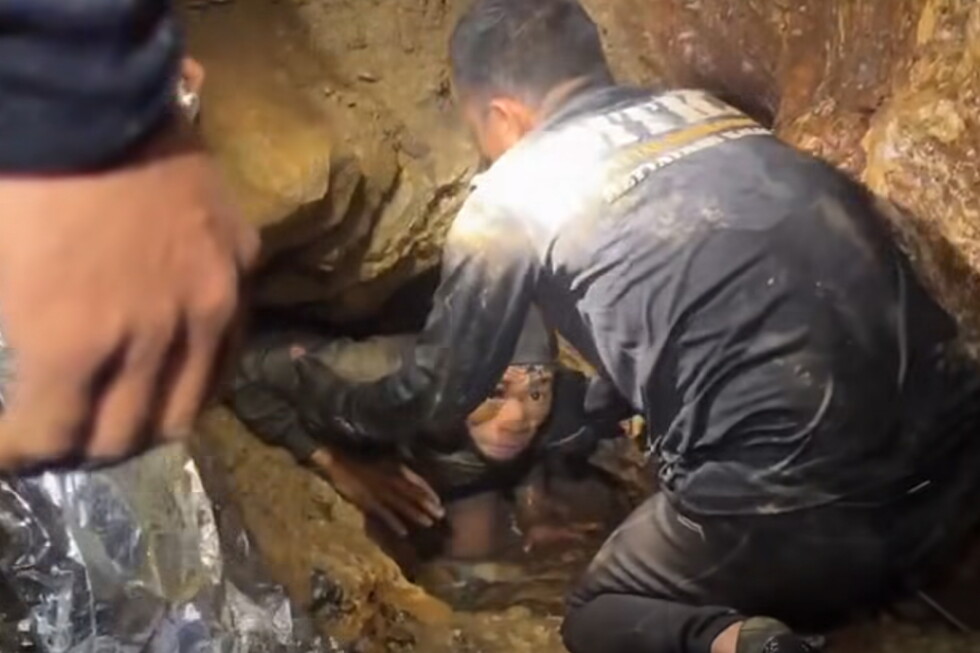
Rescuers search for alternative route to reach 2 missing in a flooded Laos cave
BANGKOK – Nearly two weeks after a sudden flash flood trapped seven people inside a remote cave in northern Laos, international rescue teams are racing against shifting weather conditions to locate the two remaining missing people, after five others were successfully pulled to safety over recent days.
The incident unfolded around 120 kilometers north of Vientiane, Laos’ capital, in the rugged terrain of Xaisomboun province. According to rescue accounts, a group of local villagers ventured into the cave nearly two weeks ago to prospect for valuable minerals including gold. A sudden bout of heavy rainfall triggered a massive flash flood that surged through the cave system, blocking the only exit the group had used to enter. One villager managed to escape the rising waters immediately and alerted local emergency authorities, launching what has become a complex cross-border rescue operation.
When teams first reached the site, all seven villagers were trapped deep within the flooded cave system. The first extraction came on Friday, when an expert diver guided one survivor out through a narrow, water-filled passage. Four more were able to walk out on their own the following day, after receding water levels opened up a temporary safe route. That brings the total number of rescued people to five, leaving two unaccounted for nearly two weeks since the flood.
Rescue efforts have been complicated by persistent hazardous conditions: the main entrance to the cave has remained completely flooded and impassable since the initial flood event, and a new round of heavy downpours on Sunday forced teams to suspend active search operations overnight as water levels rose again. The Laos-based Rescue Volunteer for People group noted on its official Facebook page that intense rainfall sent massive volumes of water cascading into the cave system, pausing progress.
Now, teams from across Southeast Asia and beyond are adapting their strategy to reach the missing. Joint operations have been running for more than a week, with lead rescue teams from Laos and neighboring Thailand, supported by expert divers from Finland, Malaysia, Japan, Indonesia, France and Australia. Many of the participating rescuers bring hands-on experience from the high-profile 2018 Tham Luang cave rescue, where 12 youth soccer players and their coach were saved after 18 days trapped in a flooded northern Thailand cave – one of the most complex cave rescue operations in modern history.
Current search efforts are focused on three alternative routes to reach the area where the two missing are believed to be trapped. First, rescue crews are actively pumping excess water out of the cave system. Malaysian diver Lee Kian Lie, a member of the international rescue contingent, told the Associated Press that once water levels drop sufficiently, teams will advance into the section where the cavers are thought to be. Second, a separate search team is surveying the opposite side of the cave mountain to locate a naturally dry, passable opening that connects to the trapped area. Third, Kengkaj Bongkawong, leader of Thailand’s Metta Tham Rescue Kalasin team, confirmed that crews are also searching from the mountain above for undiscovered air shafts that could provide entry to the deep cave section.
Rescuers say the two missing are located deeper in the cave system than the spot where the five survivors were recovered last Wednesday. The passage leading to this deeper section is extremely narrow and remains almost entirely submerged, making any entry through the main route impossible with current water levels. Teams are continuing their work around the clock to open an alternative path before further weather shifts complicate the operation.
-

Litterbugs now face on-the-spot fines in Tokyo’s tourist hotspot
As Japan grapples with unprecedented post-pandemic growth in international tourism, one of the country’s most iconic visitor destinations is rolling out strict new penalties to crack down on public littering. Starting this Monday, anyone caught dropping trash in Tokyo’s Shibuya Ward — the bustling commercial and entertainment hub home to the world-famous Shibuya Crossing — will face an immediate fine of 2,000 Japanese yen, equal to roughly $13 USD or £9 GBP.
The new penalty regime expands beyond individual litterbugs: in targeted high-traffic districts of the ward, food and beverage retailers that fail to provide on-site waste bins for customer use will also receive financial penalties. Enforced under an anti-litter campaign branded with the slogan “if you throw trash, you lose cash,” the new system allows offenders to pay fines instantly via multiple payment methods including cash, credit card, and digital QR codes. Up to 50 dedicated enforcement officers will patrol high-footfall areas of Shibuya to monitor for violations and issue penalties on site.
Japan’s tourism sector has hit historic highs in recent years, with official data showing the country welcomed a record-breaking 42.7 million international visitors in 2025. While the boom delivers significant economic benefits, it has also created growing frictions for local communities, who increasingly report disruptions from overcrowding and public misconduct. Japan’s national public broadcaster NHK notes that local officials have recorded a sharp rise in open alcohol consumption and littering across Shibuya, a large share of which is linked to visiting international tourists.
The scarcity of public waste bins across Japan, a longstanding policy rooted in national security concerns following past domestic and international terror attacks, has been cited by many as a contributing factor to rising litter. A 2024 government survey of over 4,000 foreign visitors found that the lack of public trash facilities ranked as the top inconvenience for tourists, named by more than 20% of respondents. Shibuya Ward officials, however, rejected the lack of bins as an excuse for improper waste disposal in a public statement, noting “We cannot tolerate littering simply because there are no rubbish bins. We ask for your cooperation in creating a city where everyone can enjoy themselves comfortably.”
Shibuya is not the only Japanese community grappling with the negative side effects of overtourism. In Fujiyoshida, the small town located at the base of Mount Fuji, chronic traffic congestion, excessive litter, and repeated disruption to local daily life prompted authorities to cancel the town’s popular annual cherry blossom festival this year, citing that the surge in visitor numbers had become unmanageable for local residents.
National authorities have rolled out a suite of nationwide measures to address overtourism strains, including increasing tourist accommodation taxes, launching crowd management mobile applications that provide real-time updates on visitor density at popular sites, and supporting local governments rolling out local penalty regimes like Shibuya’s new littering fines. The current tourism boom, driven by a weakened yen making travel to Japan more affordable and widespread social media exposure highlighting the country’s cultural and natural attractions, has put unprecedented pressure on urban infrastructure and residential communities across the country.
-
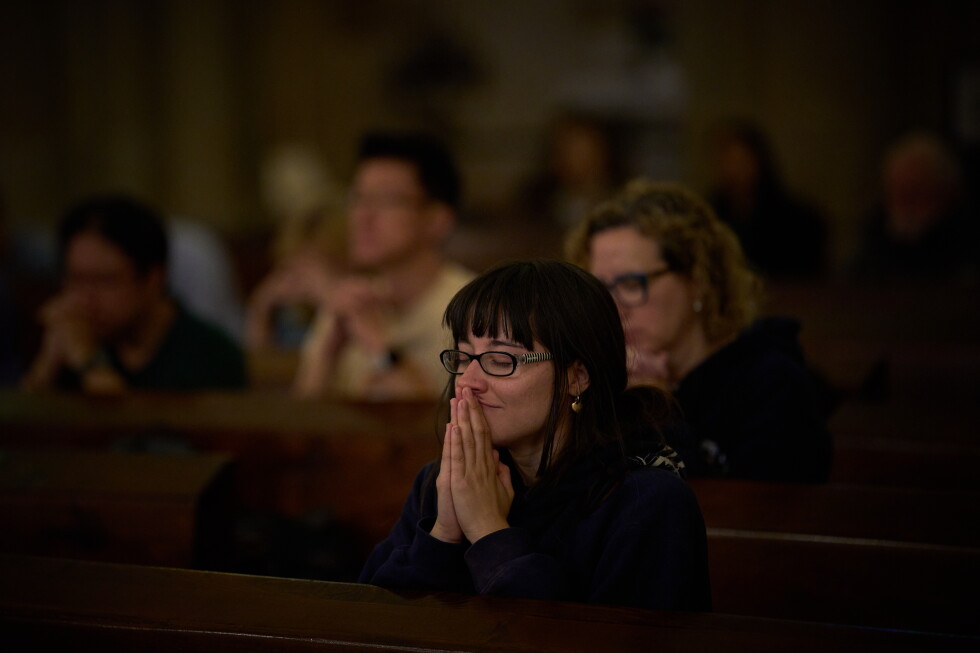
Returning to the fold? Some young Spaniards embrace Catholicism and can’t wait for Pope Leo’s visit
For most of her young adulthood, 26-year-old Sara Cabral fit the mold of a generation of secularized Southern European youth: raised in the Catholic tradition, but never actively practicing, with faith feeling distant from her daily life on Spain’s Canary Islands. That changed three years ago, when a track from a local faith-based youth group sparked something unexpected in her — a feeling that the lyrics carried a message from God directly to her.
Cabral quickly joined the movement, and today she not only attends the group’s weekly music-fueled adoration sessions, but is also preparing excitedly to join her friends for Pope Leo XIV’s open-air Mass in Gran Canaria during his upcoming trip to Spain this month. Reflecting on her journey back to the church, Cabral describes an unidentifiable inner restlessness, a hollow feeling she could not fill through other means. “God is the one looking for you first, but you need to go meet him,” she explained of her decision to embrace Catholicism.
When Pope Leo travels to Spain in June and France this September, he will encounter thousands of young people like Cabral across two nations that are historically the heart of Catholicism, but have grown firmly secular in recent decades. Across the region, centuries-old parish churches dot nearly every town and city, but weekly Mass attendance has dwindled to just a small fraction of the population. This new wave of young interest in faith has left church leaders and religious scholars debating what it means for the future of Catholicism in Western Europe, with many framing the trend as both a surprising revival and a long-term challenge for the institution to adapt to modern spiritual needs.
## A Shifting Religious Landscape Decades in the Making
To understand this emerging trend, it is necessary to trace the decades-long shift in Spanish religious life that created the current moment. Until 1975, Spain was governed by dictator Francisco Franco, who tightly aligned his regime with a deeply traditional Catholic Church still recovering from the violent anticlerical purges of the Spanish Civil War. After the transition to democracy, a marked separation emerged between popular cultural traditions rooted in Catholicism and active religious participation, explained Mónica Cornejo Valle, a religion professor at Madrid’s Complutense University.Even today, iconic public religious celebrations such as processions and feast days remain widespread across most Spanish regions, and tangible traces of Catholicism’s centuries-long central role in Spanish life are visible in nearly every community. The country still counts nearly 23,000 active parishes, but ordinations of new priests have not rebounded from decades of decline. Data from a 2024 Pew Research Center survey underscores the scale of secularization: while 80% of Spanish adults were raised Catholic, only 47% still identify with the faith, and just 2% are converts from non-religious or non-Catholic backgrounds. Only around 16% of self-identified Spanish Catholics attend Mass at least once a week, a core obligation for practicing believers.
This generational shift is palpable for young returning believers. José María Marrero, a friend of Cabral’s in Gran Canaria, recalled attending Mass as a child with his mother and noticing the pews were filled almost entirely with elderly worshippers. Marrero’s wife, who converted to Catholicism and was baptized in her early 20s, recently said some of her elementary school students saw an image of Jesus on a class trip and asked, “Miss, that’s the Catholic one, right?”
Against this backdrop, Rev. Josetxo Vera, spokesperson for the Spanish Catholic Bishops Conference, has observed a surprising new trend: growing numbers of teenagers whose parents identify as atheist are surprising their families by asking to be baptized, drawn to spiritual themes increasingly visible in mainstream popular culture. Catalan global pop star Rosalía’s recent spirituality-infused album *Lux* is one high-profile example of how Christian messaging is reaching young audiences outside of traditional church settings.
Some scholars, including Cornejo Valle, caution that the apparent revival of youth religiosity may be partially a “publicity effect,” amplified by strategic use of social media and partnerships with popular culture. But for church leaders and youth movement organizers, the broad shift away from lifelong religious practice has created a blank slate to reintroduce faith to a new generation. For Cabral, that means sharing the faith in accessible, joyful terms that resonate with modern young people.
## Grassroots Youth Movements Fuel New Interest
The re-engagement of young Spanish Catholics has been largely driven by grassroots lay movements that frame faith as a source of community and meaning, rather than rigid doctrine. One of the largest of these groups is Hakuna, which counts Cabral and roughly 35,000 other young people among its members. The movement launched in the early 2010s at a Madrid parish, when a small group of college students organized a weekly gathering that paired an opening lecture, a full hour of Eucharistic adoration, and an informal social meetup at a local bar afterward.Hakuna became an official lay organization of the Spanish Catholic Church in 2017 and has since expanded to offer volunteer service trips and faith-focused concerts, even releasing seven full albums of original Christian music. “It’s the Holy Spirit, we’re the first to be surprised” by the movement’s rapid growth, said Hakuna spokeswoman Maca Torres. She added that most members are young people who had stopped practicing the faith after childhood, though a small share are first-time converts.
This growth in youth engagement has translated directly to a sharp rise in adult baptisms across the region. The most recent annual report from the Spanish Catholic Bishops Conference recorded more than 13,300 baptisms for people over the age of seven, a marked increase from a decade ago. In France, which enforces a strict form of secularism that bans most religious expression in public spaces — a policy that has sparked growing political and social debate in recent years — the trend is even more stark: this year’s Easter Vigil saw roughly 13,000 adult baptisms, 42% of them between the ages of 18 and 25. That number represents a threefold increase compared to adult baptism counts 10 years ago, according to France’s Conference of Catholic Bishops.
Pope Leo has openly embraced this wave of new young believers. Last summer at the Vatican, he addressed a gathering of French baptism candidates and newly baptized adults, urging them to share their spiritual journeys with peers and let their faith guide their daily lives. “What a joy to see young people who are engaging with faith and want to give a sense to their life, by letting themselves be guided by Christ and his Gospel,” he told the group.
Religion scholars say the rising interest in Catholicism among young people stems from two key factors: widespread disillusionment with traditional political and social institutions, and growing recognition of the loneliness epidemic fueled by social media and hyper-connected digital life. Compounding this, the church since the papacy of Francis has shifted its public focus away from rigid doctrinal rules and toward issues of social justice, migration, and equity — priorities that align far more closely with the values of young progressive believers.
Pope Leo’s upcoming trip to Spain reflects this shift in outreach. On June 6, he will kick off his visit with a large-scale prayer vigil for young people in a central Madrid public square, before traveling to the Canary Islands to visit a migrant reception center and a prison near Barcelona. These outreach efforts to marginalized communities are particularly resonant for socially conscious young Catholics.
Cornejo Valle notes that while the total number of young Catholics has not grown dramatically, the cohort that remains active is far more engaged and committed than previous generations. “We don’t think that the number of Catholic young people has grown by a lot, but we do see that in general the profile of the Catholic youth is more committed than before,” she explained.
## A New Generation’s Quest for Meaning and Connection
For many young believers, the pull of the church is rooted in a search for peace and purpose in a chaotic, fast-paced world. María Salazar, 23, leads a local chapter of the global Catholic youth movement Effetá in Barcelona, based at the iconic Sagrada Familia — Antoni Gaudí’s unfinished modernist masterpiece and one of the most visited tourist sites in Europe. Salazar says many of her peers are exploring different forms of spirituality, both inside and outside the institutional church, in a search for something missing from their daily lives.“More than looking for faith, we look for a feeling of peace,” Salazar said. “We live in a microwave society — everything has to be immediate — but the Lord doesn’t work this way.”
Salazar’s parish at the Sagrada Familia has seen a noticeable boom in young participation in recent years. Around 120 young regulars take part in weekly adoration sessions and multi-day spiritual retreats; for the first retreat, organizers and the basilica’s rector worked well past midnight to prepare the space for attendees. The group also volunteers to assist elderly worshippers attending Mass in the basilica’s crypt, and to welcome the millions of international tourists who attend public worship services in the main sanctuary.
On June 10, Pope Leo will celebrate Mass at the Sagrada Familia and formally inaugurate the basilica’s newly completed Tower of Jesus Christ, a project decades in the making. For Salazar, the pope’s visit feels like a homecoming. “We’re going to have him here at home,” she said excitedly. “I see the tower from afar and I see the home that God gave us.”
-

8 crested ibises released in Japan decades after extinction
Decades after the crested ibis was declared extinct in Japan, eight of the iconic endangered birds have soared back into the country’s wild skies, launching a landmark new chapter in cross-border conservation and offering a hopeful symbol to a region still healing from a devastating natural disaster.
The historic release ceremony took place Sunday in Hakui, a small city in Japan’s north-central Noto region — the very area where the last wild crested ibis in this part of the country was recorded decades ago. Under clear skies, the eight white-feathered birds, known locally as “Toki,” glided out of handcrafted wooden enclosures immediately after Crown Prince Akishino, his wife Crown Princess Kiko, and senior Japanese environmental officials cut the opening ribbon. Hundreds of local residents gathered for the event, breaking into cheers and applause as the birds climbed into the sky.
Native to East Asia, crested ibises are celebrated for their striking features: soft orange-pink wing undersides and vivid red facial markings that make them a cultural icon across the region. By the 1970s, the species had completely vanished from Japan’s main island of Honshu, driven to local extinction by rampant overhunting and widespread habitat degradation that accompanied rapid industrial development. The last surviving individual of Japan’s original native crested ibis population passed away on Sado Island in 2003, leaving the country without any naturally occurring members of the species.
The species’ remarkable return to Japanese wilderness would not have been possible without cross-border conservation collaboration with China. According to Japan’s Ministry of the Environment, Beijing donated a breeding pair of crested ibises to Japan in the 1990s, and in 1999, the artificial breeding program supported by this gift produced the first crested ibis chick ever successfully hatched in captivity in Japan.
In the decades since that breakthrough, sustained breeding and protection efforts have steadily grown the Japanese crested ibis population. The first wild release took place in 2008, when 10 captive-bred birds were set free on Sado Island. Today, the wild population on the island has climbed to roughly 500 individuals, a major milestone for the decades-long recovery program.
For the Noto region, this new release carries extra meaning beyond conservation success. The area is still in the early stages of recovery after a deadly earthquake struck in January 2024, which destroyed thousands of homes and took dozens of lives. The return of the iconic birds is widely viewed as a positive omen for the region’s rebuilding, offering a much-needed boost of hope to local communities.
All eight birds released on Sunday were raised and prepped for wild life at the Sado Island conservation center, located in neighboring Niigata Prefecture. Ministry officials confirmed that 10 additional captive-bred crested ibises are currently being prepared for future release in the Noto region, as conservationists work to establish a stable, self-sustaining wild population outside of Sado Island.
-

Explosion and fire at defense company in South Korea kills 5
On Monday, a devastating explosion followed by a large fire broke out at a defense industry site in South Korea, leaving five people dead and two others hospitalized with injuries, according to government officials.
The incident unfolded at a production and development campus operated by Hanwha Aerospace, located in the central South Korean city of Daejeon, roughly 140 kilometers south of the national capital Seoul. As of the initial official briefing, investigators have not yet confirmed what triggered the blast, and full details surrounding the sequence of events remain under active review.
Yoon Seong-su, a senior emergency response official, confirmed that the worksite falls under official government classification as a designated secured facility. Kim Ju-yeon, a local public health and medical administration spokesperson, added that of the two wounded workers, one is currently in critical, life-threatening condition. She also noted that formal identification of the five deceased victims has not been completed as authorities work to next of kin notifications.
South Korea’s national Yonhap News Agency reports that the Daejeon facility is counted among Hanwha Aerospace’s most strategically important production and research sites. It is here that the company develops large-scale solid propellants for munitions, as well as complete surface-to-surface guided weapons systems for South Korea’s national defense. Local emergency response teams were dispatched immediately to contain the fire, and authorities have not yet announced a timeline for completing their investigation into the cause of the tragedy.
-
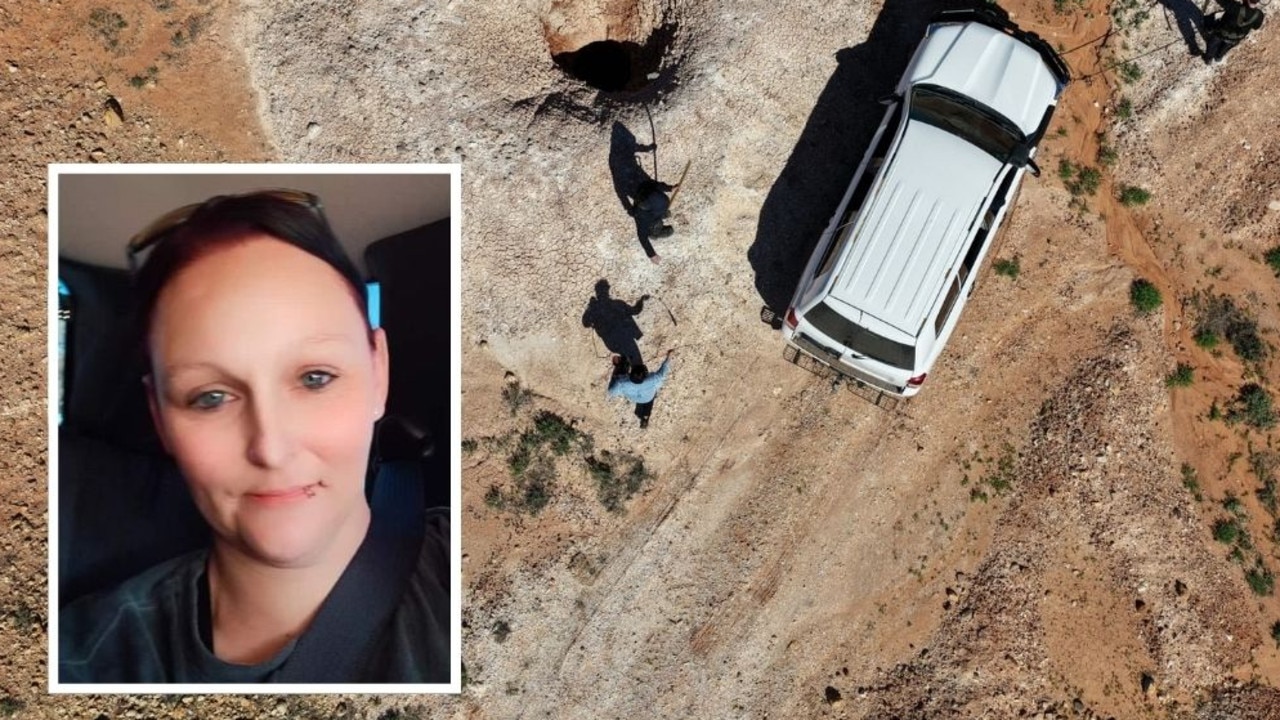
Search for missing Trisha Graf takes bleak new turn
The weeks-long search for a missing 41-year-old mother in outback South Australia has entered a somber new phase, with authorities announcing they will comb through roughly 1,000 abandoned mineshafts and drain a local dam for a second time as they hunt for clues to her fate. Trisha Graf was last seen nearly two months ago in the remote mining town of Andamooka, vanishing in the early hours of December 12 under puzzling circumstances that have left investigators and community members grasping for answers.
Graf’s disappearance began unfolding on the evening of December 11, when she visited a hotel in the nearby town of Roxby Downs. She left the establishment at 12:19 a.m. on December 12, behind the wheel of her white 2012 Ford Territory, registered as S254BCX, and headed toward Andamooka. Not long after entering the area, she collided with a kangaroo on the road outside the small township. After the crash, Graf and a friend traveling with her continued into Andamooka and stopped at a residence in the town’s northwest district. It was shortly after 2 a.m. that she was last spotted by witnesses.
Within hours, alarm began to spread when Graf’s partner and the friend accompanying her found her vehicle abandoned: the Ford was perched on a dirt embankment near Blue Dam, a remote water body just outside Andamooka. Since that discovery, South Australian Police have launched repeated search operations in the area, deploying ground teams, aircraft, and dive units to comb the dam and surrounding terrain. The first search of Blue Dam included draining the water body to allow divers to check for evidence, but the operation turned up no conclusive answers. Investigators have also been unable to rule out the possibility that critical clues remain in the dam, leading to plans for a second draining operation in the latest search phase.
On Monday, investigative teams returned to the Andamooka region to launch the new phase of the search, one that marks a grim shift in the case after weeks of unsuccessful efforts. In addition to re-draining Blue Dam, police will systematically search approximately 1,000 disused mineshafts scattered across the immediate area around the dam, where Graf’s car was found. The remote outback region around Andamooka has a long history of mining, leaving hundreds of abandoned, unmarked shafts scattered across the terrain that have been unused for decades.
Graf’s disappearance has drawn widespread attention across South Australia, with local communities and police continuing to appeal for any information that could crack the case. Authorities are urging any member of the public who has details about Graf’s movements in the hours and days leading up to her disappearance, or who may have information about her current whereabouts, to come forward. Tips can be submitted anonymously to Crime Stoppers South Australia via their official website or by calling the 24-hour tip line.
This latest expansion of the search comes after months of dead ends, leaving investigators hopeful that the new sweep of the mineshafts and dam will finally uncover the information needed to solve the mystery of Trisha Graf’s disappearance.
-

Former rugby league player Garry Leslie Sullivan accused of 1994 Melbourne Armaguard truck heist
Nearly 30 years after a brazen armed robbery left three people shot at one of Melbourne’s busiest shopping centers, a former Australian rugby league world champion has been extradited and charged in connection with the high-profile cold case, with court documents revealing serious underlying health issues that complicate legal proceedings.
Seventy-eight-year-old Garry Leslie Sullivan, a member of Australia’s 1970 Rugby League World Cup-winning squad and a former Newtown club player, made his first official appearance at Melbourne Magistrates’ Court on Monday. The appearance came one week after authorities extradited him from Southport on Queensland’s Gold Coast, closing a decades-long search for suspects in the 1994 heist.
Wearing a plain black long-sleeve T-shirt and with a full grey beard, Sullivan sat silently in the dock throughout the short hearing, flanked by court security personnel, and was not called on to enter a plea or address the bench.
The charges against Sullivan stem from the May 16, 1994, robbery of an Armaguard cash-in-transit truck at Chadstone Shopping Centre in Malvern East. Investigators allege two Armaguard staff had entered the cinema complex to collect weekend ticket revenue when they were confronted just after 11:40 a.m. as they exited the building. The suspect, described as wearing a fawn-colored balaclava and armed with a handgun, was carrying a cardboard box and ordered the guards to “Get down, drop the money,” court documents outline.
When one guard refused to comply, he was shot in the leg; the bullet ricocheted off his body and struck the shoe of the second guard, causing minor injury to the second employee. A 40-year-old bystander who followed the masked suspect as he fled the parking garage with two large bags of cash was also shot in the leg, investigators allege. The suspect dropped a cardboard box at the scene containing one bag of cash, a stolen service weapon belonging to one of the Armaguard guards, and other undisclosed evidence.
Victoria Police announced last month that the long-dormant cold case investigation had been reopened following the emergence of new intelligence, leading directly to Sullivan being charged on May 21, prosecutors told the court.
As the case moves forward, law enforcement officials confirmed they plan to rely on audio recordings from a covert listening device and court-authorized telephone intercepts as key evidence in their prosecution. Prosecutors have requested an extended three-month adjournment to allow time for all of these recordings to be professionally transcribed and reviewed, a request the court has considered alongside the defense’s concerns over the defendant’s health.
Sullivan’s defense attorney told the court that their client has multiple serious chronic health conditions that require urgent care while he remains in pre-trial custody. These include an active cancer diagnosis, coronary artery disease, osteoporosis, and coeliac disease, an autoimmune disorder that requires a strict lifelong gluten-free diet. The court heard that Sullivan has not eaten for several days, as correctional facilities have not yet been able to provide him with appropriate gluten-free meals to accommodate his condition.
Sullivan has been formally remanded in custody, and is scheduled to return to Melbourne Magistrates’ Court for his next procedural hearing on October 13.