分类: politics

  • Hispanic voters sent Trump back to power. Now some are souring

    Hispanic voters sent Trump back to power. Now some are souring

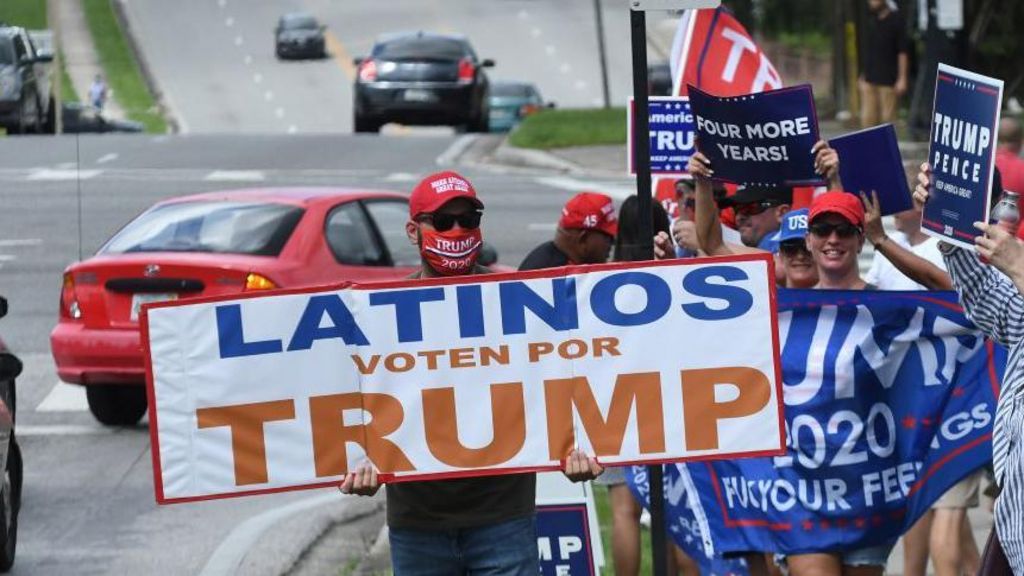
    A significant shift is occurring within the Latino electorate that helped propel Donald Trump to victory in the 2024 presidential election. New polling data from CBS News reveals a notable decline in support, with approval among Latino voters dropping to 38%—a substantial decrease from the 49% recorded in February following his inauguration. This demographic, representing over 36 million people and constituting the largest non-white voting bloc in the United States, appears to be reconsidering its allegiance to the Republican administration.

    The economic concerns that initially drove Latino voters toward Trump have now become his administration’s greatest vulnerability. While 93% of Latino Trump voters cited the economy as their primary issue during the 2024 election according to Pew Research, current CBS polling shows 61% now disapprove of Trump’s economic management, with 69% expressing dissatisfaction with his handling of inflation. Despite White House officials highlighting lower gas prices, tariff revenue, and foreign investment as successes, many Latino voters report continued financial strain.

    Moses Santana, a resident of a predominantly Latino neighborhood in North Philadelphia, observed that ‘things are still getting tight… people who are low-income are definitely feeling the impact of the prices.’ This sentiment was echoed by John Acevedo, a 74-year-old California realtor who noted that ‘He promised they would come down. They haven’t.’

    The administration’s immigration enforcement operations have further complicated the relationship with Latino voters. With over 600,000 deportations between January and early December 2024 and widespread ICE raids, 70% of Latinos disapprove of Trump’s immigration handling according to CBS data—significantly higher than the national average of 58%. While some supporters defend these measures as protecting legal immigrants’ jobs, others like Oscar Byron Sarmiento, a Houston electrician, believe the approach has ‘gone a little bit extreme.’

    Republican strategist Mike Madrid, a prominent observer of Latino politics, suggests that ‘The Latino shift right was more a function of Latinos leaving the Democratic Party [due to the economy] than it was a function of being compelled by the Republican Party.’ He notes that Latino voters, having the ‘weakest partisan anchor of any group,’ are willing to reject both parties when they feel failed.

    As the administration approaches midterm elections, addressing this erosion of support presents a significant challenge. Even staunch supporters acknowledge growing concerns, with Crystal Sarmiento noting that ‘Right now Trump is trending in a lower direction, simply because of not being able to get in front of the messaging.’ The administration’s ability to address economic anxieties and modify its approach to immigration may determine whether it can reclaim the Latino support that proved decisive in 2024.

  • Faisal Islam: Global disruption looms large over biggest-ever Davos

    Faisal Islam: Global disruption looms large over biggest-ever Davos

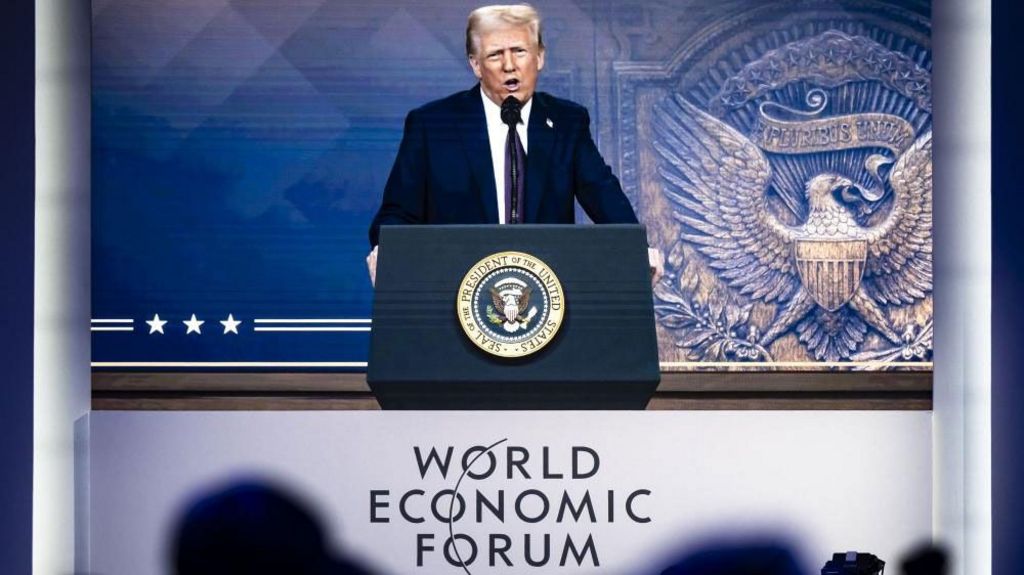
    The pristine slopes of Davos provide an incongruous backdrop for what promises to be one of the most politically charged World Economic Forum gatherings in recent memory. President Donald Trump’s scheduled appearance Wednesday marks his physical debut at the Alpine summit following last year’s remote participation just days after his inauguration.

    The American president returns as what analysts term the ‘chief global disruptor,’ bringing with him an entourage of five cabinet members and corporate titans including Nvidia’s Jensen Huang and Microsoft’s Satya Nadella. His presence has dramatically amplified attendance figures, creating the largest Davos congregation on record.

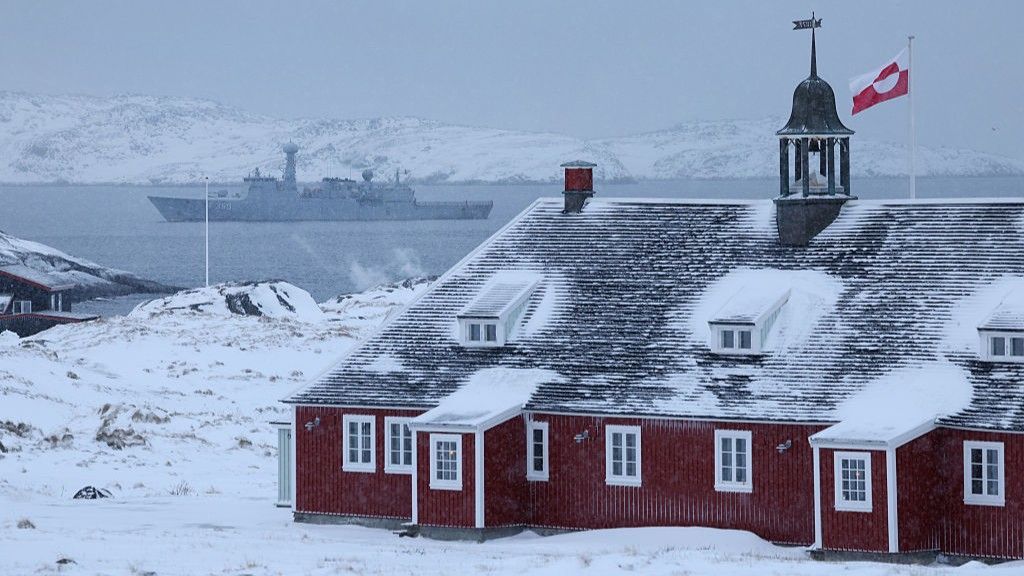
    Central to the geopolitical tension is Trump’s extraordinary territorial ambition regarding Greenland—a proposition that has left European leaders both bewildered and concerned. The administration’s attempt to economically pressure Europe into selling the autonomous Danish territory represents precisely the type of unilateral action that contradicts the forum’s official theme of ‘spirit of dialogue.’

    This year’s proceedings unfold under unusual circumstances, with reports suggesting the White House pressured organizers to minimize traditional focus areas like environmental sustainability and global development in favor of hardline business discussions. The creation of a ‘USA House’ in a local church—funded by American corporations to celebrate the World Cup and 250th anniversary of U.S. independence—further underscores the administration’s America-first approach.

    The forum gathers an unprecedented 65 heads of state alongside Ukrainian President Volodymyr Zelensky, 850 top executives, and numerous technology pioneers. This concentration of global leadership has sparked comparisons to historic summits like Yalta, particularly given ongoing border disputes from Venezuela’s Caracas to Ukraine’s Donbas region.

    While Trump champions economic nationalism, Canadian leadership presents a contrasting vision of North American cooperation. Prime Minister Mark Carney arrives having successfully navigated U.S. trade turbulence through diversified partnerships and strengthened multilateral alliances, recently advocating for a new world order alongside Chinese leadership.

    China’s substantial delegation, operating at finance minister level, positions the world’s second-largest economy as a stabilizing force amid American disruption. Their growing technological dominance—evidenced by last year’s surprise emergence of the DeepSeek AI chatbot that overshadowed early-week American triumphalism—signals a fundamental power shift that many European manufacturers now acknowledge as irreversible in critical sectors like electric vehicle batteries.

    Despite frequent criticisms of the Davos concept, this year’s forum offers a unique lens through which to observe the accelerating reorganization of global influence and the competing visions for international cooperation in an increasingly fragmented world.

  • Pentagon readies 1,500 troops for potential Minnesota deployment, US officials say

    Pentagon readies 1,500 troops for potential Minnesota deployment, US officials say

    The Pentagon has initiated prepare-to-deploy orders for approximately 1,500 active-duty soldiers from Alaska-based units amid escalating tensions in Minnesota, according to senior U.S. officials. The mobilization preparation comes as federal immigration enforcement operations have sparked widespread protests and confrontations in the Midwestern state.

    The strategic positioning of cold-weather specialized troops from the 11th Airborne Division’s infantry battalions follows President Donald Trump’s Thursday threat to invoke the Insurrection Act if state officials fail to curb protests targeting Immigration and Customs Enforcement personnel. While deployment remains uncertain, the move represents the administration’s latest escalation in responding to domestic civil disturbances.

    This development occurs against the backdrop of intensified federal immigration enforcement in Minneapolis, where tensions dramatically increased after an ICE agent fatally shot Renee Good, a U.S. citizen and mother of three, during a January 7th encounter. The incident has galvanized opposition to the nearly 3,000 federal agents deployed to the Minneapolis-St. Paul area since last week.

    The Trump administration maintains that military deployment would protect federal property and personnel, citing previous deployments in Los Angeles where Marines were dispatched under similar justification. Legal complexities surround potential deployment, as presidents possess authority to deploy active-duty forces for specific domestic purposes without invoking the Insurrection Act.

    Minnesota Governor Tim Walz has mobilized the state’s National Guard while facing a Justice Department criminal investigation. Local leaders have consistently accused the administration of federal overreach and exaggerating isolated violence to justify military intervention. The administration has particularly focused on Minnesota’s Somali immigrant community in its rationale for increased enforcement.

    The Pentagon and White House have not publicly commented on the deployment preparations, which were first reported by ABC News. The situation continues to evolve as both protest activity and federal enforcement operations persist in the region.

  • Trump tests boundaries of his power as Minnesota pushes back

    Trump tests boundaries of his power as Minnesota pushes back

    Minnesota has become the epicenter of a mounting constitutional crisis as federal immigration enforcement operations trigger widespread civil unrest and prompt military deployment preparations. The state faces unprecedented tensions with approximately 1,500 troops reportedly standing ready for deployment amid escalating protests against President Trump’s aggressive immigration enforcement campaign.

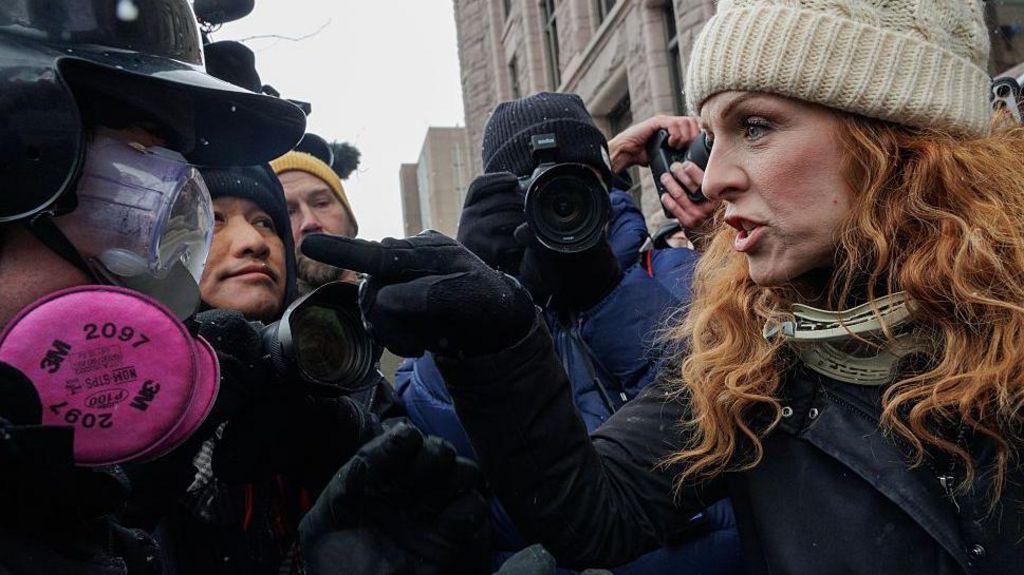
    In the Twin Cities of Minneapolis and St. Paul, civilian monitoring groups have organized to track and document the activities of U.S. Immigration and Customs Enforcement (ICE) agents. One activist, operating under the pseudonym ‘Sunshine’ due to safety concerns, explained her daily routine of tracking unmarked ICE vehicles through city streets. ‘We have the legal right to observe [ICE agents], but they seem to have forgotten that,’ she stated while navigating the icy roads of St. Paul.

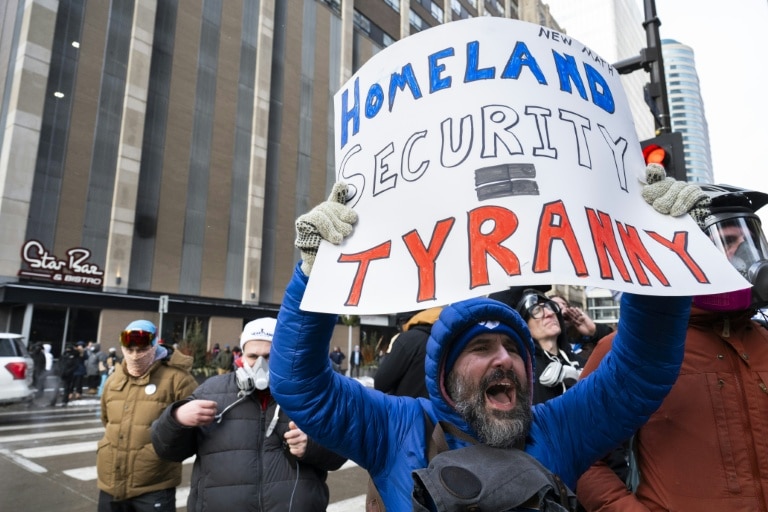
    The conflict reached a critical juncture following the January 7th fatal shooting of 37-year-old Minneapolis resident Renée Good by an ICE agent. The circumstances remain fiercely contested, with federal authorities claiming self-defense while local officials maintain the victim posed no danger. This incident has galvanized community resistance and intensified protests outside federal buildings, despite freezing temperatures.

    Federal judicial intervention has attempted to de-escalate tensions. U.S. District Judge Katherine Menendez issued a restraining order prohibiting ICE agents from arresting or using pepper spray against peaceful demonstrators monitoring immigration enforcement activities. However, clashes persist, with authorities deploying tear gas and pepper balls to disperse crowds.

    The Department of Homeland Security maintains that operations target ‘the worst of the worst,’ but documentation reveals numerous instances of non-criminal immigrants and even U.S. citizens being detained. The administration’s approach has proven particularly controversial in Minnesota, home to America’s largest Somali immigrant community, whom President Trump previously described as ‘garbage’ and suggested should ‘return to where they came from.’

    The political dimension has intensified with the Justice Department opening criminal investigations against Minnesota Governor Tim Walz and Minneapolis Mayor Jacob Frey, accusing them of obstructing federal immigration operations. Governor Walz, who recently abandoned his re-election bid amid unrelated fraud scandals, condemned the probes as ‘weaponizing the justice system against your opponents.’

    President Trump has threatened to invoke the Insurrection Act—a 19th-century statute permitting domestic military deployment—to quell resistance to his immigration campaign. Meanwhile, counter-protests have emerged, including attempts by pardoned January 6th participant Jake Lang to organize pro-ICE rallies, though these have been overwhelmingly outnumbered by opposing demonstrators.

    As temperatures plummet and tensions escalate, Minneapolis residents like ‘Sunshine’ continue their vigilante monitoring efforts, despite reporting intimidation tactics from federal agents. ‘If they’re doing this with me, they’re not putting their hands on someone,’ she remarked, acknowledging the personal cost in time and resources. ‘I think that I’m doing what I’m doing because I love my neighbors.’

  • EU weighs response to Trump’s tariff threat over Greenland

    EU weighs response to Trump’s tariff threat over Greenland

    The transatlantic alliance faces its most severe crisis in decades as former President Donald Trump’s renewed interest in acquiring Greenland has triggered diplomatic tremors across Europe. During his second term, Trump has explicitly affirmed Greenland’s strategic importance to U.S. national security and has conspicuously refused to dismiss the possibility of military acquisition should diplomatic negotiations fail.

    European leaders are confronting an unprecedented dilemma: either capitulate to economic coercion from the White House or risk triggering a full-scale trade war with the United States. The emergency EU summit scheduled in coming days will address what many officials describe as the most dangerous turn in EU-US relations since World War II.

    French President Emmanuel Macron advocates deploying the EU’s newly created ‘trade bazooka’—the Anti-Coercion Instrument (ACI)—designed precisely to counter economic bullying from hostile powers. Ironically, this mechanism was originally conceived with China in mind, not the United States.

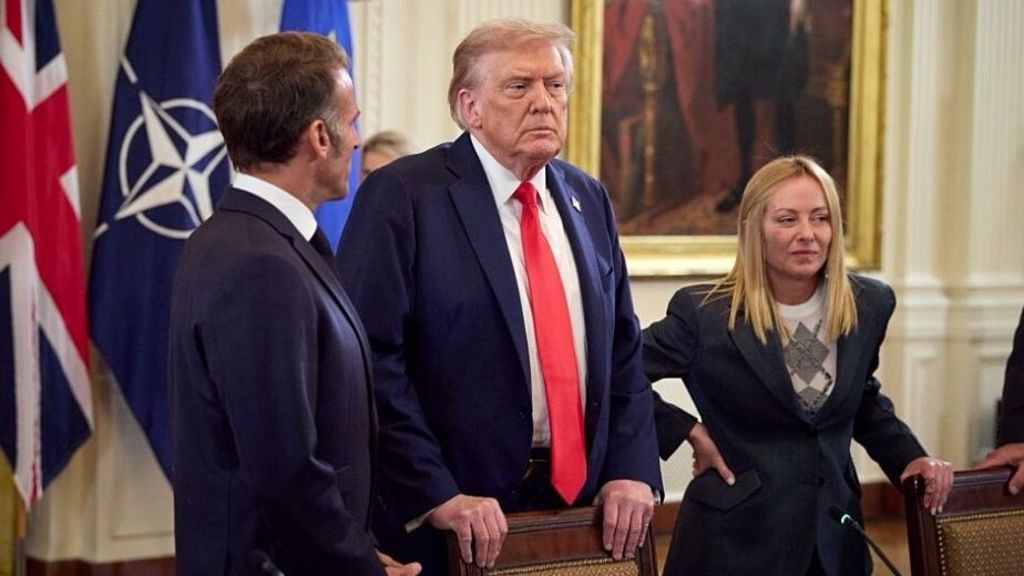
    The situation has exposed significant divisions within European leadership. Italian Prime Minister Giorgia Meloni, who maintains comparatively cordial relations with Trump, has characterized the crisis as a ‘problem of understanding and communication.’ This stance contrasts sharply with Macron’s confrontational approach, highlighting the EU’s internal fragmentation when facing external pressure.

    The recent deployment of European troops to Greenland—intended as a defensive measure—appears to have provoked rather than deterred Trump’s ambitions. This development has created a precarious diplomatic standoff that threatens to dismantle decades of transatlantic cooperation.

    As EU ambassadors convene discreet emergency meetings in Brussels, the international community watches anxiously to see whether Trump will escalate his threats or seek diplomatic resolution. The outcome will likely redefine global power dynamics and determine the future of Arctic security governance.

  • Trump admin orders 1,500 troops to prepare for possible Minnesota deployment

    Trump admin orders 1,500 troops to prepare for possible Minnesota deployment

    The United States Department of Defense has issued preparatory orders for approximately 1,500 active-duty Army paratroopers stationed in Alaska, placing them on high alert for potential deployment to Minnesota. This military readiness measure follows escalating tensions in the Midwestern state, where widespread protests have erupted in response to aggressive federal immigration enforcement operations.\n\nThe development emerges against the backdrop of President Donald Trump’s recent threat to invoke the Insurrection Act—a centuries-old statute permitting military deployment to quell domestic unrest. While the President subsequently indicated no immediate necessity for such measures, defense officials confirm contingency planning remains underway. The potential mobilization, first reported by ABC News citing anonymous defense sources, would mark the first application of the Insurrection Act in over three decades if implemented.\n\nMinnesota’s political leadership has expressed vehement opposition to federal intervention. Minneapolis Mayor Jacob Frey characterized the existing deployment of 3,000 federal immigration agents as an \”occupying force\” that has \”invaded our city,\” alleging disproportionate targeting of Latino and Somali communities. Governor Tim Walz has activated the state’s National Guard to support local law enforcement, emphasizing state-level control over emergency response operations.\n\nHomeland Security Secretary Kristi Noem defended the ongoing immigration crackdown, vowing to continue operations \”until we are sure that all dangerous people are picked up, brought to justice, and deported.\” The current unrest traces its origins to the January 7th fatal shooting of a US woman by federal agents in Minneapolis, which ignited sustained protests and clashes between demonstrators and immigration authorities.\n\nThe Pentagon’s alert order represents the latest chapter in the ongoing tension between federal and state authorities regarding immigration enforcement. Similar scenarios unfolded recently in Los Angeles, where 700 Marines were deployed to guard federal properties during immigration protests, though President Trump ultimately declined to invoke the Insurrection Act on that occasion.

  • UAE President to begin working visit to India on January 19

    UAE President to begin working visit to India on January 19

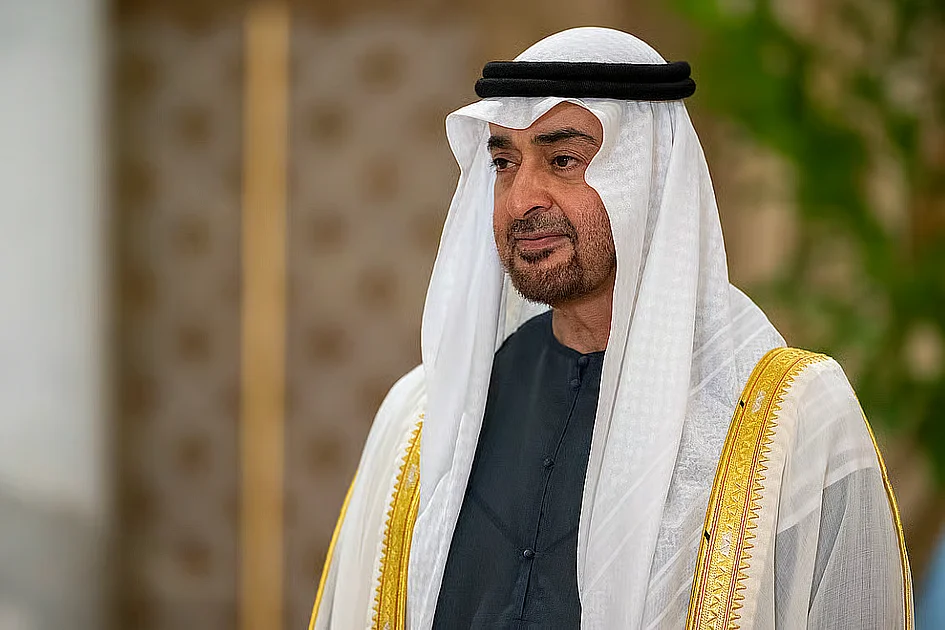
    His Highness Sheikh Mohamed bin Zayed Al Nahyan, President of the United Arab Emirates, will commence a significant working visit to India on January 19, marking another milestone in the rapidly evolving partnership between the two nations. The visit represents a continuation of high-level diplomatic engagement that has characterized UAE-India relations in recent years.

    During his stay, the UAE leader is scheduled to hold comprehensive talks with Indian Prime Minister Narendra Modi, with both sides expected to explore substantial opportunities for enhancing bilateral cooperation across multiple sectors. This diplomatic engagement occurs within the framework of the longstanding ties and comprehensive strategic partnership that both countries have cultivated over decades.

    According to India’s Ministry of External Affairs, this visit constitutes Sheikh Mohamed’s third official journey to India since assuming the presidency, though it represents his fifth visit to the country within the past decade—a testament to the priority both nations place on their relationship.

    The upcoming discussions build upon considerable momentum generated by recent high-level exchanges, including the September 2024 visit of Sheikh Khaled bin Mohamed bin Zayed Al Nahyan, Crown Prince of Abu Dhabi, and the April 2025 visit of Sheikh Hamdan bin Mohammed bin Rashid Al Maktoum, Deputy Prime Minister, Minister of Defence, and Crown Prince of Dubai.

    This series of high-profile diplomatic engagements underscores the multifaceted nature of the UAE-India relationship, which encompasses economic partnerships, security cooperation, and cultural exchanges. Both nations have increasingly coordinated on regional and international matters, reflecting their shared interests in promoting stability and economic prosperity.

  • Trump’s Gaza ‘Board of Peace’: Which Arab officials have been appointed, invited?

    Trump’s Gaza ‘Board of Peace’: Which Arab officials have been appointed, invited?

    In a significant diplomatic move, US President Donald Trump has established two pivotal institutions—the “National Committee for the Administration of Gaza” and a “Board of Peace”—as central components of phase two in Washington’s comprehensive 20-point plan to resolve the Gaza conflict. The White House confirmed that President Trump will personally chair the Board of Peace, which is designed to provide strategic oversight, mobilize international resources, and ensure accountability during Gaza’s transition from conflict to sustainable peace and development.

    Special Envoy Steve Witkoff outlined that the initiative will involve complete demilitarization and reconstruction efforts, specifically emphasizing “the disarmament of all unauthorized personnel” within the territory.

    The founding Executive Board features prominent international figures including US Senator Marco Rubio, former UK Prime Minister Tony Blair, and Presidential son-in-law Jared Kushner. Notably, several Arab officials have been appointed or invited to participate, reflecting the region’s crucial role in peace restoration efforts.

    United Arab Emirates’ Minister of State for International Cooperation Reem Al Hashimy has been formally appointed to the Gaza Executive Board. Minister Al Hashimy expressed pride in the appointment, stating that the Emirates believes “achieving lasting peace requires the concerted efforts of the international community.” She emphasized that Gaza must be governed in a manner that “ensures the legitimate rights and aspirations of the brotherly Palestinian people.”

    Qatar’s representation comes through Ali Al-Thawadi, Advisor to the Prime Minister for Strategic Affairs, who previously played a pivotal role in Qatar’s contribution to Trump’s 20-point Gaza plan. This appointment maintains Qatar’s position as a key mediator between Hamas and Israel, despite ongoing challenges including Israel’s deadly 2025 attack on a Hamas compound in Doha.

    President Trump has extended personal invitations to Egyptian President Abdel Fattah al-Sisi and Jordan’s King Abdullah II to join the Board of Peace. Both governments have acknowledged receipt of the invitations, with Egypt’s Foreign Ministry stating Cairo was “studying” the request and Jordan confirming they were reviewing related documents through their internal legal procedures.

    The Gaza Executive Board will serve as the operational link between the National Committee for the Administration of Gaza and the broader Board of Peace, creating a multi-tiered approach to conflict resolution and reconstruction.

  • ‘Europe won’t be blackmailed,’ Danish PM says in wake of Trump Greenland threats

    ‘Europe won’t be blackmailed,’ Danish PM says in wake of Trump Greenland threats

    European leaders have mounted a formidable diplomatic front against President Donald Trump’s unprecedented threat to impose punitive tariffs on eight NATO allies unless they acquiesce to his proposed acquisition of Greenland. The confrontation has escalated transatlantic tensions to levels not witnessed in decades.

    Denmark’s Prime Minister Mette Frederiksen declared “Europe won’t be blackmailed” as she coordinated with counterparts from Finland, France, Germany, Netherlands, Norway, Sweden, and the United Kingdom. These nations issued a joint statement condemning Trump’s approach as risking a “dangerous downward spiral” in international relations.

    The crisis emerged after Trump issued a February 1st deadline for compliance with his Greenland ambitions, threatening initial 10% tariffs that could escalate to 25% on goods from the targeted nations. The U.S. president has framed the autonomous Danish territory as critical to American security interests, openly discussing acquisition “the easy way or the hard way.”

    European response has been swift and unified. An emergency meeting convened in Brussels on Sunday, where leaders discussed activating the EU’s “anti-coercion instrument” should Trump follow through on his tariff threats. French President Emmanuel Macron is coordinating the collective European response, emphasizing principles of sovereignty and territorial integrity.

    The geopolitical stakes extend beyond bilateral relations. NATO Secretary General Mark Rutte confirmed discussions with Trump regarding “the security situation in Greenland and the Arctic,” while Canadian Prime Minister Mark Carney announced plans to “significantly increase Arctic security” in response to the escalating situation.

    Public opposition appears overwhelming on both sides of the Atlantic. Recent polling indicates only 17% of Americans support acquiring Greenland, with 47% opposed. In Greenland itself, a January 2025 referendum showed merely 6% support for joining the United States versus 85% opposition. Weekend protests in Nuuk and Danish cities demonstrated growing public outrage.

    The confrontation now moves to the World Economic Forum in Davos, where Trump, Macron, German leaders, and EU officials are scheduled to discuss “how can we cooperate in a more contested world?”—a theme that has taken on immediate practical significance amid the Greenland crisis.

  • A timeline of how the US and Europe have been at odds

    A timeline of how the US and Europe have been at odds

    The current diplomatic friction between the United States and European powers regarding Greenland’s future represents merely the latest chapter in a long history of trans-Atlantic disagreements. Since the conclusion of World War II, these strategic allies have experienced numerous profound crises that have periodically strained their partnership. Here we examine seven significant historical fractures that have tested the Western alliance.

    The 1956 Suez Crisis marked a pivotal moment when the United States employed substantial diplomatic and economic pressure against its closest Cold War allies. As France, the United Kingdom, and Israel invaded Egypt to depose President Gamal Abdel Nasser and reclaim control of the strategic Suez Canal, Washington’s intervention not only halted the military campaign but also dramatically accelerated Europe’s declining global influence in the postwar era.

    During the Vietnam War, European nations demonstrated limited solidarity with American military efforts. While providing diplomatic support (with France as the notable exception), European governments uniformly refused to contribute troops. Widespread street protests across the continent created significant political challenges for European leaders, who struggled to balance their support for Washington against eroding domestic popularity.

    The Euromissile Crisis of the 1980s emerged when Soviet deployment of SS-20 missiles capable of striking Western European targets prompted NATO to install American Pershing nuclear missiles across Europe. This escalation triggered massive anti-nuclear demonstrations throughout European capitals, with protestors frequently directing their anger toward Washington amid fears of a renewed arms race.

    The 2003 invasion of Iraq created perhaps the most visible rift in modern trans-Atlantic relations. France and Germany’s refusal to support the campaign against Saddam Hussein’s government prompted sharp rebukes from Washington officials. Defense Secretary Donald Rumsfeld’s characterization of these nations as ‘Old Europe’ while praising Eastern European countries as ‘New Europe’ highlighted the deepening division.

    The controversial ‘extraordinary rendition’ program during the war on terror saw the United States capturing and transferring terror suspects to third countries for interrogation using techniques often considered torture. While some European governments secretly cooperated with this program, public revelation forced political leaders to publicly denounce these practices.

    The ongoing war in Ukraine has introduced fresh tensions, particularly with President Trump’s return to office in January 2025. His administration dramatically reversed previous American policy by expressing warmth toward Russian President Vladimir Putin, adopting a cool stance toward Ukrainian leadership, and significantly reducing military assistance to Kyiv. European leaders, viewing their security as directly threatened, have urgently pressed for renewed American support.

    Finally, the Trump administration’s national security strategy document released last December explicitly characterized European allies as weak partners, criticizing their migration and free speech policies while questioning their long-term reliability. This assessment, coupled with threats of heavy trade tariffs against EU nations—America’s largest trading partner—has further strained relations, though both sides eventually agreed to a framework establishing 15% tariffs on most goods.