分类: politics

  • Canada’s conservative leader faces leadership test – and grapples with widening his appeal

    Canada’s conservative leader faces leadership test – and grapples with widening his appeal

    Conservative Party delegates are preparing for a pivotal leadership review of Pierre Poilievre this Friday in Calgary, following the party’s electoral defeat last April. While internal support appears robust, with expectations of a decisive victory, the leader confronts a profoundly divided Canadian electorate that questions his capacity to govern the nation through uncertain geopolitical times.

    Polling data from Abacus Data reveals a stark contrast in perceptions: while a strong majority of Conservative base voters endorse Poilievre’s leadership—particularly praising his effectiveness in highlighting Liberal government failures on housing affordability and his appeal to younger demographics—over half of the general Canadian public maintains negative views. Critics frequently characterize his political tone as excessively confrontational, creating what pollster David Coletto describes as a “deeply polarised” perception that poses significant electoral challenges.

    The geopolitical landscape presents particular complications. Poilievre has faced persistent scrutiny regarding his approach to U.S. President Donald Trump, who remains deeply unpopular among Canadians. Many view Trump’s tariff policies and references to Canada as a “51st state” as existential threats. Poilievre’s populist style has occasionally drawn comparisons to Trump, further complicating his public appeal.

    Prime Minister Mark Carney’s recent address at the World Economic Forum in Davos highlighted this contrast. Widely praised by international observers for its clear articulation of Canada’s stance toward Trump’s administration, the speech boosted Liberal polling numbers to 47% among decided voters according to Léger’s latest survey. Meanwhile, Conservatives gained two points to reach 38%, indicating solid base support despite the Liberal surge.

    Former communications director Ben Woodfinden acknowledges the need for clearer Conservative positioning on Trump, noting that the next election will likely occur during Trump’s presidency. However, strategists emphasize Poilievre’s success in revitalizing the party and expanding its base to record numbers despite electoral setbacks.

    Recent developments suggest potential tonal shifts. Poilievre offered rare praise for Carney’s Davos speech while criticizing Liberal economic policies, and signaled willingness to collaborate on domestic issues like grocery tax rebates and bail reform. His upcoming address to party delegates will be closely watched for indications of how he plans to bridge the polarization gap and position Conservatives for future electoral success.

  • Tensions remain high between federal and local officials in Minneapolis

    Tensions remain high between federal and local officials in Minneapolis

    Minneapolis has become the epicenter of a deepening constitutional crisis as federal authorities and local leadership remain locked in a dangerous standoff over immigration enforcement. The conflict reached a boiling point when President Donald Trump publicly warned Mayor Jacob Frey that he was “playing with fire” for declaring that city police would not enforce federal immigration laws.

    The presidential rebuke came despite earlier administration promises to de-escalate tensions following two fatal shootings involving federal agents. The victims include Alex Pretti, a 37-year-old ICU nurse at a VA hospital, killed during a Department of Homeland Security raid on Saturday. While DHS initially claimed Pretti brandished a weapon, video evidence appears to contradict this narrative.

    This incident follows the January 7th shooting of Renee Good, another case where cellphone footage raised serious questions about the official federal account. In response to the Pretti shooting, two border patrol agents have been placed on administrative leave according to DHS spokesperson Tricia McLaughlin.

    The situation has created an impossible position for local law enforcement. Minneapolis police, already overwhelmed by competing demands from protesters and federal agents both calling 911 for assistance, report plummeting morale as they find themselves caught between powerful political forces. With only 600 city officers attempting to maintain order amid 3,000 federal agents, the department struggles to provide adequate protection for demonstrators.

    Behind the scenes, attempts at reconciliation are underway. President Trump and Minnesota Governor Tim Walz have agreed on “the need for an ongoing dialogue,” while border czar Tom Homan has met with Walz to explore de-escalation strategies. Homan will assume control of operations from Gregory Bovino, whose aggressive tactics drew widespread criticism.

    An administration official indicated this leadership change would signal a shift toward more targeted operations rather than the broad street sweeps previously conducted. However, skepticism remains regarding how substantially tactics will change in a city where regular clashes between federal agents and protesters have become commonplace.

    This confrontation represents the latest manifestation of the ongoing battle between sanctuary jurisdictions and federal immigration authorities, with Trump threatening to cut funding to states that limit cooperation with immigration enforcement.

  • Talks ramp up to avert US government shutdown after Minneapolis shooting

    Talks ramp up to avert US government shutdown after Minneapolis shooting

    Washington D.C. finds itself embroiled in intense budgetary negotiations as lawmakers race against the clock to prevent a potential federal government shutdown. The political standoff centers on Democratic demands for substantial reforms within the Department of Homeland Security (DHS) following the controversial fatal shooting of 37-year-old nurse Alex Pretti by federal immigration agents in Minneapolis.

    Democratic legislators are leveraging their position to withhold support from the comprehensive $1.2 trillion spending package unless significant oversight measures are incorporated. These proposed restrictions would mandate federal agents to obtain warrants before making arrests and establish clearer identification protocols during operations. The White House and Senate Democratic leadership appear to be converging on an agreement that would address these security concerns while avoiding complete governmental paralysis.

    The current strategy under discussion would involve passing five of the six spending bills before Friday’s midnight deadline while granting DHS a temporary funding extension. This approach would provide additional negotiation time for implementing proposed operational changes, including regulations surrounding agents’ use of masks during operations.

    Senate Minority Leader Chuck Schumer has taken a firm stance, declaring, “I will vote no on any legislation that funds ICE until it is reined in and overhauled,” emphasizing that Senate Democrats remain “overwhelmingly united on this issue.” This position has been further reinforced by escalating demands from some Democratic senators calling for DHS Secretary Kristi Noem’s removal and structural changes to both Immigration and Customs Enforcement (ICE) and US Border Patrol.

    Republican Senate Majority Leader John Thune has characterized the ongoing negotiations as “productive,” though Texas Senator John Cornyn has cautioned that “any changes must not come at the expense of shutting down the government.”

    The potential shutdown would not affect the entire federal government, as legislation has already been enacted to fund numerous agencies through September 30, 2026. However, critical departments including Defense, Health and Human Services, Treasury, and the federal court system would face operational disruptions. The Internal Revenue Service would also be impacted, potentially delaying tax processing and refund distributions.

    Essential employees within affected agencies would continue working without pay until funding is restored, mirroring arrangements made during previous shutdowns. The most recent government closure in late 2025 lasted 43 days—the longest in U.S. history—leaving approximately 1.4 million federal employees without compensation and severely disrupting air travel and food assistance programs nationwide.

  • Trump terror policy massively expands US list of bad guys

    Trump terror policy massively expands US list of bad guys

    In a dramatic shift from established norms, the Trump administration has executed the most substantial expansion of the US Foreign Terrorist Organization (FTO) list since its inception in 1997. Within the first year of his second term, President Trump has designated 26 new groups as terrorist organizations—a staggering increase compared to the historical average of approximately two additions annually.

    The FTO list now exceeds 90 designated groups, surpassing the previous peak of 60 during the Islamic State’s dominance in the mid-2010s. This designation carries severe consequences: providing material support to listed groups becomes a felony offense, financial institutions must freeze associated assets, and alleged associates face entry bans or deportation from the United States.

    Most controversially, the administration has expanded the terrorist designation beyond traditional ideological groups to include numerous drug cartels and criminal organizations. Groups such as Mexico’s Sinaloa cartel, Haiti’s Gran Grif, and Ecuador’s Los Lobos now appear alongside organizations like Iran’s Revolutionary Guard Corps, which continues to direct international attacks.

    This policy shift has enabled military actions traditionally reserved for counterterrorism operations. The administration has conducted 35 missile strikes against alleged drug trafficking operations, resulting in approximately 120 casualties. These actions culminated in the January overthrow of Venezuelan President Nicolas Maduro, whom the administration accused of leading the Cartel de los Soles—though the Justice Department subsequently dropped claims of the cartel’s existence just two days after his capture.

    The expansion has created significant strain on enforcement resources and drawn criticism from analysts who question the strategic wisdom of applying counterterrorism frameworks to criminal organizations. Research indicates that such approaches often backfire, potentially increasing violence rather than containing it.

    Notably, this transformation represents a decoupling from traditional US allies on counterterrorism policy. While historically following US designations, major allies including the United Kingdom and Australia have declined to similarly expand their terrorist lists to include criminal organizations. Instead, some allies have focused on designating far-right extremist networks—a category conspicuously absent from the US expansion.

    The policy shift reflects broader changes in US foreign policy alignment, with only a few Trump-aligned Latin American countries and Canada (reportedly for trade considerations) following the US lead in designating cartels as terrorist organizations.

  • White House backtracks on Minneapolis claims

    White House backtracks on Minneapolis claims

    MINNEAPOLIS — The Trump administration has acknowledged potential procedural violations by immigration agents during operations in Minneapolis that resulted in the fatal shooting of a nurse, signaling a shift in tone amid growing national outcry. White House deputy chief of staff Stephen Miller stated Tuesday that Customs and Border Protection (CBP) agents may have failed to adhere to established protocols during the incident that claimed the life of 37-year-old Alex Pretti.

    The administration’s conciliatory stance emerged alongside a disturbing security breach targeting Minnesota Congresswoman Ilhan Omar, who was assaulted with an unknown liquid from a syringe during a town hall meeting where she had been criticizing the administration’s immigration policies. The simultaneous developments underscore the volatile atmosphere in the city following weeks of escalating tensions between federal authorities and local communities.

    President Trump, in comments to Fox News, indicated his administration would “de-escalate a little bit” its operations in Minneapolis while emphasizing the move did not constitute a full withdrawal. The president distanced himself from previous inflammatory rhetoric, specifically rejecting the “assassin” label previously applied to Pretti by Miller, and called for “a very honorable and honest investigation” into the shooting.

    The administration’s reassessment includes the expected departure of Border Patrol commander Gregory Bovino, whom Trump characterized as “a pretty out-there kind of a guy” whose presence may have exacerbated tensions. Top border security official Tom Homan has been dispatched to Minneapolis for meetings with local officials, including Mayor Jacob Frey, who reiterated the city’s position that it “will not enforce federal immigration laws.”

    The Pretti shooting marks the second fatal incident involving federal immigration agents in Minneapolis in recent weeks, following the death of US citizen Renee Good. Both cases have drawn national attention to the tactics employed by masked, heavily armed immigration agents operating in urban centers, with multiple video recordings contradicting initial official accounts that portrayed Pretti as a threatening “domestic terrorist.”

  • German leader hails Europe as an ‘alternative to imperialism and autocracy’

    German leader hails Europe as an ‘alternative to imperialism and autocracy’

    BERLIN — German Chancellor Friedrich Merz articulated a robust vision of the European Union’s global role on Thursday, characterizing the bloc as a compelling “alternative to imperialism and autocracy” in an increasingly competitive international landscape. Addressing the German parliament during a significant foreign policy address, Merz emphasized the EU’s capacity to establish partnerships with like-minded democracies through mutual respect and reliability rather than coercion.

    The Chancellor’s remarks came precisely one week after U.S. President Donald Trump retracted tariff threats against Germany and seven other European nations—a pressure tactic initially deployed to advance American claims over Greenland, the semi-autonomous territory of Denmark. Merz noted this episode demonstrated the EU’s capacity for rapid, unified response, stating unequivocally that the bloc “would not be intimidated again by tariff threats.”

    Merz acknowledged the emerging “world of great powers” where “a harsh wind is blowing,” but positioned this reality as creating opportunities for European leadership. He contended that open democracies with expanding markets actively seek what Europe offers: partnerships grounded in mutual respect rather than domination.

    While reaffirming Germany’s commitment to NATO and trans-Atlantic cooperation, Merz established clear parameters for this relationship. “We will always reach out the hand of cooperation to the United States of America,” he stated, while simultaneously asserting that “as democracies, we are partners and allies and not subordinates.”

    The Chancellor indirectly addressed recent controversial remarks by President Trump regarding NATO allies’ military contributions. Without directly referencing Trump’s claims that non-U.S. NATO forces avoided front-line positions in Afghanistan, Merz highlighted Germany’s significant sacrifices—59 troops killed and over 100 wounded during their nearly two-decade deployment. He firmly declared that Germany “will not allow this deployment, which we also performed in the interest of our ally, the United States of America, to be disparaged and demeaned today.”

    Merz advocated for European strategic autonomy through enhanced defense capabilities, technological independence, and economic growth, urging the continent to “learn the language of power politics.” Simultaneously, he endorsed expanding the EU’s network of trade agreements, specifically mentioning recently concluded deals with Mercosur and India, while maintaining that existing alliances like NATO remain fundamentally valuable.

  • Unmentioned but present, Trump is a common denominator in efforts to strengthen Asia-Europe ties

    Unmentioned but present, Trump is a common denominator in efforts to strengthen Asia-Europe ties

    BEIJING — A strategic realignment is unfolding across Asia as multiple nations establish strengthened diplomatic partnerships, responding to growing uncertainties in the global order. This week witnessed three significant agreements demonstrating how countries are seeking stability through renewed international cooperation.

    In China’s capital, British Prime Minister Keir Starmer and Chinese leader Xi Jinping committed to a “long-term, stable, and comprehensive strategic partnership” between their nations. This agreement revitalizes a relationship that had seen limited progress since its initial proposal a decade ago, with both leaders emphasizing the need for consistency during what Starmer described as “challenging times for the world.”

    Simultaneously, Vietnam and the European Union formalized their upgraded relationship to a comprehensive strategic partnership, placing Vietnam on equal diplomatic footing with major global powers including the United States, China, and Russia. The agreement, signed in Hanoi, represents a significant elevation of Vietnam’s international standing.

    Earlier in the week, the European Union and India concluded years of complex negotiations by reaching a comprehensive free trade agreement. The landmark deal encompasses numerous sectors from textile manufacturing to pharmaceutical products, and will substantially reduce India’s protective tariffs on European automobiles and wines.

    While not explicitly named in these discussions, the shadow of former U.S. President Donald Trump’s policies loomed large over the proceedings. Multiple leaders referenced the need for stability amid global uncertainty, with European Council President António Costa noting in Hanoi that “the international rules-based order is under threat from multiple sides.” The agreements reflect a broader trend of nations seeking to reduce dependency on any single market while strengthening multilateral relationships in response to shifting global dynamics.

  • Senior CPC official highlights united front work to support 15th Five-Year Plan

    Senior CPC official highlights united front work to support 15th Five-Year Plan

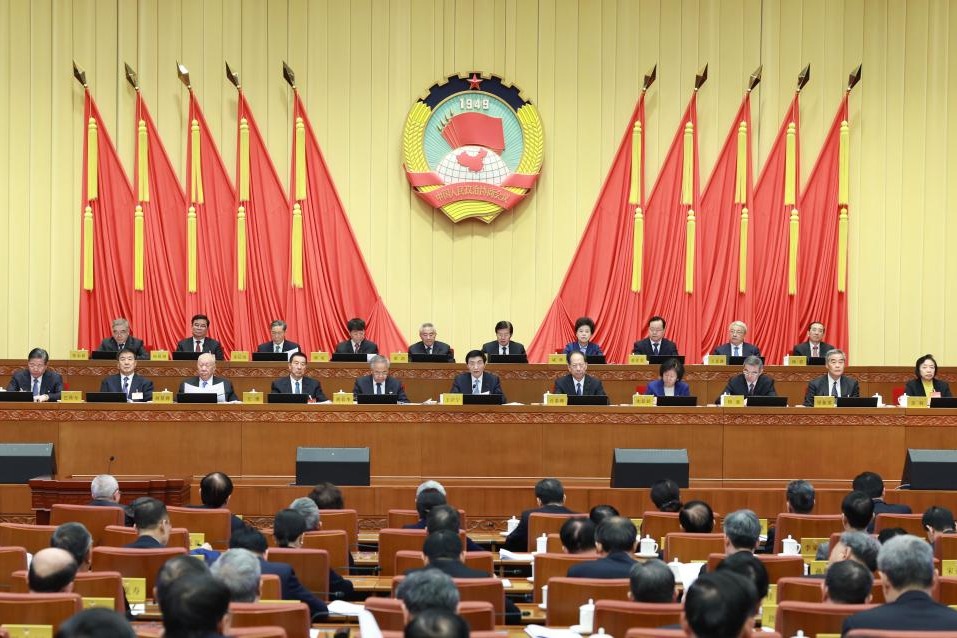
    In a significant national conference held in Beijing on January 28, 2026, senior Communist Party of China official Wang Huning delivered a comprehensive address emphasizing the critical role of united front work in supporting China’s upcoming 15th Five-Year Plan period (2026-2030). Wang, who serves as a member of the Standing Committee of the Political Bureau of the CPC Central Committee and chairman of the Chinese People’s Political Consultative Conference National Committee, addressed leaders of united front work departments from across the nation.

    Wang articulated the necessity for enhanced implementation of the CPC Central Committee’s decisions regarding united front operations to ensure a successful commencement of the country’s next developmental phase. He stressed the fundamental importance of maintaining the Party’s overall leadership, particularly the centralized and unified guidance from the Party Central Committee, in all united front activities.

    The senior official outlined several strategic priorities for united front work, including adherence to established principles and methodologies to drive high-quality development across relevant sectors. He emphasized the need to strengthen the capacity of united front work to support the central objectives of both the Party and the state.

    Wang specifically highlighted several key areas requiring focused attention: the improvement of China’s distinctive political party system, fostering a robust sense of national community among the Chinese people, establishing stronger legal frameworks for religious affairs governance, and enhancing engagement with non-CPC intellectuals, emerging social groups, and private sector representatives. Additionally, he addressed the importance of advancing work related to Hong Kong, Macao, Taiwan, and overseas Chinese communities.

  • Fujian strengthens cross-Strait ties

    Fujian strengthens cross-Strait ties

    Fujian Province has solidified its status as mainland China’s primary destination for Taiwanese investment for four consecutive years, according to Governor Zhao Long’s address at the Fujian Provincial People’s Congress. The eastern coastal region is accelerating its transformation into a demonstration zone for cross-Strait integrated development, implementing concrete measures to foster national reunification through economic collaboration and cultural connectivity.

    The province’s 2025 performance metrics reveal substantial progress, with 2,612 newly established Taiwan-funded enterprises and $724 million in actual utilized Taiwanese capital. A landmark achievement came with the introduction of China’s first local regulations on cross-Strait standard commonality, resulting in 41 new shared technical standards that facilitate smoother business operations.

    Infrastructure development features prominently in Fujian’s integration strategy. The province is advancing projects to supply water, electricity, and gas to Taiwan-administered islands of Jinmen and Matsu. Xiamen authorities aim to complete their section of the Xiamen-Jinmen Bridge this year while promoting shared usage of the newly constructed Xiamen Xiang’an International Airport as a regional hub for Jinmen residents.

    Economic integration efforts include creating a “common market” targeting electronic information, machinery, and biomedicine sectors, alongside expanded recognition of Taiwanese professional qualifications. The province plans to launch at least 30 new joint rural vitalization projects in 2026 to enhance Fujian’s appeal to Taiwanese compatriots.

    Cultural initiatives form a crucial component of the integration strategy. Governor Zhao emphasized ancestral connections through the “Taiwan Compatriots Root-seeking Platform” and proposed legislation for tracing cross-Strait family genealogies. The successful TV drama “Silent Honor,” filmed in Fujian and based on historical events, has resonated across the Strait by showcasing shared landscapes and historical bonds.

    Political advisers proposed additional measures including leveraging Mazu culture—worshiped on both sides—as a gateway for “emotional integration” and comprehensive tourism cooperation. Other recommendations focused on youth engagement through systematic support for Taiwanese participation in urban renewal and rural construction projects, alongside simplified financial services and optimized residency policies for Taiwanese professionals.

  • More foreign cases landing in IP Court

    More foreign cases landing in IP Court

    China is rapidly establishing itself as a premier global jurisdiction for international intellectual property litigation, with foreign entities increasingly opting for Chinese judicial channels to resolve complex IP disputes. Judicial authorities from China’s Supreme People’s Court have revealed significant growth in international cases, signaling growing international confidence in China’s legal framework for intellectual property protection.

    Since its inauguration in January 2019, the specialized Intellectual Property Court has adjudicated 2,546 foreign-related cases, demonstrating an impressive average annual growth rate of 18.7 percent. Deputy Chief Judge He Zhonglin disclosed these statistics during a recent press conference, highlighting that approximately 30 percent of these cases involved invention patent authorization and confirmation proceedings.

    The court’s foundational principle of equal protection for all litigants, regardless of nationality, has been instrumental in attracting international participation. “We’ve consistently upheld the equal protection of IP rights holders, regardless of their origin,” Judge He emphasized. This commitment to impartiality has significantly enhanced the credibility and global standing of China’s judicial system in intellectual property matters.

    Senior Judge Zhang Xinfeng elaborated on the court’s comprehensive approach, noting that judicial authorities remain dedicated to delivering “fair, just, convenient, efficient, and humanized legal services” to both domestic and international participants. The court adopts a global perspective while respecting litigants’ autonomy, striving to achieve substantive conflict resolution and foster mutually beneficial cooperation among parties.

    This judicial philosophy has garnered trust from international innovators, resulting in a increasing number of foreign-related cases being successfully resolved through mediation. The specialized court, which handles appeals concerning invention patents, plant varieties, integrated circuits, technical secrets, software, and monopolies, has implemented a streamlined appeals process that bypasses provincial high courts, enhancing both efficiency and consistency in complex technical hearings.

    Over its seven-year operation, the court has imposed punitive damages in 58 cases totaling 2.05 billion yuan ($295 million), while identifying monopolistic practices across multiple sectors including pharmaceuticals, telecommunications, e-commerce, and public welfare services. This robust enforcement mechanism has strengthened IP protection frameworks and stimulated innovation within China’s evolving knowledge economy.