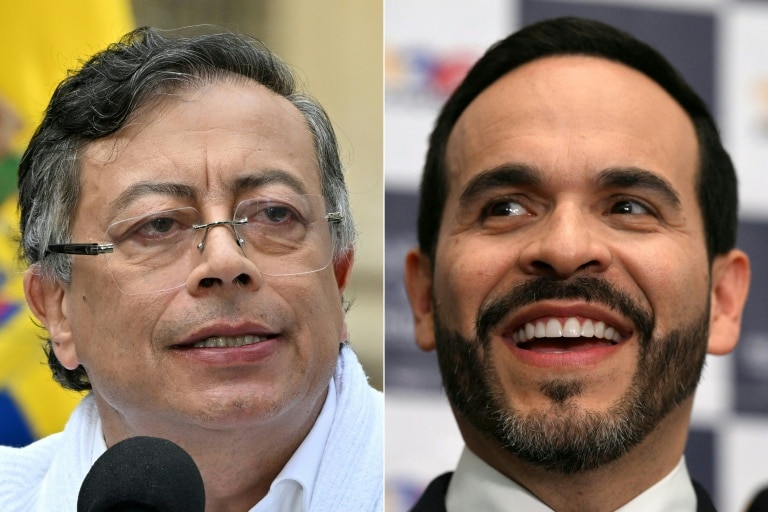
Colombia is facing a rapidly escalating political crisis just weeks before the scheduled August 7 presidential inauguration, after hard-right president-elect Abelardo de la Espriella made explosive unsubstantiated claims that outgoing left-wing president Gustavo Petro is plotting a coup to seize power. The accusation has prompted De la Espriella to immediately halt all transition cooperation with Petro’s administration, throwing the upcoming transfer of power into chaos.
De la Espriella, a millionaire libertarian lawyer who secured a narrow victory in last month’s presidential runoff, has positioned himself as a staunch opponent of Colombia’s first-ever left-wing government. His campaign, which drew open vocal support from former U.S. President Donald Trump, centered on rolling back Petro’s progressive policies: he has pledged to abandon ongoing peace talks with left-wing guerrilla groups and drug cartels in favor of full-scale military confrontation, and to cut the size of Colombia’s state bureaucracy by 40% to attract increased private sector investment, echoing the radical libertarian agenda of Argentine President Javier Milei.
In a public statement Tuesday, De la Espriella claimed that Petro and his ally, defeated presidential candidate Ivan Cepeda, had activated a so-called “Plan B” to hold onto power through unconstitutional means. “Petro and Cepeda have initiated their Plan B to remain in power at all costs. And they want to do it through a coup d’etat,” the president-elect declared. He also repeated longstanding unproven claims that Petro’s administration is riddled with corruption, alleging that a preliminary audit uncovered irregularities in the government’s anti-drug trafficking efforts, public contracting processes, and national healthcare system. Despite the serious nature of both the coup allegation and corruption claims, De la Espriella has not released any tangible evidence to support either accusation.
Cepeda, who lost the runoff to De la Espriella by a slim margin, publicly accepted the election results despite the close outcome. Petro, however, has refused to acknowledge the legitimacy of the June vote, even though independent international election observers and Colombia’s national electoral authorities have formally certified the election as free, fair, and free of widespread fraud.
Political tensions have been building steadily since the runoff, and the latest escalation has stoked fears of widespread unrest. Petro has already called for mass anti-De la Espriella protests to coincide with his scheduled national farewell address on July 20. De la Espriella’s supporters warn that the demonstrations could spiral into the kind of large-scale violent unrest that followed Petro’s protests against right-wing former president Ivan Duque between 2019 and 2021, a period of unrest that left dozens of people dead across the country.
De la Espriella has framed the ongoing conflict as a legal standoff, claiming that Petro’s accusation of a coup stems from fear of facing legal accountability for alleged misconduct during his tenure. “He knows I will make him pay for all his crimes within the framework of the law, and that’s why he’s panicked and terrified,” he said Tuesday. The president-elect, who has long aligned himself with U.S. political interests and repeatedly clashed with Petro over his critical stance toward Trump during his presidency, has already vowed to bring Petro and his left-wing allies before U.S. courts to face charges, though he has not detailed what specific offenses the legal action would address.