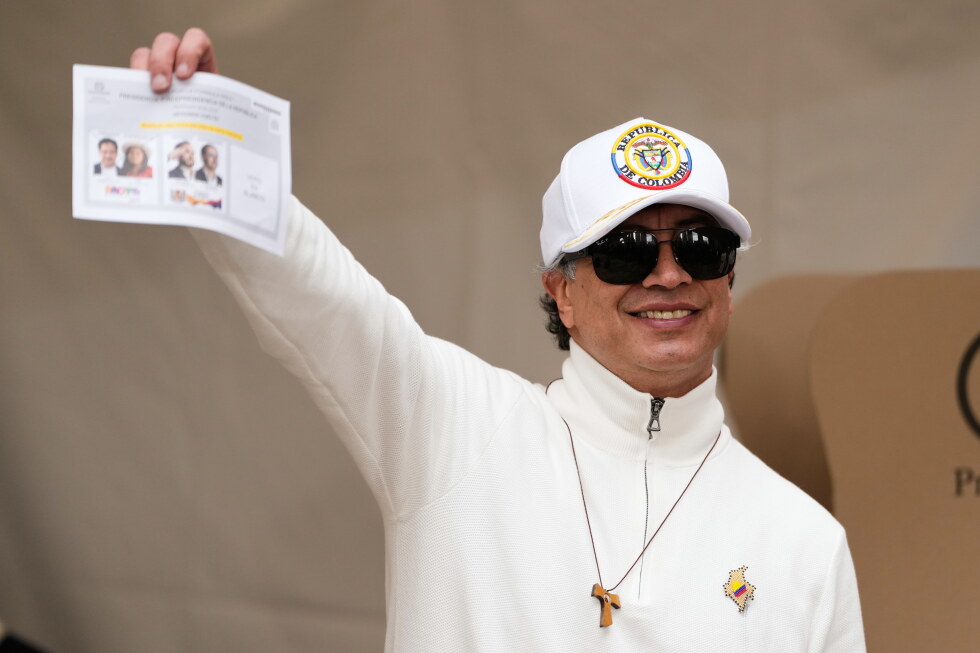
BOGOTA, Colombia — Colombian politics has entered a period of unprecedented uncertainty just weeks before a scheduled presidential handover, after President-elect Abelardo de la Espriella announced an immediate suspension of the formal transition process with the outgoing administration of incumbent President Gustavo Petro. The breakdown comes one day after Petro rejected the conservative candidate’s narrow electoral victory, leveling unsubstantiated claims of systemic electoral fraud.
A first-time political candidate endorsed by former U.S. President Donald Trump, de la Espriella took to social platform X to confirm the suspension, labeling Petro’s government “corrupt” and accusing the sitting administration of actively seeking to undermine the nation through its policy choices and official conduct. With Petro’s four-year term set to conclude in just 30 days, the suspension of the formal handover — known locally in Colombia as “empalme” — throws preparations for the incoming government into disarray. This long-standing institutional process requires outgoing officials to share critical administrative, budgetary and policy information to allow a president-elect to build a functional governing team before taking office.
The tension quickly escalated after de la Espriella’s announcement: Germán Ávila, finance minister and transition coordinator for the Petro administration, ordered his own team to halt all handover activities in response. In a live televised address to the nation, Ávila pushed back against criticism from de la Espriella’s camp, emphasizing that the transition process is not a criminal inquiry or a public trial. “We have absolutely nothing to hide,” he stated, rejecting the incoming team’s insinuations of wrongdoing by the outgoing government.
The escalating standoff is the latest in a series of reciprocal accusations between the two ideological rivals that have marked the post-election period. De la Espriella has indicated he will deliver a public address in the coming hours to elaborate on his decision to suspend the transition and outline his next steps for resolving the impasse.
The political newcomer, a businessman and lawyer with diverse commercial interests spanning apparel, wine and spirit brands, and hospitality, secured a narrow win in the June 21 presidential runoff, defeating progressive candidate Iván Cepeda by just one percentage point — a margin of more than 251,000 votes. Cepeda had run on a platform of continuing Petro’s core policy agenda, including the controversial, largely unsuccessful effort to negotiate peace dialogues with active armed groups operating across Colombia. The close result was widely interpreted as a popular rebuke of Petro’s four-year tenure, whose progressive reforms have divided Colombian voters.
Independent international observer missions have already validated the integrity of the election result. A European Union observer delegation praised the transparency and efficiency of the vote-counting process, while the U.S.-based Carter Center concluded that the election’s results management system was “reliable, transparent and fully traceable.”