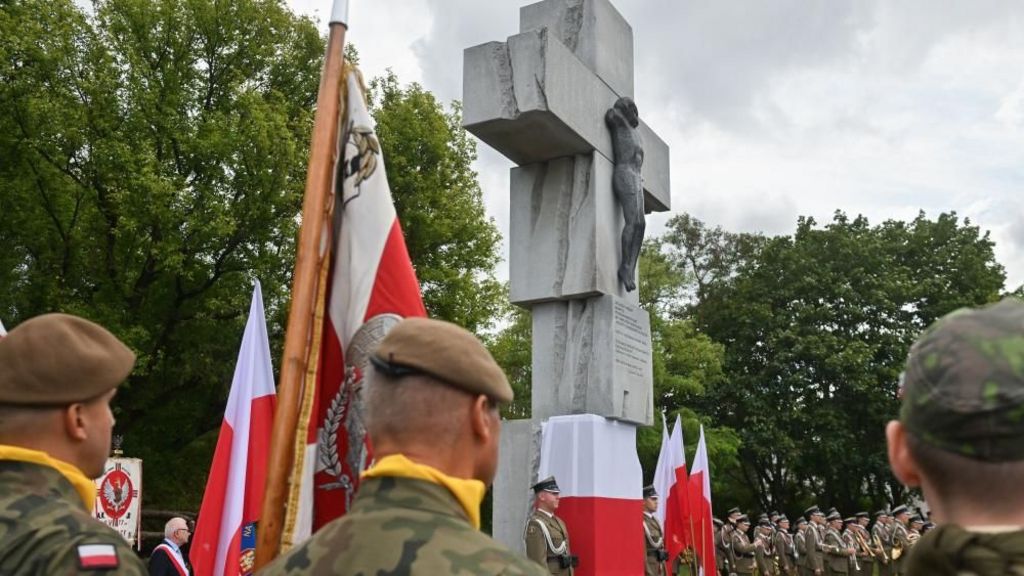
On Saturday, commemorative events honoring the victims of the 1943–1945 Volhynia killings unfolded across Poland, starting in the capital Warsaw, as the country marked the anniversary of one of the most divisive tragedies of World War Two between Poland and Ukraine. Speaking at the national ceremonies, Polish Prime Minister Donald Tusk unveiled plans to establish a dedicated national memorial to the ethnic Polish victims of what Warsaw describes as a genocide carried out by Ukrainian nationalist forces during the conflict.
The historical dispute at the heart of the current tensions centers on events that took place when Volhynia, then a Polish territory under Nazi German occupation, saw widespread violence between ethnic groups. Polish official records confirm that approximately 100,000 ethnic Polish civilians were killed between 1943 and 1945 by the Ukrainian Insurgent Army, better known by its abbreviation UPA. For decades, this shared painful history has created persistent rifts between Warsaw and Kyiv, with starkly differing national narratives of the events. While Poland frames the violence as a deliberate genocide of ethnic Poles, many Ukrainians view the UPA as heroic freedom fighters that struggled for Ukrainian independence, fighting against multiple occupying forces including Nazi Germany, the Soviet Union, and pre-war Polish governing institutions.
In his address marking the anniversary, Tusk struck a careful but firm tone, stating that upholding the historical truth is a non-negotiable obligation to the victims, while also framing it as a necessary step to move past the region’s painful history and build a more cooperative future. “Memory cannot be the servant of hatred. The answer to nationalism cannot be more nationalism,” Tusk said, adding that Ukraine must acknowledge this shared historical truth as it pursues its goal of accession to the European Union.
Saturday’s announcement comes just one month after a sharp diplomatic escalation between the two close allies, amid Russia’s ongoing full-scale invasion of Ukraine. Last month, Poland revoked the Order of the White Eagle—Poland’s highest state honor—from Ukrainian President Volodymyr Zelenskyy over his decision to name an active Ukrainian military brigade after the UPA. Polish President Karol Nawrocki defended the move while stressing that the diplomatic row would not alter Poland’s unwavering military and political support for Ukraine against Russian aggression, a commitment Warsaw has held since the 2022 invasion began. In a show of solidarity with Zelenskyy, three former Ukrainian presidents chose to return their own Order of the White Eagle awards to Poland following the decision.
In a pre-recorded video address released late Saturday, Zelenskyy responded to the commemorative events, noting that representatives of the Ukrainian government had joined Polish officials in joint prayers for the victims of the Volyn killings in ceremonies held in both countries. He emphasized that Ukraine is committed to a transparent, honest process of documenting and confirming the historical facts of all civilian deaths during the World War Two period. Zelenskyy also reiterated that in the current geopolitical context, Poland and Ukraine share a single existential threat: “This is a mortal threat to our independence, to our states, to every city, to every village, and this threat is called Russia.”
Despite the ongoing historical dispute, both leaders have reaffirmed that their core strategic alignment against Russian aggression remains intact, even as they work through the lingering tensions over conflicting memories of World War Two.