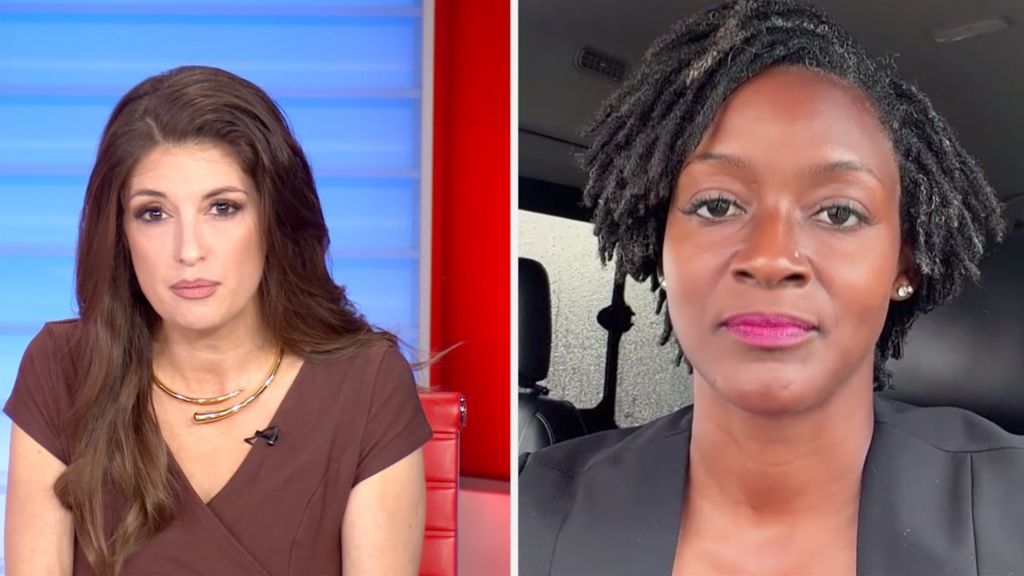
In an upset result that has sent ripples through Florida’s political landscape, a democratic socialist candidate has secured a surprise victory in the state’s U.S. Senate primary, granting an interview to the BBC shortly after the final results were confirmed. The unexpected primary win sets the stage for a high-stakes general election battle this November, where the victorious candidate, named Nixon, will go head-to-head with sitting Republican Senator Ashley Moody. Political analysts have already framed the upcoming race as one of the most competitive contests in the 2024 election cycle, given Nixon’s unorthodox progressive platform that defies traditional Democratic positioning in the traditionally conservative-leaning swing state. Incumbent Senator Moody, who ran unopposed for the Republican nomination, now faces a far more challenging campaign than many party insiders initially predicted, as Nixon’s surprise primary win has energized grassroots progressive voters across the state and drawn national attention to the Florida Senate race.
分类: politics
-
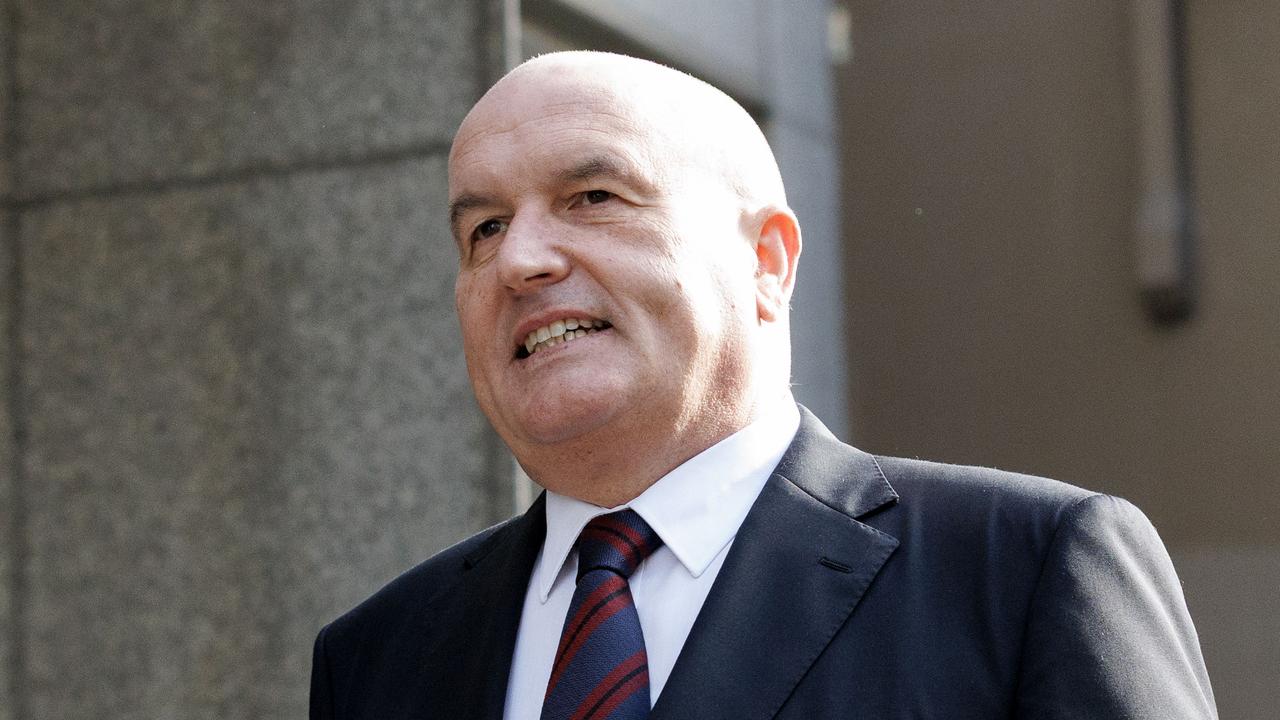
Former NSW MP allegedly targeted by Jean Nassif gives evidence in ICAC probe
A high-stakes corruption inquiry into New South Wales’ Liberal Party has heard scathing remarks from a former senior cabinet minister against a fugitive property developer accused of orchestrating a secret factional campaign to destroy his political career.
Former New South Wales police and transport minister David Elliott took the witness stand at the NSW Independent Commission Against Corruption (ICAC), where investigators are probing explosive claims that a clandestine conservative Liberal faction dubbed the “Reformers” accepted illegal political donations from Jean Nassif — a developer currently fleeing Australian authorities in Lebanon — and other figures to stack party branches with Christian members to expand the faction’s power.
The inquiry has already aired intercepted phone recordings in which Nassif openly bragged about sabotaging the political careers of both Elliott and former Building Commissioner David Chandler. Elliott, who has not been accused of any misconduct throughout the probe, told the commission he had long worked to keep property developers at arm’s length, particularly those with major projects in The Hills district, where Nassif holds most of his development interests. He explained this deliberate distance was rooted in concerns over both “actual risk of corruption, but also the perception” of improper ties between developers and elected officials.
Elliott recounted the first approach from Nassif’s associates back in 2019, when a woman working for the developer offered to arrange hidden support for his political fundraising. “I asked her how and she said, ‘oh, we’ve got ways of doing it’. That was probably the only covert way it was ever raised with me,” he told the inquiry. Elliott added that he never had a productive or even civil exchange with Nassif, saying: “Nothing positive ever comes from my conversations about Jean Nassif.”
Tensions between the pair boiled over after Nassif’s proposed Cherrybrook development was rejected by local authorities, Elliott said. The developer went “nuts” over the decision, and twice confronted Elliott uninvited: first in a residential car park in 2021, when Elliott was still serving as police minister, and again a year later at a local bar. On the first occasion, Elliott recalled, he brushed off Nassif’s demand for a meeting by telling him directly: “I’m sorry, I don’t speak to developers.”
Elliott, who left parliament ahead of the 2023 state election after his former seat was abolished in a electoral redistribution, told the commission he had consistently pushed back against overdevelopment in The Hills. He also detailed how local constituents had repeatedly raised complaints about shoddy workmanship on Nassif’s projects, including the Skyview development, which he said had obvious visible construction deficiencies. All complaints, he added, were properly referred to the Building Commissioner or NSW Fair Trading for official review.
Counsel assisting the inquiry Penny Dwyer SC put to Elliott an unproven allegation that he had requested a donation from Nassif to the Mutual Forum, the Liberal Party’s official fundraising body. Elliott flatly denied the claim, adding that he had no knowledge of Nassif donating hundreds of thousands of dollars to him or any associate. “It’s been ten years since I spent more than $50,000 on the campaign, and the last one was about $10,000 or $15,000,” he said, rejecting any suggestion of improper financial ties.
When questioned about Christian Ellis, a prominent Liberal powerbroker and co-founder of the Reformers faction at the center of the probe, Elliott said he had never met the figure. He also told the commission he had never even heard of the Reformers faction until the ICAC investigation launched. He added that the more religious, hardline conservative wing of the NSW Liberal Party was often referred to by unflattering terms internally, including “the cult.”
On the subject of former NSW premier Dominic Perrottet, who is not accused of any wrongdoing despite his brothers being named in the probe, Elliott said Perrottet was a leading figure in the party’s right faction, and had previously publicly criticized Ellis after sacking him over claims that Ellis failed to process hundreds of constituent inquiries. When asked about reports that Nassif was blocked from attending a Liberal Party event attended by former prime minister Scott Morrison and Perrottet, Elliott said he had no advance knowledge of the incident, but added: “I would have loved to have been there.”
The current ICAC inquiry was triggered by a parliamentary probe into development approval processes at The Hills Shire Council, which evaluated Nassif’s controversial Cherrybrook project, after allegations of improper influence were aired in state parliament.
-
Key European leaders demand Israel halt West Bank settlement project
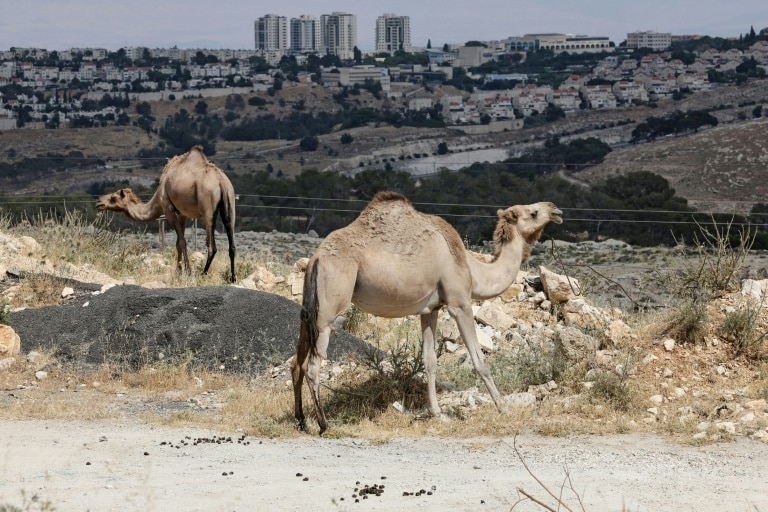
In a sharp rebuke that amplifies global pushback against Israeli settlement expansion, four of Europe’s leading powers — France, Italy, Germany, and the United Kingdom — issued a joint statement Thursday demanding Israel immediately withdraw plans to construct over 1,200 new residential units as part of the contentious E1 settlement project in the occupied West Bank. The development comes just days after Israeli housing authorities opened bidding for the construction contracts, marking the most significant step forward for the controversial initiative since it was first approved in August 2024.
The E1 project, which targets a 12-square-kilometer stretch of strategically located land between east Jerusalem and the large existing Israeli settlement of Maale Adumim, has long drawn international condemnation for its geopolitical implications. If completed, the full 3,400-home development would permanently split east Jerusalem — which Israel annexed in 1980, a move not recognized by the majority of the international community, and which is majority-Palestinian inhabited — from the rest of the occupied West Bank. This geographic divide would eliminate the possibility of a contiguous, sovereign Palestinian state, a core foundation of the decades-long two-state solution framework for Middle East peace.
The European leaders’ joint statement emphasized that the timing of the new tenders makes the decision even more alarming, against a backdrop of skyrocketing settler violence against Palestinian civilians in the West Bank and crippling economic restrictions that have severely harmed Palestinian livelihoods. The statement went further than many previous condemnations, issuing a direct warning to private businesses considering bidding on the project, cautioning that participation would put them at risk of complicity in serious violations of international law.
International pushback expanded quickly beyond the four major powers. Belgian Foreign Minister Maxime Prevot labeled the tender announcement “unacceptable,” echoing the global consensus that the project would irreparably damage any path to a viable two-state resolution. The United Nations Secretary-General has previously framed the E1 initiative as an “existential threat” to the creation of a contiguous Palestinian state.
The United Kingdom has already taken unilateral action to signal its disapproval: On Wednesday, British Foreign Secretary Ed Miliband summoned Israel’s chargé d’affaires to London to deliver a formal demand halting the project and all settlement expansion, and delivered the message directly to Israeli Foreign Minister Gideon Saar in bilateral talks. The UK government also announced it would roll out a full package of punitive measures in the coming weeks, including targeted sanctions against individuals directly involved in illegal settlement expansion.
Israel has rejected the criticism outright, with Saar pushing back against Miliband’s statement in blunt terms Thursday. He called the British foreign secretary’s language patronizing, and argued that Jewish people hold an inherent right to live across all of what Israelis consider the Land of Israel, drawing a comparison to the right of British citizens to live anywhere across the United Kingdom. Saar further accused the UK of single-sided bias, claiming London only blames Israel while ignoring Palestinian extremism that he claims fuels rising antisemitic attacks targeting Britain’s Jewish community. He called the UK’s decision to confront Israel over the issue deeply damaging to bilateral relations, and pledged that “Israel will defend its rights, its interests and its people.”
Israeli peace advocacy NGO Peace Now, which first tracked the publication of the new tender, notes that the 1,200 units up for bid make up roughly one-third of the full E1 development. The housing ministry published the tender and opened bidding on August 18, with bid submissions due October 19 — just one week ahead of Israel’s scheduled national election on October 27. Peace Now has accused the current Israeli government of rushing to lock in binding construction commitments before the vote, to cement the project’s future regardless of the election’s outcome.
The current landscape of the West Bank has grown increasingly volatile in the months following the October 7, 2023, Hamas attack on Israel from Gaza. Data from international and local monitors confirms that acts of violence by Israeli settlers against Palestinian civilians have surged to unprecedented levels during this period. Today, the West Bank (excluding annexed east Jerusalem) is home to roughly 3 million Palestinians, alongside approximately 500,000 Israeli settlers who have established communities across the territory in developments widely considered illegal under international law. Israel enforces strict movement restrictions on West Bank Palestinians, who require special permits from Israeli authorities to cross checkpoints into east Jerusalem or sovereign Israeli territory.
-
US, Canada ‘very close’ to trade deal, Ottawa says, as details emerge
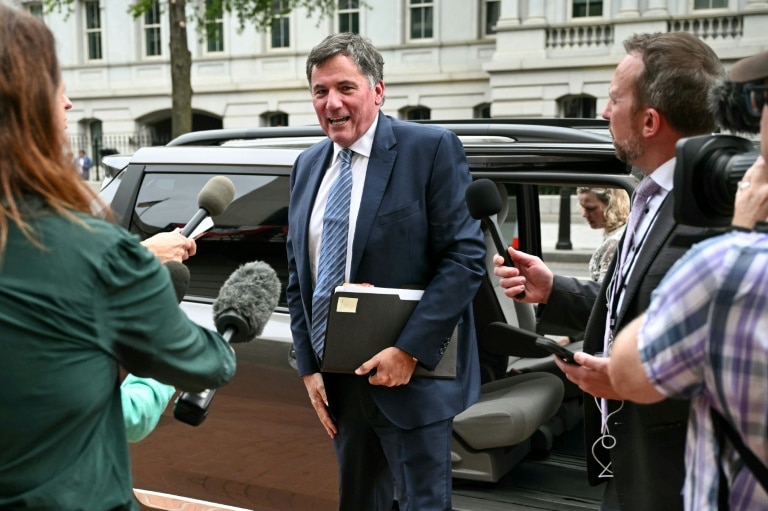
Fresh off a three-hour negotiating session with a top US trade official in Washington D.C., Canada’s lead representative for bilateral trade Dominic LeBlanc announced Thursday that the two neighboring nations are “very close” to wrapping up a final trade agreement amid efforts to avoid steep new tariffs that former president Donald Trump threatened to impose.
LeBlanc, Canada’s minister overseeing US-Canada trade relations, met behind closed doors with US Trade Representative Jamieson Greer as both sides work frantically to lock in a deal that could de-escalate months of bitter trade friction sparked by Trump’s earlier punishing levies on Canadian goods. Speaking to reporters immediately after exiting Greer’s office, LeBlanc reaffirmed that steady progress is still being made, noting the Canadian negotiating team would remain in Washington to continue working until a final agreement is reached.
Just one day prior, both sides already signaled they had edged close to a finished pact. This round of progress comes after Trump announced a last-minute 72-hour delay to a planned 50 percent tariff on Canadian imports that was scheduled to go into effect Wednesday, citing signs that a deal was imminent.
While full details of the draft agreement have not been released to the public, Canadian Prime Minister Mark Carney held a briefing this week with the leaders of Canada’s provinces and territories to update them on the status of negotiations and outline specific demands Washington has presented that require provincial action.
Nova Scotia Premier Tim Houston told reporters that one core US demand is for Canadian provinces to restock American wine and liquor on retail shelves. Several provinces pulled US alcohol products after Trump imposed tariffs on Canadian automobiles, steel, aluminum and lumber as a retaliatory measure. “The prime minister has asked us, as premiers, as provinces, to return the US alcohol to the shelves,” Houston said, adding that the removal of US alcohol has been a persistent point of tension that has greatly troubled US negotiators.
Houston also acknowledged the deep public frustration across Canada over Trump’s trade policies, including his past comments about annexing parts of Canada, which have left lasting resentment among many Canadians. Even if provincial governments reverse the alcohol ban, he noted there is no guarantee consumers will choose to purchase American products. “Beyond the provisions in any trade deal, there’s ‘the emotional impact of what Canadians have experienced,’” Houston said, describing the prolonged trade dispute as “emotionally draining.”
Quebec Premier Christine Frechette, whose province has been disproportionately harmed by Trump’s tariffs, said she will review the full terms of any final deal before deciding whether to comply with the demand to restock US alcohol. In contrast, Manitoba Premier Wab Kinew, a left-wing leader, said he is prepared to restore US alcohol to retail shelves even as he maintains Canada should stand its ground in negotiations. Kinew argued that the US is in a weaker position globally than it was one year ago, predicting Trump will lose heavily in the upcoming US midterm elections and saying “I think we’ve got the upper hand.”
A second key US demand outlined in the briefing is for provinces to remove explicit language banning US companies from public procurement contracts. While provincial governments will still be allowed to prioritize Canadian suppliers, they can no longer formally exclude US companies from bidding on public projects.
Canadian media reports indicate the US has also tabled additional demands to the federal government in Ottawa, including new commitments on defense procurement and supplies of critical minerals used in clean energy and technology manufacturing.
Provincial leaders declined to share details of what US tariff reductions are on the table, but confirmed that some Canadian goods will still face import duties when entering the US even after a deal is finalized. Saskatchewan’s conservative Premier Scott Moe, who received the briefing from Carney, noted that returning to the trade status quo of two years ago is no longer possible, but described the draft deal as “best-in-class.” Houston echoed that assessment, calling the draft agreement “the best possible outcome we can hope for in dealing with this administration.”
-
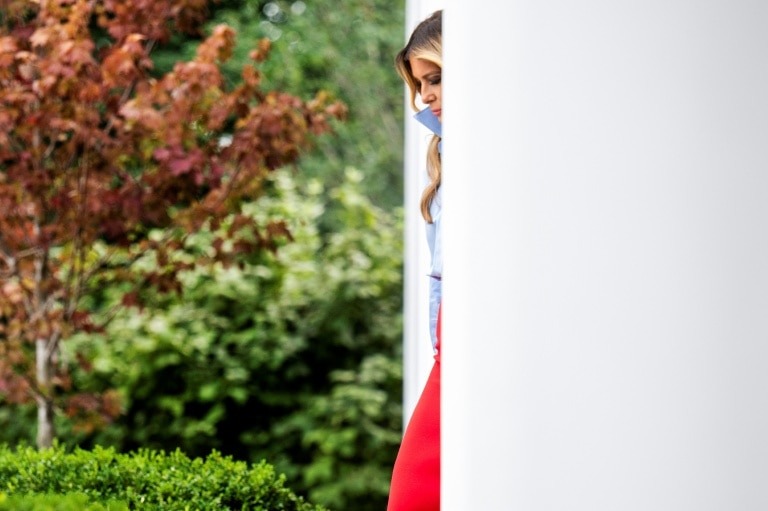
‘I heard you missed me’: Melania Trump jokes about month out of spotlight
After 31 days out of the public eye that sparked widespread media speculation and untold whispers across Washington political circles, US First Lady Melania Trump stepped back into the national spotlight Thursday, opening a White House Rose Garden event with a lighthearted joke addressing her absence.
“Good afternoon. I heard you missed me. Here I am,” the 56-year-old First Lady said with a soft chuckle as she approached the podium, marking her first public appearance since she attended the FIFA World Cup final in mid-July.
The event, held to celebrate a joint scholarship donation from motor racing series IndyCar and media giant Fox Corporation ahead of a capital street race honoring the 250th anniversary of American independence, drew far more attention than its policy-focused purpose would normally command. All cameras and political observers were fixed on Melania, whose unexpected disappearance from the public schedule had become a top topic of D.C. gossip in recent weeks.
As the First Lady walked from the Oval Office to the event stage, she held hands with her 80-year-old husband, President Donald Trump, who remained in the audience throughout her remarks. Melania’s weeks-long break from public duties followed a pattern analysts have identified in her second term as First Lady: a recent analysis from US broadcaster NBC News found that she has held roughly half the number of public engagements by this point in her second term compared to the same stage of her first term in the White House.
In the weeks leading up to her return, Melania had skipped several high-profile public events, including the rescheduled July 24 White House Correspondents’ Dinner. She had attended the original April iteration of the dinner, which was disrupted by an armed intruder incident.
Melania’s comeback also came amid ongoing political buzz surrounding another figure close to the president: 35-year-old Natalie Harp, the president’s hyper-loyal executive assistant who has become a near-constant presence at Trump’s side during his second term. Harp, who has earned the informal nickname the “human printer” for her work drafting social media posts and printing briefing materials for Trump, has been the subject of recent scrutiny after a Democratic U.S. Senate candidate questioned why Harp was one of the few people to quietly swap onto Air Force One with Trump during a security-related disruption during his recent trip to Turkey. The White House issued an angry pushback against the questions earlier this week. Notably, Harp was not in attendance at Thursday’s Rose Garden event.
-
Jailed Pakistan ex-PM Khan moved to hospital on court order: party
In a significant court-ordered development that has rippled across Pakistan’s charged political landscape, imprisoned former Prime Minister Imran Khan has been transferred to a leading private hospital in Islamabad for urgent medical assessment and treatment, his political party has confirmed. The transfer, which came in compliance with a Supreme Court directive issued earlier this week, has sparked visible displays of support from Khan’s backers across the capital.
Pakistan’s top judicial body ordered that the 73-year-old founder of the Pakistan Tehreek-e-Insaf (PTI) be moved to Shifa International Hospital within 48 hours of his legal team submitting a petition highlighting his declining health. By early Friday, PTI spokesperson Zulfi Bukhari confirmed to Agence France-Presse that the transfer had been completed, and that authorities had fully adhered to the Supreme Court’s ruling.
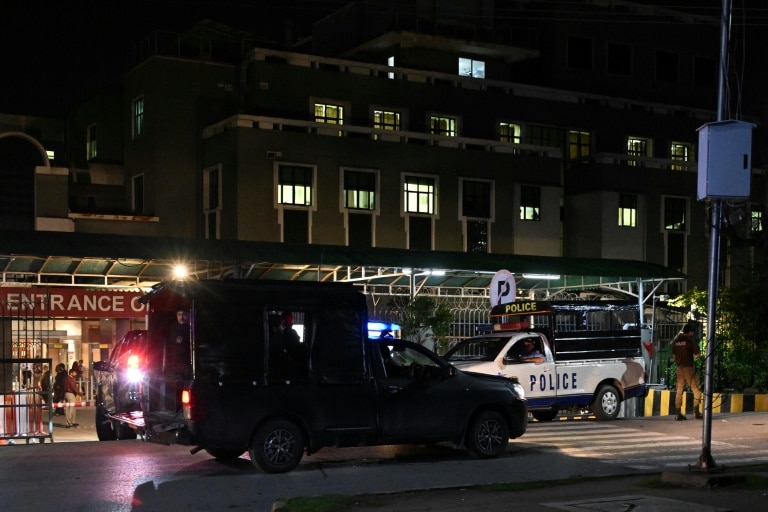
Heavy security arrangements were put in place around the hospital ahead of Khan’s arrival: hundreds of police officers, many equipped with batons, were deployed to secure the perimeter, and all access roads leading to the facility were cordoned off. Despite the security presence, dozens of Khan’s supporters gathered near the hospital grounds to show solidarity, with some throwing handfuls of red rose petals at passing vehicles in a symbolic gesture of affection for the former leader.
“It’s confirmed that he has arrived at Shifa International Hospital, the Supreme Court’s order has been complied with,” Bukhari told AFP. Arif Alvi, a former Pakistani president and senior PTI figure, echoed the confirmation in a post on X, writing that the entire nation was “happy and dancing with joy” at the court’s decision.
The court’s ruling went beyond approving medical care: it also granted Khan new access rights to his family, requiring authorities to allow weekly in-person meetings and twice-weekly telephone calls with his sons. A multi-specialist medical panel will be assembled to oversee Khan’s treatment, and the court ruled that the former PM’s sister Uzma Khan, a practicing physician, will be permitted to participate in the care process.
This is not the first time health concerns have been raised over Khan’s condition in custody. Earlier this year, Khan received outpatient eye treatment, with his family reporting at the time that he had lost most of his vision in his right eye. His legal team had repeatedly warned that his underlying health issues required urgent, specialized evaluation that could not be adequately provided in a prison setting.
Khan, who led Pakistan from 2018 until he was removed from office via a parliamentary no-confidence vote in 2022 amid escalating tensions with the country’s powerful military establishment, has been behind bars since 2023. Late last year, he and his wife Bushra Bibi were sentenced to a combined 17 years in prison on charges of corruption and other offenses, allegations Khan has repeatedly dismissed as politically motivated fabrications designed to remove him from the country’s political arena.
The 73-year-old leader, who previously led Pakistan to victory in the 1992 Cricket World Cup, remains the country’s most popular political figure, according to multiple public opinion polls. His arrest in May 2023 triggered mass nationwide protests that rattled the sitting government, and his base has remained active in organizing displays of support even amid widespread crackdowns on PTI activists.
For his supporters gathered outside the hospital Friday, the transfer is a small but long-awaited win. “I came here to show my support for the man who has made so many sacrifices for Pakistan,” 69-year-old Younus Qureshi told reporters. Another supporter, 52-year-old Bilal, echoed that sentiment, saying he hoped Khan would receive the quality medical care he needed. “Our love and affiliation will remain with Mr Khan, no matter what,” Bilal added.
-
Why Nigeria’s one-time political giant may face extinction
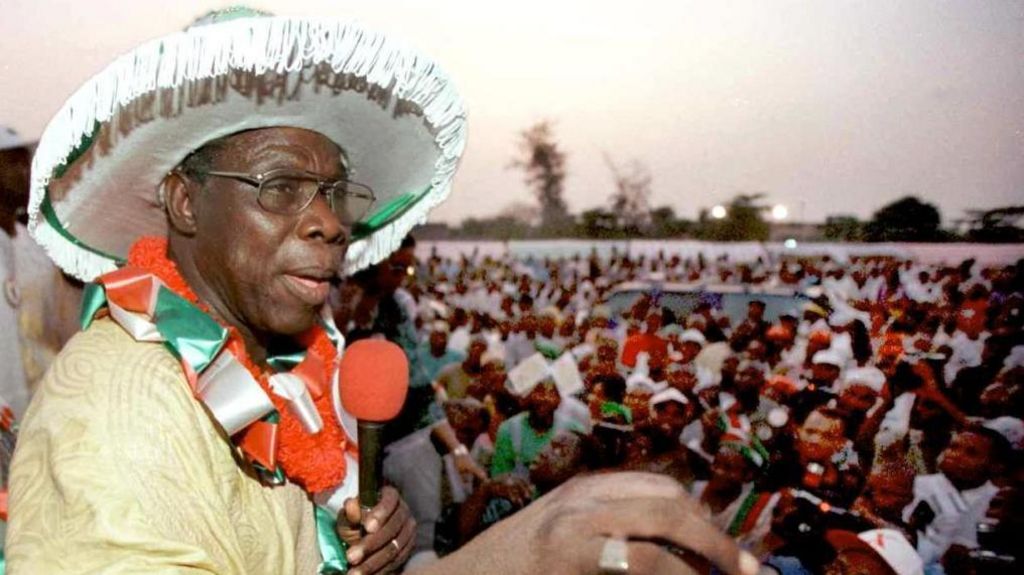
When Nigeria emerged from decades of military rule in 1999, the Peoples Democratic Party (PDP) stood as the undisputed architect of the country’s new democratic era. Founded just a year earlier, the party swept its founding presidential candidate Olusegun Obasanjo into office, cementing a grip on national power that seemed unbreakable. For 16 consecutive years, the PDP controlled the presidency and held sway over 35 of Nigeria’s 36 states, with its chairperson famously boasting in 2008 that the party would rule for 60 years. Today, that once unassailable political giant teeters on the edge of collapse, its future hanging in the balance as Nigeria prepares for January’s general election, which officially kicked off this month.
The PDP’s slow unraveling began with a political earthquake in 2015, when the party lost its hold on the presidency to Muhammadu Buhari and the newly formed All Progressives Congress (APC), a coalition of opposition factions and disaffected former PDP members. The transfer of power from PDP incumbent Goodluck Jonathan to Buhari marked the end of an era, and thrust the PDP into unfamiliar territory as an opposition party. Political analyst Ishaq Buhari notes that the party, long accustomed to the perks and structures of federal power, never adapted to life outside government. “They were a party that was so used to power, being in opposition was a new challenge they struggled with from the start,” he explained.
If 2015 delivered a crippling blow, 2025 shattered the PDP’s foundational structures entirely. A tidal wave of high-profile defections and bitter internal infighting tore through the party’s ranks, with sitting state governors leading the exit. At the start of 2025, the PDP still held eight state governorships. By year’s end, five governors – from Delta, Akwa Ibom, Enugu, Bayelsa, and Rivers – had defected to the ruling APC, citing the PDP’s fading political relevance and a desire for closer collaboration with the federal government. By late 2025, the PDP lost its last remaining governorship in Oyo State, leaving the once-dominant party with no executive control at the state level. Top party talent has also fled, including former Vice-President Atiku Abubakar, the PDP’s 2019 presidential candidate, who left the party in 2025.
Compounding these losses is a paralyzing leadership dispute that has split the party in two and locked it out of the upcoming election ballot for all major offices. The conflict centers on Nyesom Wike, a founding PDP member who now serves in President Bola Tinubu’s APC-led government. Wike was controversially expelled from the party in November 2025, when a faction claiming to represent the majority of PDP members held a national convention in Ibadan, Oyo State, defying court injunctions to stop the gathering. The expulsion followed widespread accusations that Wike betrayed the PDP by secretly aiding the APC’s victory in Rivers State during the last presidential election. Yet despite the expulsion, Nigerian courts have ruled that Wike’s rival faction is the legally recognized PDP. As a result, only Wike-aligned candidates have been approved to appear on the electoral commission’s ballot for January’s presidential and parliamentary races, leaving the anti-Wike faction with no official representation.
For a party that defined Nigerian democracy for a generation, the rapid collapse has stunned political observers. Still, a small cohort of die-hard PDP loyalists holds out hope for a comeback. Aminu Adamu, a PDP politician aligned with the anti-Wike faction, argues that the party can rebuild if it resolves its internal disputes, pointing to precedents of collapsed political parties in Thailand and Argentina that returned to power after years in the political wilderness. “All we need to do is put our house in order and start to build from there,” Adamu said. “If we make all the necessary corrections, by 2032 I really think PDP can be a major force again.” Other loyalists point to the party’s still intact grassroots network, which includes local offices, seasoned activists, and a longstanding base of historic supporters, as a foundation for rebuilding.
Most political analysts, however, argue that the PDP cannot survive on its own. Analyst Deji Olarenwaju says the only path to survival for the party is a formal alliance with either the African Democratic Congress, Nigeria’s current largest opposition party, or Peter Obi’s Nigeria Democratic Congress. With the PDP in open disarray and only Wike-aligned candidates on the ballot, voters are deeply unlikely to trust the party’s brand this election cycle. Without a major strategic shift, the PDP that ushered in Nigeria’s democratic transition will likely fade into political irrelevance, marking one of the most dramatic downfalls in modern African political history.
-
British activist Anas Altikriti questions UAE surveillance operation
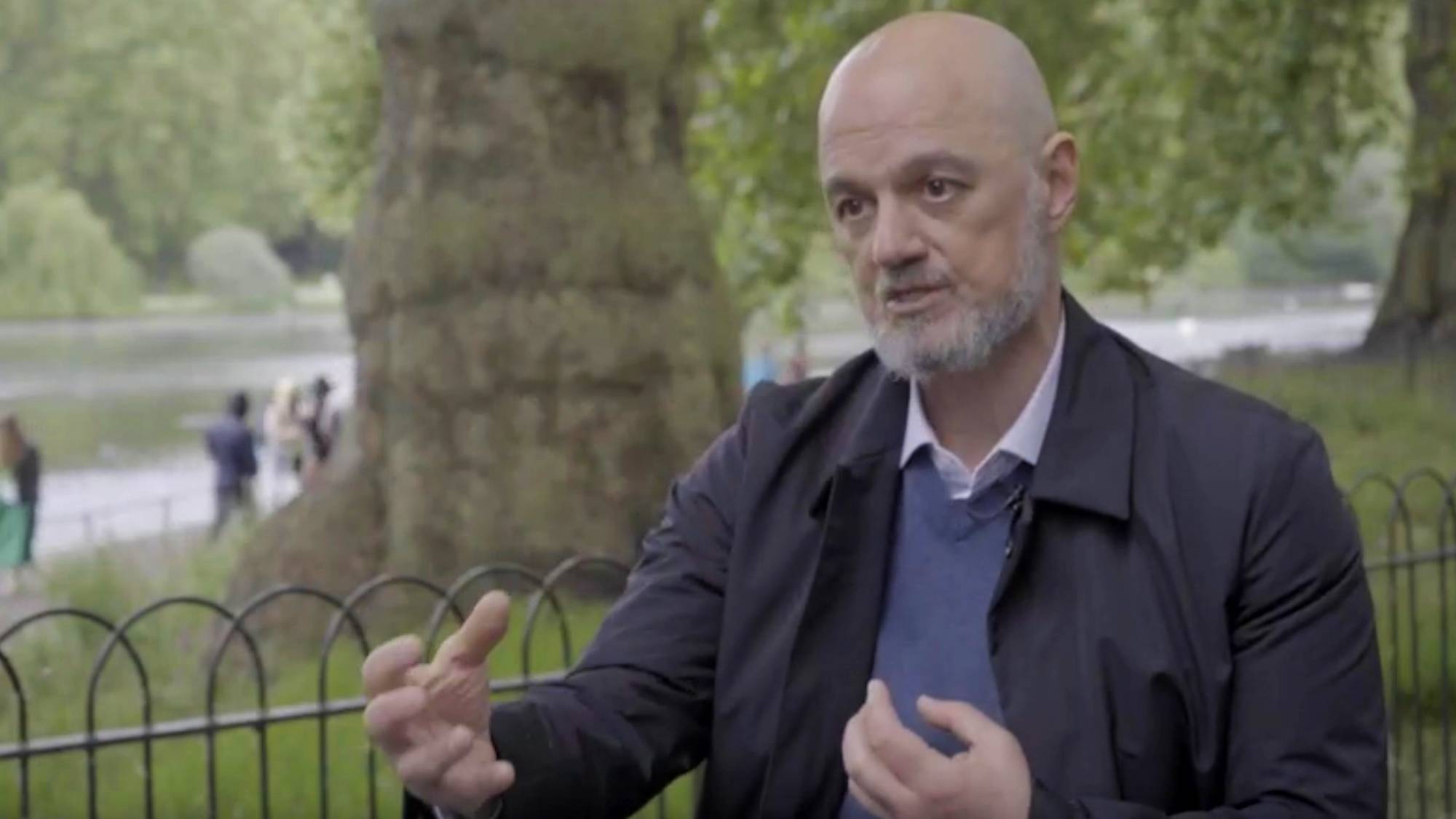
On a frigid winter morning years ago, officers from London’s Metropolitan Police arrived at the West London home of Anas Altikriti, a veteran Iraqi-born British anti-war and pro-reform activist. Altikriti was traveling abroad at the time, and only learned of the visit when one of his sons called to alert him that police were searching for him. The seasoned political activist, confused by the unexpected visit, initially brushed off the news—until officers returned two days later, this time with far more insistence.
When Altikriti followed up and called the police back, he received a chilling revelation: the force had issued him an Osman Notice, a formal alert to individuals when authorities judge their life is at imminent risk. Shaken by the news, he pressed for critical details: should he move his family to safety? Was he facing a targeted plot? Who was behind the threat? To every question, police had no answer. They told Altikriti they could share no further information, leaving him only with an ominous, unsubstantiated warning and no official protection.
It would take a full decade for Altikriti to uncover the full scope of what was happening. A British news team showed him a leaked dossier that laid bare a prolonged, granular foreign intelligence surveillance operation tracking his every movement. The files included photographs of his London home, his personal vehicle, and detailed internal WhatsApp messages from the surveillance team documenting his daily routine: from his daily commutes and school runs with his children to his scheduled lectures at a local mosque. The foreign government behind the operation, the documents confirmed, was the United Arab Emirates (UAE).
For Altikriti, the UAE’s hostility toward him came as no surprise. A prominent public voice who founded the London-based Cordoba Foundation think tank, formerly led the Muslim Association of Britain, and served as a senior official with the Muslim Council of Britain, Altikriti has long been an outspoken critic of authoritarian rule across the Gulf region. He publicly supported the 2011 Arab Spring uprisings, condemned autocratic governance in Gulf states, and repeatedly advocated for imprisoned Emirati political reformers, stoking official anger in Abu Dhabi.
While suspicion of UAE interest had lingered for years, seeing concrete evidence of a sustained surveillance operation on British soil hit Altikriti with unexpected force, he told Middle East Eye in an interview. As the initial shock faded, one overriding question pushed to the forefront of his concerns: what did British authorities know about this operation?
Altikriti says he has no trouble accepting that the UAE would target him for his political views. What he cannot reconcile is how a foreign government could run an extensive surveillance campaign inside the United Kingdom without British knowledge—or with British knowledge that was kept hidden from him. “If they knew, why is it that they didn’t tell me or at least warn me or protect me?” he asked. “Or if they didn’t know, that in itself would be a catastrophe in its own right.”
As a British citizen who has never been charged with a crime, questioned by authorities, or broken UK law, Altikriti says he holds a clear expectation that the British state will protect his basic rights. “I expect that my civil liberties would be protected, my freedom would be guaranteed,” he said. That core freedom, he argues, includes the right to criticize foreign governments and voice political opinions without being targeted by a foreign power on UK soil. “I would be guaranteed safety, at least, if nothing else, to air my views, to criticize whomever I wish to criticize whilst constantly throughout my entire life abiding by the law.”
The alleged surveillance, he argues, raises far broader questions about the unregulated scope of foreign influence in British public life. “A rogue, dictatorial, authoritarian regime such as the United Arab Emirates could actually reach into our society and infringe upon the civil liberties and freedoms and rights of citizens as well as organisations,” he said. Altikriti notes that the UAE has also targeted other British organizations, including his own Cordoba Foundation, through defamation and coordinated attacks, meaning his experience is not an isolated incident. The core systemic question, he says, is whether foreign governments can freely target British citizens and groups inside the UK—and what accountability the British state will demand in response.
Looking back to the 2010s Osman Notice he received, Altikriti says the vague, incomplete warning was deeply inadequate, particularly when he was raising two young children at the time. Police told him his life was at risk, but offered zero details about the source of the threat or what precautions he could take to stay safe. “Besides just handing me this Osman notice, as though this is a box that we’ve ticked, nothing whatsoever,” he said. That experience has gained new gravity in light of the leaked surveillance documents, he says, noting it is now clear British police were aware some threat was active. If the threat was severe enough to issue an Osman Notice, he argues, it is unacceptable that he was given no further context or protection. “The police not telling me that there is an actual threat, there is someone who is actually plotting against my life, I think is just absolutely unbelievable.”
Altikriti says he has never doubted why he drew the UAE’s attention: his long-held political views put him in direct conflict with the Gulf state’s ruling leadership. When the Arab Spring swept the Middle East and North Africa in 2011, Altikriti emerged as a high-profile supporter of pro-democracy movements across Egypt, Tunisia and other regional states, a stance that represented a direct threat to the political standing of Gulf monarchies including the UAE. “They found that extremely threatening to their own standing,” he said. The UAE made its displeasure clear in the years that followed, withdrawing invitations for Altikriti to visit and having embassy officials warn him against returning to the country. “So the fact that I’m in their bad books is of no surprise to me.”
What did shock him, he says, was the extreme extent of the UAE’s alleged actions on UK soil. For more than a decade, dozens of Emirati pro-democracy reformers have remained imprisoned in the UAE, and Altikriti’s public advocacy for their freedom further angered Abu Dhabi. “The fact that I have stood by them, the fact that I’ve spoken up for them as much as I can has angered the United Arab Emirates,” he said. “And apparently they want to silence me at any particular cost.”
Altikriti’s concerns ultimately circle back to the deep existing alliance between the UK and the UAE. The two countries maintain extensive economic, political and security ties, and the UAE has built a substantial public and economic footprint across the UK, with major investments in British football clubs, major sporting events, cultural institutions, financial markets and banking. Altikriti argues the question is not whether the UK should cut ties entirely with the UAE, but whether Britain should set clear boundaries for that relationship that protect the rights of its own citizens.
“The fact that the United Arab Emirates is one of our strongest allies is unbecoming of our own government, of our own society,” he said. He argues that the UK’s close relationship with Abu Dhabi should not come at the cost of British citizens’ fundamental rights. “If the government truly believes in freedom and civil liberties and human rights and the like, then they should take a different stand.”
That different stand, he says, must start with a full public investigation—one that examines not just the specific surveillance operation targeting him, but the full extent of UAE influence over British politics and foreign policy. Altikriti acknowledges his own experience is minor when compared to far more severe human rights abuses the UAE has been accused of committing against dissidents at home and abroad. “My story… pales in comparison to the crimes committed by the UAE regime,” he said. But that, he insists, is no reason to dismiss what happened on UK soil; it is all the more reason to examine the case closely.
Altikriti says he hopes UK political leadership will confront the issue head-on, and he has specifically called on Prime Minister Keir Starmer to challenge the status quo of the bilateral relationship. “We could be friends,” Altikriti said. “But friends do not come without conditions.” Those conditions, he argues, are straightforward: the UAE must respect British citizens’ fundamental rights and freedoms, and end all covert interference in British domestic life.
For years, claims that the UAE targeted Altikriti could be dismissed or debunked, he says. But the leaked documents, which include direct photographs, internal correspondence, and surveillance team communications, have proven the operation was real. The reason for the targeting is no longer a mystery; Altikriti already understands why he was in the UAE’s crosshairs. The only question that remains unanswered is what the British government knew—and what it will do now. “Either they support the United Arab Emirates in its dictatorial ways, and as such they should come forth and say so,” he said. “Or if they truly believe in freedom and civil liberties and human rights and the like, then they should take a different stand.”
-
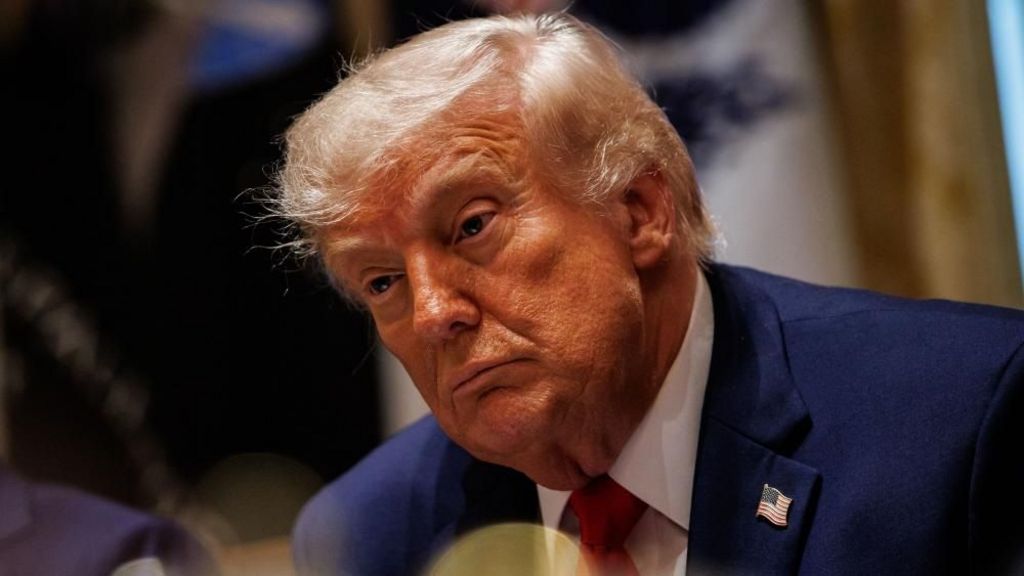
How much could Trump’s ‘economic D-Day’ hurt Iran?
Nearly half a year has passed since U.S. President Donald Trump first promised a rapid resolution to the escalating standoff with Iran. Today, the confrontation between the two nations remains locked in a stalemate, with neither a clear military breakthrough nor a viable negotiated settlement on the horizon.
In a bid to break this impasse, the Trump administration has announced a sweeping new pressure campaign it has dubbed “economic D-Day.” Under the proposed framework, any nation that continues to maintain commercial ties with Iran will face severe, far-reaching economic penalties from the United States. This escalated move comes as the White House doubles down on economic coercion after other tactics failed to deliver the desired outcome.
For decades, Iran has weathered successive waves of U.S. sanctions, and as the current conflict drags on, the country has repeatedly demonstrated its ability to withstand severe economic strain and adapt to intense pressure. That track record leaves a critical open question: can this new round of sanctions succeed where all prior U.S. strategies have fallen short?
Full details of the new U.S. economic pressure campaign have not yet been made public. Treasury Secretary Scott Bessent has confirmed that the full framework will be unveiled during a scheduled press conference on August 24. Speaking in an interview with CNBC, however, he made clear that Washington’s crackdown will extend to all nations—whether traditional U.S. allies or geopolitical rivals—that the administration accuses of propping up Iran’s economy. “You are either with us or against us,” Bessent stated, adding that if any nation insists on engaging in business with Iran, from facilitating money transfers to purchasing Iranian oil or conducting maritime trade transfers, the full weight of the U.S. Treasury and the entire U.S. government will be brought to bear to enforce penalties against them.
Vice President JD Vance has framed the new sanctions as a defining “new phase” of the confrontation, arguing that economic pressure represents the most effective tool currently available to the U.S. Appearing on the *Clay Travis and Buck Sexton Show*, Vance claimed that “They’re going to try to apply economic pressure to us, but what has been true over the last couple of weeks is that they felt a lot more pressure than we have. We’re going to keep that going because we think that’s the best way to ultimately achieve the final objective.”
U.S. sanctions against Iran date back to the founding of the Islamic Republic in 1979. The pressure campaign intensified dramatically after the first Trump administration withdrew the U.S. from the Joint Comprehensive Plan of Action (JCPOA), the 2015 nuclear agreement reached between world powers and Tehran to limit Iran’s nuclear program. Since the start of the current conflict, the administration has already rolled out Operation Economic Fury, a two-pronged initiative that combines Treasury-coordinated sanctions targeting the Iranian regime’s financial flows with a naval blockade of Iranian ports.
Geostrategy experts say the latest announcement of “economic D-Day” stems directly from the White House’s growing frustration that existing tactics have not achieved Trump’s goals. “This is really a recognition that the U.S. is almost stuck in this war,” explained Imran Bayoumi, a geostrategy expert at the Washington-based Atlantic Council and a former policy advisor to the U.S. Department of Defense, in an interview with the BBC. “It’s another try at economic pressure. We’ve not seen a clear strategy laid out by the administration with either military or economic tools. The question of what the U.S. is trying to achieve is still unanswered.”
Michael Parker, an eight-year veteran of the U.S. Treasury’s Office of Foreign Assets Control (OFAC) and a leading expert on economic sanctions, noted that the new strategy is designed to expand the scope of existing sanctions by targeting third countries that still trade with Iran and rely on access to the U.S. dollar. “Thus far, the U.S. has largely used the threat of these secondary sanctions against foreign financial institutions to encourage compliance with sanctions policy,” Parker said. “But this is a lever that is sort of unexplored insofar as targeting anything touching the U.S. dollar that is also touching Iran.” He pointed to foreign financial institutions that facilitate sanctions evasion by Iran or channel funds directly to the Iranian government as key potential targets.
While it remains unclear how Iran will respond to the latest round of sanctions, sanctions specialists have noted that Iran has a long track record of adapting quickly to circumvent restrictions. Iranian actors have honed sophisticated workarounds, including the use of unregistered “shadow” oil tankers and front companies that do not appear on U.S. sanctions blacklists. “You keep seeing new names popping up, because Iran is adapting really quickly,” said Mohammed Hammouda, an export control and sanctions manager at the London Stock Exchange. “Whatever sanctions one does, they find a new road around it. Sanctions are all on paper, but the hard work is behind the scenes. There are teams worldwide trying to impose sanctions and identify those parties involved, which is why Iran has to try to adapt.” Hammouda added that Iran’s adaptive tactics often leave sanctions enforcement teams constantly playing catch-up to the country’s workarounds.
The ultimate effectiveness of the new sanctions will depend largely on how targeted third countries respond. Potential targets include U.S. allies such as Turkey and Iraq, as well as major economic power China. “Some of this is out of Iran’s hands,” Parker explained. “Iran’s ability to evade or avoid sanctions is, in large part, contingent on other countries and financial institution’s willingness to give them access to the formal banking system. Sanctions are only as powerful as the willingness of targeted countries to comply with American foreign policy objectives, or face potentially painful sanctions on trade involving the U.S. dollar.”
Many experts question whether major powers will agree to comply with the U.S. crackdown. “I can’t really see China agreeing to that, for example,” Bayoumi noted, adding that “These states have all been able to navigate their own interests with the Trump administration. The underlying point is that this is just another tool. But the broader question of strategy remains. Absent that, I’m not sure this is going to change anything long term.”
-
Trump wants to be friends with Kim – but South Korea could pay the price
The annual Ulchi Freedom Shield joint military exercises between South Korea and the United States, which included participation from 18,000 South Korean troops and 11 additional allied nations, came to an abrupt and unplanned end on Friday, with only half of the scheduled maneuvers completed. The halt came just days after former U.S. President Donald Trump made a surprise announcement that he had ordered the Pentagon to slash the size of the drills dramatically. Trump’s decision, which framed the annual exercises as “inappropriate and hostile” to North Korea and an unnecessary financial drain on the United States, caught key U.S. allies completely off guard.
South Korean Foreign Minister Cho Hyun attempted to frame the early termination as a joint, mutually agreed-upon call, but publicly admitted that Seoul officials had no advance warning of Trump’s plan to scale back the drills. For Seoul, the joint exercises have long been viewed as a core pillar of the U.S.-South Korea alliance, a tangible demonstration of American commitment to defending South Korea against potential aggression from Pyongyang. While South Korea has voluntarily agreed to pause or scale down drills in the past to create space for diplomatic outreach to North Korea, Trump’s sudden, unilateral decision has severely eroded Seoul’s confidence in Washington as a reliable security partner, according to Jo Bee-yun, Senior Research Fellow at the Atlantic Council.
The unilateral move has also sparked anxiety among other U.S. regional allies including Taiwan and Japan, both of which rely heavily on American security guarantees to counter growing regional threats. Experts warn there is now widespread fear that Trump could go even further: drawing down the 27,000 U.S. troops permanently stationed in South Korea, or even abandoning the decades-long U.S. policy goal of complete denuclearization of the Korean Peninsula, all without consulting the South Korean government.
The Korean Peninsula remains technically in a state of war, as no formal peace treaty was signed following the 1950–1953 Korean War. Until 2024, North Korean ideology centered reunification with the South as a core goal, a goal that leader Kim Jong Un formally abandoned that year. Despite the shift in reunification policy, Pyongyang has not eased its threats against Seoul. Just days before this year’s exercises began, North Korea launched ballistic missiles toward Japanese territory, repeated warnings that it would exercise its right to use nuclear weapons if threatened, and launched additional missile tests on Thursday, just one day before the drills were halted early.
Beyond security disagreements, the Trump administration has increasingly tangled South Korea in overlapping trade and foreign policy disputes. Trump has openly criticized Seoul for refusing to join U.S. military action against Iran, and has repeatedly complained that the $1 billion annual contribution South Korea makes to cover the cost of hosting U.S. troops is insufficient. Additional grievances include claims that Seoul has dragged its feet on fulfilling a pledged $350 billion investment in the U.S. and discriminates against American companies operating in South Korea. The merging of trade disputes and national security concerns has led growing numbers of analysts and policymakers in Seoul to call for South Korea to reduce its long-standing dependence on the U.S. for security.
Cheong Seong-chang, vice president of the Seoul-based Sejong Institute think tank and a prominent advocate for South Korea developing its own independent nuclear deterrent, argues that while Seoul should maintain its alliance with the U.S., it must “take steps to acquire its own nuclear deterrence” to counter growing North Korean threats. While a majority of the South Korean public now supports developing an independent nuclear arsenal, the current South Korean government has maintained that acquiring nuclear weapons is unnecessary, and would damage the country’s existing network of security alliances. That position could shift rapidly if the U.S. continues to reduce its security footprint in East Asia, analysts note.
South Korean President Lee Jae Myung, who has prioritized repairing inter-Korean relations, has sought to frame Trump’s decision as a positive step for regional diplomacy. In a post on X, Lee praised the move, writing, “I believe this was a bold decision that is the result of your deep consideration to achieve peace.” Lee also pledged to increase South Korea’s defense spending, and said he “fully agrees” with Trump’s position that South Korea should take greater responsibility for its own national security.
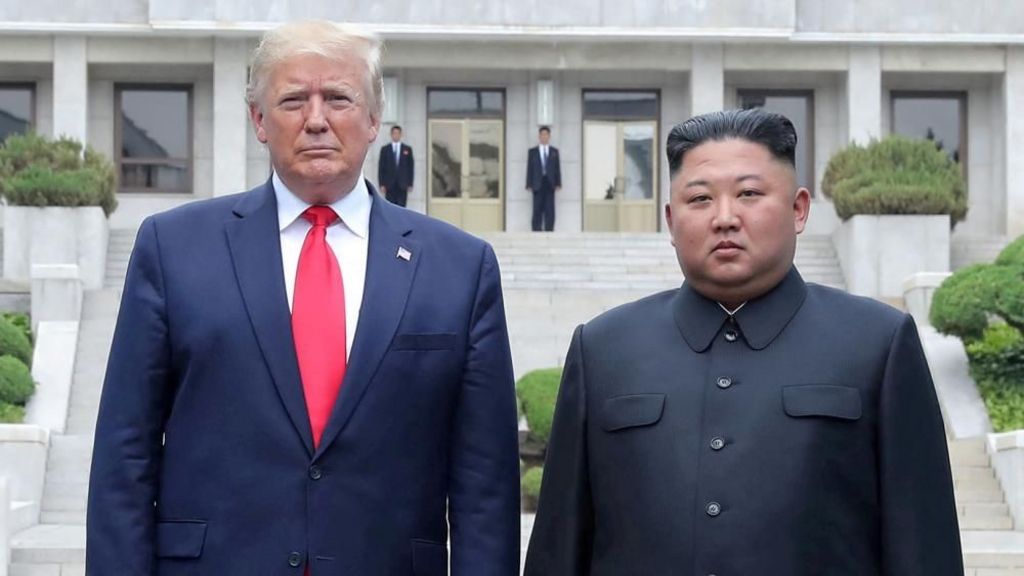
This is not the first time Trump has taken unexpected unilateral action on Korean Peninsula diplomacy during his presidency. Back in 2018, Seoul worked behind the scenes to facilitate the first ever meeting between a sitting U.S. president and Kim Jong Un, viewing Trump’s unorthodox approach to diplomacy as both a risk and an opportunity. Immediately after that 2018 summit, Trump suddenly announced a full suspension of joint U.S.-South Korea drills. A second planned summit in 2019 collapsed without any agreement after Kim refused to dismantle all of North Korea’s nuclear facilities. While Trump and Kim held a brief, widely publicized photo-op meeting at Panmunjom in the Demilitarized Zone later that year, no substantive nuclear negotiations have taken place between the two sides since.
It was South Korea that bore the worst consequences of the failed 2019 diplomatic push. North Korea demolished the inter-Korean liaison office on its territory, cut off all official communication with Seoul, passed a new law punishing the distribution of South Korean media with the death penalty, and formally codified the right to use nuclear weapons in its national constitution.
Trump has repeatedly insisted he shares a warm “great relationship” with Kim, telling reporters Wednesday, “He likes me.” But Kim Yo Jong, Kim Jong Un’s powerful sister and top advisor, issued a public statement casting doubt on that claim. She said North Korea had no knowledge of any recent contact between Kim and Trump, adding that the claim “must be the only thing I am unaware of in our foreign policy.” She also reaffirmed North Korea’s long-held position that it will never abandon its nuclear arsenal, arguing that the country’s nuclear program maintains regional military balance and stability. On the scaling back of the joint drills, Kim Yo Jong said the move “doesn’t merit our country’s interest nor comment,” and added that it does nothing to change the exercises’ “hostile and offensive nature,” according to state media reports.
While Trump has announced he expects to meet Kim Jong Un again later this year, few regional experts believe another summit will produce any meaningful progress. Kim has strengthened strategic ties with both Moscow and Beijing in recent years, with North Korea now supplying billions of dollars worth of artillery shells and missiles to Russia for its war in Ukraine, as well as an estimated 13,000 combat troops. Though North Korean troops have suffered thousands of casualties in Ukraine, they have gained substantial frontline combat experience, particularly in drone warfare, that has strengthened the country’s overall military capability. North Korea’s key non-negotiable demand for any new summit is that the U.S. formally accepts it as a nuclear-armed state, a concession Trump has not publicly indicated he is willing to make, leaving little incentive for Pyongyang to negotiate.
The early halt to the drills is already a major strategic concession for North Korea, and also aligns with long-held Chinese objections to the exercises, which Beijing views as a threat to its own regional security. Analysts warn the move could open the door to further demands from Pyongyang at a time when North Korea is militarily stronger than ever. North Korea has conducted six nuclear tests, and has developed intercontinental ballistic missiles capable of reaching the continental United States. For South Korea, which faces a persistent and growing threat from the North, the U.S. alliance remains a matter of survival. “There isn’t much South Korea can do to defend itself against the North on its own,” Jo Bee-yun notes, making the U.S. alliance “a matter of life-and-death.”