分类: politics

  • UK lawyers seek travel and financial sanctions against Netanyahu

    UK lawyers seek travel and financial sanctions against Netanyahu

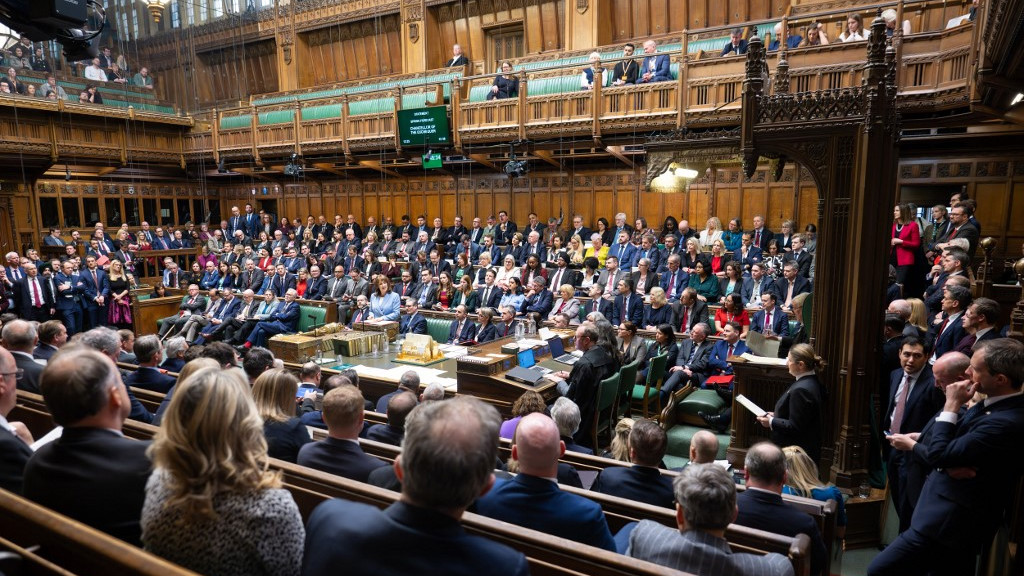
    A prominent British law firm has formally petitioned the UK Foreign Secretary to implement financial and travel sanctions against Israeli Prime Minister Benjamin Netanyahu, citing extensive evidence of alleged international law violations against Palestinians. Deighton Pierce Glynn, representing the Arab Organisation for Human Rights in the UK (AOHR UK), submitted the comprehensive legal filing earlier this week to Foreign Secretary Yvette Cooper.

    The submission presents documented evidence from multiple international institutions including the International Criminal Court, International Court of Justice, and United Nations bodies, alleging Netanyahu’s direct involvement in violations across Gaza, the West Bank, and East Jerusalem. The filing contends there are reasonable grounds to suspect Netanyahu’s statements constitute incitement to commit prohibited acts with intent to destroy the Palestinian people in part or whole – potentially amounting to incitement to genocide.

    Mohammed Jamil, chair of AOHR UK, emphasized that activating the Magnitsky sanctions regime against Netanyahu represents “a legal and moral necessity” rather than merely a political option. The sanctions framework, named after Russian whistleblower Sergei Magnitsky, targets individuals responsible for human rights violations or corruption by restricting their access to financial systems and international travel.

    The legal submission argues that Israeli actions against Palestinians result from high-level political authorization rather than subordinate decisions, citing Netanyahu’s October 2023 invocation of the biblical enemy ‘Amalek’ as evidence of incendiary rhetoric. Additionally, the filing references the Prime Minister’s role in illegal settlement expansion, including the E1 project that effectively undermines Palestinian statehood prospects.

    Jamil asserted that Britain’s international standing has been compromised by its “silence in the face of genocide” and continued military, security, political and economic support to Israel. The UK previously sanctioned Israeli ministers Bezalel Smotrich and Itamar Ben Gvir in June 2023 over settler violence incitement, marking this as the first attempt to target a sitting Israeli leader under the UK’s 2020 sanctions regime.

    Notably, Netanyahu already faces travel restrictions to the UK under an existing arrest warrant for alleged war crimes in Gaza. Legal experts note the UK has previously imposed similar sanctions on sitting heads of state including Vladimir Putin, Aleksandr Lukashenko and Bashar al-Assad, establishing precedent for such actions.

    The UK Foreign Office has not commented on the sanctions request. Deighton Pierce Glynn indicated that if the government fails to respond, they will “consider taking formal legal steps over the issue,” potentially escalating the matter through judicial channels.

  • Venezuela opens debate on an oil sector overhaul as Trump seeks role for US firms

    Venezuela opens debate on an oil sector overhaul as Trump seeks role for US firms

    Venezuela’s National Assembly has initiated legislative proceedings on a transformative bill that would significantly reduce state dominance over the country’s oil industry, marking the most substantial policy shift since the late President Hugo Chávez nationalized major portions of the sector in 2007. The proposed legislation, which advanced through initial parliamentary debate on Thursday, would establish new frameworks for private sector participation and international arbitration mechanisms.

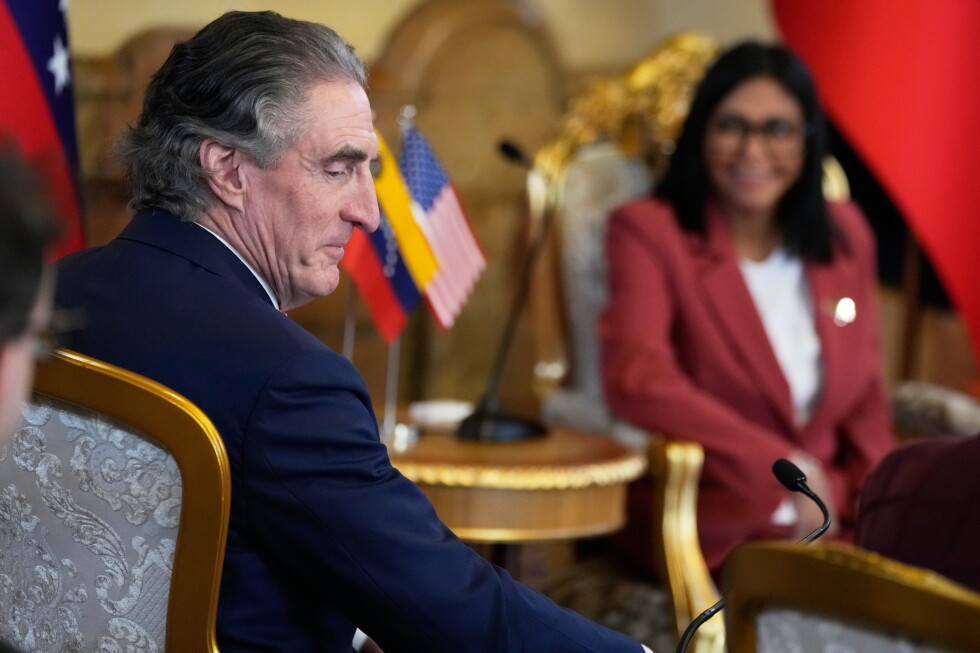
    The comprehensive reform package emerges amid heightened pressure from the Trump administration following the recent U.S. capture of former President Nicolás Maduro. American officials have intensified demands for Venezuela’s acting President Delcy Rodríguez to facilitate increased investment from U.S. energy corporations in the nation’s struggling petroleum industry.

    According to draft legislation obtained by The Associated Press, the bill would enable private companies to independently operate oil fields, market their crude production, and retain financial revenues while maintaining nominal minority partnership status with state-owned PDVSA. The document explicitly states that operating companies would assume comprehensive management of activities “at its sole cost, expense and risk.”

    A critical component of the proposed law involves permitting international arbitration for investment disputes, moving away from the previous requirement that cases be heard exclusively in Venezuelan courts. The legislation maintains the existing 30% royalty rate but allows reductions to as low as 15% for complex or capital-intensive oil projects to incentivize development.

    Jorge Rodríguez, President of the National Assembly and brother of the acting president, emphasized to lawmakers that the bill aims to achieve “an accelerated increase in production,” noting that “oil under the ground is useless” without development. The proposal received backing from business representatives, including Orlando Camacho of Fedeindustria, who described the measures as essential for maintaining the oil industry as Venezuela’s economic engine.

    Despite these overtures, significant investor concerns persist regarding financial and legal risks. Many international energy companies, including Exxon, continue seeking compensation for assets seized during Chávez’s nationalization campaign. Additional uncertainties stem from Venezuela’s political transition timeline and the maintenance of U.S. sanctions that currently restrict foreign operations in the country’s oil sector.

  • House holding war powers vote to direct Trump to remove troops from Venezuela

    House holding war powers vote to direct Trump to remove troops from Venezuela

    A significant legislative confrontation unfolded in the House of Representatives on Thursday as lawmakers voted on a resolution demanding the withdrawal of U.S. military forces from Venezuela. This move represents the latest chapter in the ongoing tension between Democratic legislators and the Republican-controlled Congress regarding presidential authority in military engagements.

    The resolution emerged despite prior assurances from the Trump administration to senators that no American troops were currently deployed in Venezuela and that congressional approval would be sought before initiating substantial military operations. Democratic representatives maintained that the measure remained necessary following recent U.S. efforts to capture Venezuelan leader Nicolás Maduro and President Trump’s expressed intentions to control the nation’s oil resources.

    The vote served as a critical examination of Republican willingness to constrain a president who originally campaigned on reducing foreign military involvement but has increasingly employed military options to advance policy objectives in the Western Hemisphere. Thus far, most Republican lawmakers have resisted imposing checks on presidential war powers through legislative measures.

    Representative Brian Mast (R), chair of the House Armed Services Committee, characterized the Democratic initiative as motivated by ‘spite’ toward President Trump rather than substantive policy concerns. He defended the administration’s actions, describing the operation against Maduro as ‘possibly the most successful law enforcement operation in history.’

    Democratic representatives countered that Congress must reassert its constitutional role in determining appropriate use of military force. Representative Gregory Meeks (D), ranking member of the House Foreign Affairs Committee, criticized the administration’s approach, stating that Trump’s policies were reducing the United States to ‘a regional bully with fewer allies and more enemies.’

    The debate occurs alongside emerging questions about the administration’s handling of Venezuelan oil resources. Senate Democrats have raised concerns about potential connections between oil licensing agreements and political contributions, specifically referencing Vitol, a major oil broker that received significant licensing rights while its executives contributed substantially to Trump-aligned political action committees.

    Thirteen Democratic senators have demanded full transparency regarding any financial arrangements connected to Venezuela that might benefit presidential donors. The White House maintains that it is safeguarding Venezuela’s oil resources for the benefit of both the Venezuelan people and American interests.

  • Trump sues JPMorgan Chase, CEO Dimon, claims ‘debanked’ for politics

    Trump sues JPMorgan Chase, CEO Dimon, claims ‘debanked’ for politics

    Former President Donald Trump has initiated a high-stakes legal battle against JPMorgan Chase and its CEO Jamie Dimon, filing a $5 billion civil lawsuit in Florida state court. The litigation centers on allegations that the financial institution deliberately terminated Trump’s accounts due to political motivations following the January 6 Capitol incident.

    The comprehensive complaint details how JPMorgan notified Trump on February 19 about the closure of several accounts, resulting in what Trump describes as ‘considerable financial harm.’ The court documents assert that the banking giant’s actions were driven by ‘political and social motivations’ and ‘unsubstantiated woke beliefs’ rather than legitimate business considerations.

    Trump’s legal team contends that the account closures forced the former president into less favorable financial arrangements with alternative institutions while significantly disrupting his business operations. The lawsuit further alleges that CEO Jamie Dimon initially promised to provide a detailed explanation for the account terminations but ultimately failed to follow through.

    JPMorgan Chase has issued a firm response, stating the lawsuit ‘has no merit’ while maintaining that account closures occur solely due to ‘legal or regulatory risk’ considerations. The banking institution emphasized that it does not terminate accounts based on political or religious affiliations but acknowledged supporting regulatory reforms to prevent ‘weaponization of the banking sector.’

    The legal action emerges within a broader political context where Trump and Republican committees have alleged systematic ‘debanking’ practices against conservative viewpoints. This case represents part of Trump’s ongoing effort to reframe the January 6 events, coinciding with his recent pardons of over 1,500 individuals involved in the Capitol incident and the administration’s characterization of rioters as ‘peaceful patriotic protesters.’

    The lawsuit unfolds alongside continued political tensions, as demonstrated by former special counsel Jack Smith’s recent congressional testimony defending his criminal investigations into Trump as necessary accountability measures rather than politically motivated actions.

  • Egypt and Saudi Arabia pressure Libya’s Haftar to stop UAE supplies to Sudan’s RSF

    Egypt and Saudi Arabia pressure Libya’s Haftar to stop UAE supplies to Sudan’s RSF

    Egypt and Saudi Arabia have escalated diplomatic pressure on eastern Libyan commander Khalifa Haftar concerning his alleged facilitation of Emirati military support to Sudan’s Rapid Support Forces (RSF). Security sources indicate this assistance could fundamentally reshape Cairo’s relationship with Haftar’s administration.

    This development forms part of a coordinated Egyptian-Saudi initiative to intercept arms, fuel, and combatant flows to the RSF, counter UAE regional influence, and stabilize the volatile border region connecting Egypt, Libya, and Sudan.

    Earlier this month, Saddam Haftar, the commander’s son and deputy leader of the Libyan Arab Armed Forces (LAAF), was urgently summoned to Cairo for meetings with Egyptian Defense Minister Abdel Meguid Saker and senior security officials. While publicly framed as routine military cooperation, intelligence sources confirm the discussions centered on compelling evidence of Haftar’s complicity in weapons transfers.

    According to a high-ranking Egyptian military official, surveillance confirmed weapons shipments originating from Abu Dhabi transiting through Haftar-controlled territories before reaching RSF positions in Sudan. Additionally, monitoring revealed Libyan fuel tankers supplying paramilitary forces in Darfur and documented mercenary movements from South America through Libya to Sudan.

    Despite historical Egyptian support for Haftar’s eastern Libyan administration, his parallel backing by the UAE—the RSF’s primary patron—has created strategic complications. Recent reports indicate supply lines established through Libyan border areas directly enabled RSF military advances, including the capture of el-Fasher where thousands reportedly faced massacre.

    Cairo and Riyadh presented Saddam Haftar with offers of alternative financial and military support to replace Emirati backing. These discussions coincided with a substantial $4 billion Saudi arms agreement with Pakistan, with portions reportedly earmarked for Haftar’s forces and the Sudanese military led by Abdel Fattah al-Burhan.

    Egyptian officials shared intelligence revealing alleged Emirati plans to fragment Haftar’s territory following RSF consolidation in western Sudan. The strategy purportedly involved dividing Libya into multiple zones, potentially diminishing Haftar’s control.

    The geopolitical realignment follows public friction between Saudi Arabia and the UAE, previously close allies. Riyadh has grown increasingly assertive against Emirati regional policies, particularly regarding Yemen where UAE-backed separatists recently faced setbacks against Saudi-supported government forces.

    Egypt demonstrated its resolve through a targeted air strike against a military convoy transiting from Libya to RSF-controlled territory in Sudan. The operation destroyed dozens of vehicles carrying weapons and fuel near the al-Uwaynat border triangle. Subsequent air patrols continue monitoring the region, with authorities warning any further support convoys will face similar consequences.

    Analysts interpret these developments as emerging Egyptian-Saudi coordination to counter expanding Emirati influence across multiple conflict zones, though underlying differences regarding regional leadership persist between Cairo and Riyadh.

  • Trump launches his Board of Peace, says it will work ‘in conjunction’ with UN

    Trump launches his Board of Peace, says it will work ‘in conjunction’ with UN

    In a significant geopolitical move at the World Economic Forum in Davos, former U.S. President Donald Trump officially inaugurated his controversial “Board of Peace” initiative on Thursday. The ceremonial signing event featured leaders and senior officials from 19 nations, including prominent Trump allies such as Argentina’s Javier Milei and Hungary’s Viktor Orbán, who collectively endorsed the organization’s founding charter.

    The newly established board, chaired by Trump himself, carries a substantial $1 billion membership fee and has sparked international debate regarding its purpose and composition. While initially conceived to oversee post-conflict peace in Gaza following the Hamas-Israel war, the board’s charter now envisions a broader mandate in resolving international disputes, raising concerns among traditional diplomatic circles about its potential to challenge the United Nations’ authority.

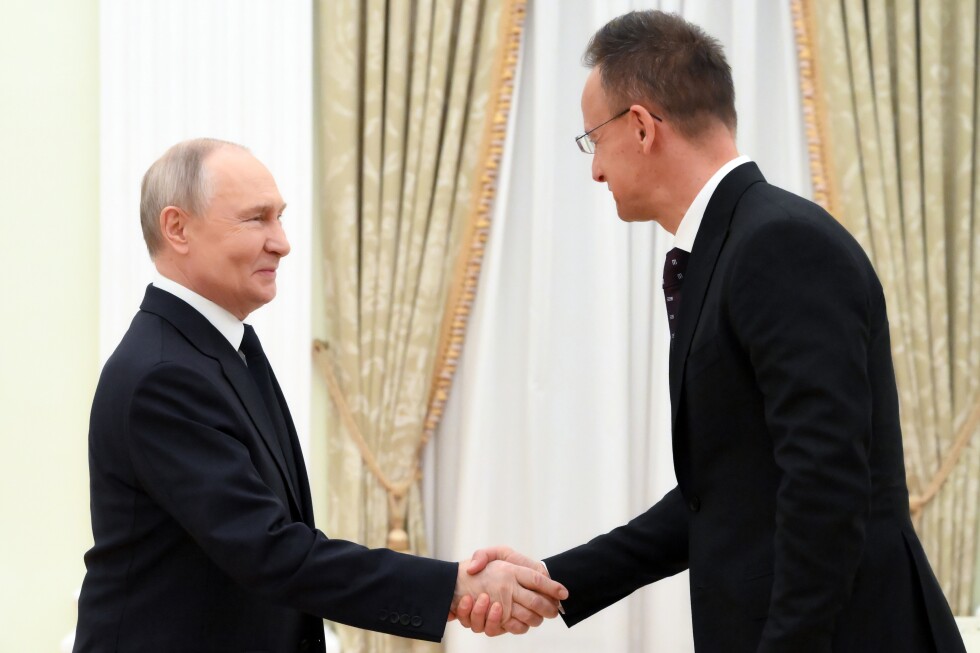
    Trump addressed these concerns during the launch, asserting that the organization would operate “in conjunction” with the UN rather than as a competitor. However, the membership roster has generated controversy, particularly regarding the inclusion of Russian President Vladimir Putin, despite Russia’s ongoing invasion of Ukraine. Trump confirmed Putin’s agreement to join, though the Kremlin leader stated he remains undecided.

    The initiative faced immediate diplomatic setbacks as key U.S. allies including the United Kingdom and France declined participation, expressing skepticism about the board’s legitimacy and objectives. Other signatories included representatives from Bahrain, Morocco, Armenia, Azerbaijan, Bulgaria, Indonesia, Jordan, Kazakhstan, Kosovo, Pakistan, Paraguay, Qatar, Saudi Arabia, Turkey, the United Arab Emirates, Uzbekistan, and Mongolia.

    U.S. Secretary of State Marco Rubio emphasized that the board’s primary focus would be “ensuring that the Gaza peace deal becomes enduring.” Trump delivered a stern warning to Hamas, stating they must disarm in the next phase of the ceasefire agreement or face consequences.

    The launch occurs against the backdrop of Trump’s previously expressed frustration at not receiving the Nobel Peace Prize, despite his claims of having ended multiple conflicts. Concurrently, Trump prepared to meet Ukrainian President Volodymyr Zelensky to discuss potential ceasefire negotiations regarding the ongoing Russian invasion, while his special envoy Steve Witkoff indicated substantial progress in peace talks, noting they had been narrowed to “one solvable issue.”

  • With ‘Board of Peace,’ Trump tries hand at institution-making, to wide doubt

    With ‘Board of Peace,’ Trump tries hand at institution-making, to wide doubt

    In a striking pivot from his longstanding pattern of dismantling international frameworks, President Donald Trump has unveiled his visionary ‘Board of Peace’ during the World Economic Forum in Davos, Switzerland. The initiative, however, has been met with profound skepticism from major global powers and foreign policy experts alike.

    Unlike traditional multilateral bodies such as the United Nations, this newly proposed board would operate under Trump’s direct personal authority, granting him ultimate decision-making power even beyond his presidential term. The concept originally emerged as a mechanism for Gaza conflict resolution following the October ceasefire between Israel and Hamas. Yet its scope rapidly expanded with invitations extended to Russian President Vladimir Putin—despite ongoing Ukraine tensions—and numerous nations outside conventional Middle East diplomacy circles.

    During the Davos announcement, Trump asserted the board’s potential to evolve beyond Gaza, with Secretary of State Marco Rubio touting ‘endless possibilities.’ The President repeatedly referenced his contested claim of ending eight conflicts during his current term while criticizing UN inefficiencies, noting he ‘never spoke to the United Nations about any of them.’

    Financial transparency concerns immediately surfaced as the charter revealed permanent executive board positions carrying a $1 billion membership fee. Although US officials clarified temporary members wouldn’t face this financial barrier and promised rigorous oversight, destination specifics for these funds remain undefined.

    European responses proved notably cool. Britain’s Foreign Secretary Yvette Cooper expressed reservations regarding Putin’s inclusion, while France’s outright refusal prompted Trump to threaten 200% tariffs on French wine unless President Macron participates. Several Muslim-majority nations including Saudi Arabia and Turkey offered cautious support but emphasized the board should function as a transitional administration for Gaza rather than permanent structure.

    Foreign policy veterans expressed deep reservations. Aaron David Miller of the Carnegie Endowment noted the initiative lacks ‘guiding principles that would enable serious countries to join,’ while International Crisis Group’s Richard Gowan observed the board reflects Trump’s preference for ’boutique organizations that he can control completely.’ Many experts warn that the board’s credibility hinges entirely on its success in Gaza—where ceasefire fragility and reconstruction challenges present immediate practical obstacles to its ambitious mandate.

  • Failed Afghan asylum seekers need to go back home, Sweden’s migration minister urges

    Failed Afghan asylum seekers need to go back home, Sweden’s migration minister urges

    NICOSIA, Cyprus — Sweden’s Migration Minister Johan Forssell has called for urgent European Union action to address the growing challenge of deporting Afghan nationals whose asylum claims have been rejected or who have committed crimes within EU territories. Speaking during an informal gathering of EU Justice and Home Affairs ministers in Cyprus, Forssell highlighted a critical administrative impasse: the inability to remove individuals lacking proper identification or travel documentation.

    The minister articulated a pressing concern that without functional documentation procedures, EU nations face ‘more or less impossible’ deportation scenarios. Forssell emphasized that while the EU maintains no interest in formal political engagements that might legitimize Afghanistan’s Taliban leadership, technical-level agreements remain both feasible and necessary.

    This position stems from Sweden’s direct experience with criminal cases involving Afghan nationals who cannot be expelled due to documentation gaps. ‘If you come to Europe and commit crimes, you have chosen yourself not to be part of our society,’ Forssell stated, underscoring the government’s commitment to ensuring expulsion of such individuals.

    The documentation crisis arises because most Afghan embassies in Europe operate without recognition from Taliban authorities, leaving migrants in legal limbo. Forssell revealed that the European Commission has initiated preliminary contacts with Kabul, describing these efforts as a ‘very positive first step.’ He also noted emerging consensus among multiple EU states facing parallel challenges.

    With over half of Afghan asylum seekers expected to receive rejections, Forssell warned that public support for legitimate asylum processes could erode without efficient return mechanisms. He proposed practical solutions including charter flights consolidating deportees from multiple countries.

    European Commissioner for Internal Affairs and Migration Magnus Brunner confirmed that member states are engaging with Afghanistan’s ‘effective authorities’ on technical levels to facilitate repatriations.

    The Swedish minister contextualized these efforts within his nation’s broader migration policy shift. Sweden’s historically generous asylum approach has transformed significantly in recent years, with public concern over migration-related problems contributing to the current government’s formation—a coalition that includes the hard-right, anti-immigration Sweden Democrats. Forssell reported that asylum applications have now reached their lowest level since 1985, aligning with current policy objectives.

  • Venezuela looks to petrodollars to bring down prices

    Venezuela looks to petrodollars to bring down prices

    In a strategic economic maneuver, Venezuela’s interim government is deploying petrodollar revenues to combat hyperinflation and stabilize its crippled currency. The administration under Acting President Delcy Rodriguez confirmed receiving $300 million from U.S. sales of Venezuelan crude, funds immediately channeled into bolstering the struggling bolivar.

    This dollar injection aims to narrow the widening gap between official and parallel exchange rates—a primary driver of Venezuela’s rampant inflation. Market analysts observed immediate positive effects, with currency speculation diminishing upon anticipation of the dollar influx. Alejandro Grisanti of Ecoanalitica noted that while such interventions provide temporary relief, sustainable economic recovery requires consistent dollar availability and responsible fiscal policies beyond exchange rate manipulations.

    The current economic strategy marks a continuation of policies initiated during Nicolas Maduro’s administration, when Rodriguez served as vice president. Following Maduro’s military ouster on January 3, the United States asserted control over Venezuelan oil assets, with former President Donald Trump declaring Washington ‘in charge’ of the nation’s oil revenues.

    Parliament has begun debating Rodriguez’s proposal to open Venezuela’s nationalized oil sector to private investment—a significant policy shift for the traditionally socialist nation. Meanwhile, ordinary Venezuelans face unbearable hardships with monthly minimum wages and pensions equivalent to merely 40 US cents, forcing pensioners to choose between hunger and untreated illness according to union leader Josefina Guerra.

  • Exclusive: UK confirms phone call between Cameron and ICC’s Karim Khan

    Exclusive: UK confirms phone call between Cameron and ICC’s Karim Khan

    The British government has officially acknowledged a contentious April 2024 telephone conversation between then-Foreign Secretary David Cameron and International Criminal Court Chief Prosecutor Karim Khan, marking the first formal confirmation of the exchange that allegedly involved threats over the ICC’s Gaza investigation.

    The disclosure emerged through a Freedom of Information request filed by Unredacted, a national security research unit at the University of Westminster. In a January 2026 response letter, the Foreign Office’s Information Rights Unit stated: “The then Foreign Secretary, David Cameron, was the only person present on the call on 23 April 2024 with Karim Khan.”

    This confirmation follows Prosecutor Khan’s recent statement to the ICC alleging that a “senior British official” threatened to withdraw UK funding from the court during the April 23rd conversation. The call occurred during a critical period—one month before Khan sought arrest warrants against Israeli Prime Minister Benjamin Netanyahu and Defense Minister Yoav Gallant, and coincided with intensifying international pressure regarding the Gaza war crimes investigation.

    According to Middle East Eye’s previous reporting, which cited sources including former staff in Khan’s office who had seen meeting minutes, Cameron allegedly characterized the potential warrants as “like dropping a hydrogen bomb.” The former prime minister reportedly argued that while prosecuting Russia for Ukrainian aggression was justified, targeting Israel during its “self-defense” against October 7th attacks was fundamentally different. Cameron purportedly warned that the warrants would have “profound implications” in Britain and within his Conservative Party, threatening defunding and withdrawal from the Rome Statute if proceedings moved forward.

    Professor Sam Raphael, International Relations and Human Rights expert at the University of Westminster, stated: “This raises serious questions about the role of a senior minister in threatening the impartiality of the ICC, especially given the myriad forms of military, intelligence and diplomatic support provided by the UK to Israel at the time.”

    Legal experts consulted by MEE suggest Cameron’s alleged conduct may constitute an attack on judicial independence and potentially violate both the Rome Statute and British law regarding obstruction of justice. Two British MPs have subsequently called for Prime Minister Keir Starmer to initiate an independent investigation into the allegations, noting that any attempted coercion of the ICC could breach Article 70 of the Rome Statute prohibiting interference with justice administration.

    The ICC continues to face significant external pressure, particularly from Israel and the United States, since Khan’s decision to pursue warrants. The Trump administration has imposed financial and visa sanctions against Khan, his deputies, six judges, and Palestinian entities connected to the investigation, while threatening further measures against the court itself.

    ICC judges are currently reviewing an Israeli challenge to the court’s jurisdiction over Palestine and a separate complaint questioning the prosecutor’s impartiality. Khan has been on voluntary leave since May 2025 pending a UN investigation into unrelated sexual misconduct allegations, which he vigorously denies.