分类: politics

  • Trump threatens tariffs on any nation supplying Cuba with oil

    Trump threatens tariffs on any nation supplying Cuba with oil

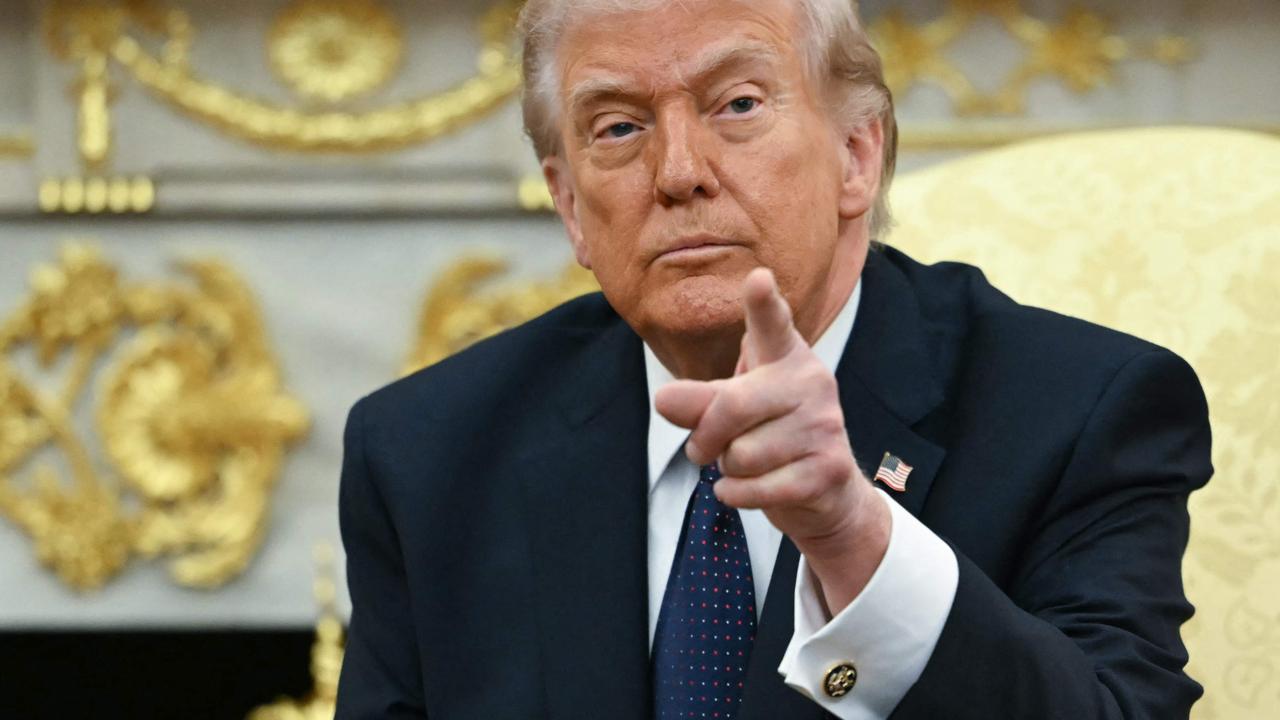
    In a significant escalation of foreign policy measures, U.S. President Donald Trump has issued a new threat against nations supplying petroleum products to Cuba. The announcement came Thursday through an executive order authorized under a national emergency declaration, marking the latest development in Washington’s intensified campaign against the Communist-governed island.

    The presidential directive did not specify particular tariff rates or identify specific countries that might face import duties. This development follows the U.S. military’s recent operation in Venezuela that resulted in the capture of ousted President Nicolas Maduro. Emboldened by this successful intervention, the Trump administration has increasingly vocalized its intentions to confront Cuban leadership.

    President Trump asserted this week that ‘Cuba will be failing pretty soon,’ noting that Venezuela, historically Cuba’s primary oil supplier, has ceased both petroleum shipments and financial support to the island nation. The tariff threat represents a continuation of the administration’s use of economic measures as instruments of foreign policy during Trump’s second term.

    Cuban leadership has previously dismissed Washington’s pressure campaign, with President Miguel Díaz-Canel stating earlier this month that the United States lacks moral authority to compel agreements with Cuba. The ongoing tension reflects deepening geopolitical divisions in the Western Hemisphere as the Trump administration expands its efforts to counter left-wing governments throughout the region.

  • Trump says he plans to talk to Iran while Pentagon prepares for possible action

    Trump says he plans to talk to Iran while Pentagon prepares for possible action

    In a development highlighting the complex dynamics of U.S.-Iran relations, President Donald Trump announced on Thursday his intention to engage in discussions with Tehran. This statement comes alongside a significant military reinforcement in the region, including the deployment of additional naval assets. Speaking to journalists, Trump confirmed his planning for potential talks but provided no specific details regarding the timeline, format, or Washington’s negotiating team. He juxtaposed this diplomatic overture with a stark reminder of U.S. military readiness, noting, ‘We have a lot of very big, very powerful ships sailing to Iran right now, and it would be great if we didn’t have to use them.’

    This ambivalent approach reflects the administration’s current review of its options. U.S. officials confirm that while military action remains a possibility, no definitive decision to strike Iran has been made. The recent surge in tensions can be traced to a violent government crackdown on widespread protests within Iran, which prompted Trump to repeatedly threaten intervention. Although these demonstrations have since subsided, the underlying issues of economic hardship and political repression persist.

    Further complicating the situation is the nuclear dimension. The President has explicitly stated that the United States would respond decisively if Iran were to resume its nuclear weapons program, referencing previous joint U.S.-Israeli airstrikes on nuclear facilities. The administration’s posture was underscored by Pentagon chief Pete Hegseth, who, using the administration’s preferred term ‘War Department,’ affirmed the military’s preparedness to execute the President’s directives. Hegseth emphasized the U.S. stance that Iran ‘should not pursue nuclear capabilities,’ signaling a firm line in any future negotiations or confrontations.

  • CCG organizes 134 patrols around the Diaoyu Islands since 2021

    CCG organizes 134 patrols around the Diaoyu Islands since 2021

    The China Coast Guard (CCG) has significantly escalated its maritime presence around the Diaoyu Islands, conducting 134 patrol missions within the territorial waters since 2021. Recent operational data reveals an exceptionally high tempo of patrol activities throughout 2025, with vessels deployed for rights protection and sovereignty enforcement missions on 357 days during the year.

    Over the past five years, the coast guard has demonstrated substantial operational capability through the deployment of approximately 550,000 ship sorties and 6,000 aircraft missions dedicated to maritime rights protection. These persistent patrol operations represent China’s determined efforts to reinforce its territorial claims and maintain constant presence in the contested waters.

    The intensified patrol schedule coincides with ongoing regional tensions regarding maritime sovereignty in the East China Sea. The Diaoyu Islands, known as the Senkaku Islands in Japan, have been subject to longstanding territorial disputes between China and Japan, with both nations asserting historical claims to the strategically significant archipelago.

    China’s coast guard operations have evolved significantly in recent years, with enhanced vessel capabilities and increased operational range enabling more sustained presence missions. The reported patrol statistics demonstrate Beijing’s commitment to advancing its maritime interests through continuous law enforcement presence rather than intermittent demonstrations of sovereignty.

  • Burkina Faso junta announces ban on all political parties

    Burkina Faso junta announces ban on all political parties

    Burkina Faso’s military regime has formally outlawed all political organizations in a decisive consolidation of power, marking the most significant authoritarian shift since Captain Ibrahim Traoré’s 2022 coup. Interior Minister Emile Zerbo declared the comprehensive ban as part of broader state reconstruction efforts, citing what authorities describe as systemic abuses within the nation’s multiparty framework.

    The junta administration contends that political parties have exacerbated societal divisions and undermined national cohesion through their operations. This sweeping prohibition extends beyond previous restrictions on public assemblies to completely eliminate party operations across the territory. According to the decree, all assets belonging to the dissolved political entities will be transferred to state ownership.

    A formal draft legislation enacting these measures will be presented to the Transitional Legislative Assembly imminently. Before the military takeover, Burkina Faso’s political landscape featured over 100 registered parties, with 15 holding parliamentary seats following the 2020 general elections.

    Captain Traoré, who seized power from Paul-Henri Sandaogo Damiba in September 2022, had initially committed to restoring civilian governance by July 2024. However, the junta recently announced a five-year extension to military rule, just two months prior to the promised transition deadline.

    Despite international criticism of his authoritarian methods, the 37-year-old leader has garnered substantial popularity across Africa for his pan-Africanist ideology and vocal opposition to Western influence. Burkina Faso joins several West African nations experiencing military takeovers in recent years, raising profound concerns about regional democratic stability and governance patterns.

  • Panama voids Hong Kong-based firm’s canal port contracts

    Panama voids Hong Kong-based firm’s canal port contracts

    In a landmark ruling with significant geopolitical implications, Panama’s Supreme Court has declared unconstitutional the contracts permitting Hong Kong-based CK Hutchison Holdings to operate critical container ports along the Panama Canal. The decision invalidates the legal framework under which subsidiary Panama Ports Company (PPC) has managed Balboa and Cristobal terminals since the 1990s.

    The judicial verdict arrives amid escalating tensions between the United States and China regarding influence over global trade corridors. Former US President Donald Trump repeatedly asserted Chinese control over the strategic waterway, with his administration pressuring Panama to address perceived Chinese dominance. Secretary of State Marco Rubio previously demanded ‘immediate changes’ to China’s influence over canal operations.

    Panamanian President José Raúl Mulino has consistently maintained national sovereignty over the canal, rejecting US claims of foreign control. The court’s determination followed extensive deliberation but was immediately challenged by PPC as legally unfounded. The company warned the decision jeopardizes stability for thousands of Panamanian families dependent on port operations and disregards over $1.8 billion in infrastructure investments.

    The ruling potentially disrupts CK Hutchison’s planned $22.8 billion global port divestiture to a consortium led by US investment firm BlackRock and shipping group MSC. This sale, previously praised by Trump as restoring US ownership while criticized by China, represented a strategic effort to reduce political exposure in sensitive regions.

    Financial markets responded swiftly, with CK Hutchison shares dropping 4.6% in Hong Kong trading, dragging the Hang Seng Index down over 2%. The reaction underscores both the company’s market significance and growing investor apprehension regarding geopolitical risk.

    Despite Chinese companies representing substantial canal users (21.4% of cargo volume), no public evidence suggests direct Chinese government control over waterway operations. The Panama Canal Authority, a government agency, maintains full operational control of the vital shipping corridor that accommodates approximately 14,000 annual transits and handles 5% of global maritime trade.

  • Niger’s junta leader accuses France, Benin and Ivory Coast of being behind airport attack

    Niger’s junta leader accuses France, Benin and Ivory Coast of being behind airport attack

    NIAMEY, Niger — Niger’s military leadership has leveled explosive allegations against the presidents of France and two West African nations, claiming they sponsored armed militants who launched a brazen assault on a strategic air force base in the capital. The attack early Thursday resulted in four soldiers wounded and significant damage to military aircraft.

    General Abdourahamane Tchiani, Niger’s military ruler, delivered a fiery address on state television Thursday evening, directly implicating French President Emmanuel Macron, Benin’s President Patrice Talon, and Ivorian President Alassane Ouattara in supporting the mercenary operation. “We have sufficiently heard them bark, and they should now in turn be prepared to hear us roar,” Tchiani declared, though he presented no concrete evidence to substantiate his claims.

    The assault targeted the Diori Hamani International Airport complex in Niamey, a strategically critical installation housing military bases, the headquarters of the Niger-Burkina Faso-Mali Joint Force, and substantial uranium reserves currently at the center of a diplomatic dispute with French nuclear conglomerate Orano. Security footage from the scene captured intense explosions that illuminated the night sky during the two-hour firefight that began around midnight.

    Nigerien defense forces responded with decisive force, neutralizing 20 attackers and capturing 11 others according to official reports. State television additionally claimed one slain assailant was a French national, displaying graphic footage of bloodied bodies at the scene, though verification remained impossible.

    The attack damaged an Air Côte d’Ivoire aircraft parked on the tarmac, with projectiles striking both the fuselage and right wing. No armed group has claimed responsibility for the assault, which occurs amid deteriorating security conditions across Africa’s Sahel region.

    This incident exacerbates already strained relations between Niger’s military junta and former Western allies. Since seizing power in 2023, Niger’s leadership—along with neighboring Mali and Burkina Faso—has severed security ties with France and other Western nations while increasingly embracing Russian military support. The juntas regularly accuse Benin and Ivory Coast, both maintaining close French relations, of acting as proxies for Paris.

    Security analysts note that jihadist violence has intensified dramatically across the Sahel since 2025, with al-Qaida and Islamic State-affiliated militants exploiting the political instability created by military takeovers in Niger, Mali, and Burkina Faso. These nations have experienced worsening security conditions under military rule despite their rhetoric of strengthened sovereignty.

  • New Zealand not to join Board of Peace: PM

    New Zealand not to join Board of Peace: PM

    In a significant diplomatic development, New Zealand Prime Minister Christopher Luxon announced on Friday that his nation would not participate in the newly proposed ‘Board of Peace’ initiative spearheaded by former US President Donald Trump. The decision follows careful governmental consideration of the invitation extended by the Trump administration.

    Prime Minister Luxon’s official statement clarified that while New Zealand appreciated the invitation, the current framework of the proposed board did not align with the country’s international governance principles. ‘After thorough deliberation,’ Luxon stated, ‘our government has determined that we cannot accept membership in the Board of Peace in its present configuration.’

    This position was further elaborated by Foreign Minister Winston Peters through a social media post on platform X. Peters emphasized New Zealand’s historical role as a founding member and consistent supporter of the United Nations, noting that any parallel international governance structure must operate in complete harmony with the UN Charter. ‘For New Zealand, it remains imperative that any new international body’s work complements and reinforces the established principles of the United Nations,’ Peters wrote.

    The Board of Peace was formally established by former President Trump on January 22 during the World Economic Forum in Davos, Switzerland. The initiative represents one of Trump’s most significant foreign policy proposals since leaving office, though specific operational details and membership criteria remain unclear. New Zealand’s decision marks one of the first public rejections by a Western-aligned nation, potentially influencing how other countries approach the controversial initiative.

    Analysts suggest New Zealand’s refusal reflects broader concerns about the board’s potential to undermine existing international institutions and create parallel governance structures that might conflict with established multilateral agreements. The decision also demonstrates New Zealand’s independent foreign policy stance, balancing its traditional alliances with its commitment to multilateral governance through the United Nations system.

  • Ukraine is bracing for brutal weather as Trump says Putin agreed to halt power grid attacks

    Ukraine is bracing for brutal weather as Trump says Putin agreed to halt power grid attacks

    KYIV, Ukraine — As Eastern Europe grapples with an extreme winter cold snap, diplomatic tensions intensify over unverified claims of a temporary ceasefire on energy infrastructure attacks. U.S. President Donald Trump announced Thursday that Russian President Vladimir Putin had acquiesced to a one-week moratorium on targeting Ukraine’s power grid, though neither the Kremlin nor White House provided immediate confirmation of the alleged agreement.

    Ukrainian President Volodymyr Zelenskyy expressed profound skepticism regarding Moscow’s intentions, stating publicly Friday: ‘I do not believe that Russia wants to end the war. There is a great deal of evidence to the contrary.’ His comments came as the conflict approaches its fourth anniversary with no diplomatic resolution in sight.

    The purported truce discussion emerged against a backdrop of continued hostilities. Overnight, Russia launched 111 drones and one ballistic missile toward Ukraine, resulting in at least three casualties according to Ukrainian air defense reports. Simultaneously, Russia’s Defense Ministry claimed interception of 18 Ukrainian drones over multiple regions including annexed Crimea and the Black Sea.

    Meteorological conditions compound the humanitarian crisis, with temperatures forecast to plunge to -30°C (-22°F) across Ukraine this week. This severe cold wave threatens millions already suffering from Russia’s documented strategy of weaponizing winter conditions by targeting energy infrastructure.

    The energy truce concept originated during multilateral talks in Abu Dhabi last weekend involving envoys from Ukraine, Russia, and the United States. Zelenskyy confirmed his administration’s willingness to adopt reciprocal measures: ‘If Russia does not strike us, we will take corresponding steps regarding their energy infrastructure.’

    However, the Ukrainian leader clarified that no formal ceasefire agreement exists, emphasizing the absence of direct negotiations between the warring nations. Fundamental disagreements over occupied territories remain the primary obstacle to peace, with Zelenskyy reiterating Ukraine’s stance against compromising territorial integrity while expressing openness to economic compromise solutions.

    Further diplomatic engagements scheduled for Abu Dhabi this weekend face uncertainty due to escalating tensions between the U.S. and Iran, potentially delaying critical dialogue on the conflict.

  • Uganda’s army chief accuses US Embassy officials of aiding opposition figure who went into hiding

    Uganda’s army chief accuses US Embassy officials of aiding opposition figure who went into hiding

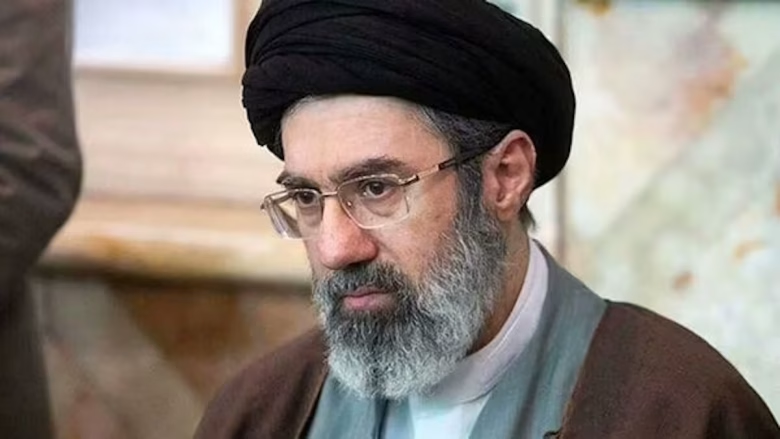
    Uganda’s military leadership has ignited a significant diplomatic controversy by alleging that U.S. Embassy officials assisted opposition figure Bobi Wine in evading capture following the country’s contentious presidential election. General Muhoozi Kainerugaba, who serves as both army chief and presumed political successor to President Yoweri Museveni, made explosive claims via social media platform X that American diplomats had coordinated with Wine to undermine Uganda’s national security.

    The general asserted, based on unspecified intelligence sources, that Wine orchestrated his own disappearance in collaboration with U.S. officials—accusations he subsequently retracted by deleting the posts. Wine, whose legal name is Kyagulanyi Ssentamu, has been circulating videos from various locations across Uganda, demonstrating his ability to evade security forces while criticizing what he describes as systemic injustice.

    This confrontation escalated dramatically when Kainerugaba declared Wine ‘wanted dead or alive,’ employing a derogatory variation of the opposition leader’s name and warning that foreign powers attempting to assist his escape would face severe diplomatic consequences. The military commander additionally claimed responsibility for a recent raid on Wine’s residence, though he denied allegations that soldiers assaulted Wine’s wife during the operation.

    Official election results show Museveni securing 71.6% of the vote compared to Wine’s 24.7%, granting the 81-year-old president a seventh term extending his four-decade rule. Wine has rejected these results as fraudulent while his supporters point to his continued evasion as evidence of government weakness. Hundreds of Wine’s supporters have been detained according to police reports, with one of his deputies facing terrorism charges related to election violence.

    The United States Embassy in Kampala has maintained silence regarding these allegations, while the Ugandan government has yet to specify formal charges against the opposition leader. This developing situation reflects deepening political divisions and growing international concern about democratic processes in the East African nation.

  • Trump says he plans to talk to Iran

    Trump says he plans to talk to Iran

    In a notable shift from his previous hardline stance, U.S. President Donald Trump announced his intention to initiate dialogue with Iranian leadership during a public appearance at the Kennedy Center on Thursday. The declaration came alongside a stark reminder of American military capabilities, with Trump referencing “very big, very powerful ships” currently deployed toward Iranian waters.

    The President framed potential diplomatic engagement as preferable to military action, stating unequivocally that avoiding the deployment of these naval assets would represent an optimal outcome. This dual-message approach—combining overt military demonstration with openness to negotiation—marks a significant development in the ongoing tensions between Washington and Tehran.

    The timing and venue of these comments carry substantial symbolic weight, delivered at a cultural institution named for a president who navigated one of the most dangerous nuclear standoffs in modern history. Trump’s statement suggests a possible recalibration of foreign policy strategy toward Iran, though the specific framework for proposed talks remains undefined.

    This development occurs against the backdrop of prolonged economic sanctions and periodic confrontations in the Persian Gulf, where U.S. and Iranian forces have previously engaged in dangerous encounters. The international community continues to monitor whether this overture will lead to substantive diplomatic engagement or represent merely tactical positioning.