分类: politics

  • New Zealand’s government plans to cut 14% of public sector jobs to slash spending

    New Zealand’s government plans to cut 14% of public sector jobs to slash spending

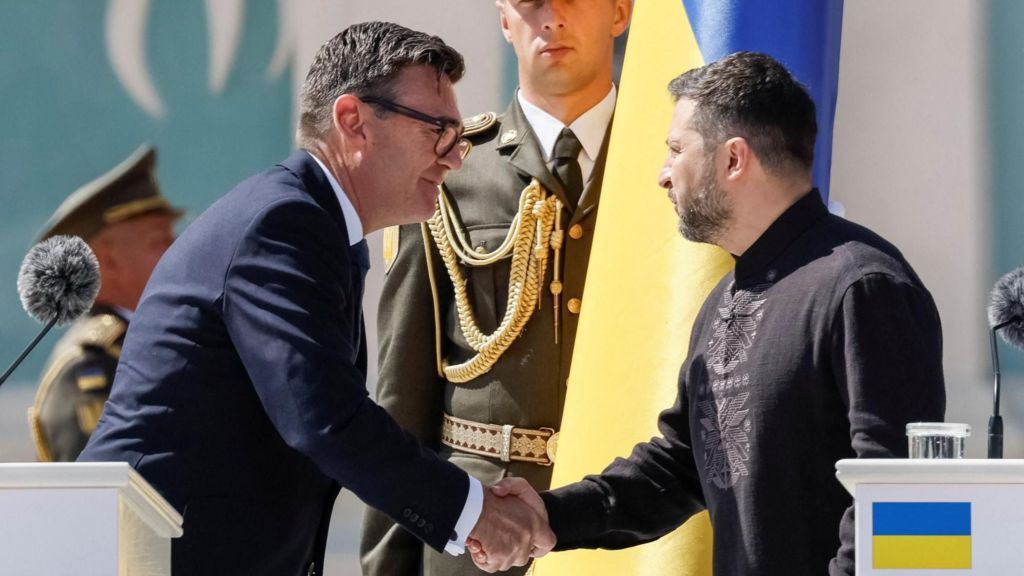
    AUCKLAND, New Zealand – New Zealand’s incumbent center-right National Party government has announced a far-reaching plan to downsize the country’s public sector, slashing nearly 9,000 positions — equivalent to 14% of the current public workforce — by mid-2029 in a push to cut billions in government spending, Finance Minister Nicola Willis revealed Tuesday during a speech to a business audience in Auckland, the nation’s largest city.

    Under the proposal, the cuts will bring the total public service workforce in Wellington, the country’s capital where most public servants are based, down to 55,000 from the projected 63,700 headcount in December 2025. This adjustment will reduce the share of public servants in New Zealand’s overall population from 1.2% to 1%, matching Willis’ stated goal of aligning the country’s public sector size with global benchmarks. “That’s unsustainable, it’s unaffordable and it’s out of step with international trends,” Willis told the gathering, adding that critical front-line roles including military personnel, primary and secondary school teachers, and hospital doctors will be fully exempt from the layoffs.

    Beyond workforce reductions, the plan includes a multi-year program of budget cuts for most public agencies, starting with an initial 2% funding trimming in the national budget set to be released at the end of May. If the National Party government secures re-election in the upcoming November general election, it will follow the initial cut with two additional 5% annual funding reductions for most departments. The government also intends to consolidate the public sector by significantly shrinking the current 39 government departments and agencies, though no final target number has been released. Additionally, Willis mandated that public services speed up adoption of artificial intelligence and digital tools, arguing the sector has fallen behind on modern technological integration.

    In total, the package of cutbacks is projected to save 2.4 billion New Zealand dollars ($1.4 billion USD) over the course of the restructuring period. The National Party, which has held power since 2023, campaigned in the last election on a platform of public sector downsizing, and has blamed the previous center-left Labour administration for the growth in public service headcount. During Labour’s time in office, the number of public servants grew from 48,000 to 63,000 after the party reversed a public sector job cap implemented by the prior National government. At the time, Labour argued the cap had forced agencies to overspend on external contractors and consultants to avoid hiring full-time employees, creating more costs than it saved.

    Notably, the layoffs will be phased gradually over multiple years, and Willis has not yet released details on how positions will be selected for elimination. Prime Minister Christopher Luxon, who has positioned his administration as a more responsible fiscal steward than its predecessor amid ongoing sluggish national economic growth, framed the plan as a step toward a more efficient, effective public sector. “The public service is not a make-work function,” Luxon said Tuesday, adding he found the prospect of a streamlined public sector “exciting.”

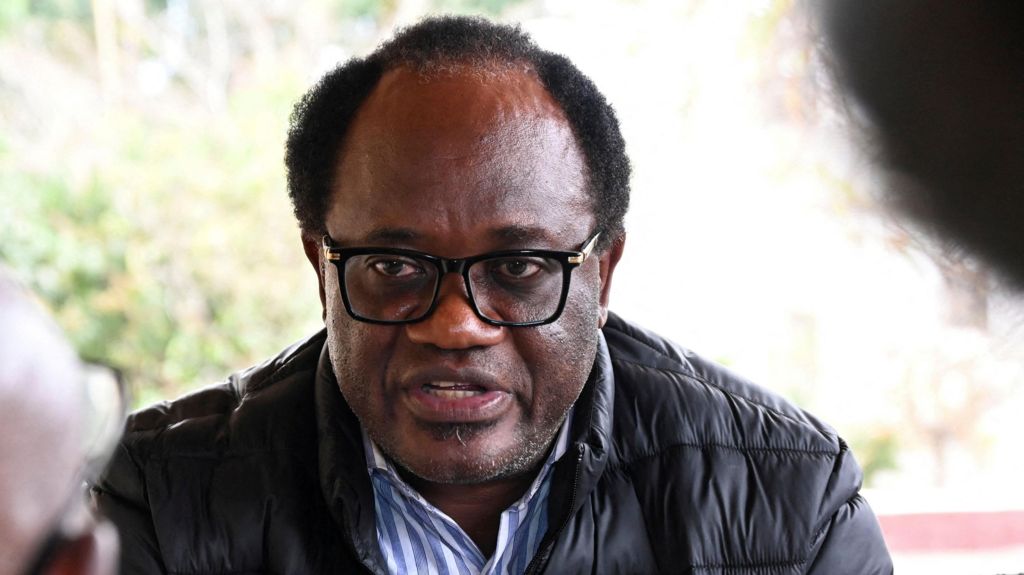
    The announcement has already drawn fierce pushback from opposition groups and public sector unions. Chris Hipkins, leader of the opposition Labour Party, warned that cutting such a large share of the public workforce would inevitably erode the quality of public services delivered to New Zealanders. Duane Leo, a spokesperson for the union representing tens of thousands of public servants, called the restructuring plan “an act of willful destruction.” Political analysts note the cuts come as the government works to demonstrate tangible progress on economic recovery ahead of the upcoming national election in November, when voters will decide whether to return the National Party administration to power.

  • Wall Street guru struck speechless by Trump insider stock trades

    Wall Street guru struck speechless by Trump insider stock trades

    On a live Monday broadcast of CNBC’s Squawk on the Street, one of Wall Street’s most high-profile media personalities, Jim Cramer, was left visibly stunned and speechless for 10 full seconds when a co-host brought up the staggering wave of stock trading executed by former President and current U.S. President Donald Trump in the first quarter of 2026. After Cramer’s prolonged incoherent mumbling left viewers confused, fellow co-host David Faber stepped in to clarify that the program was not experiencing any technical glitches — Cramer, it turned out, had simply been rendered speechless by the revelation of Trump’s controversial trading activity.

    The scope of Trump’s trading first came to light last week, when ethics disclosures published by the U.S. Office of Government Ethics confirmed that Trump completed more than 3,700 separate stock transactions between January and March 2026. Among these trades, more than 30 individual purchases each exceeded $1 million in value. The Financial Times first highlighted a striking connection: many of the top stocks Trump traded are owned by major corporations whose chief executives accompanied Trump on his official diplomatic trip to China just one week before the disclosures were released, including industry giants Tesla, Nvidia, Apple, Meta, Visa, Citi, Boeing, Qualcomm, and GE Aerospace.

    Independent journalists and ethics watchdogs have since uncovered multiple clear patterns that raise urgent red flags for potential illegal insider trading. In a detailed analysis published Monday, reporter Judd Legum documented multiple instances where Trump purchased shares in a company either immediately before or on the exact same day that he publicly praised the firm to move its share price. For example, Trump bought tens of thousands of dollars in stock of biotech manufacturer Thermo Fisher Scientific on the exact same day he toured one of the company’s production facilities. He acquired hundreds of thousands of dollars worth of Apple shares the same day he delivered a public speech lauding the firm as “a great company” and praising then-CEO Tim Cook. Just one day after purchasing a large stake in Micron Technology, Trump called the company “one of the hottest companies” during a national Fox News interview. Nine days after acquiring millions of dollars in Dell stock, Trump urged a crowd of supporters at a Georgia rally to “go out and buy a Dell computer.”

    Legum’s analysis emphasized that Trump has systematically dismantled every remaining ethical guardrail designed to prevent sitting U.S. presidents from using their public office for personal financial gain. Unlike previous presidents who have placed their assets in qualified blind trusts to remove themselves from active investment decision-making, Trump transferred his holdings to a trust controlled directly by his son, Donald Trump Jr., after returning to the White House. This structure leaves no legal or practical barriers to Trump directing trading activity based on non-public information he accesses as president.

    Investigative journalist Ryan Grim argued that Cramer’s stunned on-air reaction was entirely understandable, noting that many of the companies whose stock Trump traded have already directly profited from Trump’s controversial foreign policy decisions, including the ongoing military conflict with Iran that the Trump administration initiated. “Cramer here is having what should be the normal reaction to Trump actively insider trading on his own decisions,” Grim noted. “Just sputtering speechlessness.”

    New York Representative Dan Goldman, a Democrat, has already sounded the alarm over the trading activity, calling it “blatant and criminal insider trading.” In a social media post, Goldman warned all parties involved that records of the trades will eventually be subject to congressional investigation, noting that congressional Republicans have signaled they will ignore the scandal. “Anyone involved in these trades should preserve their records for my investigation in January 2027,” Goldman added.

    The stock trading scandal is not the only ethics controversy engulfing the Trump administration this week. On the same day Cramer’s viral on-air reaction made headlines, 93 House Democrats filed an official legal challenge to block a $1.77 billion taxpayer-funded settlement between the Trump administration and the Internal Revenue Service that critics say is a blatant grift to create a slush fund for Trump’s political allies.

    The settlement grew out of a $10 billion lawsuit Trump filed against the IRS after his personal tax returns were leaked during the 2024 campaign. As part of a deal to dismiss the lawsuit, the Trump administration created what it calls an “Anti-Weaponization Fund,” which the acting U.S. Attorney General Todd Blanche has framed as a mechanism to compensate what the administration calls “victims of lawfare” allegedly carried out by the Department of Justice during the prior Biden administration.

    But Democrats and ethics watchdogs have condemned the deal as an unprecedented abuse of power, noting that Trump is currently the head of the executive branch that oversees the IRS — meaning he is effectively both the plaintiff and the defendant in the lawsuit he arranged to “settle.” “No president can concoct a fake case for $10 billion in damages against the government so he can be plaintiff and defendant and then ‘settle’ his bogus case against himself as a judge,” said Jamie Raskin, Ranking Member of the House Judiciary Committee, calling the deal “pure fraud and highway robbery.” Raskin added that the fund is nothing more than a racket to divert taxpayer money to Trump’s most loyal supporters, including those convicted of violent felonies during the January 6, 2021 U.S. Capitol insurrection.

    The amicus brief filed by Democrats with the U.S. District Court for the Southern District of Florida, where the case is being heard by Judge Kathleen Williams, seeks to have the entire settlement thrown out. The filing notes that the fund could be used to compensate roughly 1,600 individuals already charged or convicted of crimes connected to the Capitol attack, including seditious conspiracy, assault on law enforcement, and other violent felonies.

    Richard Neal, Ranking Member of the House Ways and Means Committee, called the entire scheme “another self-enrichment scheme on the backs of hard-working taxpayers.” “Reporting detailing Trump’s interest in a billion-dollar slush fund for the J6 criminals and permanent immunity from any further IRS scrutiny only deepens the stench of corruption,” Neal added. Lawyers for the Democrats, Matt Platkin and Norm Eisen, noted that “it’s against the law for the president to in effect sue himself — and then settle for a huge sum. The court has the power to put a stop to these shenanigans and should do so.”

    This latest controversy follows a pattern of ethics violations from Trump since his return to the White House, where he issued blanket pardons to hundreds of January 6 rioters on his first day in office. According to the nonpartisan watchdog group Citizens for Responsibility and Ethics in Washington, dozens of those pardoned rioters have since been charged or convicted of additional serious crimes, including child sex offenses, rape, grand theft, burglary, illegal weapons possession, and threats against public officials.

    Progressive advocacy groups and legal ethics experts have joined Democrats in condemning both the stock trading scandal and the IRS settlement. “Donald Trump and his compromised Department of Justice have created a slush fund to make payouts to Trump supporters and cronies,” said Lisa Gilbert and Robert Weissman, co-presidents of the public interest group Public Citizen. “This scheme amounts to the creation of a January 6 payment fund.”

    Brett Edkins, managing director of policy and public affairs at the advocacy group Stand Up America, argued that the scandal lays bare the true nature of the Trump administration’s priorities at a time when many U.S. households are struggling with economic instability. “While Americans struggle with rising costs fueled by his economic mismanagement and war with Iran, Donald Trump is teaching a masterclass in grift,” Edkins said. “He’s negotiated with himself to create a $1.7 billion tax-dollar slush fund with no oversight, no transparency, and no accountability. In simple terms, Trump is stealing $1.7 billion in taxpayer dollars to hand out to himself, his cronies, his donors, or anyone he deems sufficiently loyal—including supporters who were convicted by juries of assaulting police officers on January 6, 2021. This is truly unprecedented corruption, and American taxpayers will foot the bill.”

  • British Steel crisis derails China’s tariff-bypass strategy

    British Steel crisis derails China’s tariff-bypass strategy

    A cross-border industrial acquisition that began as a strategic expansion move has erupted into a full-blown political dispute between China and the United Kingdom, after the British government tabled a formal nationalization bill to take permanent public control of the formerly Chinese-owned British Steel, based in eastern England.

    The story traces back to 2020, when Hebei-based private Chinese steel manufacturer Jingye Group stepped in to acquire the insolvent British steelmaker for £70 million (approximately $91 million). At the time, the deal was framed as a win-win: it rescued a failing historic British industrial asset, saved thousands of local jobs, and gave Jingye a much-needed production foothold in Europe. A core strategic motivation for the acquisition was to bypass steep 25% U.S. tariffs on Chinese steel that the Trump administration first imposed in 2018 under Section 232 of the Trade Expansion Act, citing national security grounds.

    Despite injecting a total of £1.2 billion into British Steel over the following years, Jingye failed to reverse the company’s persistent annual losses, which were estimated to hit roughly £250 million per year. Industry analysts cite two key structural headwinds: the UK’s sky-high industrial energy costs, and persistent market pressure from the flood of low-cost Chinese steel already flowing into European markets. The final blow came in March 2025, when the Trump administration expanded its tariff regime to impose 25% levies on all global steel and aluminum imports — including those from the UK — after detecting that Chinese steel producers were using foreign acquisitions to evade U.S. trade barriers.

    Shortly after the new tariffs took effect, Jingye announced that its flagship Scunthorpe steelworks was losing £700,000 per day and was no longer financially viable. The firm rejected a proposed £500 million UK government rescue package, prompting Parliament to rush through emergency legislation on April 12 that allowed the government to seize temporary control of the plant’s blast furnaces to prevent an immediate shutdown and protect 2,700 local jobs. On May 14, the government took the next step by introducing the formal Steel Industry (Nationalization) Bill, which grants ministers the authority to nationalize steel assets like British Steel if they meet a public interest test. The bill held its first parliamentary reading the same day, establishing a legal pathway for permanent public ownership when deemed necessary.

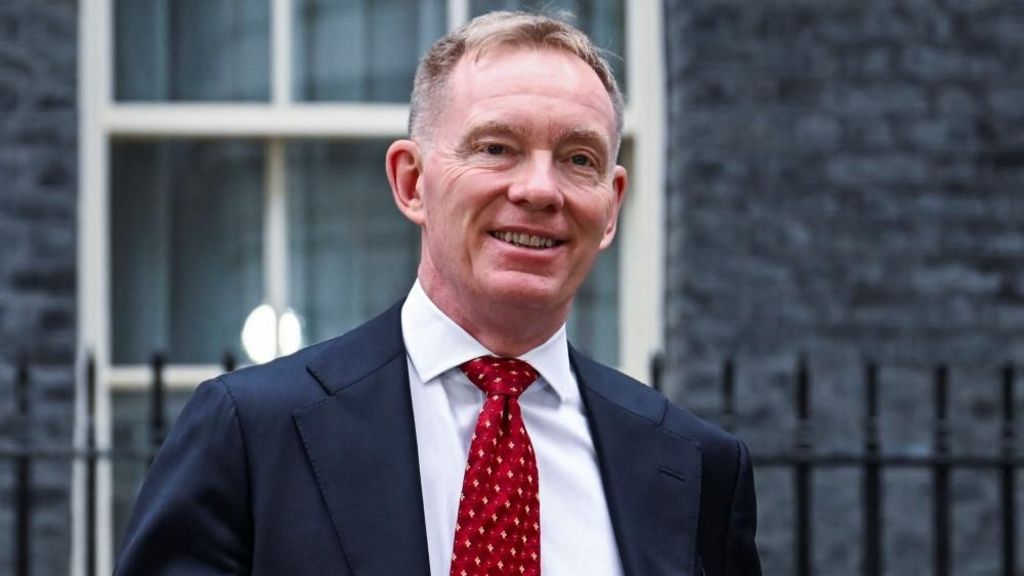
    “Revitalizing our steel sector is a top priority for this country, and this is an important first step to safeguard our steelmaking capability,” said UK Industry Minister Chris McDonald. “It will allow us to secure the future of British Steel and explore possible options to modernize the industry.” McDonald added that the fast tracking of the bill through Parliament demonstrates the current government’s unwavering commitment to protecting Britain’s domestic steel production capacity.

    The nationalization plan has drawn sharp pushback from China. “The British government should uphold fairness, impartiality and non-discrimination, act cautiously in its decisions, and safeguard the legitimate rights and interests of Chinese enterprises,” a spokesperson for China’s Ministry of Commerce said in an official statement. The spokesperson noted that the UK government has already controlled British Steel for more than a year since taking over from Jingye, and any permanent action must fully account for the substantial investment the Chinese firm has made in the UK’s steel industry, as well as its broader contributions to the British economy and local communities. Beijing has called on London to respect both Jingye’s position and fundamental market principles to negotiate “a fair, just solution acceptable to both sides,” and warned that China will take all necessary firm measures to protect the legal rights of Chinese firms.

    The dispute has also sparked debate among industry analysts in China about the risks of Chinese corporate expansion in strategic Western sectors. A Jiangxi-based industrial columnist, writing under the pen name Ganjiang Top List, noted that the British acquisition fit into a broader strategy Chinese steel firms adopted after 2018 to build “non-dollar channels” for global exports, positioning European steel assets as natural springboards for Chinese industrial chains going global, given the region’s advanced manufacturing expertise and lack of domestic capital for industrial upgrades. “British Steel was not acquired by Jingye for production alone, but for connection,” he explained, noting the acquisition created a local export hub for Chinese parts and engineering services serving Europe’s automotive, rail, and energy equipment sectors. While Jingye attempted to cut costs by transferring its digital production management platform to British Steel, those efforts ultimately could not overcome the sector’s headwinds. The columnist argued that Chinese firms must adjust their overseas expansion strategies: instead of pursuing controlling stakes in strategically sensitive key sectors, they should rely on technical service partnerships, short-term leasing, and non-controlling cooperation models to maintain market access while reducing political exposure. He added that beyond the direct capital loss, the failed acquisition has damaged the broader reputation of Chinese firms investing in Western markets.

    To understand the significance of British Steel to British national identity, one must look back at its long and turbulent history. As the birthplace of the Industrial Revolution, Britain built its 19th-century global empire on the back of its iron and steel industry, which powered the construction of railways, ships, bridges, machinery and military hardware, making the sector a core symbol of British industrial power. By the 1980s and 1990s, China’s rapid industrial expansion began to challenge Britain’s position, and after China joined the World Trade Organization in 2001, it pulled far ahead to become the world’s largest steel producer. Decades of rapid domestic infrastructure and manufacturing growth left China with massive chronic overcapacity, flooding global markets with low-cost steel that added intense pressure to already struggling British producers, which already grappled with high labor costs, expensive energy, aging production facilities, and repeated cycles of nationalization and privatization.

    British Steel itself was originally founded as a nationalized entity in 1967, when the UK government consolidated the country’s major steel producers into public ownership. It grew to become one of Europe’s largest steelmakers, but by the late 20th century it was struggling with falling demand, labor unrest, aging infrastructure and rising foreign competition. It was privatized in 1988, changed hands multiple times, and collapsed into insolvency in 2019 before Jingye’s rescue a year later. Even under Chinese ownership, losses continued: the firm posted a £227 million post-tax loss in 2023, down from £367 million in 2022, and losses deepened through 2024.

    The nationalization move has been supported by hardline British political figures, who have raised suspicions about Chinese influence in the strategically critical sector. Gary Smith, general secretary of the UK’s GMB trade union, raised concerns last April about what he called “industrial vandalism” at the site, while senior Conservative Party figure Iain Duncan Smith has openly accused Beijing of inappropriate interference. Business Secretary Jonathan Reynolds has gone as far as to argue that Chinese firms should be entirely excluded from “very sensitive” UK industries.

    In response, the Chinese Embassy in the UK has pushed back against what it calls the politicization of a purely commercial transaction. “At a time when the United States is using tariffs against countries including Britain and pursuing unilateralist and protectionist trade bullying, some British politicians are attacking China’s government and Chinese companies instead of criticizing Washington,” the embassy’s spokesperson said. “What exactly are they trying to achieve?” The spokesperson emphasized that British Steel was already insolvent and facing years of losses before Jingye’s 2020 acquisition, and that the Chinese firm’s investment kept the plant operational and protected thousands of British jobs. “Any words or actions that politicize commercial issues and engage in malicious hype will damage Chinese enterprises’ confidence in investing in the UK and harm China-UK economic and trade cooperation,” the spokesperson warned.

    A major sticking point in ongoing tensions is the question of compensation. Earlier this year, reports indicate Jingye is seeking roughly £1 billion in compensation from the UK government, matching its claimed £1.2 billion total investment since 2020. British local media, however, reports that the UK government has proposed a settlement valued at less than £100 million. The scale of Jingye’s investment itself is also disputed: public filings show that as of 2023, Jingye and its affiliates had provided £735.7 million in loans to British Steel, and charged tens of millions of pounds in interest on those loans. A Jingye spokesperson has defended the £1.2 billion figure, explaining that it includes both equity investment and low- or zero-interest loans issued to support ongoing operations.

    One Chinese industrial columnist based in Henan has argued that the UK’s move risks long-term damage to bilateral trade for short-term domestic political gain, noting that seizing foreign assets via legislation will erode Britain’s reputation as a safe destination for foreign direct investment. She warned that “Today’s China is not the China of 1840,” referencing the First Opium War when Britain defeated Qing China and forced it to pay heavy reparations, adding that modern Chinese firms hold strong legal, financial and moral leverage in the dispute.

  • Hungary’s Magyar kicks off his first foreign trip as prime minister to ally Poland

    Hungary’s Magyar kicks off his first foreign trip as prime minister to ally Poland

    Fresh off a historic political upset that ended 16 years of Viktor Orbán’s nationalist-populist rule, Hungary’s new center-right Prime Minister Péter Magyar is traveling to Poland this week to draw lessons from Warsaw’s own recent experience undoing authoritarian-leaning governance. The trip comes as Magyar’s Tisza party sets out to dismantle the political and economic infrastructure Orbán built during his more than a decade and a half in power, a mission that has sparked widespread optimism across Europe.

    Magyar’s landslide election victory last month — which delivered Tisza a two-thirds parliamentary supermajority, an unprecedented result in Hungary’s post-Communist era — has drawn consistent comparisons to Poland’s 2023 general election, where Donald Tusk’s center-right coalition ousted the national-conservative Law and Justice (PiS) party after eight years in power. Like Tusk, Magyar has made restoring eroded democratic institutions, holding corrupt former officials accountable, and rolling back executive overreach his top policy priorities.

    Magyar’s diplomatic itinerary kicked off with a flight to the southern Polish city of Kraków on Tuesday, followed by an overland journey by train to Warsaw, and a final leg to the Baltic coastal city of Gdańsk. Since being sworn in on May 9, the new prime minister has moved quickly to consolidate his mandate, demanding that dozens of senior officials appointed by Orbán’s administration step aside, and threatening to remove remaining holdouts via constitutional amendment — a power Tisza’s supermajority makes fully achievable.

    Topping Magyar’s target list are key institutional leaders he has labeled “Orbán’s puppets”: ceremonial but constitutionally powerful President Tamás Sulyok, Hungary’s attorney general, and the heads of both the Constitutional Court and Supreme Court. All are appointees of the previous government, and many retain their seats through long terms that extend years into the future; Sulyok’s term runs until 2029, while Constitutional Court head Péter Polt, a widely acknowledged Fidesz loyalist, will remain in office until 2037.

    Warsaw-based Center for Eastern Studies analyst Andrzej Sadecki notes that while retaining control of key state institutions by former regime allies is the same core challenge Tusk faced after taking power in Poland, Magyar holds a critical advantage his Polish counterpart did not. “The situation is much easier for Magyar because he has a constitutional majority. This makes it much easier for him to introduce deep changes,” Sadecki told the Associated Press. Unlike Tusk, who had to negotiate as head of a fragile coalition government, Magyar’s Tisza party won an absolute 53% of the national vote, securing enough seats to pass constitutional amendments without cross-party support. Sadecki framed the election outcome as far more than a routine change of government, calling it “a watershed moment” for Hungarian democracy.

    One of Magyar’s first policy pushes mirrors Tusk’s early actions in Poland: overhauling a state-controlled media ecosystem that operated as a partisan mouthpiece for the previous ruling government. For 16 years, Orbán built an expansive, state-aligned media network that consistently amplified Fidesz’s messaging while defaming, discrediting, and intimidating political opposition. In the wake of his election victory, Magyar slammed Orbán-era public broadcasters as “a factory of lies,” announcing he would suspend all news programming until the outlet can be restructured to meet objective journalism standards.

    Tusk’s government took an almost identical approach less than a month after taking office, overhauling the primetime newscast on Poland’s state television network and replacing senior leadership at all public media outlets. That move drew legal criticism even from some liberal groups, with the Warsaw-based Helsinki Foundation for Human Rights noting that the rapid restructuring “raises serious legal doubts.” But József Péter Martin, executive director of Transparency International Hungary, argues the systemic failure of Hungarian public media under Orbán justifies a full restructuring — and that the process can be completed within the bounds of the rule of law.

    Restoring full judicial independence, by contrast, is shaping up to be one of Magyar’s most difficult long-term challenges, mirroring ongoing struggles faced by Tusk’s administration in Poland. During PiS’s eight years in power, the party overhauled Poland’s court system by appointing loyalist judges to higher courts, punishing dissident judges with disciplinary action, and stacking the Constitutional Court with ideological allies who could block unfavorable legislation through prolonged constitutional review. Tusk’s efforts to reverse these changes have been repeatedly blocked by two successive PiS-aligned Polish presidents, and full judicial independence has yet to be restored.

    In Hungary, similar structural barriers stand in Magyar’s way. Despite repeated calls for his resignation, Orbán ally President Sulyok has publicly stated he has no intention of stepping down early. Martin argues that while rank-and-file Hungarian judges and prosecutors largely uphold their professional duties, replacing the senior leadership of the constitutional and supreme courts is critical to restoring public trust in judicial impartiality. Critically, Martin added that these posts should not be filled with Tisza loyalists, which would simply replace one partisan capture with another, but rather with independent figures fully committed to upholding the Hungarian constitution and public interest.

    The new Hungarian government also faces pressure from voters to hold former Orbán administration officials accountable for alleged corruption and abuse of power — nearly 3.4 million Hungarians cast ballots for Tisza, with many naming accountability as a top priority. In Poland, prosecutors have already opened multiple corruption investigations against former PiS officials, including former Justice Minister Zbigniew Ziobro, who stands accused of diverting public funds intended for violence victims for personal and political gain. Prosecution of Ziobro stalled after he was granted asylum in Orbán’s Hungary earlier this year, though he has since claimed to have relocated to the United States, where Polish authorities are seeking his extradition.

    To meet voter expectations for accountability, Magyar has pledged to launch a new specialized body, the National Asset Recovery and Protection Office, tasked with investigating and recouping public funds allegedly misappropriated during Orbán’s tenure. Martin emphasized that restoring the rule of law and independent judiciary is the “initial and most essential step” to enabling successful prosecution of past abuses, adding that Magyar’s campaign pledge to join the European Public Prosecutor’s Office would be a major step forward. “If all this is done, then I think there is a good chance that the corrupt perpetrators of the former regime, under an independent judiciary, can be held accountable,” Martin said. The report was contributed to by AP correspondent Ciobanu, reporting from Warsaw, Poland.

  • Richard Marles accuses Coalition of creating submarine ‘capability gap’

    Richard Marles accuses Coalition of creating submarine ‘capability gap’

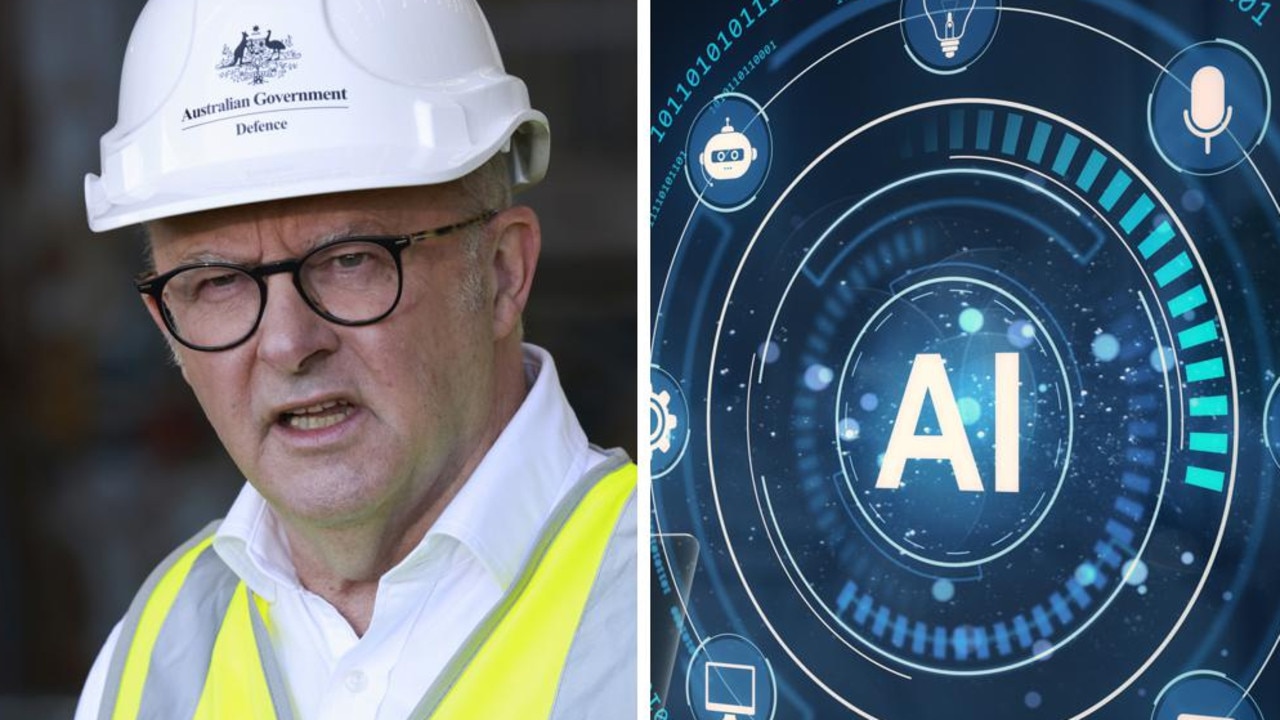
    A sharp political clash over Australia’s national defence policy has erupted after Defence Minister Richard Marles launched a scathing attack on the former Liberal-National Coalition government, accusing it of neglecting critical planning for the nation’s ageing Collins-class submarine fleet and leaving a dangerous capability gap that the current Albanese Labor government is now forced to address. The confrontation came during a major policy address delivered by Marles at the Lowy Institute on Tuesday, where he positioned the Albanese government as the true steward of Australian national defence while dismantling the long-held public perception that conservative parties are the more competent actors on security issues.

    At the center of the dispute is the government’s scaled-back, reworked approach to the A$11 billion life-of-type extension (LOTE) program for Australia’s six Collins-class conventionally powered submarines, which are set to remain in service until the delivery of nuclear-powered submarines secured under the trilateral AUKUS security pact with the United States and the United Kingdom. Following an independent defense review, the Albanese administration has abandoned the original full fleet overhaul plan inherited from the Coalition, instead adopting a flexible, conditions-based strategy that cuts back unnecessary engineering overhauls, reduces scheduling risks, and focuses upgrades exclusively on high-priority capabilities including core weapons systems and combat infrastructure.

    The oldest of the fleet, HMAS Farncomb – launched almost 30 years ago – will be the first vessel to enter the LOTE program later this month, with work split between shipyards at Osborne in South Australia and Henderson in Western Australia, carried out by the Australian Submarine Corporation (ASC). The work will retain and restore the submarine’s core base components while modernizing critical combat and weapons systems. Upgrades to the fleet’s optronics systems were previously shelved by the current government to align with the tailored, risk-mitigated approach. Marles also confirmed the revised program will accelerate modernization work on HMAS Rankin, the newest submarine in the Collins-class fleet.

    “This approach will reduce engineering risk by sustaining existing systems where appropriate, while continuing to upgrade critical capabilities that keep our fleet operationally effective,” Marles said in his address. “It will ensure our Collins-class submarines remain a potent, highly capable undersea deterrent for Australia today and for years to come.”

    Beyond the submarine program, Marles used the speech to outline the government’s broader defence agenda, highlighting progress on accelerating the delivery of new Mogami-class frigates and major investments in Ghost Bat and Ghost Shark, two domestically developed autonomous defense vehicles. He pushed back aggressively against decades of Conservative branding on defence, arguing that Labor has always been Australia’s natural party of national defence, pointing to the legacy of former Labor prime ministers including Chris Watson, Andrew Fisher, John Curtin, and Gough Whitlam in building Australia’s independent defence capacity and national sovereignty.

    “Labor’s historical focus on defence comes from the fact that our armed forces, national security, and defence capability sit at the very heart of Australian national sovereignty,” Marles said. “The character of any nation is defined in large part by what it is able to do militarily. Sovereignty is the foundation of nationhood, of the idea of Australia itself – and Labor has always been the party of the Australian project.”

    He went on to criticize the conservative vision of Australian federation, noting that original conservative leaders sought only to unite six British colonies into a single British entity focused on free trade, with little interest in advancing an independent Australian national identity. Turning to the Coalition’s nine years in office under prime ministers Tony Abbott, Malcolm Turnbull, and Scott Morrison, Marles called the previous government “the worst defence government in Australia’s history”, pointing to its failure to address the rapid expansion of Chinese naval capabilities in the Indo-Pacific. He added that the current government maintains “serious concerns” over recent Chinese actions against Philippine civilian and government vessels in the South China Sea.

    “For decades, the Liberals have enjoyed a huge brand advantage when it comes to defence policy,” Marles said. “But the gap between perception and reality is sometimes a chasm. All leaders face the danger of believing their own publicity – and in defence, that has made the Liberals fundamentally lazy.”

    On the future submarine program, Marles reiterated that the previous government’s mismanagement had left a critical capability gap for Australia’s most important maritime military platform. “By this point, careful, long-range planning for extending the life of the Collins-class fleet should have been well underway,” he said. “Unfortunately for Australia, the Liberals failed to prepare and implement a thoughtful, coherent LOTE plan for the submarines.”

    The debate comes as global security uncertainty intensifies following the outbreak of conflict in the Middle East, which Marles said has placed new, urgent focus on Australia’s defence capabilities, national resilience, and sovereign independence. In 2024, the Collins-class fleet was officially listed as a “Product of Concern” by the federal government, triggering increased direct ministerial oversight of the upgrade program to address delays and capability risks.

  • Pakistan deployed 8,000 troops, a Chinese air defence system and warplanes to Saudi Arabia: Report

    Pakistan deployed 8,000 troops, a Chinese air defence system and warplanes to Saudi Arabia: Report

    In a significant reinforcement of its long-standing security alliance with the Kingdom of Saudi Arabia, Pakistan has deployed 8,000 troops, a full fighter jet squadron, and a advanced Chinese-built air defense system to the Gulf nation, according to a exclusive Reuters report published on Monday. This incremental buildup of Pakistani military personnel and hardware in the kingdom began in early April, marking one of the most tangible commitments to the bilateral mutual defense accord signed just months prior.

  • Timeline of recent US-Cuba relations amid heightened tensions in Trump’s second term

    Timeline of recent US-Cuba relations amid heightened tensions in Trump’s second term

    In the wake of a early-year Venezuelan military operation that resulted in the capture of embattled Venezuelan President Nicolás Maduro, the United States has steadily escalated diplomatic and economic pressure on Cuba, the Latin American nation long led by a communist government, according to reporting from multiple senior U.S. and international sources. The escalating standoff has put bilateral relations, already fraught after more than 60 years of enmity, at a critical turning point, with the U.S. Justice Department now moving toward a criminal indictment of former Cuban leader Raúl Castro, a step that could send regional tensions soaring.

    A potential indictment against Castro would require approval from a federal grand jury before it can be formally filed, three anonymous sources familiar with the ongoing investigation confirmed to the Associated Press. Three insiders noted that the preliminary charge is tied to Castro’s alleged role in the 1996 downing of two aircraft operated by Brothers to the Rescue, a Miami-based Cuban exile group, an incident that left four people dead. At the time of the shootdown, Castro served as Cuba’s defense minister, and he retains behind-the-scenes influence over Cuban governance despite stepping down from official office years ago. The Cuban government has not issued any public response to multiple requests for comment on the pending investigation, which was first reported by CBS.

    This push for legal action comes amid a year of rapidly shifting friction between the Donald Trump administration and Havana, unfolding concurrently with a fragile, uneasy ceasefire in the U.S. military conflict with Iran. To contextualize the fast-moving developments, here is a chronological breakdown of key milestones in U.S.-Cuba relations over the first five months of the year:

    On January 4, just 24 hours after the Venezuelan operation that removed Maduro from power, Secretary of State Marco Rubio publicly warned that Cuba’s ruling government “is in a lot of trouble.” That same day, Trump renewed his long-stated public call for the United States to take control of Greenland, an autonomous territory owned by Denmark.

    A week later on January 11, Trump issued a direct public ultimatum to Cuba, Maduro’s closest regional ally, as the island braced for potential domestic unrest following Maduro’s ousting. “Cuba needs to make a deal BEFORE IT IS TOO LATE,” Trump wrote in a social media post. Cuban President Miguel Díaz-Canel pushed back sharply on the threat, arguing that the U.S. government, which he criticized for turning even human lives into a commercial transaction, has no moral standing to judge Cuba’s actions.

    On January 30, Trump signed a new executive order imposing punitive tariffs on any goods imported from nations that export or supply petroleum to Cuba. Policy analysts widely agree the move will further damage Cuba’s already fragile economy, which has been strained by decades of U.S. sanctions.

    On February 26, one day before the U.S. launched its full-scale military campaign against Iran, Trump unexpectedly announced that Washington was holding high-level talks with Cuban officials and floated the possibility of a “friendly takeover of Cuba,” though he offered no further details on what such a framework would entail. He confirmed Rubio was leading discussions with senior Cuban leadership, noting that the decades-long adversarial relationship between the two nations was approaching a pivotal moment. That same month, Raúl Guillermo “Raúlito” Rodríguez Castro, Raúl Castro’s grandson and a rising figure in Cuban politics, held a secret closed-door meeting with Rubio on the sidelines of the Caribbean Community summit in St. Kitts.

    It was not until March 13 that Díaz-Canel publicly confirmed the backchannel talks, marking the first official acknowledgement of negotiations between the two governments amid a crippling national energy crisis. He said in a public statement that the discussions “were aimed at finding solutions through dialogue to the bilateral differences between our two nations. International factors facilitated these exchanges.” Two weeks later on March 31, a Russian oil tanker that had been sanctioned by the U.S. docked in Cuba, delivering the first shipment of fuel to the island in three months.

    Through early April, Díaz-Canel repeatedly rejected U.S. pressure to step down, stating in an April 12 interview with NBC’s *Meet the Press* that Washington has no legitimate justification for either a military invasion of Cuba or an attempt to remove his government from power. He warned that any U.S. military incursion would carry heavy costs and destabilize the entire Caribbean region. On April 16, during a mass rally in Havana marking the 65th anniversary of the Cuban Revolution’s formal declaration of socialism, Díaz-Canel called on the Cuban people to prepare for potential external aggression. “The moment is extremely challenging and calls upon us once again, as on April 16, 1961, to be ready to confront serious threats, including military aggression,” he told the crowd of hundreds of supporters. “We do not want it, but it is our duty to prepare to avoid it, and if it becomes inevitable, to defeat it.”

    The following day, news broke of a new round of in-person talks between a U.S. delegation and senior Cuban government officials, marking a renewed push for diplomatic progress. This meeting was the third confirmed discussion between U.S. representatives and Rodríguez Castro, and a senior State Department official had met with the Cuban envoy earlier that month, a department official confirmed on condition of anonymity due to the sensitivity of the negotiations. The official declined to name the members of the U.S. delegation, while a second U.S. official clarified that Rubio was not part of the delegation that traveled to Havana.

    On April 23, Cuban Ambassador to the United Nations Ernesto Soberón Guzmán told the AP that Havana would reject any U.S. ultimatums requiring the release of political prisoners as a condition of continuing talks, stating that all internal Cuban matters related to detentions “are not on the negotiating table.” The release of political prisoners has been a core demand from U.S. negotiators in the first formal bilateral talks held on Cuban soil in a decade. A week later on April 28, Senate Republicans blocked a Democratic-sponsored bill that would have forced Trump to lift the U.S. energy blockade against Cuba without prior congressional approval. The vote underscored unified Republican support for Trump’s unilateral exercise of U.S. military and diplomatic pressure across multiple global hotspots, including Venezuela, Iran, and Cuba.

    By May 7, senior U.S. officials moved to quell widespread speculation about an imminent U.S. military strike on Cuba, despite repeated public threats from Trump that “Cuba is next” and hints that U.S. warships deployed to the Middle East for the Iran conflict could sail to Cuba after concluding their operations. The sources, who are involved in the ongoing preliminary talks with Cuban authorities, also told the AP that U.S. negotiators are not optimistic that Havana will accept a sweeping U.S. offer that includes tens of millions of dollars in humanitarian aid, two years of free Starlink internet access for all Cubans, agricultural support, and infrastructure investment. The proposal comes with strict policy conditions that the Cuban government has rejected for decades, though officials noted that Havana has not yet formally turned down the offer even after new Trump administration sanctions took effect.

    One week later on May 14, both U.S. and Cuban officials confirmed that CIA Director John Ratcliffe had traveled to Havana for high-level meetings with Cuban officials, including Rodríguez Castro. Ratcliffe held discussions with Rodríguez Castro, Cuban Interior Minister Lázaro Álvarez Casas, and the head of Cuba’s national intelligence service, covering intelligence cooperation, economic stability, and regional security issues. A CIA spokesperson later confirmed the meeting to the AP. A day after that visit, the AP first reported that the Justice Department was moving forward with plans to seek a grand jury indictment against Raúl Castro, the latest development in a rapidly shifting standoff between the two nations.

  • Japanese prime minister travels to meet South Korea president for second leg of hometown summits

    Japanese prime minister travels to meet South Korea president for second leg of hometown summits

    TOKYO/SEOUL – Six months after launching their unprecedented series of personal diplomatic engagements, South Korean President Lee Jae Myung and Japanese Prime Minister Sanae Takaichi prepared to convene their fourth bilateral summit on Tuesday, this time on South Korean soil. The meeting, held in Lee’s hometown of Andong, marks a groundbreaking milestone: the first time incumbent leaders of the two neighboring nations have exchanged reciprocal visits to their personal hometowns, a gesture crafted to build personal rapport and accelerate the gradual warming of a relationship long overshadowed by historical tension.

    Andong, a quiet southeastern South Korean city, draws global cultural attention for its 500-year-old traditional folk village, a protected UNESCO World Heritage Site that preserves centuries of Korean Confucian culture and folk tradition. This choice of venue follows a similar precedent set in January, when Takaichi hosted Lee in her own hometown of Nara, Japan’s ancient imperial capital centuries before modern political divisions shaped the two nations’ relationship.

    The summit comes at a moment of heightened global geopolitical volatility, with rising tensions across the Middle East, shifting power dynamics in the Indo-Pacific, and evolving security threats that have pushed both Seoul and Tokyo to prioritize cooperative engagement over historical disputes. Ahead of the meeting, South Korea’s presidential office emphasized that the gathering would center on deepening personal trust between the two leaders, while Takaichi told reporters Tuesday morning that the talks would focus on expanding cooperation “under the severe geopolitical conditions such as situations in the Middle East and the Indo-Pacific.”

    Official agenda items for the one-day summit span a range of shared priorities: expanded economic and energy collaboration, coordinated responses to the ongoing conflict in Iran, and further progress in bilateral relationship-building. Observers and regional policy experts note there are no immediate contentious issues blocking progress, leading to widespread expectations that the meeting will proceed smoothly and keep the bilateral relationship on its current positive trajectory.

    Choi Eunmi, a leading Japan specialist at the Seoul-based Asan Institute for Policy Studies, explained the shifting approach driving the current warming of ties: “The two countries put more emphasis on agenda for cooperation than contentious issues. They would now think scenes of constantly fluctuating relationship or eventually negative bilateral ties won’t be helpful to anyone now.”

    The current progress in Seoul-Tokyo relations represents a dramatic shift from decades of friction. Both countries are major liberal democracies and key U.S. allies in the Indo-Pacific, but relations were repeatedly strained for generations by unresolved grievances rooted in Japan’s 35-year colonial occupation of the Korean Peninsula, which ended with Japan’s defeat in World War II. A sustained turn toward cooperation began in 2023, when the predecessors of Lee and Takaichi took deliberate steps to set aside intractable history disputes, framing closer alignment as a necessary response to shared regional challenges: growing U.S.-China strategic competition, global supply chain fragility, and North Korea’s accelerating nuclear and ballistic missile programs.

    When Lee and Takaichi assumed office last year, many regional analysts predicted cooperation would stall. Takaichi carried a long public reputation as a right-wing security hawk, while Lee, a political liberal, was widely expected to shift South Korea’s foreign policy toward engagement with North Korea and China, moving away from alignment with the U.S. and Japan. Instead, the two leaders have doubled down on cooperation, even adopting unprecedented, informal diplomatic gestures to build personal chemistry.

    Two months before Takaichi took office, Lee made a landmark move by choosing Japan as the first destination for his inaugural bilateral overseas summit. In January, at the close of their Nara meeting, the pair shared an informal jam session: Takaichi, a lifelong heavy metal fan who played drums in college, led the pair in drumming along to global K-pop hits including BTS’s chart-topping track “Dynamite.”

    Lee has publicly noted that he and Takaichi share a core belief that sitting national leaders must prioritize pragmatic problem-solving over partisan or nationalist posturing common among ordinary politicians. But many observers argue the impetus for deeper cooperation also stems from new global pressures that were less acute for previous administrations, including the return of Donald Trump to U.S. leadership with his signature “America First” policy, and widespread global economic disruption stemming from the ongoing Iran war.

    Both South Korea and Japan hold hundreds of billions of dollars in commercial and investment commitments to the U.S. economy. Yet Trump’s aggressive tariff policies and transactional approach to security alliances have eroded long-standing trust in U.S. commitment among political and business elites in both Seoul and Tokyo, pushing the two neighbors to build more robust bilateral coordination of their own.

    Despite the current positive momentum, experts caution that the bilateral relationship remains fragile, and unresolved historical issues could trigger sudden setbacks. Disputes over Japan’s colonial-era forced mobilization of Korean laborers and sexual enslavement of Korean “comfort women” have not been permanently resolved, the two governments have simply agreed to set aside public debate on the issues to avoid derailing cooperation.

    As Choi noted: “Both countries aren’t talking about how to resolve and prevent recurrences of conflicts over those issues and we don’t know when they could occur again.”

    Associated Press reporter Mari Yamaguchi contributed reporting from Tokyo.

  • Trump says Gulf leaders asked him to ‘hold off’ on resuming Iran war

    Trump says Gulf leaders asked him to ‘hold off’ on resuming Iran war

    In a sudden announcement that has reshaped the trajectory of escalating tensions across the Persian Gulf, former US President Donald Trump revealed on Monday that Washington has scrapped plans to launch a full, large-scale military offensive against Iran, set to begin Tuesday. The decision came following a formal request from the top leaders of three key Gulf Arab allies to delay the attack amid ongoing diplomatic negotiations.

    Trump made the announcement via his TruthSocial platform, stating that the Emir of Qatar Tamim bin Hamad Al Thani, Saudi Crown Prince Mohammed bin Salman Al Saud, and United Arab Emirates President Mohamed bin Zayed Al Nahyan all urged the US to hold off on its planned military strike. The leaders argued that serious diplomatic talks were already underway, and their assessment as close US allies was that a mutually acceptable negotiated agreement could be reached, according to Trump’s post.

    The outgoing president added that any prospective final deal would be very favorable to US interests, with one critical non-negotiable provision: Iran will permanently be barred from developing nuclear weapons. Trump emphasized that his deep respect for the three Gulf leaders guided his choice to accommodate their request, but made clear that the pause on military action is not permanent. He warned that US military forces remain fully postured to launch the full-scale large-scale assault against Iran at a moment’s notice if a viable, acceptable agreement fails to materialize through negotiations.

    This latest development comes on the heels of nearly two months of open conflict across the region, triggered by a joint US-Israeli strike on Iran on February 28. Iran retaliated immediately, launching thousands of missiles and drones targeting Gulf Arab states, with the UAE bearing the brunt of the attack after normalizing relations with Israel in 2020 under the Abraham Accords. Almost 3,000 Iranian projectiles struck UAE territory, according to regional reports.

    In mid-April, Pakistan brokered a fragile ceasefire that has paused large-scale open fighting, though low-level tensions and limited military action have continued. On Friday, Bloomberg reported that the UAE had recently attempted to rally Saudi Arabia and Qatar to back a coordinated joint military offensive against Iran in response to Tehran’s attacks, but the bid ultimately failed.

    Shortly after the February 28 US-Israeli strike, Mohamed bin Zayed held a series of urgent calls with fellow Gulf leaders to push for the coordinated military response. But Saudi Arabia’s crown prince and other Gulf leaders rejected the proposal, sources confirmed. Despite the rebuff of the joint offensive plan, both Saudi Arabia and the UAE have launched independent retaliatory strikes against Iranian targets, recent reporting confirms.

    The Wall Street Journal reported that the UAE targeted key Iranian energy infrastructure, carrying out a strike on Iran’s Lavan Island, a major Persian Gulf oil export hub, in early April around the time the ceasefire was announced. Saudi Arabia, by contrast, carried out limited, measured retaliatory strikes before quickly shifting its focus to supporting Pakistan’s mediation efforts, regional analysts note.

    Last week, the Financial Times reported that Saudi Arabia has also circulated a proposal for a region-wide non-aggression pact between Iran and other Middle Eastern states, modeled on the 1970s Helsinki Accords that de-escalated Cold War tensions in Europe. The Saudi initiative has already earned backing from major European capitals and EU institutions, though it remains unclear whether the US and Israel will support the proposed framework.

    Parallel to shifting regional diplomatic efforts, the conflict has drawn Israel and the UAE even closer strategically. Middle East Eye reported on Monday that the two countries have launched a joint defense acquisition fund to jointly purchase and develop next-generation weapons systems, deepening their security cooperation amid rising regional tensions.

  • Trump told Taiwan not to ‘go independent’ – but does it want to?

    Trump told Taiwan not to ‘go independent’ – but does it want to?

    Weeks after his high-profile meeting with Chinese President Xi Jinping in Beijing, former and current U.S. President Donald Trump has delivered an unprecedented public warning to Taiwan against moving toward formal independence, triggering immediate reactions from Taipei and sparking widespread debate over the future of U.S. policy in the Indo-Pacific.

    In an interview with Fox News that aired Friday, Trump made his stance clear: “I’m not looking to have somebody go independent. And, you know, we’re supposed to travel 9,500 miles to fight a war. I’m not looking for that. I want them to cool down. I want China to cool down.” These remarks mark the most direct public pressure a sitting U.S. president has ever placed on Taiwan regarding its sovereignty status, leading to a quick response from Taipei.

    Taiwanese officials reiterated their long-held position that the island sees no need for a formal declaration of independence, a stance that aligns with mainstream public sentiment on the self-governing island. To understand the stakes of this exchange, it is necessary to contextualize the decades-long historical and geopolitical backdrop of the Taiwan issue.

    Following the 1949 conclusion of China’s civil war, the defeated Kuomintang government relocated to Taiwan, while the Chinese Communist Party established control over the mainland. Beijing has claimed the island as an inalienable part of its territory ever since, and Taiwan independence has stood as the most sensitive red line for Chinese leadership. Since President Xi Jinping took office, Beijing has ramped up its efforts to suppress perceived separatist activity, framing unification with Taiwan as an “unstoppable” historical priority. In recent years, this pressure has translated into regular military drills near the island, diplomatic campaigns to cut Taiwan’s global recognition, and persistent greyzone incursions into Taiwan’s airspace and territorial waters.

    During his recent summit with Trump, Xi emphasized that the Taiwan question is the single most critical issue shaping U.S.-China relations, warning that mishandling the topic could lead to direct conflict. For decades, global observers have warned that any Chinese military move against Taiwan would likely draw in the U.S., which is legally bound by the 1979 Taiwan Relations Act to provide the island with defensive military capabilities. Under China’s 2005 Anti-Secession Law, Beijing retains the right to use “non-peaceful means” to assert its territorial claims if Taiwan formally declares independence or all options for peaceful unification are exhausted, making any move toward formal independence a potential trigger for regional war.

    Today, most Taiwan residents, who live under a thriving democratic system distinct from mainland China’s increasingly authoritarian rule, support maintaining the status quo—neither formal independence nor unification with Beijing. This position is reflected in the official policy of the Democratic Progressive Party (DPP), which has governed Taiwan since 2016. Current President Lai Ching-te, like his predecessor Tsai Ing-wen, has argued that Taiwan already functions as an independent sovereign state, so no formal declaration is necessary—a carefully calibrated approach designed to assert Taiwanese autonomy without crossing Beijing’s explicit red line. A formal declaration of independence would also require constitutional amendment approved by Taiwan’s legislature and a majority public vote in a referendum, making it logistically difficult for any administration to pursue even if it wanted to. Even so, Beijing remains deeply suspicious of the DPP, which historically advocated for formal sovereignty, and has repeatedly labeled Lai a dangerous separatist, accusing his administration of hijacking public opinion to push an independence agenda and building up military capabilities for confrontation. Lai has pushed back on these claims, noting that military strengthening is only a defensive measure in response to growing Chinese pressure.

    Trump’s recent comments have upended long-standing expectations around U.S. policy on Taiwan. No U.S. administration has ever explicitly supported Taiwanese independence, and for decades Washington has maintained a carefully calibrated “strategic ambiguity” policy, neither confirming nor denying whether it would intervene militarily to defend the island. This policy emerged after 1979, when the U.S. severed formal diplomatic ties with Taiwan to establish relations with Beijing, acknowledging the one-China principle, while passing the Taiwan Relations Act to enshrine U.S. commitments to Taiwan’s defense. The act authorizes ongoing arms sales to Taiwan to support its self-defense capabilities.

    Trump’s remarks have left analysts divided. During his summit, Trump noted that Xi “doesn’t want a movement for independence” in Taiwan, adding that he “heard him out” but did not offer a formal response. While Trump later stressed that “nothing’s changed” in U.S. policy and expressed openness to speaking directly with Lai— a move that would almost certainly draw fierce condemnation from Beijing, as it did when Trump spoke with a Taiwanese president early in his first term—many observers see his warning to Taiwan as an unusual break from past U.S. framing. Ryan Hass, a senior analyst at the Brookings Institution, argues that Trump’s “visible sympathy for Xi’s framing on Taiwan will embolden Beijing to increase pressure on Taipei, and elevated the risk of confrontation.”

    All eyes are now turning to a pending $14 billion U.S. arms package for Taiwan, which follows an $11 billion weapons sale approved in December. After the Beijing summit, Trump declined to commit to finalizing the new package, telling Fox News the decision “depends on China” and that the proposal “is a very good negotiating chip for us frankly.” He later added that he would make a decision “over the next fairly short period.” This is not the first time a U.S. president has shaken up long-standing Taiwan policy rhetoric: former President Joe Biden twice publicly stated the U.S. would defend Taiwan if attacked, appearing to move away from strategic ambiguity, only for his administration to walk back the comments and clarify that official policy had not changed. For decades, U.S. policy on Taiwan has remained fundamentally consistent despite shifts in rhetoric. Now, regional and global powers are closely watching Trump’s next moves to see if the long-standing U.S. balancing act on the Taiwan issue is finally shifting.