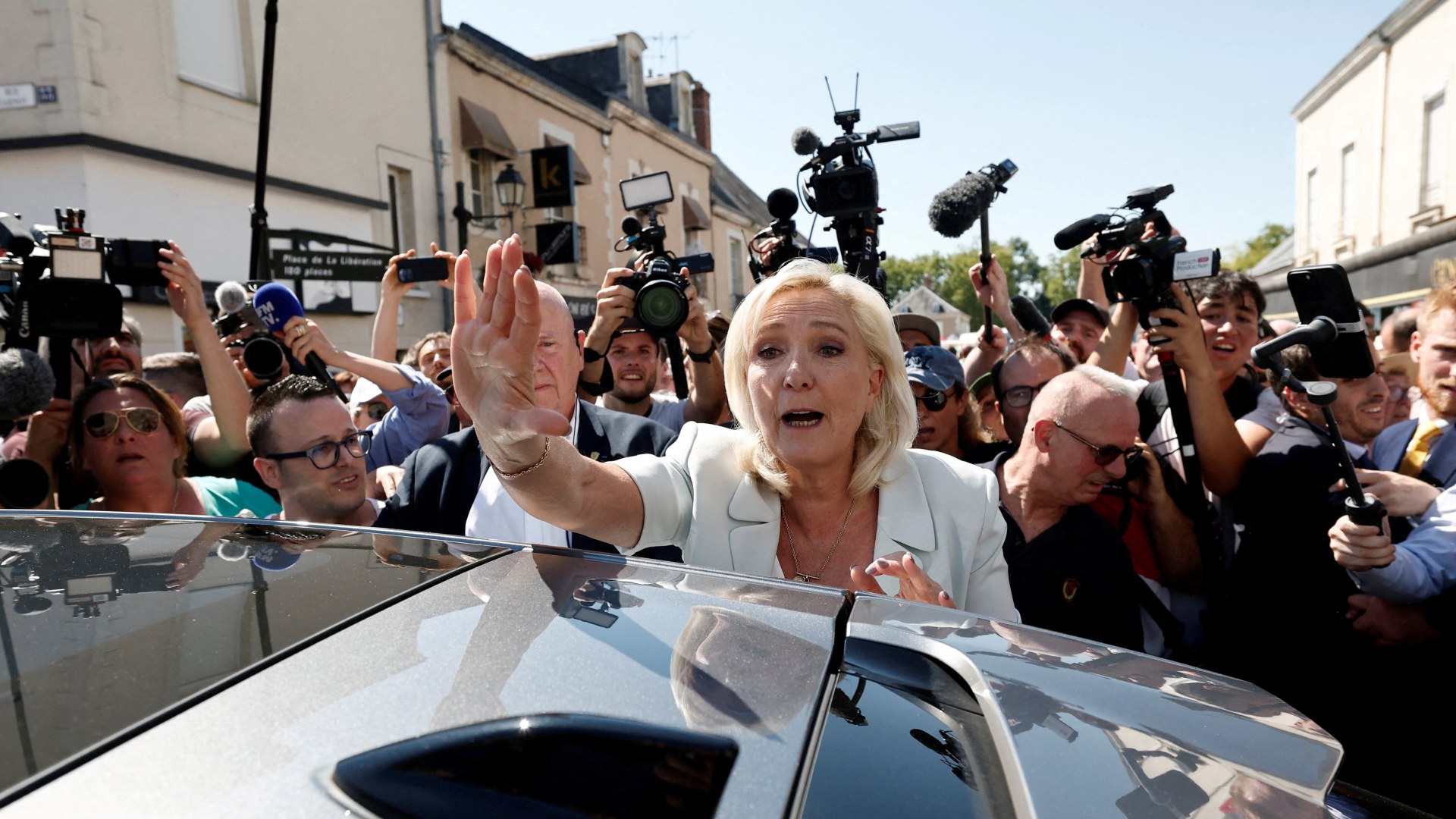
A new nationwide survey conducted by Toluna Harris Interactive for leading French broadcasters RTL and M6 has revealed a seismic shift in France’s pre-election political landscape, placing far-right presidential hopeful Marine Le Pen at a record-high polling position that projects her to win the April 2027 presidential contest. The poll, which surveyed 1,764 eligible French voters aged 18 and older, shows Le Pen holding a lead of at least 16 percentage points over every other declared or potential candidate, an unprecedented margin three years out from the vote. The results also signal a clear upward trajectory for left-wing pro-Palestinian figure Jean-Luc Melenchon, leader of the La France Insoumise (LFI) party, who has jumped from 12% support in April polling to a current 16 to 17%. This growth puts Melenchon on track to outperform centre-right former prime minister Edouard Philippe and secure a spot in the mandatory second-round runoff, according to poll analysts. In a projected head-to-head runoff between Le Pen and 75-year-old Melenchon, the survey estimates Le Pen would claim a decisive victory with 68% of the vote against Melenchon’s 32%. Under French presidential election rules, if no candidate secures an absolute majority in the first round of voting, the top two finishers advance to a second and final round of balloting. This 2027 race marks the fourth presidential bid for Le Pen, who lost back-to-back elections to outgoing President Emmanuel Macron in 2017 and 2022, taking 41.4% of the second-round vote in 2022. Macron is constitutionally barred from running for a third consecutive term, opening up the election for the first time in a decade. France’s left-wing bloc has been grappling with internal division heading into the contest, with dozens of potential candidates splitting voter support across ideological lines. To address this fragmentation, multiple left-wing party leaders have scheduled a “united left” primary for October 11 to select a single unified contender. However, LFI and two other major left-wing parties have rejected the initiative, deepening rifts within the bloc that could benefit Le Pen’s candidacy. Le Pen’s path to the 2027 ballot was only cleared earlier this summer after a French appeals court revised a prior criminal conviction tied to an embezzlement scheme involving European Parliament funds. Last year, Le Pen and 20 other members of her Rassemblement National (RN) party were found guilty of misappropriating roughly €4.5 million in EU public funds to pay unregistered RN party staff instead of the European Parliament employees the funds were allocated for. The original ruling handed down a four-year prison sentence and a five-year ban from holding public office, which would have blocked Le Pen from running in 2027. But on July 7, the Paris Court of Appeal upheld the conviction but drastically reduced the sentence: Le Pen will now serve a one-year house arrest sentence monitored by an electronic ankle tag, removing the ban on political office that would have disqualified her campaign. Following the ruling, Le Pen announced she would file a further appeal to France’s highest criminal court, the Cour de Cassation, in a bid to have the electronic monitoring requirement removed. If the high court fast-tracks the appeal and rejects her challenge, Le Pen could be forced to conduct her 2027 campaign wearing the court-ordered ankle tag. The RN, originally founded as the Front National by Le Pen’s father Jean-Marie Le Pen, carried a decades-long reputation marred by virulent antisemitic scandals that left it ostracized by mainstream global political actors. For generations, Israel enforced a strict boycott of European far-right parties over their antisemitic or Holocaust-denying histories and ties to fascist movements, and the former Front National was a core target of that policy. But in recent years, the RN has undertaken a deliberate campaign to rebrand itself, distancing itself from its extremist origins and shifting sharply to a pro-Israel policy stance. This shift has coincided with a broader rapprochement between Israel and far-right parties across Europe. Earlier this year, Le Pen held a private, unannounced meeting with Joshua Zarka, Israel’s ambassador to France, in a sign of the warming bilateral relationship between the RN and the Israeli government. Last year, during Israel’s military campaign in Gaza, Le Pen repeatedly criticized Emmanuel Macron’s public condemnations of Israeli military actions and his formal recognition of a Palestinian state. In a 2023 television interview, Le Pen framed Israel’s military operations as “a war against Islamic terrorism”. Most recently, Israeli Diaspora Affairs Minister Amichai Chikli publicly endorsed Le Pen’s party during 2024 parliamentary elections, and extended an invitation to RN party president Jordan Bardella to speak at an international conference on antisemitism to be held in Jerusalem in March 2025. Beyond her foreign policy shifts, Le Pen has centered her domestic agenda on strict hardline immigration policies, framing the growth of Muslim communities in France as a process of “Islamisation” that poses an existential threat to France’s secularist constitutional values. She has previously called for the repeal of laws granting legal residency to undocumented migrants, and has pushed to cut social welfare benefits for all immigrants to reduce incentives for new arrivals to settle in France.
分类: politics
-
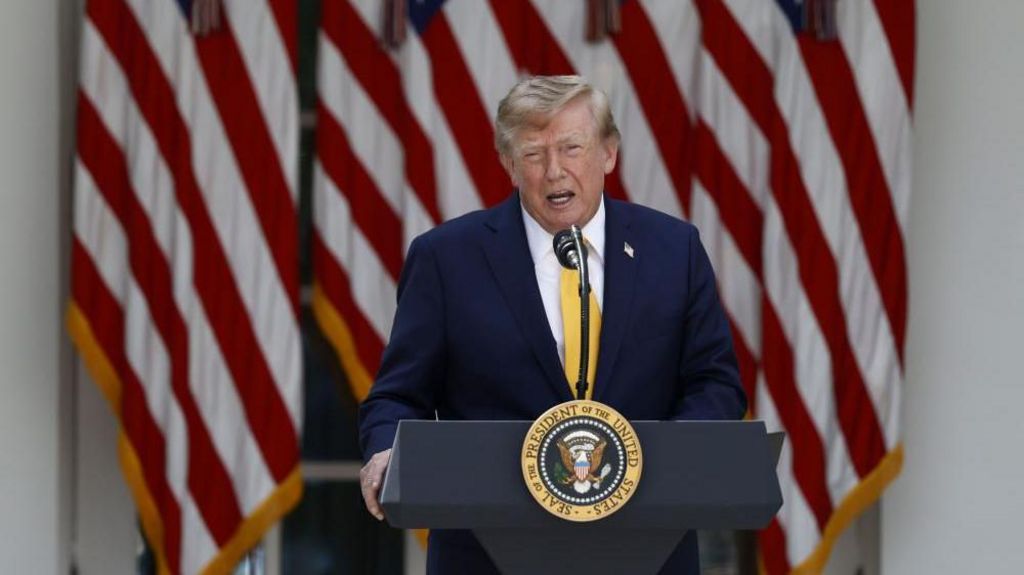
US-Canada trade war escalates as Trump threatens tariff hike on autos after Carney vows to retaliate
A fresh and dramatic escalation in cross-border trade tensions between the United States and Canada has sent shockwaves through North American economic and political circles, after former President and current U.S. leader Donald Trump threatened to double existing tariffs on Canadian-made automobiles and auto parts early next year. The aggressive move comes just days after high-stakes trade negotiations between the two neighboring nations collapsed in acrimony late last week, with both sides trading blame over last-minute demands that derailed what had appeared to be a path toward a new agreement.
In a public statement issued Monday, Trump confirmed that he plans to raise the current 25% U.S. tariff on imported Canadian passenger vehicles, trucks and auto components to 50%, with the new rate set to take effect on January 1 of 2026. Trump repeated his longstanding criticism of Canadian trade policy, claiming the country has “ripped America off” for decades through unfair trade practices that disadvantage U.S. manufacturers and workers.
Canadian Prime Minister Mark Carney responded to the threat with measured defiance, noting that the new tariff announcement was hardly unexpected given the sudden breakdown of negotiations late Friday. Carney accused Trump of deliberately targeting Canada’s $500 billion auto industry with the aim of undermining its global competitiveness, but added that the Canadian government remains open to restarting discussions if U.S. negotiators arrive at the table with a constructive, good-faith “right attitude.”
The collapse of talks came mere moments before a U.S.-imposed deadline that would have triggered a 50% tariff on nearly $20 billion worth of Canadian imports across multiple sectors. Just days earlier, both sides had signaled cautious optimism that a updated bilateral trade deal could be finalized, making the sudden breakdown a sharp and unexpected reversal of momentum. Canadian officials have pushed back against U.S. claims, saying Washington introduced unacceptable last-minute demands, including a controversial clause that would have restricted Canada’s ability to sign independent free trade agreements with other third-party countries. On the U.S. side, U.S. Trade Representative Jamieson Greer told CNBC Monday that it was Canadian negotiators that walked away after pushing for unplanned last-minute changes to the draft agreement, saying “they wanted more” than what was on the table.
Carney has already confirmed that Canada will retaliate to any new U.S. tariffs with reciprocal measures that match American levies “dollar for dollar,” with the first round of Canadian retaliatory tariffs set to enter into force on September 8. Beyond immediate retaliatory measures, the Canadian prime minister announced a C$11 billion investment to construct six new heavy and medium icebreakers for the Canadian Coast Guard at a Quebec shipyard, a project designed to replace the country’s aging current fleet and open new year-round Arctic and Atlantic shipping lanes to diversify Canada’s trade routes away from its historic overreliance on the U.S. market.
The most fiery response to Trump’s threat came from Doug Ford, the outspoken premier of Ontario—Canada’s heartland of auto manufacturing, which accounts for the vast majority of the country’s vehicle production. Ford fired back at Trump, telling the U.S. president to “kiss my ass,” and suggested Canada should add new surcharges on U.S. imports of Canadian crude oil, natural gas, electricity and critical minerals, all of which are critical to U.S. energy and manufacturing security. Canadian federal data shows that Canada supplies 60% of all U.S. crude oil imports and nearly 100% of U.S. natural gas imports, giving Ottawa significant leverage in the escalating conflict.
Trump quickly hit back at Ford in a post on his Truth Social platform, dismissing the Ontario premier’s comments as empty “bluster” and warning that “Someone should get these clowns to ‘fall in line’ or, the consequences for Canada will be far WORSE!”
Business leaders on both sides of the border have already sounded the alarm over the escalating trade war, with many small and large manufacturers warning that higher tariffs will raise costs for consumers, disrupt tightly integrated North American supply chains, and force layoffs on both sides. Many companies say that half of their cross-border revenue could be wiped out if the new tariffs go into effect.
Beyond the immediate auto tariff fight, the collapse of talks has thrown the future of the existing U.S.-Mexico-Canada Agreement (USMCA), the landmark North American trade bloc signed by Trump during his first term, into serious question. The trade deal, which underpins $1.6 trillion in annual cross-border trade across the continent, is currently undergoing a mandatory 10-year review. Over the summer, both Canada and Mexico submitted formal requests to extend the existing agreement for an additional 16 years, but the U.S. has already refused to renew the deal in its current form.
Economic analysts with Oxford Economics warned Monday that the risk of the entire USMCA unravelling has risen sharply amid escalating tensions. While a full collapse remains an unlikely outcome, the firm’s lead Canada economist Tony Stillo and senior economist Michael Davenport warned that dissolving the trade pact would plunge Canada into a full recession and lock the country into a permanently lower long-term growth trajectory.
-
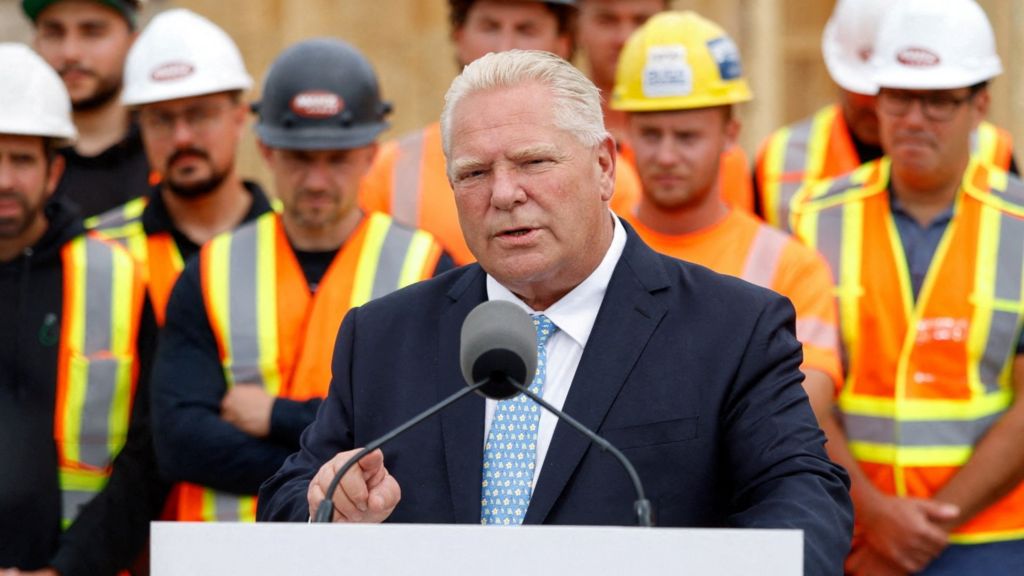
Watch: Doug Ford’s blunt warning to Trump over Canada tariffs
A tense new development in cross-border economic tensions has emerged, as Ontario Premier Doug Ford has delivered an unvarnished public warning to former U.S. President Donald Trump over planned tariffs on Canadian goods. In a sharply worded public address that has drawn international attention, Ford did not hold back in laying out concrete retaliatory measures that Canada could deploy to directly damage the United States’ own economic interests, pushing back against any new trade barriers.
The Ontario premier used unusually direct, blunt language to frame his message, directly calling out the former president’s trade agenda that has long targeted North American trade dynamics. Ford outlined a range of targeted countermeasures that would hit key U.S. economic sectors, from agricultural exports to cross-border manufacturing supply chains, making clear that Canada would not stand idly by if new tariffs are imposed. This open confrontation highlights the growing friction that continues to shape trade relations between the two neighboring nations, even as Trump remains a dominant figure in U.S. political discourse ahead of national elections.
Trade analysts note that this public rebuke is not just a rhetorical gesture: as the premier of Canada’s most populous and economically powerful province, Ford holds significant sway over national trade policy, and his warning signals a unified Canadian pushback against protectionist U.S. trade measures. The exchange has underscored how trade disputes between the two countries remain a flashpoint in bilateral relations, with ripple effects that could impact millions of jobs on both sides of the border if tariffs move forward.
-
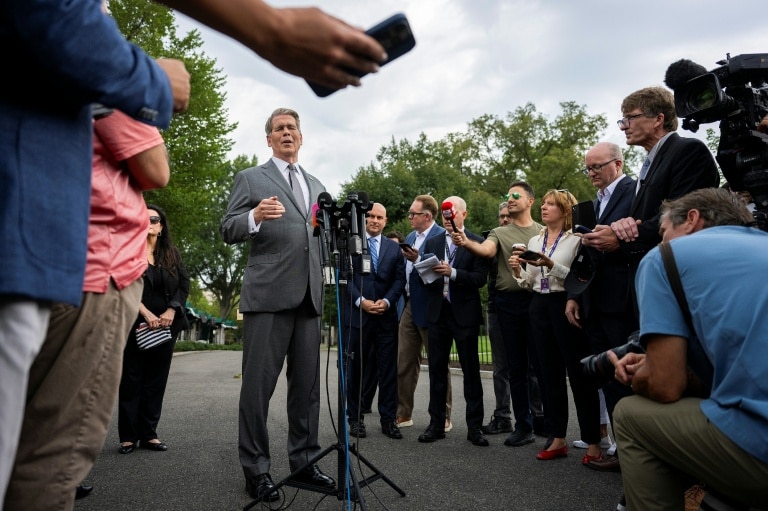
US vows ‘economic asphyxiation’ of Iran with new sanctions
Six months into a grinding, stalemated war between the US-led coalition and Iran, Washington has launched a sweeping new sanctions campaign labeled an “economic asphyxiation” of the Iranian regime, according to an announcement from US Treasury Secretary Scott Bessent on Monday.
Bessent framed the new measures as an “economic D-Day” for Tehran, outlining a strategy to cut off every remaining economic lifeline connecting Iran to the global economy. The plan expands Washington’s secondary sanctions regime, which targets third-party entities that continue to do business with Iran, and carries a stark warning: any country that refuses to join the US-led campaign will face isolation alongside Tehran.
Notably, the announcement did not name specific target countries beyond Iran or lay out a clear timeline for implementation, but it does map out new sanctions coverage that reaches across key sectors of Iran’s economy. Expanded penalties will target Iran’s digital assets, technology trade, gold reserves, aviation industry and commercial shipping networks. The Treasury Department also issued immediate sanctions against 60 individuals, companies and vessels accused of supporting Iran’s oil revenue generation, weapons procurement and cyber activity. These sanctioned entities are spread across the globe, with locations including the United Arab Emirates, Hong Kong (China), Singapore and multiple European states.
In a sharp escalation of financial pressure, Bessent vowed that any entity found facilitating money laundering on Iran’s behalf will be cut off from the US dollar financial system, a penalty that effectively excludes most major global institutions from transacting with the world’s reserve currency. He added that President Donald Trump has been personally engaging with world leaders via phone, urging them to sever economic interactions with Tehran. When asked whether major Chinese banks, which have historically facilitated Iranian oil purchases, would face penalties under the new regime, Bessent replied that “no one is above the reach of US sanctions.”
Iran has already pushed back forcefully against the new measures. Deputy Foreign Minister Kazem Gharibabadi framed the US’s announcement as an implicit admission of military failure, questioning why Washington would need to launch what it calls the “largest financial invasion in history” if it had achieved its war objectives.
“Is this a victory or an admission of America’s defeat?” Gharibabadi said in a social media post ahead of the US announcement, warning third countries against aligning with Washington’s campaign.
The current war, launched by the US and Israel in February, was initially justified over concerns about Iran’s nuclear program, but fighting and political focus have quickly shifted to the Strait of Hormuz, the strategic chokepoint that carries roughly a fifth of the world’s daily oil and gas supplies. Since the outbreak of war, Tehran has imposed a full blockade on most traffic through the strait — a move it never took in pre-war years — that has driven up global energy prices and fueled inflation, creating significant domestic political pressure on Trump ahead of November’s midterm elections.
Iran has a long history of evading crippling Western sanctions: for decades before the current war, Tehran maintained steady oil exports (mostly to China) via complex, opaque international financial networks. But data from maritime analytics firm Kpler shows that the US naval blockade around Iran has cut Iran’s daily oil exports through the Strait of Hormuz from 2 million barrels pre-war to just 400,000 barrels by mid-August.
For ordinary Iranian citizens, the new sanctions are expected to amplify already devastating economic hardship. Years of rampant inflation have already pushed millions of Iranians into financial precarity, sparking massive anti-government protests late last year and early this year. In an interview with AFP, Sarah Hassanbeigi, a 32-year-old Tehran-based pharmacist, captured the widespread public exhaustion: “I don’t think people can really take this much longer.”
In a separate change to policy, the US also announced it would suspend all sanctions exemptions for cross-border educational payments between the US and Iran, cutting off another remaining financial link between the two countries.
Despite the escalating economic pressure, diplomatic efforts to end the conflict continue to move forward. Last week, Iranian President Masoud Pezeshkian — a figure widely considered a relative moderate within the Iranian political system — stated that Tehran is in a position of strength and should seek to end the war immediately. Pezeshkian’s comment came shortly after Supreme Leader Mojtaba Khamenei appointed hardline figures to key national security posts, signaling a continued split in elite perspectives on the conflict.
On Monday, a Pakistani delegation led by army chief Asim Munir traveled to Tehran to meet with Iranian Parliament Speaker Mohammad Bagher Ghalibaf, who also serves as Iran’s chief negotiator for peace talks. Pakistan has previously emerged as a leading mediator in conflict negotiations, helping broker an April ceasefire that ultimately collapsed. As a major trading partner of Iran, Pakistan could now face secondary sanctions penalties under the new US framework. Following the Pakistani visit, Oman’s foreign minister is scheduled to travel to Iran on Tuesday for talks focused on reaching a new agreement to regulate commercial passage through the Strait of Hormuz.
-
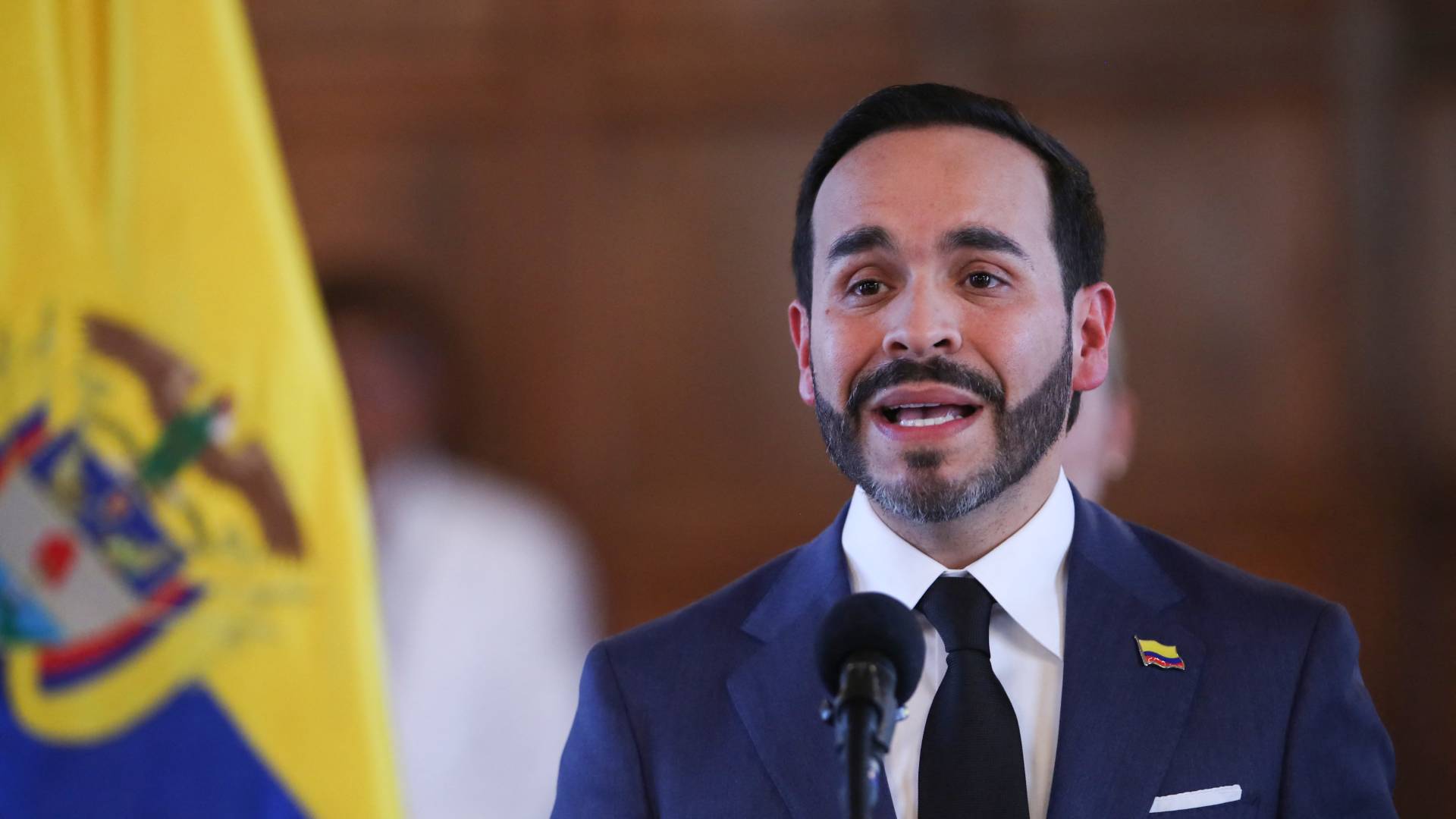
Colombia lifts coal export ban on Israel imposed over Gaza genocide
Fifteen days after taking office, Colombia’s new right-wing government has overturned a total coal export embargo imposed by former leftist President Gustavo Petro, greenlighting new coal shipments to Israel in a sharp shift toward closer economic and diplomatic ties with the Israeli government.
Trade Minister Mauricio Gomez Amin made the announcement publicly Friday in a recorded video appearance alongside President Abelardo de la Espriella, who displayed the signed authorization decree for cameras. “We have the decree that authorises the export of coal,” Gomez Amin confirmed during the event.
As of the announcement, the new administration has not released key details of the order, including its official decree number, publication date in Colombia’s state Official Gazette, or the regulatory requirements exporters must satisfy to resume shipments. It also remains unconfirmed when the first cargoes will depart for Israel.
The embargo that was reversed marked the final step of Petro’s escalating response to Israel’s military campaign in Gaza. In May 2024, Petro cut full diplomatic relations with Israel over the assault on the Gaza Strip. Three months later, his administration introduced restrictions on thermal coal exports to the country, before eliminating all exemptions for existing contracts and enforcing a complete embargo in August 2025.
Petro designed the embargo to remain in effect until Israel complied with binding provisional measures ordered by the International Court of Justice, which required Israeli forces to withdraw from Gaza and specifically the southern city of Rafah. Since the ICJ issued that order, Israeli operations have left the Palestinian city completely destroyed.
Prior to the introduction of export restrictions, Colombia held the position of Israel’s largest thermal coal supplier. S&P Global market data confirms that Colombia supplied 60 percent of all Israel’s thermal coal imports in the first half of 2024.
Gomez Amin framed the original embargo as a policy rooted solely in Petro’s ideological positioning, rather than practical statecraft. For his part, de la Espriella campaigned on a promise to transform Colombian-Israeli relations to be closer “like never before,” and emphasized the speed with which his administration has followed through on that pledge. “We’ve only been in government for 15 days,” he noted during the announcement.
The decision to lift the coal embargo is just one part of a broad pro-Israel policy overhaul launched after de la Espriella took office on August 7. In addition to restoring full diplomatic relations that Petro severed, his administration has formally recognized Israeli sovereignty over Syria’s occupied Golan Heights and unveiled plans to relocate Colombia’s embassy from Tel Aviv to Israeli-occupied East Jerusalem.
The policy reversal re-establishes a critical energy supply line for Israel, undoing Petro’s deliberate use of Colombian trade leverage to protest what he described as Israel’s genocide in Gaza, and replacing that pressure campaign with a rapid deepening of both economic and diplomatic alignment with the Israeli government.
-

Turkey sentences 5 opposition mayors in cases critics slam as politically motivated
In a high-profile verdict that has reignited debates over judicial independence in Turkey, an Istanbul court on Monday handed down corruption convictions to five municipal mayors belonging to the country’s main opposition bloc, a case critics have long decried as a politically motivated effort to weaken government opponents.
The seven-month trial, held at a courthouse adjacent to Silivri Prison on Istanbul’s western outskirts, centered on claims of bribery, bid-rigging, and fraudulent manipulation of municipal public contracts involving 200 total defendants. While some other defendants received sentences and others were cleared, full details of their rulings have not been released to the public as of Monday’s verdict.
Prosecutors’ case was built around the activities of Turkish businessman Aziz Ihsan Aktas, whose companies stand accused of securing lucrative municipal tender agreements through illegal kickbacks and fraudulent bidding practices. Aktas was first taken into custody in Istanbul in January of last year; his arrest triggered widespread investigations into multiple CHP-governed districts across Istanbul, as well as the southern CHP-run municipalities of Adana and Adiyaman. After initially denying all wrongdoing, Aktas agreed to cooperate with prosecutors under Turkey’s “effective repentance” law, turning witness against his co-defendants and claiming he bribed mayors and municipal officials with cash, luxury vehicles, and other favors to win contract awards. In a separate, related trial, Aktas was sentenced to 2 years and 8 months in prison for bid-rigging, but acquitted on separate bribery charges.
Of the five convicted mayors, all from the Republican People’s Party (CHP), Riza Akpolat — the sitting mayor of Istanbul’s upscale Besiktas district — received the harshest penalty: 23 years and three months in prison on charges of bribe-taking, money laundering, and bid-rigging. The four other convicted mayors, who were all removed from their elected positions immediately following their arrests, received sentences ranging from five to eight years.
Critics of President Recep Tayyip Erdogan’s administration have raised a series of red flags about the conduct of the trial, arguing it was deliberately crafted to target the CHP ahead of upcoming political contests. Two key controversial elements have drawn particular scrutiny: the prosecution’s reliance on secret witnesses, many of whom openly acknowledged their testimony was based on second-hand hearsay, and the use of cooperating codefendants like Aktas who secured more lenient sentences by implicating other defendants.
Akpolat himself told the court during proceedings that investigators offered to drop all charges against him if he agreed to provide false testimony in a separate investigation into CHP’s 2023 internal party congress. That investigation ultimately led a Turkish court to order the removal of CHP’s top leadership in May over claims of voting irregularities during the party’s leadership election. The ouster prompted hundreds of CHP members to follow former leader Ozgur Ozel to form a New Party, which now holds the position of the largest opposition bloc in Turkey’s national parliament.
The opposition has also pointed to a double standard in enforcement, noting that municipalities controlled by Erdogan’s ruling party that also conducted business with Aktas never faced the same level of rigorous investigation that the CHP municipalities endured.
For its part, the Erdogan administration has repeatedly rejected claims of political interference, insisting that Turkey’s national judiciary operates as an independent body free from political pressure.
Monday’s conviction comes amid a broader pattern of legal action against CHP officials following the party’s strong showing in recent local elections. The CHP seized control of several major Turkish cities, including Istanbul and the capital Ankara, in the 2019 local elections, and expanded on those gains in the 2024 municipal polls. Since the 2024 election, dozens of CHP elected officials have faced various criminal charges in Turkish courts.
The highest-profile case against the opposition involves Ekrem Imamoglu, the popular metropolitan mayor of Istanbul and the CHP’s leading candidate to challenge Erdogan in the next presidential election. Imamoglu has been held in pre-trial detention since March of last year, facing a sprawling set of corruption charges related to Istanbul municipal operations that mirror the claims in the Aktas case. If convicted on all counts, Imamoglu could face a cumulative sentence of more than 2,300 years in prison.
All five convicted mayors have announced they plan to appeal Monday’s verdict, with their legal team vowing to challenge what they call a politically tainted conviction built on unreliable and coerced testimony.
-

Prince Harry steps down from African wildlife charity board
In a move that comes amid ongoing fallout over confirmed human rights violations by park rangers employed by a leading African conservation organization, Prince Harry, Duke of Sussex, has stepped down from the board of African Parks, a charity he has been affiliated with for a decade. A spokesperson for the duke confirmed the exit Friday, noting that after six years serving as the charity’s president, Prince Harry joined the board of directors in 2023, and while he is leaving his formal governance role, he will continue to back the organization’s core conservation mission.
The resignation comes barely a week after Prince Harry and his wife Meghan, Duchess of Sussex, announced plans to relocate their family — which includes their two children, Prince Archie and Princess Lilibet — from their long-time home in California back to the United Kingdom, where their children are set to begin school in early September. The timing has placed both the charity controversy and the Sussexes’ new chapter firmly in the global spotlight.
The controversy surrounding African Parks erupted last year, when the organization publicly acknowledged that its rangers operating in Odzala-Kokoua National Park in the Republic of Congo (Congo-Brazzaville) had committed severe human rights abuses against local Indigenous communities. An independent investigation launched following the allegations confirmed multiple reports of violence, including beatings, sexual assault, and torture carried out by guards employed and managed by the charity. In 2025, African Parks announced it had overhauled its internal safeguarding protocols both at the Congolese park and across all its operations, as part of broader organizational reforms.
As part of what African Parks framed as a “governance refresh” of its board, the organization issued a statement thanking Prince Harry for his ten years of involvement. The charity acknowledged that Prince Harry had been instrumental in drawing global attention to the urgent crisis of biodiversity loss across the African continent, highlighting his work to advance conservation philanthropy that benefits both local communities and wildlife. “The duke remains deeply committed to this cause, and remains a strong supporter of African Parks’ work,” the statement read.
Prince Harry’s connection to African Parks runs deeper than board service: the organization’s website records his role as part of the expert team that delivered the first phase of the landmark 500 Elephants project, one of the largest elephant translocation initiatives in modern conservation history. The project moved hundreds of elephants from overcrowded, poaching-prone habitats in Malawi to protected areas where elephant populations had been decimated by decades of illegal hunting. Prince Harry previously described participating in the translocation as an “amazing” experience, and he was photographed attending an anti-poaching demonstration in Malawi back in 2019. In his own statement released through his spokesperson, Prince Harry said he was “proud of his 10 years with African Parks” and fully supports the charity’s ongoing work to strengthen its governance and operations. “His commitment to conservation in Africa continues, and he remains a supporter of African Parks’ mission,” the spokesperson added.
African Parks currently manages roughly 20 national parks and protected areas across 12 sub-Saharan African countries, making it one of the largest non-profit conservation organizations operating on the continent.
The Sussexes’ impending relocation to the UK has already sparked widespread discussion about the couple’s future, particularly around unresolved questions of security arrangements. Last year, Prince Harry lost a high-profile legal challenge against the UK Home Office over the level of publicly funded police protection he and his family are entitled to when staying in the UK. No final details have been confirmed about what security provisions will be put in place for the family following their move, and the couple’s broader long-term plans for their time in the UK also remain unannounced.
UK public broadcaster the BBC has also reported that the Duchess of Sussex is currently in talks to return to her former acting career, with a potential role in the popular Netflix series *The Gentlemen*. If confirmed, the role would mark her first major acting credit since her marriage to Prince Harry in 2018.
This upcoming relocation marks a major shift for the couple, who stepped back from full-time senior royal duties in early 2020 before permanently settling in California that same March. A spokesperson for the couple has confirmed that their official status as non-working members of the royal family will not change following the move, and they will remain private individuals.
-
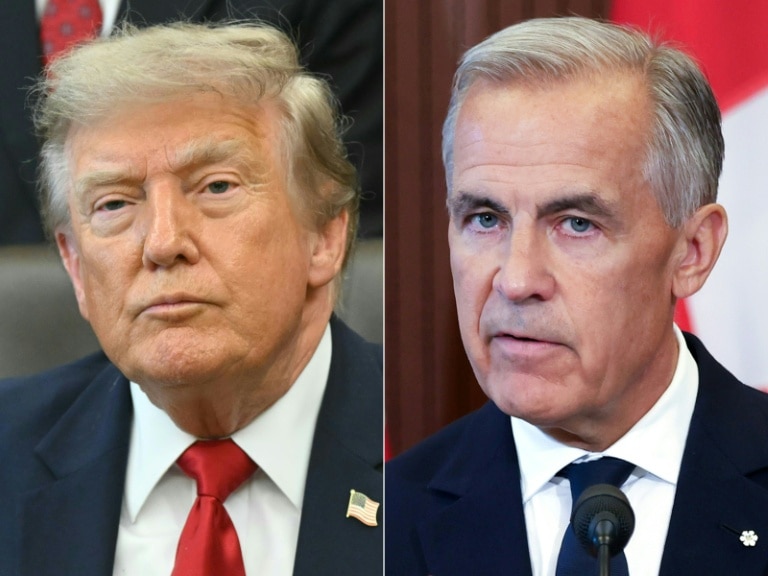
Trump says to double tariffs on Canada autos as trade fight heats up
A rapidly escalating transboundary trade conflict between the United States and Canada entered a dangerous new phase Monday, as former president and current US leader Donald Trump announced plans to double existing tariffs on Canadian automobiles and automotive parts starting in 2027.
In a public post to his Truth Social platform, Trump confirmed that starting January 1, 2027, all imported passenger cars, trucks of all sizes, automotive components, and Canadian steel entering the US market will face a 50% import tariff. Currently, the US imposes a 25% duty on Canadian-made vehicles that do not meet US content requirements under existing trade rules, while most Canadian steel already faces a 50% tariff under prior US trade measures.
The announcement comes just days after negotiations between Washington and Ottawa collapsed completely, failing to avert a new round of 50% US tariffs on $20 billion worth of Canadian goods that went into effect Saturday. These new levies cover approximately 5.5% of all Canadian goods entering the US, ranging from industrial inputs like cement to consumer goods including hockey sticks.
Canadian Prime Minister Mark Carney rejected what he described as an unacceptable “bad deal” from US negotiators, walked away from talks, and immediately announced reciprocal retaliatory tariffs targeting key US export sectors. Carney’s retaliatory measures, set to take effect September 8, will hit US steel, dairy products, agricultural machinery, pulp and paper, and consumer electronics.
The US has long held the position as Canada’s largest single trading partner, with 70% of all Canadian exports destined for the US market. As of 2025, US Census Bureau data ranks Canada as the second-largest goods trading partner for the US, just behind Mexico. Existing Trump administration tariffs have already placed significant pressure on core Canadian industrial sectors including auto manufacturing and steel production.
In his post Monday, Trump doubled down on his longstanding criticism of Canadian trade policy, arguing that “Canada has been ripping off the United States of America for years.” He added, “we don’t need Canada, they need us.” The Trump administration initially justified the new round of tariffs by alleging Canada engages in discriminatory trade practices against US alcohol, automotive, and dairy products. Last week, Trump delayed the implementation of the new tariffs by three days to allow for last-minute negotiations between top trade officials from both nations.
Top Canadian negotiator Dominic LeBlanc and his delegation held marathon talks with US Trade Representative Jamieson Greer and his team in Washington across Thursday and Friday, extending negotiations late into Friday night, but the two sides could not bridge core differences. According to comments Greer gave to The New York Times Saturday, the US had tabled a compromise offer ahead of the collapse: Washington offered to eliminate a 10% tariff on Canadian softwood lumber, cut the existing 25% auto tariff, and reduce the 50% steel tariff to 25% for most Canadian steel exports. The offer was rejected by Canadian leadership.
Public opinion polling from the Angus Reid Institute released Sunday shows broad domestic support for Carney’s decision in Canada: three-quarters of Canadian respondents back the government’s choice to walk away from the talks. At the same time, the poll found that two in five Canadians report anxiety over potential job losses linked to the trade dispute.
As of Monday, neither side had announced plans to schedule a new round of negotiations, and Carney confirmed late Friday that he has suspended further trade talks with Washington. The ongoing tariff conflict is not the only point of tension between the two neighbors: the US is also pushing for revisions to the US-Mexico-Canada Agreement (USMCA), the trilateral trade deal that governs regional trade, and Trump has so far refused to renew the agreement in its current form. Additional friction has been caused by repeated provocative comments from Trump suggesting Canada should become the 51st US state, comments that have stirred widespread anti-US sentiment among Canadian voters.
US automakers have not yet issued a public response to Trump’s latest tariff threat, leaving unclear how the proposed 2027 duty increase would impact North American integrated auto supply chains that rely heavily on cross-border movement of parts and vehicles.
-
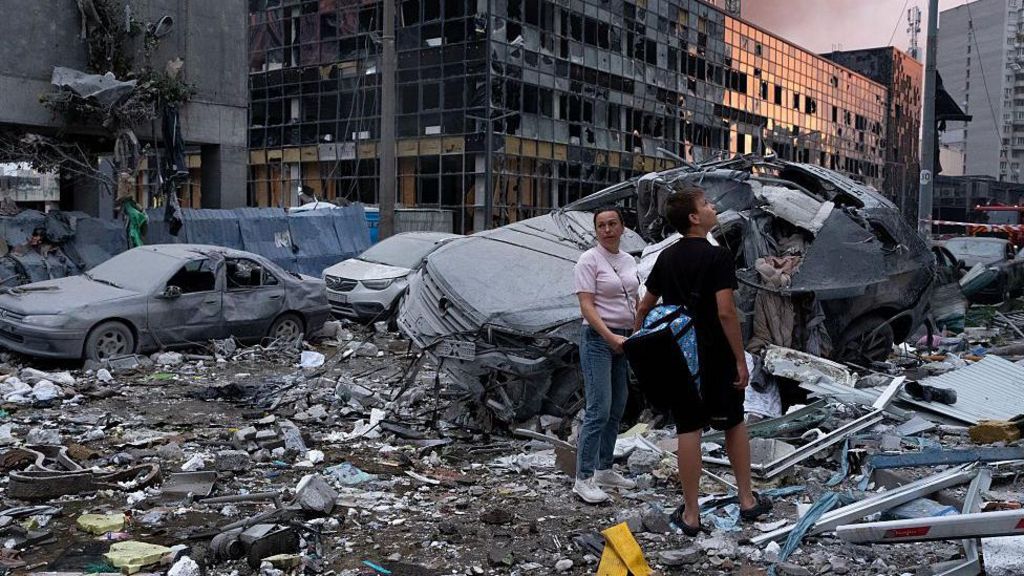
Is UK’s Storm Shadow missile a game changer for Ukraine?
The ongoing Russia-Ukraine conflict has long been defined by the incremental impact of Western military aid, and the recent delivery of UK-made Storm Shadow long-range cruise missiles has sparked urgent debate over whether this advanced weapon system can alter the course of Kyiv’s counteroffensive operations. Defense correspondent Joe Inwood has delved into the technical specifications and strategic implications of the system to unpack its potential role on the front lines. Unlike the shorter-range artillery and rocket systems that Ukraine has relied on for most of the war, Storm Shadow boasts a stand-off strike range of more than 250 kilometers, allowing Ukrainian forces to hit Russian command hubs, ammunition depots, and supply lines deep behind occupied front lines without putting their own aircraft at risk within heavily defended enemy airspace. Designed for precision strikes against fixed infrastructure targets, the missile uses a combination of GPS navigation and terrain-following radar to avoid detection, and its tandem warhead is engineered to penetrate hardened concrete structures like underground bunkers and reinforced storage facilities. While Western officials have emphasized that the missiles are intended for use on Ukrainian territory that is currently under Russian occupation, the deployment of this long-range capability marks a significant escalation in Western military support, raising questions about how Moscow will respond to the new threat. Military analysts note that even with Storm Shadow, Ukraine cannot achieve a decisive battlefield breakthrough on its own; the system is a force multiplier that can disrupt Russian logistics and weaken their defensive positions, rather than a silver bullet that will end the war immediately. Inwood’s analysis walks through both the capabilities and limitations of the technology, contextualizing its arrival against Ukraine’s ongoing push to retake occupied territories and the shifting dynamics of military support from Western allies.
-
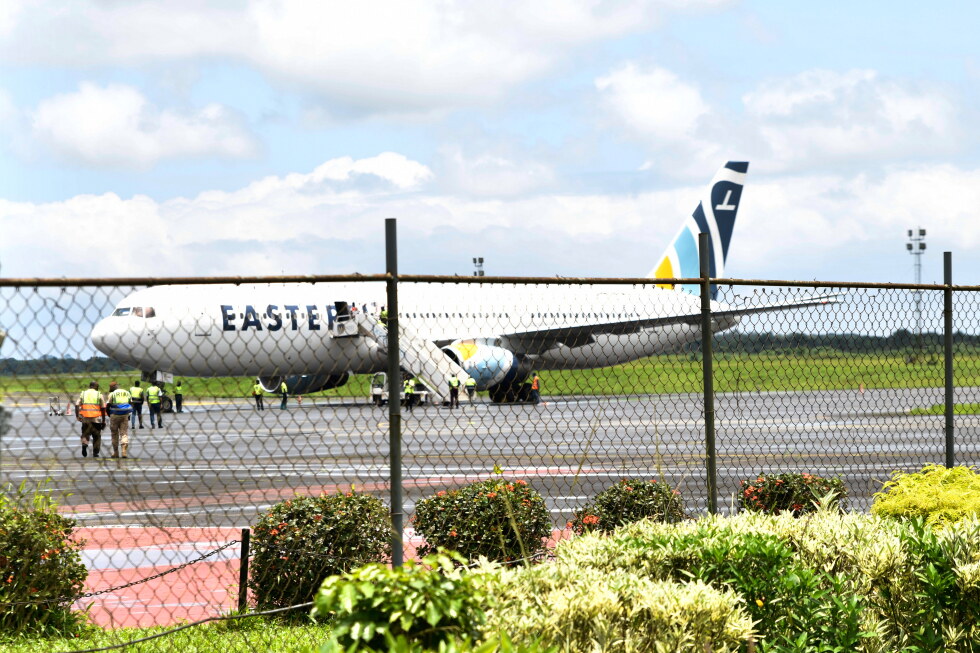
Deportees who refused to exit a US flight in Liberia are sent to Equatorial Guinea
DAKAR, SENEGAL — A coordinated act of resistance by six migrants deported from the United States has cast new light on the Trump administration’s controversial secretive third-country deportation policy, after the group refused to exit their flight in Liberia last week and was ultimately rerouted to another African nation, multiple sources confirmed Monday. A person traveling on the deportation flight and a legal representative in contact with the detainees have verified the details of the incident, which has drawn fresh criticism of a practice immigration advocates call a loophole for bypassing asylum protections.